Whitehot Magazine
October 2026
"The Best Art In The World"
"The Best Art In The World"
October 2026
Interview: Creative Technologist Simi Gu and the Art of Worldbuilding
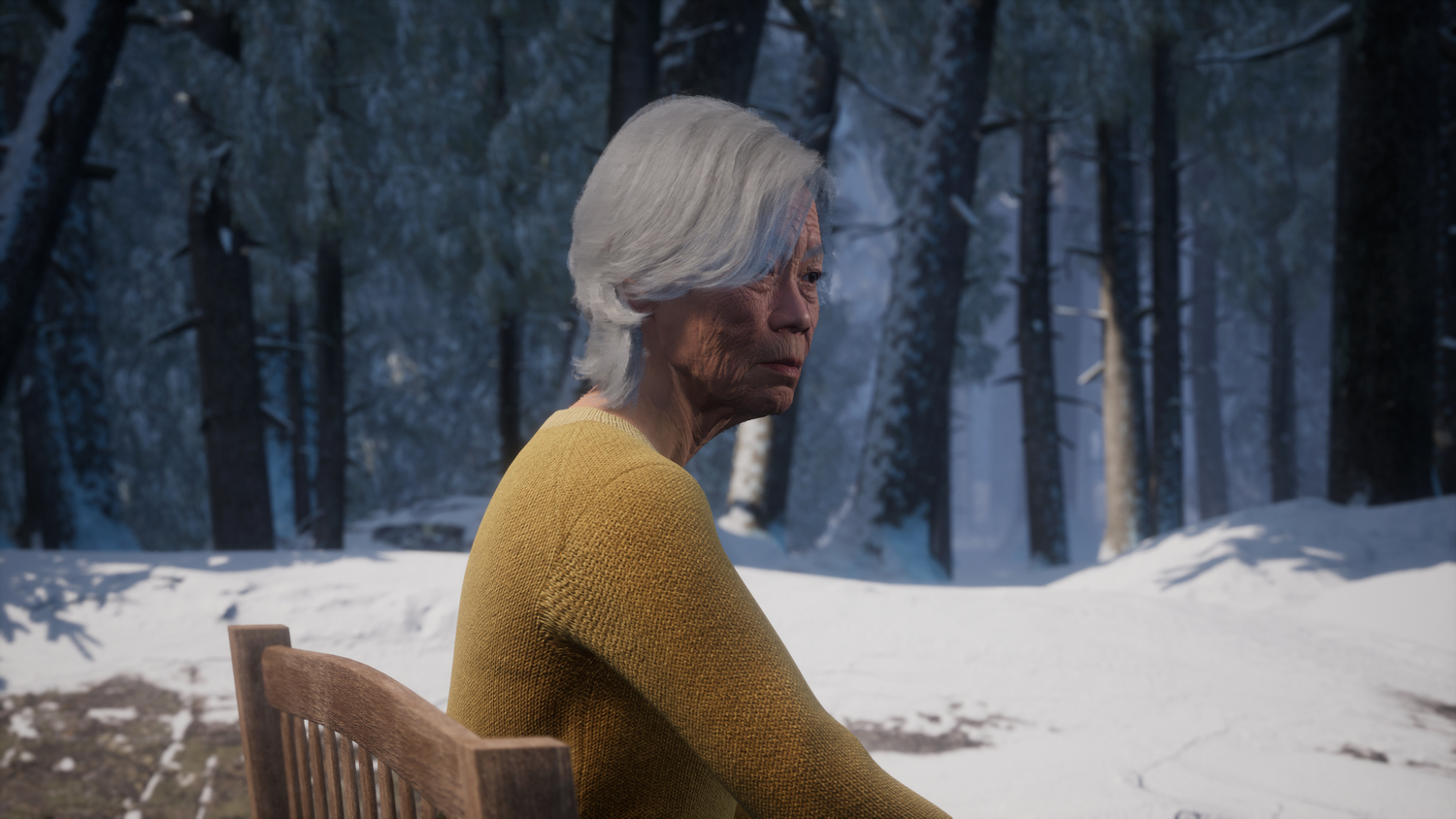 Still from Journery Into Self, 2023
BY SERENA HANZHI WANG March 25, 2026
Snow covers the forest. I do not see a clear path. The light barely changes.
A wooden bench sits among the trees. An elderly woman is seated there, leaning slightly forward, hands resting at her sides. She does not seem to be looking at anything specific. The image stays longer than expected. Time stretches. Almost nothing moves.
I stayed here for a while before doing anything else.
Journey Into Self is created by Shimin Gu and her team and released online through inmarfa.xyz. The work was selected for the XR Section of the 2024 Shanghai International Film Festival, exhibited in Berlin and New York, and received recognitions at the 2025 AIXR XR Awards. The experience lasts around 25–30 minutes and unfolds across several connected spatial sections. Because it can be explored and navigated, people often approach it as a game. The project itself describes it as an immersive experiential artwork, structured as a spatial journey focused on perception.
As it continues, the environment shifts. Outdoor scenes lead into interior spaces, then open up again. Virtual figures appear at measured distances. They remain where they are. Each one seems to hold a position rather than perform a role. Small fragments of story surface through these spatial changes. Sometimes I move closer. Sometimes I stop and stay where I am. The experience does not rush either choice.
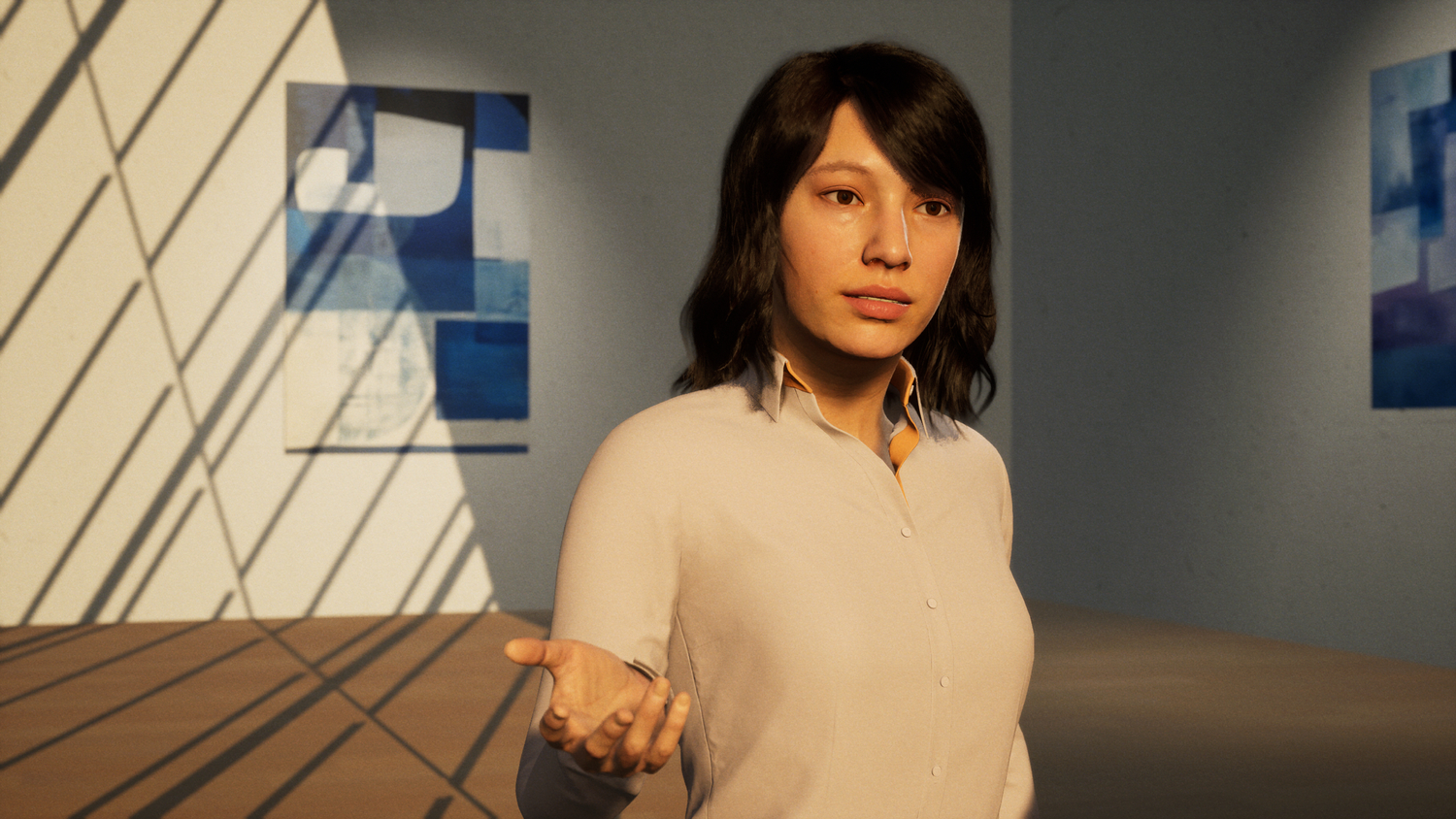 Still from Journery Into Self, 2023
Later on, bodies begin to lift from the ground. In one scene, a dancer hovers in a darkened space. Points of light drift slowly around her. The movement is minimal and continuous. I notice the duration more than the action. I notice my own balance as I watch.
When it ends, the image fades. The interface disappears. I am back in the room. What lingers is not a storyline, but a set of sensations: how long certain pauses lasted, how far apart the bodies felt, what it was like to watch something remain suspended. These details stay unorganized.
Spending time with Journey Into Self made me think again about why video art and game-based art feel increasingly present right now. These works ask to be entered. They ask for time. Compared to painting or sculpture, or even installation and performance that are often meant to be observed from a distance, video and interactive works are experienced through proximity and duration. When they are carefully paced, the effect does not arrive all at once. It settles later.
Since completing Journey Into Self, Shimin Gu has continued to develop projects across tech art, collaborating with institutions and brands and receiving recognition along the way. Still, I keep returning to this work. It feels like an early point where many of these concerns are already in place. With that in mind, the following interview looks at how her practice grew from this moment, what continues to drive it, and how she approaches making art through technology.
1.
Serena: You’ve been working full-time in the industry for a long time. Before all the independent work and exhibitions, what first pulled you into interaction design as a job you wanted to stay in?
Shimin (Simi): I have never thought of creative work as belonging to fixed categories. For me, different media are simply different ways of telling a story. What matters is choosing the form that best serves the intention.
As an undergraduate studying advertising, I worked primarily in graphic design and video. During my graduate studies at NYU’s Integrated Digital Media program, I encountered interactive works that reshaped how I understood narrative. I began developing my own interactive projects and realized that interaction design allows the audience’s behavior and emotional response to become part of the work itself. The response to those early projects confirmed my decision to pursue interaction design as a long-term professional path.
2.
A lot of your projects involve long processes and real systems, not just concepts. Over the years, which part of that process do you feel has shaped you the most?
What shaped me most was learning that ambition alone does not carry a project. It succeeds when people can move through it without friction.
In many projects, I held primary responsibility for shaping how the experience flows from beginning to end. That meant defining user paths, transitions, and behavioral logic so the experience feels continuous rather than fragmented. Working at the production level taught me to take full responsibility for that continuity. Over time, I became less interested in isolated moments and more focused on how everything connects.
3.
You’ve worked on teams that received support like Epic Games MegaGrants and recognition through things like the Verizon 5G Challenge. Inside the work itself, did that change anything day to day, or did it mostly happen around the project?
Recognition increased expectations but did not simplify the work. If anything, it made clarity and stability more critical.
At that level of visibility, even small inconsistencies become noticeable. My role required maintaining continuity from concept through implementation and ensuring the experience remained reliable under scrutiny. External validation reinforced the discipline required to deliver at scale.
4.
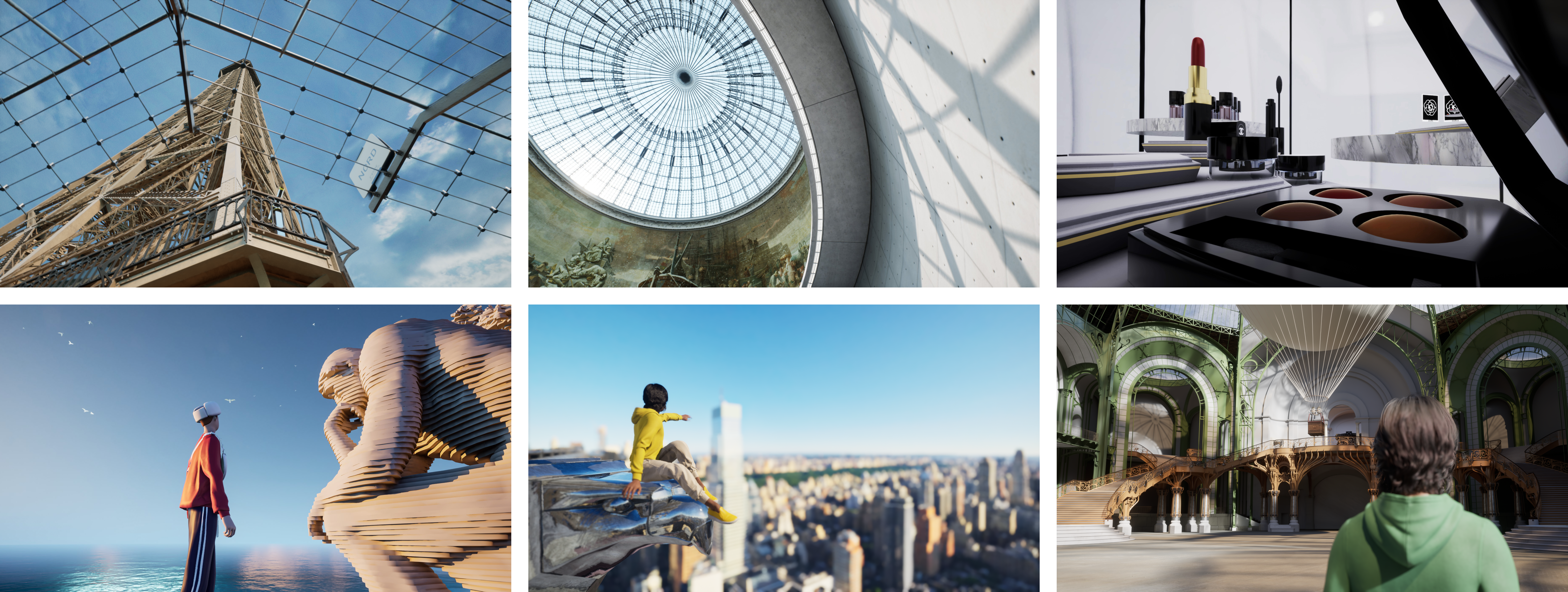
When you’re working with brands like Chanel, there’s a lot at stake visually and structurally. What usually feels hardest to hold onto in those situations?
In high-profile brand collaborations, the challenge is preserving experiential depth within strict visual and structural constraints.
I am often responsible for translating brand language into a cohesive interaction experience rather than simply executing predefined visuals. That means balancing aesthetic standards with user flow and clarity, while also communicating closely with brand stakeholders. Creative ideas do not always align immediately, so part of my role is explaining how certain interaction decisions strengthen the overall narrative and user experience.
In the end, the work becomes less about surface design and more about shaping how the experience unfolds in real time.
5.
You’ve also worked on immersive projects connected to cultural heritage sites in France. What felt different about bringing interaction into places that already carry so much history?
Those environments already carry weight. The interaction cannot compete with that.
Many of these projects involved both online and on-site audiences, often at scale, and not everyone was familiar with immersive technology. The work had to remain intuitive, stable, and respectful of the setting. I focused on ensuring that the experience integrated naturally into the space rather than drawing attention to itself. Designing in those contexts strengthened my ability to balance accessibility, scale, and sensitivity.
6.
At some point, your work starts to circle more clearly around emotion: loneliness, self-awareness, psychological states. Do you remember when that shift became conscious for you?
I have always wanted my work to bring audiences into a specific emotional state. Through collaborations with artists from traditional disciplines, I often used technology to help express ideas about memory, loneliness, and psychological distance. Those themes felt closely tied to broader social realities.
Journey Into Self was the moment when that intention became explicit. By then, I had enough technical experience to shape emotion through pacing and spatial decisions rather than explanation. Emotion stopped being just a theme and became embedded in how the experience was constructed.
7.
In pieces like Quiet Pulse, emotion isn’t spelled out. It’s carried through pacing, rhythm, and space. When you’re designing something like that, what tells you that you’ve done enough?
I tend not to explain emotion directly. Some of the works I value most offer almost no explanation yet remain powerful.
When developing a piece, I look for balance. If I feel the need to clarify the feeling, it usually means the pacing is unresolved. At the same time, I rely on user testing. Observing how people respond to rhythm and duration helps determine whether the intended experience is working. When the flow sustains attention without reinforcement, I know it is complete.
8.
NUMA, the project imagining immersive systems for confined spaces like elevators, feels very close to everyday life. What made you interested in those kinds of ordinary, slightly uncomfortable spaces?
My interest in confined spaces began with studying adaptive design. I became aware that what feels neutral to most people can be uncomfortable for others.
Living in New York and experiencing prolonged subway stops made me more conscious of how quickly perception shifts in enclosed environments. NUMA emerged from that awareness. I led the development of the interaction approach to explore whether subtle environmental changes could ease psychological tension. The intention was quiet modulation rather than spectacle.
9.
In many of your projects, the technology stays very quiet. It doesn’t ask for attention. Is that something you actively work toward, or is it just how your decisions tend to land?
It is intentional. I see technology as a medium, not the subject.
In a moment when tools and AI are widely accessible, novelty alone is not meaningful. What matters is what the work communicates and how it affects perception. Keeping technology quiet requires precision. When it recedes, the experience itself becomes visible.
10.
Looking back now, where does Journey Into Self sit for you? Does it feel early, transitional, or just one point along the way?
Journey Into Self feels foundational. It strengthened my commitment to focusing on emotion as a central direction.
The project was built around the idea that memory fades while emotional residue remains. Audience responses and exhibitions reinforced that belief. Through multiple iterations, I learned that emotional clarity depends on continuous refinement of both narrative and interaction. The work consolidated my approach rather than marking a transition.
11.
Right now, when you think about making tech-based work, what do you find yourself paying more attention to than before?
Now I pay closer attention to embodiment and psychological impact.
Immersive systems influence not only what we see, but how we inhabit space. Small shifts in timing or distance can change how a person feels. I am less concerned with novelty and more concerned with responsibility and durability. For me, seniority means understanding how subtle decisions shape lasting experience.
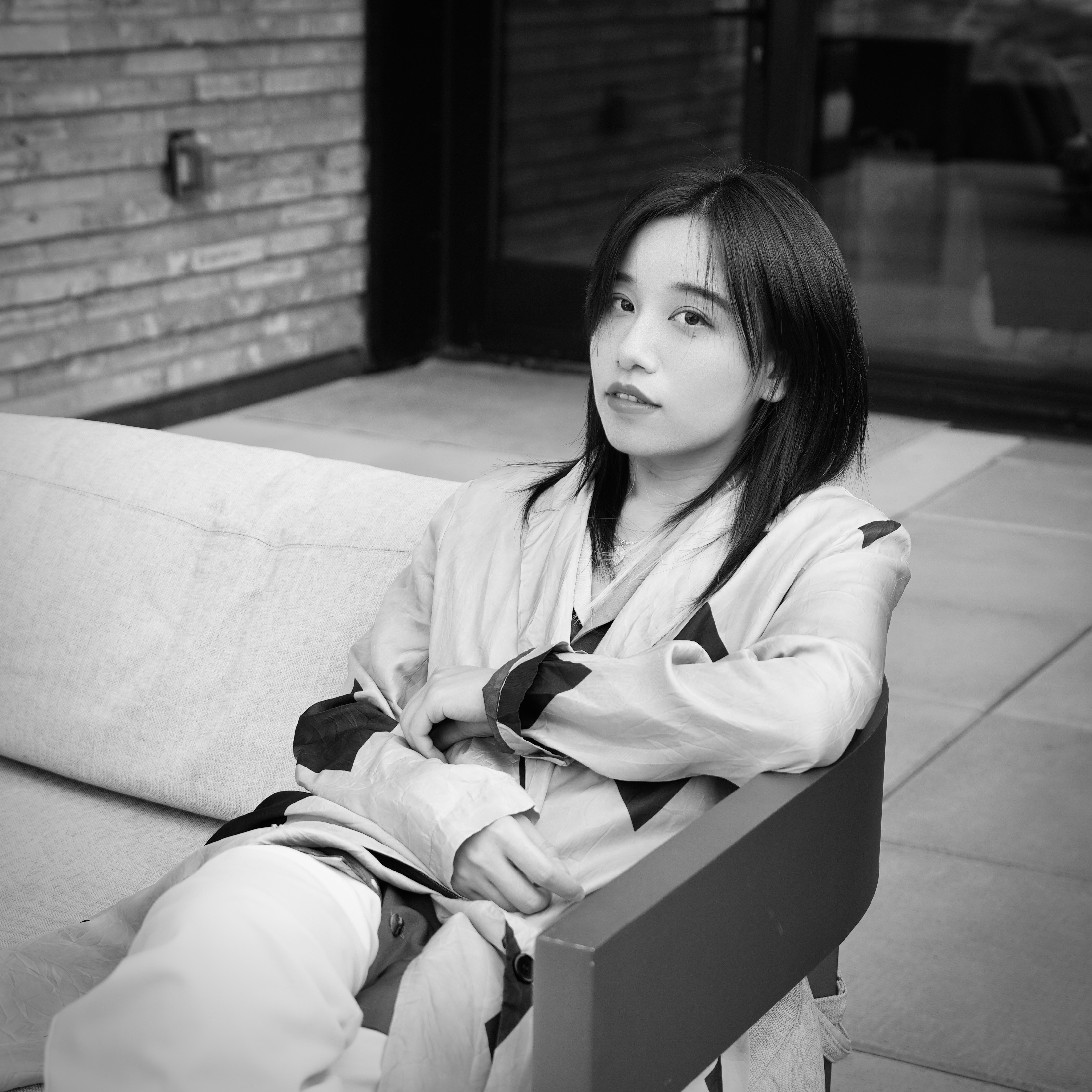
Shimin (Simi) Gu is a New York–based creative technologist working across immersive media, XR, and real-time systems. Trained at NYU’s Integrated Digital Media program, she combines storytelling with interaction design and spatial computing to produce technically rigorous, narrative-led work. Her projects have been recognized by the AIXR XR Awards, LOOP Design Awards, French Design Awards, TITAN Health Awards, W3 Awards, MUSE Creative Awards, and NYX Awards.

Serena Hanzhi Wang
Serena Hanzhi Wang (b. 2000) is an award-winning art proposal writer, multimedia artist, and curator based in New York City. Her work spans essays, exhibitions, and installation Art—often orbiting themes of desire and technological subjectivity. She studied at the School of Visual Arts’ Visual & Critical Studies Department under the mentorship of philosophers and art historians. Her work has appeared in Whitehot Magazine, Cultbytes, SICKY Mag, Aint–Bad, Artron, Art.China, Millennium Film Workshop, Accent Sisters, MAFF.tv, and others.
view all articles from this author