Whitehot Magazine
November 2026
"The Best Art In The World"
"The Best Art In The World"
November 2026
How Much Can Identity Explain? — Moon River: On a Slow Boat to…
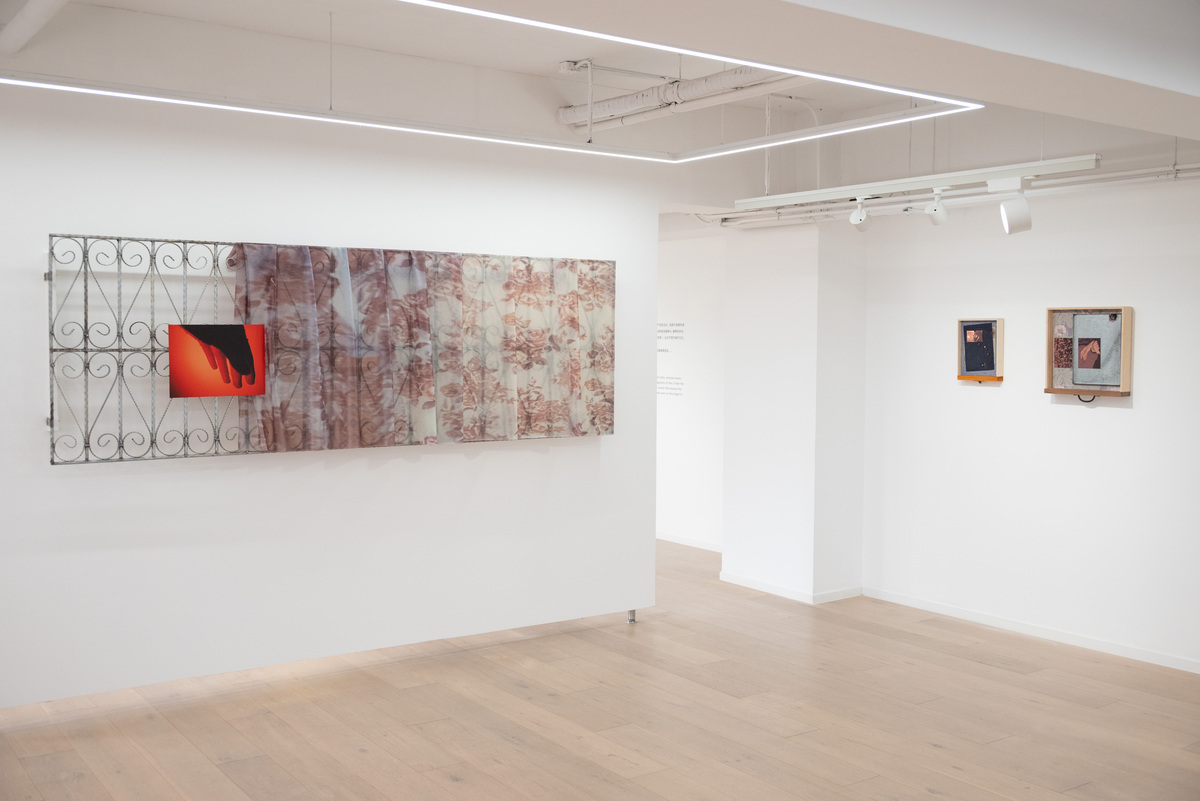
Installation view of Moon River: On a Slow Boat to…, ASE Foundation, Shanghai, 2026. Courtesy of ASE Foundation.
BY LUMAN JIANG November 3rd, 2026
In Moon River: On a Slow Boat to…, Li Hainan’s Coming Soon was initially the work whose place in the exhibition I found hardest to understand. The words on its lightbox—object, display, value, power—seemed to have little direct connection to the everyday objects and personal memories surrounding it. During my visit, its scrolling mechanism had been paused for an event, and curator Estrela Wenyi Chen explained how the words would change. Later, learning how the work had developed led me to reconsider my understanding of the exhibition as a whole.
Curated by Chen at the ASE Foundation, Moon River considers how migration changes language, memory, and ways of seeing. Its title draws on “(I’d Like to Get You on a) Slow Boat to China” and “Moon River,” bringing an imagined distant elsewhere together with the desire to set out, while leaving the destination open in an ellipsis. The exhibition occupies two main spaces, moving from a room that evokes a dwelling into maps, historical investigations, and communication networks, with a family video at the end. Yet as I moved among the works, diaspora did not retain a consistent shape. At times it concerned relatives and hometowns; elsewhere it emerged through materials and language. Some works left me uncertain where to begin.
In the first space, beneath a low ceiling, Pocono Zhao Yu’s clock with its hands removed and Huang Peishan’s images of interiors sit alongside xindi’s leaf-shaped textile incorporating the artist’s mother’s diary and a sound work by the same artist. The room accommodates several kinds of private experience. The diary retains its connection to the artist’s mother, while the interiors do not necessarily disclose whose rooms they are. Zhao Yu’s A Room of One’s Own—Studio No. 9 also brings solitude into a discussion of control over time. Removing the hour and minute hands suspends the clock’s usual function, but the demands of work, information, and productivity remain. Someone who has never left home might face the same problem.
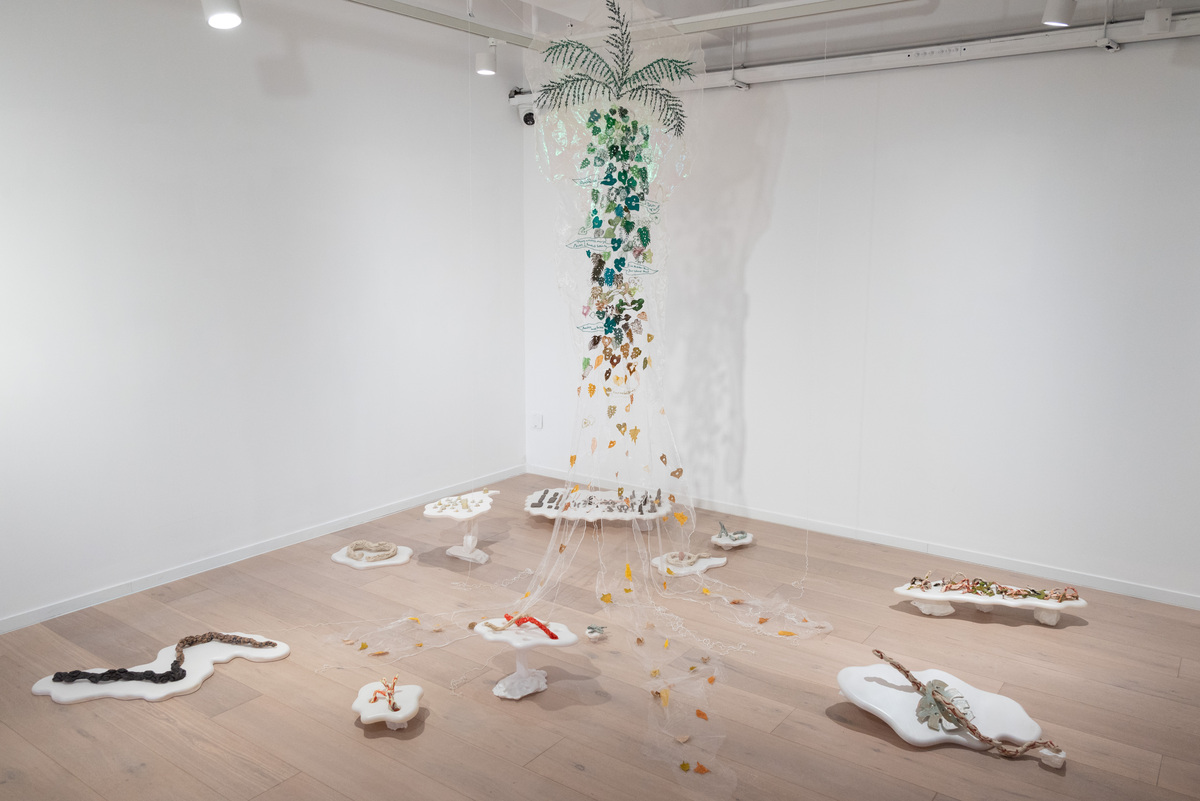
xindi, Her tropical diary, leaves leaves, 2025. Digital, free-motion and hand embroidery on mixed fabrics, 71 × 367 cm. Installation view at ASE Foundation, Shanghai, 2026. Courtesy of ASE Foundation.
Gao Xiaoyi’s Clearance Sale uses a woman’s coat as a painting support. The garment has a past, but its former owner’s life has not been passed on with it. In an interview, Gao describes how, as a newcomer, she used the furniture, clothing, and tableware in secondhand shops to imagine the domestic lives of people in a foreign city. These objects offer access to those lives while leaving much unknown; painting introduces her own experiences and fantasies into the gaps. The fabric also affects how she works. Some textiles cannot accommodate sharply defined brushstrokes, so she adjusts her painting accordingly. The blurring that might readily be read as fading memory also arises from the contact between paint and cloth.
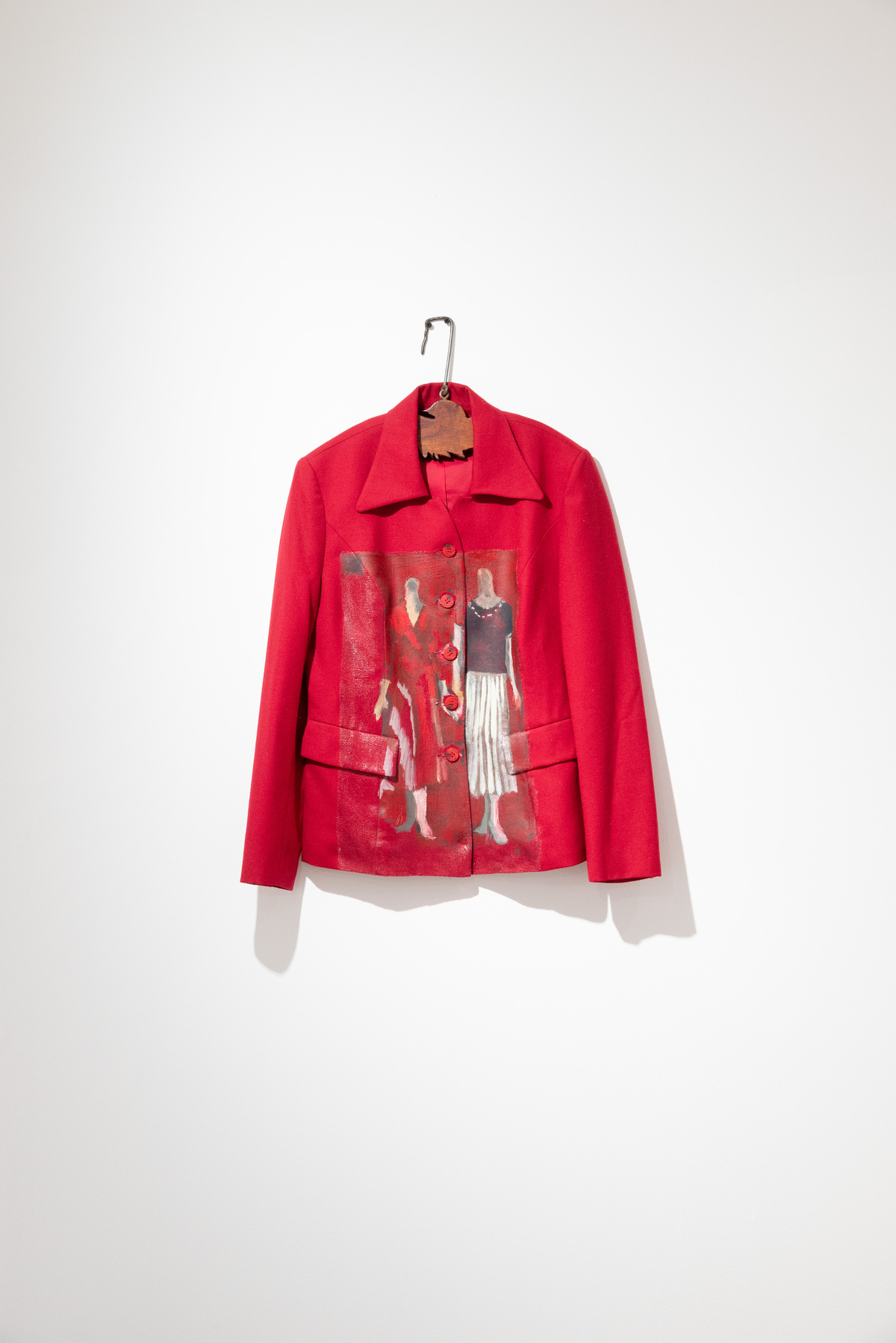
Gao Xiaoyi, Clearance Sale, 2024. Oil paint on a woman’s coat, 80 × 142 cm. Courtesy of ASE Foundation.
In the second space, personal experience is no longer the sole source of narrative. Zhao Yu uses a fictional archaeological investigation to question historical evidence; Zhang Beichen revisits the history of the Great Northern Telegraph Company; and Zeleo Zhao divides a historical map of the world into the blocks of a sliding puzzle. How distant places are depicted, how the past is established, and how information travels all depend on conditions beyond an individual’s control. Meanwhile, Li Qinyang’s Dusty Breath No. 4 returns to still-life details and gestures drawn from family photographs. The artist excludes explicit identifying information, UV-printing these images onto copper plates in a drawer-like construction. Traces of private life remain, but no individual’s story unfolds.
Before Zeleo’s Leaving is Staying, I was first drawn to the pears suspended from a curved, branch-like structure. In Chinese, 梨 (lí, “pear”) and 离 (lí, “to leave”) share a pronunciation, while 柳 (liǔ, “willow”) echoes 留 (liú, “to stay”). I had been looking for traces of migratory experience; here, familiar Chinese sounds led me to read the forms in terms of leaving and staying. The map, drawers, and pears do not address distance on the same scale. Their presence makes the second space difficult to describe as a straightforward progression from personal experience toward a broader narrative.
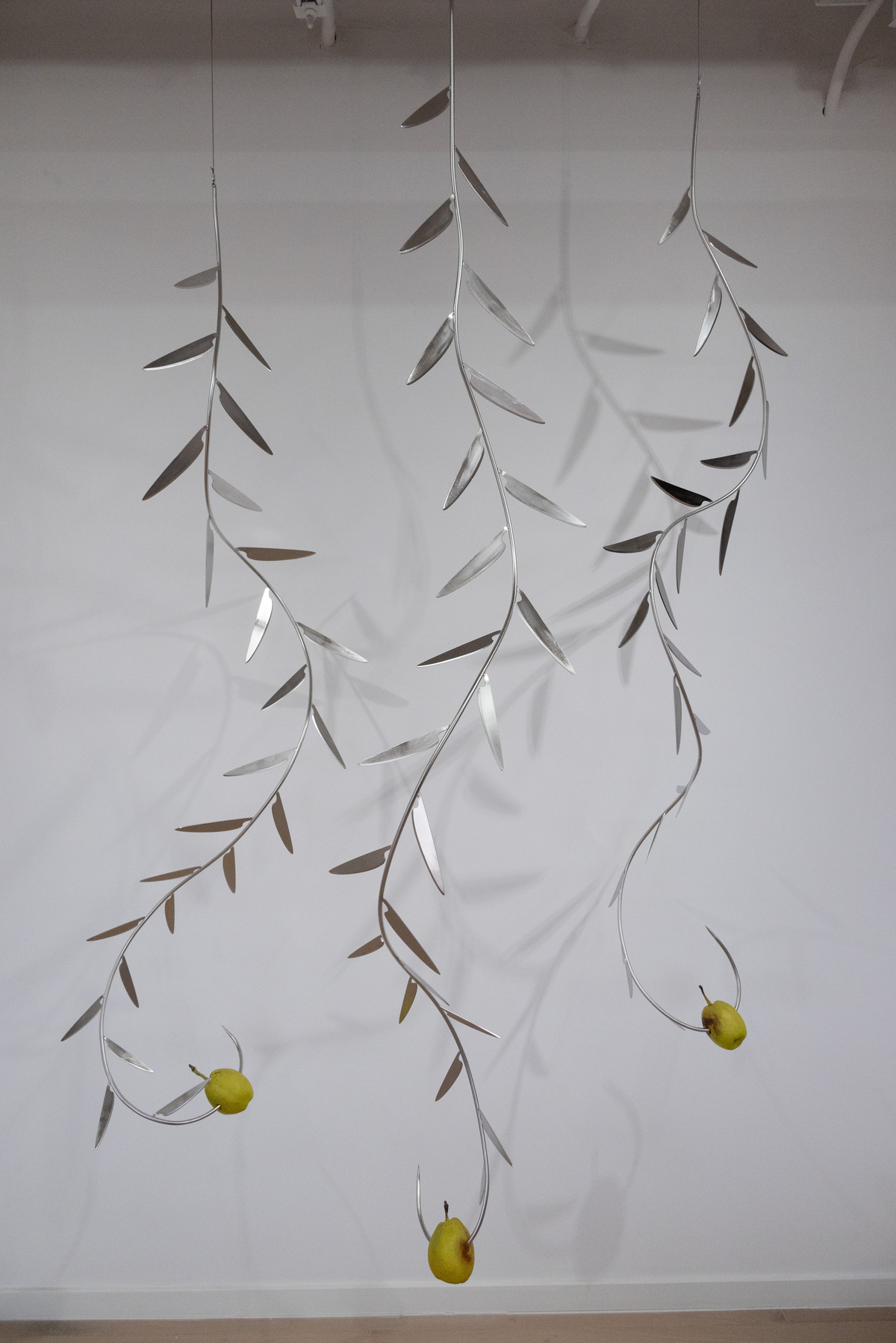
Zeleo Zhao, Leaving is Staying, 2025. Stainless steel and Korla fragrant pears, dimensions variable. Installation view at ASE Foundation, Shanghai, 2026. Courtesy of ASE Foundation.
Li Qinyang’s iron window grille and Zeleo’s map occupy opposite sides of a freestanding wall, establishing another connection. The window suggests a view outward, but the wall supporting it blocks the map imagined as the world beyond. Seeing that world requires walking around the wall. Chen pointed out this relationship to me, and the works’ physical placement gave it substance. They do not recount the same experience, yet their arrangement allows them to address the limits of seeing together.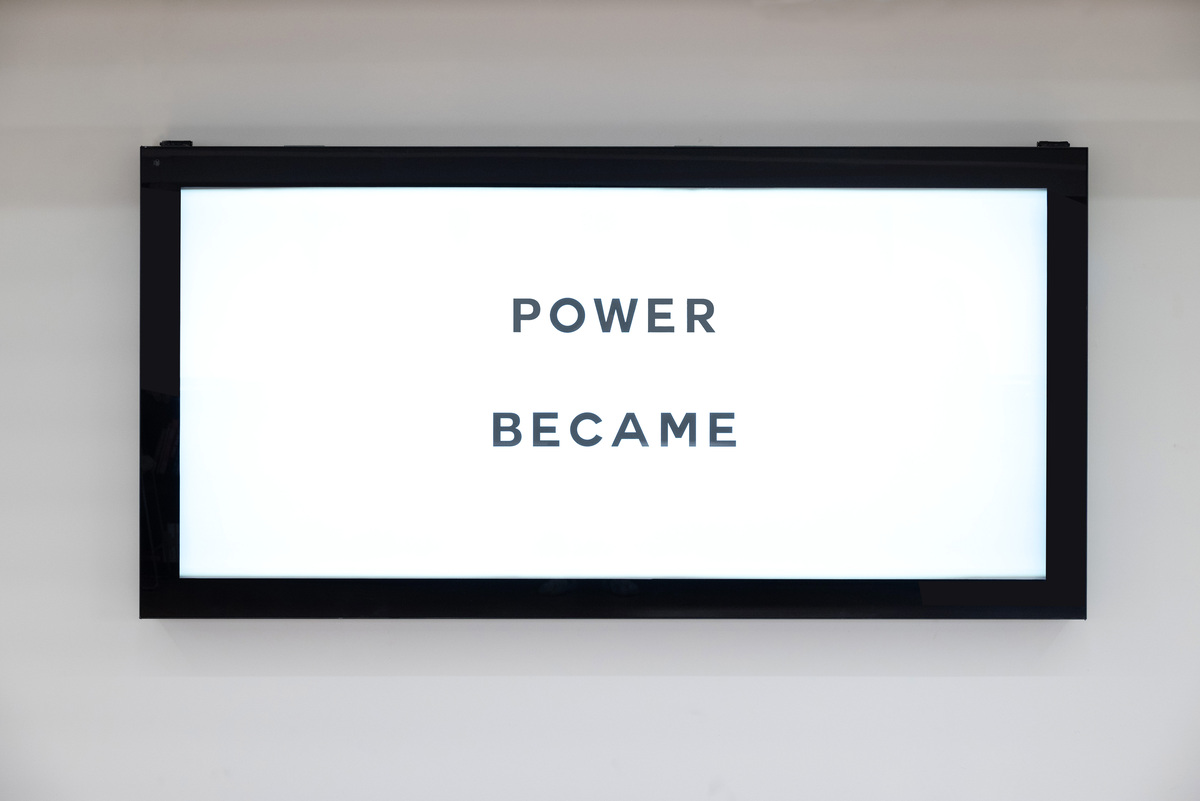
Li Hainan, Coming Soon, 2026. Rolling lightbox advertising sign, 240 × 120 × 15 cm. Installation view at ASE Foundation, Shanghai, 2026. Courtesy of ASE Foundation.
At the exhibition’s end, Chai Mi and Lei Lei’s 1993–1994 moved me in a more immediate way. The work draws on footage Chai’s father shot while working in the United Arab Emirates in the 1990s. He recorded everyday life abroad, added music, and edited the footage himself. Years later, the two artists reworked these images, incorporating his recollections and Chai’s poetry. What he filmed was the life he was then living; his daughter’s days at home were never part of those images. His enthusiasm for recording everyday life remains evident, while the reworked footage and Chai’s poetry also tell the story of his time abroad from her perspective.
Gao imagines lives through strangers’ belongings, while the past Chai encounters had already changed her own. By the time she watched the footage years later, she had lived through her father’s absence. A departure never belongs only to the person who leaves.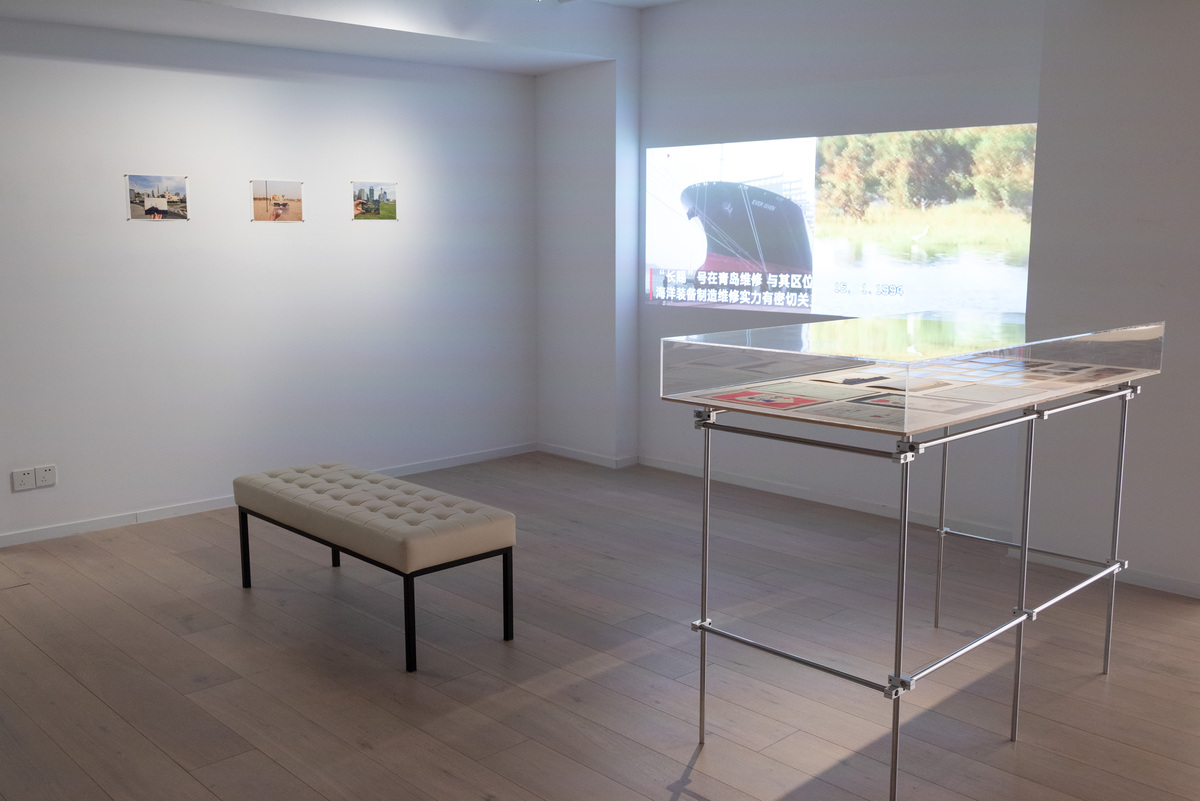
Chai Mi and Lei Lei, 1993–1994, 2021. Dual-channel video, 50 min. Installation view at ASE Foundation, Shanghai, 2026. Courtesy of ASE Foundation.
My reconsideration of the lightbox began with Chen’s account of its development in relation to Ligne13, a work also listed in the exhibition’s checklist. In her essay, Chen describes how Li Hainan initially drew on his repeated journeys on Paris Métro Line 13, bringing routes, stations, and identity documents together to make migration readily legible. He came to question this “readily achieved completeness” and left those explicit references out of Coming Soon. Chen takes this creative decision as the basis for a question: “When we name a group of practices ‘diaspora,’ are we allowing experience to find expression, or requiring it to conform to an established concept?”
The explicit references Li Hainan left out of Coming Soon were the kind I had initially looked for when trying to understand the lightbox’s place in the exhibition. Reading about its development, I began to understand positioning as a continuing concern, shifting from geographical location within a transit network to how objects are positioned through display and assigned meaning and value. An advertising lightbox makes certain things visible and invites anticipation. Understanding this shift led me to notice how Moon River itself selects, juxtaposes, and interprets. Some connections between the works and diaspora originate in the artists’ lives; others are strengthened or acquire new meanings through their inclusion in the exhibition.
Mieke Bal understands “framing” as an initial act of interpretation. Context does not explain meaning by itself: deciding which information to introduce and what counts as relevant involves choices on the interpreter’s part. Interpreters need to explain the basis of their choices and examine how those choices shape understanding. In Moon River, placing the window grille on the opposite side of the wall from the map and opening the curatorial essay with the lightbox’s development both guide interpretation. The former changes the viewer’s position; the latter turns a creative decision into a way of examining the exhibition.
Understanding a mother’s diary or a father’s footage also depends on knowing where the material comes from. In 1993–1994, the clearer the father–daughter relationship becomes, the harder it is to overlook their different experiences of the same departure. This specificity makes “migrant” an insufficient description of the people whose lives the work brings into view. In Coming Soon, Li Hainan leaves out explicit references to migration; Chai and Lei develop its consequences through family material. Both approaches change the scope of what identity can explain.
I find these curatorial choices convincing because they provide further grounds for understanding the works. The juxtaposition of the window grille and map makes the limits of seeing perceptible through movement; comparing the secondhand clothing with the family footage brings out the difference between approaching strangers’ lives and reconsidering an experience that has already shaped one’s own. Seen this way, international biographies cannot adequately account for the relationships within the exhibition. Moon River is persuasive in allowing comparisons among works to alter the understanding of diaspora itself. The theme no longer serves only to identify who has left which place. It also concerns how people come to understand lives they have not known firsthand, and how a departure continues to affect those who remain. WM
Moon River: On a Slow Boat to…, curated by Estrela Wenyi Chen, was on view at ASE Foundation, Shanghai, from August 20 to October 23, 2026.
Luman Jiang
Luman Jiang is an independent curator and writer based in New York. Her work engages contemporary art, curatorial practice, and cultural theory across Chinese and English.
view all articles from this author