Whitehot Magazine
September 2026
"The Best Art In The World"
"The Best Art In The World"
September 2026
250 Years of the Albertina Museum: Collecting, Preservation, and the Future of Art Richard Prince and Other Stories
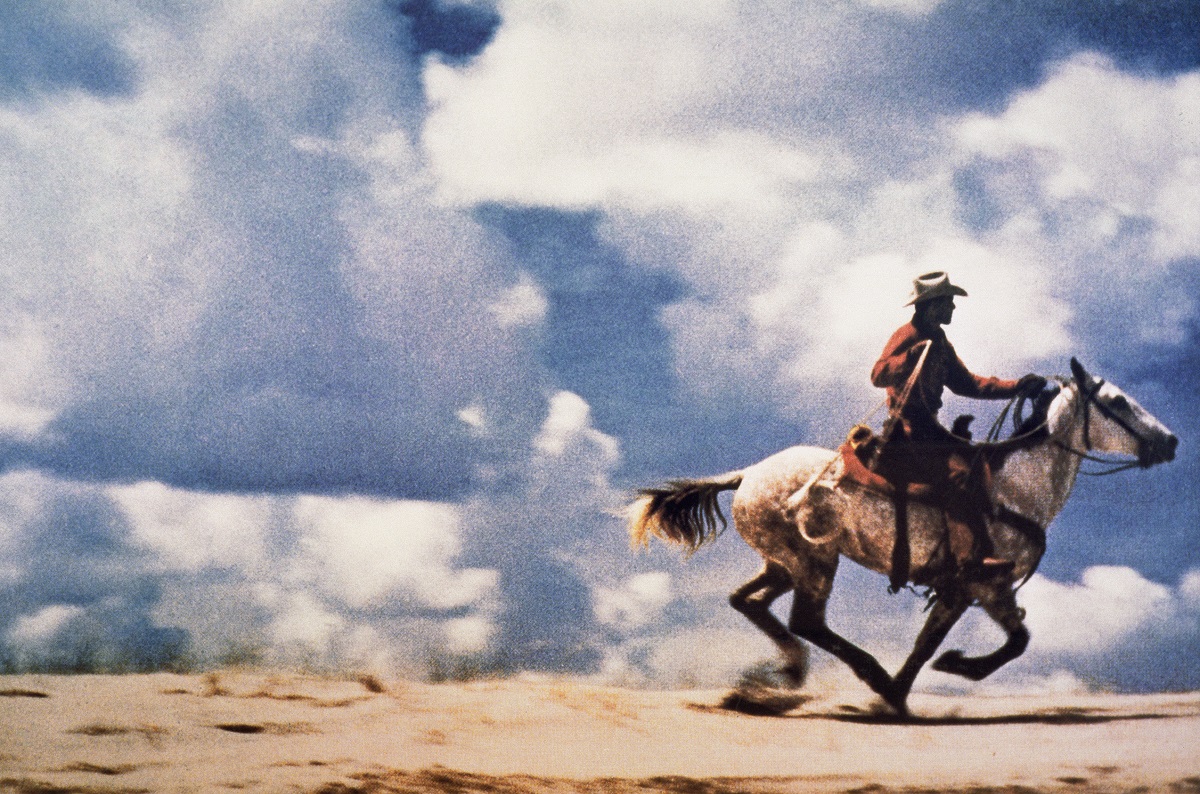 Richard Prince, Untitled, Cowboy, 1989, courtesy of Richard Prince Studio,
copyright Richard Prince
By LARA PAN July 22nd, 2026
The Albertina Museum in Vienna is home to one of the world’s most significant collections of graphic art, housed within a former Habsburg residential palace that was once the residence of one of Maria Theresa’s daughters. Founded in 1776, the collection has evolved into an extraordinary archive comprising more than one million prints, as well as thousands of drawings, paintings, and works on paper spanning from the 15th century to the present day.
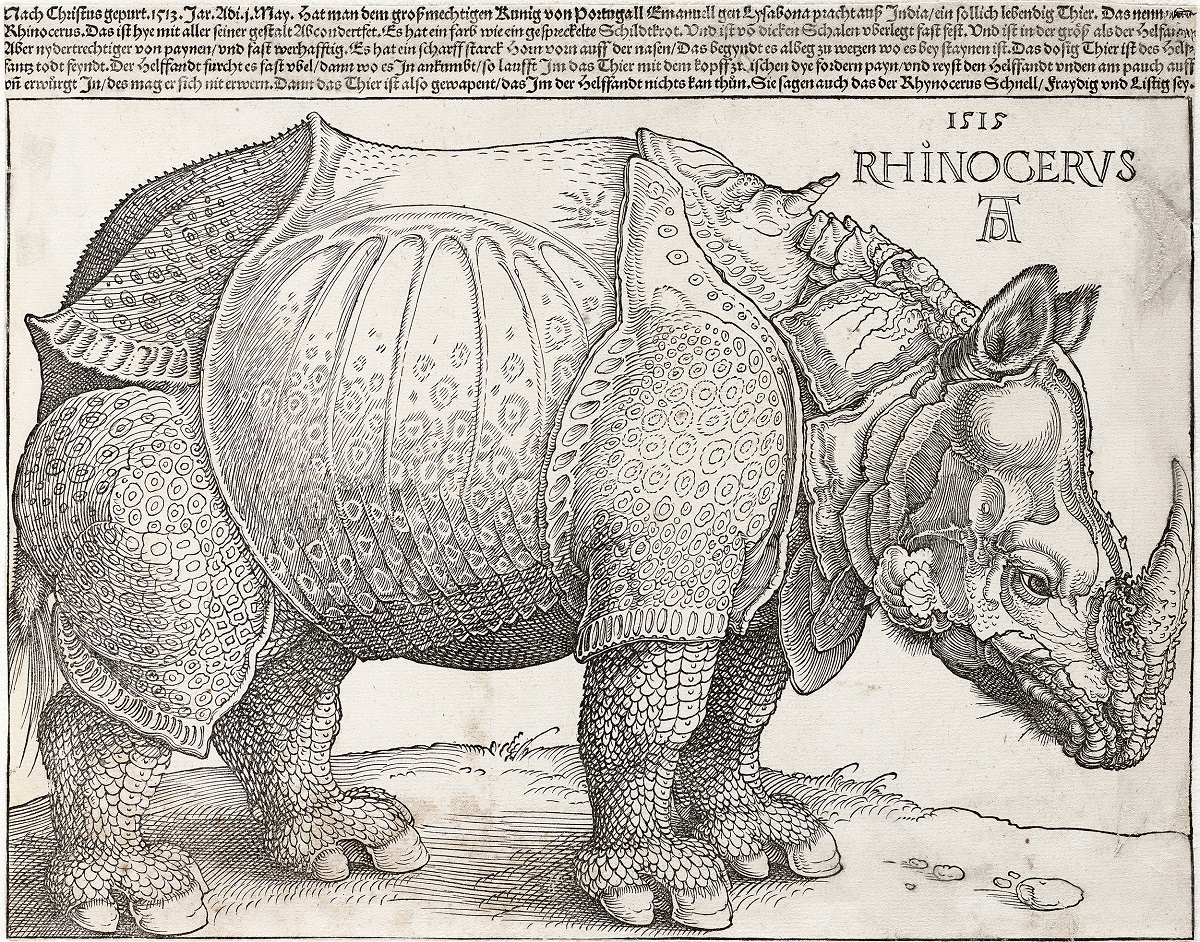 Albrecht Dürer, Rhinocerus (Das Rhinozeros), 1515. Albertina, Vienna.
Reflecting the institution’s ongoing commitment to preserving, expanding, and reinterpreting artistic heritage, the exhibition Collecting for the Future explores the evolving role of collecting in shaping cultural memory. Bringing together works that trace the history of the institution from its foundation to the present day, the exhibition offers a compelling reflection on how collections are formed, preserved, and continuously reactivated through new historical and contemporary perspectives.
Among the highlights is a brilliantly curated investigation of Richard Prince’s work, examining his radical approach to appropriation, image circulation, and authorship, concepts that continue to challenge conventional notions of originality, ownership, and artistic value. Another exhibition unveils hidden treasures within the collection, including the work of Helga Philipp, a pioneering female artist associated with Op Art, whose rigorous explorations of perception, movement, and spatial relationships establish her as an important yet still under-represented figure in twentieth-century art.
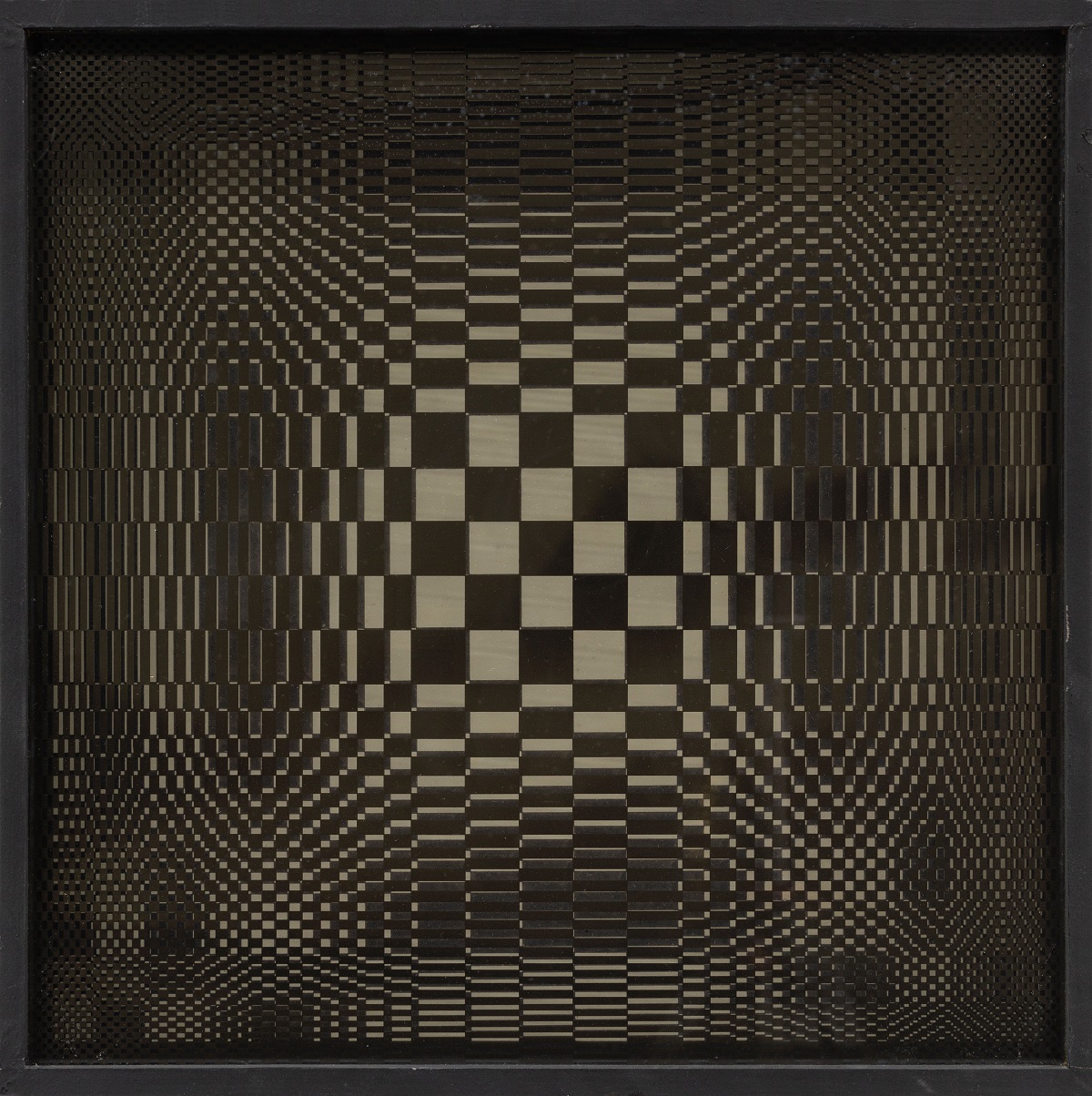 Helga Philipp, Ohne Titel, 1962/63, privatsammler nachlass, Helga Philipp, foto Attia Mognetti courtesy 10am art gallery, Milan
The renewed vision of the museum’s leadership, together with the expertise and dedication of its curatorial team, has positioned the Albertina among the world’s leading museums. Its distinction lies not only in the exceptional depth of its collections but also in the ambition, precision, and rigor of its exhibition programming and scholarly publications.
My admiration goes to the Richard Prince exhibition, curated by Walter Moser and his team, which remains on view until August 16. The exhibition deserves particular attention for its thoughtful examination of Prince’s complex artistic practice. Beyond the exceptional presentation of the works, the accompanying catalogue stands out for its intellectual rigor, bringing together insightful essays that offer new perspectives and critical contexts for understanding Prince’s position within contemporary art. It represents an important contribution to the ongoing discourse surrounding appropriation, authorship, and the constantly evolving role of images in contemporary culture.
Rather than beginning with the controversy surrounding Richard Prince, perhaps the more fundamental question is how images evolve across the cultural landscape over time, and how they, in turn, reshape society. Images are never neutral. They circulate through advertising, cinema, television, magazines, digital networks, and social media, constantly acquiring new meanings while simultaneously constructing new forms of desire, identity, and power. Over the past decades, the representation of women has undergone profound transformations, from the highly coded language of consumer advertising and mass media, through postmodern strategies of appropriation, to today’s algorithm-driven ecosystem dominated by Instagram, influencers, and the endless circulation of self-images.
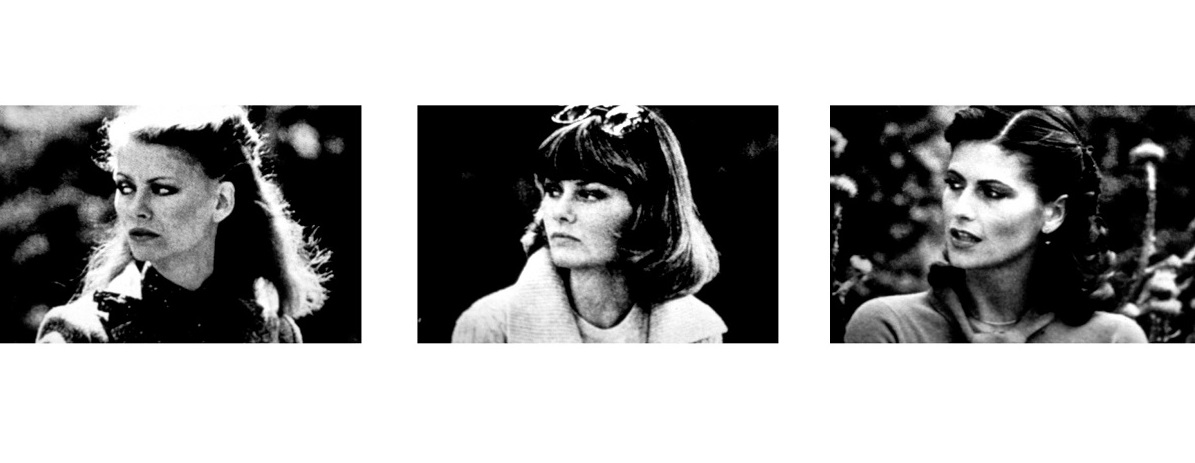 Richard Prince, Untitled, Three Women Looking in the Same Direction, 1980, courtesy of Richard Prince studio copyright Richard Prince
Richard Prince’s work traverses this entire historical trajectory. His practice cannot be understood merely as appropriation; rather, it is an archaeology of image production itself. Beginning with the rephotographed Marlboro advertisements in the late 1970s and extending through the Cowboys, Girlfriends, Nurse Paintings, Spiritual America, and later New Portraits, Prince repeatedly returns to images that already exist within collective consciousness. His work asks how images acquire authority, how they circulate, and why certain representations become culturally dominant. As critics such as Douglas Crimp and Hal Foster have argued, Prince belongs to the Pictures Generation, for whom originality was no longer the central artistic concern. Instead, the artwork became an investigation into the systems through which images are produced, consumed, reproduced, and believed.
Yet what interests me most is not the finished image but the process that precedes it. What motivates the act of selecting, reframing, and relocating an existing image? Is the process intended to expose hidden ideological structures? To reflect society back to itself? To provoke? To critique? Or does it deliberately refuse moral positioning altogether? Prince consistently leaves an unresolved space between these possibilities. That ambiguity may explain why, despite decades of critical writing, no consensus exists regarding his work. He has been described as a critic of consumer capitalism, a cynical opportunist, a feminist antagonist, a conceptual strategist, and an archivist of American visual mythology, often simultaneously. His work resists stable categorization precisely because it operates within contradiction rather than outside it.
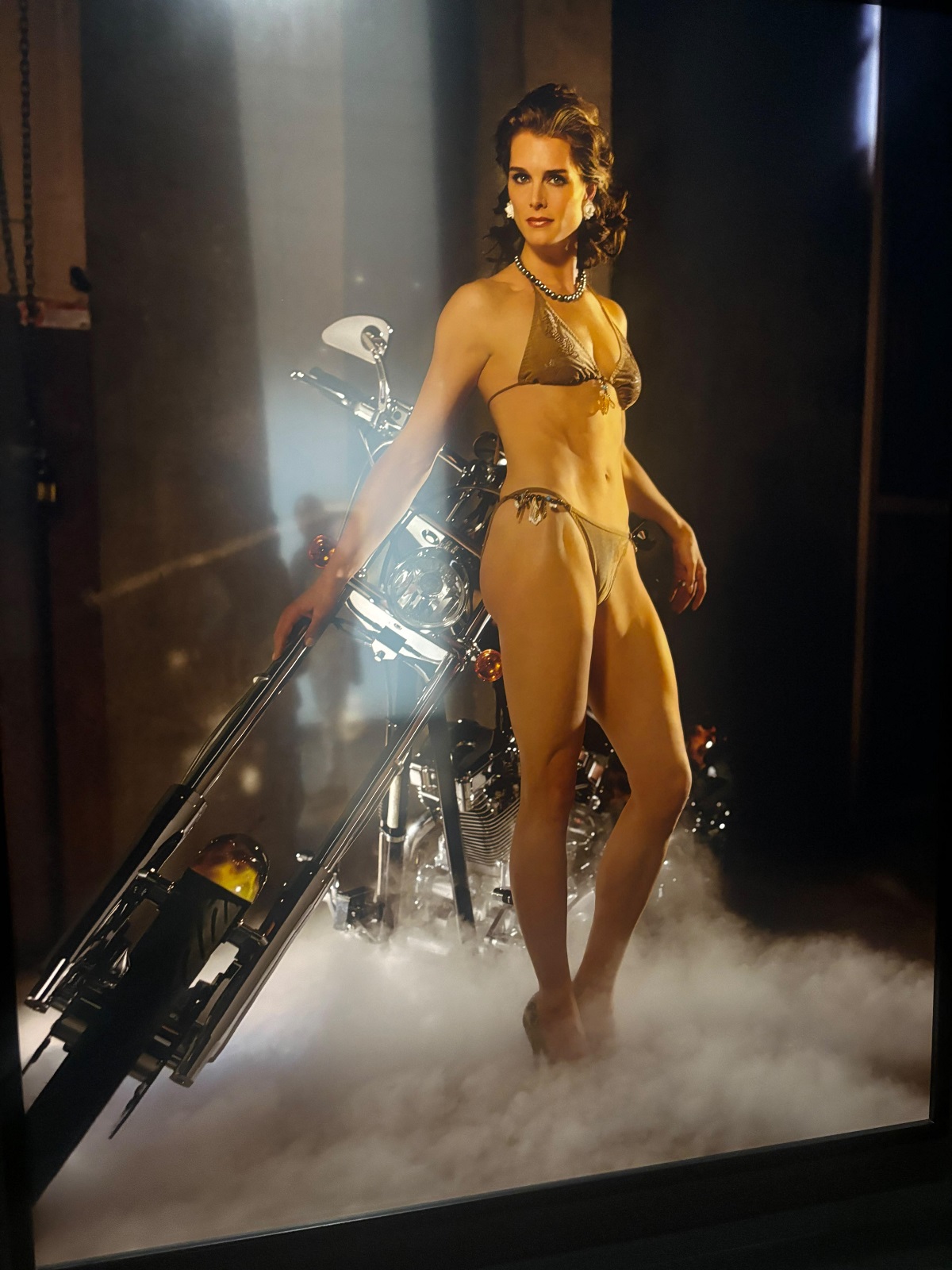 Richard Prince, Spiritual America 4, collaboration with Sante D Orazio
One of the interesting stories that caught my attention was the example of Kunst Museum Winterthur. The decision, under the directorship of Konrad Bitterli and including Lynn Kost’s less fully articulated curatorial perspective in Form Matters, Matter Forms – From Readymade to Product Fetish,(2024) to initially proceed with the exhibition of a work long contested for its depiction of a nude ten-year-old Brooke Shields , followed by its removal only after internal staff protest, reveals an asymmetry in how ethical concerns are integrated into curatorial decision-making.
We have an example of how the misuse or misjudgment of Richard Prince’s photograph Spiritual America of 10-year-old Brooke Shields at Kunst Museum Winterthur exposes a deeper contradiction within contemporary institutional culture: the coexistence of feminist curatorial language with exhibitionary structures that continue to privilege historically canonical, male-authored positions.
This episode can also be situated within a broader institutional field in which museums define their critical legitimacy through their positioning in relation to other high-profile controversies surrounding the same work, including its contested presentation at Tate. Rather than operating in isolation, these cases form part of an implicit reference system through which institutional authority, ethical responsibility, and cultural legitimacy are negotiated and stabilized.
Seen alongside Women (2018), the exhibition at Kunst Museum Winterthur curated under the same institution’s leadership, this episode reveals a recurring institutional logic in which the critique of the “male gaze” is mobilized as a curatorial framework, while the exhibitionary structure continues to rely on the same historical hierarchies it seeks to interrogate. Feminist terminology becomes part of institutional language, yet does not necessarily, in the case of Kunst Museum Winterthur, translate into a redistribution of institutional authority or a reconfiguration of canonical visibility.
This contradiction becomes increasingly evident in other recent exhibitions as well, where feminist discourse is incorporated without necessarily producing a fundamental transformation of the structures through which artistic value and visibility are determined.
Within this framework, Nancy Spector’s question, “Is Richard Prince a feminist?”, can be understood less as an endorsement of the artist than as an index of a broader institutional paradox: the capacity of the museum to articulate feminist critique while continuing to stabilize and circulate works embedded in contested regimes of representation.
Richard Prince’s work, in this sense, should not be understood as a critique of feminism or as a feminist position; rather, it operates within the same regimes of representation, authorship, and circulation that feminist critique seeks to analyze. It therefore produces a structural ambiguity in which categories such as objectification, authorship, appropriation, and critique become difficult to separate. The issue is not reducible to individual intent, but to a larger tension between critique and institutional reproduction, in which feminist discourse functions simultaneously as an analytical tool and as a mechanism of cultural legitimation.
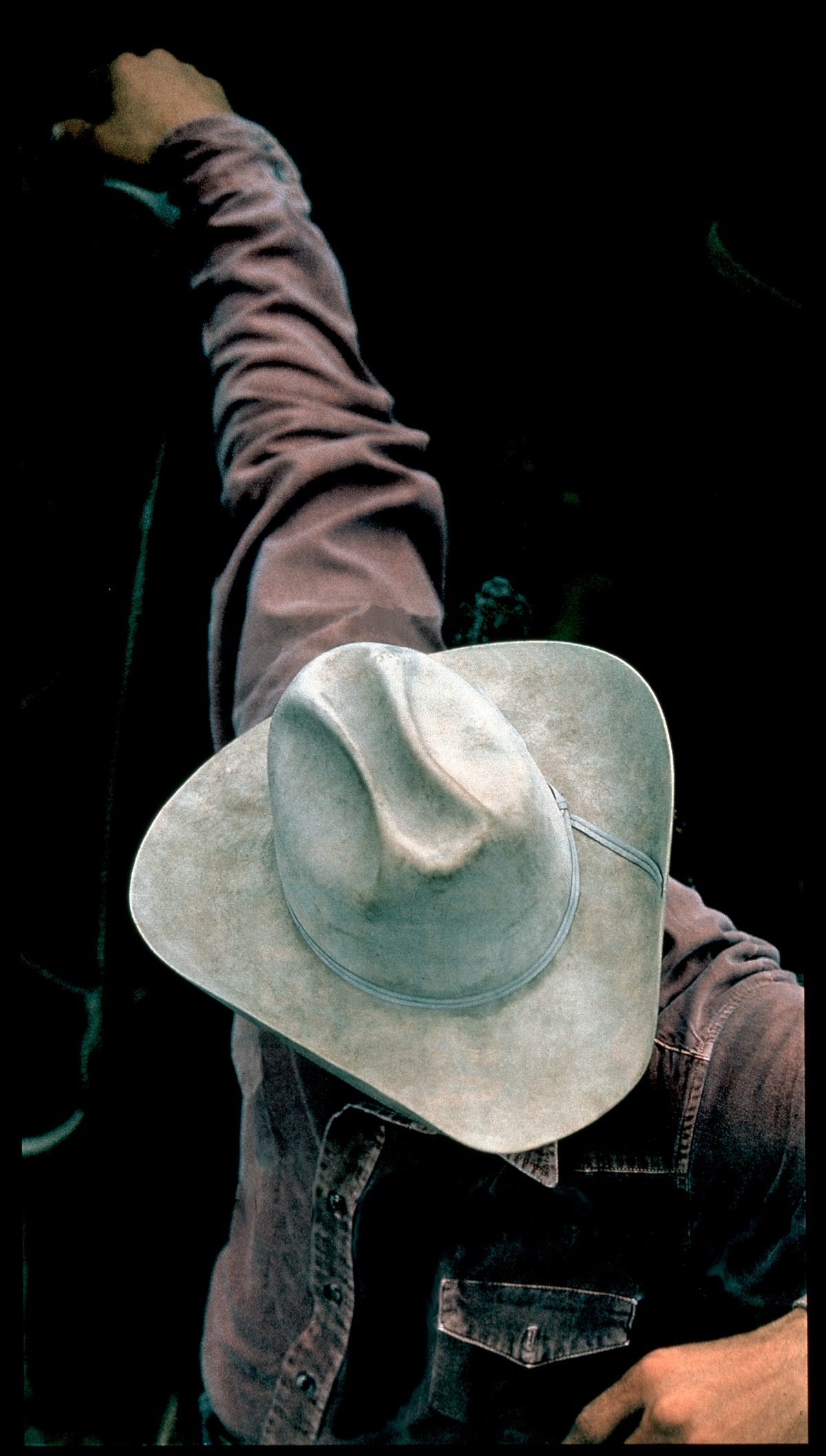 Richard Prince, Untitled (Cowboy), 1999. Courtesy of Richard Prince Studio. © Richard Prince.
This ambiguity becomes particularly significant when considering the historical representation of women. As Griselda Pollock has argued, images do not simply reflect reality but actively construct the cultural conditions through which gender, power, and visibility are produced. Representation is never neutral; it participates in the organization of social and cultural meanings. Carolee Schneemann approached these questions from a different but equally radical position, challenging the historical objectification of the female body by reclaiming it as an active site of artistic agency and knowledge production.
Richard Prince occupies neither of these positions. His work instead examines the circulation of images already embedded within mass culture. From advertising and consumer imagery to contemporary digital platforms, images of women have continuously evolved while remaining connected to structures of desire, commodification, and visibility. Prince’s practice follows this transformation across decades, from the mythology of the Marlboro cowboy to the contemporary economy of Instagram imagery.
What remains most compelling is not only the final image but the process that precedes it. Is appropriation intended to expose hidden structures, reflect society back to itself, provoke, or take a position? Or does it deliberately leave space between all these possibilities? Prince’s work refuses a fixed interpretation. It creates an unresolved space between critique and complicity, making it difficult to place him within a single category. This ambiguity is precisely what continues to make his practice relevant to contemporary debates surrounding authorship, representation, ethics, and institutional responsibility.
As a conclusion, the example of the Albertina Museum demonstrates that institutional rigor cannot be achieved through the adoption of feminist terminology alone, but through a sustained commitment to scholarship, critical responsibility, and the continuous re-examination of historical narratives. The Albertina has achieved and continues to cultivate a level of curatorial rigor through which complexity, research, and contextualization become central to the production of knowledge, an approach that some museums still operating through patriarchal models of authority often struggle to fully articulate.
Albertina’s achievement lies in its ability to expand art history through rigorous examination rather than through symbolic gestures of inclusion. It demonstrates that true institutional responsibility is not defined by the vocabulary a museum adopts, but by its willingness to question the structures that determine visibility, value, and historical recognition.

Lara Pan
Lara Pan is an independent curator,writer and researcher based in New York. Her research focuses on the intersection between art, science, technology and paranormal phenomena.
view all articles from this author