Whitehot Magazine
October 2026
"The Best Art In The World"
"The Best Art In The World"
October 2026
The Only True Protest Is Beauty Inaugural Exhibition Asks Questions About the Meaning of Beauty
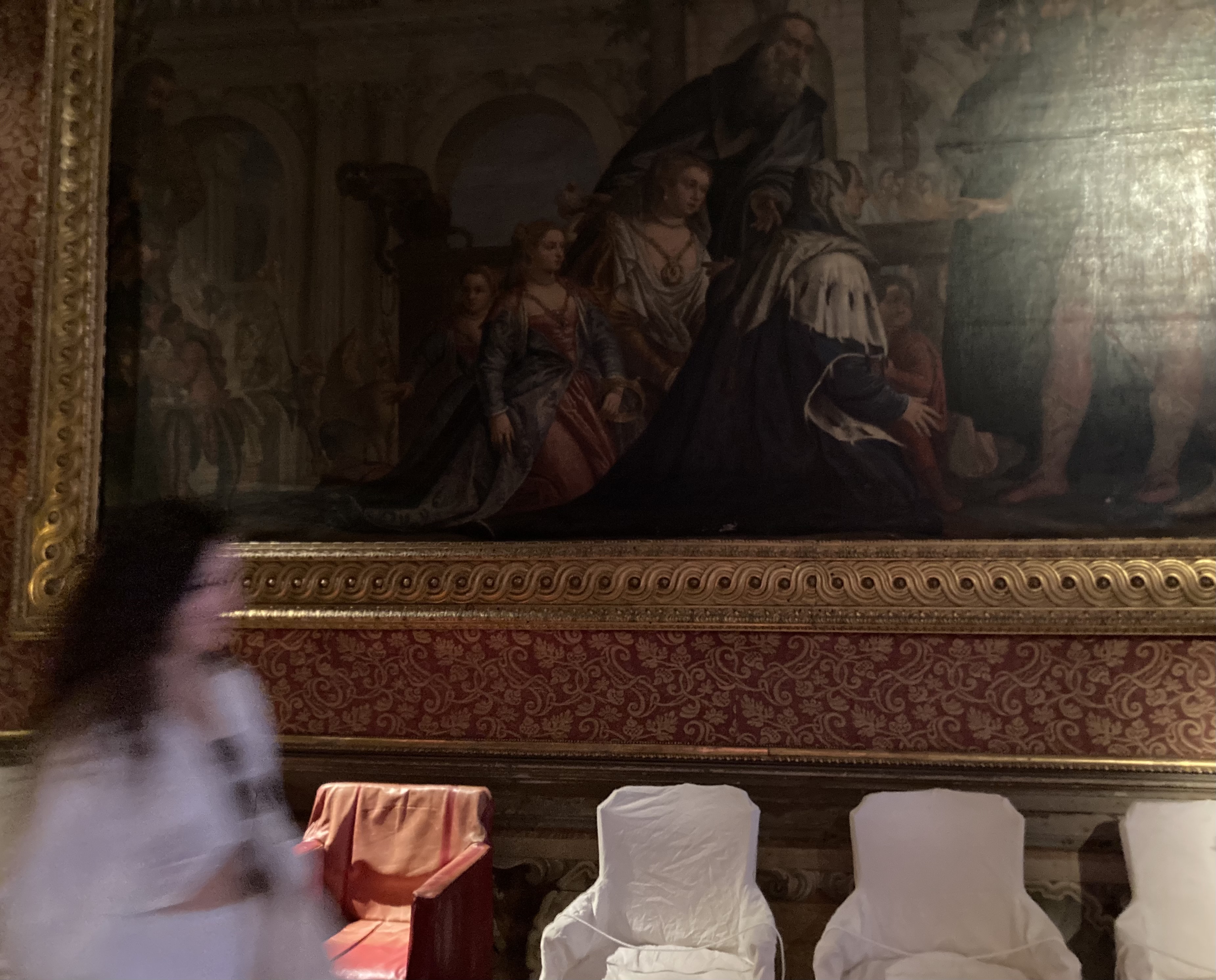 Photo: Ewa Monika Zebrowski
By EWA MONIKA ZEBROWSKI October 3, 2026
Seeing the exhibition THE ONLY TRUE PROTEST IS BEAUTY, curated by Dries Van Noten at the Palazzo Pisani Moretta in Venice, is a provocative and challenging experience. The presentation questions the idea of beauty while exploring craftsmanship as a language of expression and emotion.
The title draws from a line by American songwriter and political activist Phil Ochs whose songs became protest anthems of the 1960s: “In such ugly times the only true protest is beauty.”
In July 2025, Dries Van Noten and Patrick Vangheluwe acquired Palazzo Pisani Moretta and founded the Fondazione Dries Van Noten. Their desire was to give this historic fifteenth-century palazzo a new life. They wanted to create an enduring international community of established and emerging artists, encouraging both creativity and cultural dialogue. A celebration of beauty.
I was overcome by emotion visiting this Palazzo after an absence of 10 years. I had visited this historic residence, owned by the Pisani and the Sammartini families, on two previous occasions while working on a personal photographic project.
There was a mood of anticipation and excitement in the air as I walked down the very narrow alleyway leading to the almost invisible entrance of the Palazzo.
 Artist: Katsuo Aoki. Photo: Matteo de Mayda
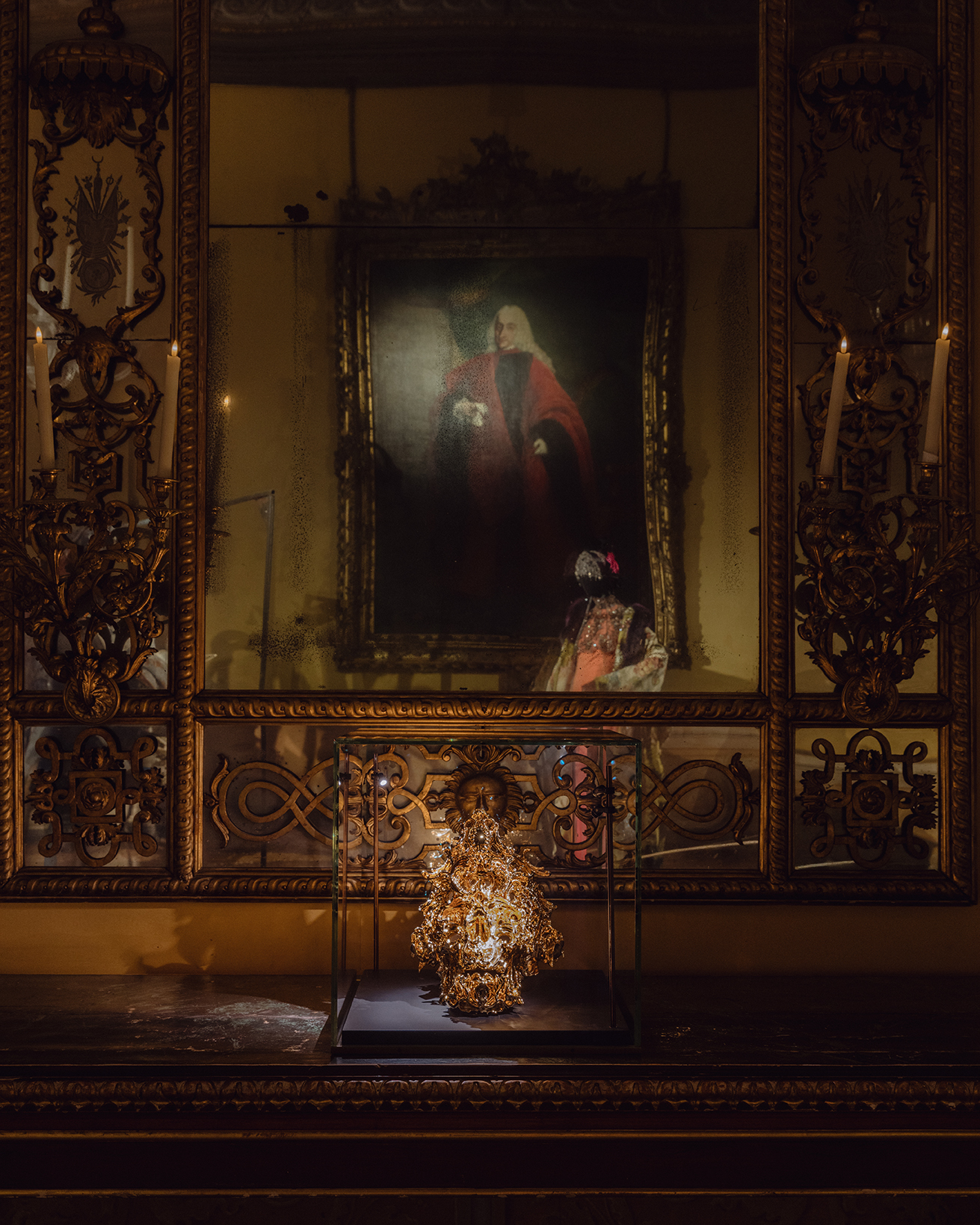
The inaugural exhibition of the Fondazione did not disappoint. Seeing 50 artists exhibiting more than 200 objects on three floors was overwhelming. THE ONLY TRUE PROTEST IS BEAUTY, presented from April 25 to October 4, 2026, included fashion, jewellery, sculpture, photography, glass, textiles and ceramics by established and emerging artists all presented in dialogue with one another.
I entered and felt immediately enveloped by darkness. The atmosphere was mysterious, theatrical. Operatic. A procession of 20 rooms each evoked a different narrative.
Throughout the exhibition, a series of photographs of people sleeping was shown in various rooms. The photographs by Canadian photographer Steven Shearer were printed large-scale, almost like billboards, points of encounter. They evoked the idea of dreaming. After all, are we not all dreamers? A certain obscurity existing between the state of sleeping and death.
 Artist: Alexander Kirkeby. Photo: Matteo de Mayda
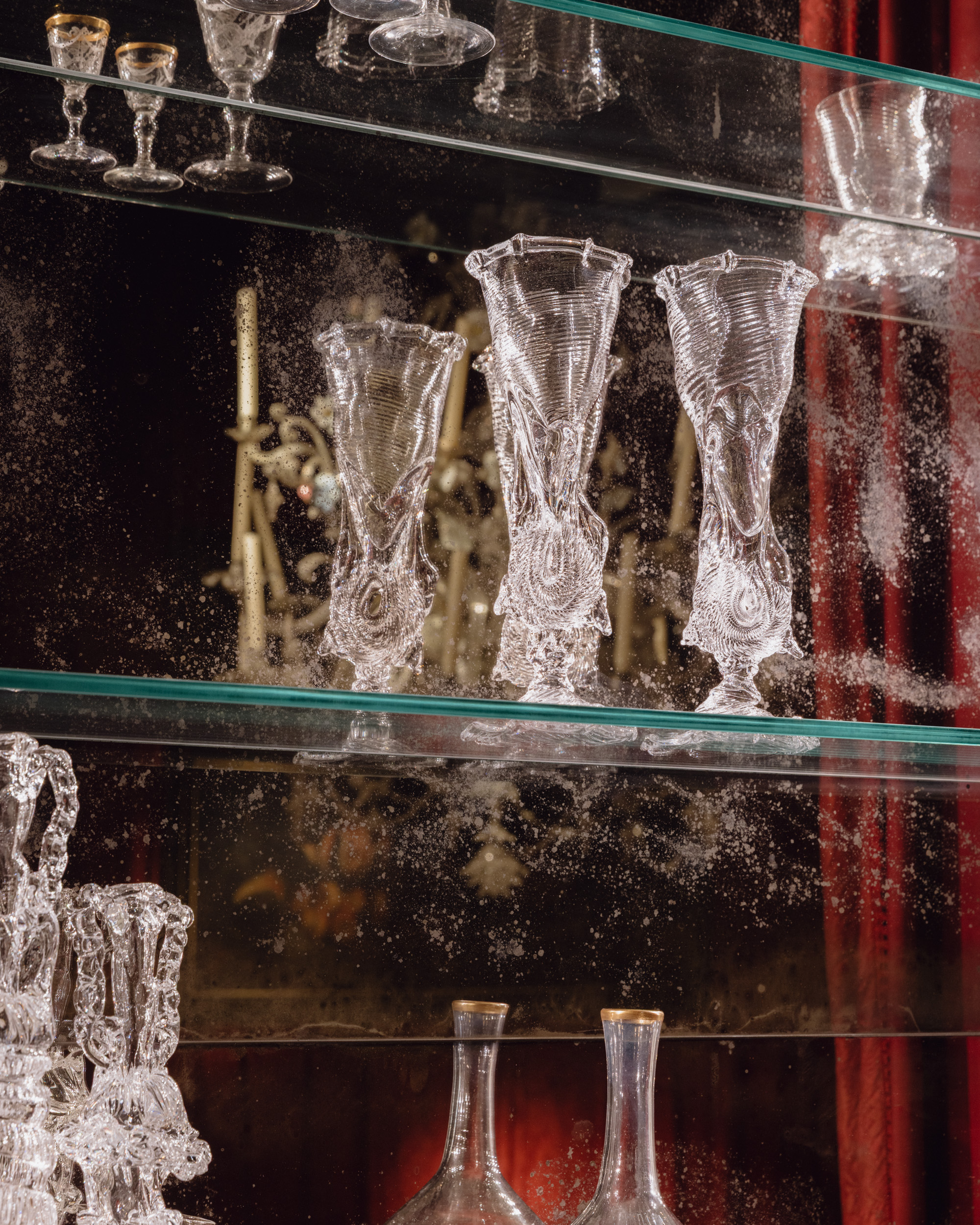
For me, glass is synonymous with Venice. The glass sculptures created by Danish artist Alexander Kirkeby were resplendent in their ambiguity and fragility. Floating. Transparent, Translucent. His creations were shown in juxtaposition with the everyday glass collection of the Pisani family. The Pisani family collection produced by the historic Manifattura Briati consisted of gold-rimmed wine glasses, water glasses, goblets for everyday use emblazoned with the family crest, and produced in the eighteenth century. Utility and imagination, side by side. Past and present. A continuum.
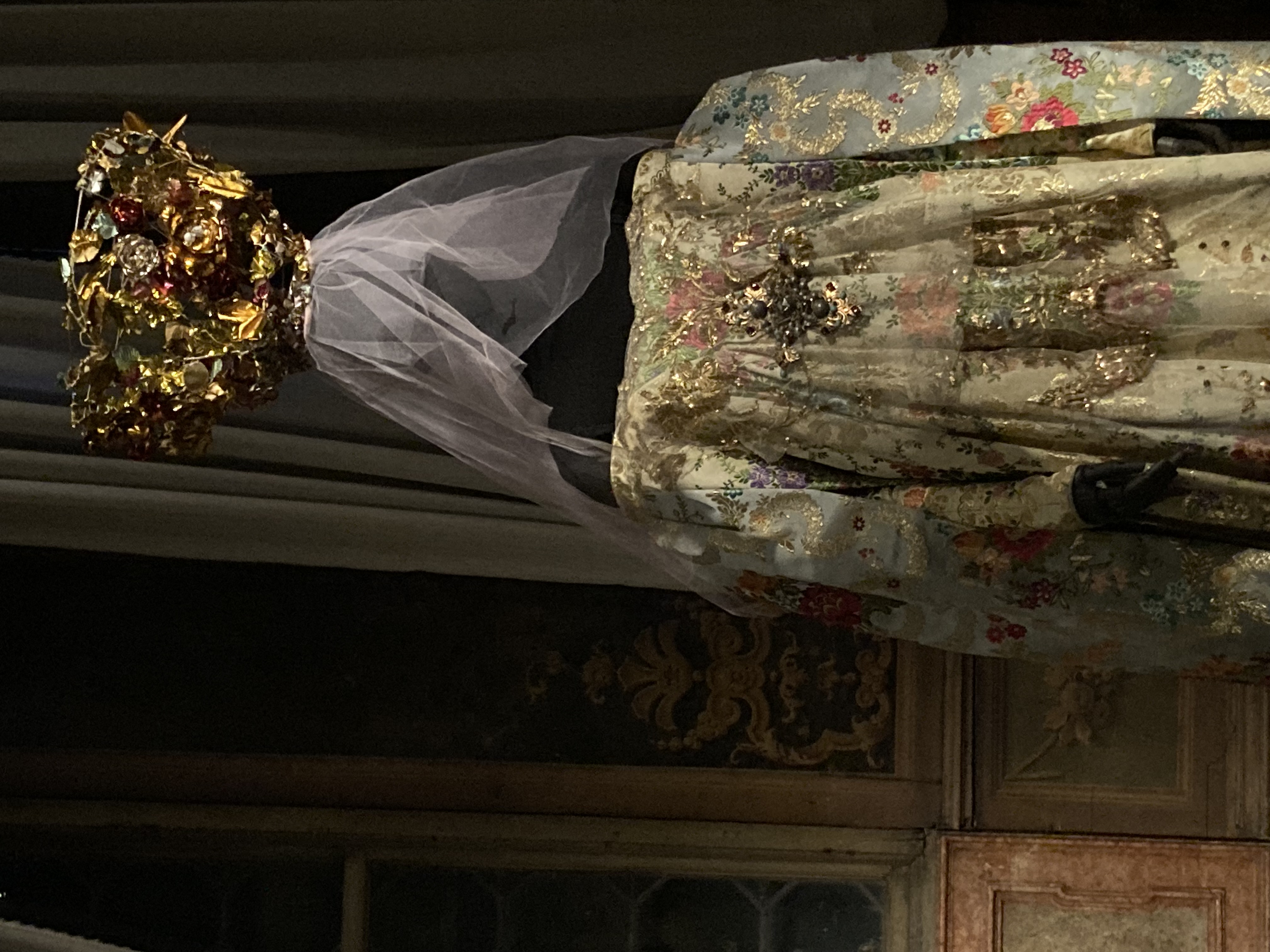 Artist: Christian Lacroix. Photo: Ewa Monika Zebrowski
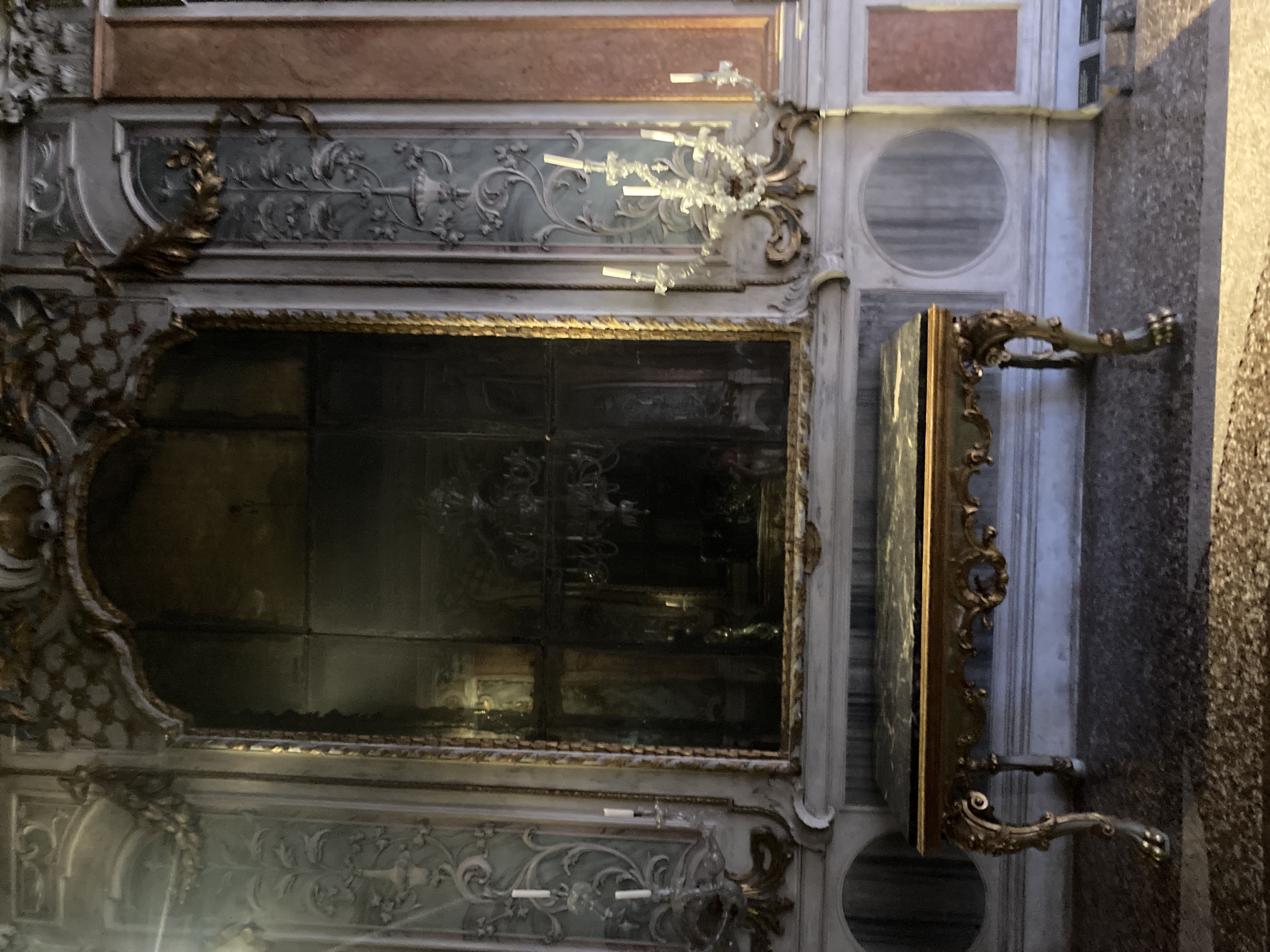 Photo: Ewa Monika Zebrowski
It was not surprising that fashion played a strong role in the exhibition appearing from the first room to the last. Dries Van Noten has been involved with the world of fashion for 38 years. He created the eponymous fashion house in 1986. Works by Christian Lacroix, Comme des Garçons and Ayham Hassam provided punctuation throughout the entire exhibition: ornamental, sculptural and political perspectives. Fifteen silhouettes by Christian Lacroix reflected the evolution of his art resonating with the Palazzo’s ornamental language. In parallel, archival works by Rei Kawakubo for Comme des Garçons showcased sculptural, concept-driven forms.
Various exquisite imaginary fruits made of ceramic by Japanese artist Kaori Kurihara were displayed like precious jewels on wall pedestals, glistening against the brocade walls. Still life paintings hung on the walls, providing an echo.
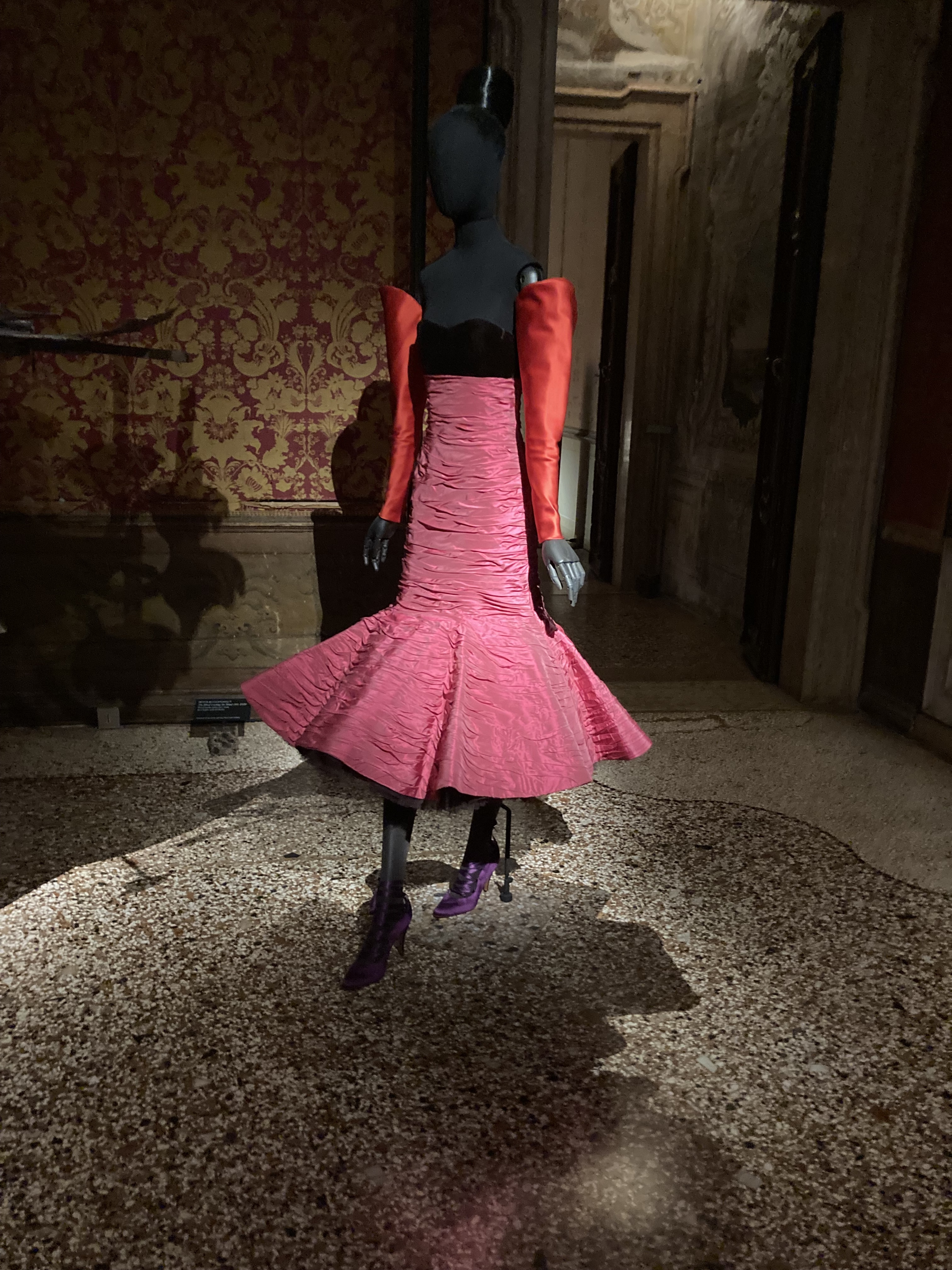 Artist: Comme des Garçons. Photo: Ewa Monika Zebrowski
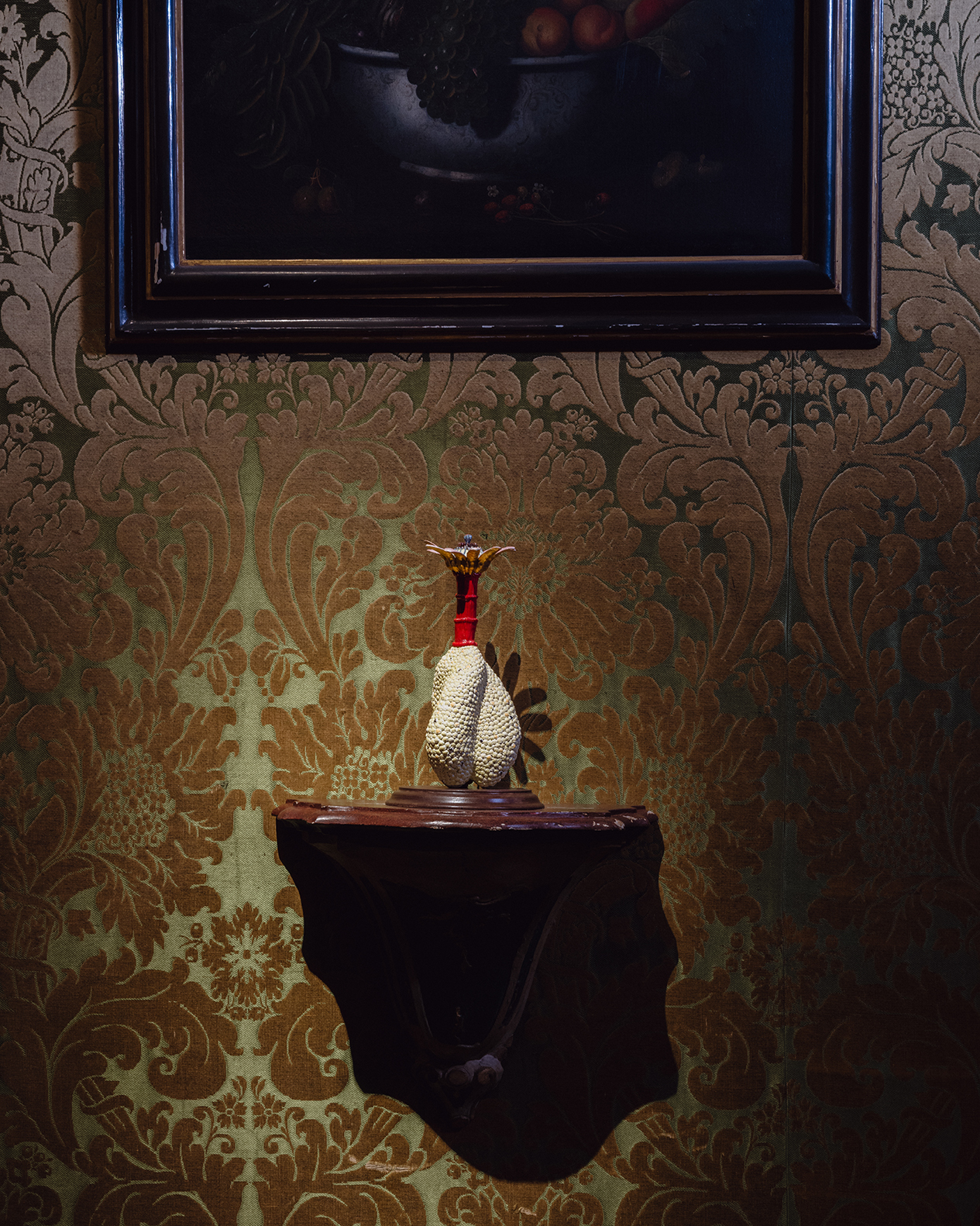 Artist: Kaori Kurihara. Photo: Matteo de Mayda
Some works were more confrontational and disturbing. The multiple sculptures of Belgian artist Peter Buggenhout provided a disturbance on all floors throughout the displays. I was stopped in my tracks seeing his installation on the ground level. Being asked to consider a monumental creation made of industrial debris, wood, metal, and found materials in the stately high space of the Androne looking onto the Grand Canal brought with it a visceral reaction. Primitive. Primordial. Raw. Unfinished. Ambiguous.
A number of questions arose as I explored the exhibit. What is beauty? How does creativity manifest itself? Who is the audience? Should beauty disturb? Is beauty really in the eye of the beholder?
The exhibition brought many unlikely elements together. The juxtapositions created moments of distraction, moments of contemplation, moments of discomfort.
Throughout the presentation I tried to understand the relationship between the works exhibited and the luminous, historic Palazzo that I had carried in my mind all these years. Sometimes the work shown was so strongly and dramatically lit that the Palazzo’s interiors seemed overshadowed. In other moments there was a clear dialogue between object and Palazzo. A kind of in-and-out. Focus, unfocus.
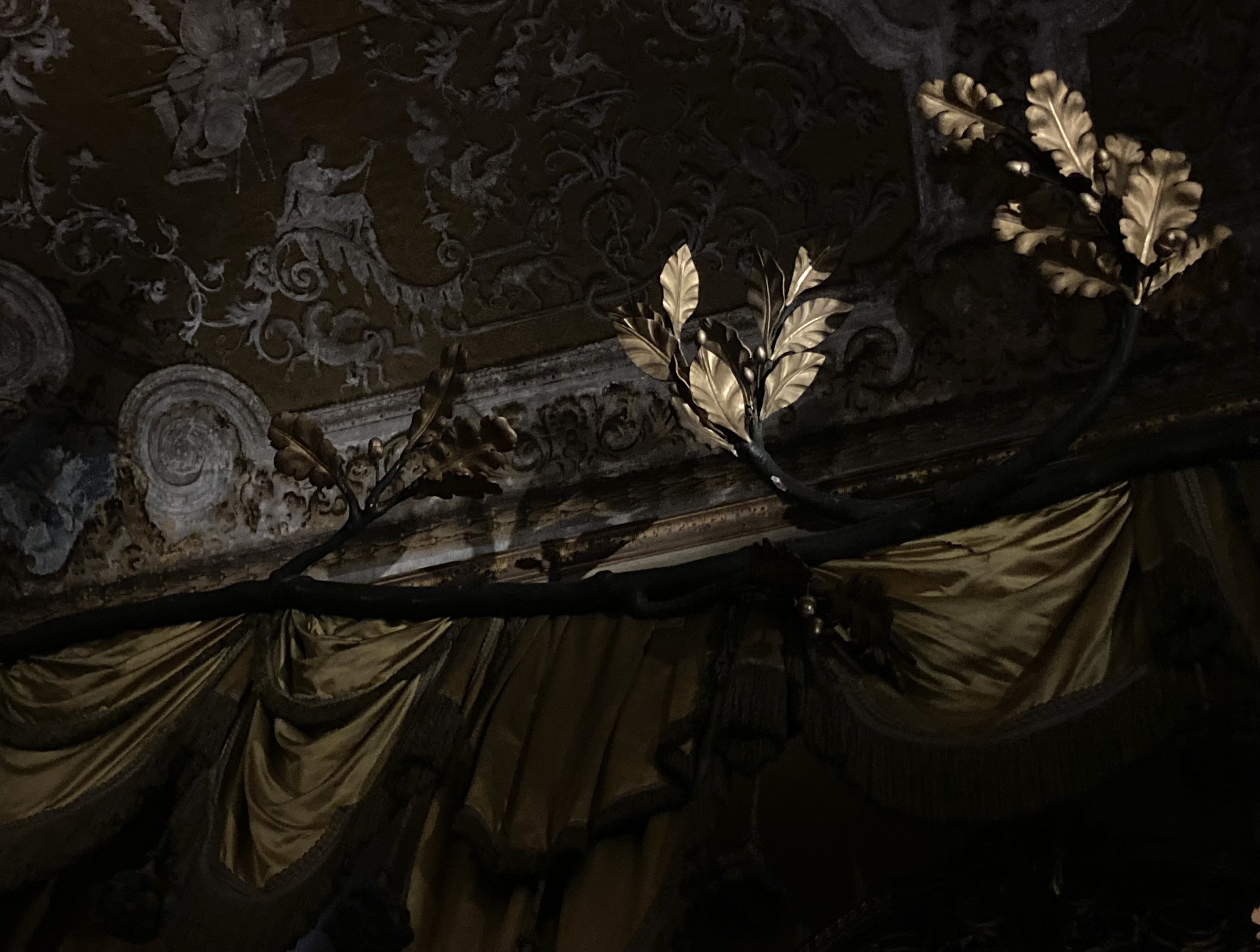 Photo: Ewa Monika Zebrowski
There was so much to see, to experience, to absorb while chasing beauty, and its meaning in the context of the exhibition. Each of the 200 works had a voice, a presence, together forming a somewhat dissonant chorus. A constellation of encounters. New dialogues. The challenge was how to read the presentation in this unique, historic setting. The Palazzo Pisani Moretta floating in time.
Dries Van Noten imagined and curated this exhibition of extraordinary proportions. He invites us to consider the meaning and importance of beauty in our everyday lives, during these times of uncertainty and change. May we find ourselves chasing beauty and its meaning.
IG Tag: @fondazionedriesvannoten
Website: fondazionedriesvannoten.org
Ewa Zebrowski
Ewa Monika Zebrowski is a writer and photographer based in Montreal.
Photo by Maxine Marcovitch
view all articles from this author