Whitehot Magazine
October 2026
"The Best Art In The World"
"The Best Art In The World"
October 2026
“The primary art form of the 21st century” Reviewing Culture Lab LIC’s Groundbreaking Exhibition Queens: The Art of Drag & NYC
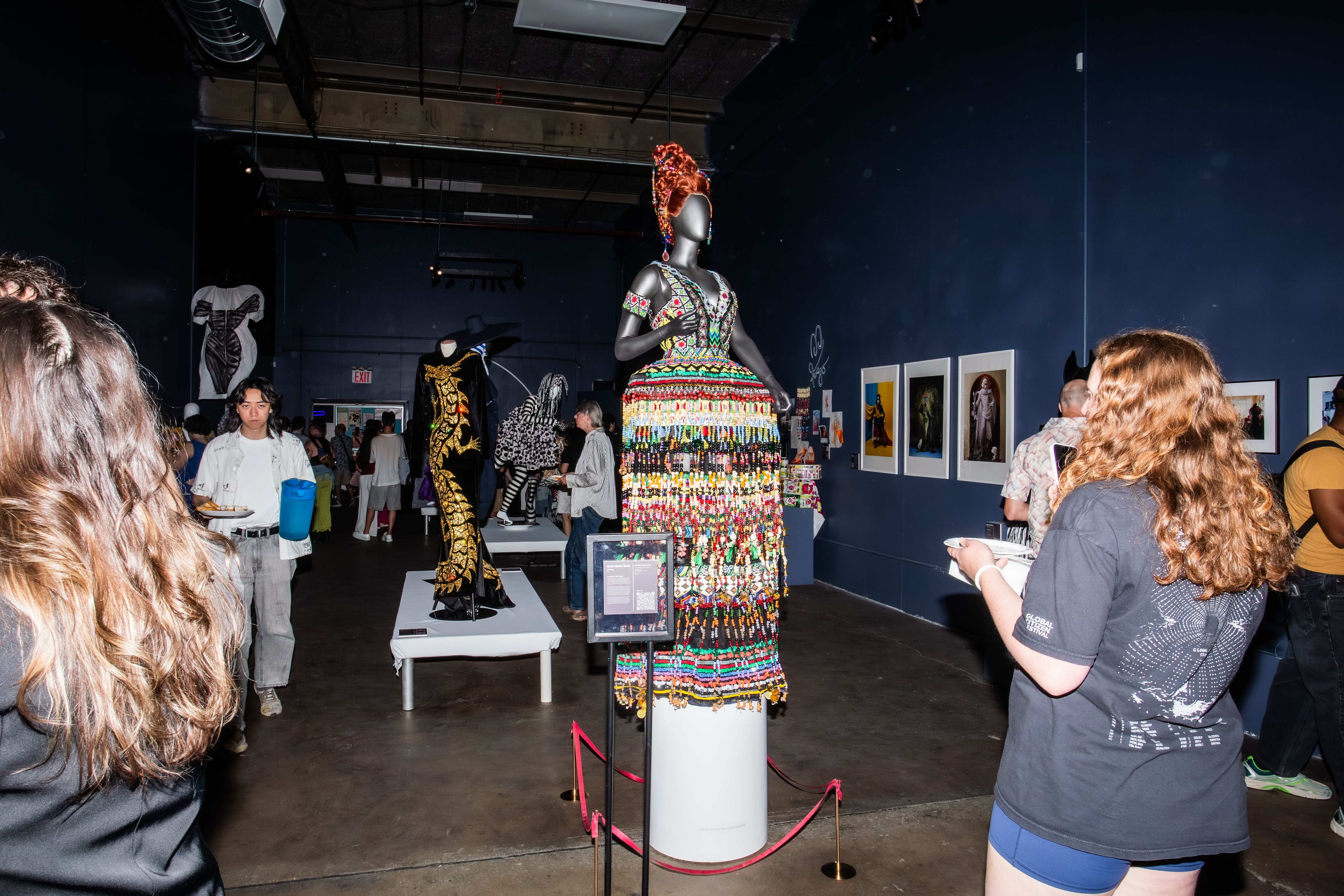 Photo of the exhibition opening, taken by Sean Perreira. Shared courtesy of Tess Howsam.
BY EMMA CIESLIK July 17th, 2026
This past June 4th, Culture Lab LIC opened Queens: The Art of Drag & NYC, a show dedicated to exploring the artistry of drag in New York City. The multimedia exhibition--featuring photography, portraiture, costume, video, installation, and performance materials, highlights the rich creativity and artistic labor behind the form. The exhibition importantly roots itself within New York City’s cultural history, highlighting how the ballroom scene and queer nightlife not only led to the creation of modern drag culture but also the modern LGBTQ+ rights movement as we know and are fighting for today.
While there is a rich history of exhibitions exploring drag artistry at museums and cultural institutions outside of the United States, including The Art of Drag at the Frans Hals Museum, Queens: The Art of Drag & NYC is one of the first exhibitions based in the United States, following in the footsteps of the Museum of Art and Design’s 2022-2023 show Queer Maximalism x Machine Dazzle and Rachel Rampleman’s solo exhibition Life is Drag premiered in 2025.
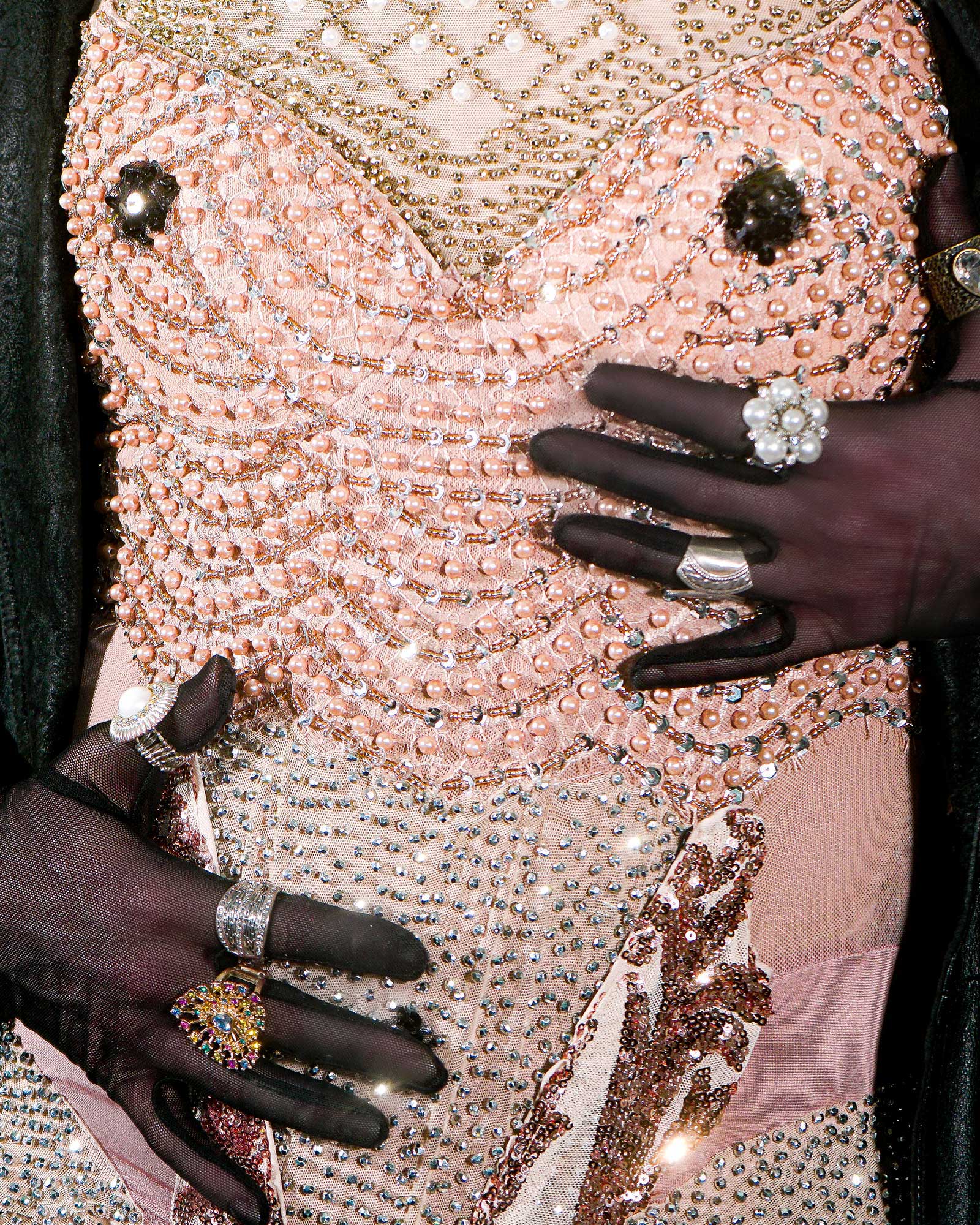 Skin, a wearable piece created by Bradshaw. Photo shared courtesy of Bradshaw.
A few other shows, including Albuquerque 516 Arts’s The Rest Is Drag which premiered this past July 11th, have popped up in the past two years, but Queens is one of the few exploring drag as both a historical and cultural phenomenon as well as a formal art form. While far right leaders continue to fight for laws banning drag performers and performances from public spaces, Queens is a timely reflection on drag not just as an art form rooted in revolutionary visibility but also a rich history of community making.
For Benjy Bradshaw, a performer, designer, and artist, “there is no reason this art form shouldn’t be shown because drag is culture and part of this country’s history. Ultimately,” he continued, “I believe we all wear drag whether we admit it or not. What we choose to wear and how we choose to present ourselves is one element of this. I believe drag pushes culture, expands boundaries, and creates spaces/places for exploration in gender, identity, and politics.”
For Bradshaw, a history of American culture--especially as many are celebrating the nation’s 250th birthday--has to include drag, as well as the history of alternative and underground spaces, including ballroom culture, that led to its development. From William Dorsey Swann, a formerly enslaved man who hosted private balls and became the first self-proclaimed drag queen, to modern drag performers like RuPaul and Murray Hill with their own television shows, drag is fundamentally tied to the history of American pop culture, gender, and fashion--captured beautifully in Queen’s exploration of drag as an art form beyond just the performers.
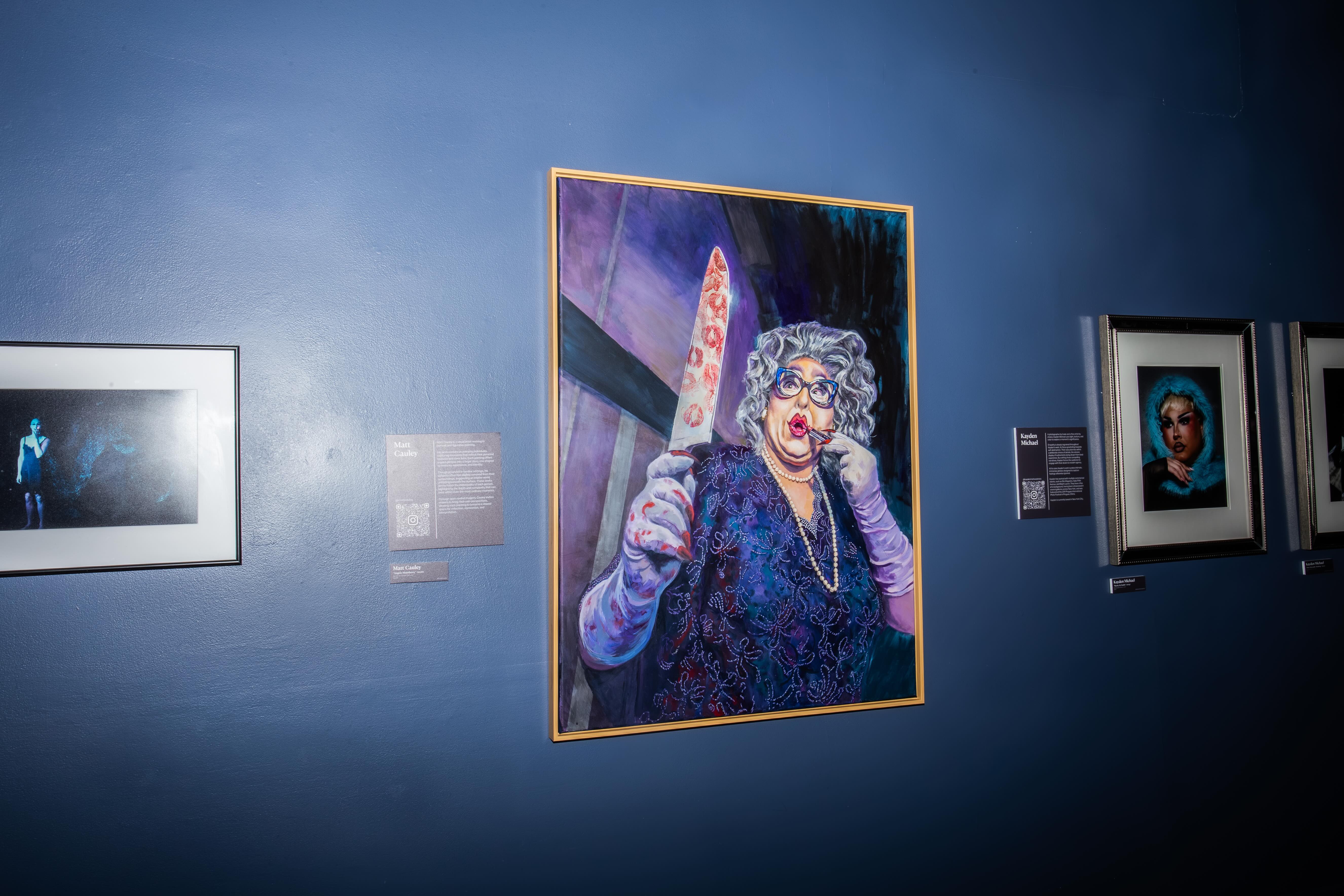 Photo of the exhibition opening, taken by Sean Perreira. Shared courtesy of Tess Howsam.
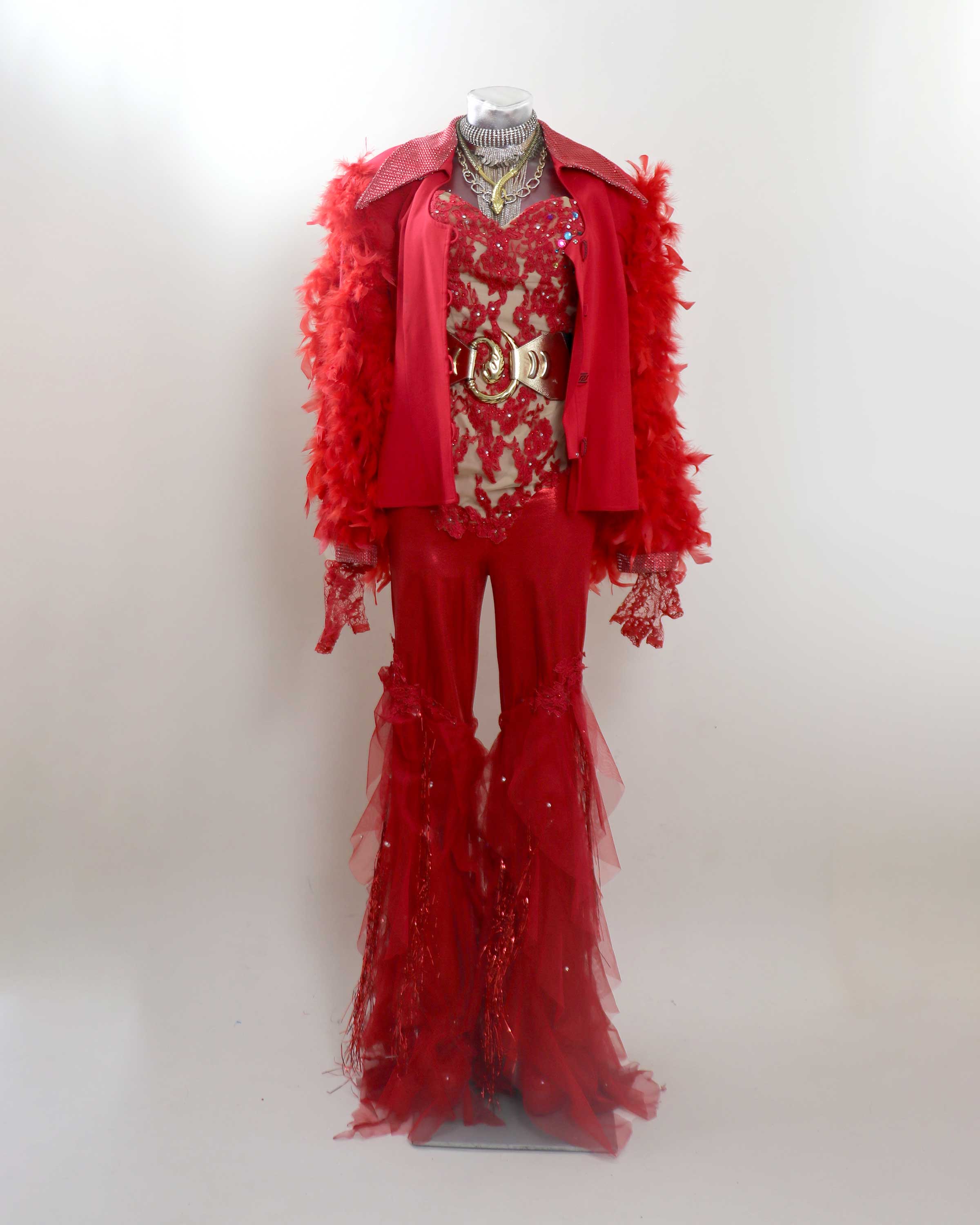 Blood, a wearable piece created by Bradshaw. Photo shared courtesy of Bradshaw.
As Daniel Dabdoub, also known as drag queen DD Fuego who appeared on RuPaul’s Drag Race Season 18 and is featured in Queens told me, “no artist truly works alone, especially in drag, which is all about community.”
“What I love the most is that even if this exhibit is technically showcasing ‘my’ work, it truly is a celebration of my collaborators. Among many things, I am so grateful to be sharing a dress that has been created very collaboratively,” Dabdoub said, specifically a dress made for a runway category on RuPaul’s Drag Race with his sister Renata and friend Morgan. His mom originally wore the dress to his brother’s wedding five years ago, and with the help of their friend, he created something exciting and new that carried a piece of their mom. He used the dress as a base before stitching on a beaded fringe skirt that Mexican fashion designer and artist Kevin Pascual created in Oaxaca, Mexico and mailed all the way to Brooklyn.
This intense, often unseen labor, Dabdoub explained, is part of the human art form that is drag. Part of his hope is that visitors to Queens “remember that everything that creates drag is so human. It’s creativity from people--it’s stitching, sketching, sculpting. It’s dancing, sweating, feet hurting. Drag like many of the highest art forms is unreplicatable by machine. The details of the work in the exhibit should remind people of the depth of this, so next time you’re at a drag brunch, late night at a bar show, or watching queens and kings of screen, people won’t take for granted the magic that is in front of them.”
Because, as Sam Branman, also known as DJ Ten Yards, shared with me, “drag is the primary art form of the 21st century in the US, especially post 2016.”
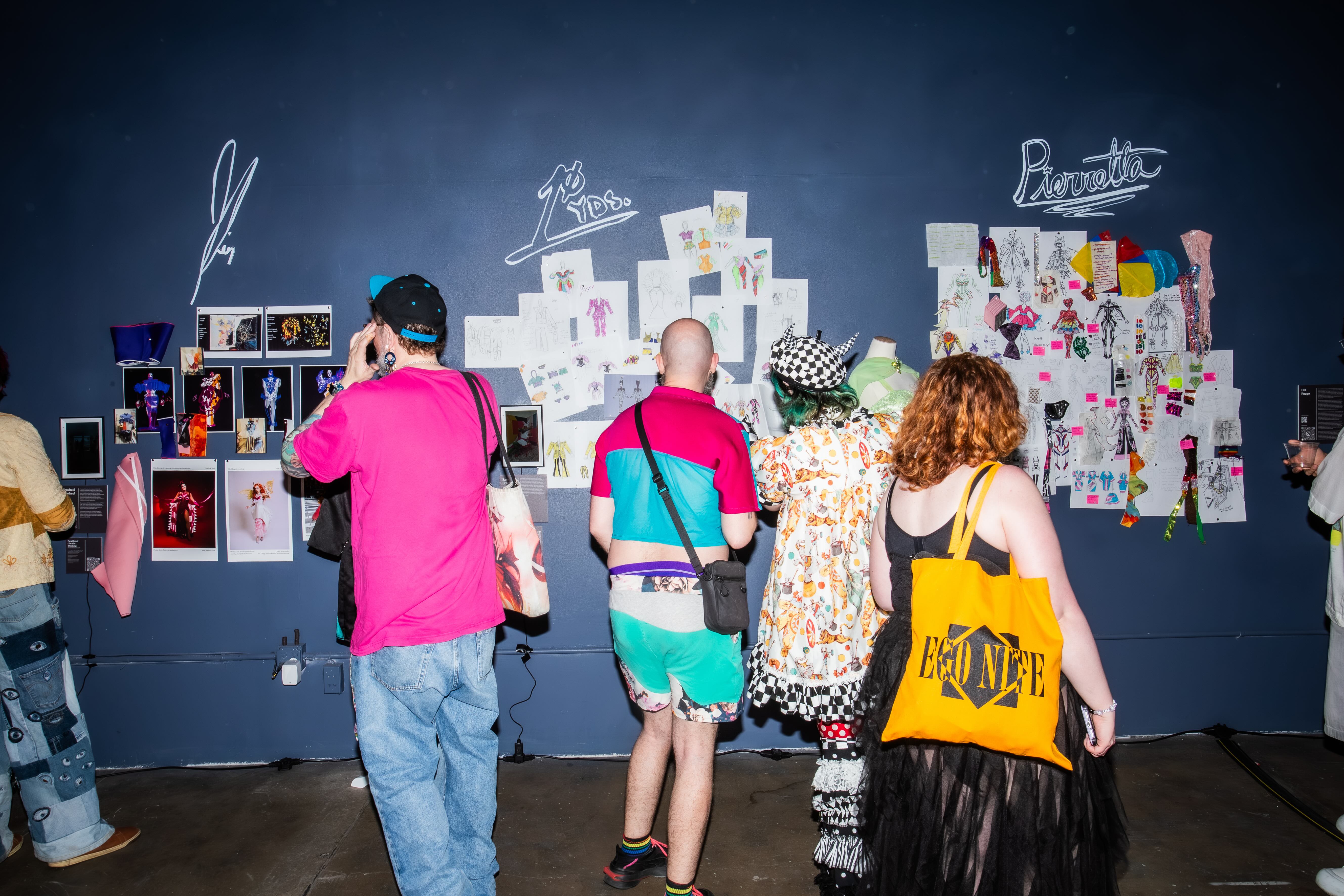 Photo of the exhibition opening, taken by Sean Perreira. Shared courtesy of Tess Howsam.
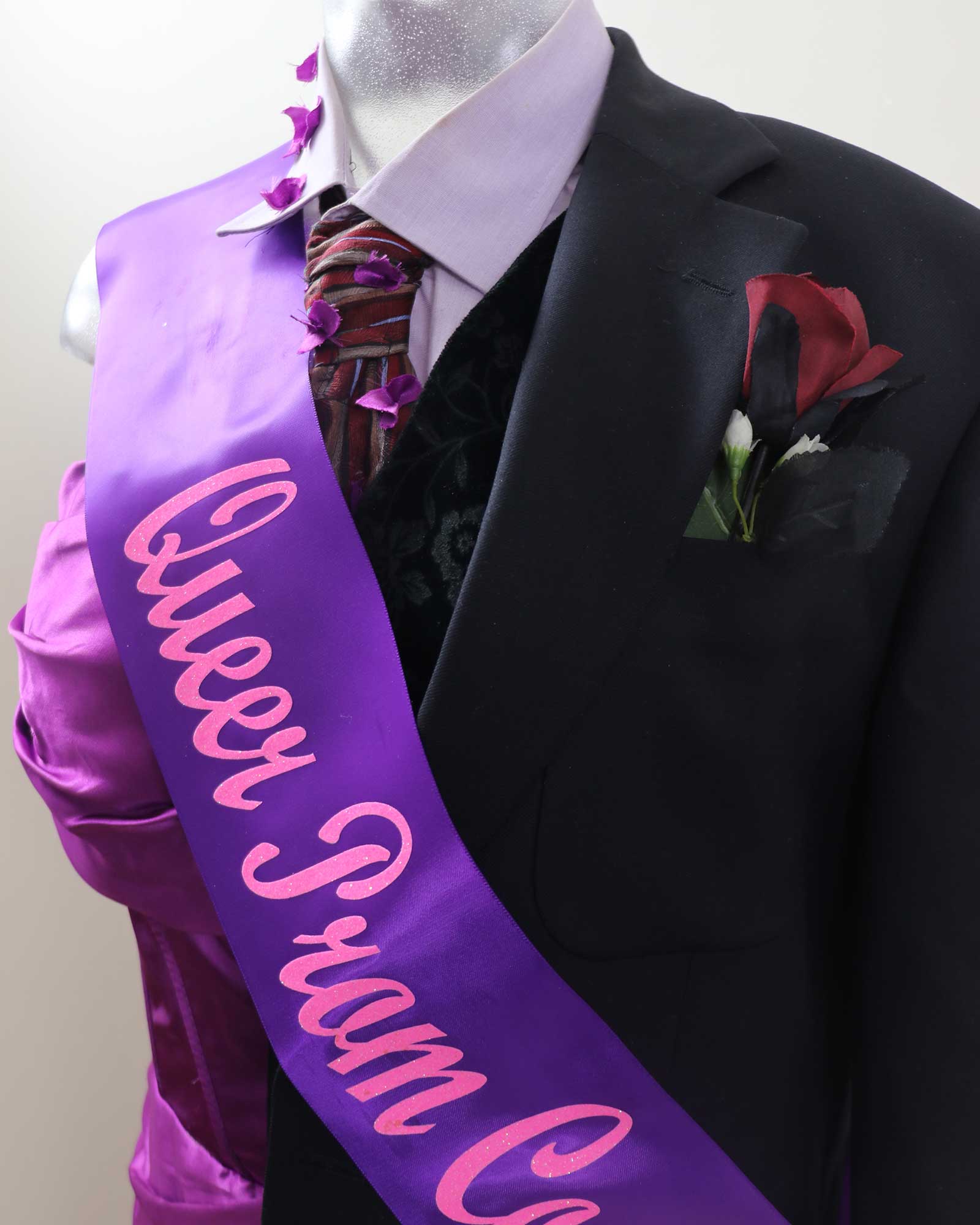 Queer Prom, a drag performance piece created by Bradshaw. Photo shared courtesy of Bradshaw.
“It is collage, it is performance, it is dance, it is critique, it is comedy, it is fashion, it is painting, it is pastiche and drama and satire and confessional and film and music,” Branman said--citing a recent conversation with his roommate critic Kyle Turner. “A critical part of drag is the actual people because you can put photography or fashion anywhere and have it be art, so documentation like Rachel Rampelman’s is really critical in showing that it’s not just an outfit or makeup.” Rampelman, as mentioned above, recently debuted a solo exhibition drawing from the largest digital archive of drag performance in the United States.
Part of the conservative backlash to drag is rooted in its transformative power--and as Bradshaw shares, its fundamental connection to the performance of gender throguh clothing, makeup, and behavior. During a time when the Trump administration and White House Domestic Policy Council are targeting drag history and far right leaders falsely accuse drag artists of sexualizing children, drag has become a representative of the wider LGBTQ+ community and a target for far right leaders decrying gender exploration and affirmation through art.
As Dabdoub explained to me, drag is not only the product of strong communities but also builds them up, welcoming in people--especially trans, queer, and nonbinary people--who have long found kinship in an art form that allows them to express themselves and challenge gendered assumptions and norms. “The power of drag to me,” Dabdoub explained, “is that ephemeral energy that is shared with an audience that empowers a room, emboldens a crowd, reminds people of their strength and lights people up from the inside.”
“That energy is radical. The world may want to dim the light of people they deem on the sidelines, but I see my value as a drag creator and entertainer that I get to remind people of who they are through this artistry. And then we all get to take this shared energy we have built, and change the world.”
Bradshaw agreed, sharing that drag is about learning to love and live as yourself. “At the core, drag is both an expression and a rebellion. Drag takes confidence, self-love, and a sort of unapologetic ability to trust your creative intuition and embrace one’s inner super hero,” he explained, and that is inherently tied to New York City where he and others moved to have the freedom to walk around--and perform--as themselves.
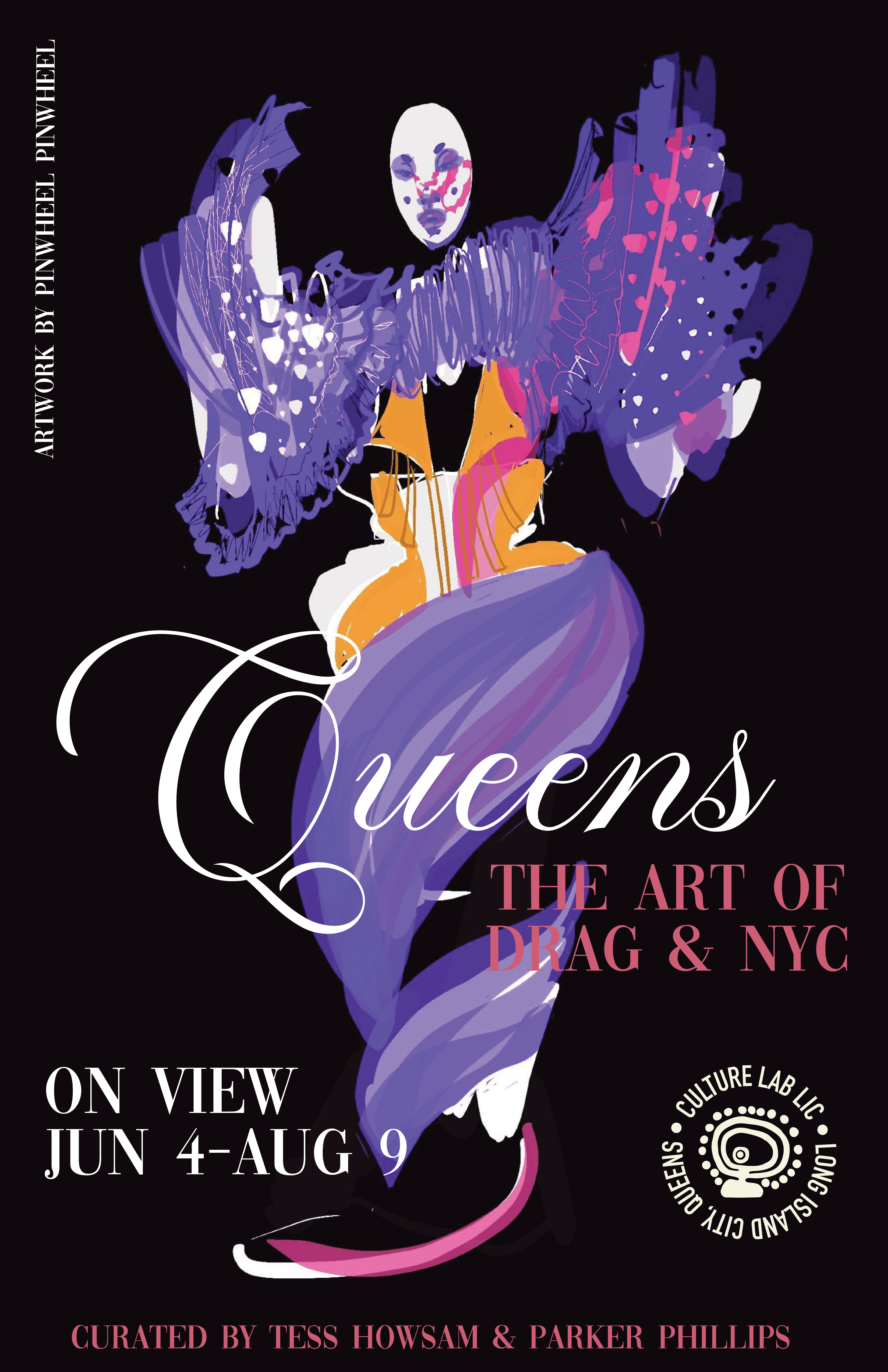 The flyer for Queens, shared courtesy by Tess Howsam, who curated the show alongside Parker Phillips.
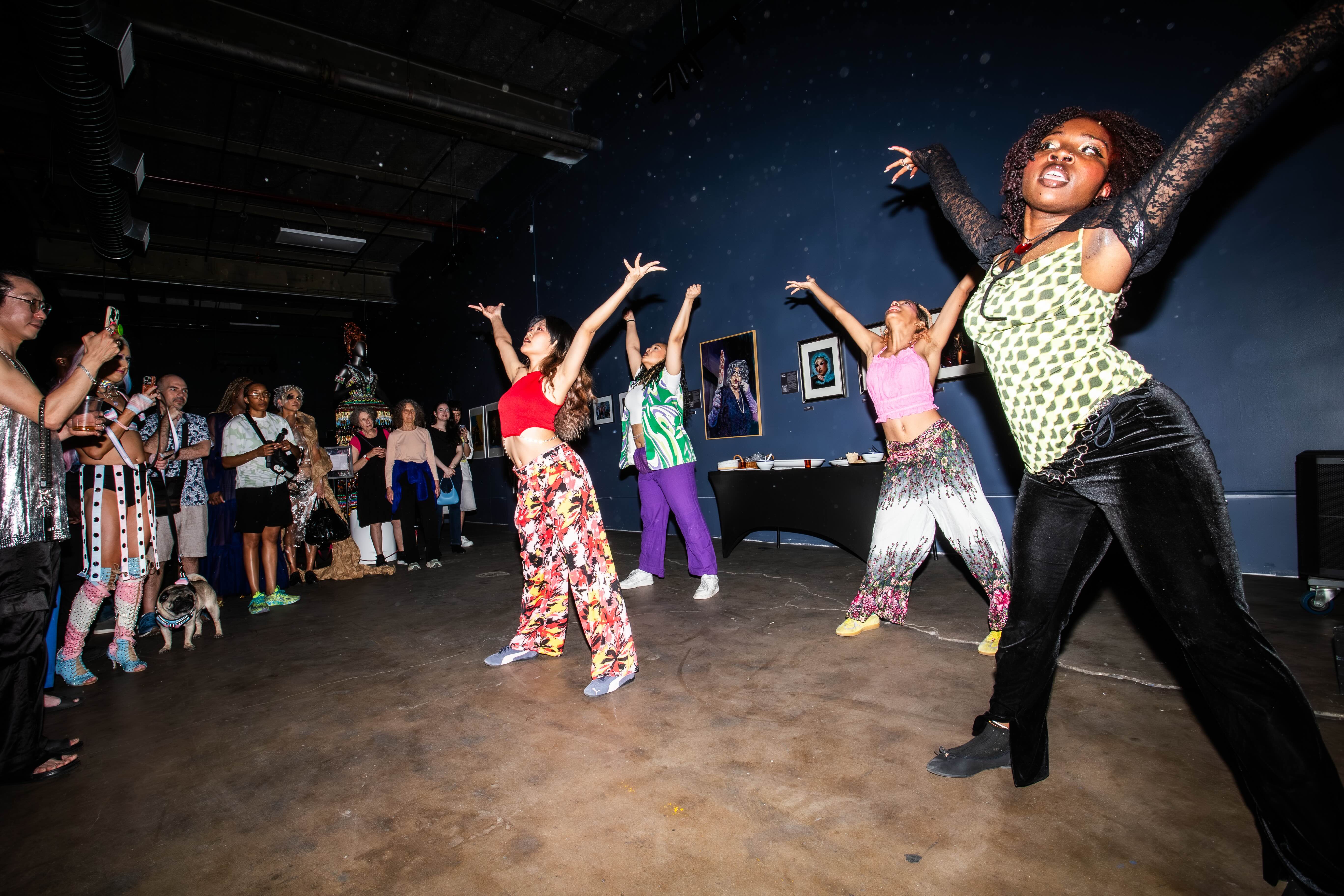 Photo of the exhibition opening, taken by Sean Perreira. Shared courtesy of Tess Howsam.
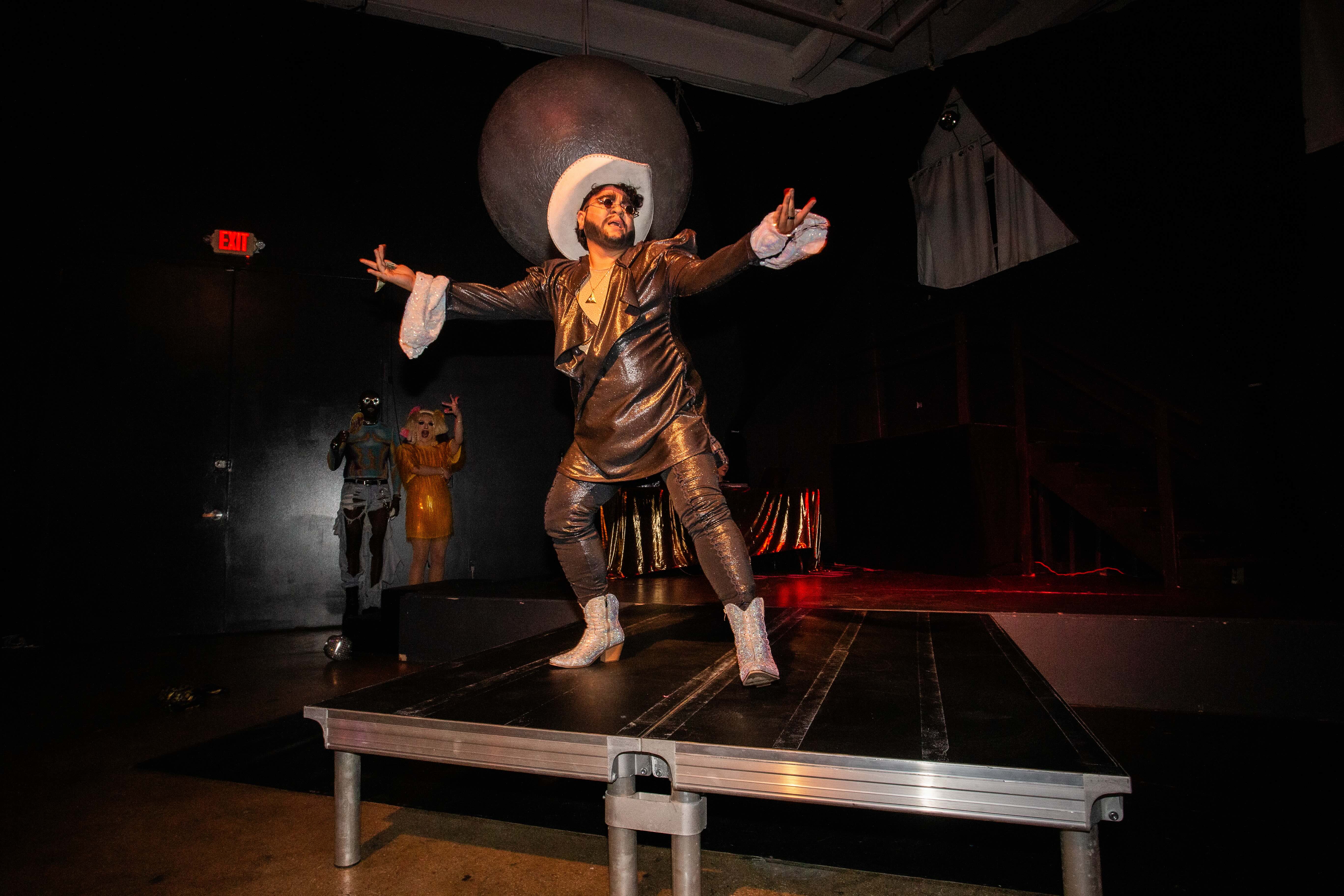 Photo of the exhibition opening, taken by Sean Perreira. Shared courtesy of Tess Howsam.
But celebration of this art form, Branman explains, is also about paying drag artists for this artistic labor and acknowledging that not all drag has to inherently have a revolutionary message. Drag can be fun, surprising, and joyful. It can play with gender just for the sake of that exploration, for the sake of performance and the art form itself. “Drag has always been here, trans people have always been here, even in the face of respectability politics and oppression. It also doesn’t need to be activism, most of it isn’t,” he said.
While our queer and trans bodies are increasingly politicized by far right groups, just as drag queens are targeted by conservative Americans as part of their ongoing anti-LGBTQ+ bigotry, queer art can and should be able to just exist and serve its own purposes rather than to accomplish a specific task. In much the same way, queer and trans people should be able to just exist as they are. But in today’s political climate, creating and performing the art of drag is a political act, and Queens is a groundbreaking exhibition recognizing and highlighting drag as an art form. Queens is a timely exploration of not just how drag got its start but also how it continues to revolutionize the world through visibility and community making.
Culture Lab LIC is an organization dedicated to sharing and showcasing local, national, and international art in Western Queens. Their institutional recognition of drag as an art form is vital, especially as drag is increasingly targeted by far right leaders, and follows in the footsteps of queer and trans-led historical and arts organizations that center community engagement and supporting contemporary performers alongside curatorial work. Queens will be on display through August 9th, 2026. WM

Emma Cieslik
Emma Cieslik (she/her) is a queer, disabled and neurodivergent museum professional and writer based in Washington, DC. She is also a queer religious scholar interested in the intersections of religion, gender, sexuality, and material culture, especially focused on queer religious identity and accessible histories. Her previous writing has appeared in The Art Newspaper, ArtUK, Archer Magazine, Religion & Politics, The Revealer, Nursing Clio, Killing the Buddha, Museum Next, Religion Dispatches, and Teen Vogue
view all articles from this author