Whitehot Magazine
November 2026
"The Best Art In The World"
"The Best Art In The World"
November 2026
Phantom Limbs and Luminous Skin: Jenna Gribbon’s "Projections" at David Kordansky Gallery
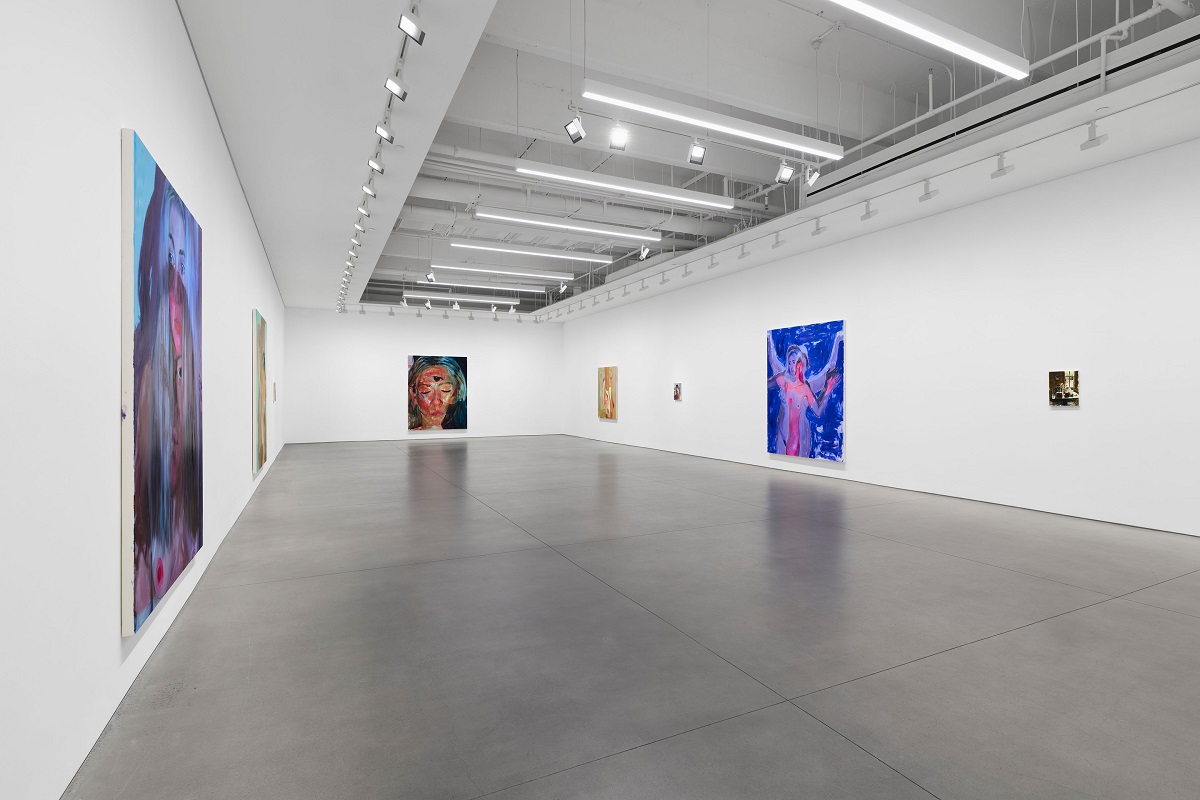 Jenna Gribbon, Installation View, 2026. Courtesy of David Kordansky Gallery.
By KAYLEY CASSIDY, November 24th, 2026
Inside David Kordansky Gallery, Jenna Gribbon and her wife, Mackenzie Scott, greet visitors nude. Looming large and back-to-back on a freestanding white wall, the painting Janus (2026) shields the rest of the installation space from view. The placement plays cleverly on the title’s namesake, the two-faced Roman god of new beginnings. Painted in fiery oranges and rich reds, Scott looks solid and fleshy. Gribbon’s skin ghosts over hers in cool, stark whites and icy blues, revealing that the two aren’t physically back-to-back, but rather that she is projected onto her wife’s body.
Move past this threshold, and you’ll be transported into an untamed world of light and myths, populated by glowing, three-eyed, multi-limbed giants.
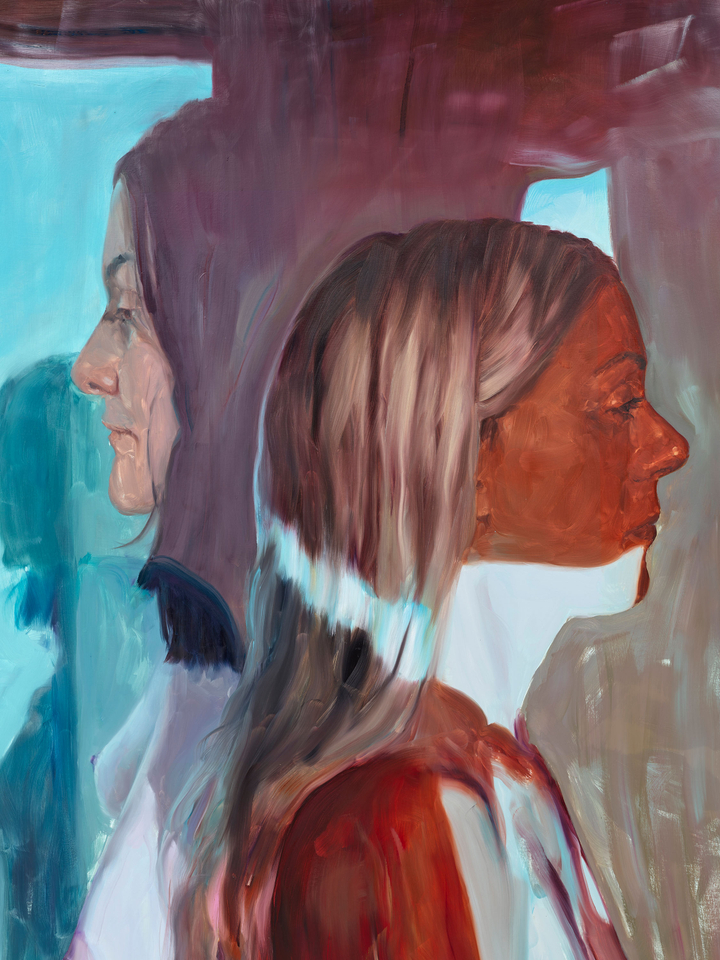 Jenna Gribbon, Janus, 2026. Courtesy of David Kordansky Gallery.
In her newest exhibition, Projections, Gribbon confronts the anxiety of losing yourself in a relationship and conquers it on canvas, showing that two people can become deeply connected without losing who they are as individuals. Best known for painting her bleached-blonde-haired partner, Scott, alongside signature details like fluorescent pink nipples, the Brooklyn-based artist has spent the last decade exploring the tension between intimacy and voyeurism with paintings that make you feel caught in the act of looking.
The installation intentionally plays with scale to guide you around the room. Seven large canvases anchor the space in otherworldly imagery, while three miniature canvases depicting everyday scenes from Gribbon’s life are dispersed to ground the viewer back in reality. In the larger works, Gribbon and Scott morph together into an ectoplasmic-like form that blurs the line between where one body ends and the next begins. Inspired by mythical beings, she created these scenes by projecting photographs of herself onto her wife in the studio before translating them into oil paint.
Named after the Hindu goddess of death and rebirth, Kali (2026) consists of erratic brushstrokes that turn indigo, navy blue, and purple into a scribbly backdrop. Gribbon and Scott are placed in the foreground as a mutated, multi-armed woman. A giant third neon nipple is positioned between her breasts. Amongst the flailing arms, torsos, and legs, you can get lost in new pockets of skin and flesh that you hadn’t noticed at first glance. In their playful movements, one can feel the safety of being with someone who truly matches your energy, where the fear of losing yourself melts away and reveals the raw versions of ourselves we tend to hide.
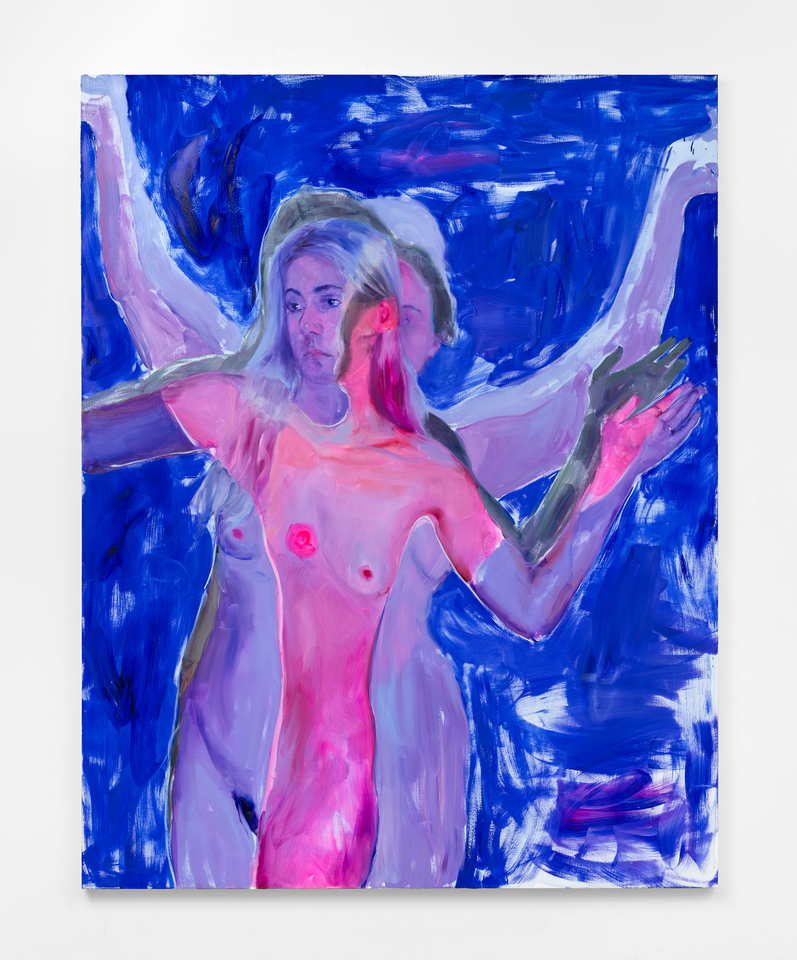 Jenna Gribbon, Kali, 2026. Courtesy of David Kordansky Gallery.
The most breathtaking piece in the entire exhibition is Steropes (2026). Named after a one-eyed giant, the title quite literally casts Scott as a cyclops. Because it sits on the farthest back wall, the painting holds a quiet command over the room. It feels like the all-seeing center of the exhibition, silently watching and holding sway over every other canvas. A dark shadow falls across her face, painted in vibrant hues of pinks, reds, blues, and whites. Her eyes are closed, except for the third eye on her forehead, which is Gribbon’s large brown orb glancing to the side. There is a striking, meta quality to imagining Gribbon painting her eye onto Scott’s face while her real eyes watch the scene come to life. By placing the eye on the forehead, she gives her partner her literal point of view, conveying a couple can share a single vision without losing their individual ways of seeing.
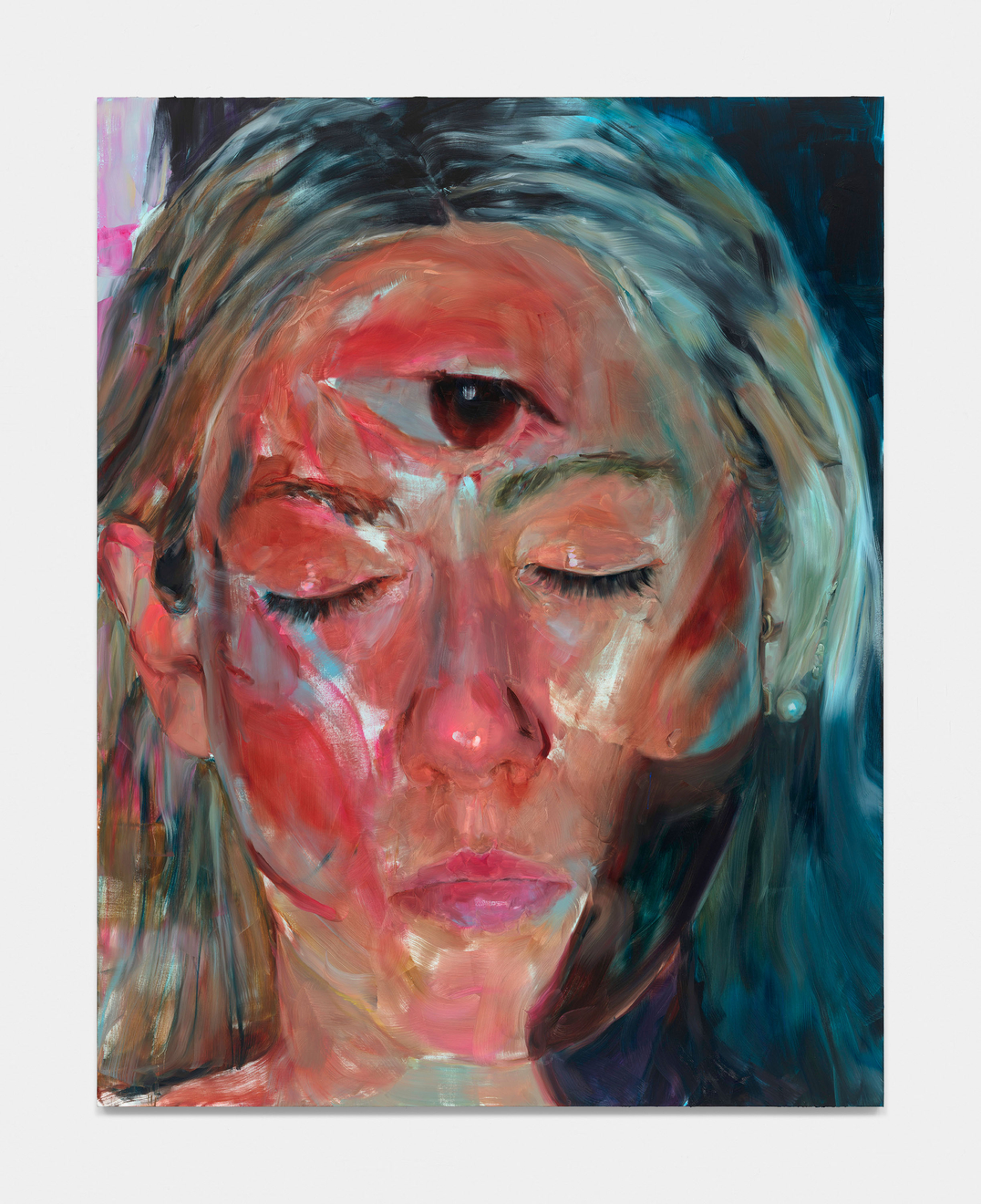 Jenna Gribbon, Steropes, 2026. Courtesy of David Kordansky Gallery.
Self, September light (2026) stands out as the most vulnerable. Gribbon is naked, and her brown hair is pulled back. Her figure is almost completely overtaken by shadows, except for her right eye that twinkles in the light. Fully aware of our gaze, she looks back at us and chooses to be seen, even in her darkest parts. In a show built around layered illusions and mythic personas, this quiet self-portrait feels like a deliberate surrender of control and self-protection. As the only piece in the exhibition where she isn’t painted onto Scott’s form, Gribbon confronts the fear of being exposed, misunderstood, or judged in a relationship.
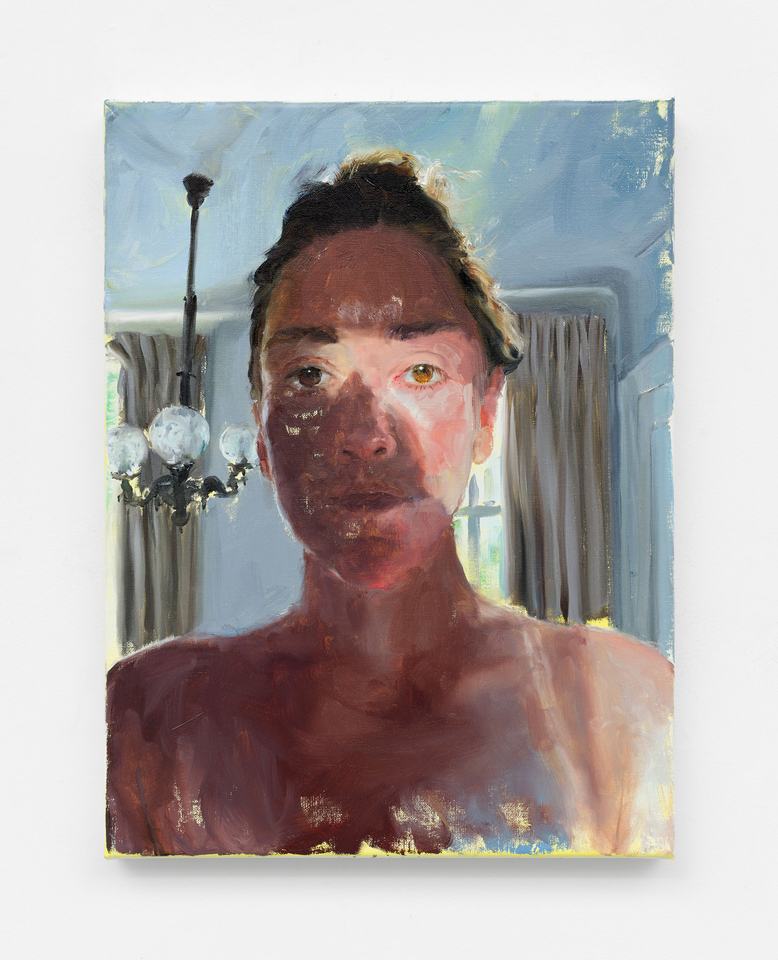 Jenna Gribbon, Self, September Light, 2026. Courtesy of David Kordansky Gallery.
Together, these works reveal the dual meaning behind the show’s title. There is the literal light cast onto Scott in the studio, and then there are the psychological projections of love: the unconscious fears, longings, and ideals we cast onto the people closest to us. What makes Projections so compelling is its refusal to conflate two people into one. Gribbon shows that real intimacy isn’t about surrendering yourself, but building a shared space where both can exist fully together. Even after leaving the space, these new works linger in the imagination, inviting viewers to inhabit altered states. They prompt you to envision growing new limbs, transforming into loved ones, and reexamining the relationships that shape your life.
Projections, by Jenna Gribbon, is on view at David Kordansky Gallery, New York, through December 19, 2026.

Kayley Cassidy
Kayley Cassidy is a journalist and writer based in New York with a passion for storytelling across the arts, women’s sports, and LGBTQ+ communities. She holds a master’s degree in Creative Publishing & Critical Journalism from The New School for Social Research.
view all articles from this author