Whitehot Magazine
October 2026
"The Best Art In The World"
"The Best Art In The World"
October 2026
Practicing the Yet-to-Be-Named

Salome Asaga
By AYSE SARIOGLU March 19th, 2026
Founded in 2014 by the New Museum, NEW INC emerged as the first cultural incubation program initiated by a museum. Over the past decade, the program has evolved into an interdisciplinary ecosystem where artists, technologists, designers, and cultural entrepreneurs test new models for production, collaboration, and sustainability. As the New Museum prepares to reopen following a major renovation, we spoke with the program’s leaders about experimentation, mentorship, and the infrastructures shaping the future of cultural production.
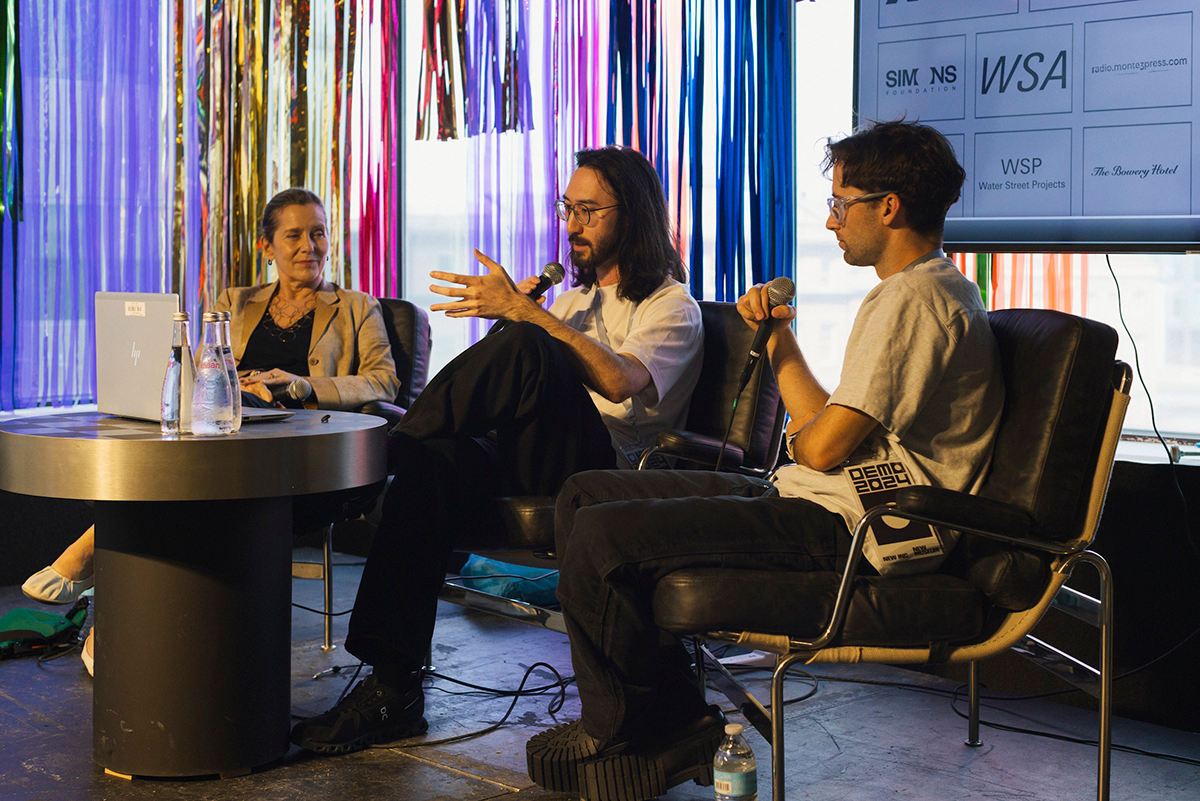
Demo2025 New Inc. ‘s signature annual festival
In recent years, artistic production has increasingly become a matter of infrastructure.
Today’s artists are not merely producing objects or exhibitions; they are designing systems, developing software, forming collectives, and experimenting with alternative economic models. As disciplinary boundaries dissolve, the conditions under which culture is produced are also transforming. In this context, the museum’s role is no longer limited to exhibiting completed works. It can also function as a space for research, collaboration, and production.
NEW INC’s mission is not only to support projects but to explore new ways in which creative practice can be organized economically, socially, and institutionally.
As the New Museum prepares to reopen, NEW INC is entering a new phase. With expanding workspaces, production laboratories, and public programs, the initiative has become more than a community where ideas circulate; it is a laboratory for cultural production itself.
We spoke with the program’s leaders about how NEW INC has evolved, how creative ecosystems are built, and why the future of culture can depend as much on infrastructure as it does on imagination.
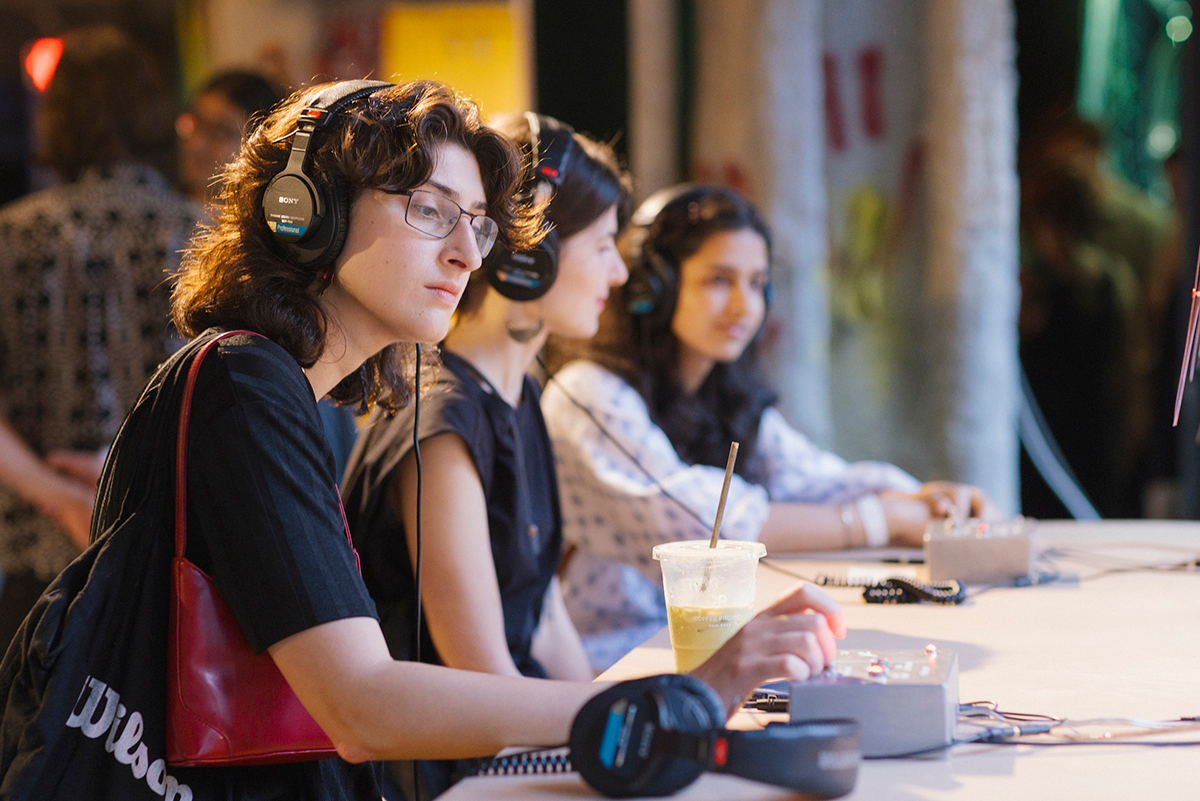
Demo2025 New Inc. ‘s signature annual festival
Describing NEW INC as a traditional incubation program feels inadequate. Today, do you see NEW INC as an institution, a methodology, or a continuously evolving experimental space?
You are right — NEW INC has long surpassed the definition of an incubator. Over twelve years, the program has transformed into an international community of multifaceted creators, engaging with some of the most urgent questions of our time and pushing the boundaries of experimentation.
From future housing models to the opportunities and risks offered by artificial intelligence, members find a space where they can shape their projects, civic initiatives, or companies. At the same time, they collectively imagine how creative production can make a meaningful impact amid rapid cultural and technological transformations.
By focusing on practices that cannot fit within a single discipline, what gap does NEW INC fill in today’s art and cultural landscape?
When people and ideas step outside siloed structures, catalytic potential emerges.
Members often describe NEW INC as “a space embracing the new — even the yet-to-be-named.” This openness allows new forms to emerge for art production, distribution, preservation, gathering, and cultural infrastructure.
We are particularly excited when our members make connections that even we cannot foresee. Investing in these kinds of ideas helps us understand where culture might go. In this sense, NEW INC also contributes to the museum maintaining a sharp, pioneering position.
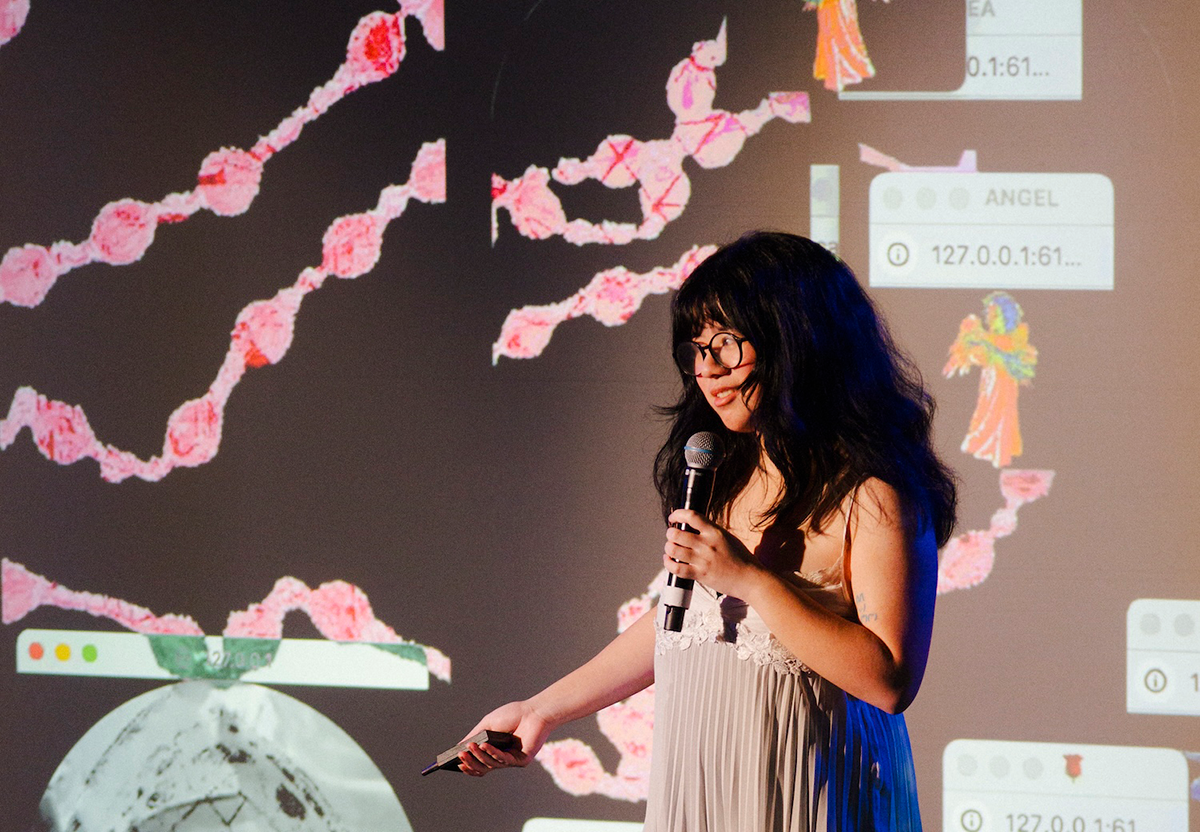
Demo2025 New Inc. ‘s signature annual festival
When evaluating alumni contributions to the ecosystem, what matters most to you: economic output, cultural impact, or something harder to measure?
Both economic and cultural impact are vital.
In recent years, while the number of people working in traditional creative sectors in New York has declined, the number of independent artists and self-employed cultural producers has risen significantly.
Many of these creators — especially those from historically underrepresented communities — face systemic barriers to mentorship, funding, and professional networks.
Programs like NEW INC provide fairer access to knowledge, guidance, and community. When creators cannot find ways to grow their work, the economy becomes dominated by homogeneous perspectives, and everything starts to look the same.
Another, harder-to-measure criterion is the long-term influence of ideas that emerge from the program. Projects that initially seem niche can later become part of much broader cultural conversations.
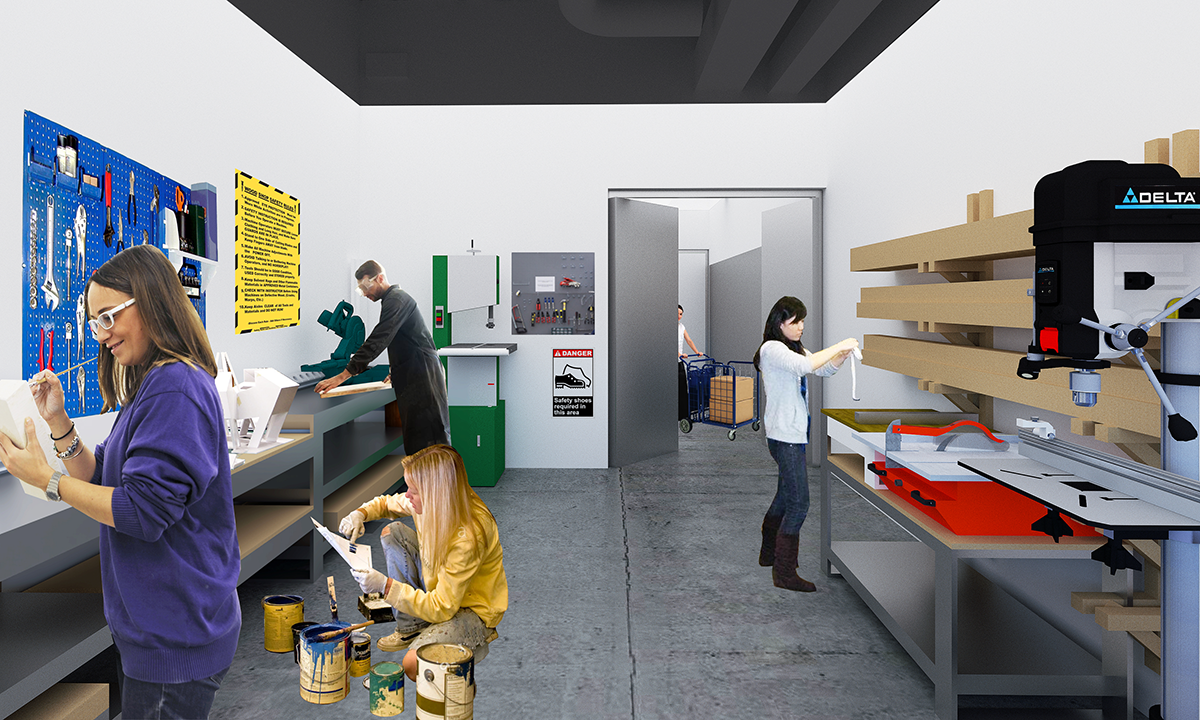
Rendering New Inc. Space
How will the New Museum’s post-renovation reopening affect NEW INC?
We are thrilled to bring our large community back “home.”
The newly designed workspace will include shared desks, meeting rooms, production labs, and media studios. Members will have access to digital fabrication tools like 3D printers, laser cutters, CNC machines, high-performance computers for XR development, and motion-capture systems.
In this way, NEW INC becomes not only a space where ideas develop but also a place where they materialize.
We are also excited by the potential to collaborate with different museum departments. From youth workshops to in-house media production, we can work across many areas. NEW INC thus becomes a resource not just for its members but for the institution as a whole.
To what extent are the social or ethical positions of projects considered during the application process?
This is extremely important to us.
Projects accepted into the program need to be aware of their social and ecological impact. Our members work toward a fairer and more vibrant future. Creative curiosity should not reproduce existing harms; it should point to alternative possibilities.
Could strong mentorship be measured less by the final project and more by a member learning to trust their own intuition?
Absolutely.
Our mentor network, composed of over 130 professionals worldwide, makes often invisible industry rules understandable. Many members want to grasp these rules first — and then learn how to bend them.
For me, the true measure of a good mentorship relationship is a member learning to ask sharper, more discerning questions.
Today, NEW INC alumni work in museums, biennials, tech companies, and alternative economic models. How do you define success?
One of my favorite things is seeing NEW INC members together years later.
At birthday parties, book clubs, exhibition openings, or company meetups, I notice that we have built something genuinely meaningful.
Building authentic friendships is one of NEW INC’s strongest — and perhaps most invisible — impacts.
Can you tell us about some alumni whose work is shaping new conversations?
Artists Stephanie Dinkins and Sougwen Chung were early members. They were researching human–machine collaboration, algorithmic decision-making processes, and biases in technological systems.
Today, these questions sit at the center of global AI debates. Both later appeared on Time magazine’s list of 100 most influential people in AI.
Moments like these remind us that NEW INC often begins its work well before cultural conversations reach the mainstream.
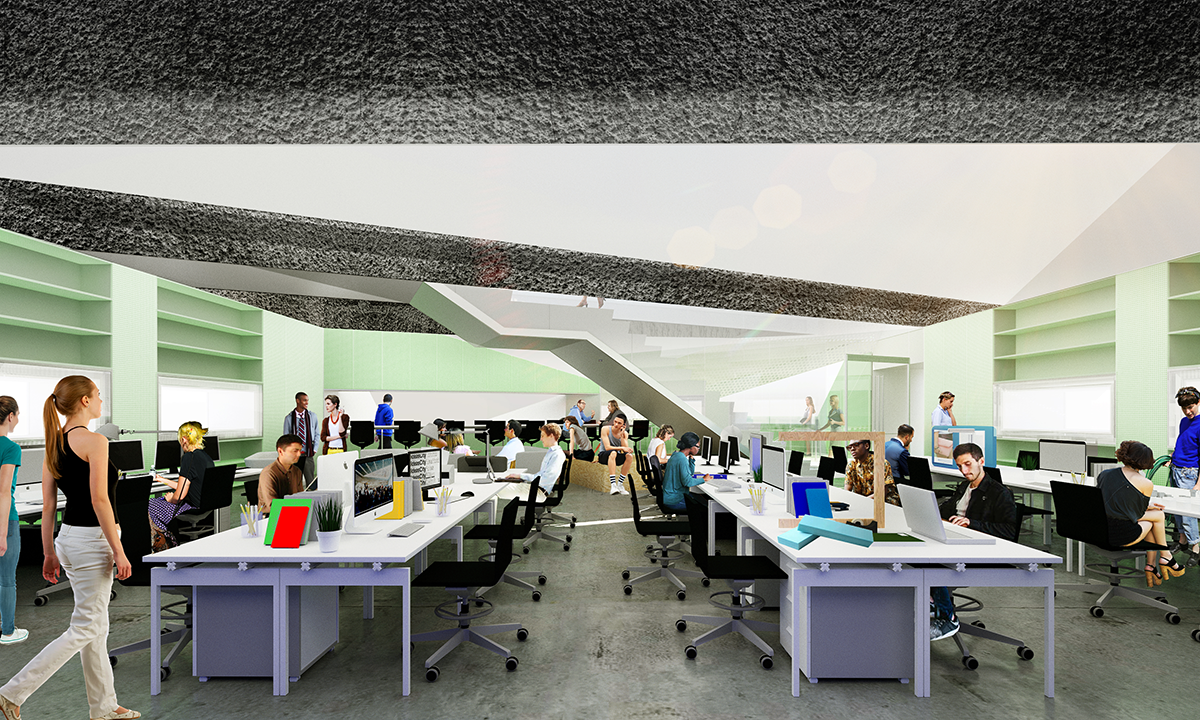
Rendering New Inc. Space
How does the NEW INC experience begin for new members?
At the start of the program, we hold a week-long intensive orientation called CAMP.
Over four days, members introduce themselves in short presentations, explore the professional development structure of the program, begin mentor matching, and meet the museum staff. Social events and trips are also organized.
This intensive opening week lays the foundation for relationships that will continue throughout the year.
What does a typical day in the shared workspace look like?
Our space functions like a hub.
Members hold meetings, mentor sessions, or provide feedback on each other’s projects. At the same time, the fabrication and media labs allow projects to be physically realized.
With 3D printers, laser cutters, CNC machines, and XR development systems, the space becomes an active production hub.
How does the community respond when members share their initial ideas?
Ideas circulate constantly at NEW INC.
Members share their projects both within their research-area groups and during monthly workshare events. Presentations often begin with the members’ own questions.
Feedback comes in the form of conceptual discussions, or sometimes funding, partnership, or strategy suggestions. This process often marks the beginning of unexpected collaborations.
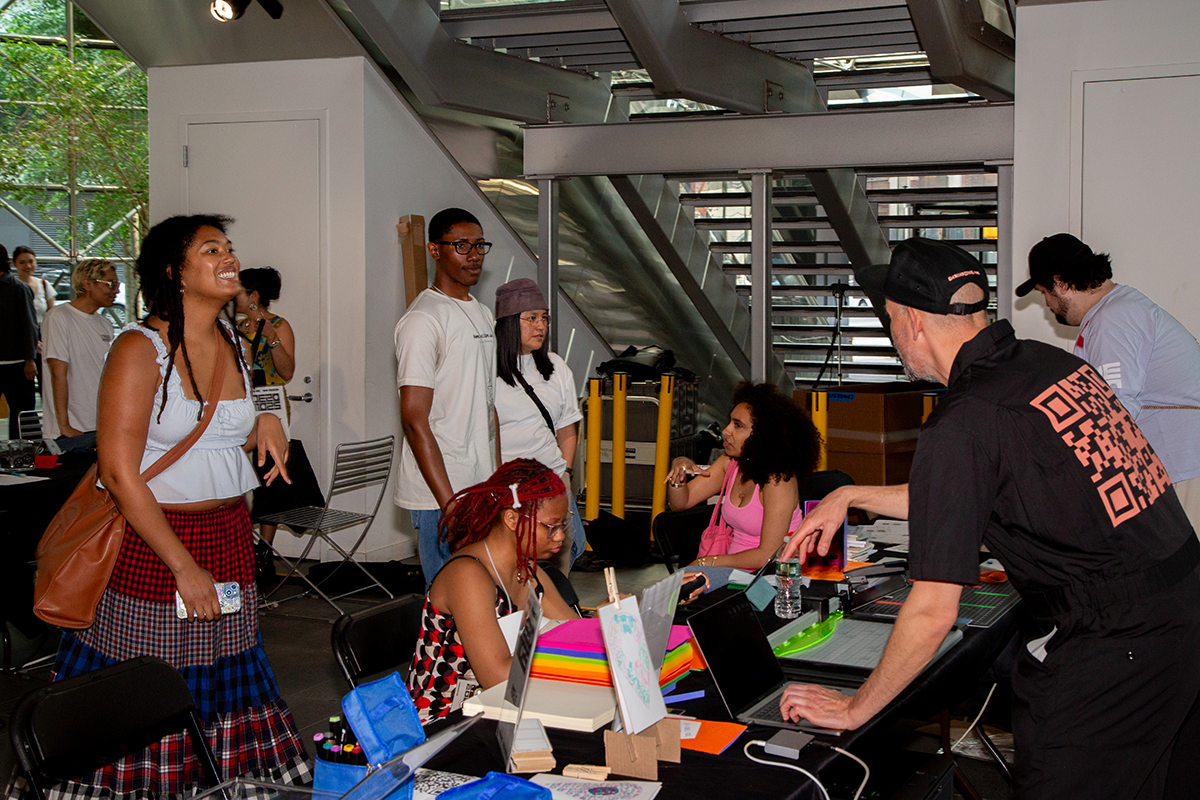
New Inc. Event
The future of cultural production often unfolds not in completed works, but in the circulation of yet-to-be-named possibilities. NEW INC points precisely to the productive side of this uncertainty: a space where ideas can be considered together before they are finalized, categorized, or translated into economic models.
Today’s artists and cultural producers are not only creating works; they are building new infrastructures, new modes of collaboration, and even new institutional imaginaries. In this process, incubation programs evolve from static structures into experimental cultural laboratories.
Perhaps the most accurate way to define NEW INC is not to place it in any fixed category. Some spaces reach their greatest potential precisely at the moment when they are practicing the yet-to-be-named.

Ayse Sarioglu
Ayse Sarioglu-Guest is a senior Turkish media executive, writer, and art critic based in Istanbul and New York. With over 25 years of executive experience in Turkey’s leading media organizations, including Sabah and ATV Group, she has held key leadership roles overseeing national newspapers, magazines, and television networks. Sarioglu-Guest was instrumental in the launch of MTV and Nickelodeon in Turkey and led the market introduction of Eurosport. She currently contributes to Vogue Turkey and Harper’s Bazaar Turkey, focusing on contemporary art, culture, and international creative industries.
view all articles from this author