Whitehot Magazine
October 2026
"The Best Art In The World"
"The Best Art In The World"
October 2026
Pilar Zeta: Between Portals
By ANNALIISA BENSTON May 16, 2025
I met Pilar during Covid.
We were two isolated islands in a sea of Southern indifference.
Even then, her work carried a strange, geometric light — something that felt otherworldly, but charged with real energy.
Now, years later, we’re speaking over a WhatsApp video call — she’s in Mexico City, I’m in New York City.
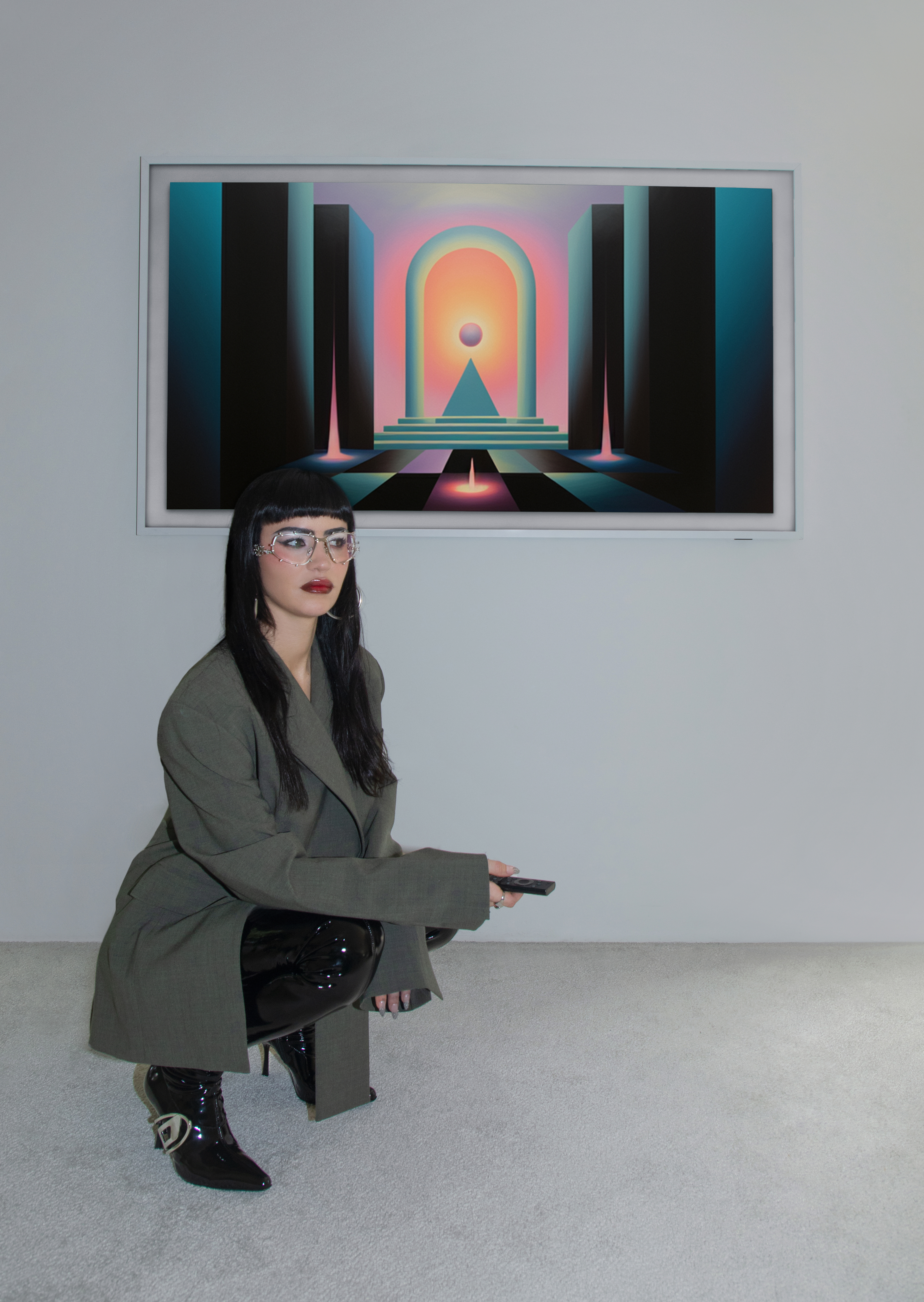 Numero Odissey Photo Courtesy of the artist. Pictured at Load Gallery in Barcelona.
The distance feels right.
The chance to create light where there is energy — that’s something I don’t take lightly.
I’m thankful.
Pilar’s work — and her way of being — runs on intuition, energy, memory, and systems unseen.
When I asked if she ever had any formal training, she smiled and shook her head:
“No. It’s always been about energy. That’s the only thing I really trust.”
The only formal thing she’s ever applied to, she joked, was the Pyramid of Giza.
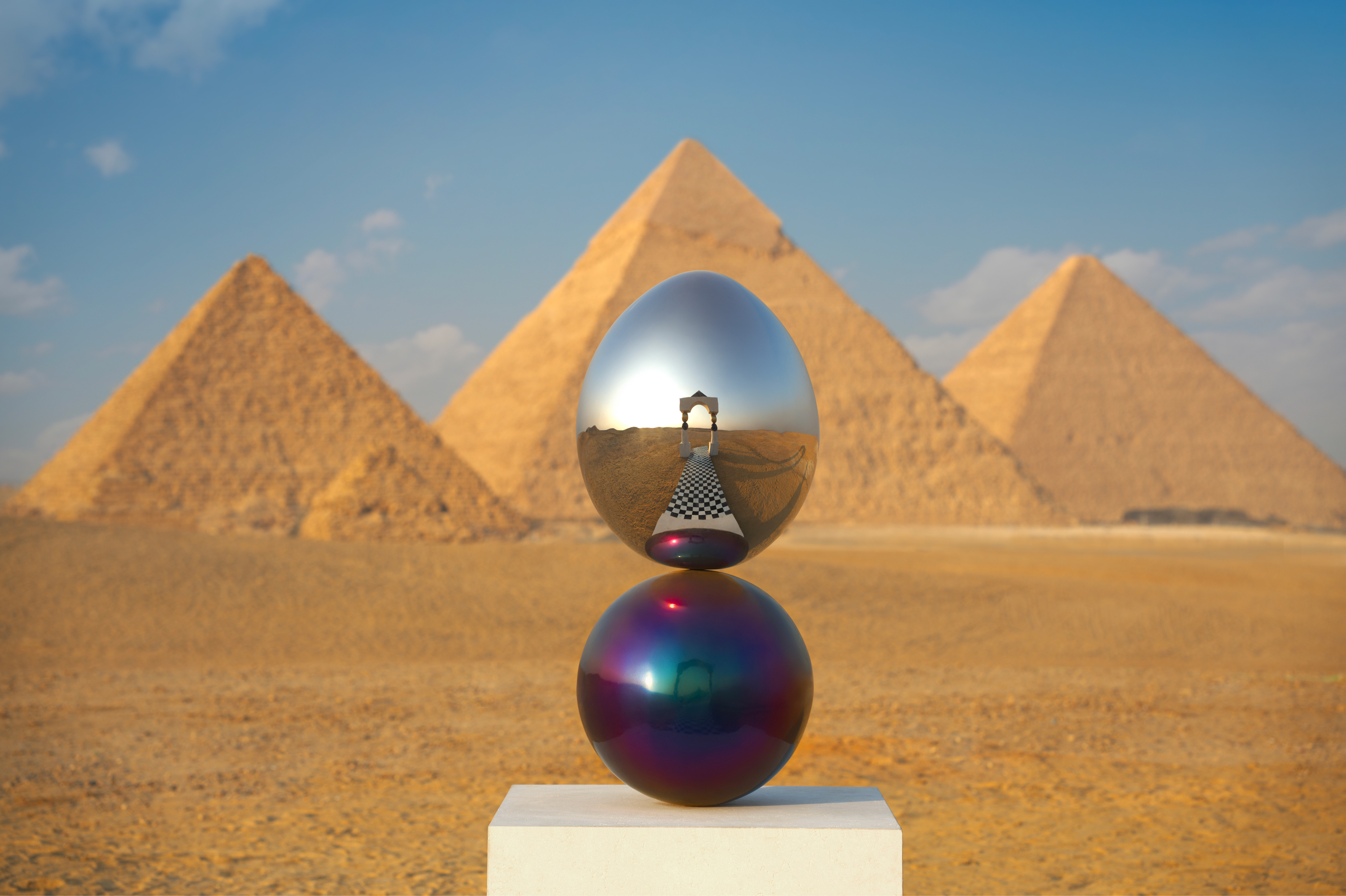
When it came to her upcoming book, she told me the only “truth” she would seek was passion.
If she could ask advice from any successful artist, she said she would choose Salvador Dalí — and she would ask him one thing:
How do you remember your dreams?
Her new show at Load Gallery marks a new moment — a larger scale, a new dimension — but one that feels like a culmination.
A line running through her work all along: energy becoming architecture, memory becoming matter.
It’s a portal she’s been building for years, and now we get to step through. Here are the 10 burning questions we got down…
AnnaLiisa Benston: Your work often merges mysticism, geometry, and surrealism. How do these elements shape your creative process, and what draws you to them?
Pilar Zeta: The universe is the starting point, and then everything starts blending—mysticism, sacred geometry, sci-fi, Masonic altars, postmodernism, surrealism. I’m drawn to symbols, secret codes, anything that feels like it’s carrying some kind of hidden meaning. I love when things look like they don’t belong to this time or place, like they’re visiting from another dimension. That mix creates a language that I feel comfortable speaking.
Hall of Visions was a significant moment in your career, bringing immersive experiences to a broader audience. How did this project challenge or expand your artistic approach?
Hall of Visions was a symbolic and not symbolic portal. It was a threshold I crossed—from being mostly a digital artist to someone who creates physically in this dimension. It felt like all my manifestations, dreams, and visions came together and pushed me into a quantum jump. The scale was massive, and when I saw it in real life, it felt like the universe surprised me—I wasn’t expecting much. It felt like a clear closing and beginning of a cycle.
Your installations feel like portals to other dimensions. When designing a space, what emotions or transformations do you hope to evoke in the viewer?
I love quantum physics and the idea that there are infinite possibilities in the quantum field. Portals, for me, represent this subconscious symbol—when you walk through one, you’re entering a new dimension. The idea is to help people feel that jump, like something subtle but real just shifted inside.
Your aesthetic blends retro-futurism with cosmic and metaphysical themes. Are there specific artists, movements, or philosophies that have deeply influenced your work?
Sci-fi movies, Star Trek, ancient civilizations, sacred architecture, postmodern architecture, surrealism, quantum physics, paranormal activity, and 90s rave culture. I love systems—visual systems, symbolic systems, energetic systems. Anything that creates maps of other realities.
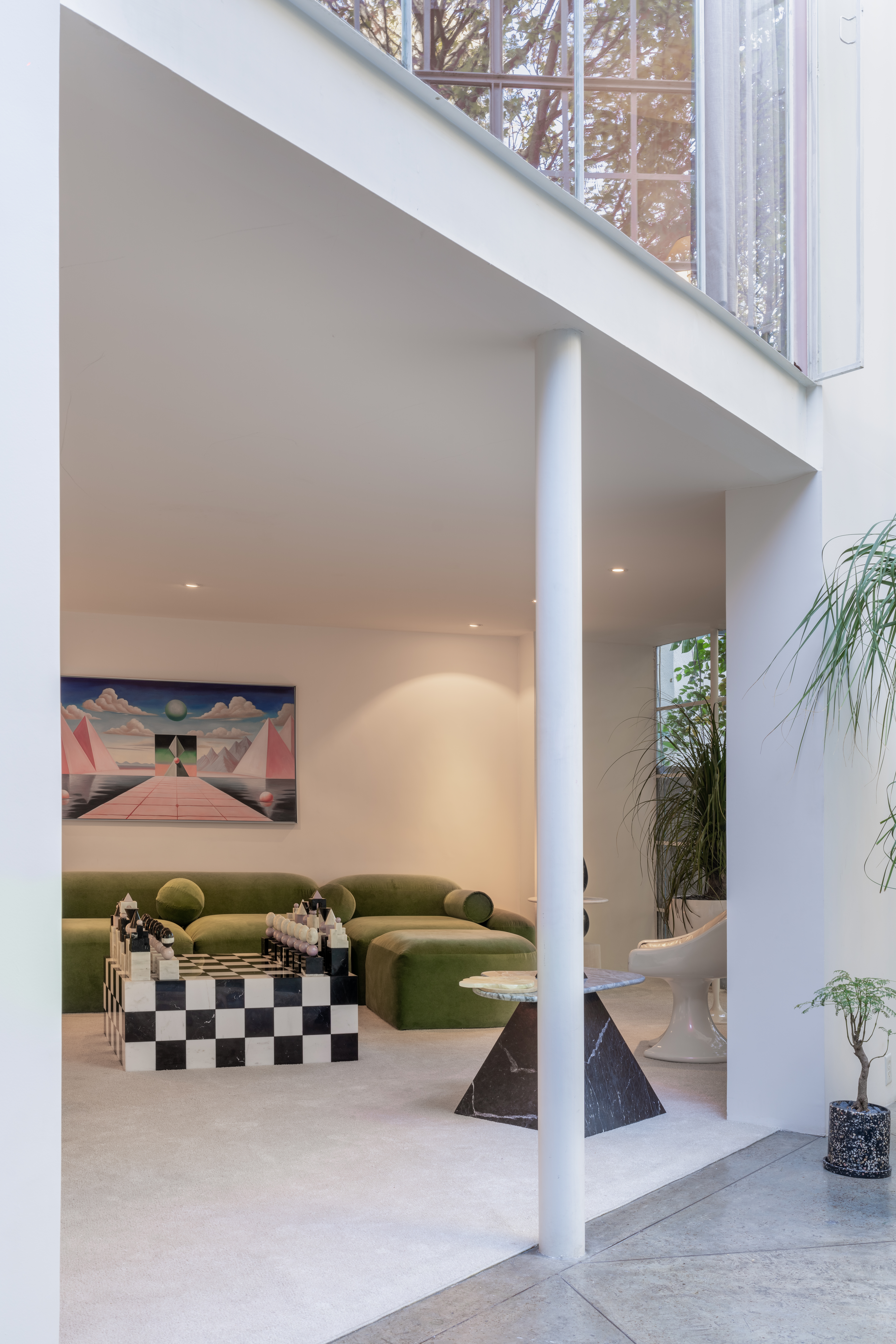 "Temple of Self" from the artist home in Mexico City. Photo to courtesy of the artist.
If you could time-travel to any art movement in history and immerse yourself in that era, where would you go and why?
Ancient Egypt, when the pyramids were being built. Sometimes I wonder if that even happened in this dimension or on this timeline. The pyramids, for me, are the greatest architectural sculptures on the planet. And of course, the sacreds—the codes, the alignments, the mysteries.
Your art often explores metaphysical ideas—if you could live in any alternate reality or parallel universe, what would it look like?
It would be a place where light is a building material and thoughts instantly shape matter. Environments would be responsive, alive, fluid. No separation between art, technology, nature, or spirit. Just one continuous frequency of creation.
You’ve worked with figures like Marina Abramović and Deepak Chopra. What’s the wildest or most unexpected creative idea you’ve ever brainstormed with a collaborator?
Those figures came into my life through synchronicity. It wasn’t something I expected or planned—it just aligned. But one of the craziest ideas I’ve had is doing something next to the pyramids in Antarctica. Whoever fits into that vibration would be the perfect collaborator. Maybe even a non-physical being. I’m open.
If you could turn one of your artworks into a fully functional space to live in, which one would it be, and what would daily life inside it feel like?
Either Temple of Variations or Mirror Gate. Maybe Mirror Gate, just to be able to look at the pyramids all day. It would feel like living inside a reflective dream.
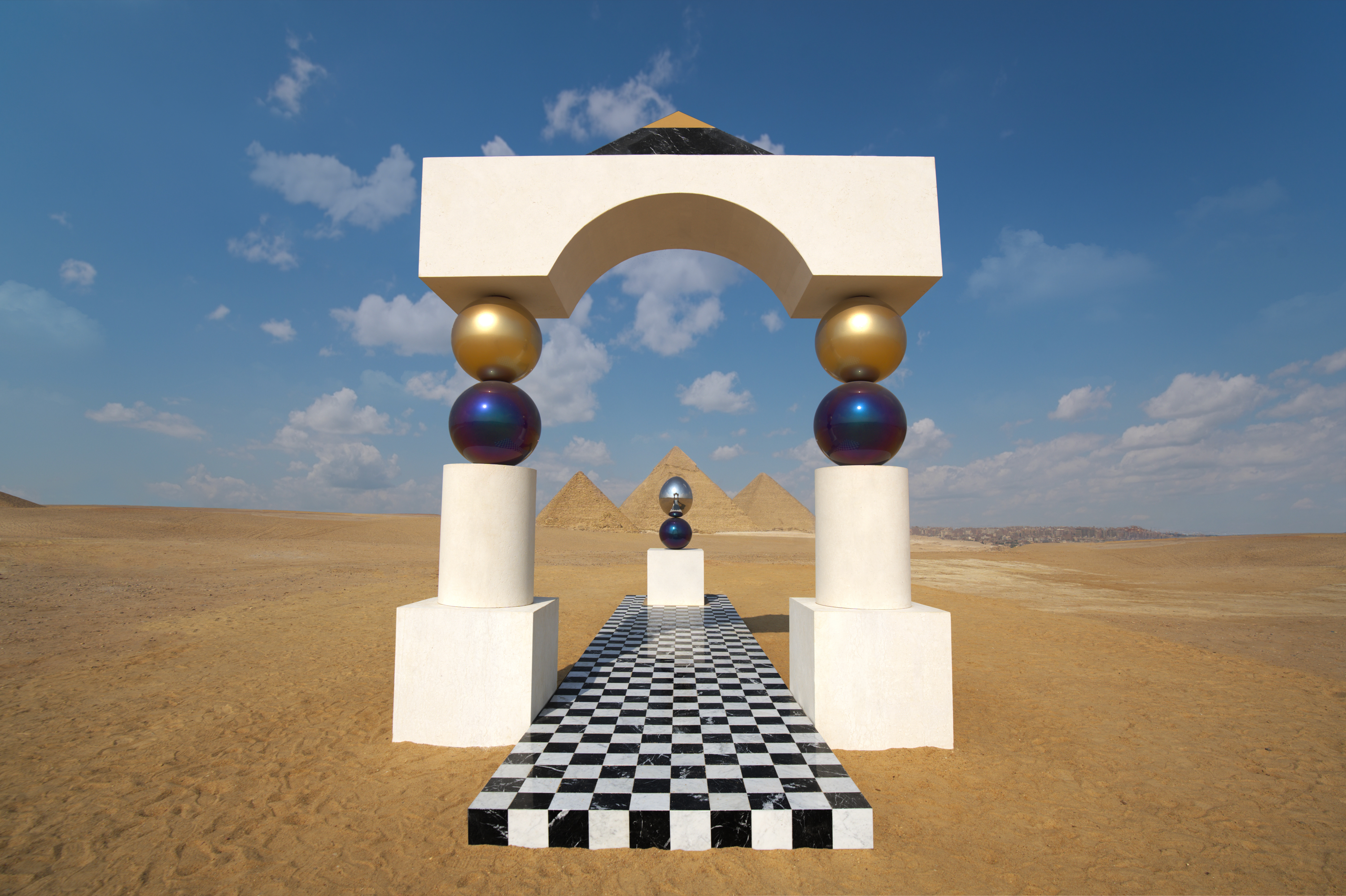 "Mirror Gate" for third edition of Forever is Now — an exhibition of 14 international artists set against the backdrop of the Pyramids of Giza. Photo courtesy of the artist.
What drew you to show at Load Gallery? You’ve often worked outside the traditional gallery system — do you feel this is a shift for you or an evolution?
It gave me a new scale. A feeling of culmination. But I’ve never relied on the gallery system. It’s more about energy alignment. If it feels right, I go. This felt like a line running through all my work — and Load understood that.
You’re so prolific — it seems like there’s always another collaboration, installation, or idea. What’s next for you?
I’m working on a book that questions reality and creativity—it’s like a map of my thoughts and my work, kind of a case study but also a diary. In terms of what’s next, I don’t have a specific collaborator in mind, but dream locations would be Antarctica, Easter Island, or maybe even teleporting into the Flintstones
Pilar’s voice is present, poetic, and full of quiet power:
In a world that often feels too literal, Pilar Zeta reminds us that energy is real, portals are possible, and art—when charged with intention—can be a map to something higher.
To the wind with the traditions. Sometimes we just need passion with a dash of steadfast vision. And the courage to remember our dreams.
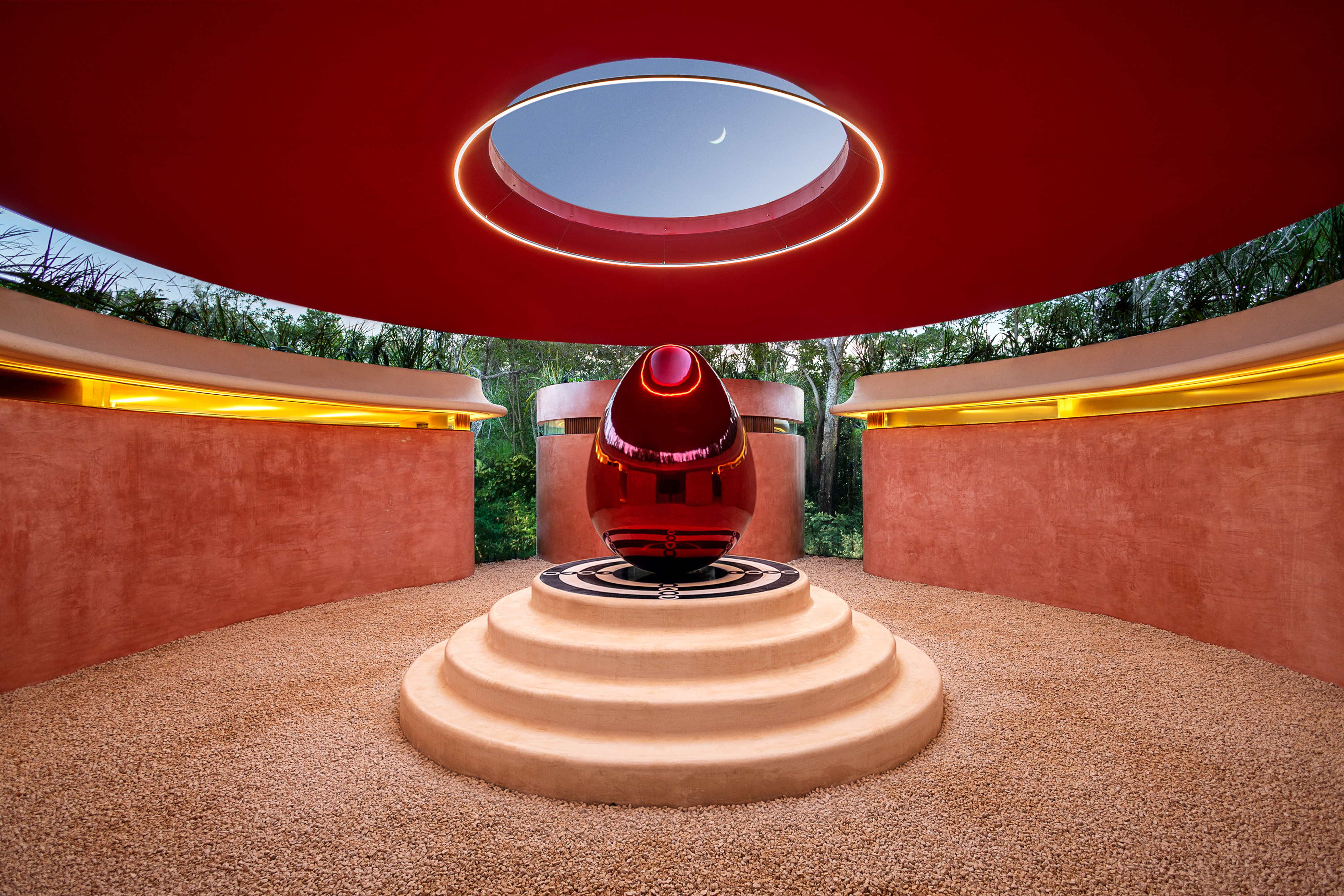 Portal Del Eter Rojo 1 located in Mexico City. Photo courtesy of the artist.
Pilar Zeta
Visions
3 April – 10 May

AnnaLiisa Benston
AnnaLiisa Benston is a writer, curator, and creative strategist consultant with a background in fine arts, technology, business, and cultural production. She holds an MFA from SVA and a BFA from Pratt, bringing a sharp, interdisciplinary perspective to her work. As a creative producer for the Satellite Art Show during Miami Art Basel, she has shaped innovative cultural experiences in collaboration with leading artists and designers. Passionate about the intersection of art, technology, and intellectual property, her writing explores aesthetics, creative economies, and the shifting dynamics of artistic ownership in the digital age. She currently lives in Brooklyn with her black rescue cat, Shadow.
view all articles from this author