Whitehot Magazine
September 2026
"The Best Art In The World"
"The Best Art In The World"
September 2026
Richard Estes: When Photographs Stand on Their Own
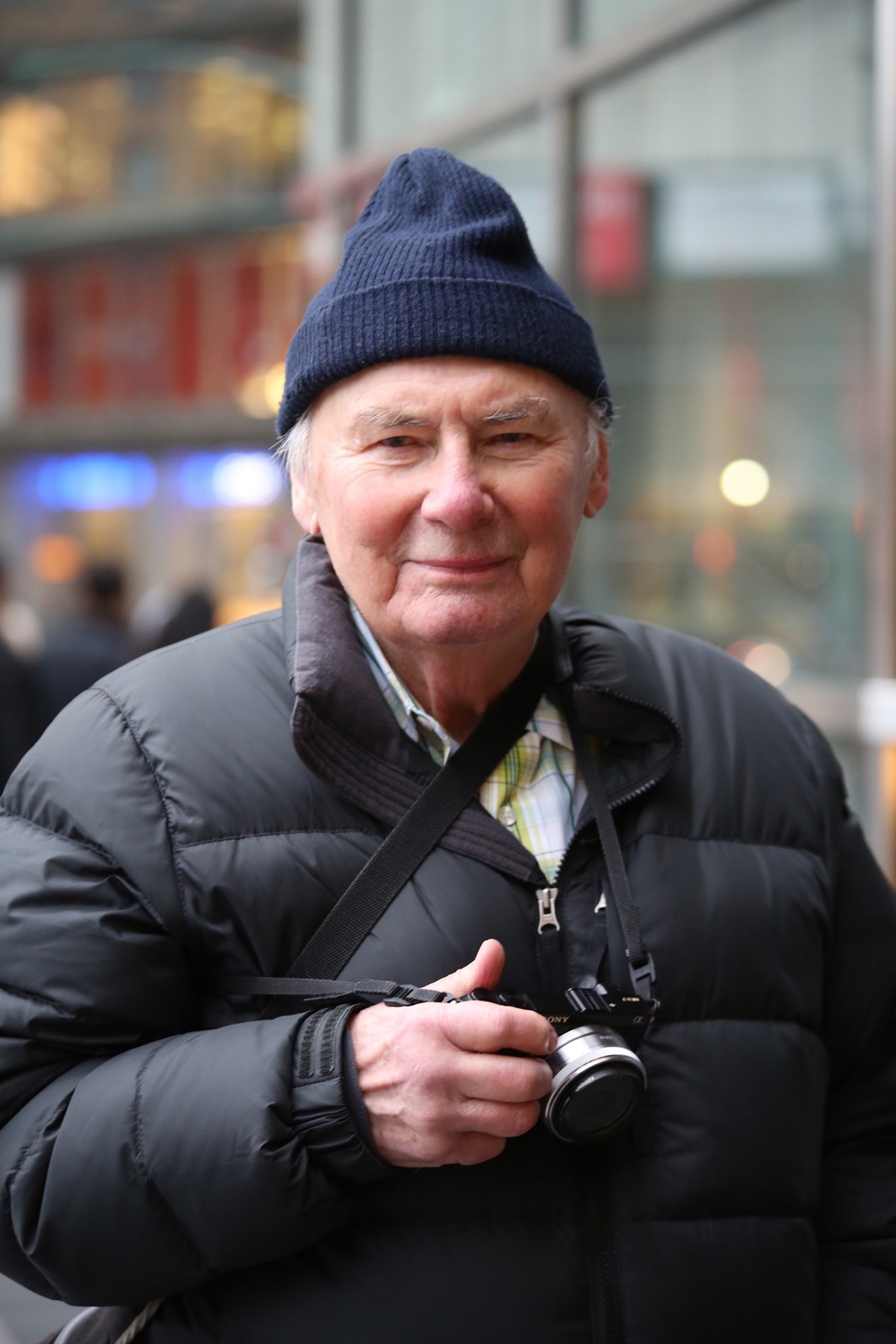 Richard Estes. Courtesy Schoelkopf Gallery.
By KUN SOK August 4th, 2026
In Richard Estes: My Camera Is My Sketchbook at Schoelkopf Gallery, Estes presents his photographs as standalone works of art for the first time in his career. The exhibition brings photographs, paintings, and prints together, foregrounding the place of photography within his broader practice.
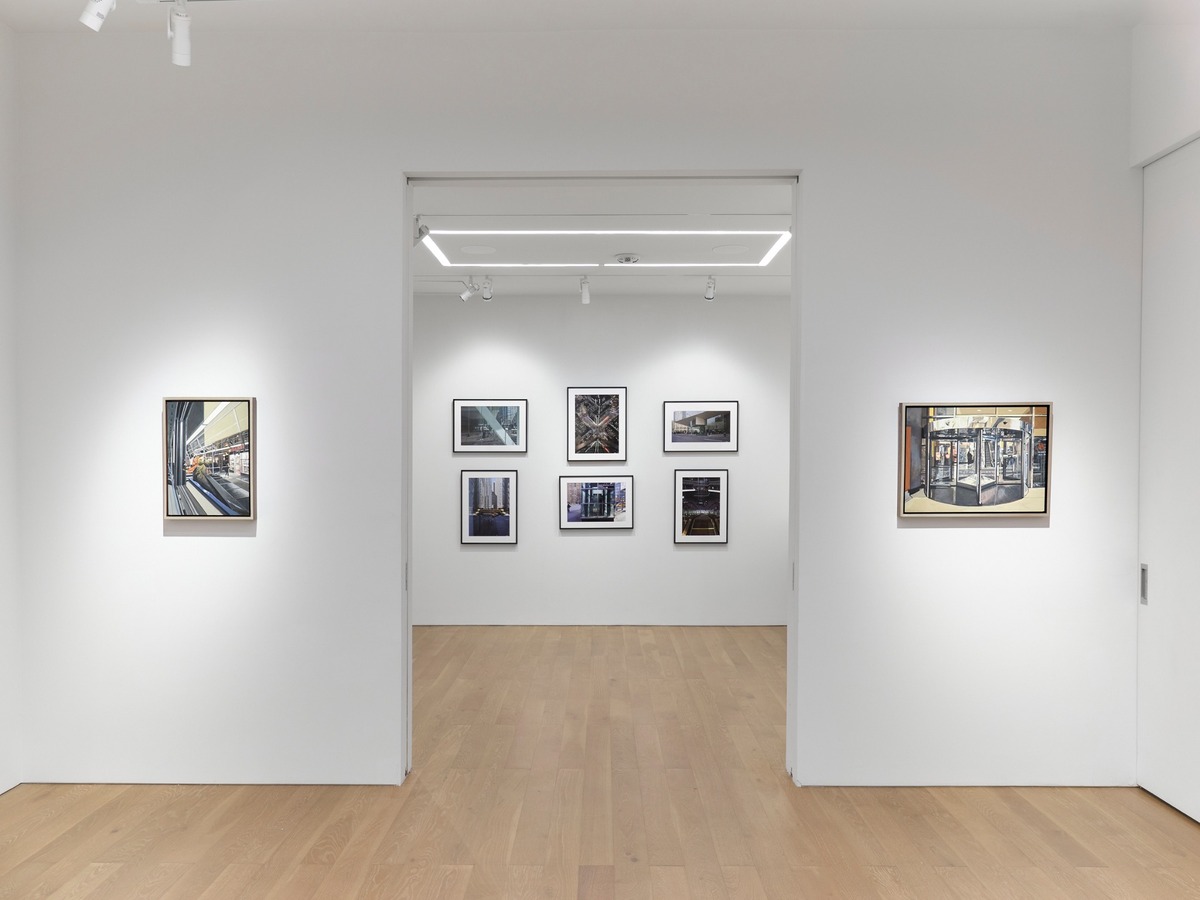 Installation view of Richard Estes: My Camera Is My Sketchbook at Schoelkopf Gallery, New York, 2026. Courtesy Schoelkopf Gallery. Photo by Victoria Loeb.
Estes discusses what attracts his attention when he photographs, how he selects and prints his images, and how he alters composition, spatial relationships, and color when working in paint. Alana Ricca, Managing Director of Schoelkopf Gallery, addresses the exhibition’s origins, the selection of the photographs, and the relationships among the photographs, paintings, and prints.
For this interview, I interviewed Estes separately about his photographic and painting processes and Ricca about the exhibition’s origins, selection, and installation. Their responses have been lightly edited and arranged for clarity and continuity.
Kun Sok: For decades, your photographs were generally discussed as part of the process behind your paintings. What led to presenting them publicly as works in their own right at this moment? How did the decision come about?
Richard Estes: It seemed like a natural evolution of the way I work. In this show, I’m exhibiting my photographs as works of art for the first time. In the past, I showed composited photographs as reference material. Now the photographs are standing on their own, unaltered.
KS: Alana, this is the first exhibition to present Richard Estes’s photographs as independent works. Could you describe how the idea originated, who initiated the conversation, and how the title My Camera Is My Sketchbook was selected?
Alana Ricca: When Richard expressed his desire to exhibit his photographs as standalone works of art, naturally, we were delighted to make it happen! But we also knew it would expand our audience’s understanding of Richard’s practice and reveal an aspect of his process that has not been considered as deeply. His approach to composition and geometry is so refined, and his visual curiosity about the world is truly inspiring. His photographs underscore that even further.
Richard has often used this expression to describe how photography factors into his process, and it’s quite fitting for this exhibition, in particular because of the focus on showing his photographs for the first time.
KS: Richard, what does the idea of the camera as a sketchbook mean in practical terms? What do these photographs reveal about the way you look at and try to understand the world?
RE: These photographs reveal what draws my attention. You’ll notice the kinds of things that catch my eye, like reflections, geometry, or architecture. It all continues to interest me, especially in New York City. I really just look at the world and try to understand it, so the photographs are part of that process.
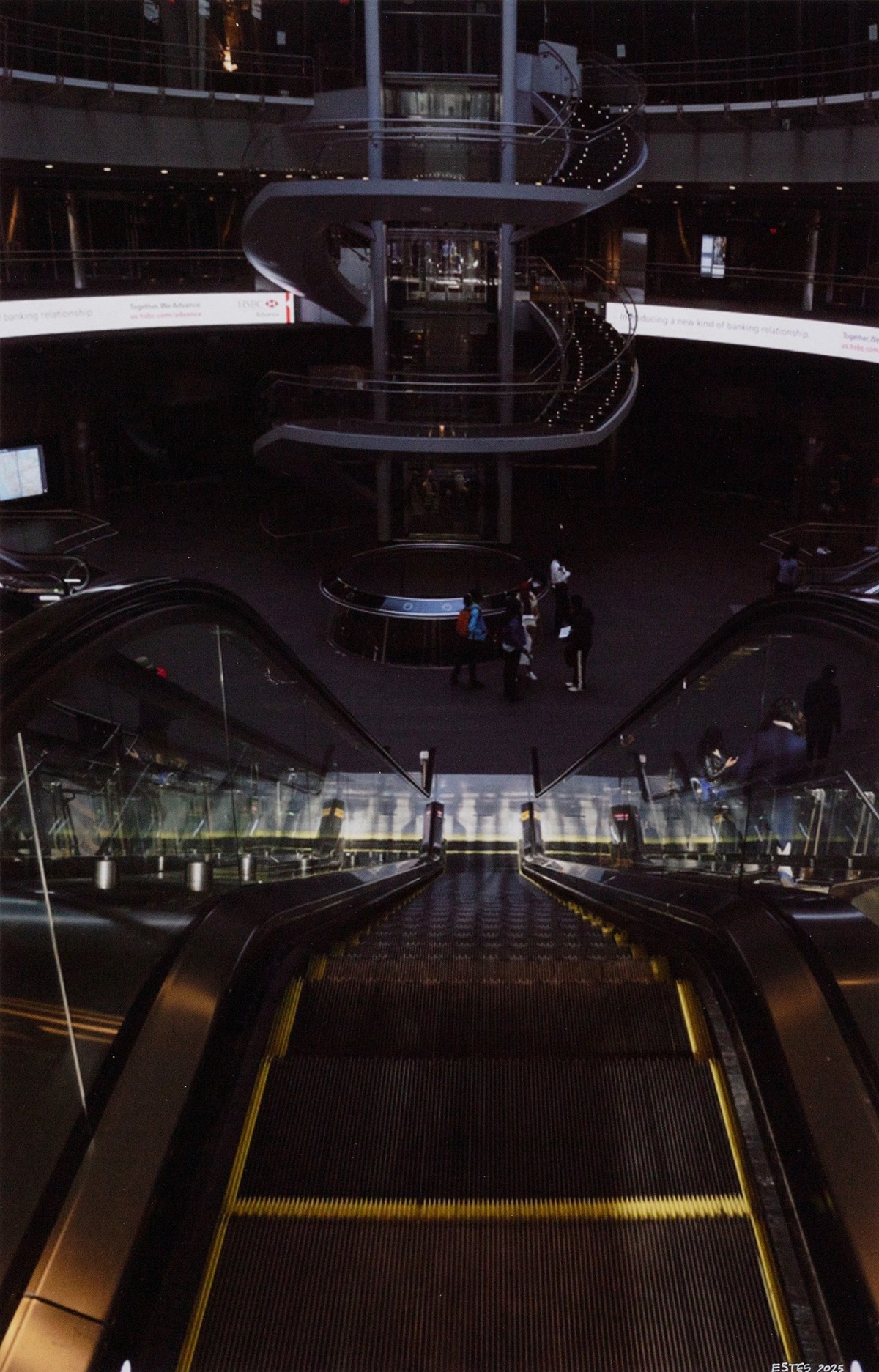 Richard Estes, Escalator at Fulton Center, 2025. Inkjet print, image size 19⅞ × 12¾ inches; sheet size 22 × 17 inches. © Richard Estes. Courtesy Schoelkopf Gallery.
KS: The photographs in this exhibition were digitally captured and printed by you. How do you decide which image becomes a finished photograph, and what role does printing play in that process?
RE: I just take a lot of pictures and try to decide which one I like the best. I have always printed my own photographs and continued to do so for these new works.
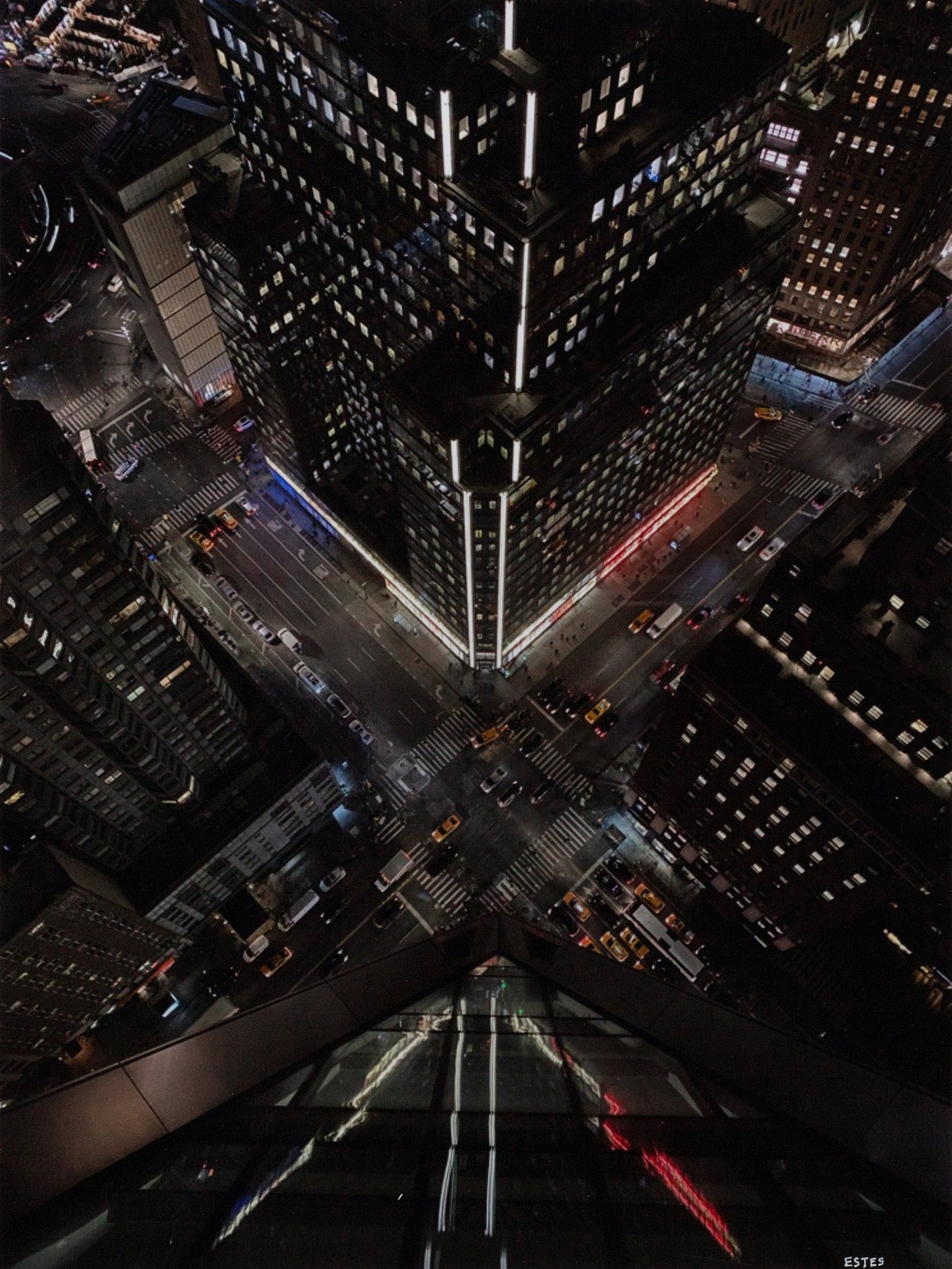 Richard Estes, 57th Street and 8th Avenue, 2026. Inkjet print, image size 19⅞ × 15 inches; sheet size 22 × 17 inches. © Richard Estes. Courtesy Schoelkopf Gallery.
KS: Alana, how were the photographs selected from Estes’s larger archive, and how did the gallery approach their relationship to the paintings and prints in the installation? Did seeing the photographs framed and installed as a distinct body of work alter your understanding of Estes’s career or the place photography occupies within his broader practice?
AR: Again, we took our cue from Richard. He moved to New York in 1958, so of course there was no shortage of incredible material. The exhibition highlights New York scenes as a nod to our local audience, and certainly Richard has had a passion for the aesthetics of urban life throughout the entirety of his practice.
We strive, as we do with all of our presentations, to engage an audience with a full picture of Richard’s practice. His vision is remarkably consistent over the years. Don’t forget he’s been working for over six decades! We found it was easy to draw connections across mediums and time periods because Richard’s eye has been so incredibly distinct—and celebrated—for so long.
We believe deeply in Richard’s importance in the history of Photorealism and American art as a whole. For me, seeing his photographs as fully realized artworks just further emphasizes how strong and clear his vision is.
KS: Richard, you often construct a painting from several photographs rather than transferring a single photograph directly into paint. What kinds of changes do you make to composition, spatial scale, and color while developing the final image?
RE: I cheat a little bit. You try to make it a good composition, shifting things a little bit. I always liked the wide-angle lens, but that exaggerates things in the distance. They become so small, they lose what they really look like. You can enlarge them so things that are far away feel in balance with things in the foreground.
There’s no logic to it. It’s just what looks the best. You can’t really match colors either. There are colors you simply can’t make in paint as opposed to what you see in a photograph.
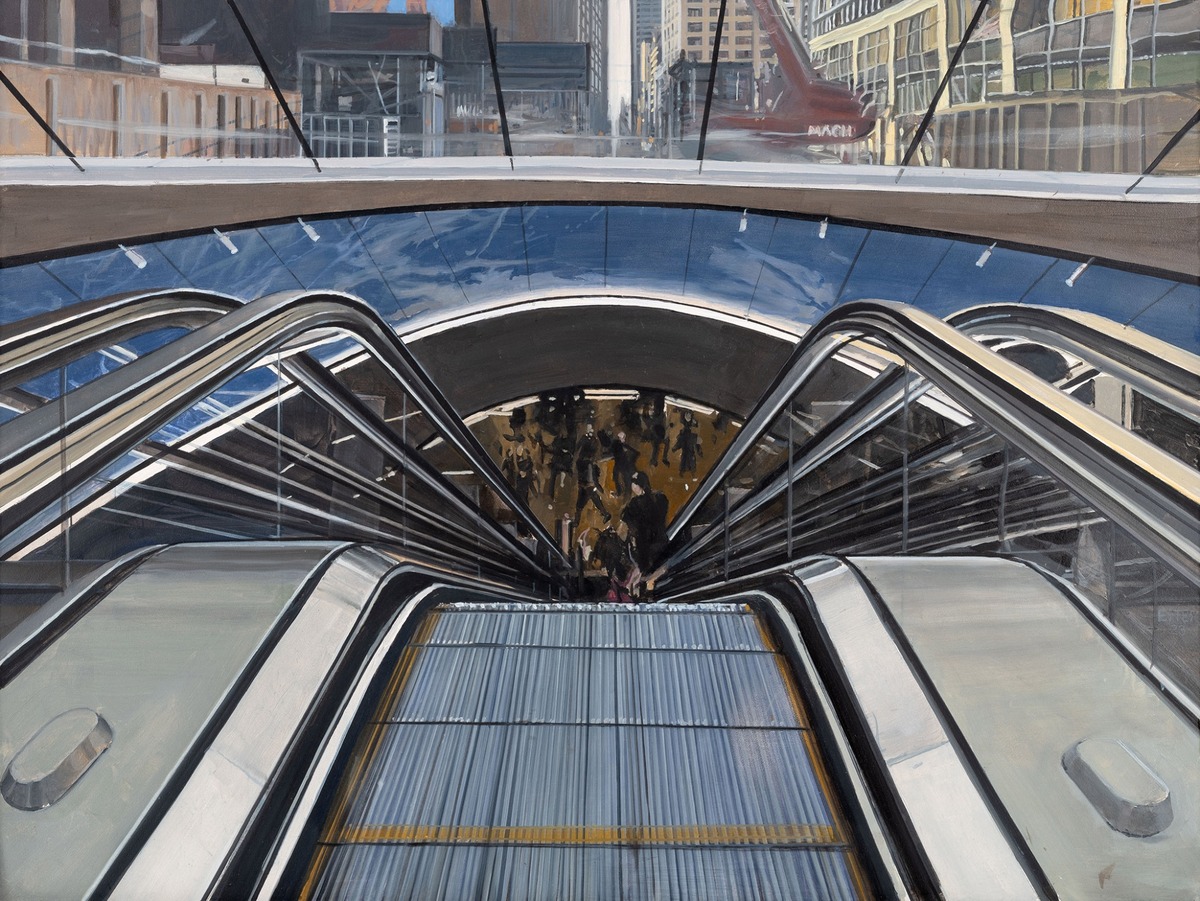 Richard Estes, Escalator at Penn Station, 2023. Oil on panel, 18 × 24 inches. © Richard Estes. Courtesy Schoelkopf Gallery.
KS: New York City and Maine have both been central to your work for many years. How does your way of looking change between the density, movement, and reflective surfaces of New York and the landscape, water, and open space of Maine?
RE: I’m still fascinated by the architecture and complexity of New York. When I started spending time in Maine, I wanted to see if I could paint the natural environment too. That challenge appealed to me.
One of my subjects is water waves. It’s sort of fun to do because you just scribble it in. You don’t have to worry about drawing waves; you sort of make waves. You hope that it will have the illusion of water.
The sky can be difficult to get right. You always have to make the sky much darker than it really is in photographs. You don’t want it to be too blue. It’s sort of vulgar if it’s too blue. You also need something dark enough for clouds and buildings to stand out against. I basically use two blues. One is ultramarine and one is Prussian blue.
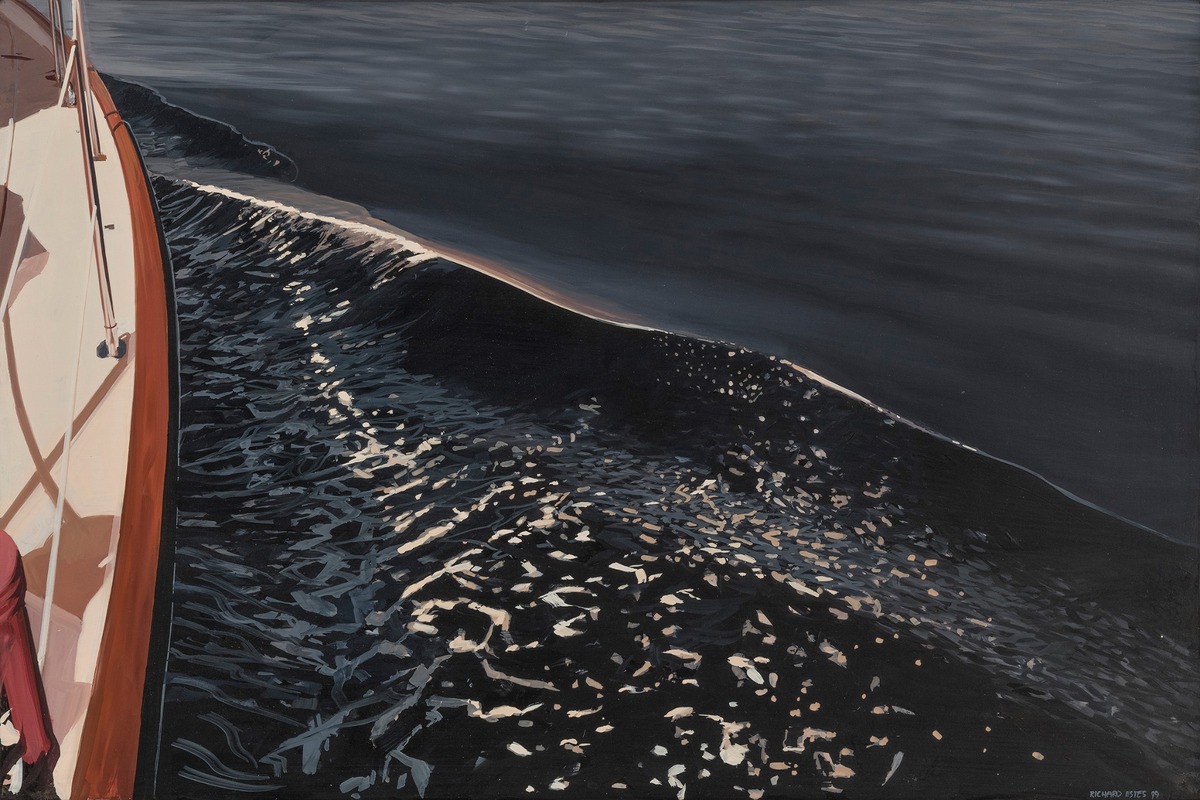 Richard Estes, Sailing, 1999. Oil on panel, 16 × 24 inches. © Richard Estes. Courtesy Schoelkopf Gallery.