Whitehot Magazine
October 2026
"The Best Art In The World"
"The Best Art In The World"
October 2026
Patrick Guetta: Redirecting the Language of Recognition
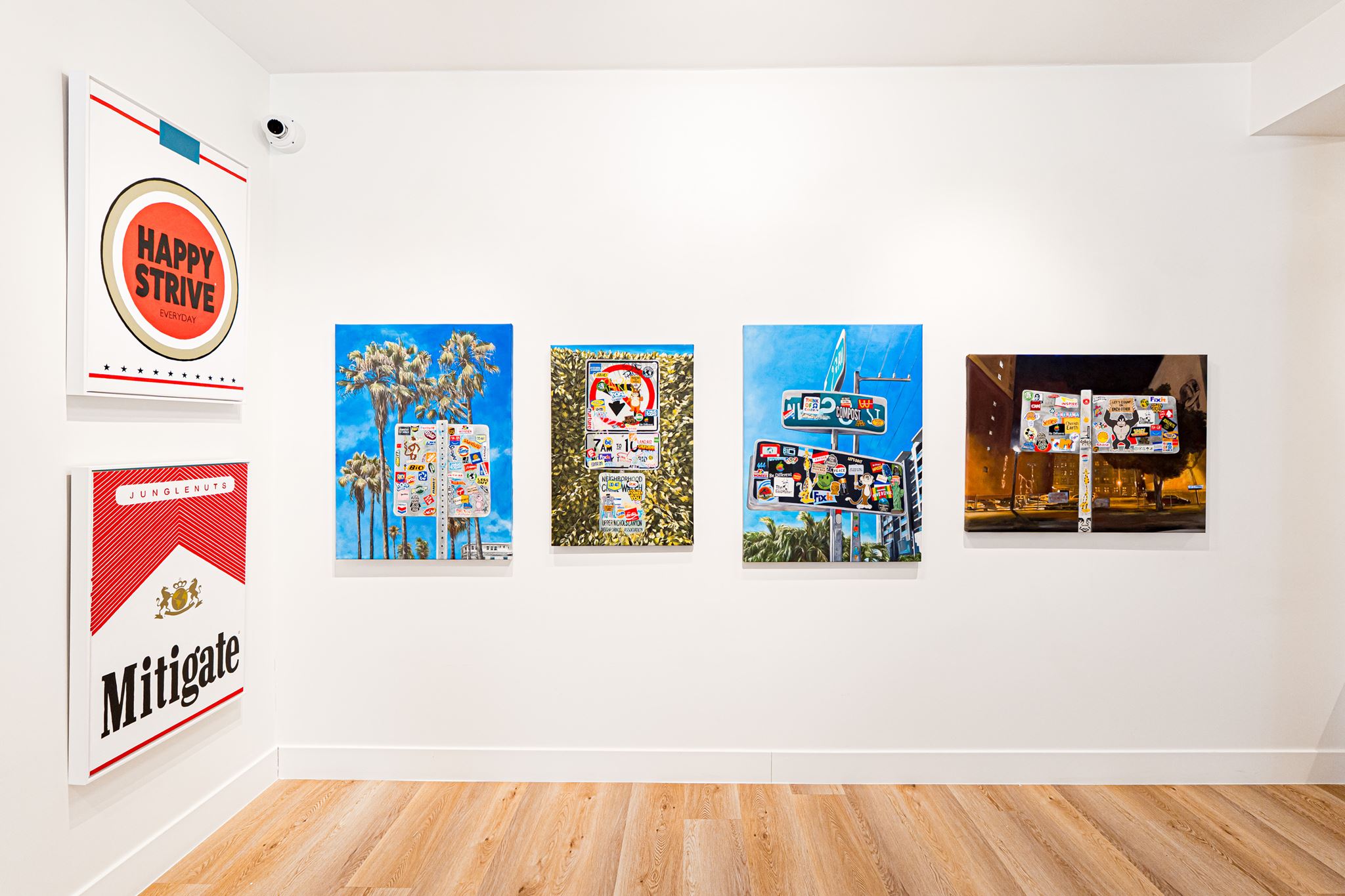
Patrick Guetta, Time is the Essence, Hamilton-Selway Fine Art. Photo: Jorge Alejandro Photography
By Carlota Gamboa, June 13, 2026
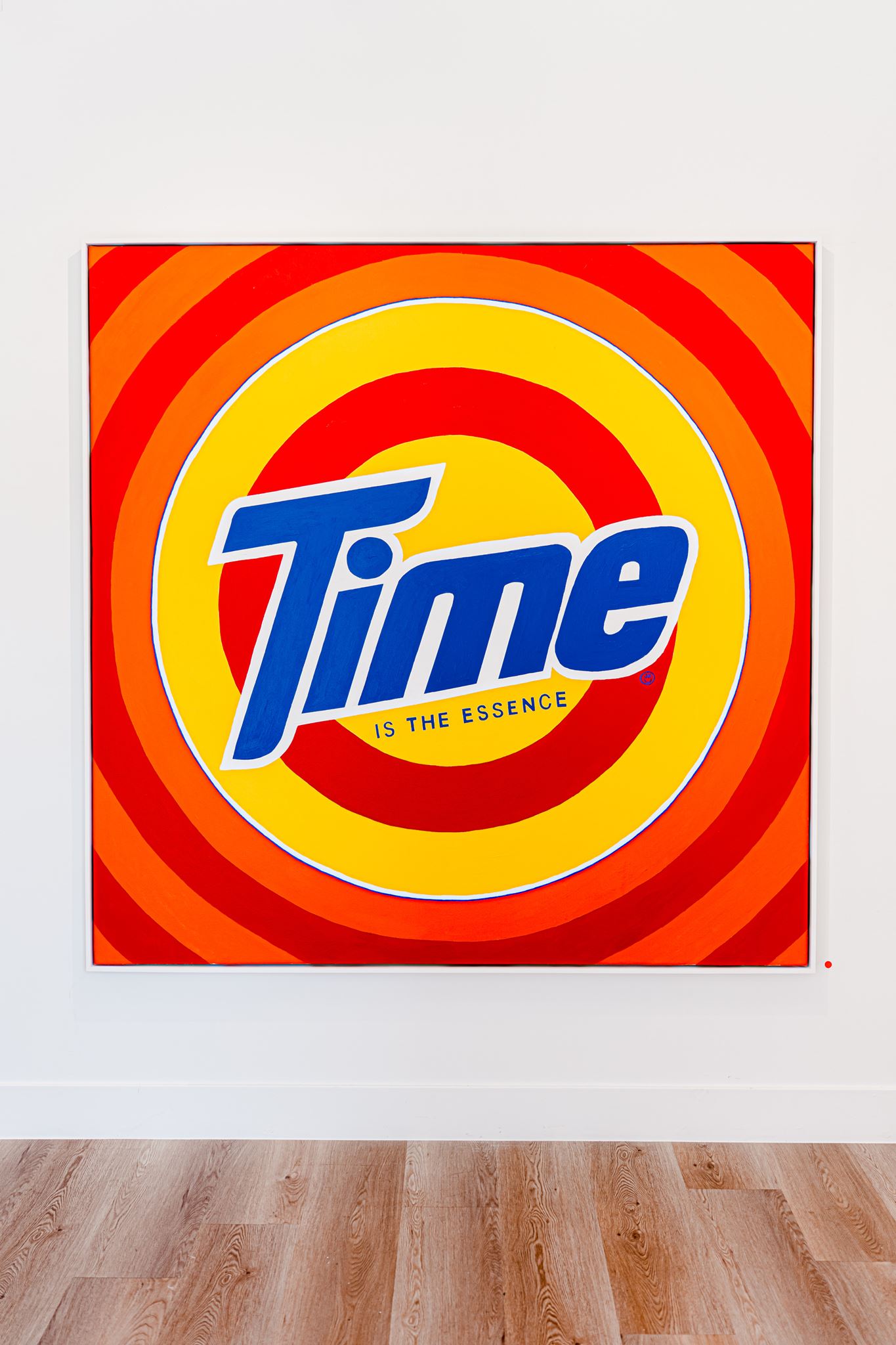
Presenting his debut solo exhibition, Time is the Essence, at Hamilton-Selway Fine Art in Los Angeles, artist Patrick Guetta unveils a collection of work that transforms some of the most familiar visual symbols of our quotidian life into vehicles for environmental awareness. Through paintings of altered logos, site-specific photographic interventions, and a set of recurring cartoons known as the Junglenuts, Guetta constructs a visual landscape that feels at once recognizable and defamiliarized.
The exhibition arrives to viewers after the artist spent decades working in the conjunction of art and branding. For much of his career, Guetta worked behind the scenes—first in apparel and licensing and later within the contemporary art world as a studio assistant—developing an intimate understanding of how visual culture is manufactured, distributed, and consumed. Now, with Time is the Essence, those experiences converge into a practice that examines the power of images already embedded within a collective consciousness. “I want to ignite a sense of awareness,” he says. “The images we've trusted all our lives already live in our minds. I'm simply redirecting them.”
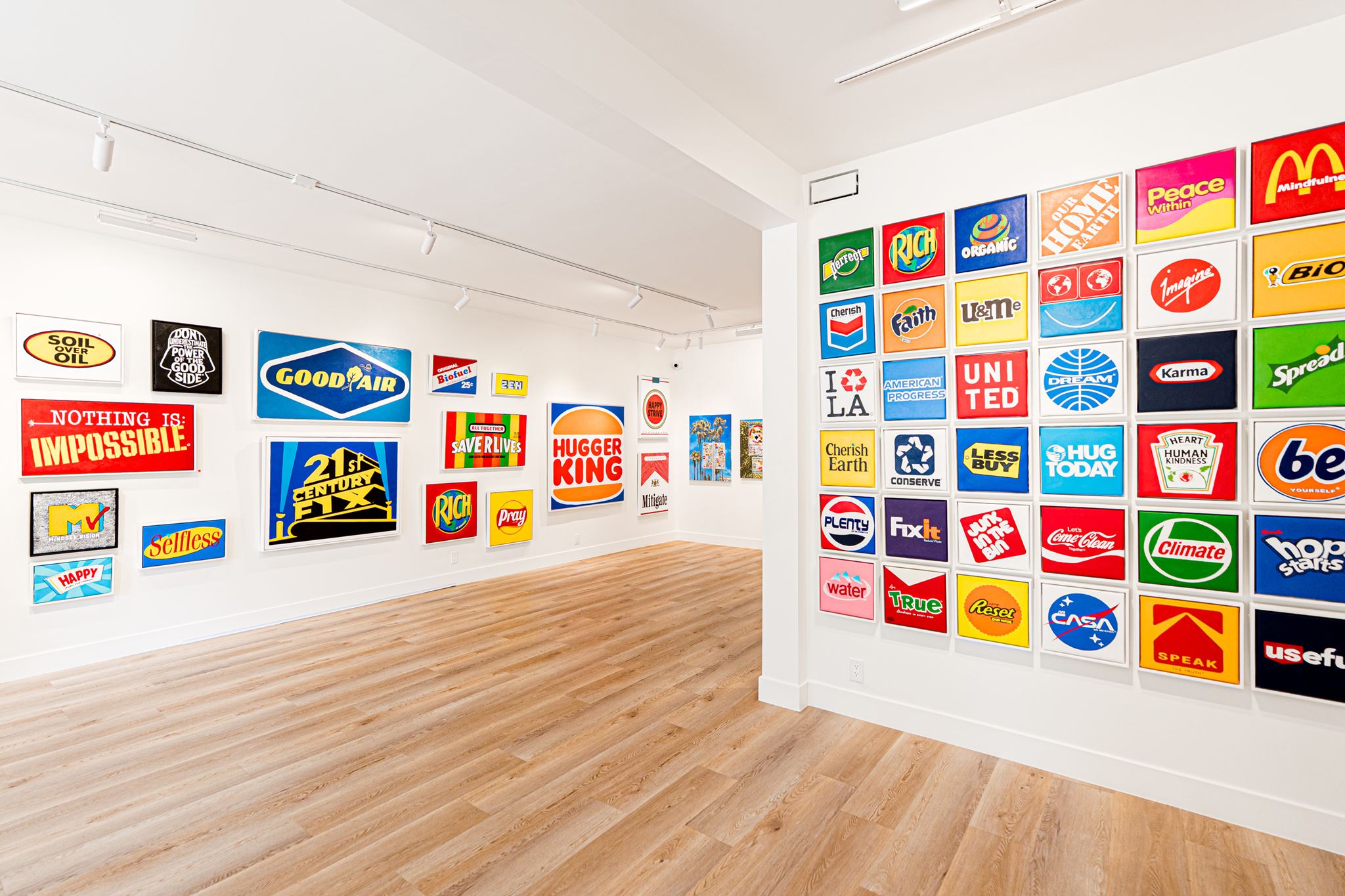
Patrick Guetta, Time is the Essence, Hamilton-Selway Fine Art. Photo: Jorge Alejandro Photography
The corporate logos and advertising slogans that appear throughout the exhibition, alerting the viewer to the familiar while decontextualizing them from their original intent, are a culmination of sentiments that Guetta has been working with for years. Before his emergence as a fine artist, Guetta spent his time immersed in branding culture. During the late 1980s and 1990s, he produced apparel and merchandise for major film studios, relying on similarly recognizable characters and imagery. The experience fed his understanding of the influence advertisement has on the public's perception.
As licensing became increasingly corporate and restrictive, Guetta found himself drawn toward creating original characters and began operating a successful vintage T-shirt business on Melrose Avenue. After publishing a book with Taschen devoted to vintage shirt graphic culture, he simply moved on from the field. “Eventually I reached a point where I asked myself what I really wanted from my work,” he says. “I wanted something deeper, something I could genuinely contribute to.” Rather than pursuing imagery solely for its market value, Guetta began searching for a subject that felt more urgent and personally meaningful. The answer emerged through a group of cartoon-like animal characters he had been developing independently for years.
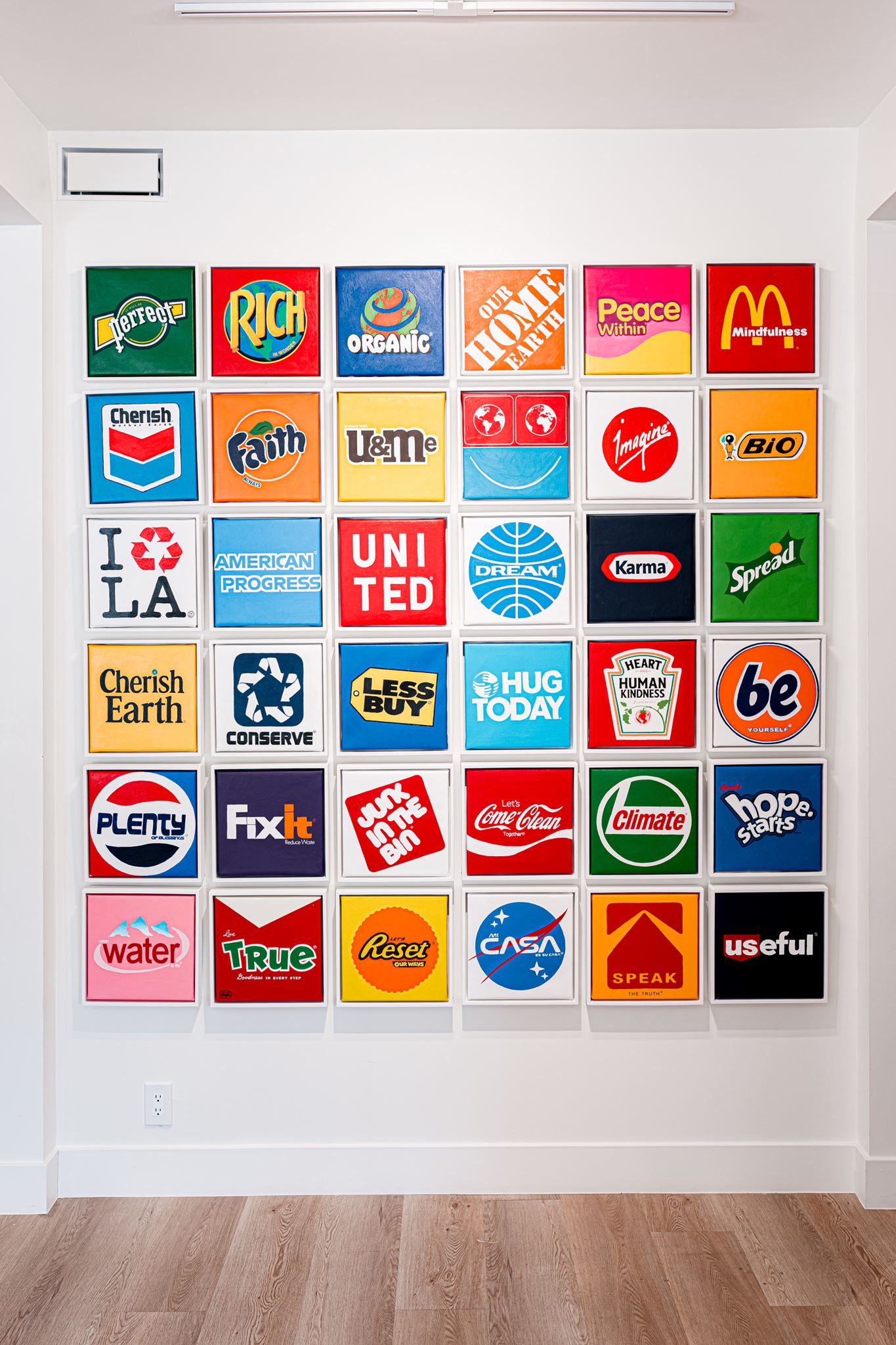
Patrick Guetta, Time is the Essence, Hamilton-Selway Fine Art. Photo: Jorge Alejandro Photography
“I asked myself, if these animals could speak, what would they say to humans? Animals can't protest. They don't have a voice. But if they could speak, I felt they would talk about the environment. Humans and animals need the exact same things: air, water, and land. When humans damage the environment, we're hurting ourselves and every other living creature. So I decided to give the animals signs, as if they were protesters. I wrote environmental messages on those signs and began creating a dialogue between the characters and the viewer.”
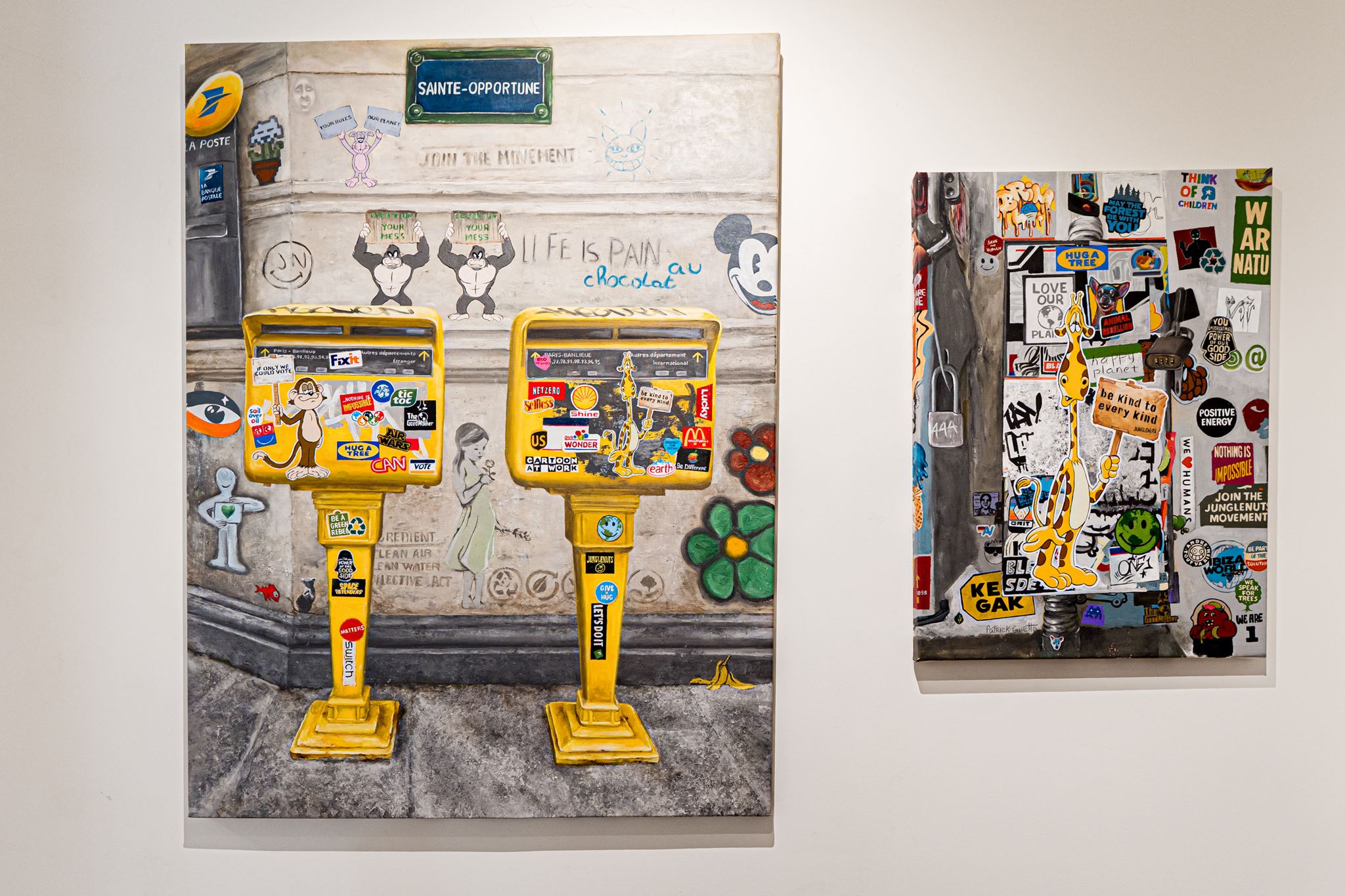
The resulting series, known as the Junglenuts, transformed his ongoing drawings into silent activists. Holding protest signs and carrying concise environmental messages, they became stand-ins for a natural world that cannot advocate for itself. And alongside the intervened logos, Guetta is bringing the human back into a space that has been used to guide subliminal consumer influence for decades.
Patrick Guetta, Time is the Essence, Hamilton-Selway Fine Art. Photo: Jorge Alejandro Photography
Rather than inventing entirely new symbols, Guetta appropriates visual systems already operating within a collective memory and redirects their momentum toward a different purpose. It is an approach that situates his practice within a broader lineage of conceptual and pop artists who have examined mass media, advertising, and consumer culture since their conception. “Those companies spent billions and billions of dollars putting those logos inside our brains,” he explains. “I'm attaching myself to that memory and rerouting it. I'm redirecting it toward something for the environment.” Yet unlike many earlier critiques of commercial imagery, Guetta's work is less interested in exposing manipulation than in repurposing existing visual infrastructure for constructive ends.
Several of the works featured in Time is the Essence originate from photographs taken in cities including Los Angeles, New York, Miami, and Paris. “For a brief moment I became a street artist,” Guetta explains. “I took these stickers and put them up around the city. Every time I installed one, I photographed it. When I came back, I began looking through those photographs and noticed something fascinating. The stickers were interacting with countless other stickers and visual messages in public space.”
Patrick Guetta, Time is the Essence, Hamilton-Selway Fine Art. Photo: Jorge Alejandro Photography
Born from the influence of urban sticker culture, Guetta’s process of logo-revision had to originate from site-specific intervention because it had to find its place among the other cultural symbols of our contemporary archive. As his stickers competed for attention with the original advertisements, they were able to take on an agency of their own. “One logo became ten. Ten became fifty,” he continues. “Eventually I became obsessed with creating them. Every new painting required more logos, and suddenly the logos themselves became the artwork.”
In a culture saturated with signs competing for attention, Time is the Essence proposes that perhaps the most powerful gesture is not creating new symbols, but transforming the ones we already know. However, Guetta's approach avoids moralizing. Rather than creating works rooted in catastrophe or guilt, he seeks to cultivate awareness through optimism. The title serves as both observation and challenge. The environmental questions embedded within Guetta's work are no longer distant possibilities. They are immediate conditions shaping the world now.
To learn more about Patrick Guetta, please visit his website and follow him on Instagram @patrick.guetta

Carlota Gamboa
Carlota Gamboa is an art writer and poet from Los Angeles. You can find some of her writing in Art & Object, Clot Magazine, Salt Hill Journal, Bodega Magazine, Oversound and Overstandard.
view all articles from this author