Whitehot Magazine
October 2026
"The Best Art In The World"
"The Best Art In The World"
October 2026
Night at Gelman Gallery: On a space in fourteen traces
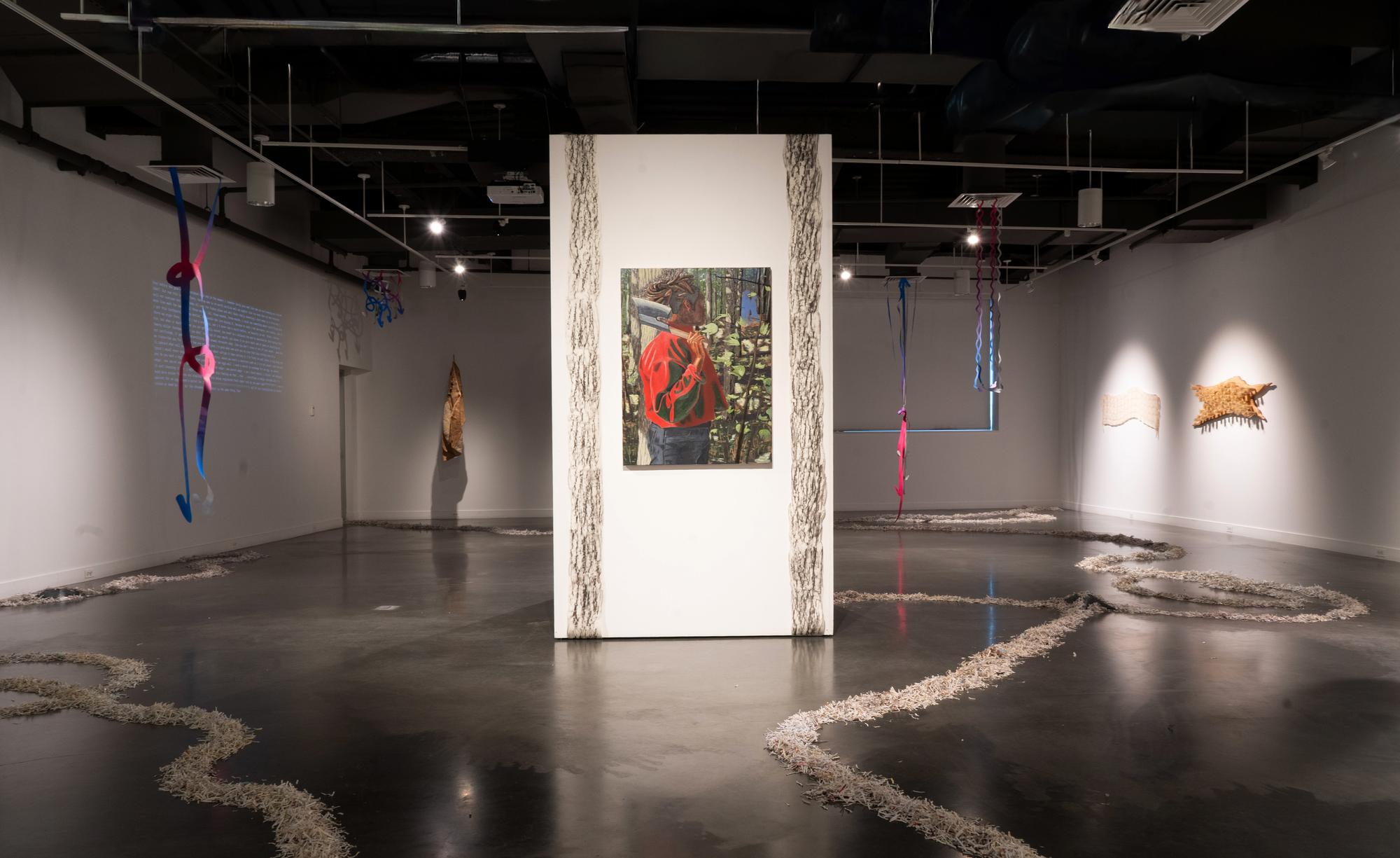
Installation view of a space in fourteen traces. Photo by Echo Youyi Yan. Courtesy of the artist and the curator.
By April Liu May 14th, 2026
In the movie series Night at the Museum, the museum guard encounters a miracle: everything in the museum comes to life during the night. The space loses its usual silence and high dignity. History and stories move closer. Objects become touchable, reachable, and almost too alive.
What happened at Gelman Gallery in Providence on the night of April 30 carried a similar feeling. During the opening of a space in fourteen traces, curated by vida zamora, artworks and space were activated together. They spoke directly through movement, waiting, and sudden shock.
Even before entering the gallery, the poster had already set the tone. The artists’ faces were turned into rough black-and-white portraits, almost aggressive. The poster became a trigger, pulling the atmosphere of the show outward before the opening even began. Stepping into Gelman Gallery that night felt like entering an experimental amusement park. The atmosphere felt suspended. Something could appear, interrupt, or surprise the room at any moment.
Collaborating with Echo Youyi Yan, AnneMarie Torresen's Paper trail spread shredded paper across the floor. The shredded paper, usually treated as waste and carrying almost no value, became an artwork that visitors were unsure whether to step on. A foot might land on it by accident, only to find that the feeling was exactly the same as stepping on normal paper. The work quietly teased the movement of the audience and the conventions deeply rooted in the gallery space.
Nicolás Franco-Zamudio wandered around the gallery handing out earplugs. At that moment, the huge balloon in the corner announced itself as something waiting to happen. The whole space entered a shared state of nerves and excitement. A collective anticipation spread through the space and the crowd.
The gallery front desk had shifted into a bank counter. In Gelman Santander Bank, Edgar Solórzano and Spencer Peterson wore Santander shirts and earphones, dealing with the deposit services requested by the audience with careful carelessness. They were almost faceless, like clerks at a bank. They barely seemed to hear what clients were saying. They mechanically gave out documents and packed the valueless things brought forward for deposit. That curated ignorance became the hit point of the work. People lined up to experience it. In a real bank, people would definitely get pissed off. Here, the alienated behavior turned back toward the audience, making the absurdity of institutional service visible and strangely funny.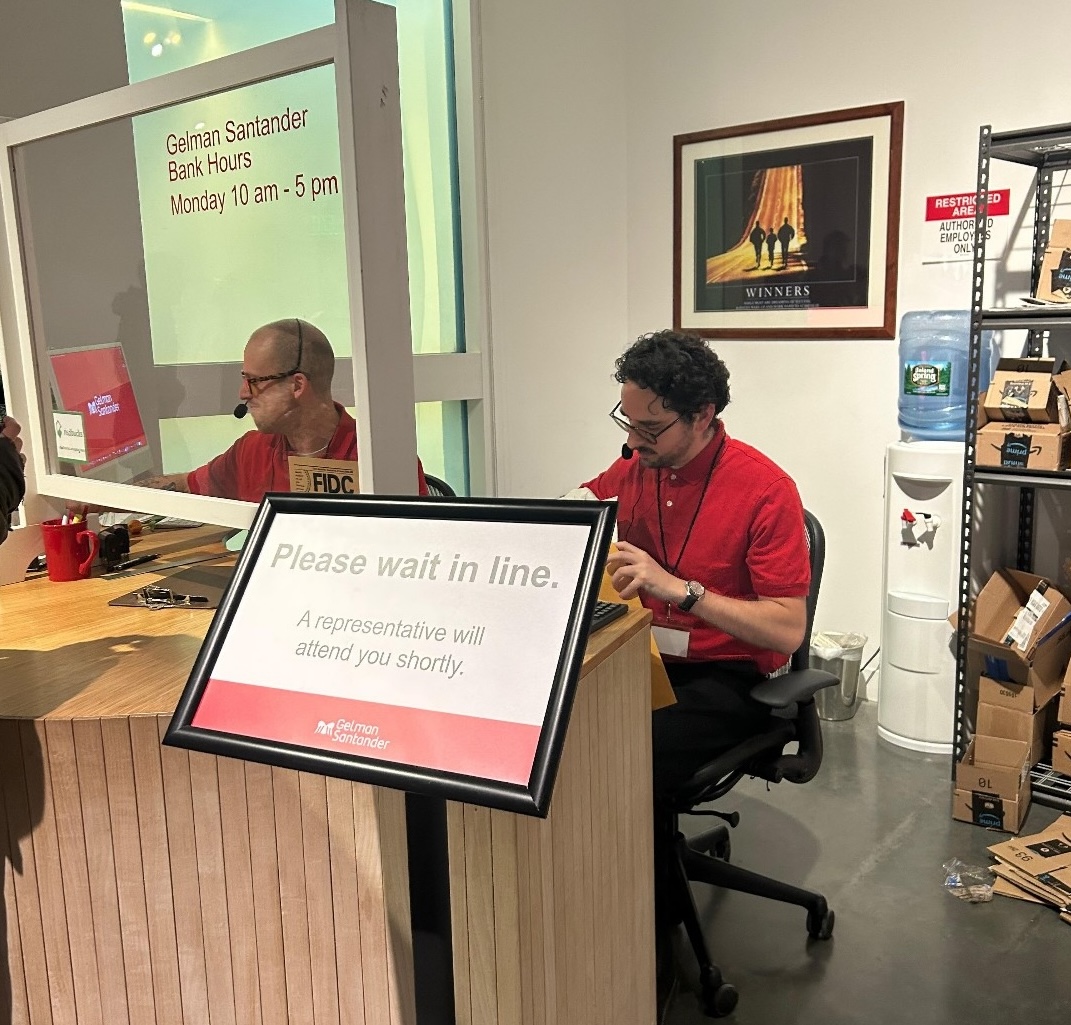
On-site view of a space in fourteen traces. Photo by the artist.
Entering the small room, under the spotlight, stood Echo Youyi Yan’s cage-like structure Defendant’s Playpen, with Del Ziegman sitting inside and typing continuously. Visitors were welcome to enter the room and speak. Ziegman typed what moved through the space, yet the text appeared somewhere else, connected to the large screen outside the gallery. Watching the content and becoming the content creator became two separate positions. The writing body and the written output were separated. The cage also had eggs placed on top of its bars. A structure of control became strangely domestic and almost useless.
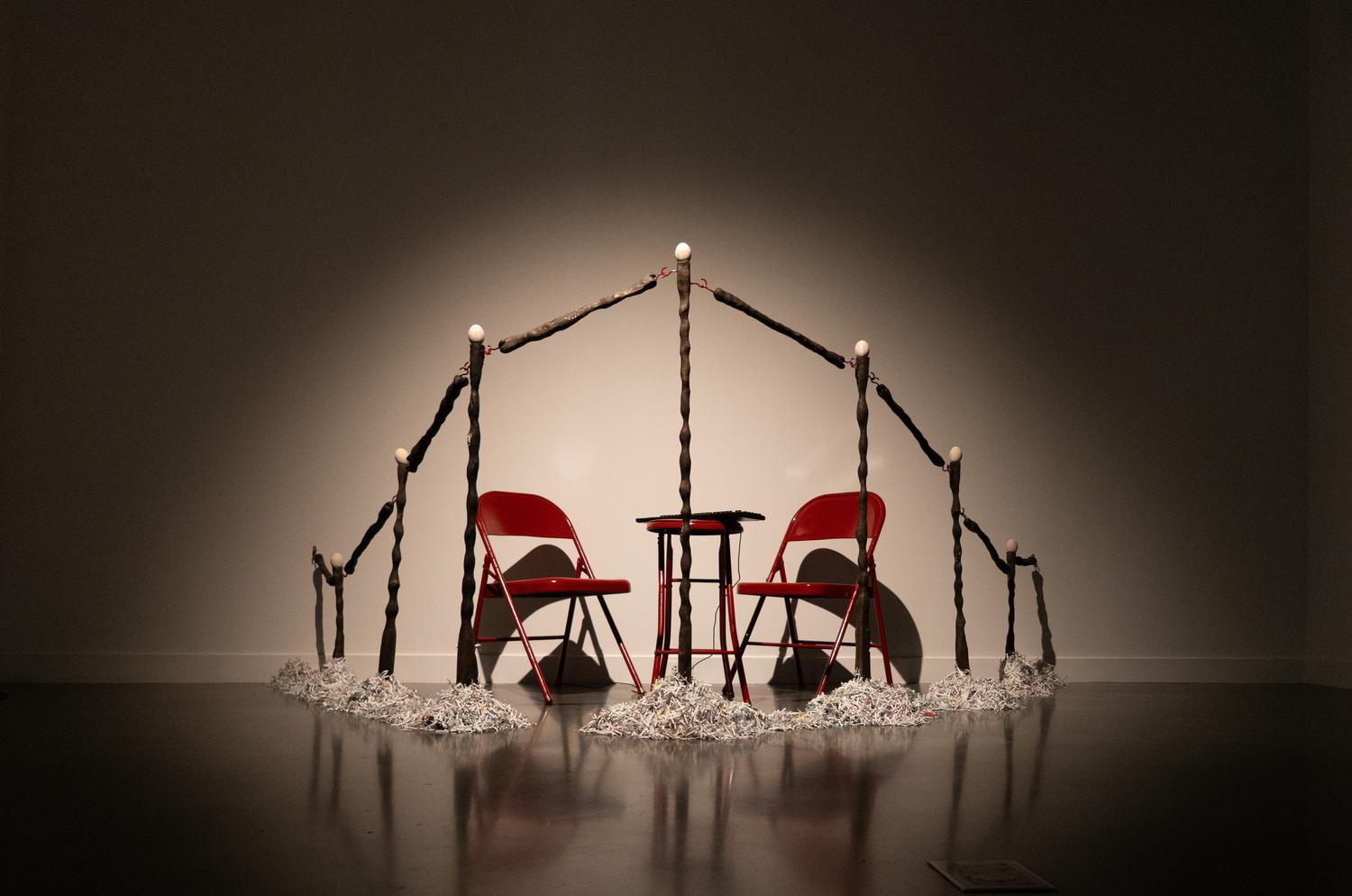
Installation view of a space in fourteen traces. Photo by Echo Youyi Yan. Courtesy of the artist and the curator.
“Boom!”
The balloon exploded. Paper flew through the gallery like a fake fantasy coming apart. The moment was brief, loud, and ridiculous. It broke the rhythm of the room. Cut-out paper missiles and stars flew out like party debris. The explosion was funny, childish, and anxious at the same time. Violence became small, absurd, and almost harmless.
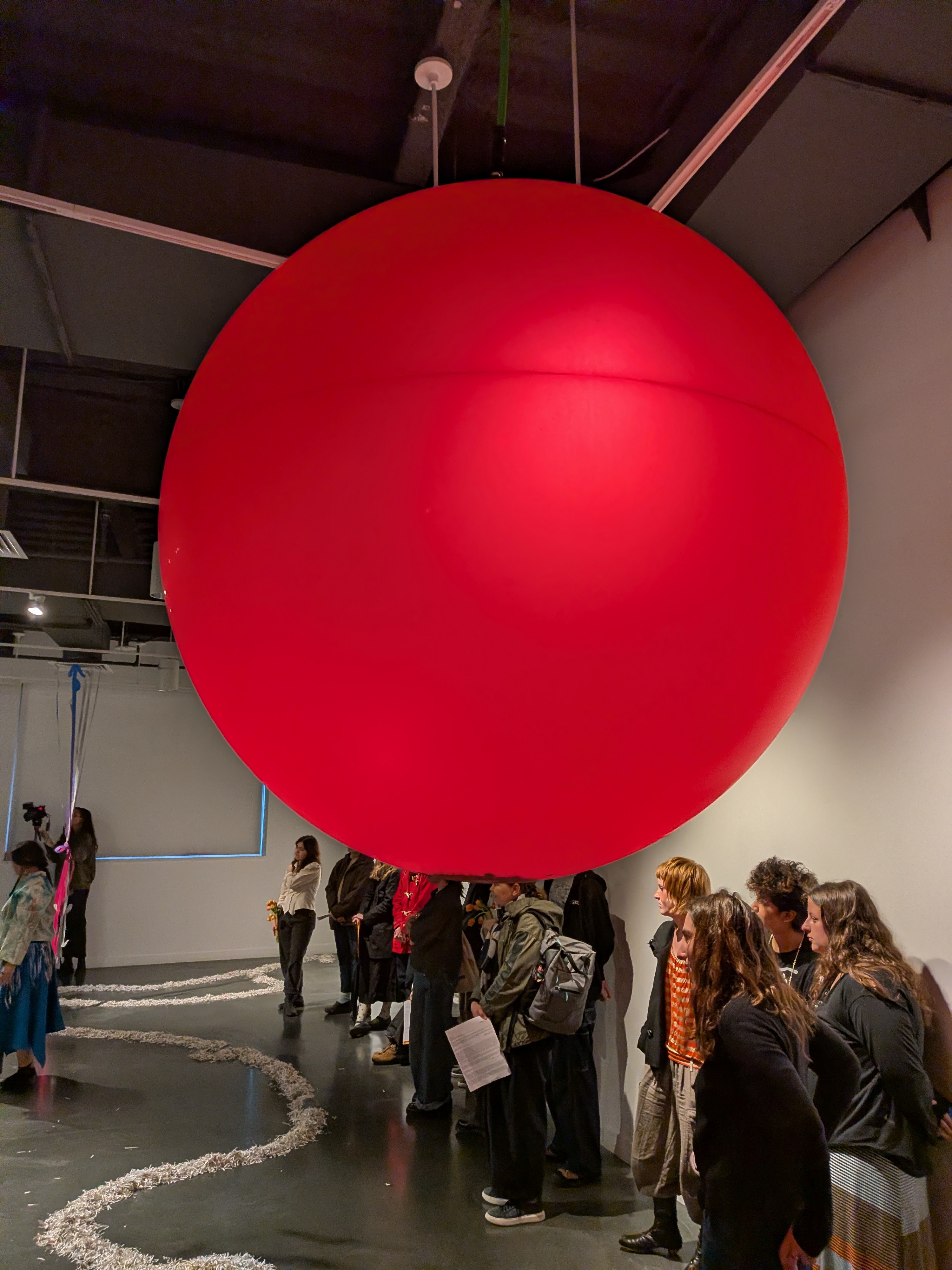 On-site view of a space in fourteen traces. Photo by the artist.
The fourteen groups of artists made the night at Gelman feel like a strange version of Alice in Wonderland: fake, playful, unstable, and a little dangerous. When the opening ended, the show continued through what was left behind. The paper stayed on the floor. The cage stayed in the room. The bank counter became quiet. The remaining works held the space in quieter ways, through painting, textiles, projection, sound, sculpture, and other traces.
The night ended. The sugar coat was peeled away. The gallery became quiet again, yet a crueler residue remained.
April Liu
April Liu is an independent curator and writer working between Providence and New York. She is especially drawn to emerging artists and the fresh perspectives they bring to contemporary art.
view all articles from this author