Whitehot Magazine
October 2026
"The Best Art In The World"
"The Best Art In The World"
October 2026
Anthony Haden-Guest on The Open Eye of Wayne Ensrud
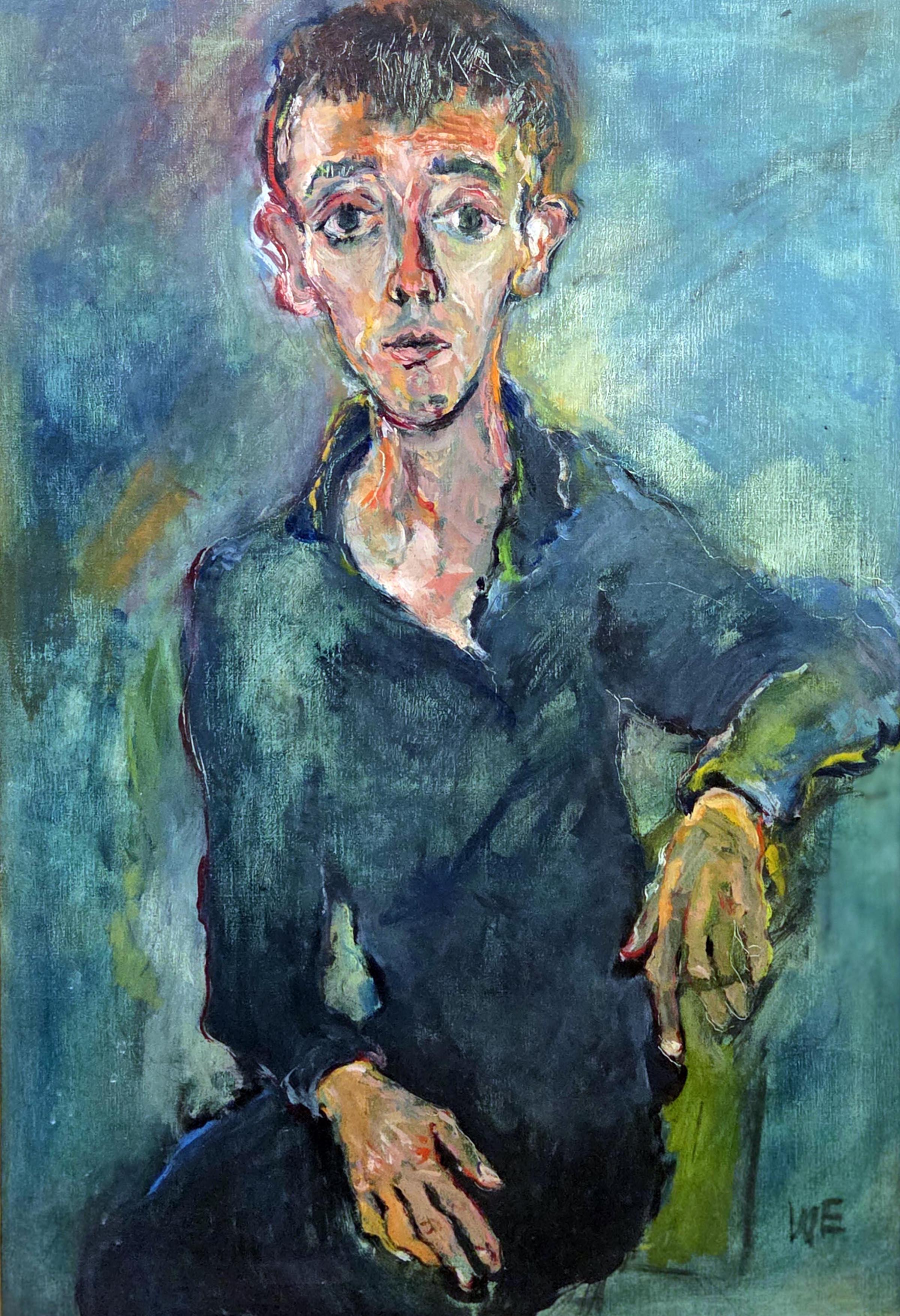 WAYNE ENSRUD-NICOLAI NAGLE-1967-OIL ON LINEN
By ANTHONY HADEN-GUEST May 30th, 2026
The show of work by Wayne Ensrud, now up at the Garner Arts Center in Rockland County, New York, tells a story, and that story is as singular as his remarkable art. Ensrud, who died at 90 in 2024, was the grandson of a Norwegian farmer in Minnesota and grew up a farm boy, handling crops, machinery, the weather. Still, he was also compulsively drawing and painting, practices he had picked up watching the artist mother of a girlfriend. It was she who taught him watercolor painting, saw he had something special, and suggested he apply to the Minneapolis College of Art & Design. He got a partial scholarship, so he attended classes but also worked in the cafeteria. It was there in 1953 that the nineteen-year-old student had a pivotal meeting with an artist/guest lecturer, the 71-year-old Austrian art star, Oskar Kokoschka.
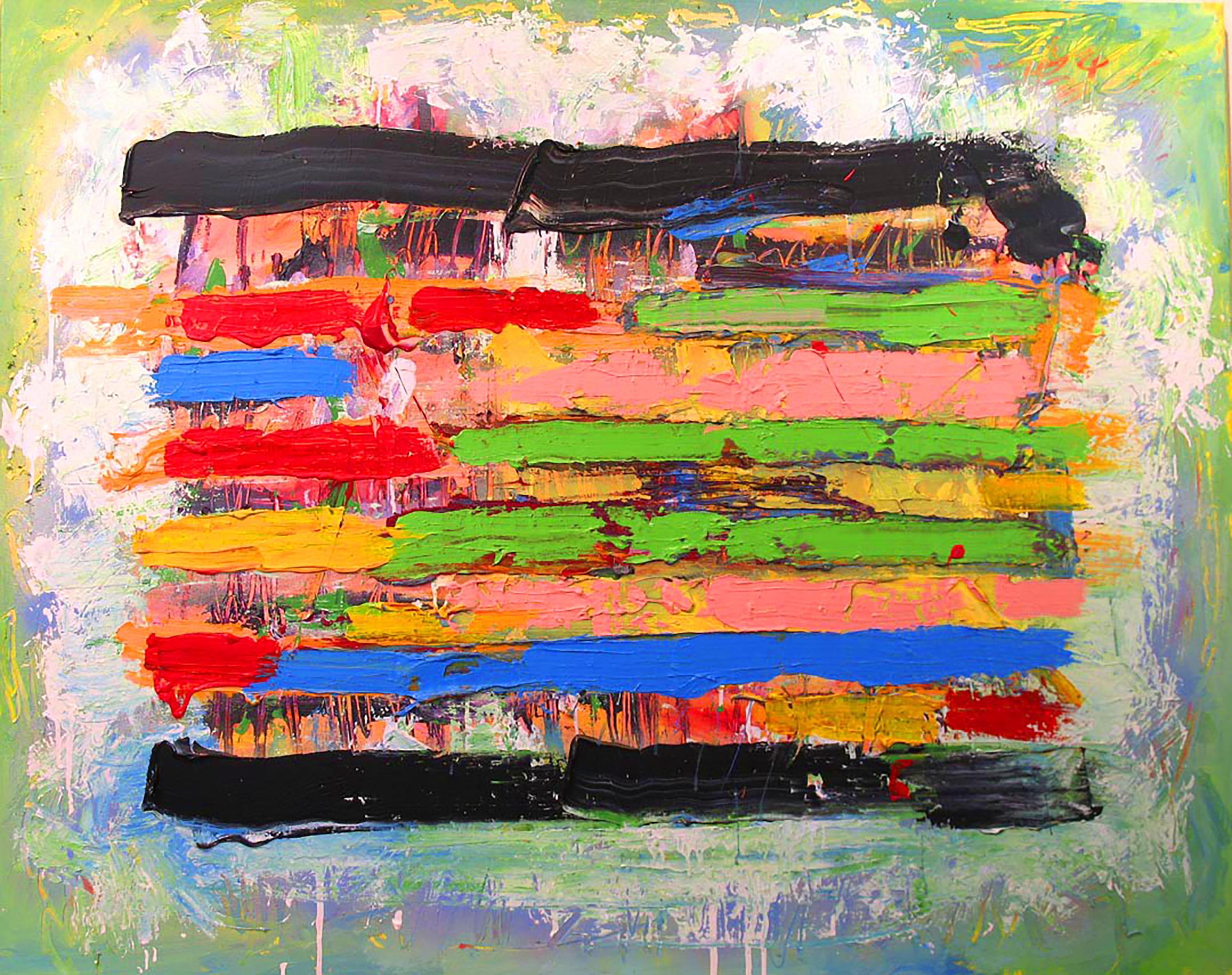 WAYNE ENSRUD-LE PORT- ACRYLIC ON CANVAS-40x50 INCHES-2006
Kokoschka would play a key role in the Ensrud story, but had already featured in a darker one. In 1904, he got a scholarship to the University of Applied Arts, Vienna, a few years before Adolf Hitler twice failed to get such a scholarship because of “insufficient talents”. However, Kokoschka believed in the popular myth that he had beaten Hitler out, felt lifelong guilt, and was quoted as saying, “If only Hitler had taken my place at the art school, the world would be a different place.” With the approach of World War II, Hitler re-entered the story. Nine Kokoschka paintings were seized in 1937 and put into Entartete Kunst, Degenerate Art, the infamous show of Modernism in Munich. Kokoschka was aware that the Führer’s own paintings included street scenes, so he responded by calling him a “house painter.” But further Nazi retaliations were likely, and he was flown to London on an emergency flight, arranged by a doctor friend, and relocated post-war to Switzerland.
Kokoschka didn’t relate to academics, so he chose not to dine with the faculty in Minneapolis, preferring to mix with the students, particularly Wayne Ensrud, with whom that first connection in the cafeteria had ripened. It was thus that Kokoschka introduced him to the work of Egon Schiele, a fellow student of his in Vienna, whose career had also blossomed, and whose work Ensrud greatly admired. Also, Kokoschka's paintings hung at the Minneapolis Institute of Art beside the college, and Ensrud went there daily, absorbing his broken line, his coupling of classically trained drawing with Expressionist paintwork.
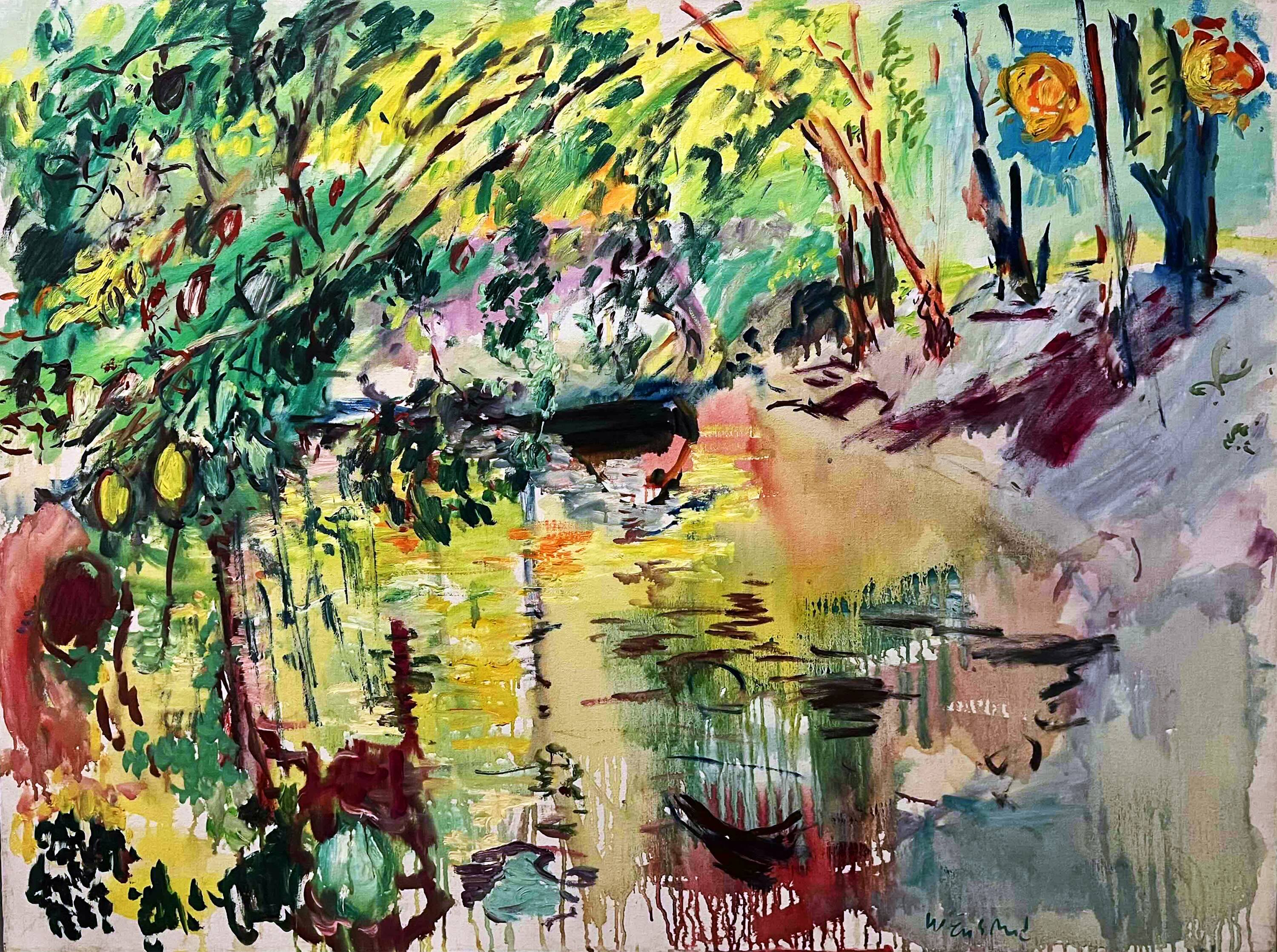 WAYNE ENSRUD-SEVEN LAKES-OIL ON CANVAS-1976-30X40 INCHES
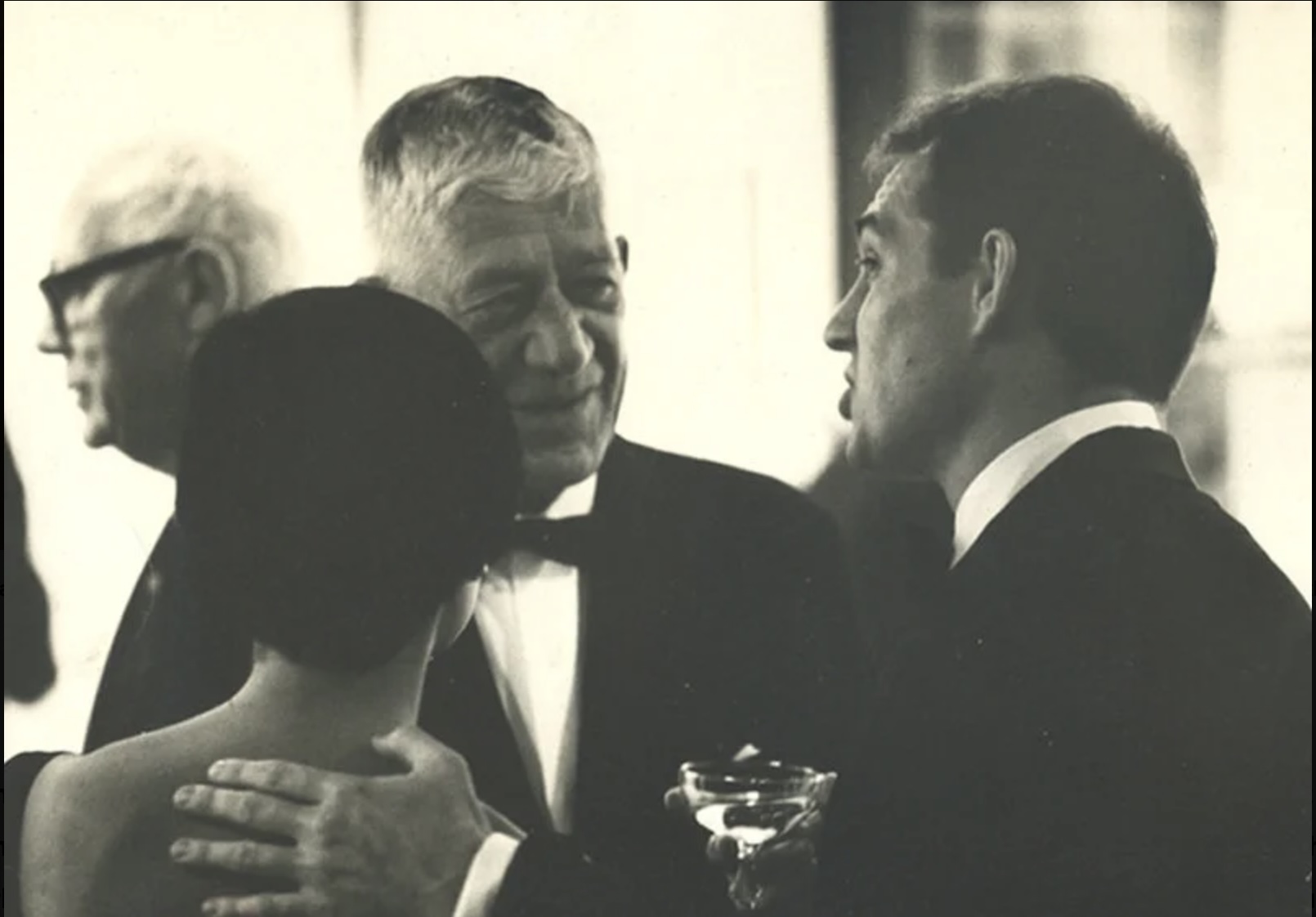 Oskar Kokoschka and Wayne Ensrud at his 80th Birthday Exhibition at Marlborough Gallery
Kokoschka didn’t suggest career moves in his continuing conversations with Ensrud, nor offer market chitchat, but focused on his interest in art as a way to deliver messages, defy power, channel raw energy, and effect changes. This is what Ensrud called the Philosophy of Oskar Kokoshka, and it glued them into a remarkable mentor/protege relationship. The dialogue lasted twenty-seven years and is documented in two books, The Kokoschka Influence and The Kokoschka Legacy, which were self-published by Ensrud, with affable photographs of the artists on each cover, but which are otherwise radically unalike. The intro to the first observes, The following paintings by Oskar Kokoschka and Wayne Ensrud clearly reflect the influence of the Austrian master on his disciple. Pictures within show how closely Ensrud captures the energy, often replicating the actual look of Kokoschka’s paintings and drawings by juxtaposing four painted mountainscapes, two by each artist, on facing pages, and four self-portrait drawings by each on facing pages likewise.
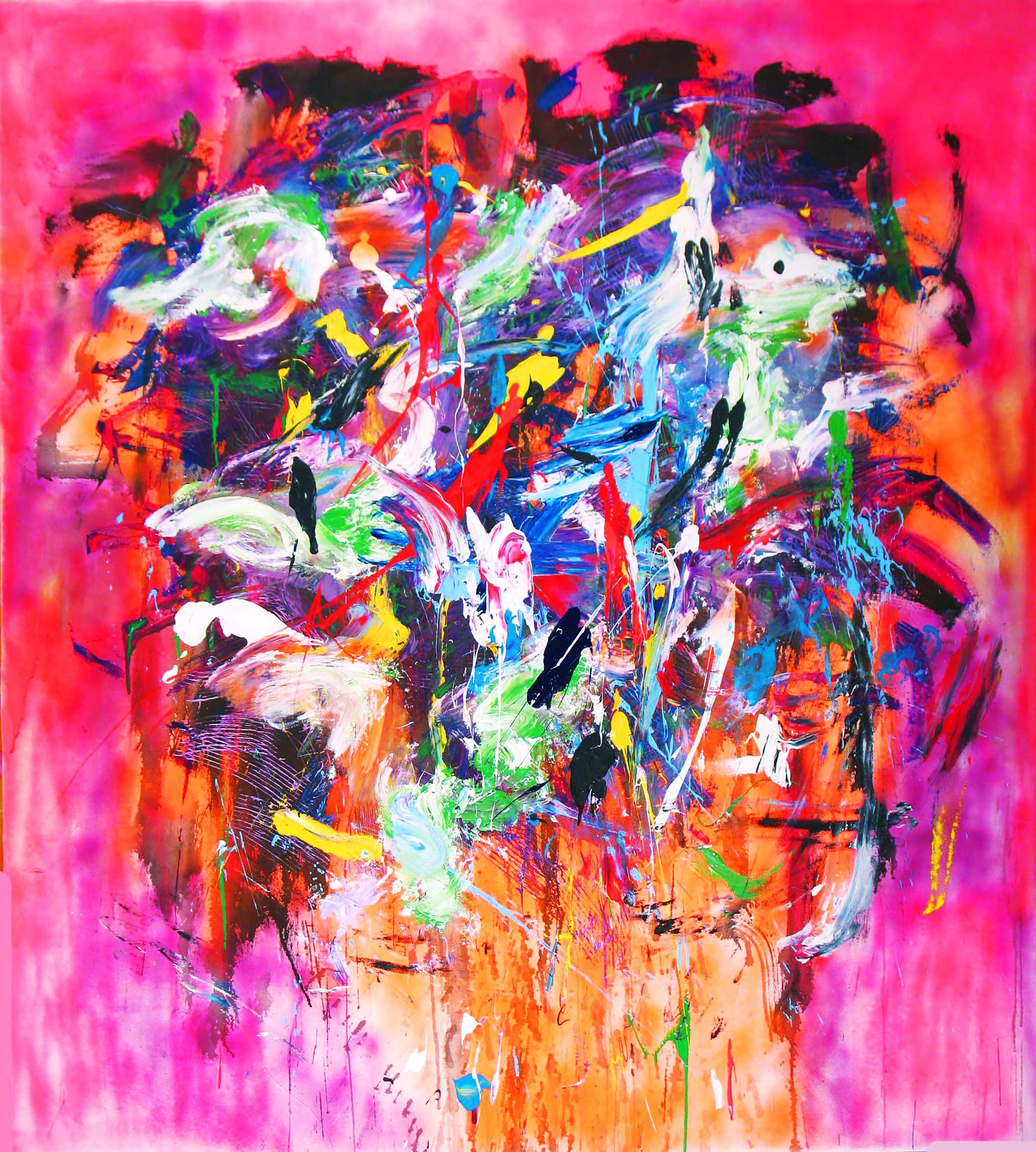 WAYNE ENSRUD-FIREBALL-2009-ACRYLIC ON CANVAS-66X60 INCHES
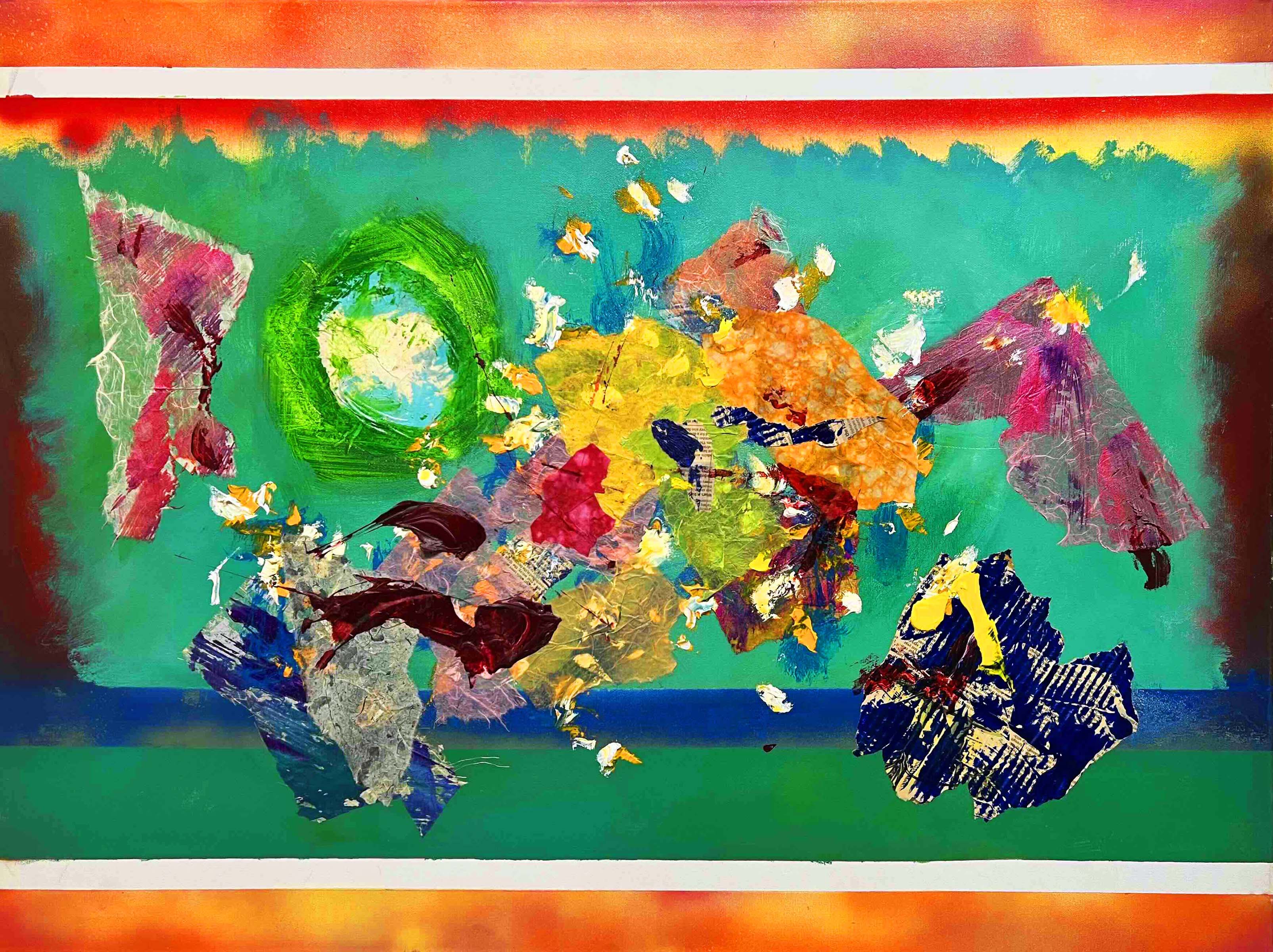 WAYNE ENSRUD-CORNERS OF MY MIND-30X40 INCHES-ACRYLIC AND PAPER ON CANVAS-2010
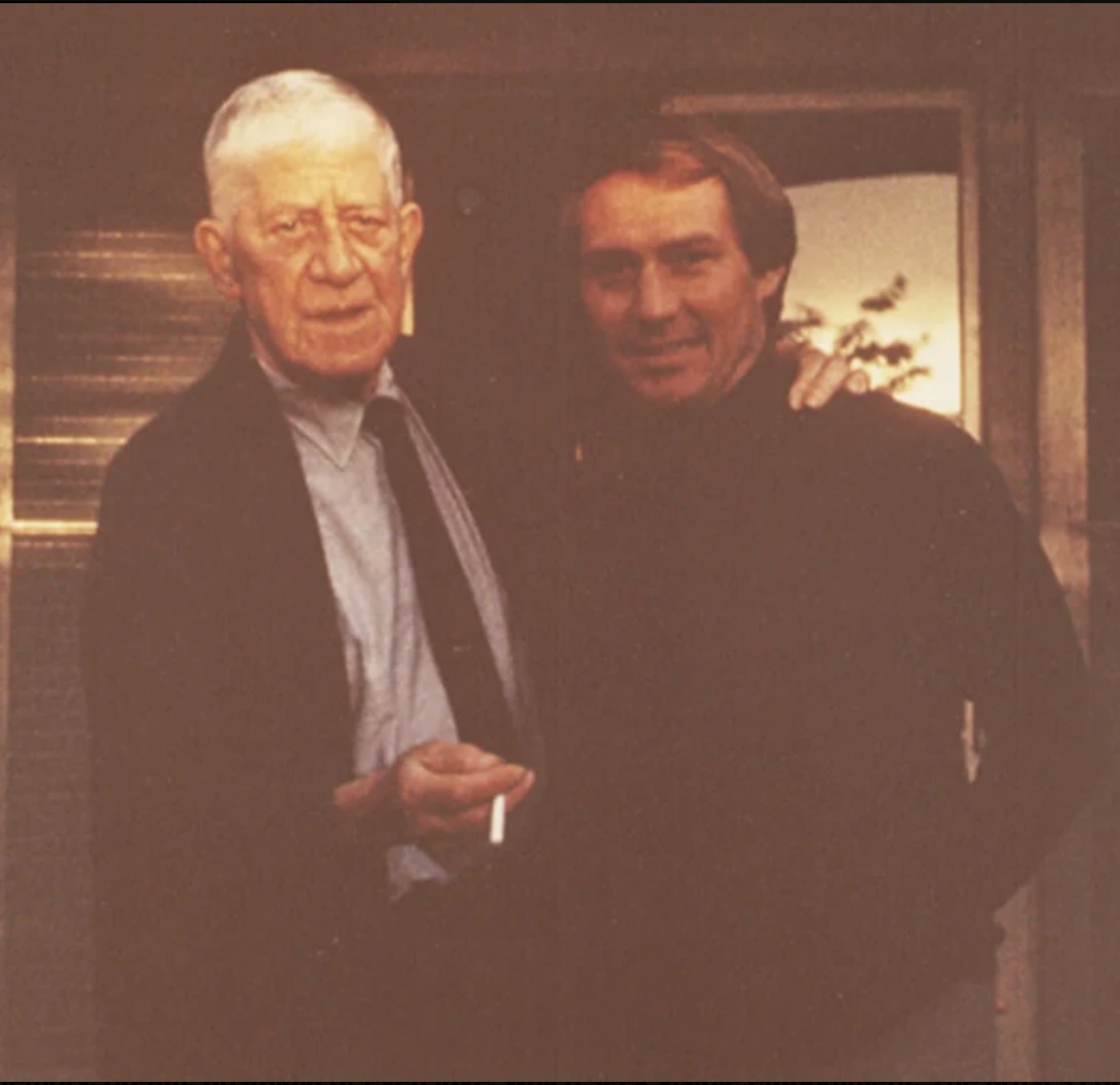 Oskar Kokoschka and Wayne Ensrud at his home in Villeneuve
Such overt pictorial allegiance is a rarity in the art world, indeed something of a no-no. Accordingly, the intro to The Kokoschka Legacy notes: Ensrud became aware that his faithfulness to Kokoschka in subject matter and aesthetic approach did not find a receptive audience. Realizing that he needed to make significant changes, he stopped making portraits and cityscapes, two of the master’s most characteristic practices, and moved on to making work in an area that was wholly new to him: Abstraction.
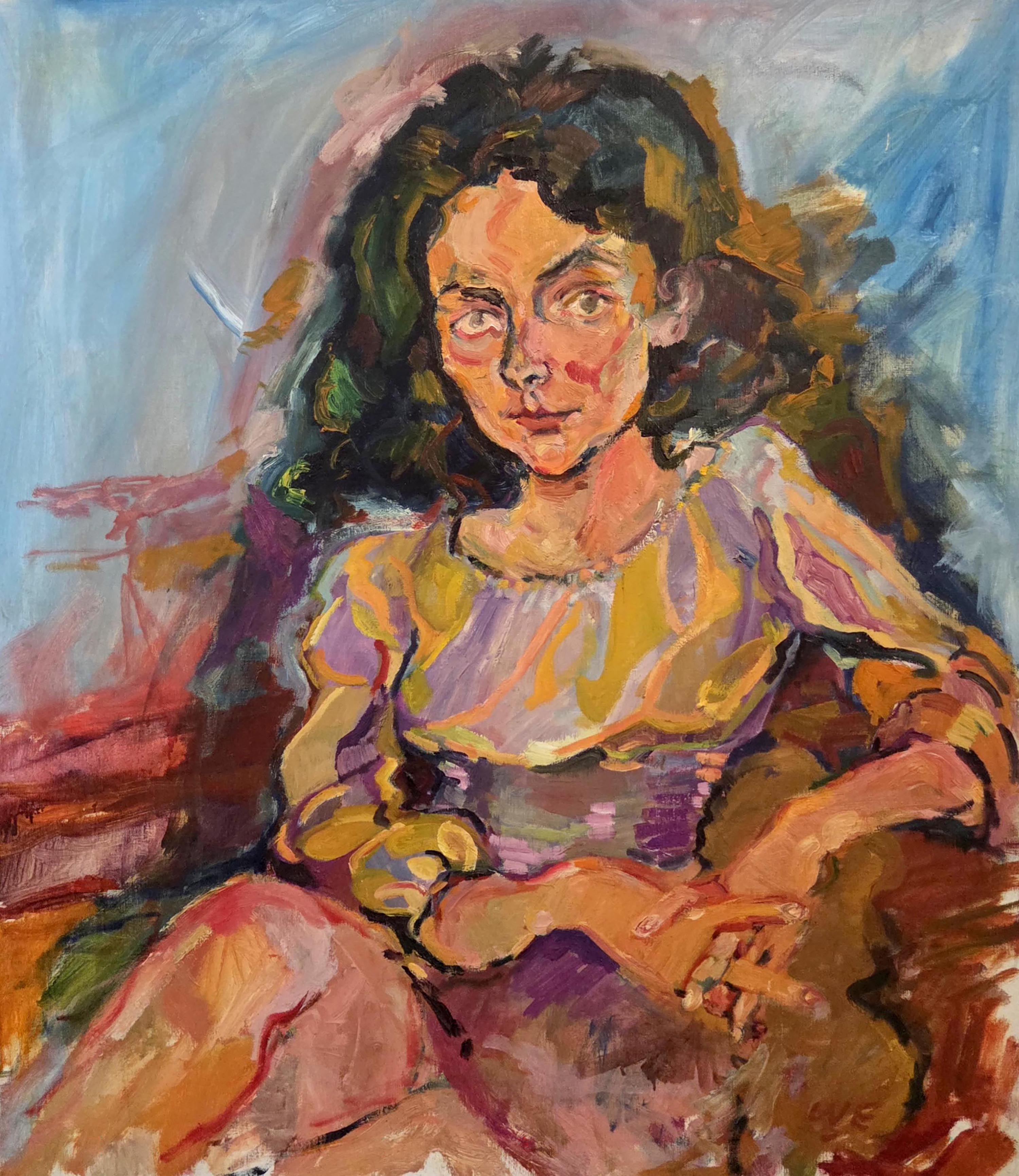 WAYNE ENSRUD-TIMBERLAKE WERTENBAKER-38X33-OIL ON CANVAS-1967
This had come about like a natural growth. Ensrud had always enjoyed painting outside, plein air as the Impressionists put it. “Wayne was always dancing with chaos,” says Lisa Mee Doherty, his widow. “He didn’t want to romanticize nature. He wanted to transform the experience of being in it.” A specific such canvas, Seven Lakes, painted in 1976, was his glide path into pure abstraction. This began as a landscape, painted as it happened, not far from the Garner Arts Center. Different energies fed into this breakthrough, primarily Ensrud’s close looking at what he called the “wash and stain” paintwork on certain Kokoshka canvases, namely the application of ultra-thin layers of oil paint to birth a flat surface with a sense of limitless space. Other energies also pulsed through the Ensrud project, including his admiration for Monet’s late paintings of waterlilies, canvases which prefigured abstraction, and which some outraged classicists attacked as “blobs” and also Ensrud’s meetings with another of the college’s guest lecturers, the futurist designer and inventor, Buckminster Fuller.
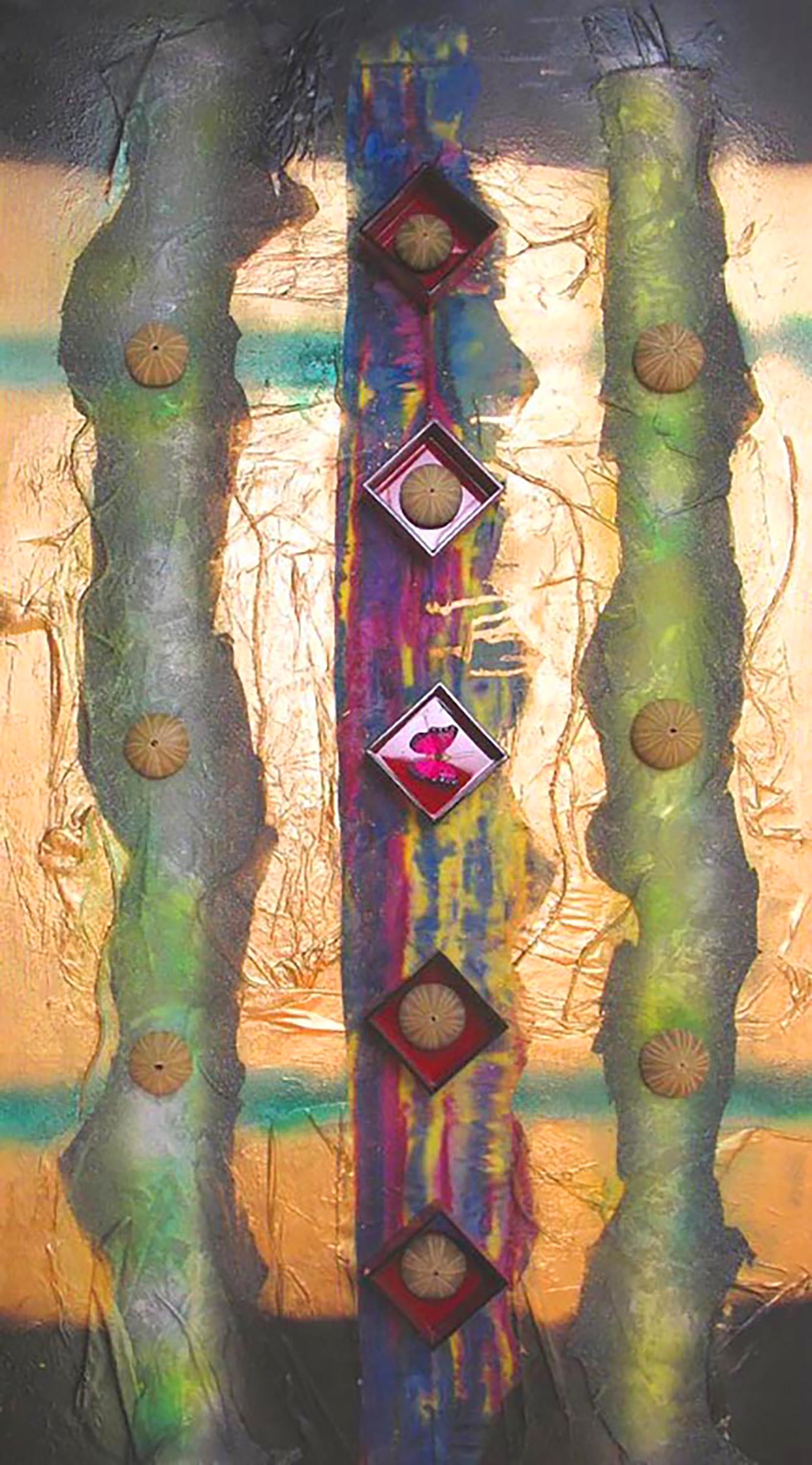 WAYNE ENSRUD-SEA ANEMONES-ACRYLIC-FABRIC-BOXES-URCHIN SHELLS ON CANVAS-2009-48X26 INCHES.
Ensrud’s move, moreover, signaled a break with his mentor. Kokoschka had let it be known that he strongly disdained abstraction, seeing it as an easy way out for artists with weak painting or drawing skills. But the Garner show indicates that Ensrud’s break with Kokoschka was followed by a remarkable breakout. It includes several portraits from Ensrud’s Kokoshkoid period, such as a haunting painting which connects you with rather than just scrutinizes the subject, Nicolai Nagle, the personal assistant to an art appraiser friend of his, who had an overlarge head on his small frame. Other pieces in the show. One is Sea Anemones, a knobbly faux realist abstraction the likes of which, a rarity in our times of Abstraction Inc., you are unlikely to have seen anywhere before. Fireball, another abstraction, painted in 2009, is a 66 by 60 inch energy burst, very much inspired by Joan Mitchell, the Paris-based American Ab Ex painter, whom he preferred to Jackson Pollock, and Le Port, an abstraction of 2006, where he has laid bars of horizontal pigment on the canvas to create a kind of grandiloquent Minimalism.
Ensrud was in short remarkably unusual in ignoring the market pressures upon an artist to become a recognizable signature. Instead, he embraced continual extreme transformation, accepting the risks of failure and obscurity, just to keep on working, making his often remarkably unalike art, which is nonetheless clearly the work of Wayne Ensrud. It should be added that Ensrud’s break with Kokoschka over abstraction did not affect their mentor/protege relationship. He visited Kokoschka in Switzerland every year. It was, Lisa Mee Doherty says, “a sacred pilgrimage, “adding, “He never told Kokoschka that he was going to break with him.”
Through Upstate Arts Weekend, June 29th at GarnerArtsCenter.org
Anthony Haden-Guest
Anthony Haden-Guest (born 2 February 1937) is a British writer, reporter, cartoonist, art critic, poet, and socialite who lives in New York City and London. He is a frequent contributor to major magazines and has had several books published including TRUE COLORS: The Real Life of the Art World and The Last Party, Studio 54, Disco and the Culture of the Night.
view all articles from this author