Whitehot Magazine
September 2026
"The Best Art In The World"
"The Best Art In The World"
September 2026
Interview: Himil H. Ramani on the Meaning of Architecture and Plants
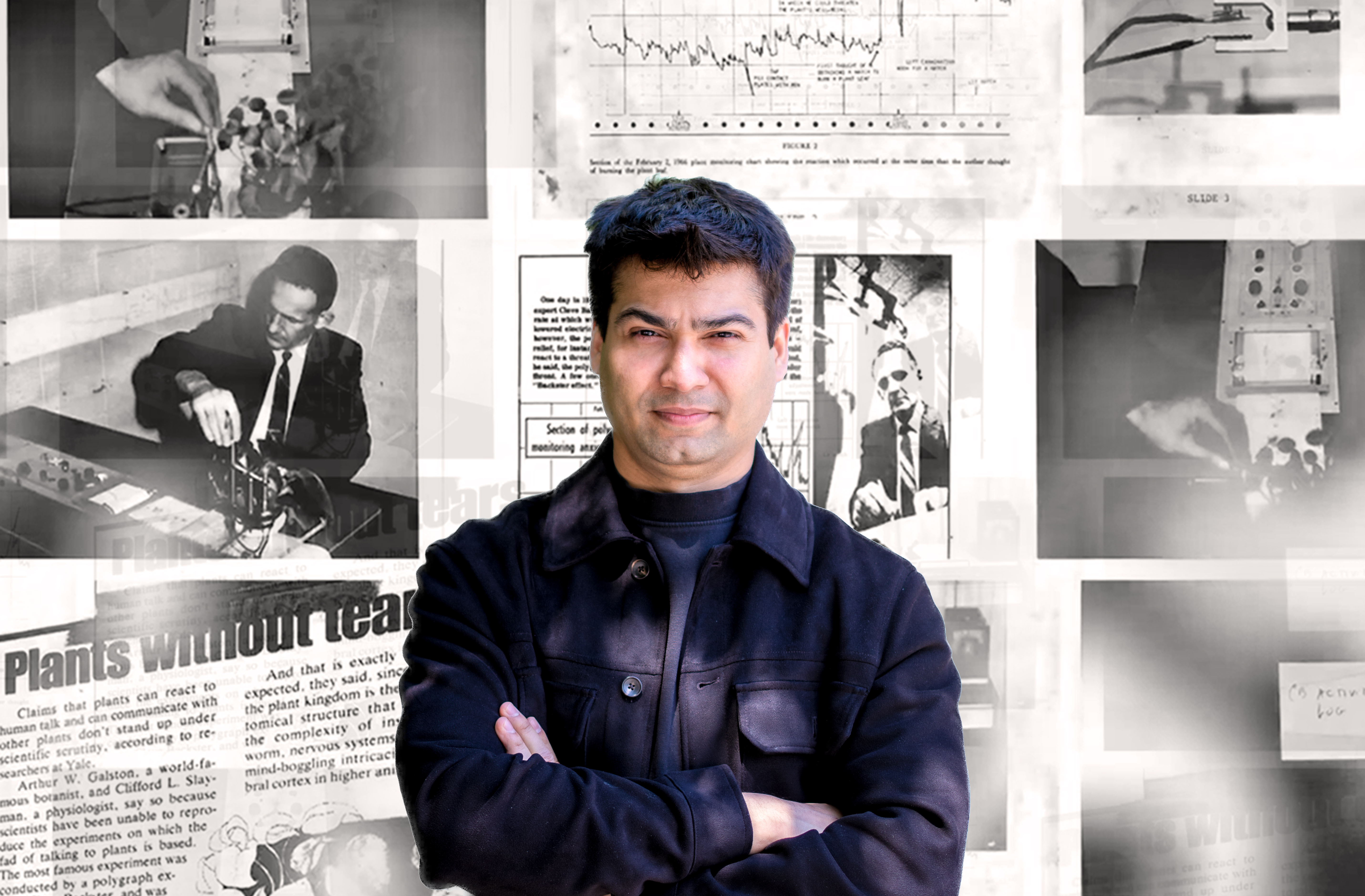 Portrait of Himil Ramani, 2026
By NOAH BECKER August 14th, 2026
What first drew you to Cleve Backster and his experiments with plants?
House plants today are seen as one of the most meaningful companions to humans. And we need to go back in history and understand where this idea comes from? Since the Victorian Era and Industrial Revolution, houseplants have been a victim of the human obsession to control nature through architecture. In this case, plant pots are designed by humans as a decorative furniture piece bringing a sense of ornament in our overly neutral and machine driven domestic spaces, by bringing nature inside. However, this pot isolates the plant from its natural form of existence, blocking its communication with other plant species through a network of fungi connected to their roots under the soil. This idea of isolating plants in a pot is an idea of a cage prisoner, and if you live and talk long enough with the prisoner, it might just talk back – just like other domestic animals that have proven to. My book ‘Interrogating Plants: Cleve Backster’s Environmental Media Practices’ provides a history of one such early interspecies experiment during the Cold War period, that explores the unseen connection between media and ecology; a time when US military and intelligence agencies engaged in numerous forms of biofeedback experimentation intended to operate in the thresholds of consciousness, and to mobilize bodies and ecosystems as sites for surveillance and control.
How does Backster’s work connect ecology with Cold War surveillance and technology?
On February 2nd, 1996, a retired CIA agent Cleve Backster in his research lab in New York, decided to attach his dracaena plant to a polygraph machine, also known as a lie detector. Surprisingly, the plant recorded a brief response similar to that of a human subject that might be afraid of being detected. Backster replied ““If this plant wants to show me some people-like reactions, I’ve got to use some people-like rules on it and see if I can get this to happen again.” Now the way a polygraph machine works is that a small amount of electricity is passed through electrode plates, one attached to two fingers of the human body. Backster placed the leaf between the two sensor electrodes and encircled it with a sandwich leaf with a rubber band. Backster not only treats the plant as a human subject under suspicion, but also uses the epistemology of technology as a driving force to build companionship with the other species.
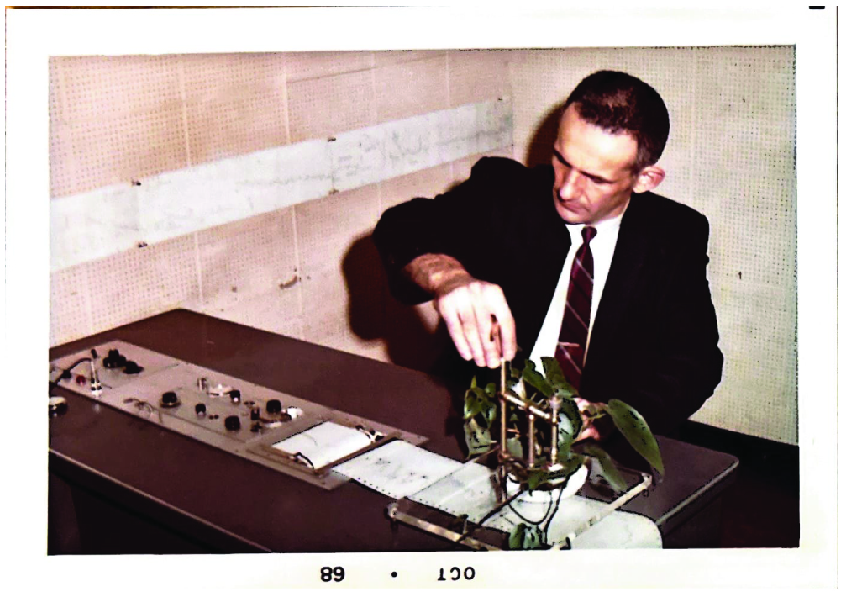 Cleve Backster Testing African Velvet's Pulses in his Research Lab, Cleve Backster Research Foundation, Courtesy University of West Georgia
How has your research on houseplants changed the way you think about architecture and domestic space?
It is important to note that there was a shared fear of control and unpredictability growing with the development of nuclear weapons during the second world war, not limited to human beings but the influence of the environment humans live in as whole. Plants, among many other species, became a victim of this fear. There was an attempt to study patterns of reactions in different environments to neutralize them, one that resulted in the building of intelligent information systems that took off during the post second world war period by Macy Conferences in Cybernetics, from 1946 to 1953, officially titled Cybernetics: Circular Casual and Feedback Mechanisms in Biological and Social Systems. Charlotte Sleigh points out that the communication with insects and animals was well recognized in terms of the funding and attention it received in the United States, as animals provided examples of “effective orientation and meaningful communication” in a manner that was to be directly translated into military and social tools. These techniques did not limit to sociological experiments, but were directly deployed in modern architecture design among many other disciplines – by neutralizing the interiors of our domestic spheres, the human subject is exposed to the messages imposed by media and technology mobilizing a collective form of consciousness.
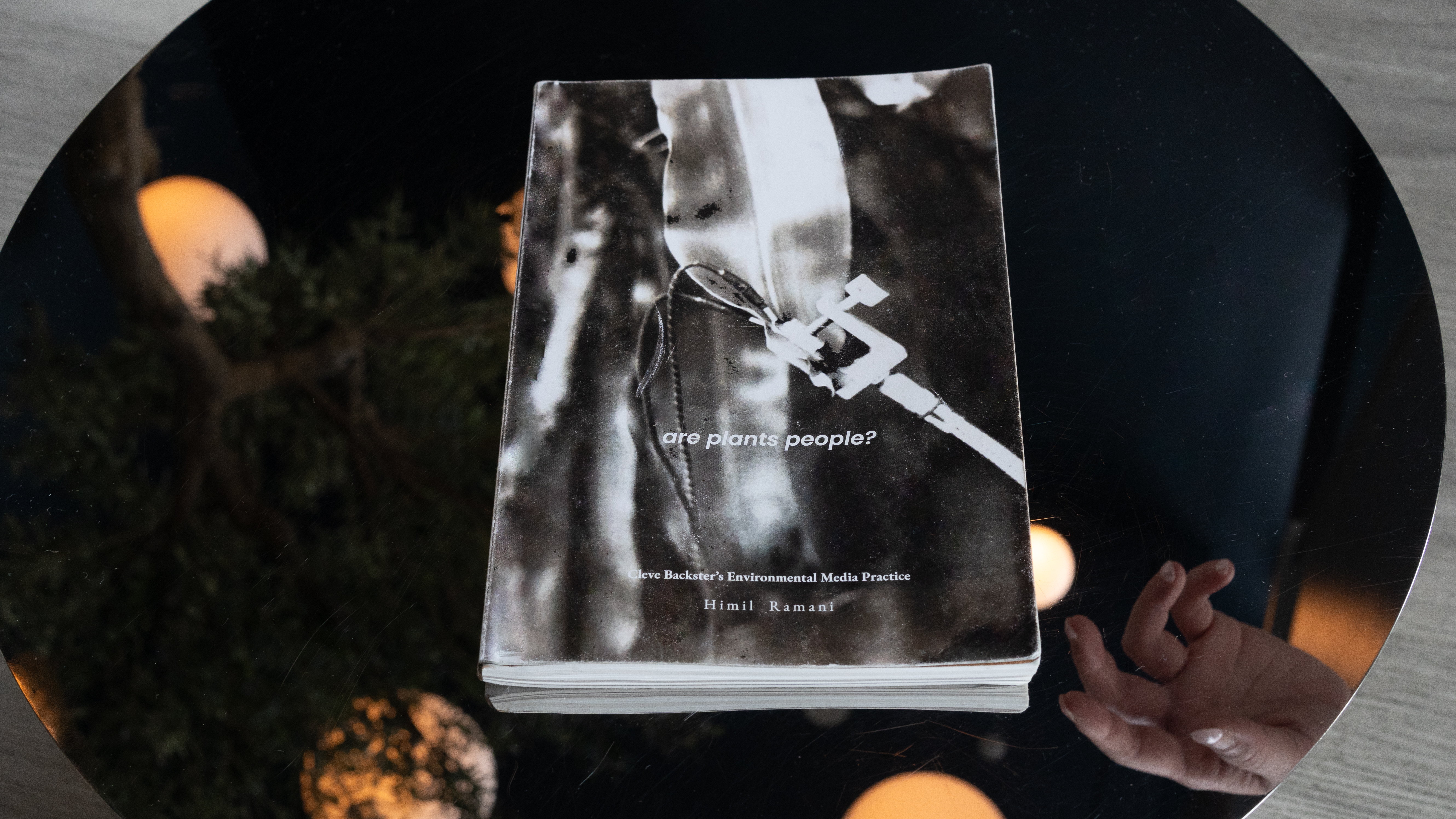 Interrogating Plants: Cleve Backster's Enviornmental Media Practice
What happens when architecture, performance, media, and ecology are considered together?
If you think about it, there’s something urban about our bodies. We have about 160 major species of bacteria in our bodies, and they all form complex ecosystems. Our mouths are different ecosystems than our intestines, or our skins, or our airways. So we are not anatomically individuals at all. Architecture, inseparable from performance of the body, in recent years has extensively pushed the boundaries of what constitutes a body in space, the expected behaviour and its relationship to architecture. Media appears and functions within architecture changing our perspective of the world through televisions, radio, microwaves, automated light systems, lock systems, dishwashers and so on, all that are products of the weapon industry of war. From being a tool of communication and perception of knowledge, media is constantly used to project messages and monitor social behaviors on a microbial scale. Together these practices help understand a complex network interlocutors provoking a certain kind of behavioral pattern on domestic species.
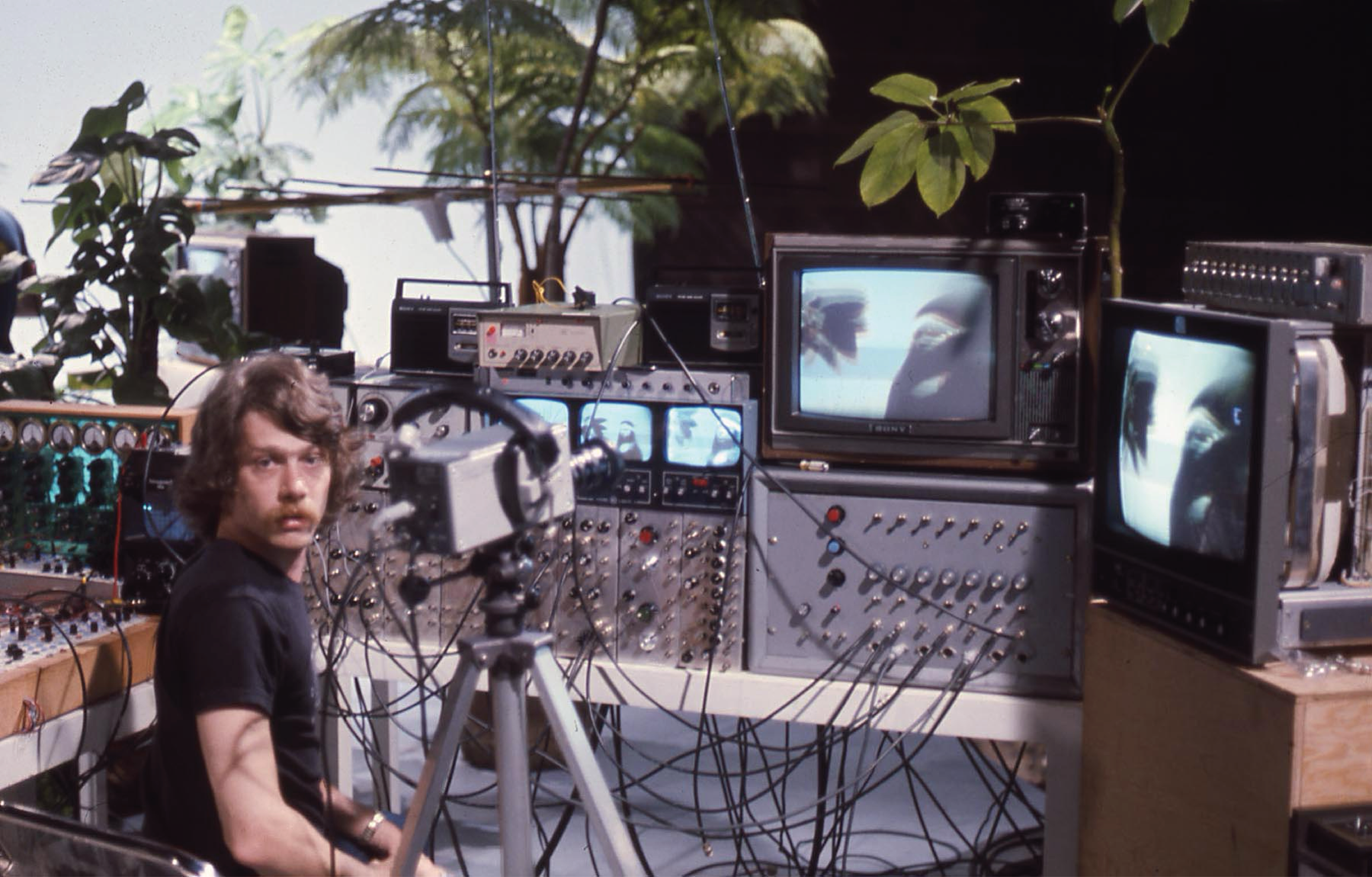 Jim Wiseman, Secret Life of Plants, Courtesy Richard Lowenberg
What do you look for when entering an archive for the first time?
Archives have been at the centre of my research practice. To me, visiting an archival space is like going to a crime scene, and the archival document being the only piece of evidence available to begin solving the crime. And to frame any group of archival documents side by side is already to construct an idealized world of a collective fantasy. My mentors Mark Wasiuta and Mark Wigley have always influenced my work with the archives. If you think about it, paper as a document itself, is not just a support of its material content, but it has its own materiality too. Such as its color, thickness, weight, texture, size, opacity, notes, clippings, with the use of say pencil, charcoal, crayon, pastel, ink, oil, photographs, sketches, framed, unframed, text – all of which usually ignored on a digital search, even if it's critical to the person who drew their ideas on it.
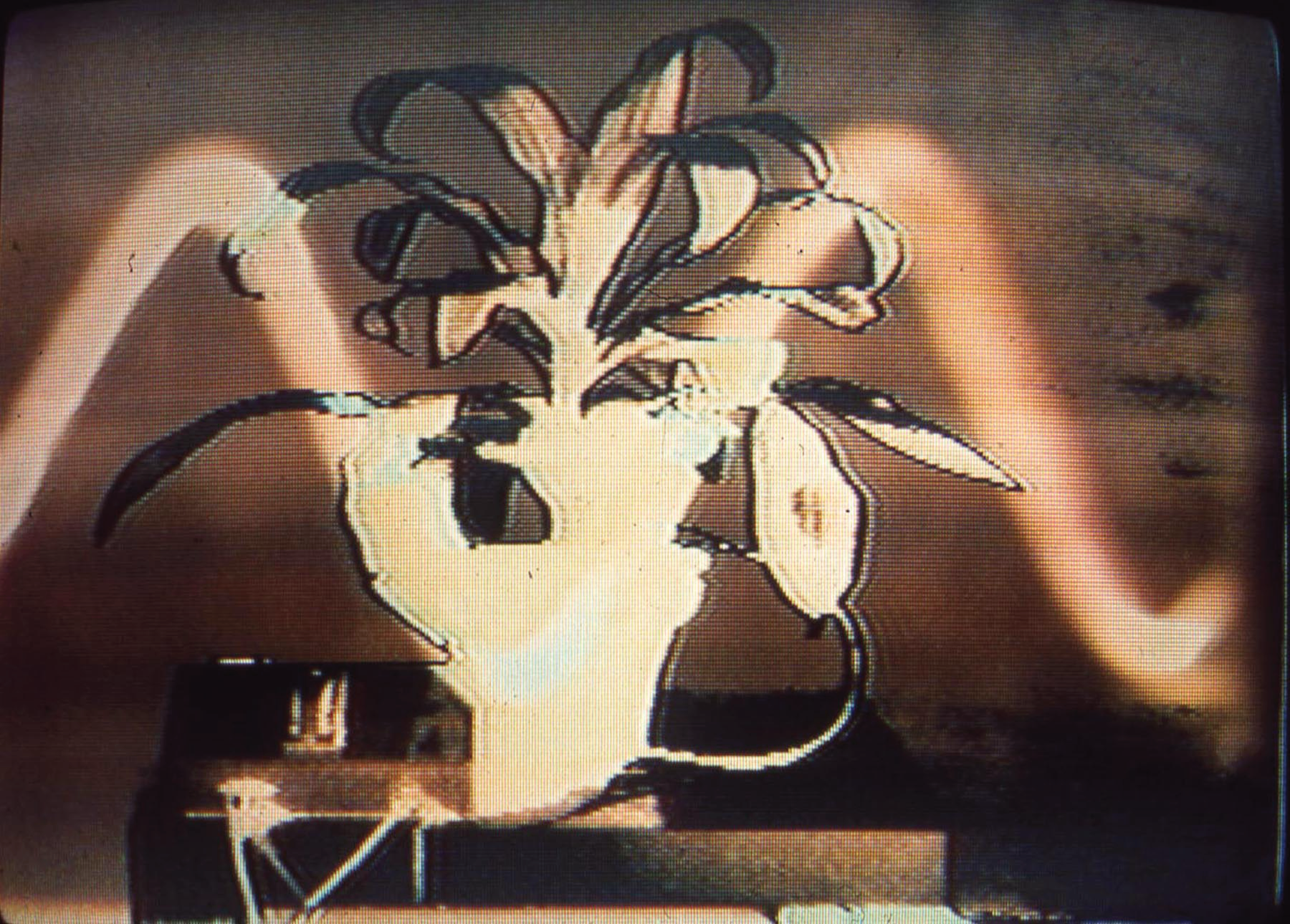 Plant Biofeedback Visuals from Secret Life of Plants, Courtesy Richard Lowenberg
How did working at Storefront for Art and Architecture shape your approach to archives?
After recently acquiring a physical archive space in Brooklyn, I along with José Esparza Chong Cuy and Guillermo Ruize, had the opportunity to rethink the framework of Storefront for Art and Architecture’s archival database that potentially includes the different layers of research driven exhibitions, and its accessibility to emerging artists and architects looking into similar areas provoked during the show. After several attempts and conversations, it was clear that the exhibitions at Storefront for Art and Architecture go beyond its physical manifestation of the gallery space and beyond. One that refuses to acknowledge a linear narrative of research subject, but opens up a possibility of breathing new life to multiple lineages of projects and ideas finding resistance to their personal terms.
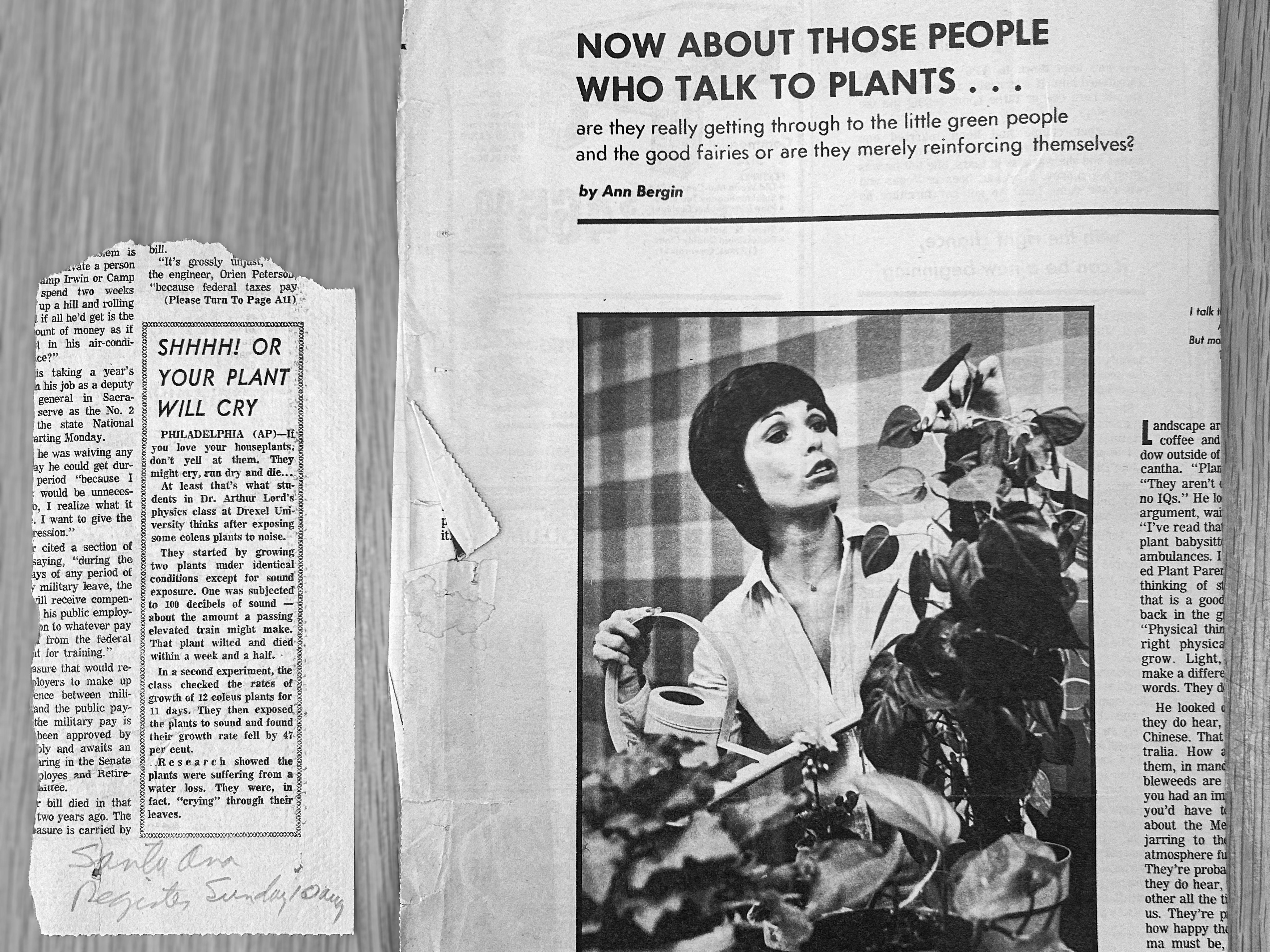 Newspaper Clippings from the Cleve Backster Archives, Cleve Backster Research Foundation, Courtesy University of West Georgia
What did working with original architectural drawings reveal that published histories often miss?
As part of my recent teaching experience at Columbia GSAPP with Andrés Jaque, titled ‘Transscalar Architecture: Construction Detail as Cosmopolitical Enactments’, we undertook a detailed examination conducted through the very lens of the construction detail drawings. Some of the most influential buildings and architectural projects produced over the past five decades have questioned the notion of black and white drawings as a site of architectural thinking and knowledge production. Black lines being a neutral signifier of materiality, and white being the space of immaterial. However, Jaque rightly argues that construction, and particularly construction detailing, is too often framed as the exclusive domain of experts, a space that is governed by technocratic authority and presented as if it were neutral, inevitable, or apolitical. Rather than treating details as the endpoint of design, the course positioned them as generative instruments for rethinking architectural practice itself. A terrain where alternative societal and ecological articulations can be prototyped and contested.
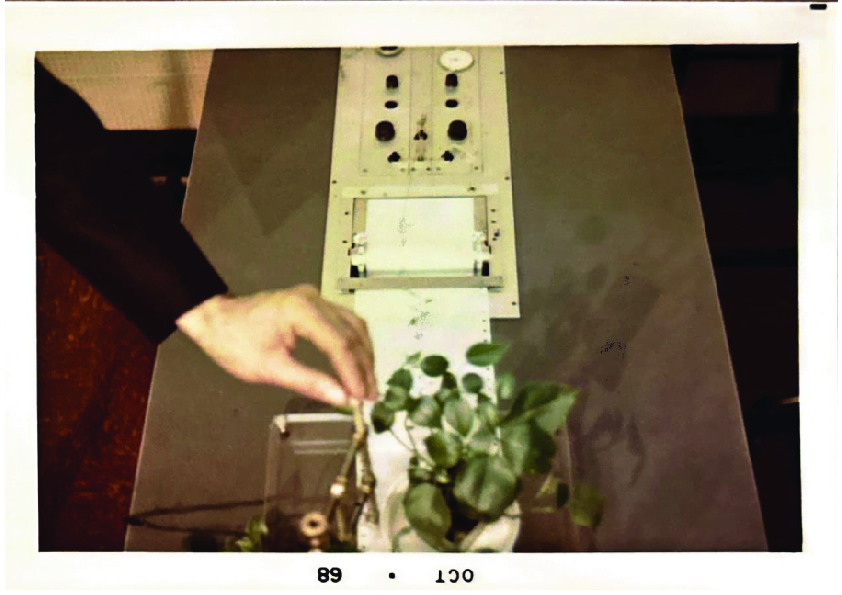 Cleve Backster Testing African Velvet's Pulses, Cleve Backster Research Foundation, Courtesy University of West Georgia
What interests you about Richard Lowenberg’s use of media, technology, and environmental documentation?
During my research for Interrogating Plants, I came across Richard Lowenberg’s works, especially the segment for ‘The Secret Life of Plants’ that resulted in a collaboration with John Lifton who did a version of audio installation titled “Green Music” in 1975 at the White Chapel Gallery in London, along with Tom Zahuranec, and Jim Wiseman to recreate an experiential installation at the Glass Plant Conservatory in San Francisco's Golden Gate Park (modeled on Kew Gardens in London) for the documentary film. The collaborative used electrodes, similar to ones Cleve Backster used, to the roots of potted plants to record its electrical signals, to further translate it into musical score. The installation resulted in a non-rhythmic sound that was recorded live as visitors interacted with the plants. However, when the film was released to a larger audience, the audio from the plant's electrical signals were replaced by Steve Wonder’s music score, and even described the change in electrical signals as ‘change in the mood of plants’ refabricating the knowledge to a larger audience. This led to a curatorial project for me to compile Lowenberg’s life works under the title “Info/Eco: Richard Lowenberg”, looking into 30 years of his practice using military grade technologies to document performances, bio-media arts, interspecies communication, ultra-spectrum sensing, thermography, and many other projects spanning from early 1970s to 2000s, often in collaboration with NASA and Pentagon at the time.
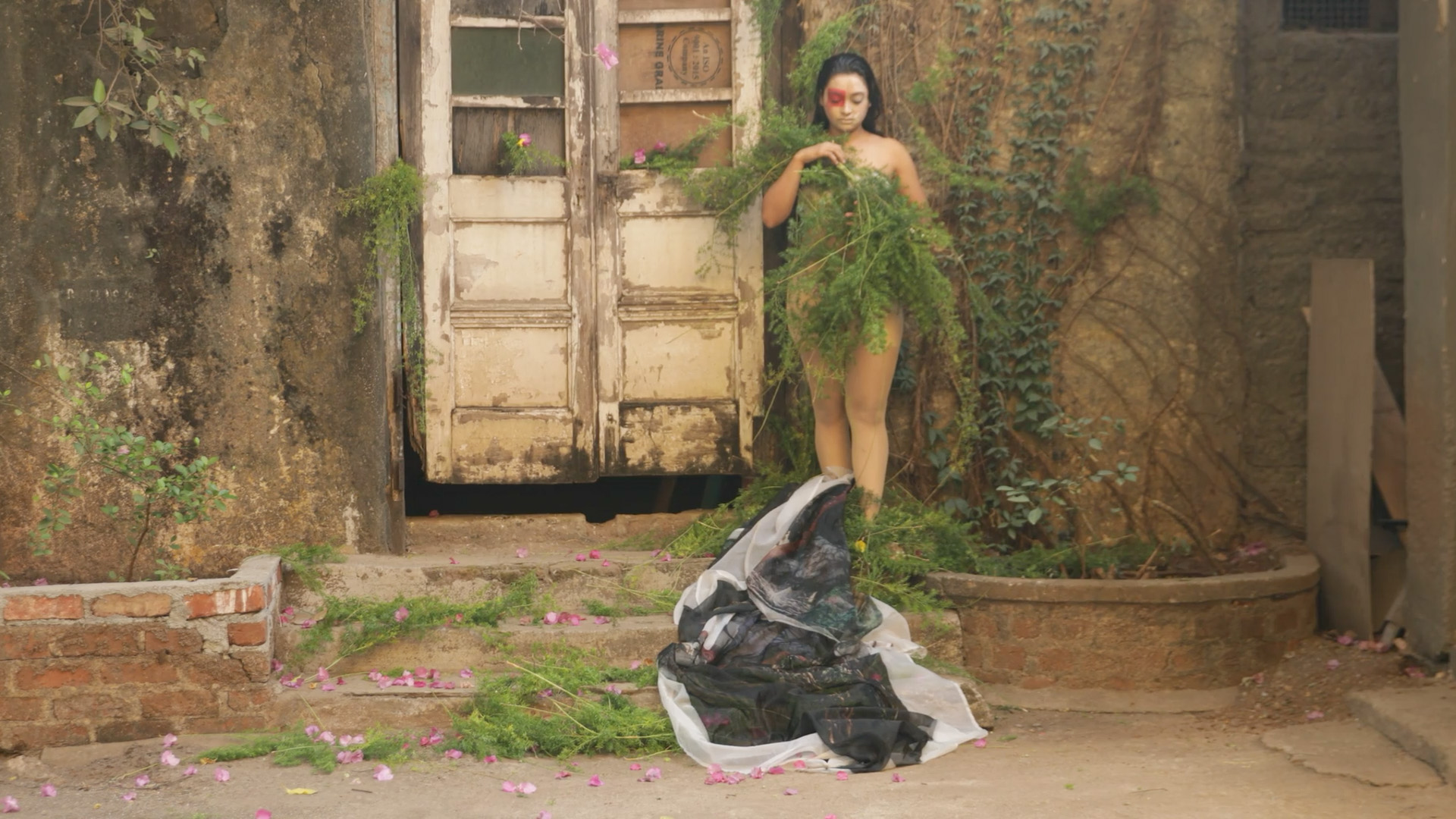 Still from Ends in Architecture
How did Mumbai’s disappearing textile mills influence your work Ends in Architecture?
In 1982, the Great Bombay textile strike involving around 250,000 mill workers, led to the widespread closure of the city’s mill infrastructures. While most are gone, some remnants are present as abandoned structures, with the remains of its original facade and wall’s presence on its site. In the absence of humans, the plants took over the abandoned architecture of textile mills and created an alternative landscape of what the site might look like, if it wasn’t controlled or monitored by human standards. It provoked a question of the human obsession with static environments created by encapsulating time in an object that is frozen and doesn’t adapt to change. ‘Ends in Architecture’ attempts to reimagine the idea of ‘ending’ through the lens of abandoned architecture – a space constructed on a human scale, opens up a possibility of provoking questions of the architect's notion of neutralizing surfaces through cosmetics and maintenance.
 Archive Research for Alison Nguyen's Project, Archive Courtesy Richard Meier Architects
How do you turn archival research into films, performances, and exhibitions without losing its complexity?
Through my research practice, I try to focus on understanding how different histories interconnect and can be articulated using primary sources of documents. The process involves carefully constructing a network of interlocutors as I develop my work, through performances, installations, and other forms of languages, so that the work reaches audiences far beyond the academy without sacrificing its rigor. It not only contributes to keep the work informed and critically lively; but constitutes the audience to expand the research and disseminate it. For example, my work ‘Interrogating Plants: Cleve Backster’s Environmental Media Practice’ has developed across research, performance, installation, publication and exhibition-making, while ‘Ends in Architecture’ is a performance document, or a video-installation in traditional terms. My work with Richard Lowenberg has developed over several conversations, research screenings, a curatorial project, working with his archives while Alison Nguyen’s upcoming film commissioned by Highline and Chanel in New York, I’ve contributed archival research into the reuse of once abandoned Highline railtrack and Westbeth Artist Housing, previously Bell Laboratories where critical innovations for telephones, televisions, radar systems, telecommunication cables, and cameras were developed. Working a wider spectrum of research areas constitutes my work's presentations in different formats, without losing its contextual relevance to a larger audience.

Noah Becker
Noah Becker is an artist and the publisher and founding editor of Whitehot Magazine. He shows his paintings internationally at museums and galleries. Becker also plays jazz saxophone. Becker's writing has appeared in The Guardian, VICE, Garage, Art in America, Interview Magazine, Canadian Art and the Huffington Post. He has written texts for major artist monographs published by Rizzoli and Hatje Cantz. Becker directed the New York art documentary New York is Now (2010). Becker's new album of original music "Mode For Noah" was released in 2023.
Becker's 386 page hardcover book "20 Years of Noah Becker's Whitehot Magazine of Contemporary Art" drops Aug 8, 2025 globally on Anthem Press.
Noah Becker on Instagram / Noah Becker Paintings / Noah Becker Music / Email: noah@whitehotmagazine.com
view all articles from this author