Whitehot Magazine
November 2026
"The Best Art In The World"
"The Best Art In The World"
November 2026
Emily Coan: My Alchemical Vessel at DIMIN
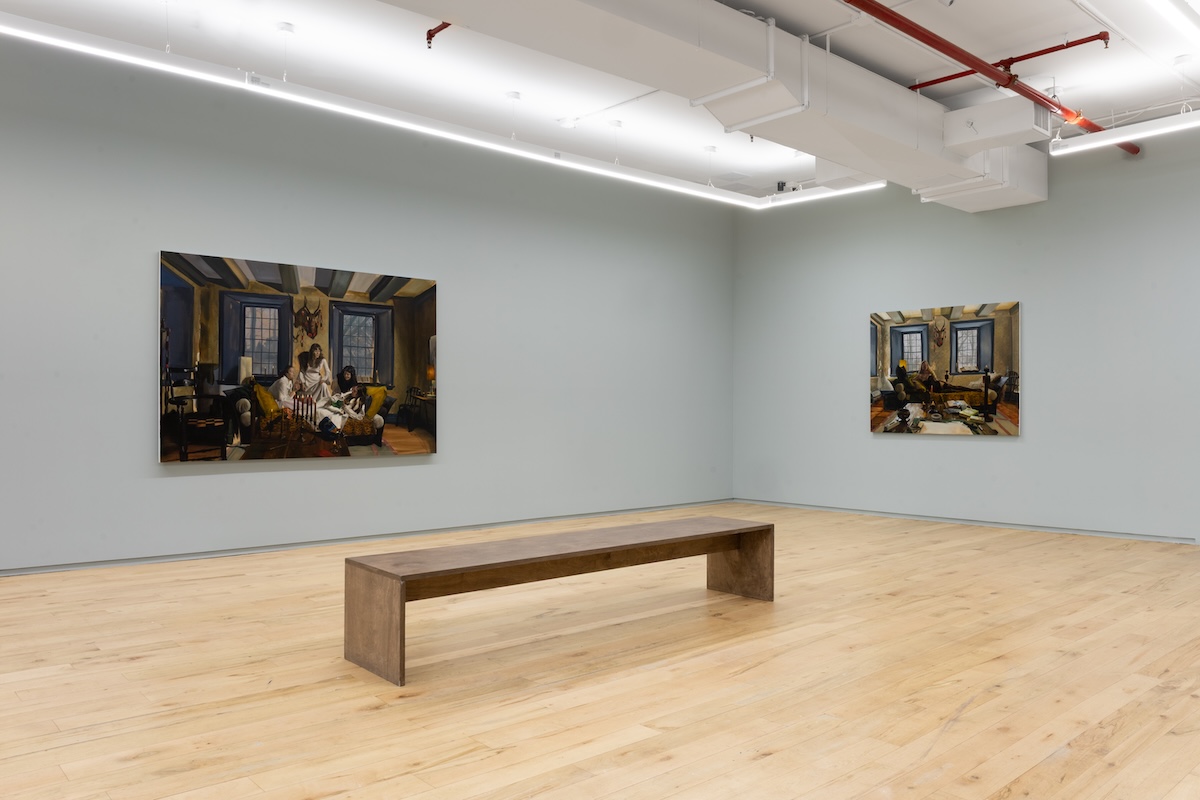 Installation view, Emily Coan, My Alchemical Vessel, image courtesy of the artist and DIMIN, New York, NY
By ESME GRAHAM, November 11, 2026
American witches take on many manifestations in the contemporary imagination. Sorting through these myriad tropes, two major threads prevail: witches as young erotic beings, dancing and chanting naked in the woods, or witches as decrepit old hags, often tormenting women who have the youth they covet. In the space between the nubile and the decrepit, what can be conjured? Emily Coan’s My Alchemical Vessel, exhibited at DIMIN in New York, explores the act of transitioning between these two stages of life, depicting women who have made a space for themselves and prepare to grow old in it. The women, still young, have left the woods and begin to occupy a domestic site. In this exhibition, Coan explores what it means to grow old in a space.
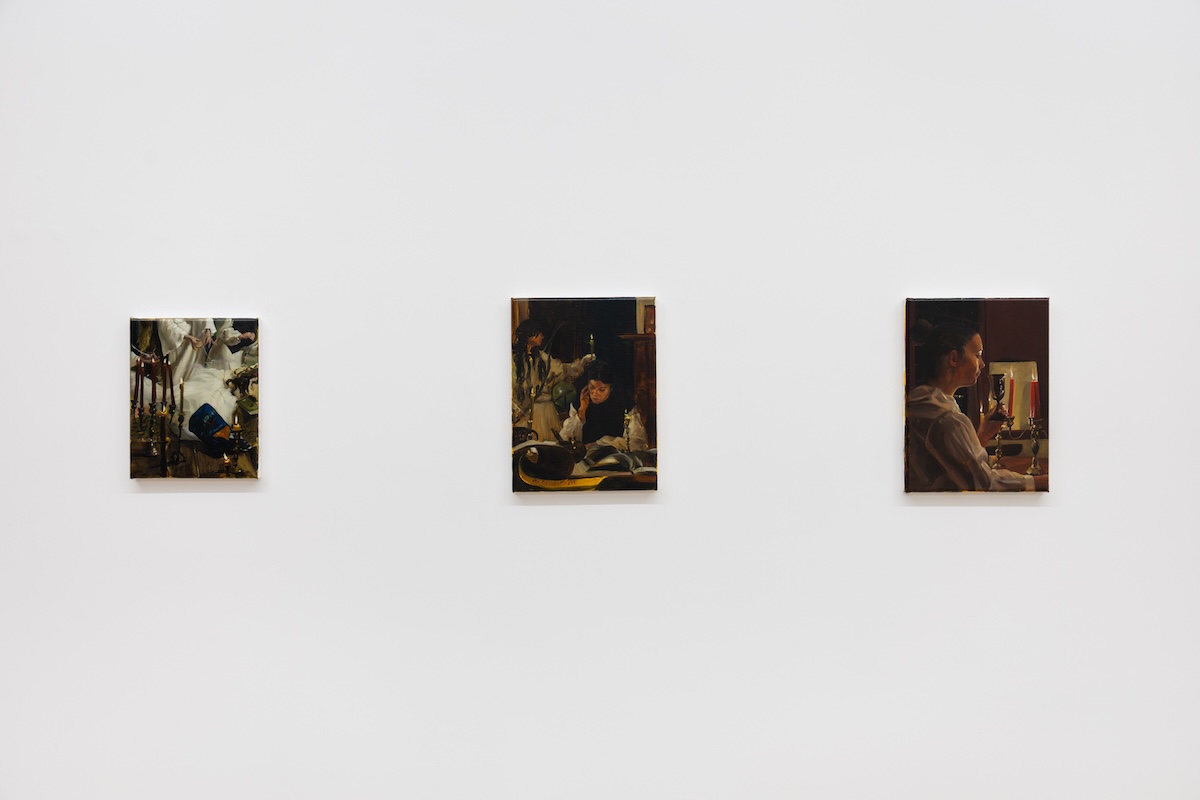 Installation view, Emily Coan, My Alchemical Vessel, Image courtesy of the artist and DIMIN
The four paintings that populate the main gallery, as well as the eight smaller paintings in the adjoining room, are set in the same wallpapered and wood-paneled house, whose windows peer out into a forest. These interior scenes, crafted in Coan’s striking and painterly style, have dramatic, nearly baroque lighting. Especially in the smaller works, candles cast warm, glowing light over the scenes. This candlelit staging evokes the painting of Georges de La Tour, who she references specifically in A Penitent Magdalene. Quoting de La Tour, the painting depicts a woman lit by flickering candles, who sits before a mirror, lost in thought as she sips idly from a chalice. Bwbach, a larger canvas, depicts a woman, again candlelit, clad in royal blue robes standing in front of a seated man, who holds a crying baby. Throughout the painting, the blue of her garb is echoed in the glints of shadows, the folds of the baby’s dress, and the edges of the carpet. It is as if the woman has pervaded the room, inhabiting it completely.
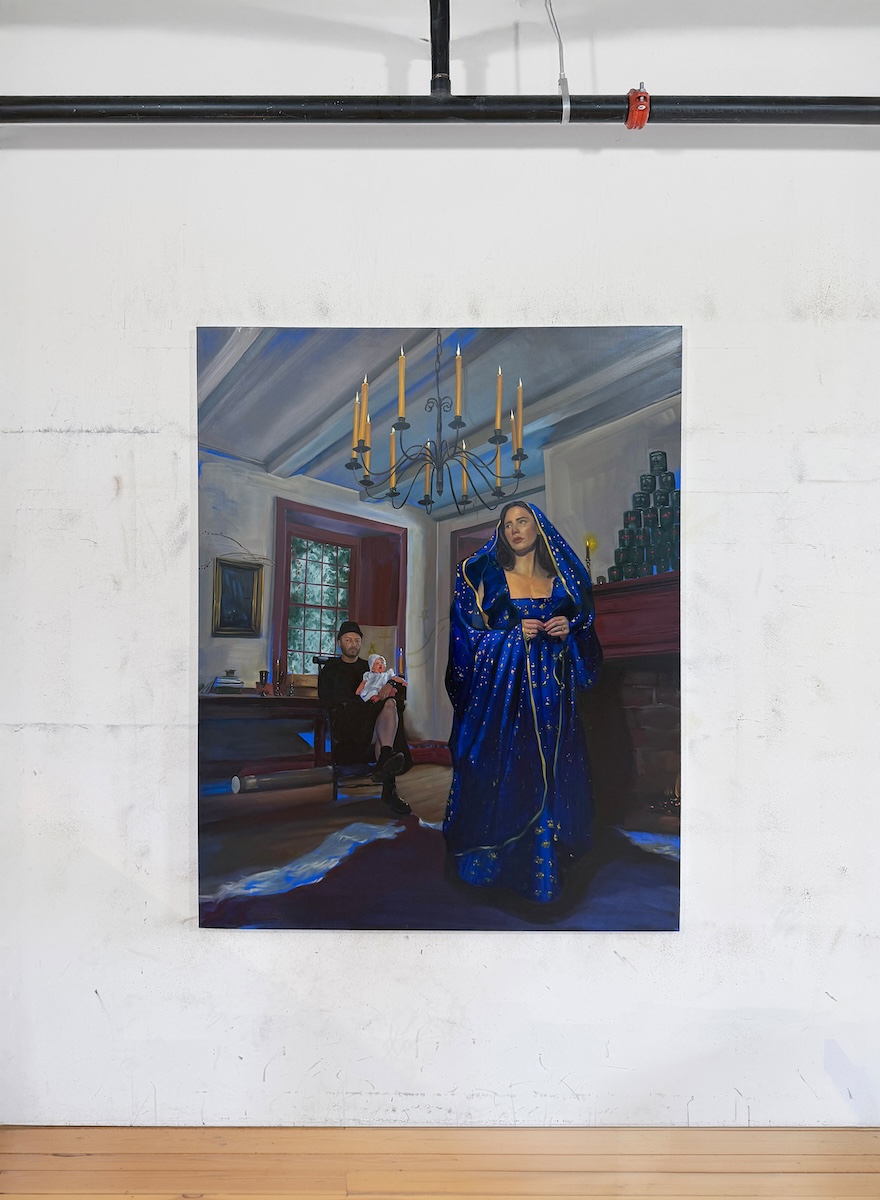 Emily Coan, Bwbach, Image courtesy of the artist and DIMIN
Perhaps the most striking image in the exhibition is Nigredo, which depicts three people beneath a wide chimney. Two elder figures in black flank a younger woman dressed in red. While the elders sit slightly forward, the woman is set back, her eyes and the top of her head obscured by shadow cast beneath the chimney. What is visible of her face reveals a mysterious, almost ambivalent expression while flames spring from her body, burning the edges of the chair and her red dress, causing smoke to plume out around her chest toward the ends of her long brown hair. In the process of “nigredo,” one must allow oneself to be completely destroyed in order that something can be created in its place. As the younger woman in red allows herself to dissolve into ashes, she will perhaps transform into an elder, a permanent dweller of the house. This “witchcraft” is not one defined by spells or potions, but instead a more alchemical vision of creation and fundamental, structural change. Witchcraft also allows for the retention of female agency within the domestic sphere. Rather than accepting a seeming inevitability of the well-trodden ennui as the destiny of the housewife, in Coan’s images, women forge the process of creating and becoming.
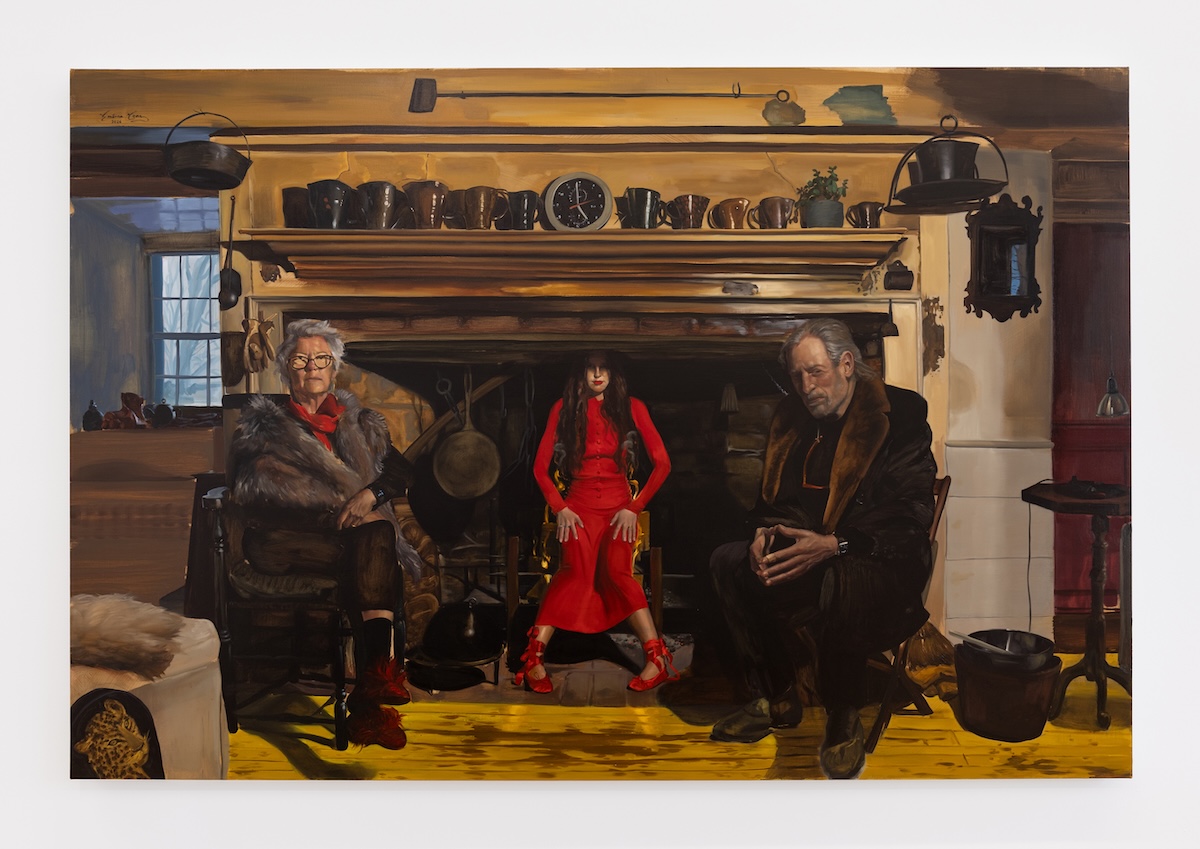 Emily Coan, Nigrido, 2026, Image courtesy of the artist and DIMIN
Emily Coan
My Alchemical Vessel
October 30–December 5, 2026

Esme Graham
Esme Graham is a writer and critic based in New York. She began writing while receiving her master's degree in art history from the University of Chicago. Her specific focus is on modern and contemporary art.
view all articles from this author