Whitehot Magazine
October 2026
"The Best Art In The World"
"The Best Art In The World"
October 2026
Exhibition Review: “Circa 1971: From the Collections of Jordan D. Schnitzer and His Family Foundation” at the Sun Valley Museum of Art, Ketchum, Idaho
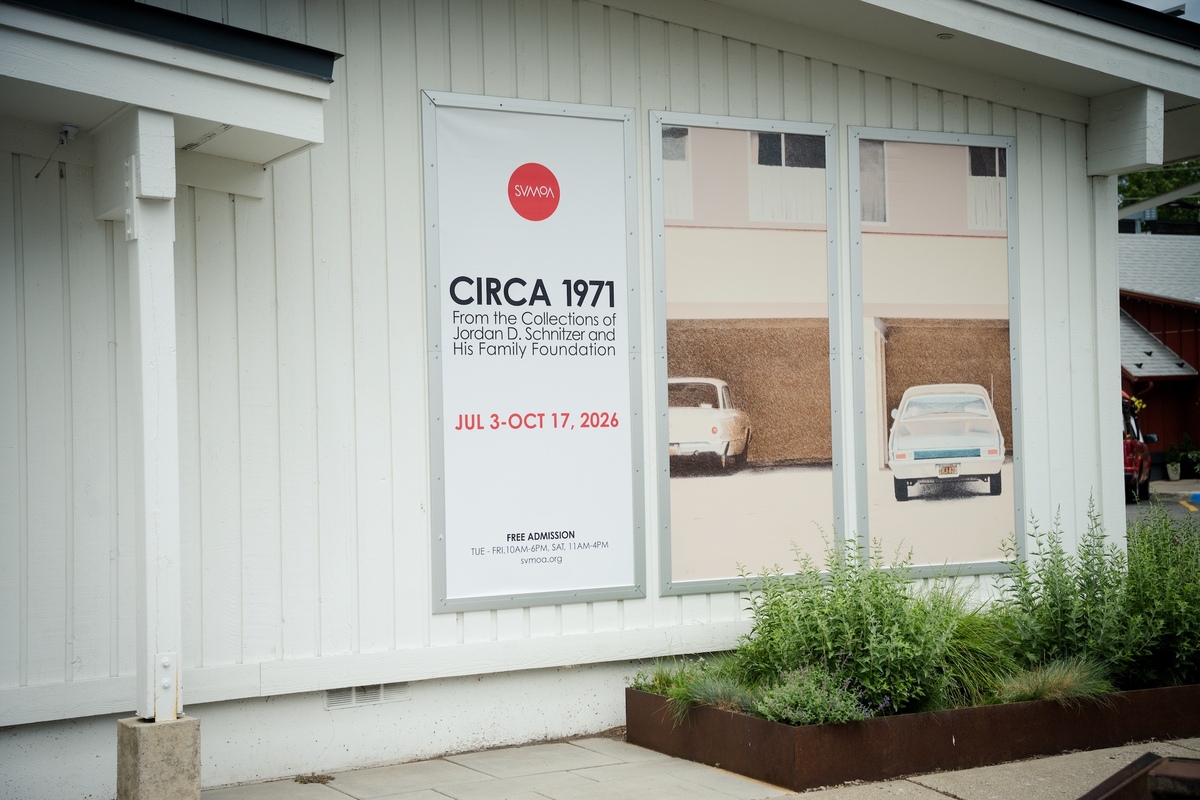 Exterior of the Sun Valley Museum of Art with poster advertising the Circa 1971 exhibition. Ketchum, Idaho, 2026. Image courtesy of the Sun Valley Museum of Art.
By LIAM OTERO September 9th, 2026
Art collectors occupy an important part of the arts ecosystem in that they can be agents for greater public accessibility to art. The loaning of works renders them the great mediator between audience and institutional sectors. The people of Ketchum, Idaho currently have access to one of the finest selections of later-20th Century art in the city’s esteemed cultural center, the Sun Valley Museum of Art, all thanks to the generosity of Jordan D. Schnitzer.
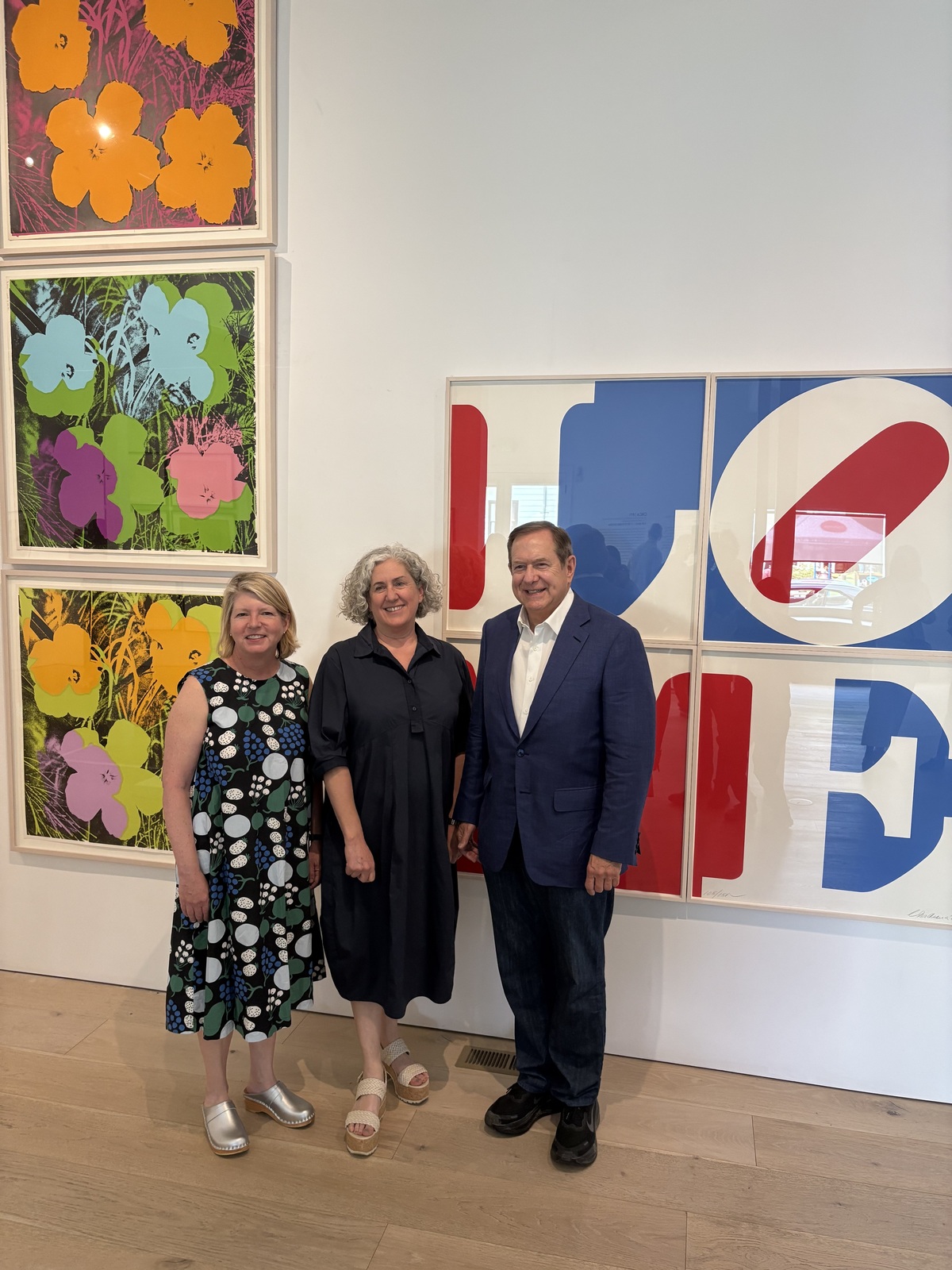 (Left to right) Assistant Director & Curator of the Sun Valley Museum of Art (SVMoA) Courtney Gilbert, Executive Director of SVMoA Jennifer Wells Green, and Jordan D. Schnitzer during the opening reception of Circa 1971 at the Sun Valley Museum of Art, Ketchum, Idaho, 2026.
Also known as the “Prince of Prints”, Schnitzer is a real estate businessman, philanthropist, and art collector based in Portland, Oregon who has amassed an extraordinarily voluminous art collection - some 22,000 pieces - with most of these being prints. Since founding the Jordan Schnitzer Family Foundation in 1997, he rightfully earned a reputation for an inspiring generosity in loaning works from his personal collection to institutions all over, with the Sun Valley Museum of Art as one of his latest recipients. Bonus fact: He even has his own museum, the Jordan Schnitzer Museum of Art, out in Eugene, Oregon that speaks to the breadth of quality works he wants audiences of all stripes to be able to see and experience.
 Robert Rauschenberg (American, 1925 - 2008), Signs, 1970, screenprint. Collection of Jordan D. Schnitzer.
Circa 1971 (on view through October 17, 2026) is a like a time capsule to one of the most pivotal moments in American art where names as big as Robert Indiana, Claes Oldenburg, Helen Frankenthaler, and the recently passed Sir David Hockney (during his halcyon California days) grace the museums walls alongside a roster of other modern legends.
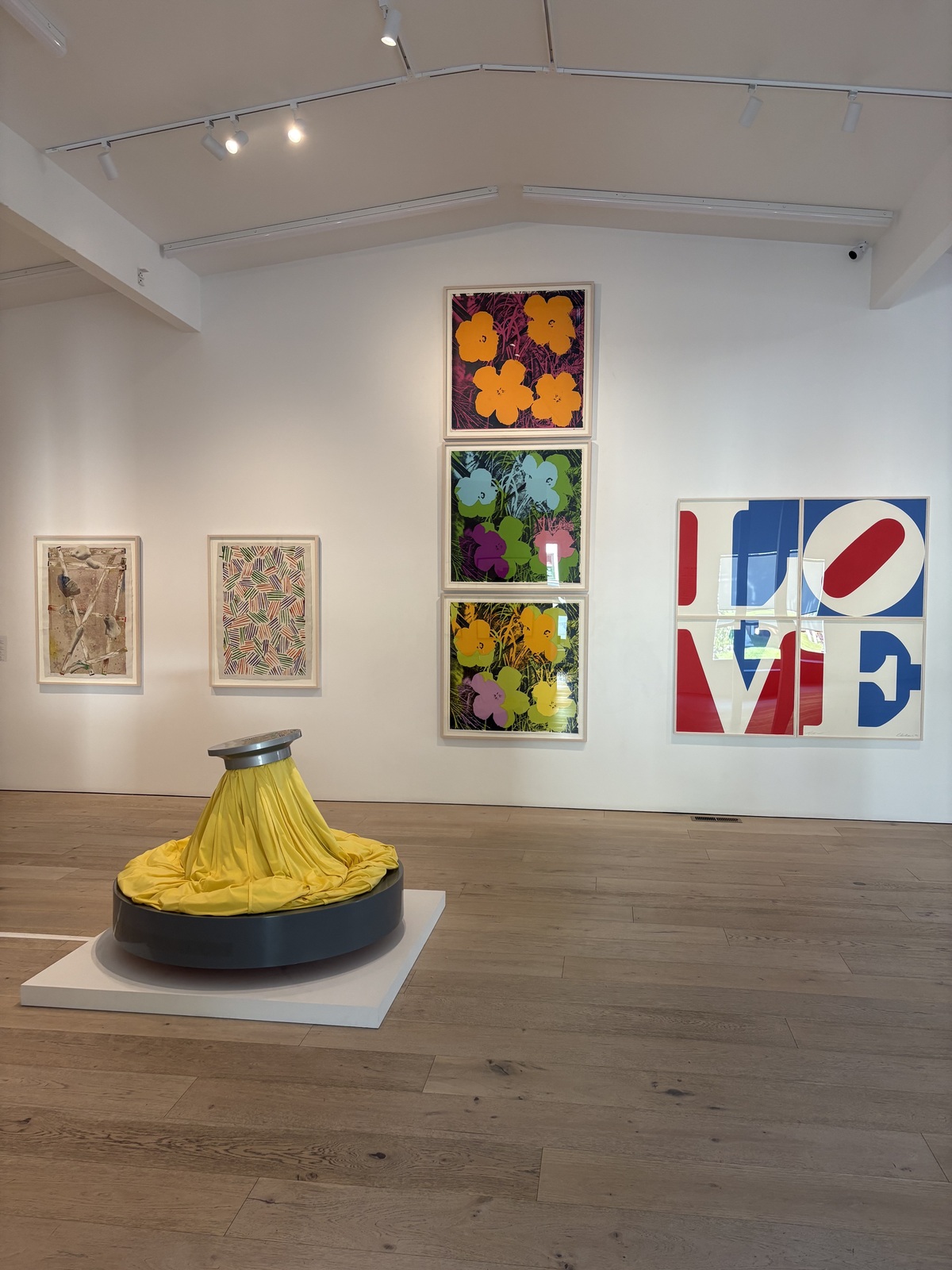 Installation view of Circa 1971 at the Sun Valley Museum of Art, Ketchum, Idaho.
Working in close collaboration with the museum, Schnitzer wanted the focus to be on works created between 1970 and 1972, a small enough window encompassing a period that was packed with much going on in the U.S. and around the world: the Vietnam War, the Civil Rights and Black Power Movements, the Sexual Revolution, Modern Environmentalism, etc. Art historically, this was also a frenetic period of many “-isms” and movements that came, went, and hung on: Abstract Expressionism, Photorealism, Pop Art, Geometric Abstraction, Minimalism, Conceptualism, etc. Serendipitously, 2026 also marks the 55th anniversary of the founding of the Sun Valley Museum of Art.
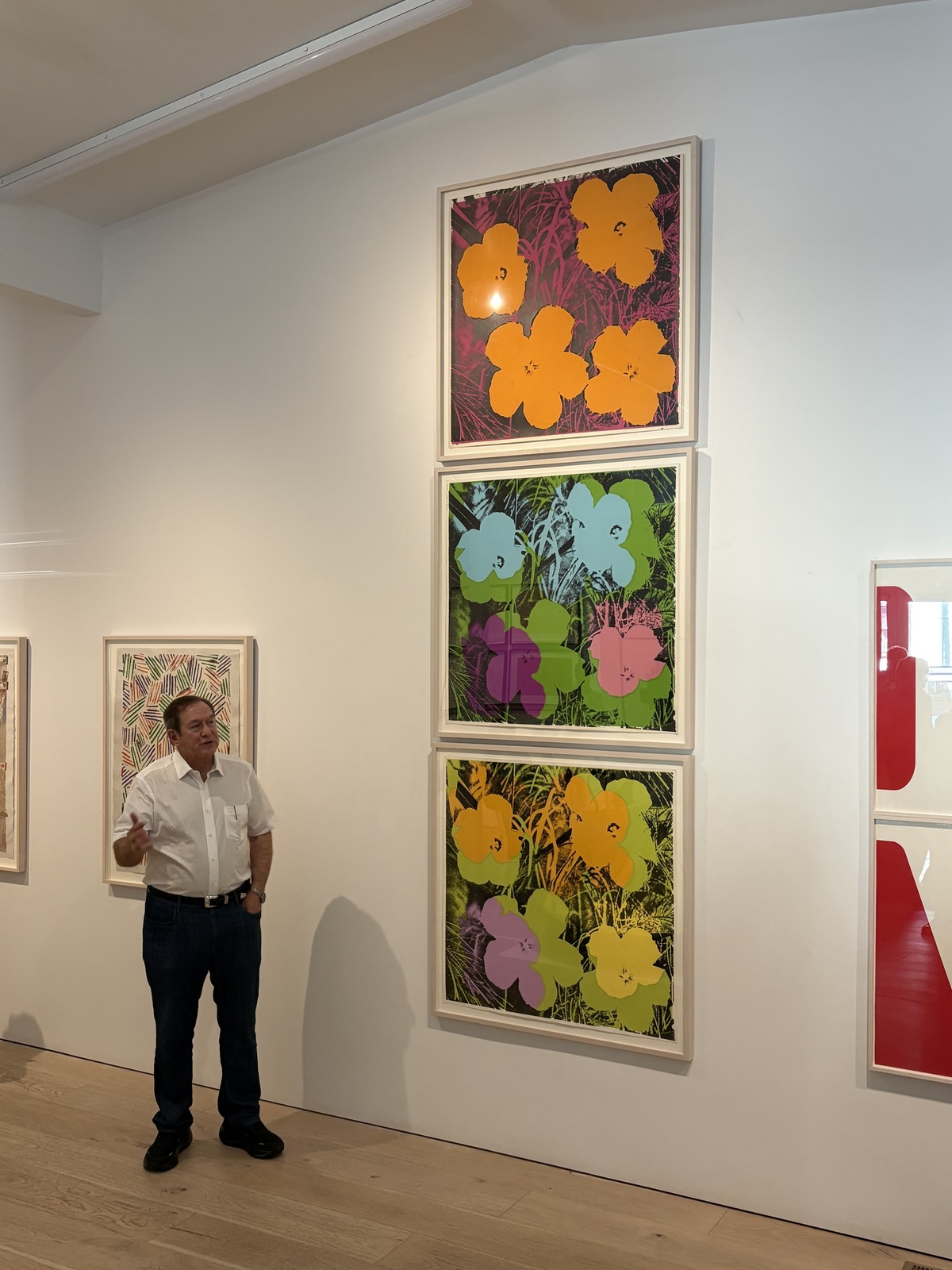 Jordan D. Schnitzer speaking extemporaneously and enthusiastically about his respect for Andy Warhol and his contributions to Pop Art.
During the press preview, Schnitzer took the time to further explicate his rationale in demarcating the exhibition’s timeframe to the very early 1970s. He emphasized this period is an important bridge to our contemporary world with artists in this show exerting major influence in the creative possibilities art offered by way of style, medium, and subject matter. He conveyed a great ebullience for the works in this show, an enthusiasm most contagious, as he marveled at Andy Warhol’s capacity to turn the most mundane objects into something notable through the mediation of screenprinting or Ellsworth Kelly’s ability to seize one’s emotions through bold coloration structured around a pared-down arrangement of geometric forms.
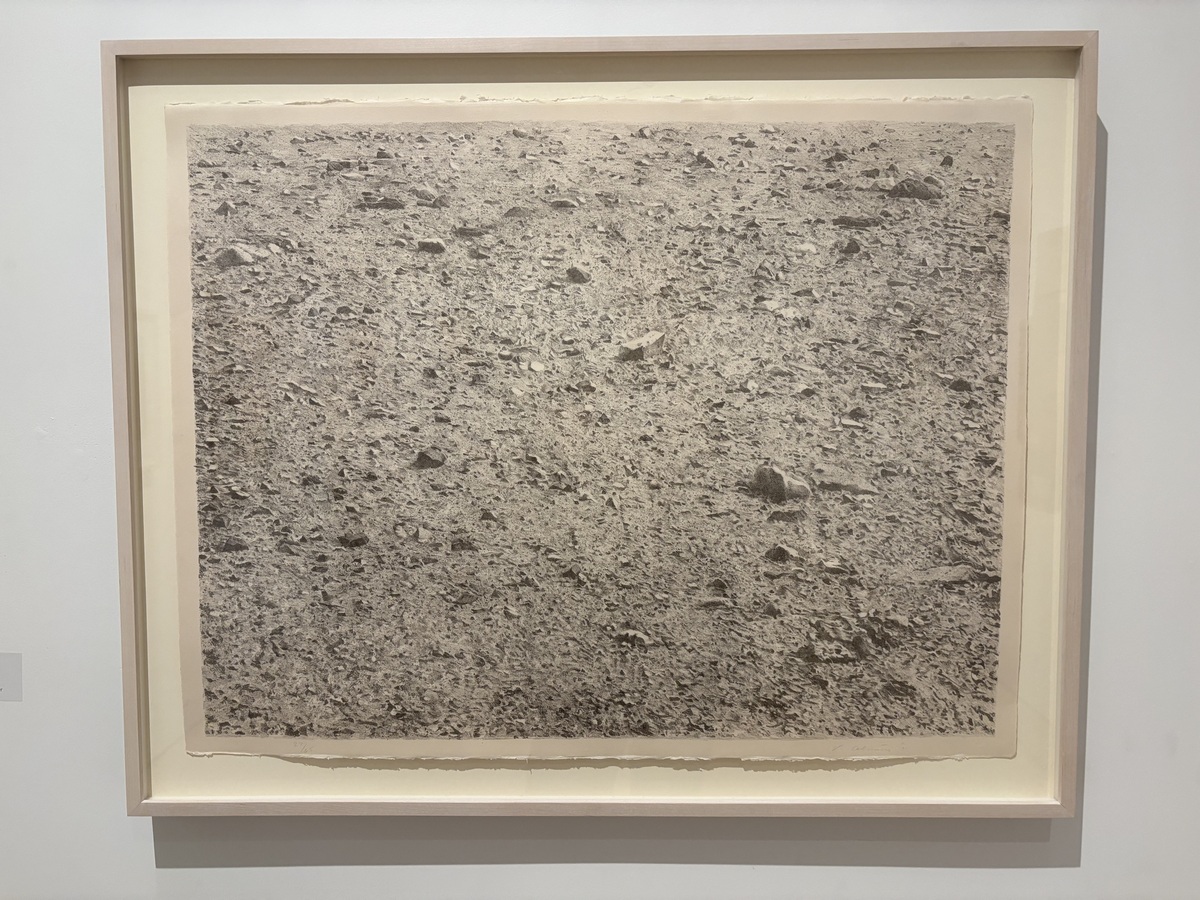 Vija Celmins (Latvian-American, b. 1938), Desert O38C-VC71, 1971, lithograph. Collection of Jordan D. Schnitzer.
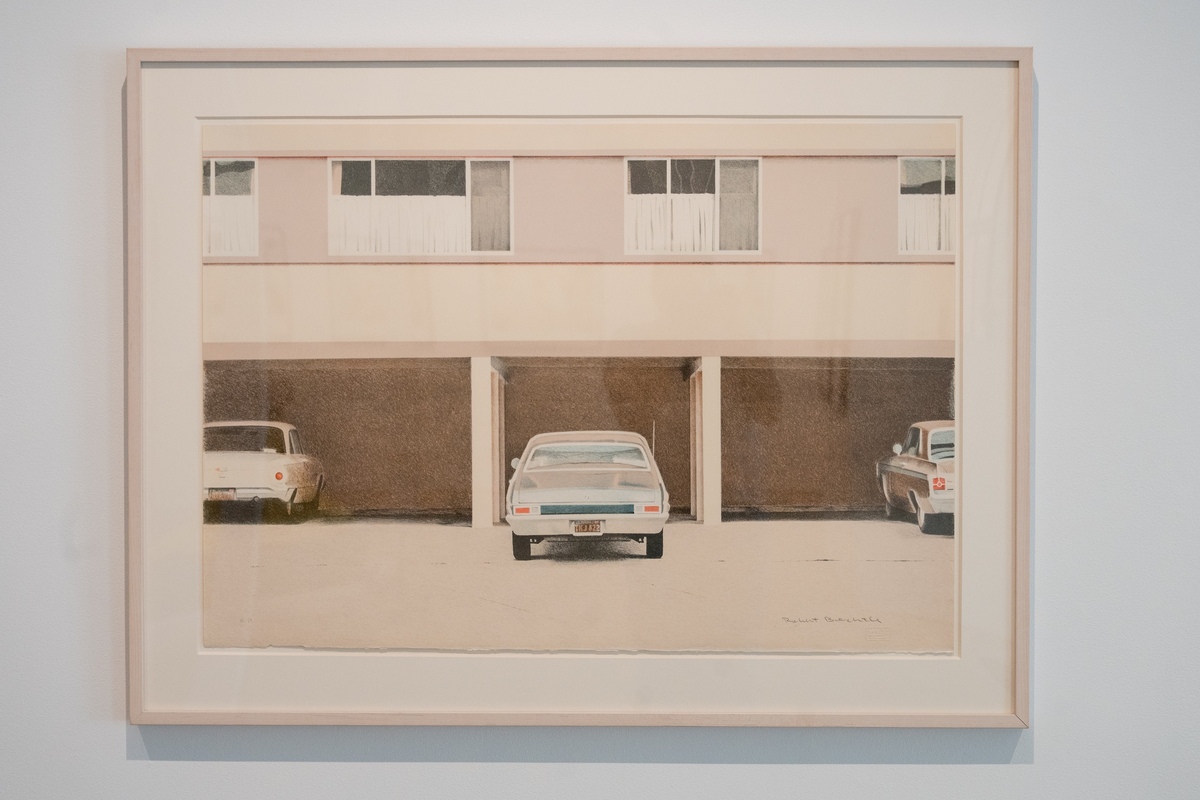 Robert Bechtle (American, 1932 - 2020), 68 Nova, from the Documenta Portfolio, 1972, lithograph. Collection of Jordan D. Schnitzer.
The plurality of works on view is the ultimate reason for Circa 1971’s success: Robert Bechtle’s Photorealist lithograph of a 1968 Chevy Nova automobile parked beneath an apartment or office block sutured in a yellowish-brown recalls the grain of a film photograph of the early-70s; Robert Rauschenberg’s Signs (1970), a screenprint of appropriated imagery reflective of almost every important figure and event of the 1960s (the Apollo Moon landing, the Kennedy’s, Janis Joplin, Vietnam, etc.); the “Godfather of Conceptual Art” John Baldessari’s mischievous, schoolhouse humor of I Will Not Make Any More Boring Art (1971); a somber, almost anti-Color Field work by Helen Frankenthaler, and the list goes on.
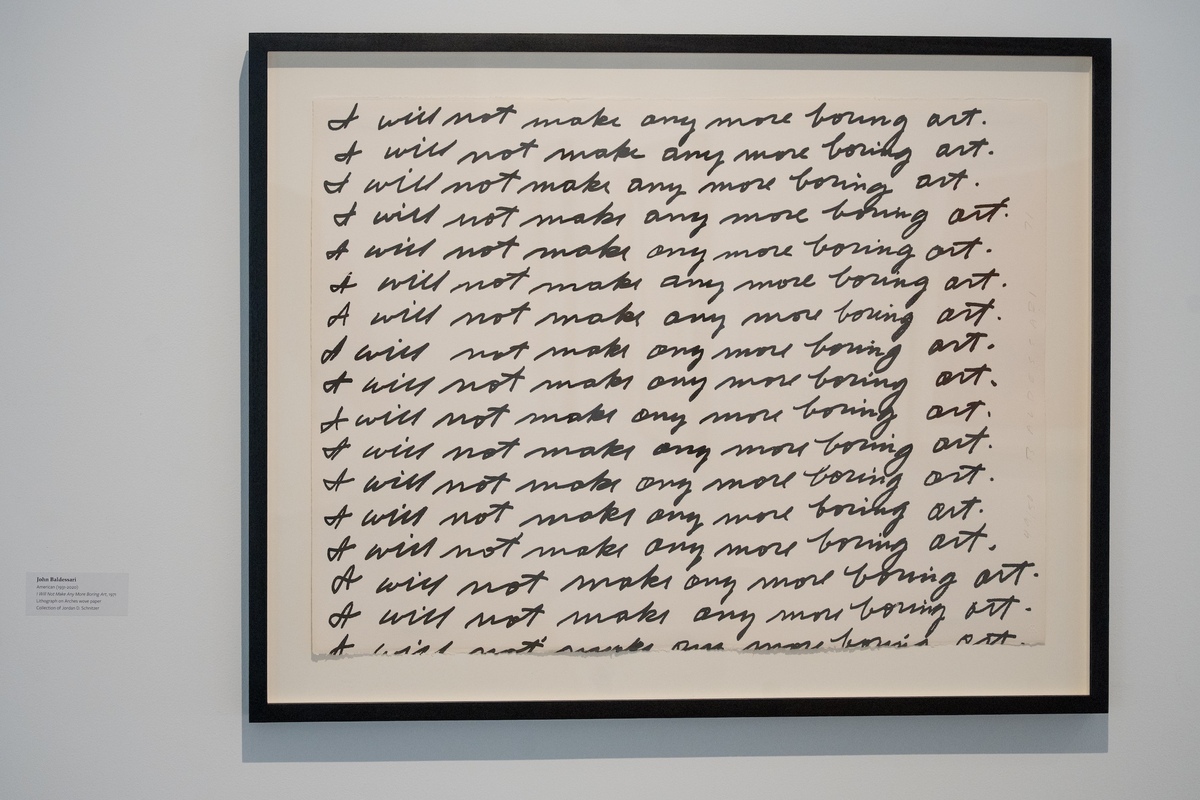 John Baldessari (American, 1931 - 2020), I Will Not Make Any More Boring Art, 1971, lithograph on Arches wove paper. Collection of Jordan D. Schnitzer.
The Sun Valley Museum of Art, which is technically located in the small city of Ketchum near the famed Sun Valley Resort, is situated in the middle of Idaho around at least five awe-inspiring mountain ranges. Being one of the more rural parts of the United States, Schnitzer recognized the importance of bringing works by groundbreaking and significant figures of Modern Art to an area that is more geographically remote from other major cities. “Too many eyes don’t wear out the art” was an expression he repeated on multiple occasions to emphasize the need for an artwork to be viewed by as wide of an audience as possible. Until the middle of next month, those in Sun Valley should reap the benefits of this most auspicious of exhibitions by bringing an open mind and eager eyes to view this truly remarkable selection of works from Schnitzer’s fabulous, one-of-a-kind collection. WM
 James Rosenquist (American, 1933 - 2017), Moon Beam Mistaken for the News, from Cold Light Suite (G.38), 1971, lithograph. Collection of Jordan Schnitzer Family Foundation.

Liam Otero
Liam Otero is a freelance art writer in NYC. He was recently named New York Editor of Whitehot Magazine.
view all articles from this author