Whitehot Magazine
September 2026
"The Best Art In The World"
"The Best Art In The World"
September 2026
The $5,000 Artists Who Became $3 Million Names and the Man Behind It
By PRISCA PAN July 25th, 2026
In moving through museums, galleries, and art fairs, there are single works that keep me up at night — a painting glimpsed in a booth, a piece I didn't buy that I haven't stopped thinking about. That happens often enough, but presentations that nourish me holistically, feeding something deeper than appetite, those are rare. In the last couple of years, it has happened exactly twice. The first was standing inside the SI Newhouse and Agnes Gund collections at Christie's, the accumulated conviction of two lifetimes of looking. The second was Danny First.
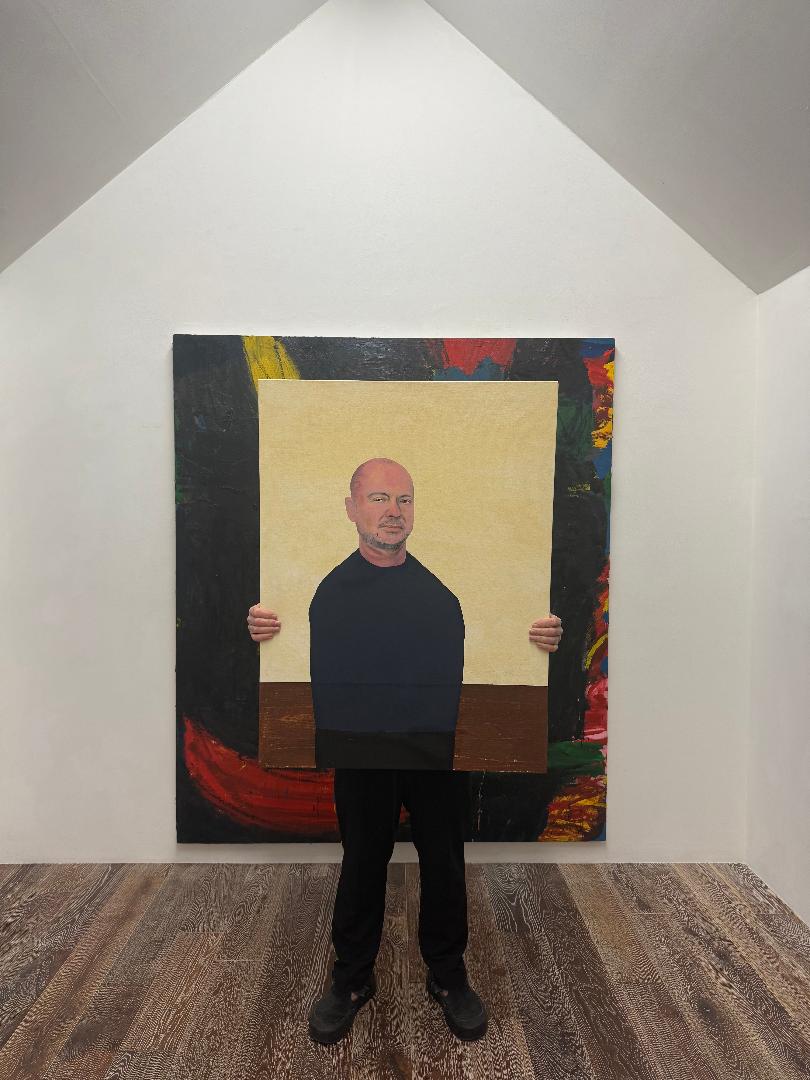 Danny First painted with a t-shirt, For the section From T-Shirt to Cabin
From T-Shirts to The Cabin
Danny First designed cult-favorite graphic T-shirts & 100s of other products. He got tired of it, so he decided the thing he actually wanted to do with his life: Support artists. He built a small structure in the backyard of his Hancock Park home in Los Angeles, modeled after the Unabomber's Montana shack, and named it The Cabin. He started inviting artists to live and work in a nearby studio for a month at a time. That was 2014.
He has been doing this ever since, quietly consistently. Without institutional backing, a formal endowment, and much credit from the industry that has quietly benefited from his eye.
When an artist is selected, Danny covers their flights, their materials and he provides room and board. He even does their laundry. At the end of the residency, works are sold and proceeds split 50/50 with the artist; a split that barely covers the costs he has already absorbed. Over 72 artists have passed through the program. He finds many of them on Instagram and random websites like a Polish fashion site, before anyone else does.
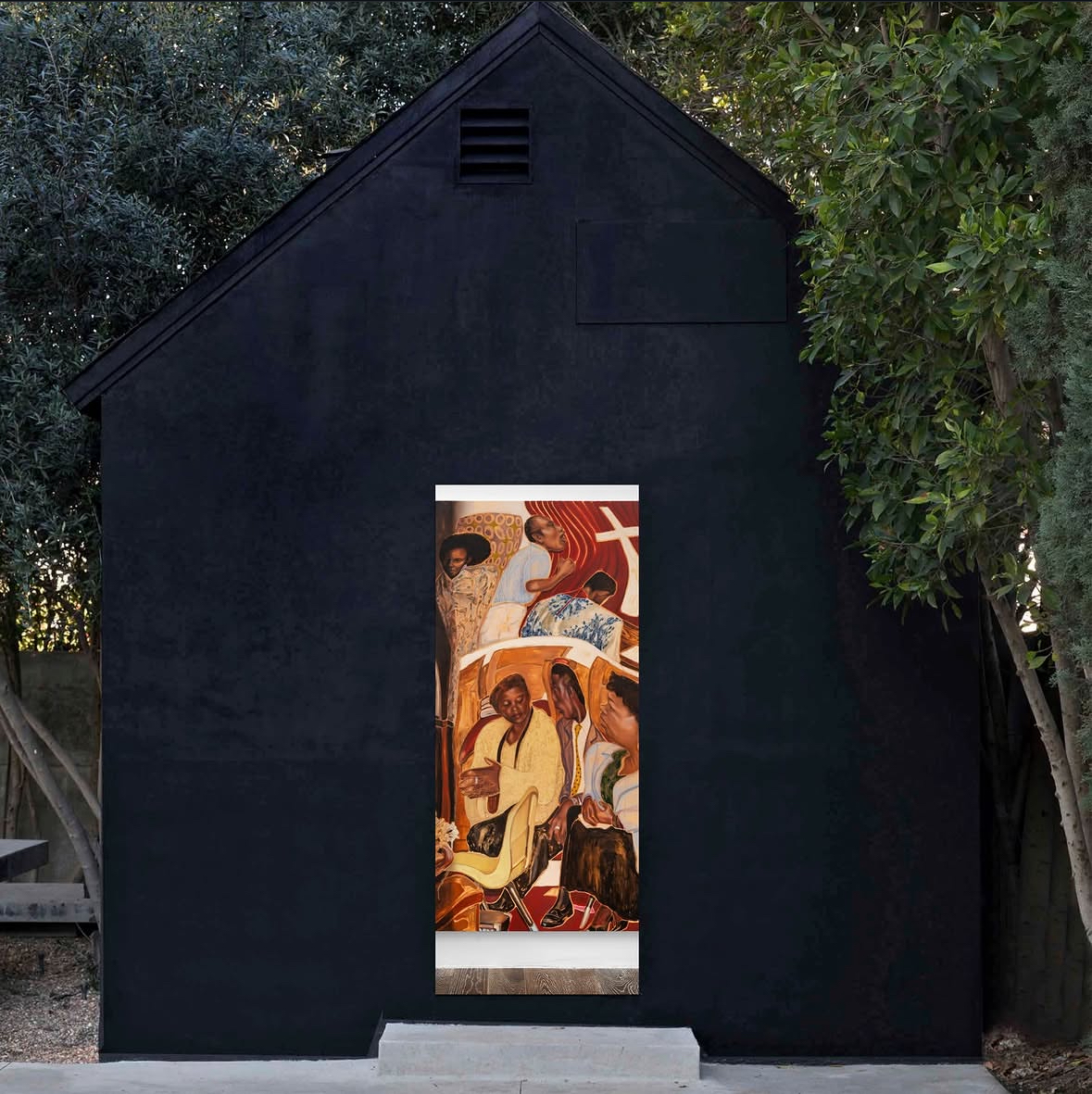 Georgia Semple’s Give or Take show in May 2026, for What He's Actually Built section
The Receipts
The names that have passed through The Cabin read like a syllabus for the last decade of figurative painting: Amoako Boafo, Tschabalala Self, Genevieve Gaignard, Tunji Adeniyi-Jones, Lenz Geerk and more. When they arrived, works were accessible in the $5,000–$8,000 range.
Boafo now holds an auction record above $3 million. Tunji Adeniyi-Jones regularly clears six figures and represented Nigeria at the Venice Biennale. Tschabalala Self's early $10,000 paintings now appear at Christie's and Sotheby's major sales. Lenz Geerk now sells in the mid five figures. The pattern repeats, artist after artist, year after year.
Danny saw all of them before the market did, and before the galleries did.
He just doesn’t get the credit for it.
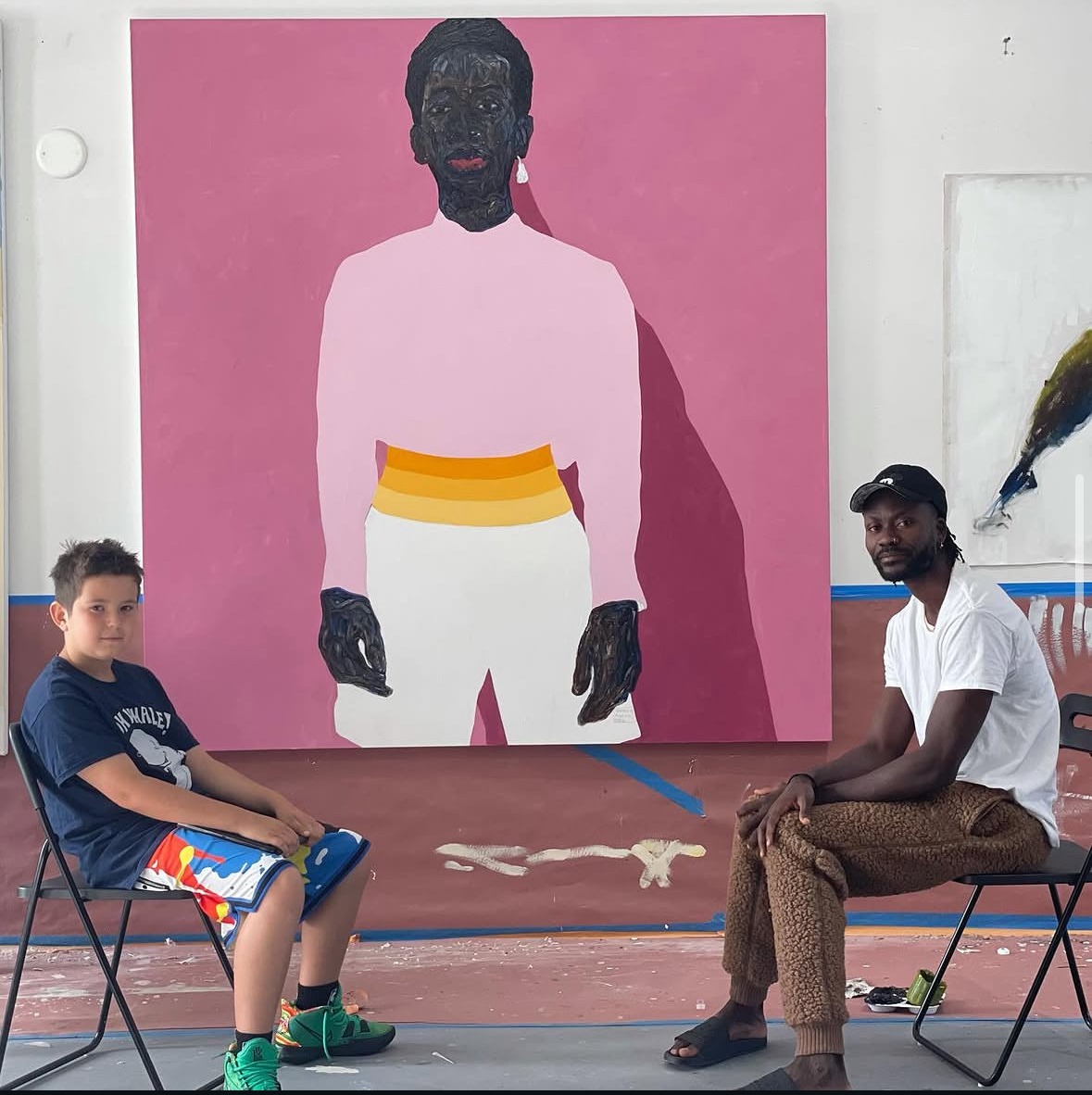 Amoako Boafo sit down interview at the Cabin circa 2021.
Courtesy of Danny First and Robert's Projects
A Patron-Champion
There is a question the art world has not yet answered cleanly, and Danny First is the reason it needs to.
As this piece goes to press, Pace Gallery has just cut 50 artists from its roster and laid off 50 staff members. CEO Marc Glimcher called it a "model correction," declaring that "the current gallery model isn't only broken, it's unfixable." This follows two consecutive years of global art market contraction, the closure of Blum and numerous other long-standing galleries, and a broader reckoning with what it costs to operate at scale. Pace spent $100 million renovating its Chelsea flagship, expanded to eight locations across three continents, bet on crypto-backed ventures, and collapsed under the weight of its own overhead, cutting the very artists and workers the model was supposedly built to serve.
Danny First runs his entire operation out of a backyard in Hancock Park. He has been doing this for over a decade, sculpting his own work on the side, quietly building a secondary practice as a sculptor while funding everyone else's primary one. His overhead is his conviction.
These are not equivalent models and no one is suggesting they should be. But held side by side in this particular moment, they raise a question worth sitting with: what does it actually mean to support artists? Not in the abstract, in the specific. In the flights booked, the materials covered, the 50/50 split that barely breaks even, the decade of quiet and consistent belief before the auction records arrived.
The art world has comparison programs it considers prestigious: Skowhegan on 330 acres in Maine, MacDowell awarding 300 fellowships a year since 1907, the Rome Prize with its $30,000 stipend. These institutions credential artists through the weight of their names, being selected is itself the signal. The Cabin operates on the opposite logic. No application panels. No institutional endorsement. Just one person's eye, his own money, his own backyard, and a track record that rivals any of them for the metric that actually matters: where do the artists go next.
The art world has no shortage of people who love to announce that they discovered someone. Discovery has become a performance — a story told at dinners, in press releases, in gallery texts that credit the institution's vision without naming the person who actually found the work first. Tastemaker has become a title people give themselves, a brand position, a dinner party credential. Danny First is not that. Meet him in person and you will not find the snobbery that passes for discernment in so many art world rooms. He is introverted, unpretentious, not especially interested in talking about himself. You will not get many words out of him, but the words you get, he means.
The art world has spent decades building institutions to do what Danny First does alone, informally, and at his own expense, and has done so with more accuracy than most of them. What he is, as best as I can name it, is a patron-champion: someone who operates before the credentialing system catches up, who absorbs real financial risk in service of artists he believes in, and who creates the conditions: space, time, materials, stability, and yes, clean laundry, for work to be made that the market will eventually spend millions to acquire. The art world does not have a great language for this. I think that is part of why he has gone uncredited for so long. The category did not exist, so the contribution went unnamed.
The Cabin has been written up by The Art Newspaper, which called it "per square foot, the most influential gallery in Los Angeles," and still the galleries that now represent his alumni have not publicly acknowledged where they first encountered the work, or who took the risk before it was legible.
The market has caught up to his eye. The galleries have caught up. The auction houses have caught up. The Art Newspaper has noted it. The collectors have acted on it.
The formal acknowledgment from the institutions that benefited most from his eye, the galleries now representing his alumni, the curators who encountered the work first at The Cabin, has not arrived.
It should.
Prisca Pan
Prisca runs Unfram_d, an art advisory working at the intersection of culture and capital, helping a new generation of collectors build thoughtful, investment-grade art collections. She writes about cultural permanence, art as infrastructure, and what wealth looks like beyond liquidity at The Uncommon Angle.
view all articles from this author