Whitehot Magazine
September 2026
"The Best Art In The World"
"The Best Art In The World"
September 2026
The First Memes Were Sent by Mail
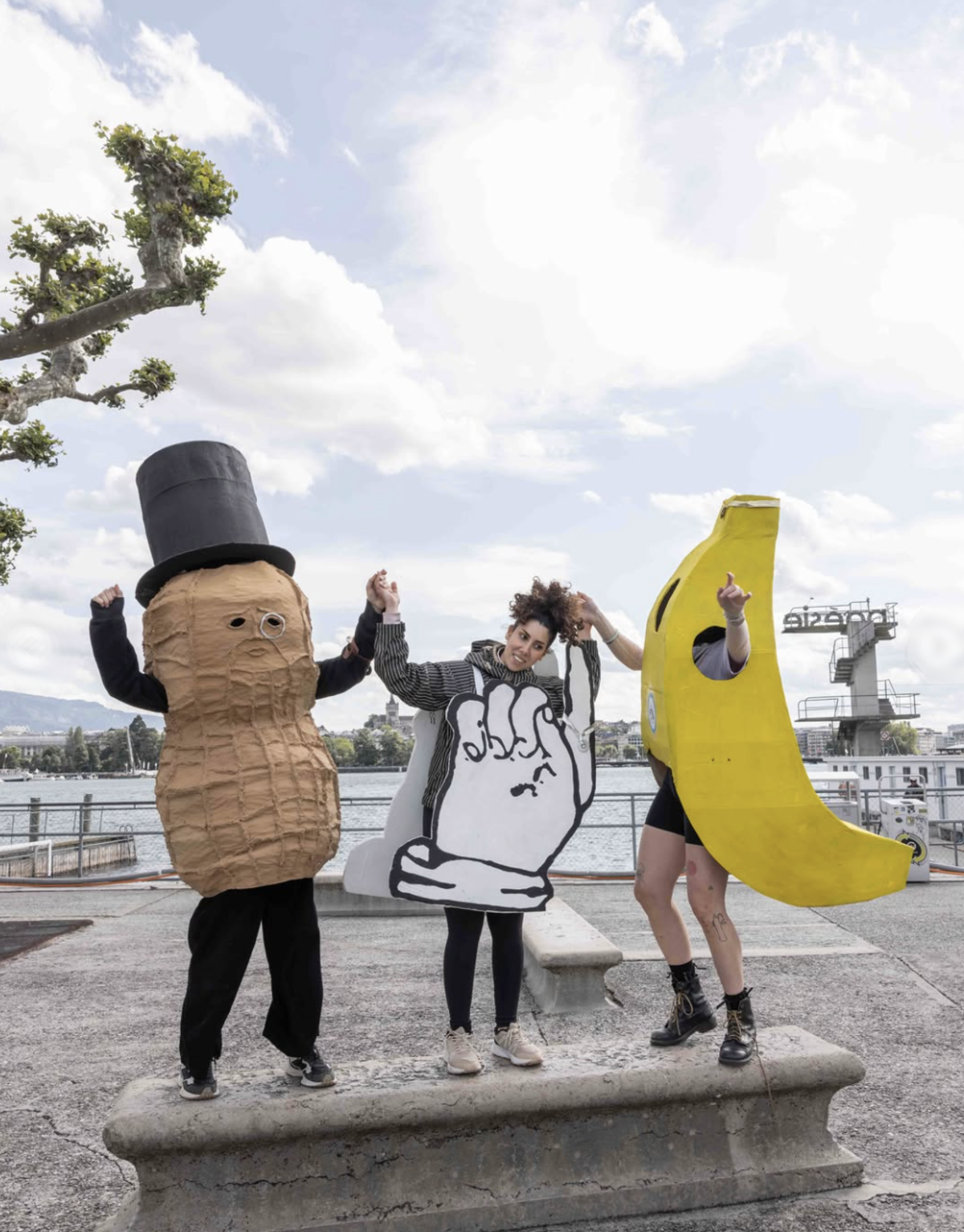
Tribute to the 1970s performances of Anna Banana and Vincent Trasov (Mr. Peanut), presented during the opening of Quickkopy Conceptualism: Bay Area Dada to Bay Area Punk at MAMCO Geneva. Photo by Antoni Aeby for MAMCO Geneva.
By CAMILLE MORENO June 25th, 2026
The longstanding rule of "six degrees of separation" seems to be especially true in the art world, and in fact sometimes all it takes is a banana. Acting today as a kind of shorthand for the absurdities of the contemporary art sector and its market (like being taped to the wall and sold for millions) the world's most popular fruit has actually been doing some heavy cultural lifting for over a century already.
Paul Gauguin painted monumental bunches of bananas shortly after arriving in Tahiti in 1891. Giorgio de Chirico scattered them across a deserted piazza in The Uncertainty of the Poet in 1913. Andy Warhol painted a banana for the 1967 debut record of The Velvet Underground and Nico, and Czech dissidents later adopted the band as a symbol of cultural resistance behind the Iron Curtain. Feminist artists from Natalia LL to Sarah Lucas and the Guerrilla Girls have all had a go of biting back via their own versions of bananagraphically-loaded symbolism.
Even today, spray-painted bananas can be found outside many galleries and museums. Since the 1980s, German artist Thomas Baumgärtel, aka the "Banana sprayer" has tagged over 4,000 art institutions with his signature yellow stencil, using bananas both as a kind of insider's seal of approval as well as an exercise in artistic license.
After peeling back the layers of sex, freedom, consumerism, absurdity, protest, and subversion, this humble berry's greatest achievement may not even be what it symbolizes, but how it manages to continually resurface.
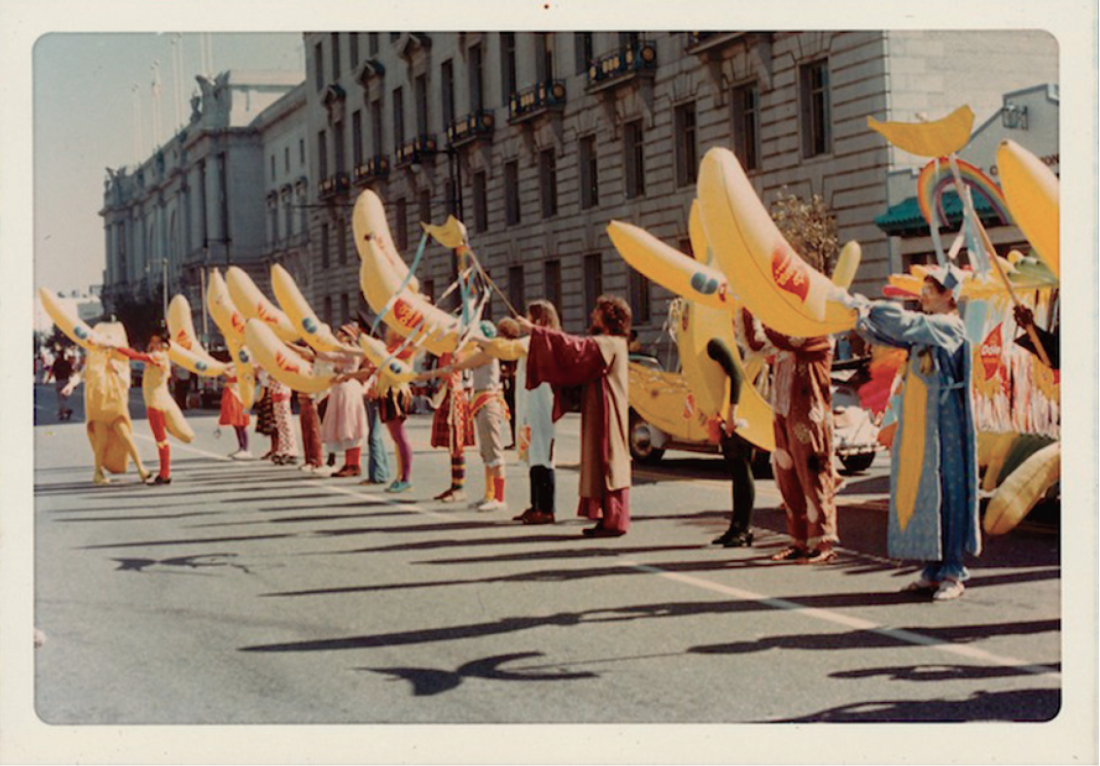
Anna Banana’s Columbus Day Parade entry, San Francisco, 1974. Photographer unknown. Courtesy Art Gallery of Greater Victoria.
For Canadian conceptual artist Anna Banana and the Bay Area Dadaists, banana (re)production was a vehicle for communication: bananas appeared in performances, mail art, and above all, through photocopying. The banana's importance did not make sense per se, insomuch as it did not retain any special or fixed meaning. Rather, it drew power from its mobility: moving from artist to artist, city to city, and network to network. Recognizable, accessible, and endlessly repeatable, the banana gained significance through circulation. It was a meme before memes had a name.
At the entrance to Quickkopy Conceptualism: Bay Area Dada to Bay Area Punk stands a recreation of Anna Banana's banana costume, among others, produced by HEAD–Genève (Geneva's University of Art and Design) students for a collective performance staged on opening night of an exhibition that delves into the Dadaist spirit of contestation and absurdity as a means to questioning systems of gender, authority, and institutional power. Conceived as an homage to the 1970s actions of Anna Banana and Vincent Trasov (aka Mr. Peanut), the performance encapsulated the exhibition's broader ambition. Instead of looking at mail art like a closed historical chapter, it puts it back into circulation.
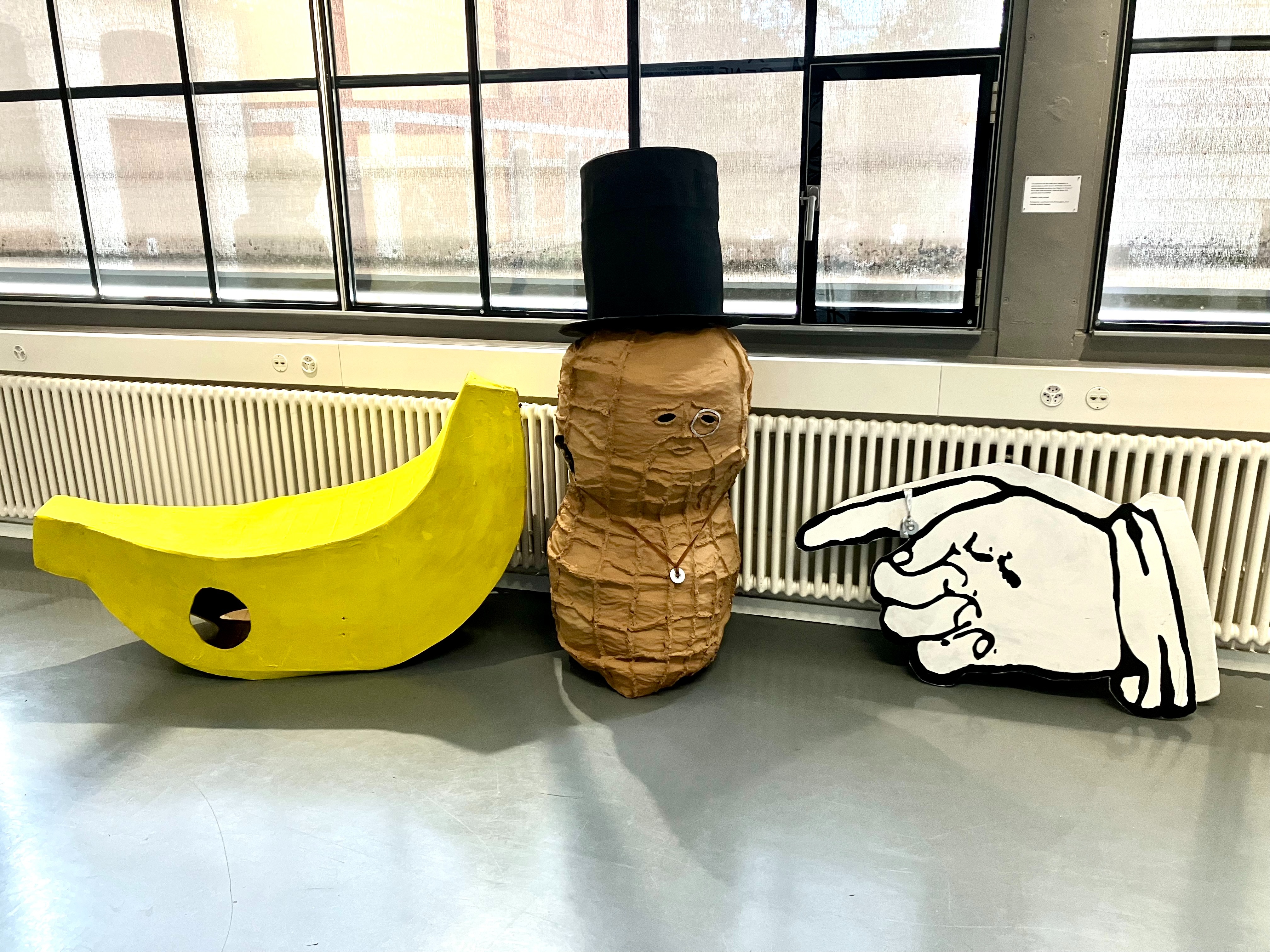 Costumes created by HEAD students for the opening performance.
During preparations, exhibition curator Elisabeth Jobin established contact with OG mail artist Bill Gaglione’s mail art network, inviting artists to send in materials to be included in the show. “I received hundreds of them,” she says, standing before a wall virtually overflowing with letters, postcards, and other paper transmissions which poured in from around the world. Once the art started arriving, it "never stopped.” The result is a testament to the network's power and its ability to generate new connections. For the HEAD students and the contributing artists alike, the open call transformed mail art from a historical subject into an active practice, reintroducing a physical, participatory network to a generation raised with the speed and abstraction of the internet.
Developed through a collaboration between MAMCO, HEAD students, and art historian Branden W. Joseph, the exhibition reconstructs a sprawling network that linked San Francisco, Geneva, and London, as well as Vancouver and countless points in between from the 1970s through the 1980s. Over the course of a year, students drew connections and worked directly with archival materials, producing performances, publications, and interventions, all of which are woven into the show. While MAMCO, whose main building is closed for renovations, is currently housing its Ecart archives at the school, the setting also creates an interesting continuity between the exhibition's subject and its production. Visitors must pass through the campus to reach the gallery. Rather than students visiting the museum, the museum comes to them, as does everyone else.
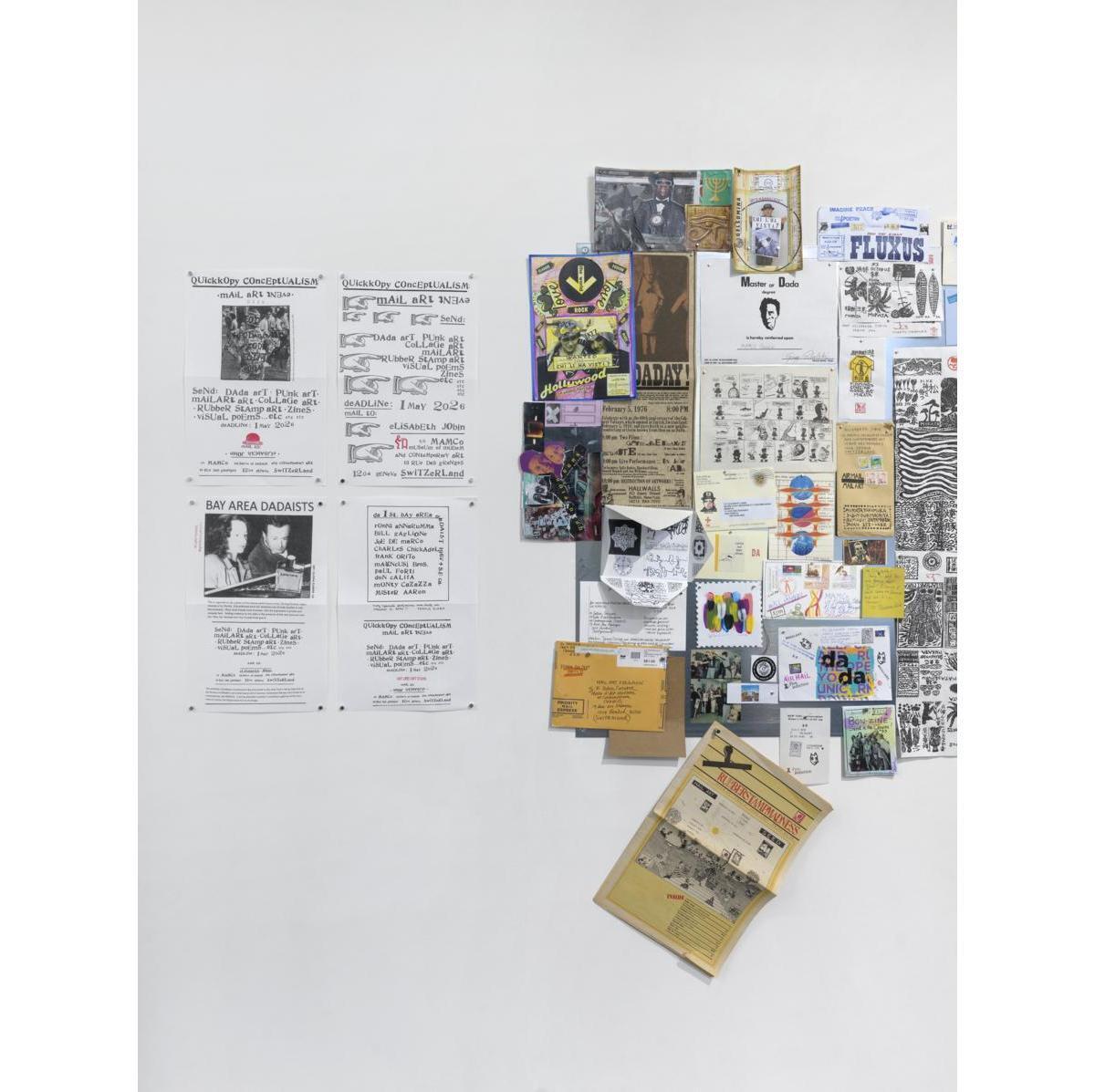 Exhibition view and mail art. Photo by Annik Wetter for MAMCO.
Through an exceptionally rich collection packed with correspondence, photos, and ephemera, as well as a surprisingly neat presentation of seemingly endless archival material, the exhibition is nothing short of a zine-core wetdream. It features a dedicated wall-o-zines and DIY mail art station complete with postcards, stamps, and even postage. Because many of the works were loaned and sourced specifically for the exhibition, MAMCO is also preparing a publication that preserves the project beyond its physical run — a necessary gesture, as Jobin points out, as it may be the only moment when such a vast amount of mail art and Ecart materials are assembled in one place. For those unable to visit the exhibition physically, the experience is also accesible as a digital deep-dive.
One of the exhibition's greatest achievements is not only drawing connections between locations, artists, and memes, but also demonstrating how shared ideas did not develop in isolation. Through Ecart, the Geneva-based collective co-founded by John Armleder, artists, publications, performances, and ideas moved continuously between Europe and North America. Part gallery, part publishing house, part performance venue, and part mail art hub, Ecart became a relay station in what participants called the "Eternal Network."
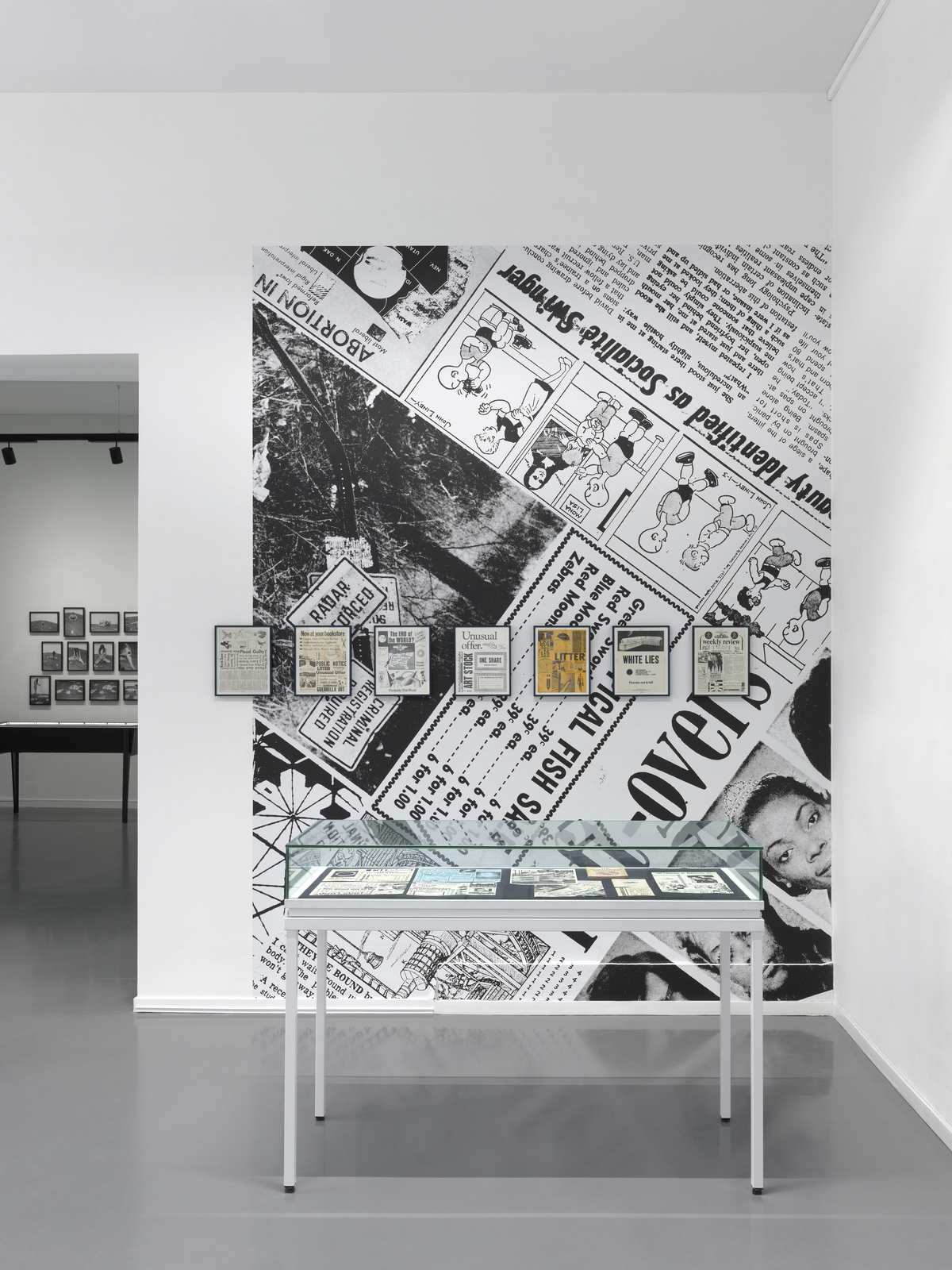 Exhibition view. Photo by Annik Wetter for MAMCO.
The exhibition follows these routes from Ray Johnson's early mail art experiments and Bruce Conner's collage practice to General Idea and Image Bank in Canada, before tracing increasingly dense exchanges between the Bay Area Dadaists, Geneva's Ecart circle, and London's industrial underground.
Figures such as Anna Banana, Bill Gaglione, Monte Cazazza, Genesis P-Orridge, and Cosey Fanni Tutti appear as nodes in an ever-expanding web of correspondence. The density is overwhelming by design, and one could truly spend days on end tracing the connections. In one vitrine, a publication may reference a performance documented in another room (not to mention another city). In that room, a mail art thread becomes a fanzine and the fanzine later becomes a record sleeve.
Connections multiply so quickly that understanding the contents often requires retracing steps, drawing lines between people, publications, and places that only become legible later on. Through it all, recurring motifs, from bananas to a noteworthy quantity of mischevious little girls from Earnest Bushmiller's 1938 comic strip Nancy. It's as though these motifs are speaking an insider's language, but one that was accessible to anyone with the desire to participate.
Despite the obsessive recycling and idolization of certain motifs, nothing was really precious. Not the image, which could be copied endlessly. Not the publication, which could be cut apart, altered, and redistributed. Not authorship, which was often concealed behind pseudonyms, stage names, and collective identities. Not chronology, with magazines deliberately misdated and histories gleefully rewritten. Not even publicity. When Flash Art requested information for a feature, the Bay Area Dadaists responded with fake names, masked photographs, and literally unusable statements such as "Bill Gaglione is a jerk" as a refusal of artistic authority, stable identity, and institutional validation.
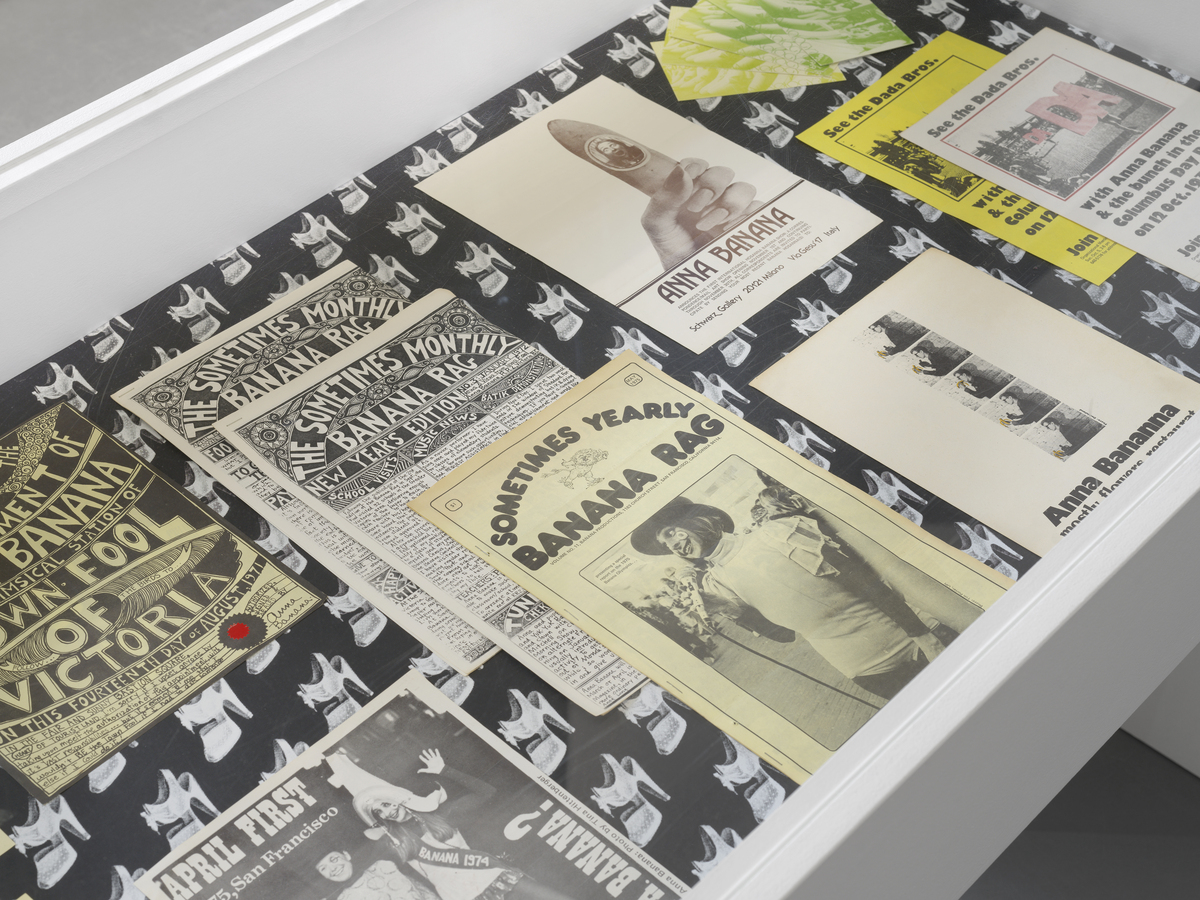 Anna Banana's publication Banana Rag. Photo by Annik Wetter for MAMCO.
Not even the delivery of the mail art was sacred. A considerable amount of it never reached its intended destination, and many pieces were even seized traveling in or out of authoritative regimes. Artists tested the limits of postal systems by sending unconventional objects, designing their own artistamps, or intentionally routing works through politically sensitive channels. Pieces were lost, confiscated, damaged, delayed, or simply disappeared.
But even these mishaps were not seen as failures. If anything, they reinforced the bigger incentive: work existed to serve a process of circulation, so the meaning was shaped as much by interruption and chance as by a successful arrival.The artwork spent more of its life in circulation than anywhere else.
Anna Banana understood this particularly well. Her Banana Rag publications transformed absurdity into a signature communications strategy. Stories about bananas, performances involving bananas, drawings of bananas — the excessive banana content was almost beside the point. Like a contemporary meme, the banana accumulated significance through its repetition, and the repetition invariably allowed the meaning to develop and change as it accumulated more layers.
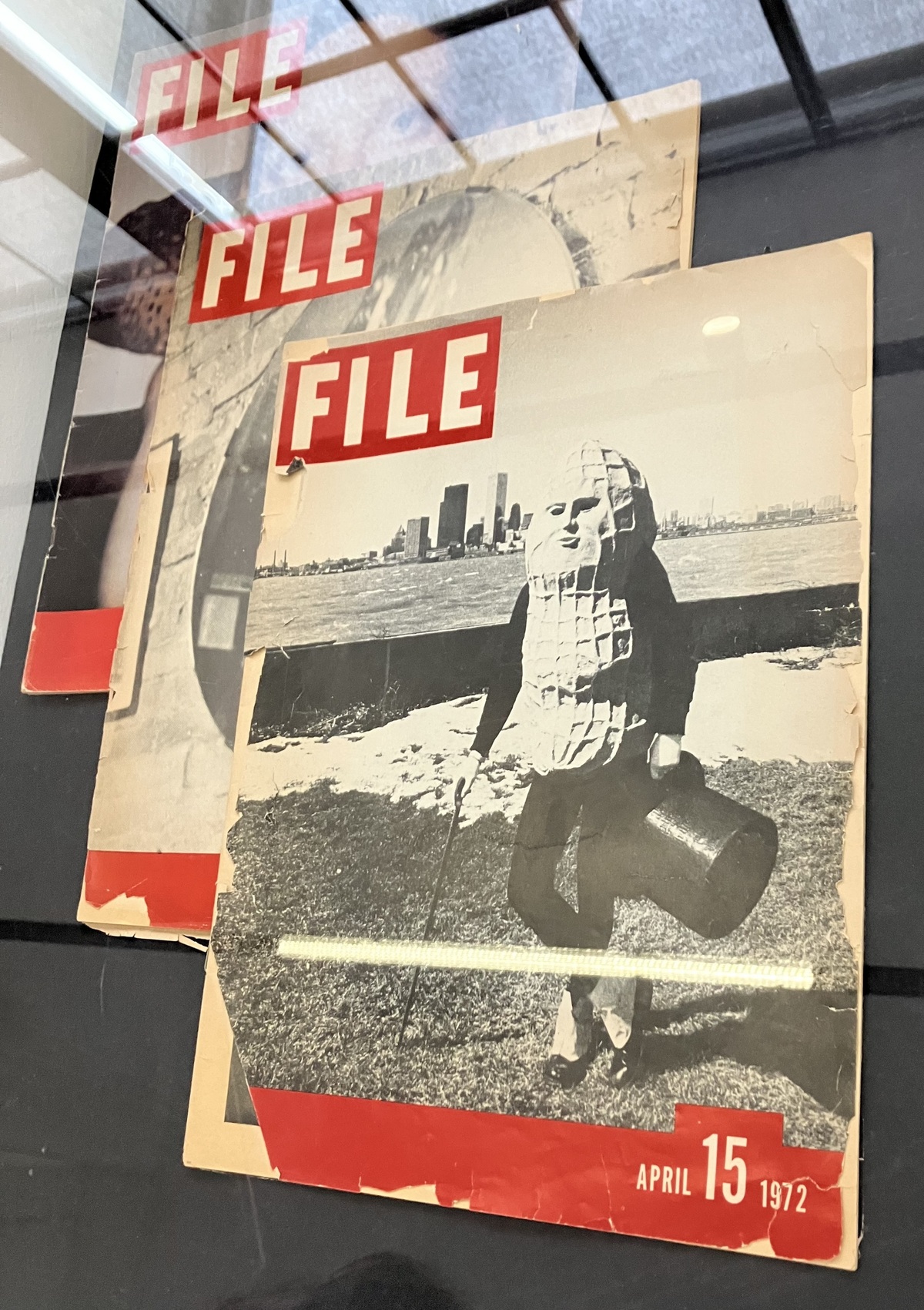 FILE MEGAZINE by General Idea.
The exhibition is filled with similar iterations of this same logic. General Idea's FILE magazine spoofed LIFE magazine. Image Bank turned Vincent Trasov's Mr. Peanut mayoral campaign into an artwork by collecting and republishing the resulting media coverage. Genesis P-Orridge parlayed legal battles with the British postal service into an elaborate mail artwork.
Across the collection, artistic production is inseparable from distribution, reproduction, and exchange. As it turned out, it was the act of copying and regurgitating that became a method of building relationships and organizing a movement. Participation generated more participation, and networks expanded through intentional acts of mutual recognition. Compared to the algorithms of today, this seems much more in control of the network, its members, and its narrative.
Today, the most obvious terrain on which artists and cultural workers organize against authoritarian politics is the internet. But communication relies on platforms where visibility is measured through metrics. The platforms do not belong to us. In fact they proactively censor us from one another, and if that weren't enough they take our data so they can advertise to us.
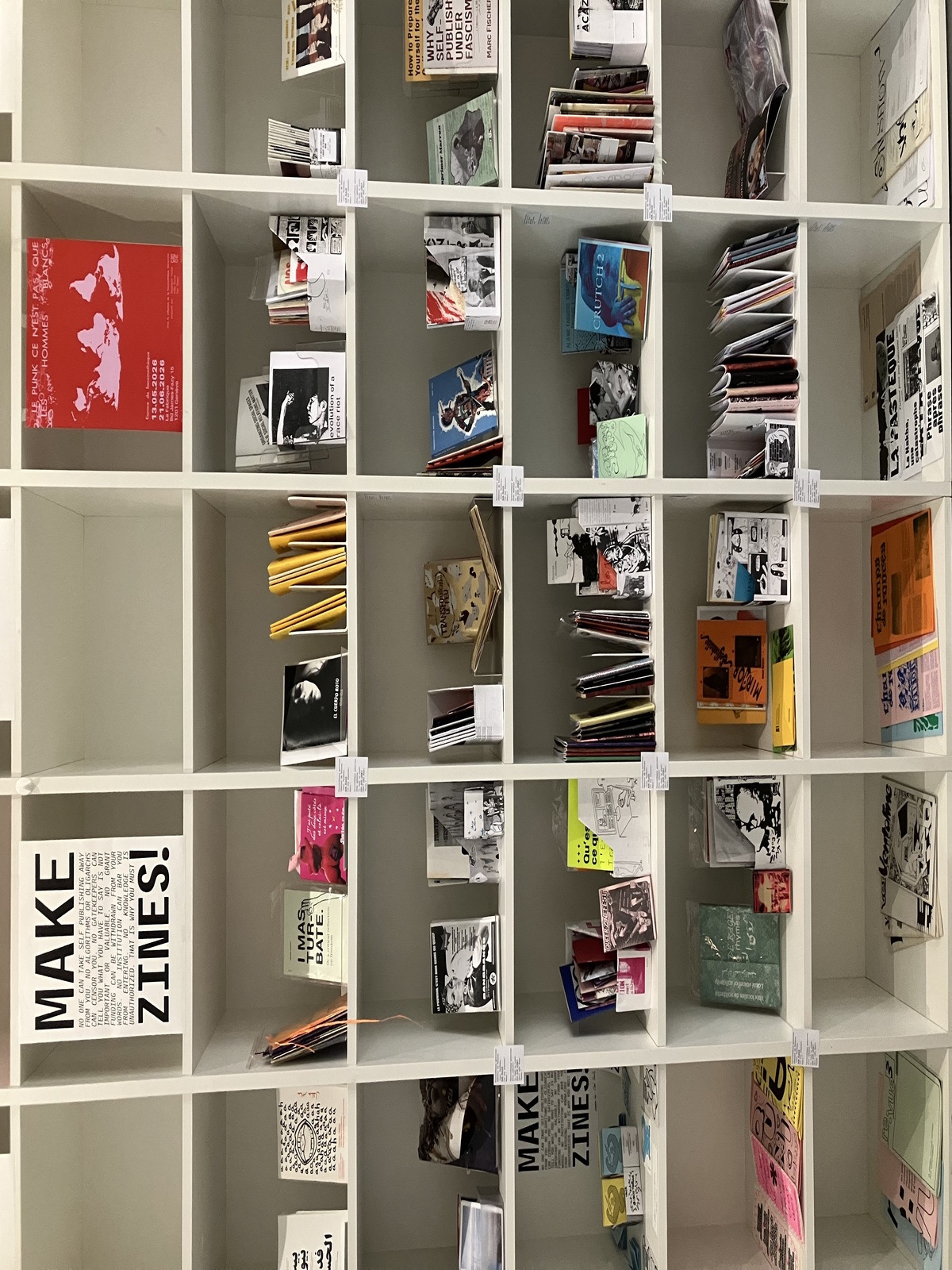 Zine wall. Photo by Camille Moreno.
Walter Benjamin warned that fascism seeks not to grant political power but to provide opportunities for expression. Its logic lies in the aestheticization of politics: transforming participation into spectacle while leaving underlying structures untouched. Looking at contemporary platforms, his observation feels uncomfortably apt.
The networks documented in the exhibition operated differently. Their focus was not visibility but circulation. Not audiences or followings, but active correspondents. Not even broadcasting but ongoing exchange. There is something less material there, yet more foundational.
Let it be said, this does not mean they were politically triumphant. Mail art did not defeat capitalism once and for all. The Bay Area Dadaists did not halt the rise of neoliberalism. Punk did not dismantle systems of power for good. But these networks did succeed in building alternative routes for ideas, tactics, and communities to move independently of dominant institutions.
The exhibition itself offers proof of this in the deluge of new mail art received over months and months, which shows that even decades after its supposed heyday, the network remains alive and well. This is the most compelling lesson here. The value of these systems cannot be measured solely through visibility or immediate political outcomes. Their strength lies in their capacity to sustain relationships, foster participation, and bounce back.
MAMCO x HEAD
Quickkopy Conceptualism: Bay Area Dada to Bay Area Punk
Av. de Châtelaine 5, 1203 Genève, Switzerland
May 13 – June 21st, 2026
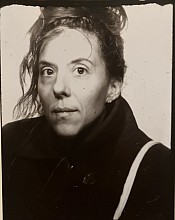
Camille Moreno
Camille Moreno is a Costa Rican-American writer based in Berlin. Her writing investigates how art operates within social structures, foregrounding accessibility and the everyday as sites of critical and imaginative potential. She has written for cultural publications in Germany, the United States, and the United Kingdom.
view all articles from this author