Whitehot Magazine
October 2026
"The Best Art In The World"
"The Best Art In The World"
October 2026
Matt Magee Makes the Ordinary Extraordinary
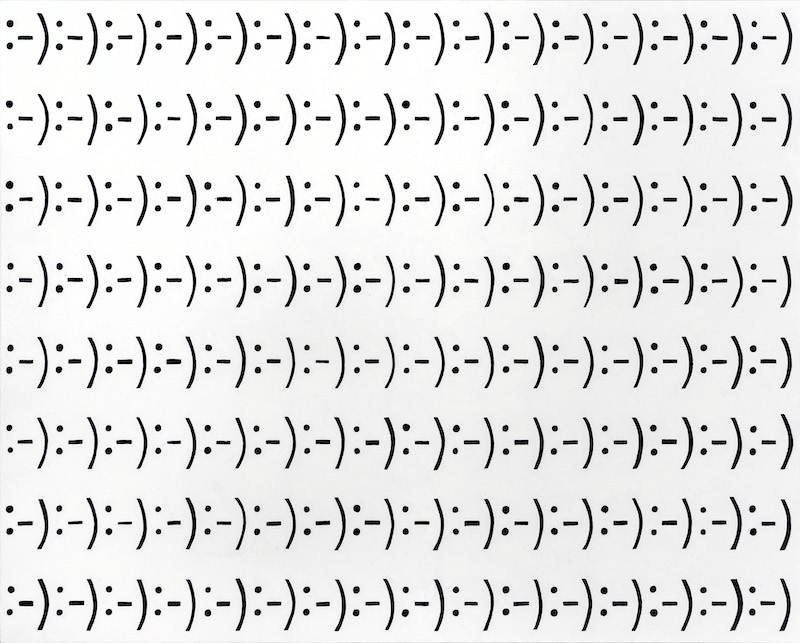 Matt Magee, Mantra, 2014. Oil on panel, 16 x 20 in. Courtesy the artist and David Hall
By PAUL LASTER, July 14, 2026
An award-winning American artist best known for his minimal, abstract paintings, sculptures, prints, assemblages, murals, and photographs, Matt Magee was born in Paris but spent years developing his career in the New York art scene, including 18 years working as a studio assistant and photo archivist for the legendary artist Robert Rauschenberg, before moving his studio to the historic Cattle Track Arts Compound in Scottsdale, Arizona, in 2012.
His diverse body of work, developed over more than forty years, focuses on repetition, grids, and visual language. He creates eye-catching geometric paintings and prints, as well as witty found-object assemblages and sculptures. Using flat, vibrant colors, his paintings and prints feature lines, circles, and bars that resemble conceptual spreadsheets, abacuses, or hidden codes, with his compositions delving into symbols, language, and numerology. Inspired by his childhood travels with his geologist father, the Phoenix-based artist primarily gathers and repurposes discarded materials for his sculptural pieces, transforming colorful detergent bottle caps, rubber inner tubes, aluminum cans, wire, and stones into detailed totems, mobiles, assemblages, screens, and equally engaging large-scale installations.
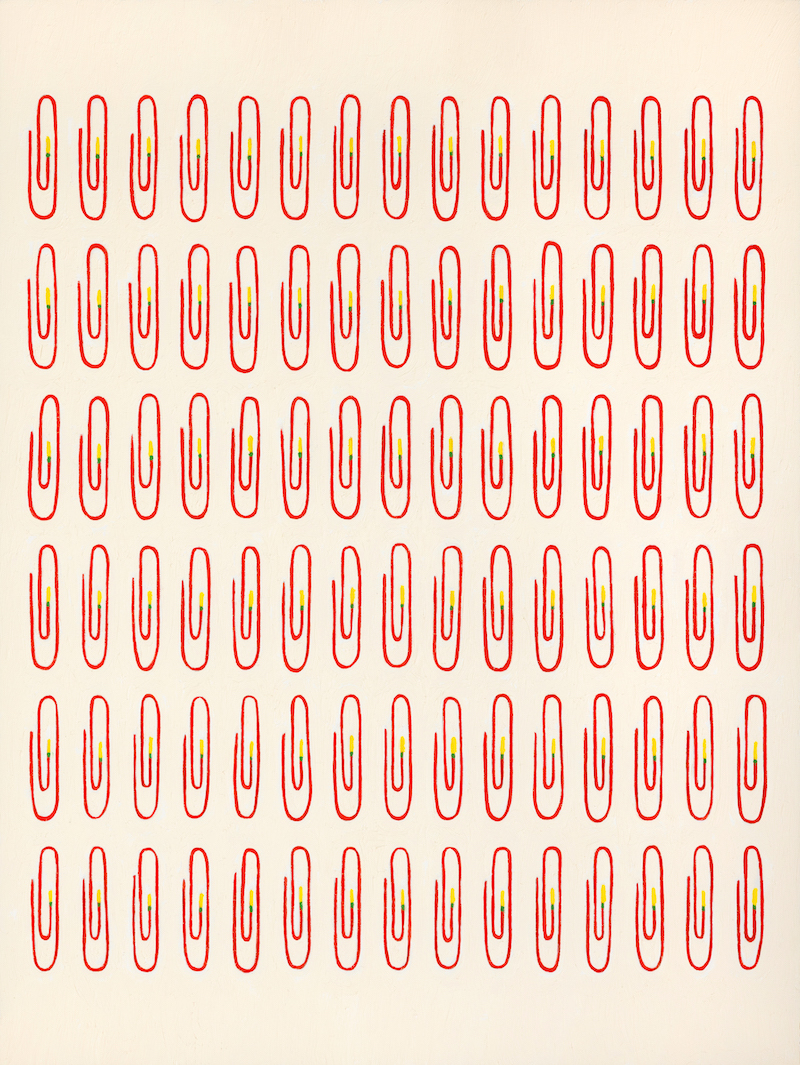 Matt Magee, Clipboard, 2025, Oil on panel, 16 x 12 in. Courtesy the artist and David Hall
Beyond exploring traditional and investigational art forms, the multidisciplinary Magee creates what he calls “textcavations”—artworks resembling written paragraphs, in which letterforms are intentionally abstracted to obscure their meaning. His wide-ranging body of work also includes monumental murals and cast bronzes, which scale up his geometric motifs into public wall works and sizable metal castings. Additionally, his observant photography uncannily highlights abstract geometric patterns, repetition, and visual grammar in everyday objects and in natural landscapes.
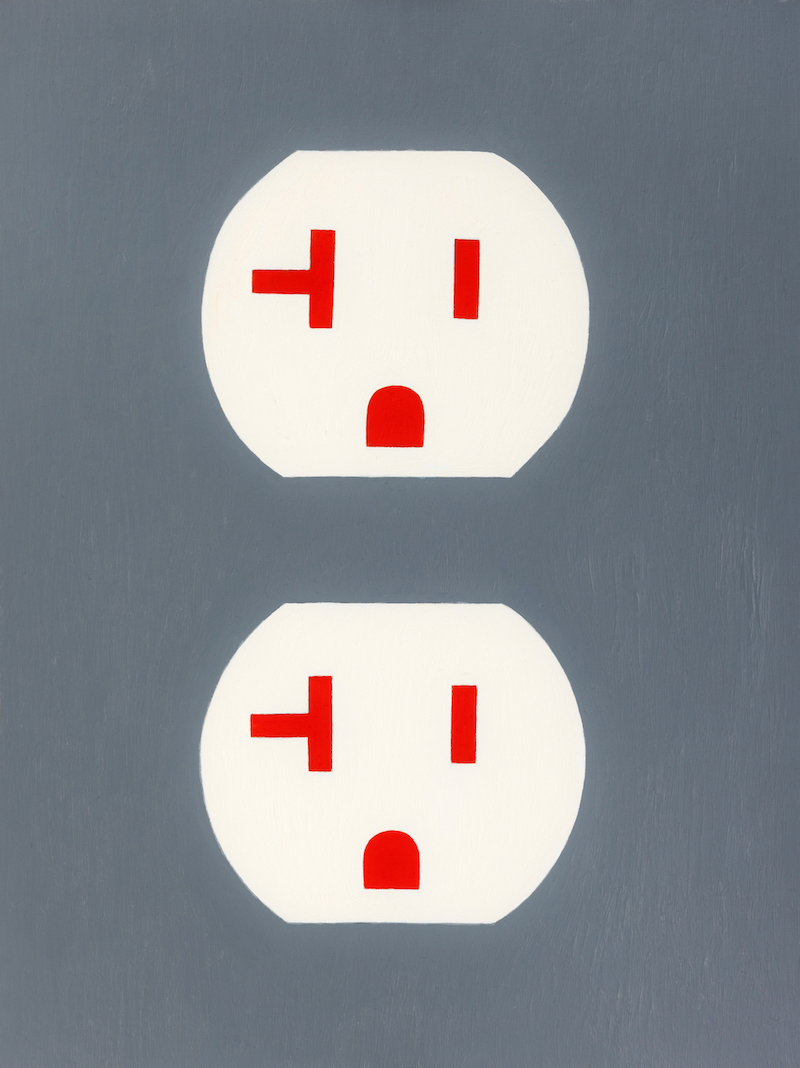 Matt Magee, Red Sockets, 2025. Oil on panel, 16 x 12 in. Courtesy the artist and David Hall
His unique style, which combines the careful precision of early hard-edge abstraction with the expressive quality of the human hand, is represented in major museum collections, including the Museum of Fine Arts, Houston; the Phoenix Art Museum; and the Beinecke Rare Book and Manuscript Library at Yale University. For his latest exhibition, titled “New Paintings of Common Objects,” the adventurous artist was challenged by gallerist David Hall to create a series of new paintings featuring paper clips, rubber bands, phone chargers, gaskets, elevator buttons, and other seemingly banal, commonplace things.
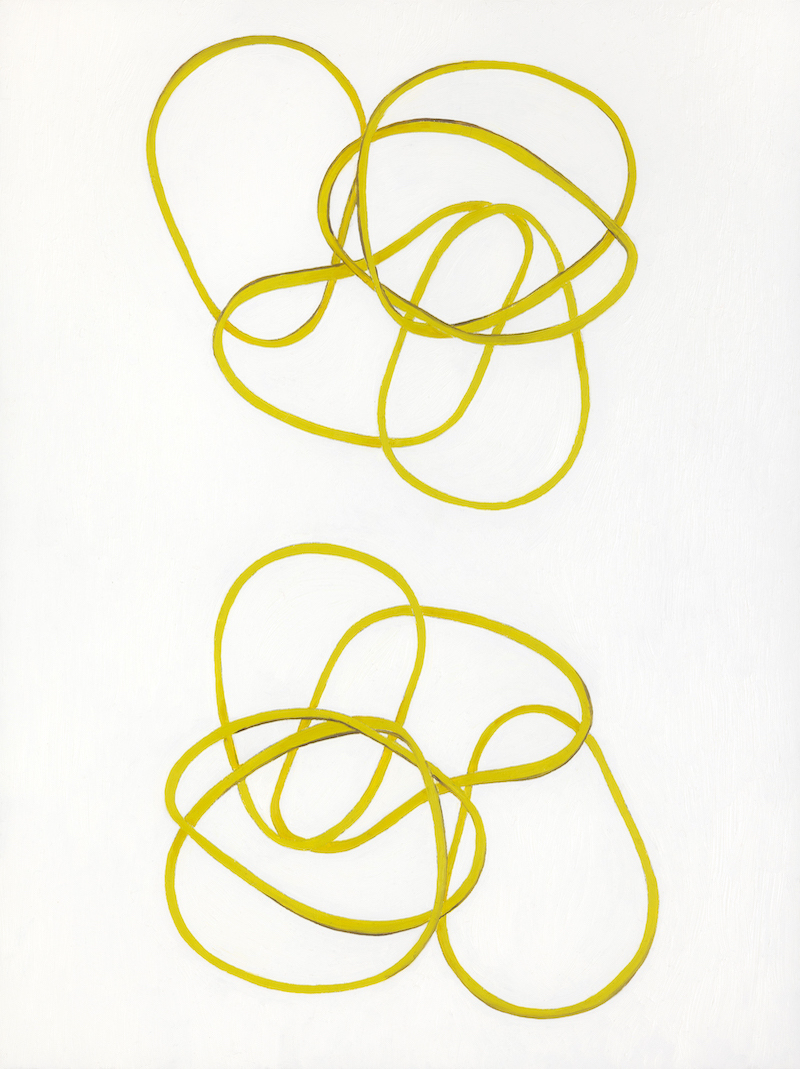 Matt Magee, Double Helix, 2025. Oil on panel, 16 x 12 in. Courtesy the artist and David Hall
The exhibition title and originating concept reference the 1962 Pasadena Art Museum group show “New Painting of Common Objects,” curated by Walter Hopps, co-founder and former director of the Ferus Gallery in Los Angeles, which introduced Pop art to the West Coast. Hopp’s seminal show, one of the first museum surveys of American Pop art in the United States, featured work by Roy Lichtenstein, Jim Dine, Andy Warhol, Edward Ruscha, Wayne Thiebaud, and others.
“These small, intimate paintings by Magee capture the beauty and significance of the overlooked and remind us of the complexity and intricacy of a world that we often take for granted due to the commonplace items that allow us to function,” writes David Hall in the accompanying essay. “Magee has chosen to focus on the mundane, approaching each painting with the same disciplined attention that has defined the artist's abstract practice.”
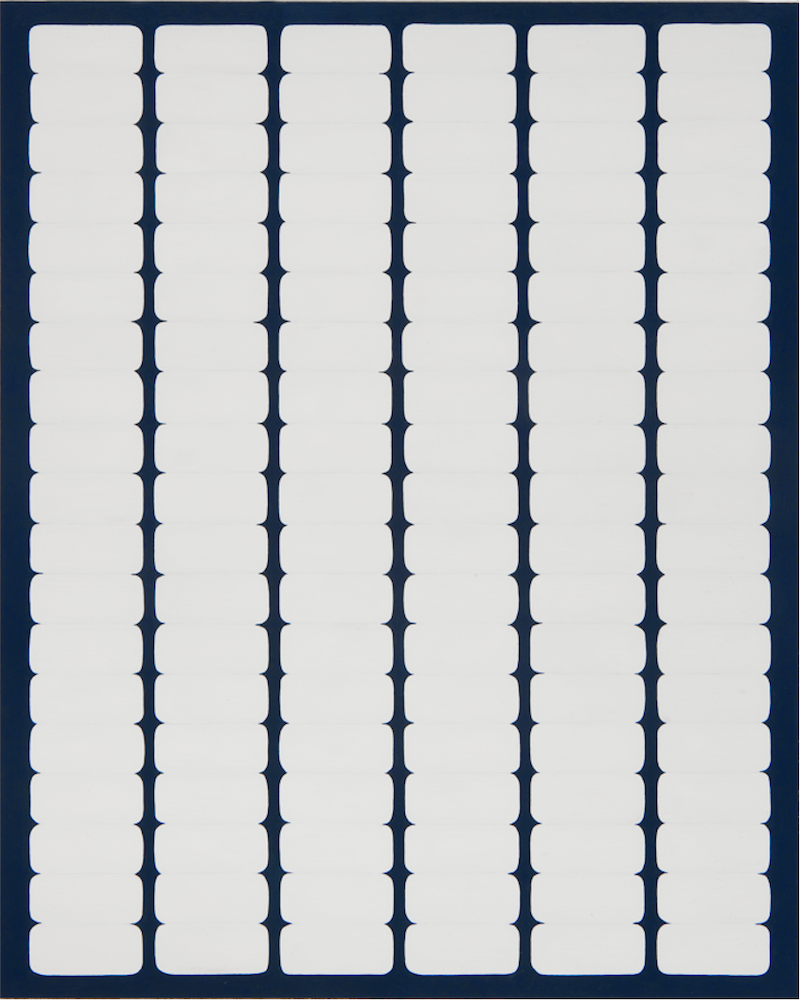 Matt Magee, Thorn Chart, 2013. Oil on panel. 20 x 16 in. Courtesy the artist and David Hall
“I had never been asked by a dealer to paint specific things, and I took it as a challenge,” Magee shared with Whitehot Magazine. “Painting specific things is outside my wheelhouse. My painting subjects usually evolve into related series of abstract, repetitive, and iterative forms, in which everything seems to build on what came before.”
“For the red paperclip painting, Clipboard, I took a paperclip to a FedEx office, had them copy it via Xerox, then Photoshopped it in rows and printed it out in black and white,” he added. “I used the printout as a template and carefully transferred it onto a panel using transfer paper before painting the clips red on an off-white ground. Transfer plays an important part in the process of most of the paintings, a technique gleaned from working for Rauschenberg.”
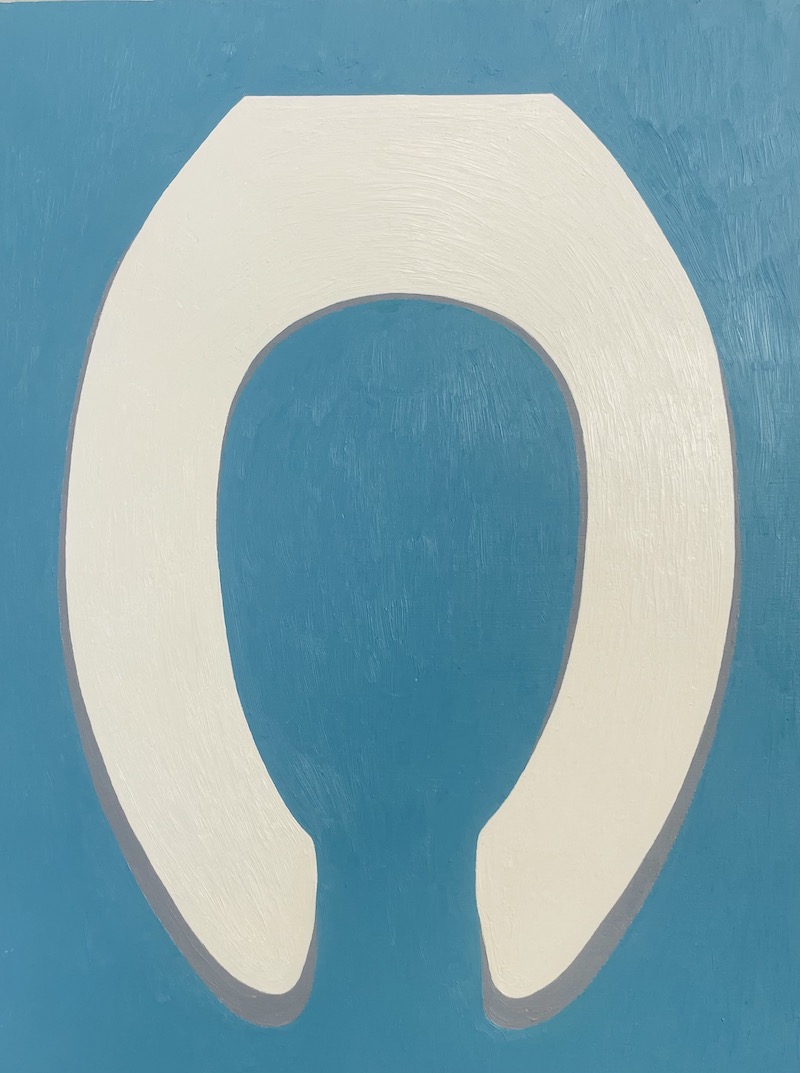 Matt Magee, Head, 2026. Oil on panel, 16 x 12 in. Courtesy the artist and David Hall
Magee’s painting Mantra features a repetitive motif of punctuation marks—a colon, a hyphen, and a single parenthesis—that create a smiling emoji, forming a field of 128 black smiling faces on a white ground. He photographed the electric sockets for the Red Sockets painting, then had the image printed in black and white at 16 x 12 inches and transferred it onto the 16 x 12-inch panel using transfer paper. He outlined the sockets with a solid gray field of paint and used red for the three-prong socket holes, which humorously form another kind of face.
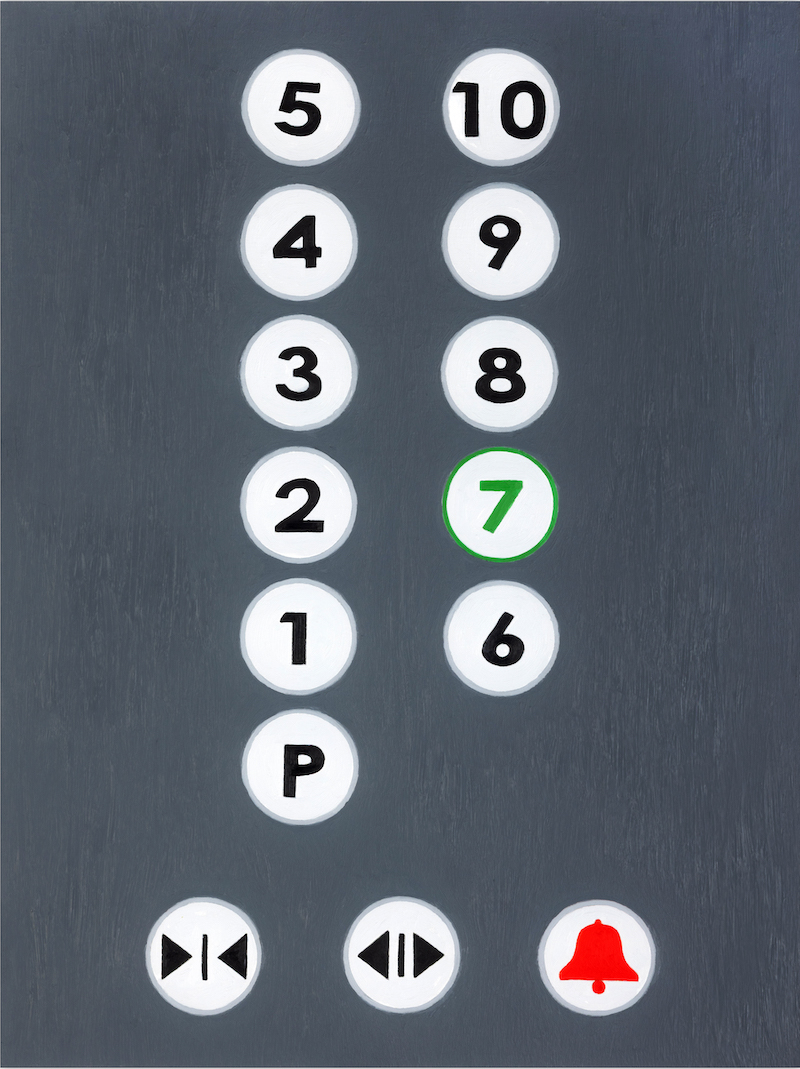 Matt Magee, Red Bell, 2025. Oil on panel, 16 x 12 in. Courtesy the artist and David Hall
Double Helix is composed of five overlapping rubber bands, with the same image above flipped when reproduced below—both bundles of bands painted a charming chartreuse. The Thorn Chart painting reproduces a sheet of Avery labels, with the labels removed, on a black ground, creating rows of thorn-like stems that run vertically and offering a dialogue between positive and negative space. Gasket is a painting depicting the interface between the inside of a refrigerator door and the rubber seal that keeps the interior cool, while Head is based on a photo of a conventional toilet seat that, when painted white against a turquoise background, creates a silhouetted head at its center, forming a marvelous pun.
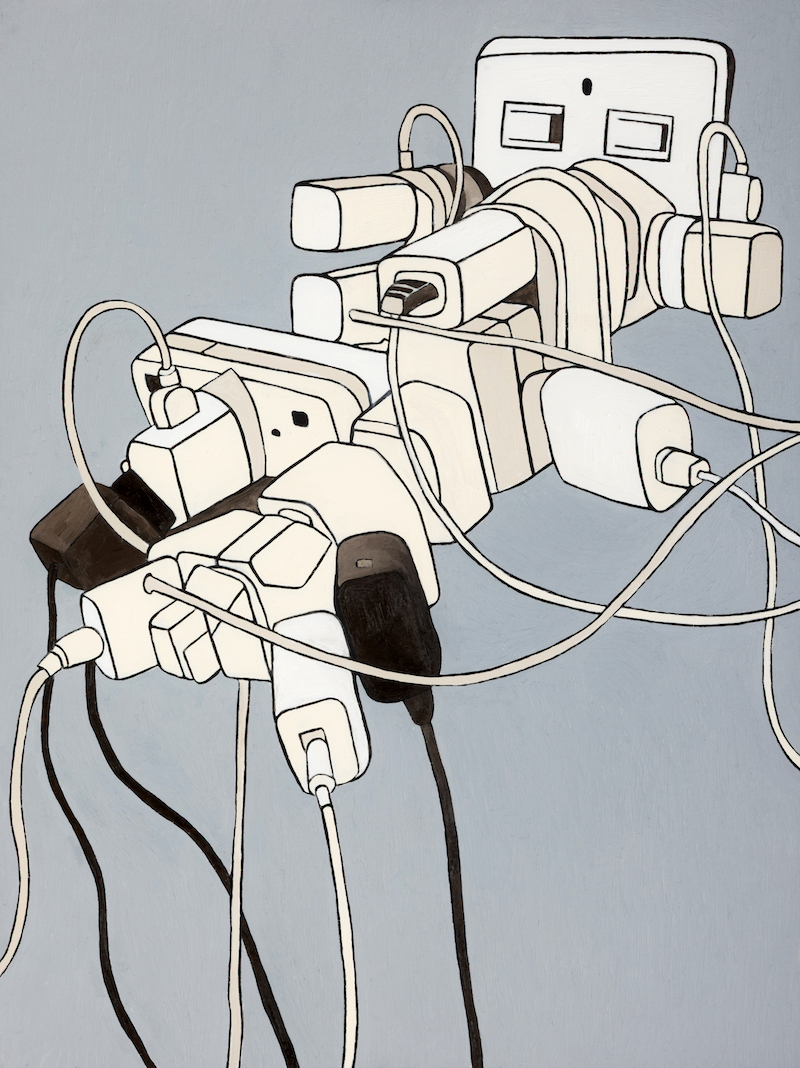 Matt Magee, Thicket, 2025. Oil on panel, 16 x 12 in. Courtesy the artist and David Hall
Rounding out the ten panel paintings in the succinct show, a photograph of elevator buttons served as the point of departure for Red Bell, in which the number seven—a favorite and often repeated subject for the artist—is highlighted in green and the emergency bell is emphasized in red; Thicket portrays an overload of phone chargers in an outlet; and Switchback mimics, from memory, the laser-cut steel panel cover of the thermostat in the sauna at Magee’s gym. The latter is titled Switchback because of the way he painted it—when he completed a row, he would switch back to start the next.
“The objectness of the subjects in the paintings for this show has made me think about how to mesh subject and abstraction in my work,” Magee summarized. “While nothing entirely new has emerged, there are a number of upcoming paintings that explore space in new ways. They may formally resemble what has come before, but there’s a new consciousness in the approach.” WM
New Paintings of Common Objects remains on view at David Hall Gallery in Wellesley, MA, through July 31, 2026.

Paul Laster
Paul Laster is a writer, editor, curator, artist and lecturer. He’s a contributing editor at ArtAsiaPacific and Whitehot Magazine of Contemporary Art and writer for Time Out New York, Harper’s Bazaar Arabia, Galerie Magazine, Sculpture, Art & Object, Cultured, Architectural Digest, Garage, Surface, Ocula, Observer, ArtPulse, Conceptual Fine Arts and Glasstire. He was the founding editor of Artkrush, started The Daily Beast’s art section, and was art editor of Russell Simmons’ OneWorld Magazine, as well as a curator at P.S.1 Contemporary Art Center, now MoMA PS1.
view all articles from this author