Whitehot Magazine
September 2026
"The Best Art In The World"
"The Best Art In The World"
September 2026
Time Never Stops: Harmony Hammond on Feminism, Abstraction, Material Memory, and Rust Never Sleeps
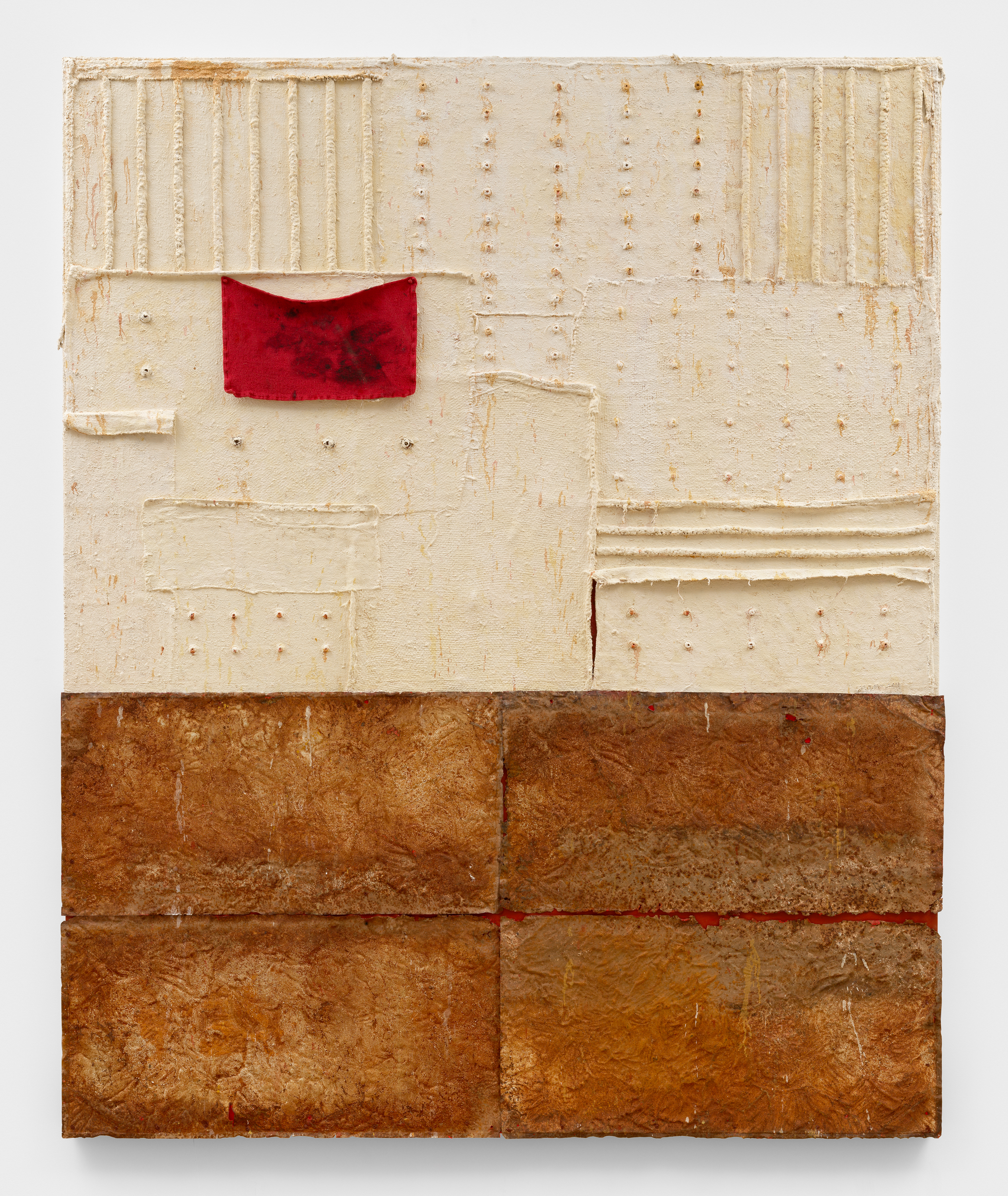
HARMONY HAMMOND, Red Flag, 2025
By AYSE SARIOGLU July 14th, 2026
Ayse Sarioglu: How do you evaluate the impact of the feminist movement on art? Has the language of art changed, or have the hierarchies that determine what art considers “serious” changed?
Harmony Hammond: The feminist movement, beginning in the late 1960s, created a profound transformation in the art world. It was not only about visibility, but about fundamentally questioning which materials, experiences, and bodies were considered legitimate within the world of fine art.
In the 1970s, using materials like fabric, yarn, thread, and other so-called “non-art” materials as well as techniques such as stitching, weaving, crocheting, knitting, quilting and other forms of needlework, directly connected to women’s lived experience and to practices historically dismissed as craft, was a conscious political decision precisely because of their gendered associations..
I often think of my daughter Tanya, who studied sculpture and photography as a student. She did not identify as feminist, but simply assumed she had the right to use any material she wanted such as fabric or hair in her work, which was very personal. For my generation, that was a political act; for hers, it was simply available. That difference shows how deeply things have shifted.
While we looked at textiles, we never used the word “textile” back then to describe our work. We spoke of fabric, cloth, and perhaps weaving. I referred to the pieces of recycled cloth I used, as “rags”. Today, “textile” has become a major critical category, especially in relation to abstraction. That shift reflects how discourse itself has expanded.
So yes, lots of change has happened. But gender-equality is not fully achieved. Just look at the numbers – far fewer women then men are represented by galleries or have solo museum exhibtions, and the prices of their work is lower than comparable work by male artists. Of course, there are exceptions, but vigilance is still necessary.
A.S.: Has the idea of women’s experience as subject matter in art been fully internalized today?
H.H.: All art participates in multiple narratives. I do not think that art can be reduced to a single framework or looked at thru a single lens. Every work is open to multiple readings. For example, in my case we could say painting, sculpture, mixed-media, collage and assemblage, monochrome, minimalism, abstraction, thick paint, queer abstraction, feminist, lesbian, American, etc., readings that do not exclude each other but do give some limited information . Instead, I prefer to define those labels on my own terms.
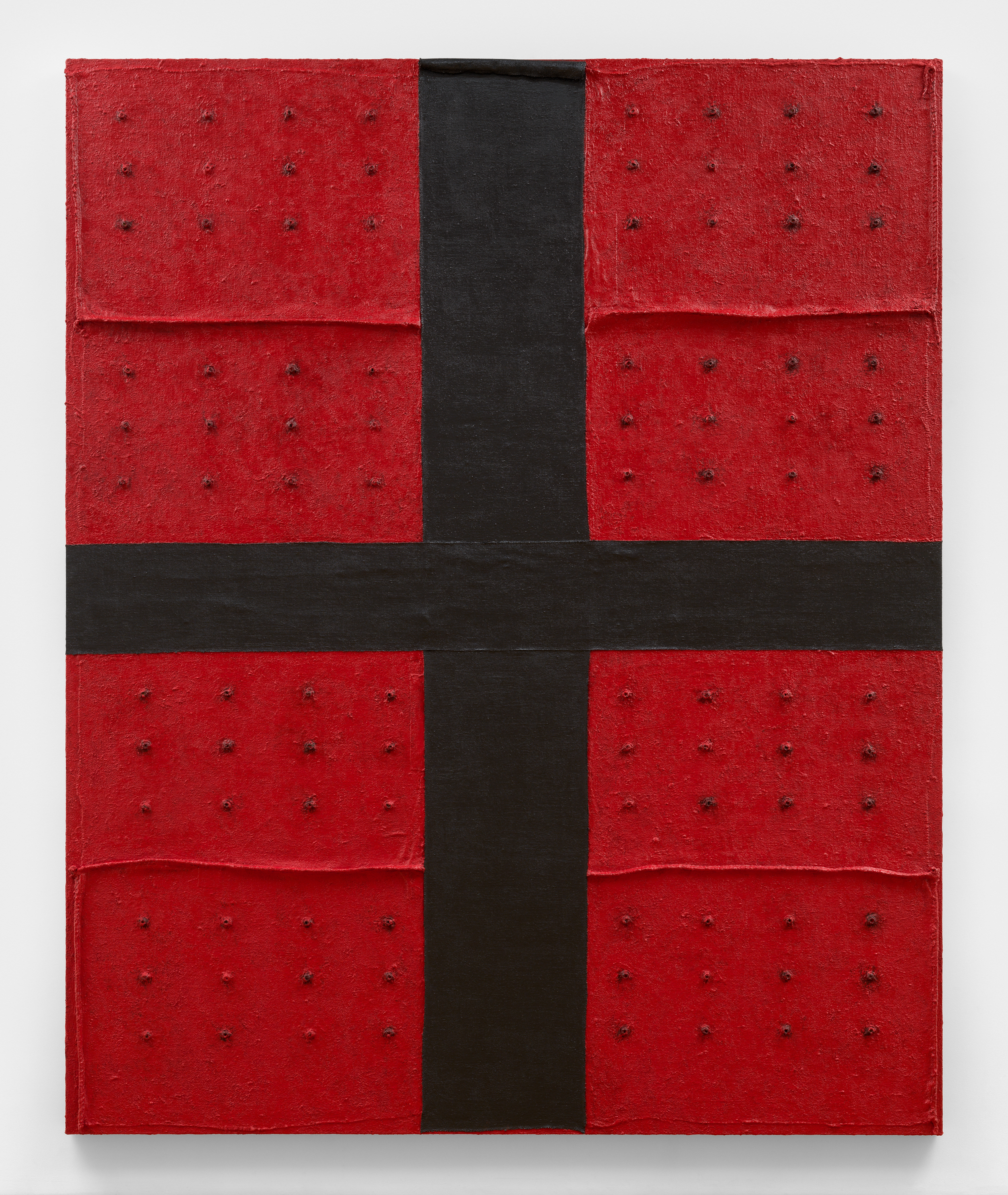
HARMONY HAMMOND, Samurai, 2024
A.S.: Is abstraction a more powerful tool than figuration in expressing the political?
H.H.: Most figuration is limited by “contours” of the body and notions of “representation”. Abstraction and working with materials allow for the presence of the body or bodies as social political sites. Abstraction, like queerness is indeterminant. It is not only a formal choice; it is also a way of creating an open conceptual space where interpretation remains fluid.
A.S.: Was it more difficult to establish A.I.R. or to sustain it over time?
H.H.: The most difficult aspect of founding A.I.R. was the collective process itself. A.I.R. was founded on the idea of creating a space where women artists could exhibit their work – a space where we could show what we wanted, when we wanted, how we wanted without commercial or institutional restriction. Our organzing structure was that of a feminst collective of 20 members, similar to that of a consciousness raising group, but on a larger scale, where every voice mattered. This meant that the process, which was extremely time consuming, was as important as the goal of establishing the gallery.
Sometimes this process was difficult as members did not have equal resources of time and money to contribute to the establishment of the gallery. Family income, childcare, single-parenting, work obligations—these factors created uneven conditions within the collective. Money and free time was not distributed equally. We quickly learned that those who had the most free or flexible time to volunteer working on the gallery had the most power, the most say, in its decision-making and formation. So, the collective structure was both our greatest strength and one of its most complex challenges.
A.S.:How would you describe the emergence of Heresies: A Feminist Publication on Art and Politics?
H.H.: In the mid-1970s, we called an open meeting to discuss the state of feminist art and artists. Two needs emerged: a space and a voice.
The Feminist Art Institute became the physical and educational space and Heresies became the voice. Several of us, including myself, were intially involved with developing both projects, but as that became too time-consuming chose to devote our energy to one or the other. I chose to join the mother collective that was forming Heresies, though I taught painting for several years at the Feminist Art Institute.
The self-selected mother collective of 20 feminist artists, architects, art writers, art historians and critics determined the editorial structure of the quarterly magazine – we determined a special theme for each issue, sent a call out for editors for that issue which could include anyone who wanted to work on that topic, handled finances and distribution, and determined certain policies . For example, decided not to feature the work of any one artist on the covers, and not to have advertising except for exchange ads with like-minded publications.This structure was probably the most radical thing about Heresies. It made the magazine both flexible and demanding, constantly negotiated between the ongoing mother collective and the temporary editorial collectives.
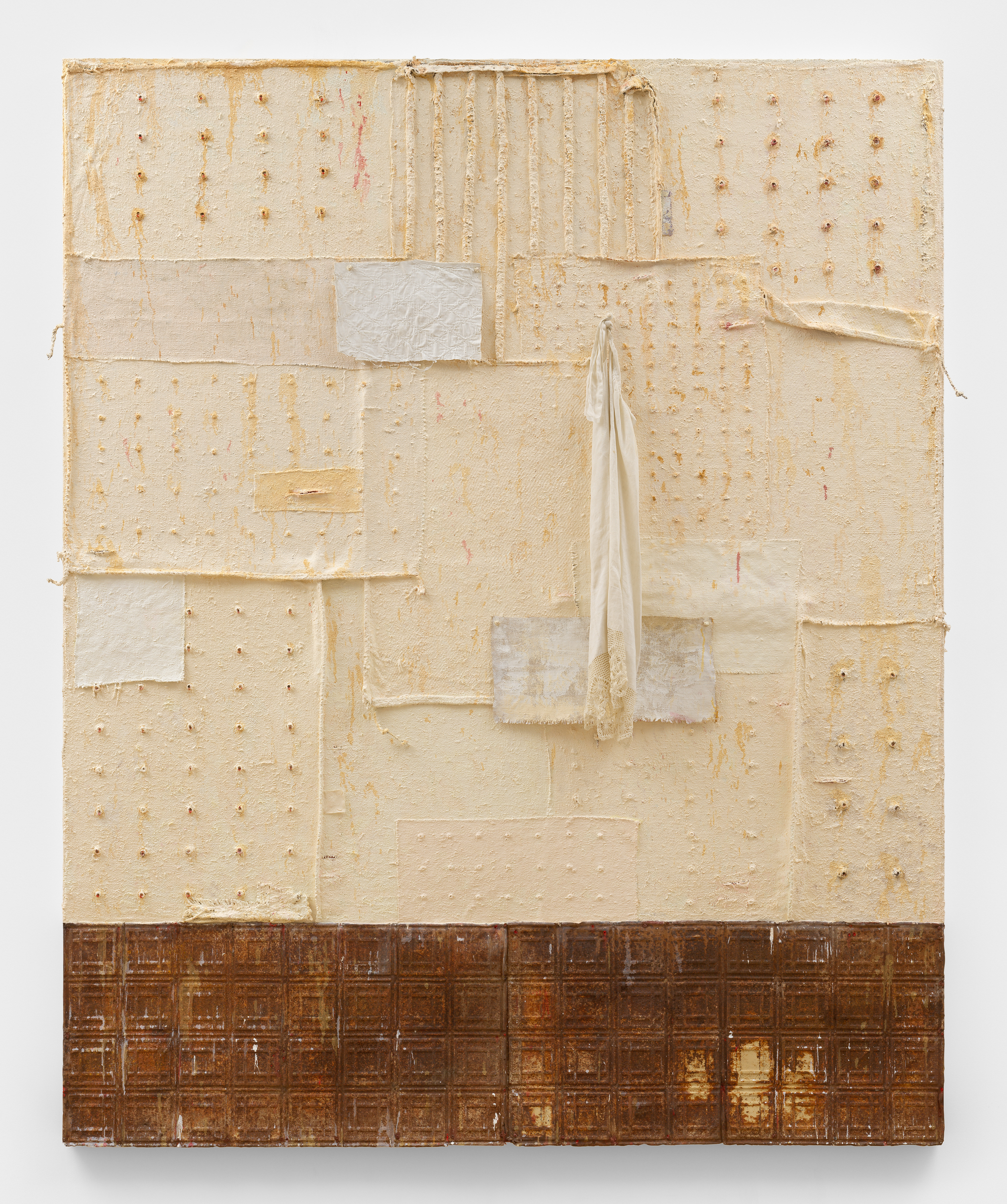
HARMONY HAMMOND, Attachment, 2025
A.S.: How do you evaluate the projects documenting the history of A.I.R. and Heresies?
H.H.: We need such projects so feminist art is not erased, dismissed or minimized. Major projects documenting both A.I.R. and Heresies are currently underway—a book on A.I.R., which by the way still exists, co-edited by Kat Griefen and Kalliopi Minidouki and “The Heresies Generation: Feminism, Art and Politics, 1977 - 1992”, an exhibition , curated by Amara Antilla for iCI. These are not simply archival projects. They are urgent acts of historical preservation as only about half of the founding members of both collectives are still alive. Documentation is necessary now, while memory is still present.
These projects are also oriented toward the future. I believe they are inspirational.They show younger artists that collective practice is possible—that structures can be built, you can make things happen, you can create positive change.
A.S.: Your recent exhibition “Rust Never Sleeps” extends your long engagement with material transformation, time, and decay. How does this body of work situate itself within your practice today?
H.H.: Since the early 70’s Ive used found and recycled materials, that bring their own histories, memories, and asssociations into my work.
The title “Rust Never Sleeps” suggests that change continues to happen, nothing stops the rust, the corrosion. Time continues. Rust continues. Materials continue to change even when we try to hold them still in a gallery space.Even when the rust itself is beautiful.
The rusted metal panels I use were originally part of the interior or exterior of buildings in the South West. They have already lived other lives: used for structure function and decoration, discarded, perhaps reused for a fence or chicken coop, abandoned, exposed to weather’s patination, then gathered by the artist to use in her work.
A.S.: The phrase “Rust Never Sleeps” itself carries a layered cultural history—from industrial advertising to music to critical reception. How do you understand this accumulation of meanings in relation to your own use of recycled materials?
H.H.: Well the layered cultural history of “Rust Never Sleeps” that you describe is parallel to the physical history of rusted metal that I just laid out.
The phrase “rust never sleeps” was used in a review of my exhibition “Material Witness” by Marty Fugate, and I loved it immediately. Later I discovered its earlier history—Neil Young’s album title from 1979, which borrowed from a Rust-Oleum advertising slogan (Rust-Oleum being a paint that would resist corrosion because rust itself continues over time. Young’s title was a call for ongoing change to resist becoming creatively “rusty”. I used the poetic phrase to title a painting and then title my current exhibtion at Alexander Gray. Young, borrowed from Rust-Oleum. Fugate borrowed from Young, and I borrowed from Fugate, the phrase moving through different registers: advertising, music, criticism, and then into my work.
A. S.: New Mexico appears to be central to your current visual and material vocabulary. How has living there reshaped your understanding of abstraction and space?
H.H.: New Mexico changed my relationship to space. I like energized space. Both New York and New Mexico are highly energized spaces, but in different ways. In New York, everything is compressed and vertical. Here, in New Mexico, it is wide open, but environmentally and culturally charged - a horizontal field with plenty of room to be who you think you are. Its outlaw territory. I often say I’m a “space queen” because I need that spatial expansiveness. Here, in northern New Mexico abstraction is not detached from environment. It is produced through it.
A.S.: Your material practice often engages architectural remnants and industrial fragments. What do these materials carry into the work today?
H.H.: Ive used a lot of building materials over the years: corrugated roofing tin, copper insulation, wood, straw, mud, and linoleum come immediately to mind. Also screens, doors, windows, gutters -they already carry histories of place and people before they enter my work. They suggest abstract narratives.
In metal panels in “Rust Never Sleeps, is just one example: installed, then removed, discarded, exposed, and left to weather.That shift—inside to outside, functional and/or decorative to abandonment—is not just physical. It is conceptual, and carries questions of labor, time, disappearance, and agency. Place and material begin to operate in the same language.
A.S.: How does your daily studio rhythm in New Mexico shape the way the work develops?
H.H.: The rhythm here is slower, but not less intense. I tend to work for long stretches, say 4 – 8 hours at a time, depending upon what the material demands, without stepping back too often. Judgment comes later.
At the end of the day, I might sit back and look at what I’ve done to review where the materials have taken me. Sometimes what is there is not what I intended. Sometimes that’s good, but sometimes it feels completely wrong. If so, I usually leave it alone but return the next day when I have openess and clarity and can see what is really there. I can decide to go with what is going on in the work or not. The studio becomes a space where immediacy and critique continuously exchange roles.
A.S.: After more than fifty years of practice, what still holds your attention in the work?
H.H.: What continues to hold my attention is the relationship between letting the materials lead the way, and a final intentional editing or tweeking to develop the painting formally and conceptually. The process is initially very open, but by the time the work is completed, nothing remains accidental. Everything that is there, is intentional.
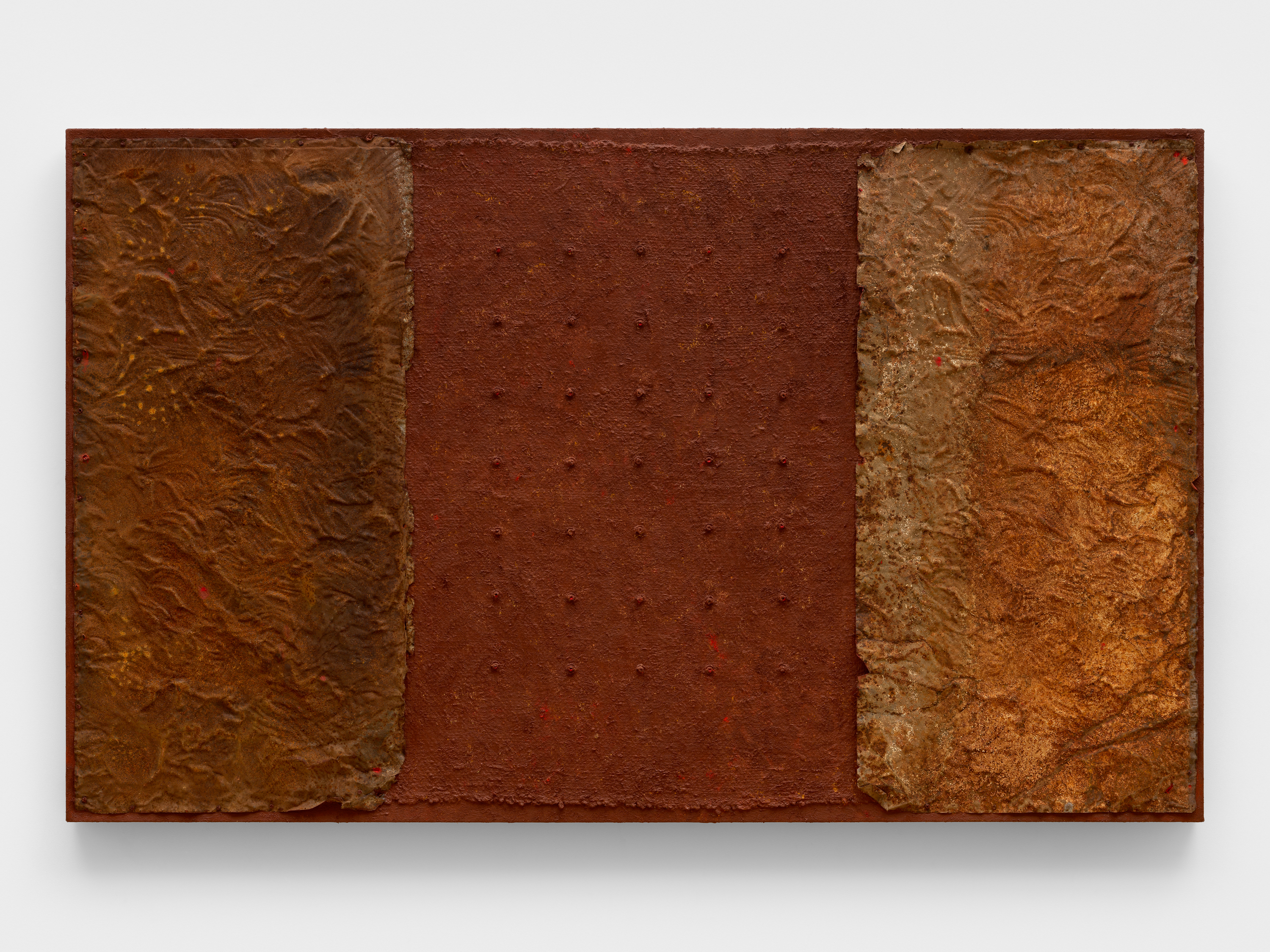
HARMONY HAMMOND, Rust Never Sleeps, 2025
Rust Never Sleeps and New Mexico are not separate thematic concerns in this conversation but interwoven conditions. Time, material, and place operate as continuous forces, producing work that remains in a state of transformation even when it appears complete.
My sincere thanks to Alejandro Jassan for their valuable support in facilitating this interview.

Ayse Sarioglu
Ayse Sarioglu-Guest is a senior Turkish media executive, writer, and art critic based in Istanbul and New York. With over 25 years of executive experience in Turkey’s leading media organizations, including Sabah and ATV Group, she has held key leadership roles overseeing national newspapers, magazines, and television networks. Sarioglu-Guest was instrumental in the launch of MTV and Nickelodeon in Turkey and led the market introduction of Eurosport. She currently contributes to Vogue Turkey and Harper’s Bazaar Turkey, focusing on contemporary art, culture, and international creative industries.
view all articles from this author