Whitehot Magazine
October 2026
"The Best Art In The World"
"The Best Art In The World"
October 2026
Yvette Mayorga’s Magic Tchotchke with ART FOR CHANGE
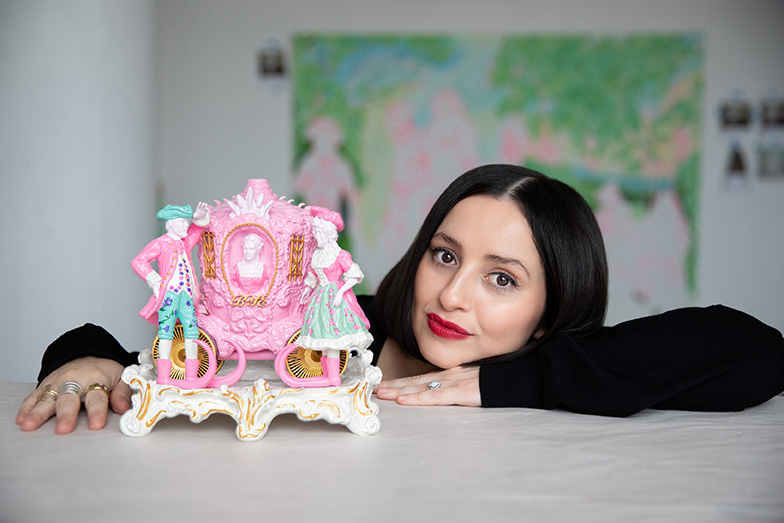 Yvette Mayorga with The Magic Tchotchke, 2026. Resin, acrylic, acrylic paint, and clear coat. 9.25 x 9 x 7.5 in. Photograph by Javier Romero
CLARE GEMIMA April 19th, 2026
"Art has the power to document history and offer an alternative narrative—one that honors the lives, labor, and stories that are too often erased. Supporting an organization dedicated to immigrant and human rights is deeply meaningful to me, especially right now." - Yvette Mayorga, 2026
At a moment when immigration policy in the United States is both fiercely contested and increasingly punitive, ART FOR CHANGE has used its platform to redirect attention and financial support toward immigrant rights advocacy. Its latest limited-edition release, The Magic Tchotchke, 2026, by Chicago-based artist Yvette Mayorga, channels proceeds to the Illinois Coalition for Immigrant and Refugee Rights (ICIRR), an organization currently operating at the front lines to provide legal defense, employ rapid response infrastructure, and offer community-based support to immigrant families navigating an increasingly volatile federal landscape.
Mayorga’s practice works through excess as a critical strategy, drawing inspiration almost explicitly from Rococo. The Magic Tchotchke embraces, subverts, and mocks European aristocratic indulgence, ornament, and theatricality. She reclaims and distorts this lineage, fusing its opulence with kitschy confectionary pigments, militarized imagery, and contemporary consumer culture. Silhouettes adorned with bonnets, aprons and devilishly pointy jester shoes loosely reference 18th-century Dutch and Flemish peasant attire, situated within Northern European pastoral traditions of the time. Mayorga’s self-defined “Latinxoco” framework merges Latinx identity with Rococo aesthetics, and forces a confrontation between colonial art histories and lived, racialized experiences. Pink, across her work, is central to this inversion. It operates not as decoration but as a seductive disguise for her candy-colored characters. Whether friend or foe, what appears most temptingly delicious often carries the greatest harm.
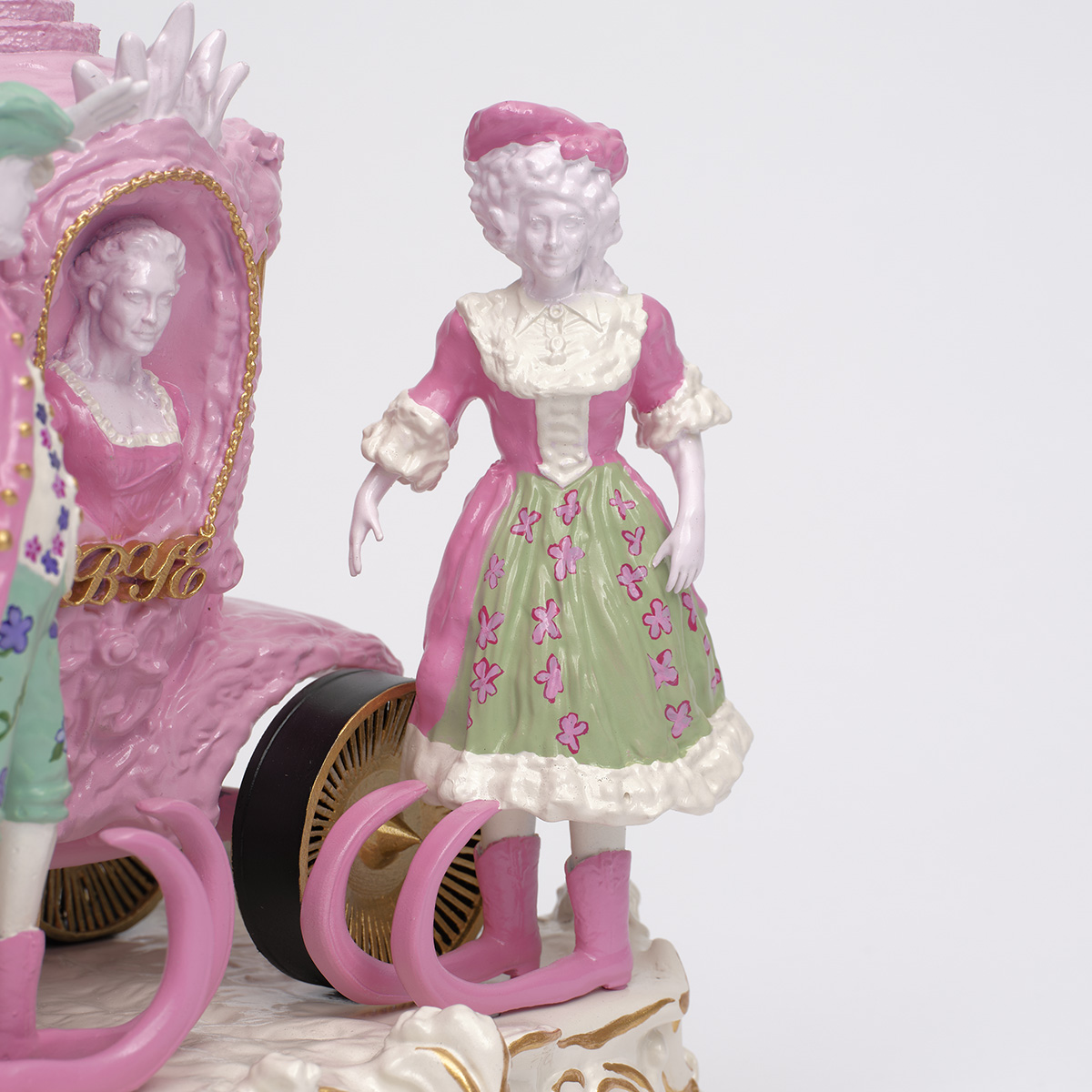 Yvette Mayorga, The Magic Tchotchke (detail), 2026, 9.25 x 9 x 7.5 in, Resin, acrylic, acrylic paint, and clear coat, Limited edition of 25, Signed and numbered by the artist. Photograph by Garrett Carroll
The Magic Tchotchke condenses a Rococo-derived vocabulary into a domestic-scaled sculpture, riffing on antique tchotchkes while drawing from Mayorga’s larger installation Magic Grasshopper (Times Square). Three figures sit within a carriage that recalls the ornate vehicles of Rococo painting and decorative arts, where movement once signaled status, leisure, and spectacle. Here, that association is unsettled. The carriage becomes a fantastical vessel of migration, carrying the tensions embedded in colonial systems of mobility—who is permitted to move freely, who is displaced, and how hierarchies of superiority, inferiority, and purity are constructed and maintained.
Conceived as an intimate object that can be held onto and lived with, the work shifts these questions into the domestic sphere, where memory and aspirations, including the pursuit of the American Dream, accumulate. Cast in resin and acrylic, the sculpture adopts a thick, encrusted finish that mimics bakery frosting, pointing to the labor of immigrant women within the Latinx community across domestic and culinary economies, both historically and today. This surface also draws from the visual and material residue of adorned interiors—the ceramic and plastic figurines that populate family homes—recasting them through Mayorga’s “Latinxoco” approach, where Rococo ornamentation is folded into lived, culturally specific experience.
Contemporary references also surface in the work’s finer details. At the center of the carriage, the word BYE appears in script reminiscent of gold nameplate jewelry. It reads as refusal of intrusion and control, while also marking justified departure, movement, and self-determination. The Rococo object, once aligned with indulgence and consequence-free excess, becomes here a site of pressure, holding competing narratives in suspension.
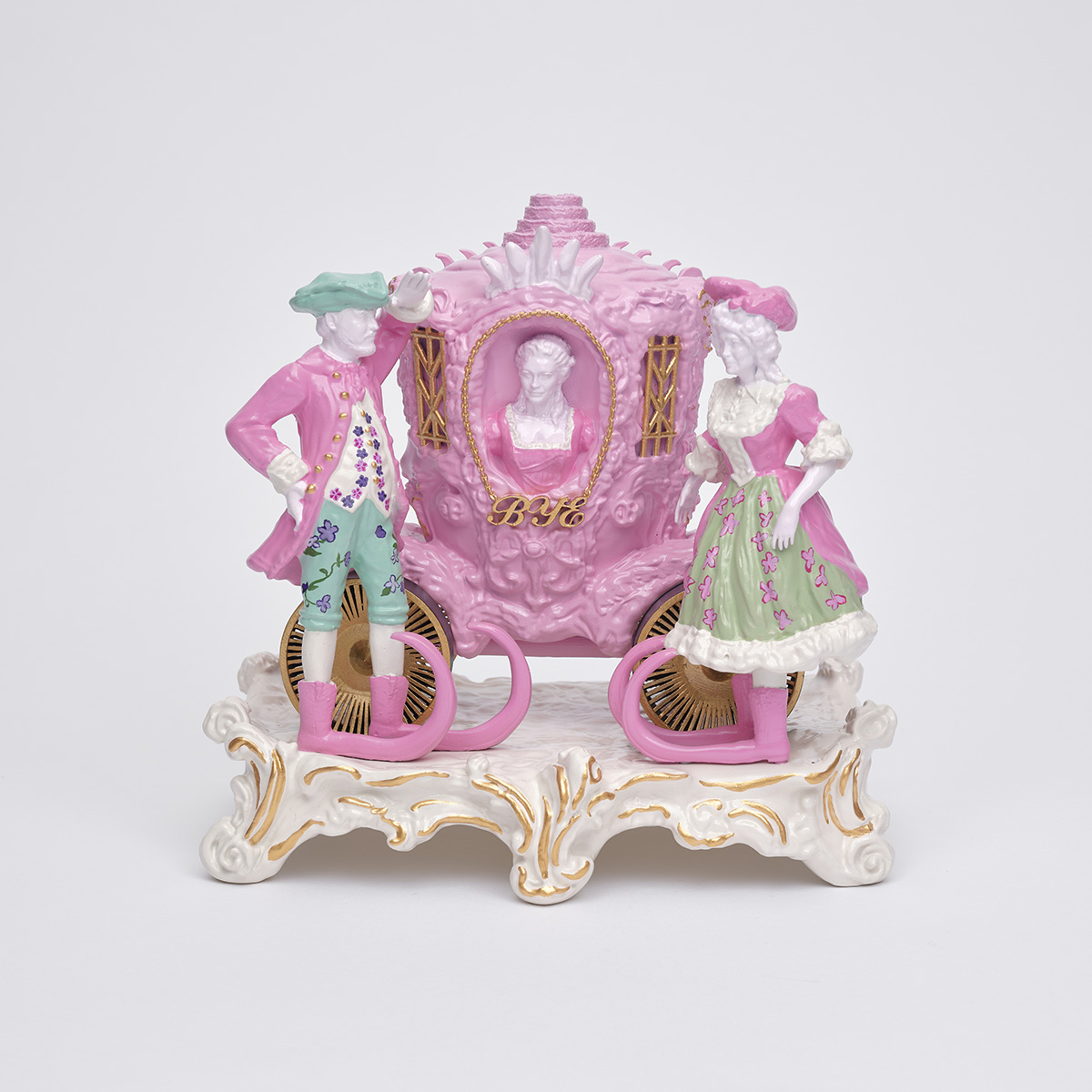 Yvette Mayorga, The Magic Tchotchke, 2026, 9.25 x 9 x 7.5 in, Resin, acrylic, acrylic paint, and clear coat, Limited edition of 25, Signed and numbered by the artist. Photograph by Garrett Carroll
Mayorga’s own position as a first-generation Latinx artist structures this inquiry without reducing it to autobiography. Her exhibitions, including Dreaming of You at The Aldrich Contemporary Art Museum and What a Time to Be at The Momentary, extend her Rococo inspired interventions across immersive installation and sculptural environments. Her large-scale public work, Pilgrimage to the Isle of Pink, permanently installed at O’Hare International Airport, situates these concerns within the infrastructure of transit itself—embedding questions of movement, access, and belonging into one of the most surveilled and regulated spaces in contemporary life. With The Magic Tchotchke, her usual scale contracts. Limited to an edition of 25, the work becomes intimate, collectible, and, pointedly, transportable.
Through ART FOR CHANGE, proceeds from The Magic Tchotchke are directed toward the organization’s ongoing efforts in legal defense, rapid response, and community support for immigrant families. Since its founding in 1986, ICIRR has advanced immigrant rights through legislative advocacy and direct services, including pathways to citizenship and protections against detention. In the current climate, that work has intensified, requiring sustained resources to support individuals and families navigating detention, displacement, and systemic precarity.
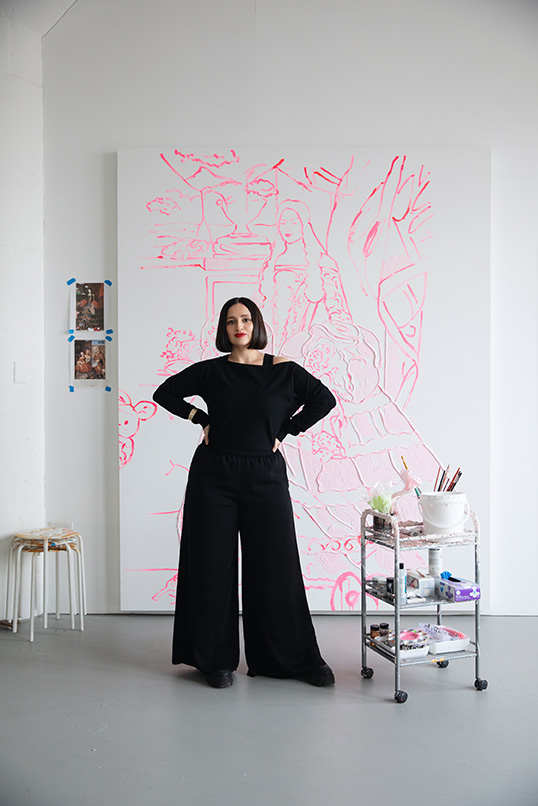 Yvette Mayorga, 2026, Photograph by Javier Romero
Mayorga's practice refuses to separate aesthetic pleasures from historical heaviness and political crisis. Drawing together ornament, labor, migration, and memory, the artist reworks inherited forms so they carry the pressures of the present rather than escape them. Through ART FOR CHANGE, her gesture extends beyond the object itself, directing attention and resources toward ICIRR’s ongoing work in advocacy and support. The Magic Tchotchke operates within this convergence, holding contradiction without resolution while insisting that the histories it engages are not confined to the past, but remain urgently unfolding in today’s climate. WH

Clare Gemima
view all articles from this author