Whitehot Magazine
October 2026
"The Best Art In The World"
"The Best Art In The World"
October 2026
Michelle Uckotter: Trap Paintings 4: Step on a Dollar for Good Luck - at King’s Leap
By ESME GRAHAM, October 25, 2026
The term “male gaze” is now so ubiquitous as to be a standard colloquialism, but it originated in film theory. Coined by Laura Mulvey, the concept stems from her seminal analysis of film noir and how the protagonist, a proxy for the audience, looks at the femme fatale. She is watched because of her beauty, but also because the audience, familiar with existing tropes, is awaiting the violence that will likely befall her. The woman is the object of multiple gazes, yet she herself is deprived of the agency of looking. Michelle Uckotter’s exhibition Trap Paintings 4: Step on a Dollar for Good Luck at King’s Leap in New York City uses well-trod characters and narrative tropes from detective films in her paintings, casting femme fatales in dimly-lit rooms. Uckotter does not attempt to right past depictive norms, but rather she investigates and deconstructs this cinematic act of looking. What is revealed about these women when they are stripped of narrative context? Or, perhaps more urgently, what is revealed in how the audience looks at them?
 Courtesy the artist and King's Leap, NYC. Photo: Elijah Meyer.
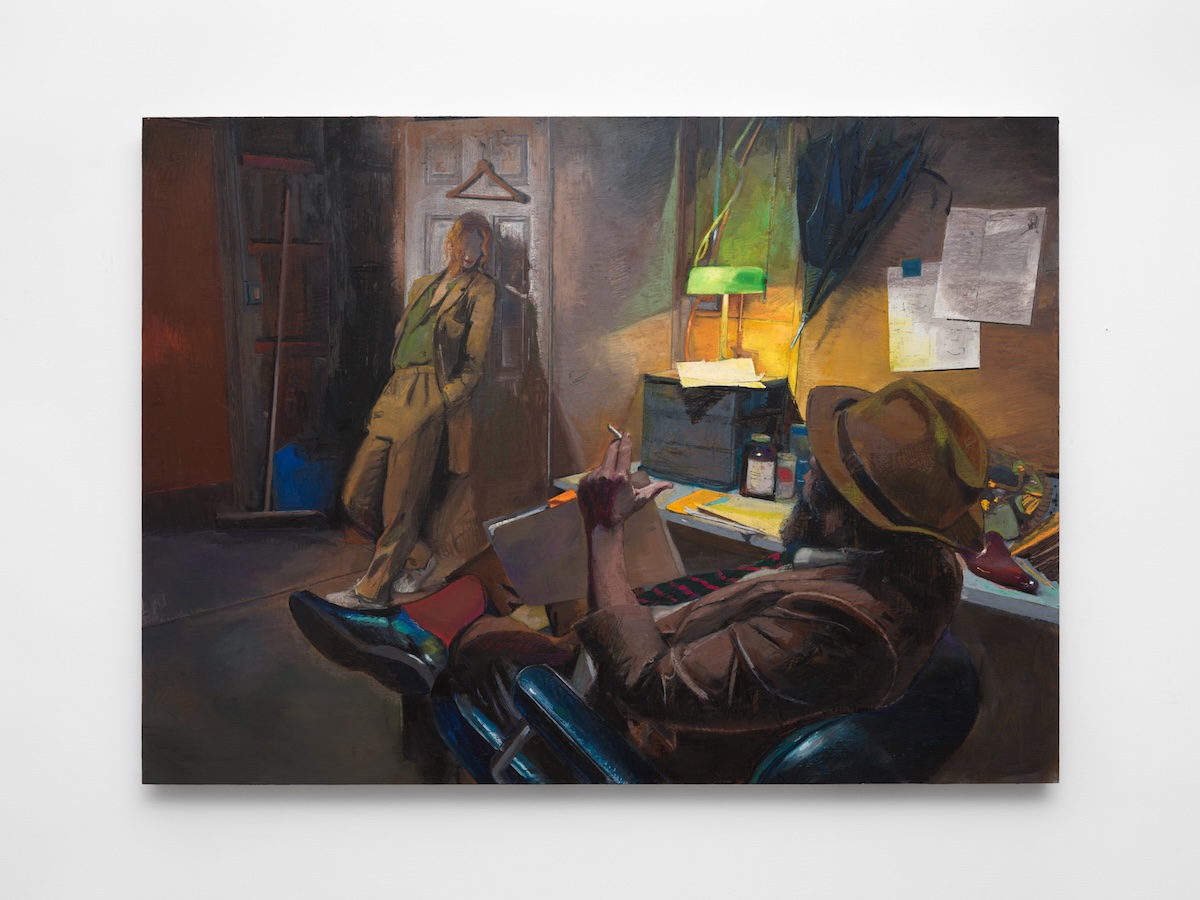
Uckotter’s lush pastels and charcoals are static images, yes, but also clues. In them, a story emerges through rapid amnesiac flashes. The Encounter is an establishing shot, one of the first images seen upon entering the gallery. The scene is set in a seedy private detective’s office; he sits casually back in a chair as he looks at a suited woman. The audience peers over the man’s shoulder at her, sharing his perspective. However, the viewer cannot focus on the woman’s face: her brightly made up lips curve into a smile, but her upper face is blurred. Uckotter makes plain how little insight the viewer has into this figure, how superficial any impression is. Simply seeing—never knowing—the woman is the most the viewer can do.
 Courtesy the artist and King's Leap, NYC. Photo: Elijah Meyer.
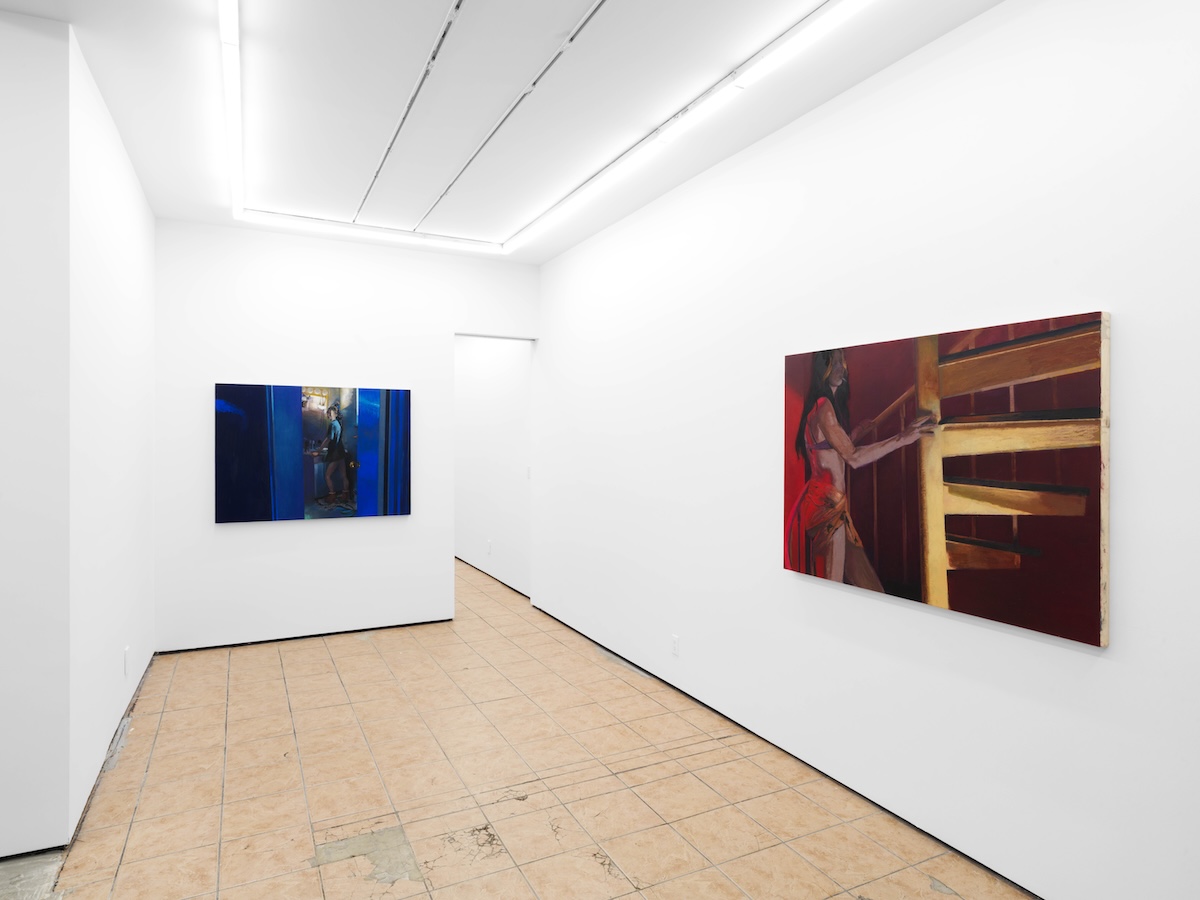
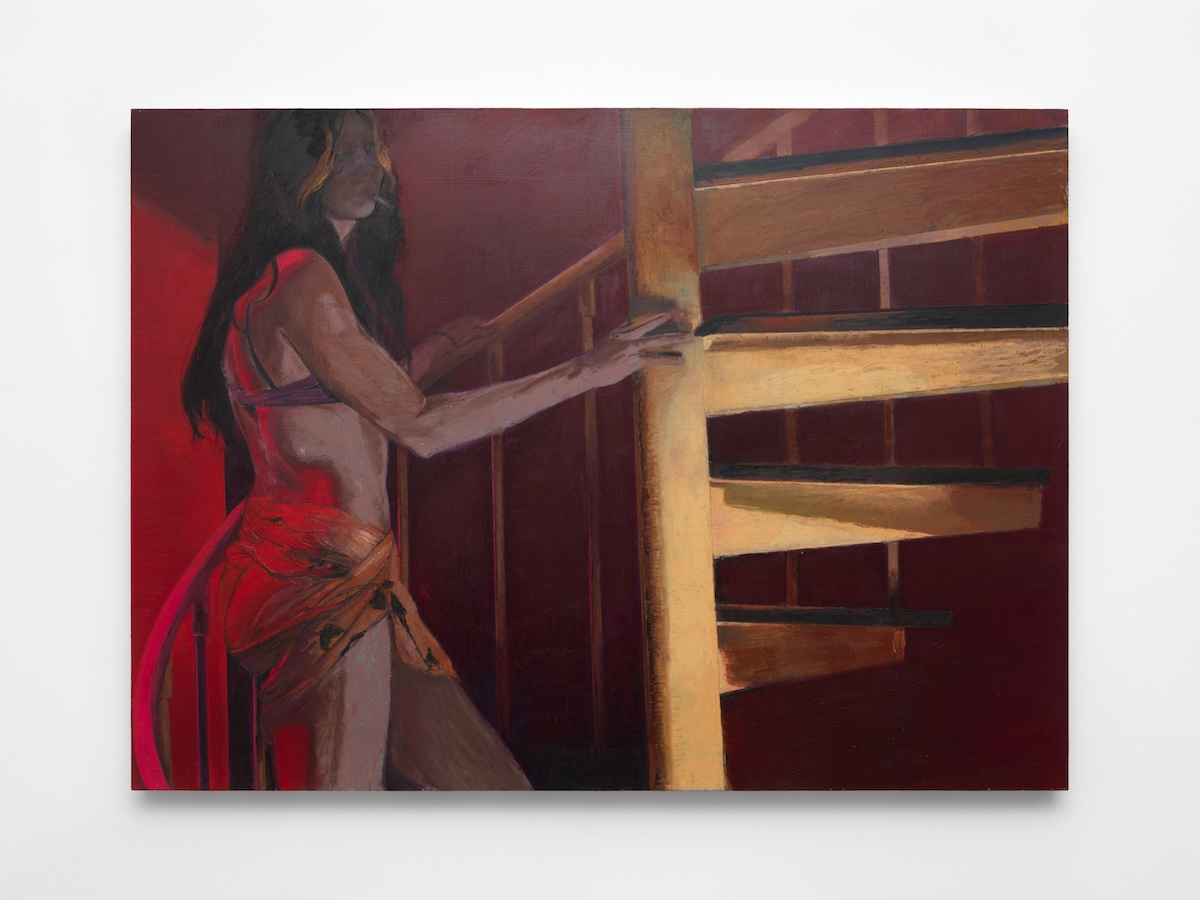
Starlet and Penny, two of the most captivating images from the exhibition, depict women in private settings. The images are set in the neon-soaked, low-lit rooms that alcoholic detectives may stumble through while solving crimes. The room in Starlet is bathed in blue while the room in Penny is lit in red, and in both, the depicted women look back over their shoulders at the viewer. In these scenes, although casually, the women return the gaze. There is no empowerment or reclamation here, however, but instead a sense of resignation and also a latent sensuality. Indeed, in both images, the women seem to be inviting the viewer to bed. Even in a moment of supposed agency, their power still rests in their appeal to the presumed-male looker.
 Courtesy the artist and King's Leap, NYC. Photo: Elijah Meyer.
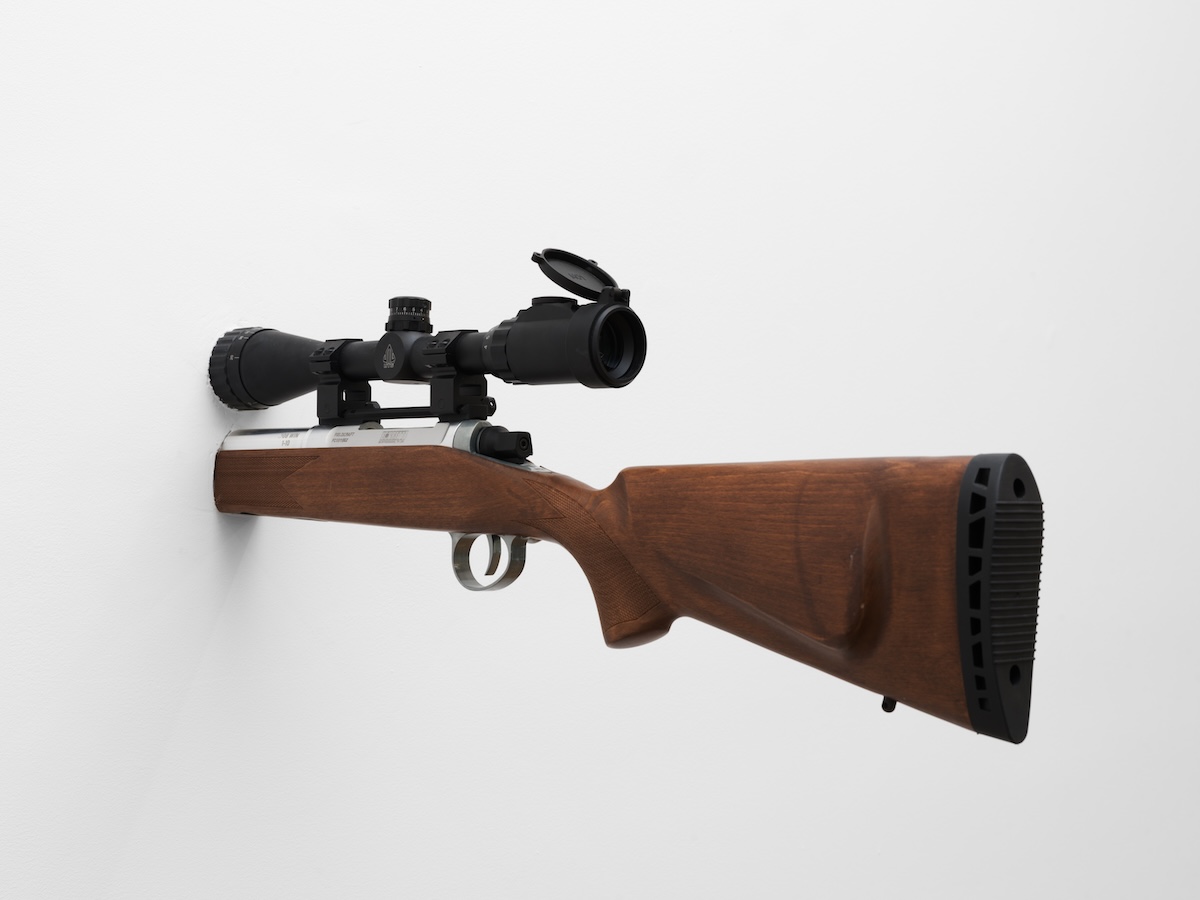
Amongst these paintings is The Doll, a sculptural replica of a hunting rifle affixed to the gallery wall. Through its scope, a short film can be glimpsed, which introduces a different type of gaze. The Doll invites the viewer to inhabit a directly predatory role instead of taking comfort in a removed voyeurism while the femme fatale succumbs to suffering or death. Violence is implied throughout Uckotter’s exhibition, but here it seems impossible to be a removed viewer while repositioning one’s body close to the rifle to stare down a target.
 Courtesy the artist and King's Leap, NYC. Photo: Elijah Meyer.
Michelle Uckotter
Trap Paintings 4: Step on a Dollar for Good Luck
King’s Leap
September 25–October 31, 2026

Esme Graham
Esme Graham is a writer and critic based in New York. She began writing while receiving her master's degree in art history from the University of Chicago. Her specific focus is on modern and contemporary art.
view all articles from this author