Whitehot Magazine
September 2026
"The Best Art In The World"
"The Best Art In The World"
September 2026
When Architecture Dreams Back: Stereotank’s Cornucopia at LOT-EK’s Yellow Wall
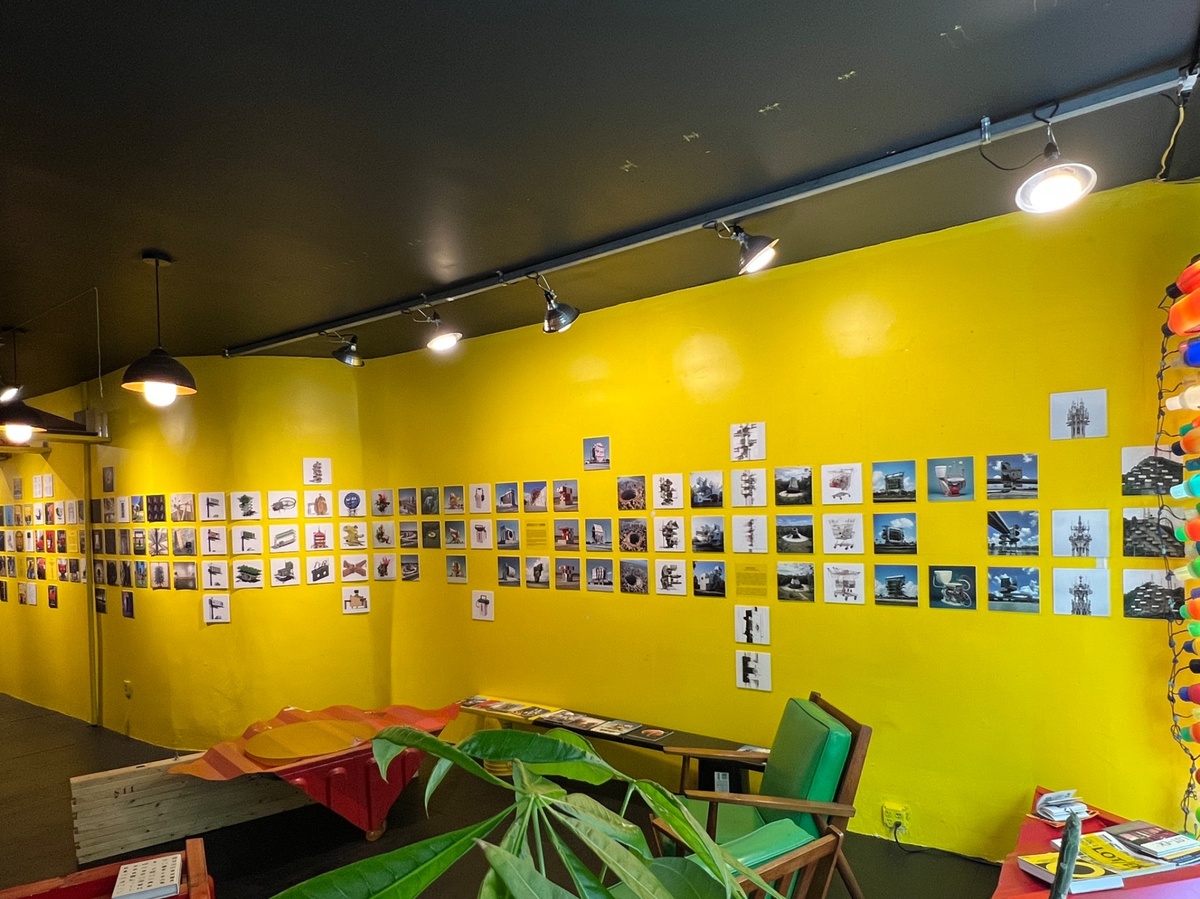 Stereotank: Cornucopia, installation view, LOT-EK’s Yellow Wall, New York, 2026. Courtesy of LOT-EK.
By KUN SOK May 31st, 2026
Stereotank’s Cornucopia at Yellow Wall, the project space inside the architecture office LOT-EK, is an exhibition of architectural images. The works are printed in the same square format, mounted on thin panels, and arranged in dozens across a vivid yellow wall. Each small panel contains a dense architectural world, from built public projects to speculative images made with AI.
Yellow is an unusually strong choice for an exhibition background, and it could easily overpower the individual works. Here, however, the repeated square format and tight arrangement offset that risk. The yellow wall becomes a visual structure that holds the images together. Rather than scattering into separate fragments, the panels read as part of one compressed architectural landscape.
Stereotank, led by Marcelo Ertorteguy and Sara Valente, has long worked between architecture, design, sound, and public space, often finding new functions inside existing resources. In their earlier work, architecture was not only something to look at. It was something to enter, touch, hear, play, and activate through the body. A container could become a musical instrument. A public structure could behave like a drum. Cornucopia changes this relationship. Instead of bringing large public structures into the gallery, it presents the images left by those works and asks what happens when their memory becomes material for new images.
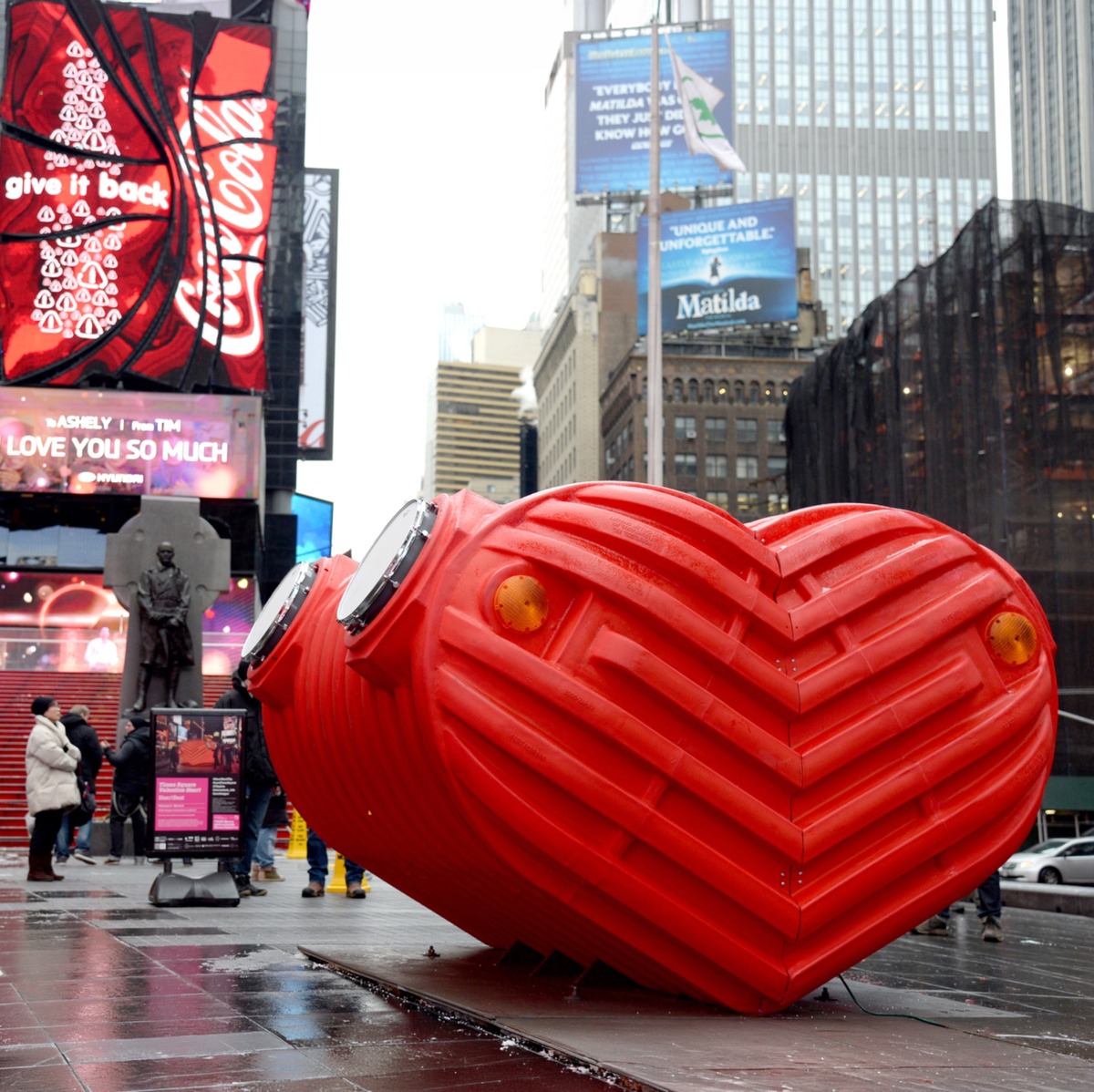 Stereotank, HEARTBEAT. Photo by Clint Spaulding for @TSqArts, courtesy of the artists.
The exhibition’s term “re-prospective” matters. The past is not arranged as a finished archive. It is put back into motion. Built projects become photographs. Photographs become visual sources. Visual sources become speculative architecture. In this process, AI is not a decorative tool, but a medium that pushes fragments of existing works into another form.
On the left side of the exhibition, the photographs show structures Stereotank actually made. They act like evidence of architectural events that once met bodies in the world. As the sequence moves to the right, the images slowly leave the status of record. In the middle, products, machines, structures, and buildings begin to mix. Farther along, flowers or potatoes merge with architectural form, and the images begin to read less as evidence than as propositions. Some images prove that architecture existed. Others suggest what architecture could become.
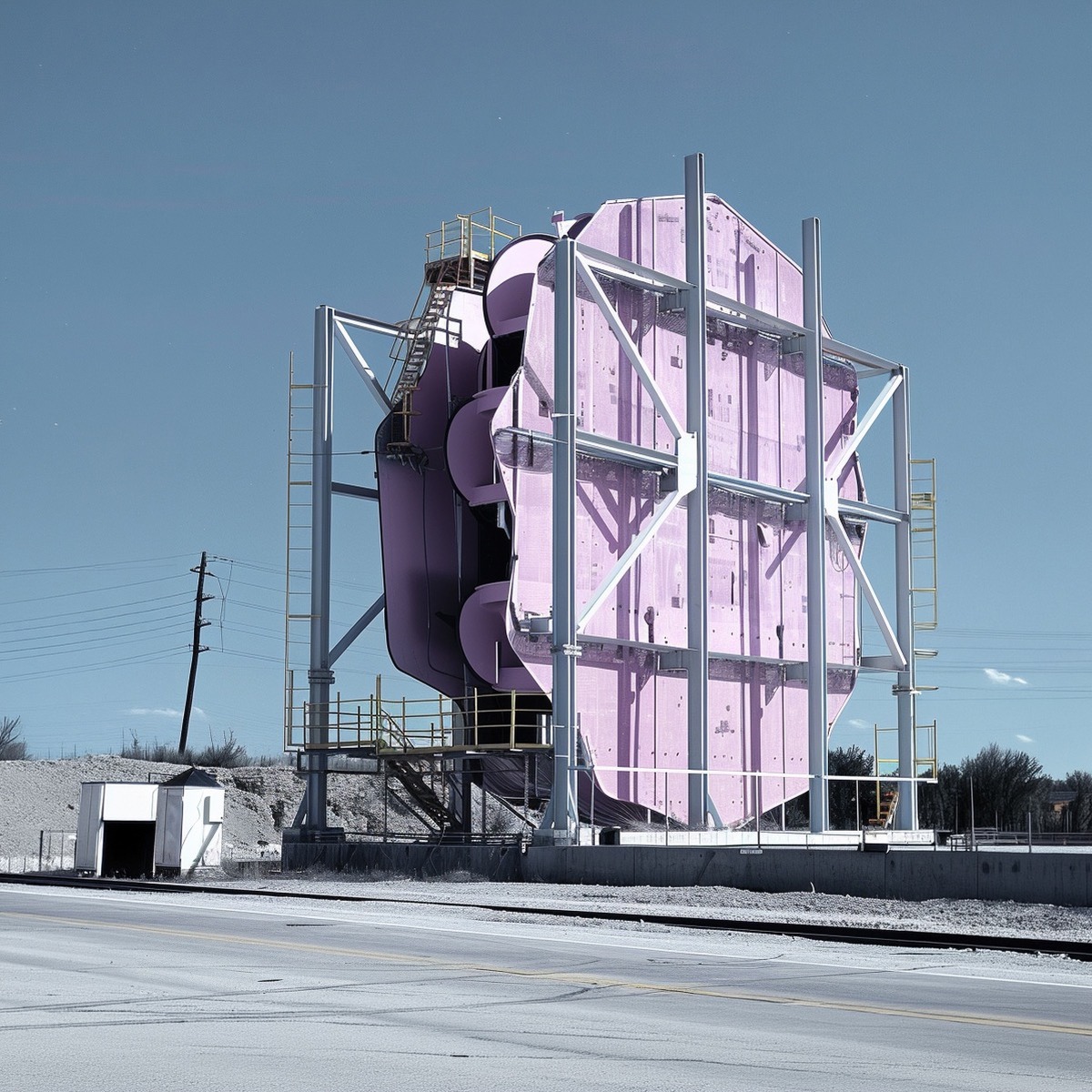 Stereotank, HYBRID STRUCTURE. Image courtesy of the artists.
Here, Cornucopia becomes more than an exhibition of AI images. Today, architectural images often arrive before buildings do. Renderings, digital models, proposals, and now images made with AI circulate before anything is built, shaping expectation before material reality arrives. When an architectural image circulates before a building exists, it is neither a simple record nor a material fact. It occupies an ambiguous position between evidence, proposal, and promise. Cornucopia brings this ambiguity into the exhibition space. On the same yellow wall, evidence and proposition sit within one visual flow. The viewer tries to separate them, but the exhibition shows how easily that boundary shifts.
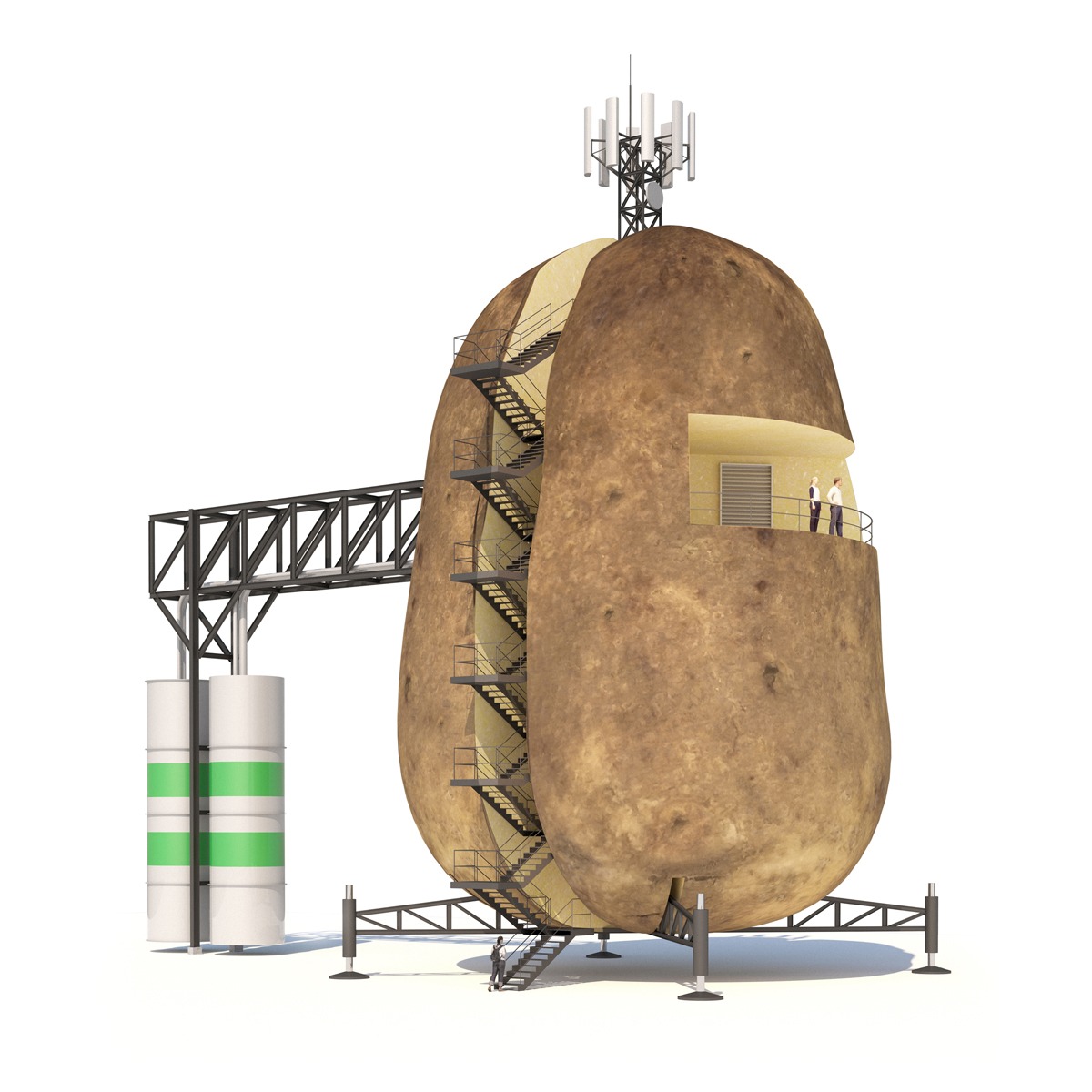 Stereotank, HYBRID STRUCTURE. Image courtesy of the artists.
The show gains force because it does not resolve this ambiguity. A photograph of a built project holds the memory of scale, material, weather, sound, and use. An image made with AI may be visually convincing, but it has not yet passed through those conditions. Shown in the same scale and format, the images appear as one continuous flow, yet they bring together images that have already passed through the world and images that only imagine it. Some images remember bodies. Others only imagine them.
The videos and sound made with AI add another layer, but the central tension remains on the wall. Inside LOT-EK, the images are not fully separated from the conditions of architecture. The viewer remains aware of a working environment shaped by design labor, models, materials, and construction. This setting does not turn the images into buildings, but it prevents them from becoming pure fantasy. It pulls them back toward questions of structure, use, and the world outside the image.
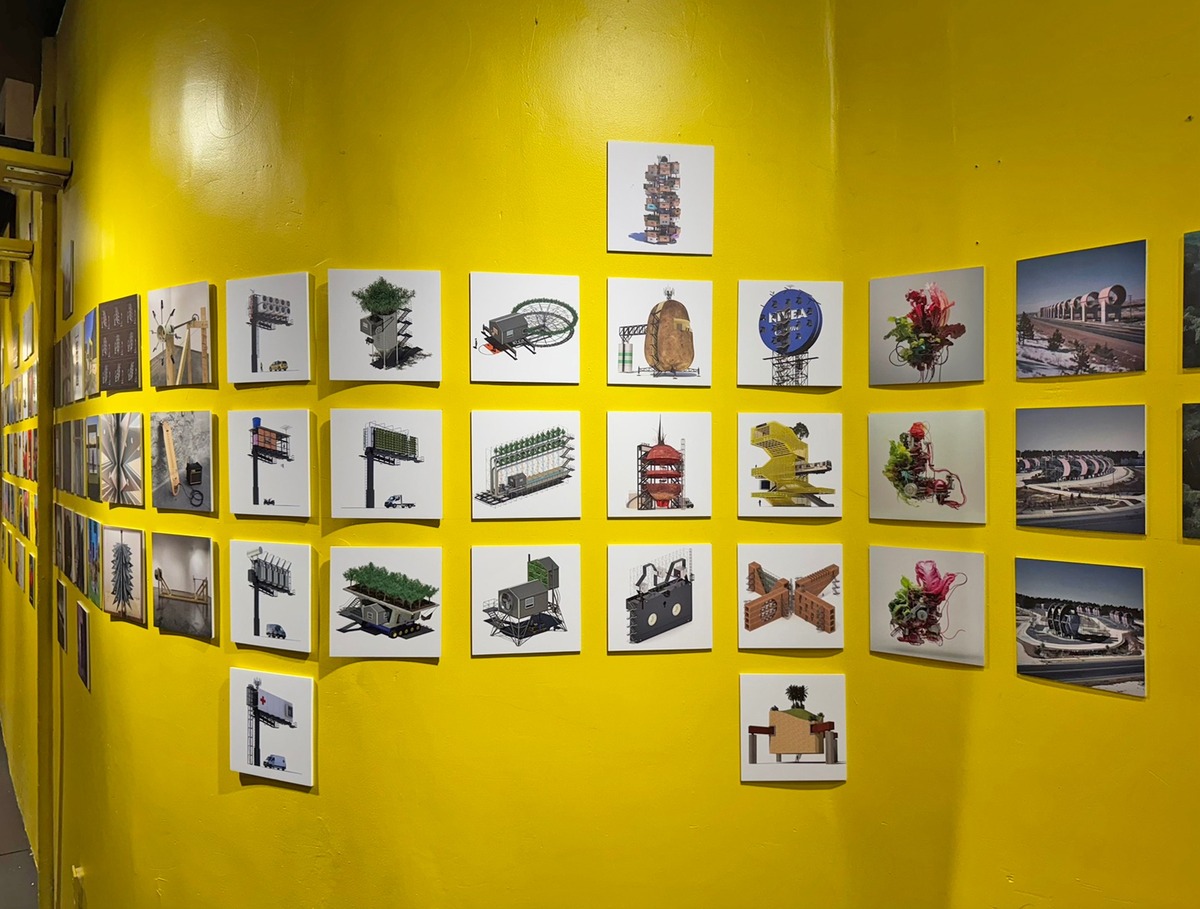 Stereotank: Cornucopia, installation view, LOT-EK’s Yellow Wall, New York, 2026. Photo by Stereotank, courtesy of the artists.
If these images remain only images, they may become beautiful speculative surfaces. If some of them return to matter, sound, touch, and public use, they may open a different phase in Stereotank’s practice. Cornucopia turns Stereotank’s archive into a place of possibility, while also reminding us that possibility is not the same as reality. Architecture can dream through images, but Cornucopia matters most when it asks how those images might return to the world.