Whitehot Magazine
September 2026
"The Best Art In The World"
"The Best Art In The World"
September 2026
Terrence Sanders-Smith on the Life and Loss of His Son, Lucien Smith
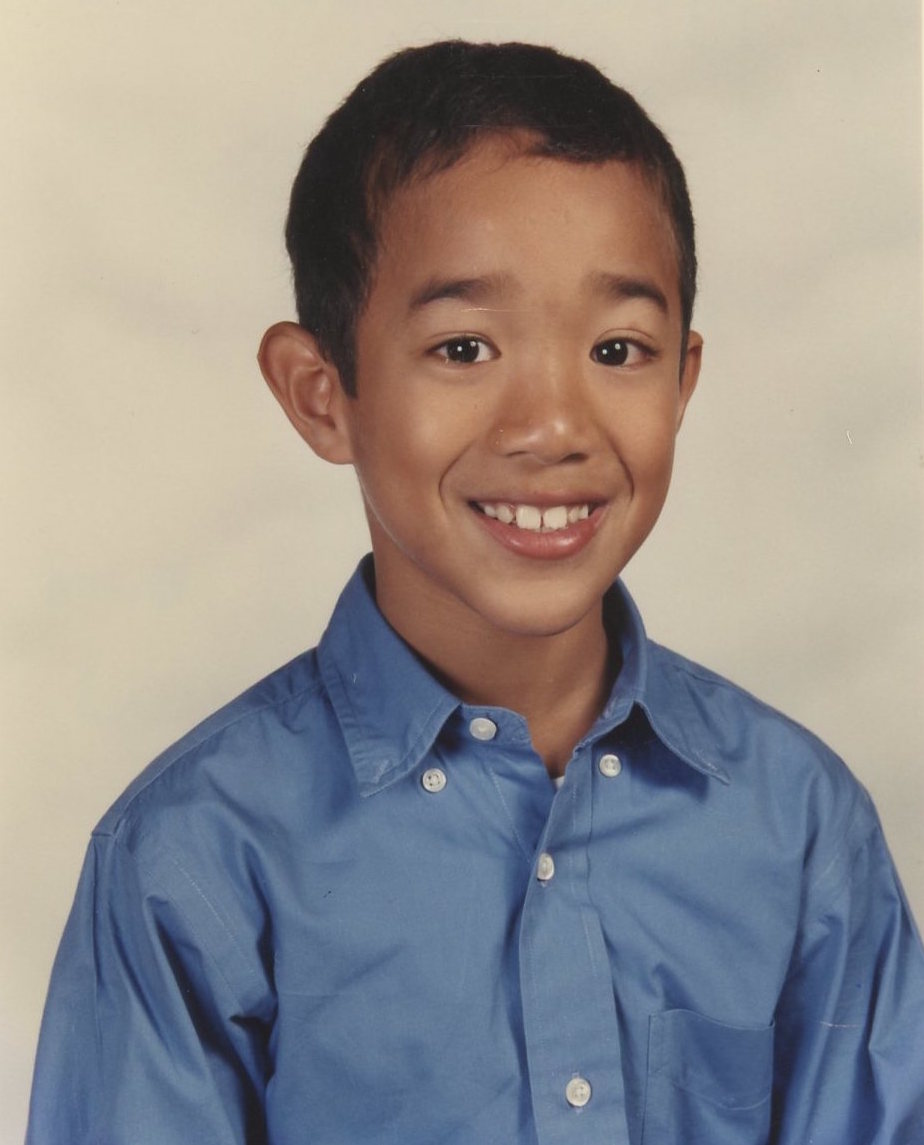 Lucien Smith 10 Years Old 1999
By NOAH BECKER September 15th, 2026
Lucien Smith died on September 7, 2026, at the age of thirty-seven. To the public, Smith was known through his paintings, exhibitions, modeling and remarkably rapid ascent within the international contemporary art world, a young artist whose early success inevitably generated its own mythology.
His father, Terrence Sanders-Smith, knew a different Lucien: not the public figure or art-world phenomenon, but the child he raised and the son he loved. For approximately the first twenty years of Lucien’s life, father and son shared an unusually close relationship, one shaped in part by Terrence’s own life as an artist and by their experiences visiting galleries, discussing and debating art, and witnessing firsthand the possibilities of an artistic life.
That early relationship would become an important part of Lucien’s decision to pursue art himself. Yet, as Lucien entered adulthood and established an independent identity and career, the relationship between father and son became increasingly complicated, eventually giving way to a prolonged estrangement.
Upon learning of Lucien’s death, I reached out to Terrence, an old friend, to offer my condolences to him and his family. He did not answer my calls or respond to my messages, and I understood his silence as the necessary privacy of a father confronting the sudden death of his only son.
Through conversations with Terrence over many years, I had known that his relationship with Lucien had become difficult and distant, but grief seemed an inappropriate moment for easy explanations or judgments about what had occurred between them.
When Terrence was ready to speak, I wanted to offer him something more meaningful than an opportunity to “set the record straight”: a space in which a father might remember his son honestly, including the love that preceded the estrangement, the years of silence that followed, and the questions that death has rendered impossible to answer together.
The conversation that follows is therefore neither an attempt to assign responsibility nor to retroactively resolve a deeply personal relationship. Rather, it considers a father and son before, during, and after their separation, and the larger human questions embedded within their story, love and ambition, art and identity, addiction and vulnerability, masculinity and fatherhood, memory and regret, forgiveness and grief, and perhaps most painfully, the assumption shared by so many estranged families that there will always be more time.
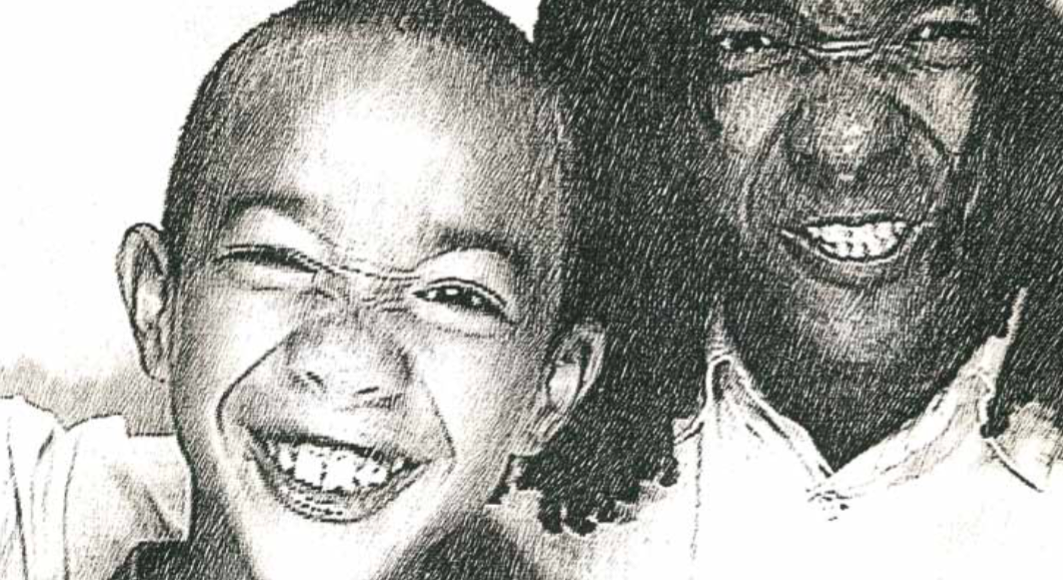 Son & Dad Baton Rouge, Louisiana 1999
Noah Becker: Before Lucien became “Lucien Smith the artist,” who was Lucien Smith the little boy, and what was the relationship between the two of you like?
Terrence Sanders-Smith: Lucien was a beautiful, strong, and deeply sensitive child. He was stubborn, inquisitive, and a dreamer. In many ways, my son embodied the best parts of both his mother and me. For the first twenty years of his life, when I was actively present, we were more than father and son we were best friends. We shared a certain temperament as well; we were both Aries, both strong willed and sensitive in our own ways. There is something about the circumstances of his birth that has always stayed with me. Lucien was expected to arrive on April 11th, my birthday, but apparently, he had other plans. He entered the world four days later, on April 15th the birthday of Leonardo da Vinci. Looking back at the extraordinary artistic life he would eventually pursue, that coincidence feels almost poetic to me.
NB: In our conversations over the years, you described the first twenty years of Lucien’s life as a period when you were not only father and son but best friends. What did that friendship look like in everyday life?
TSS: Like many sons who are deeply nurtured and loved by their fathers, Lucien wanted to be like me when he was young. He rarely wanted to leave my side, and I cherished his company. I loved being his father, but I also loved being his mentor. There was an extraordinary trust between us. He trusted me with his questions, his fears, and the things he was trying to understand about life, and I trusted him in return. We played chess and basketball, but just as importantly, we talked. We listened to one another. In many ways, we became each other’s support system.
I probably spoiled Lucien because he was my pride. He was my legacy and watching him grow into a man was one of the greatest gifts I could receive as a father particularly when he ultimately chose an artistic life that, in some respects, reflected my own. I tried to be there when he needed guidance, reassurance, or simply someone with whom he could have the difficult conversations. But fatherhood had to evolve as he became a man. I understood that I could no longer make his decisions for him. Our relationship began shifting from father and child toward two adults, and part of loving him meant learning to respect his choices even when I disagreed with them. That transition from protecting your child to allowing him to become entirely himself is perhaps one of the most difficult responsibilities of being a father.
NB: What qualities did you recognize in Lucien as a child that, looking back now, you can identify in the artist and man he eventually became?
TSS: Lucien was an exceptional draftsman from a very early age, and I credit his mother with giving him much of that gift. Creativity was part of his inheritance. He was the child of an artist/musician and a fashion designer, so he grew up in an environment saturated with artistic expression. Art wasn't something distant or institutional to him; it was simply part of the language of our household and the way we experienced the world.
What was uniquely Lucien's, however, was his curiosity. Even as a child, he wanted to investigate things, take ideas apart, experiment, and arrive at his own conclusions. He was never particularly interested in accepting something simply because someone else considered it important. Looking back, I can see a direct line between that inquisitive, experimental child and the artist he eventually became. The curiosity I witnessed when he was young matured into a willingness to test materials, processes, conventions, and expectations. In that sense, the boundary-pushing quality people later recognized in Lucien's contemporary art was already present in the boy I knew it simply hadn't found its canvas yet.
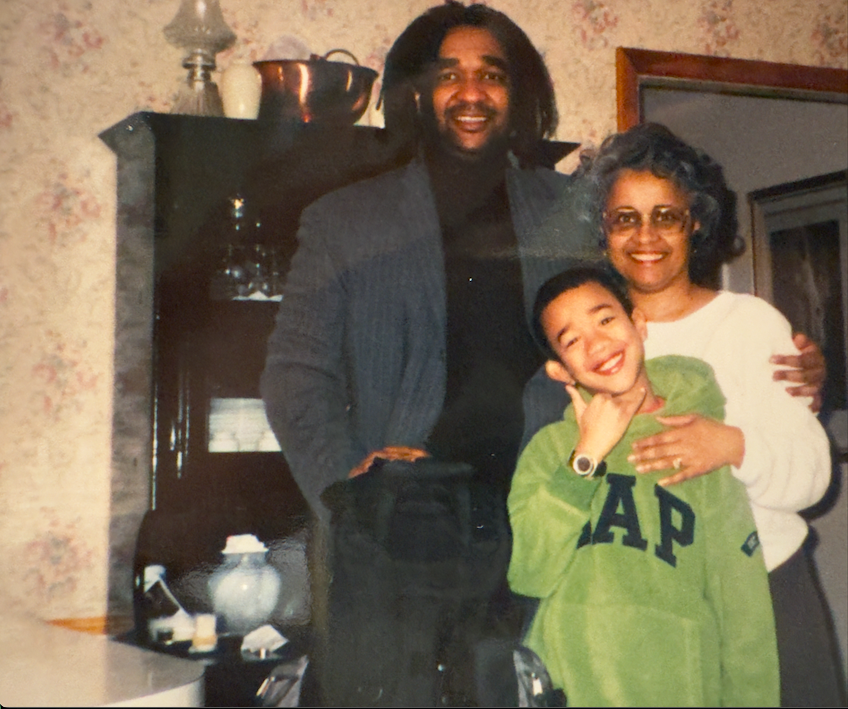 Terrence, Grandma & Lucien 1999
NB: You were an artist yourself, and Lucien lived with you in Baton Rouge, his bedroom had previously been your art studio. How much do you believe watching you make, exhibit, and sell art influenced his decision to become an artist?
TSS: I believe the year Lucien lived with me when he was a teenager was instrumental in his decision to pursue a career as a visual artist. I had recently had a solo exhibition there, and during the opening Lucien and I spent much of the evening sitting in the back room of the gallery playing poker. I've never been particularly comfortable with adulation, so while people circulated through the exhibition looking at my work, my son and I played cards. Throughout the evening, people kept asking to meet the artist. One by one, they came into the back room to introduce themselves and talk about the work. I remember watching Lucien take all this in. I believe something happened inside him that night. Perhaps, for the first time, he began to understand that being an artist wasn't simply something his father did it was a life one could choose.
At the time I was driving a taxi to support my family, and Lucien would sometimes ride around with me after school. Between fares one day, I needed to deliver a painting that a young woman had purchased from the exhibition. We drove to her house, I handed her the painting, and she handed me $300. Lucien looked at the money, then looked at me and asked, almost incredulously, “Dad, did she just pay you for the painting?” I said, “Yes.” That was it. I can still see that moment. Something suddenly became tangible to him: an idea could become an object, an object could have value, and someone might value what you created enough to pay for it. I cannot say that one exchange made Lucien an artist his creative instincts were already deeply embedded in him but as his father, I believe I witnessed a moment when possibility became real. He saw that an artist could make something from himself and send it out into the world.
 Lucien Smith Sunbeam 2008 Mixed Media Framed 38 x 50 in. Collection of Britt Benoit
NB: Why has that particular moment remained so important to you?
TSS: That was the moment I believe my son decided he was going to become an artist. Until then, art had been part of the environment in which he was raised, but now he was beginning to understand what an artist's life required. By observing me, he witnessed the entire process: the effort and the labor required to create the work; the practice and the discipline necessary to continue making it; and the commerce, the moment when someone outside of yourself assigns tangible value to something you created. Together, those things transformed the abstract idea of “being an artist” into something real. In his young mind, I imagine there was a very simple realization: My dad can do this. I can do this, too. He understood that being an artist wasn't merely an identity you claimed; it was something constructed through work, discipline, conviction, and ultimately the willingness to place what you create into the world and allow others to determine its value. From my perspective as his father, that was the moment the possibility of art became a vocation.
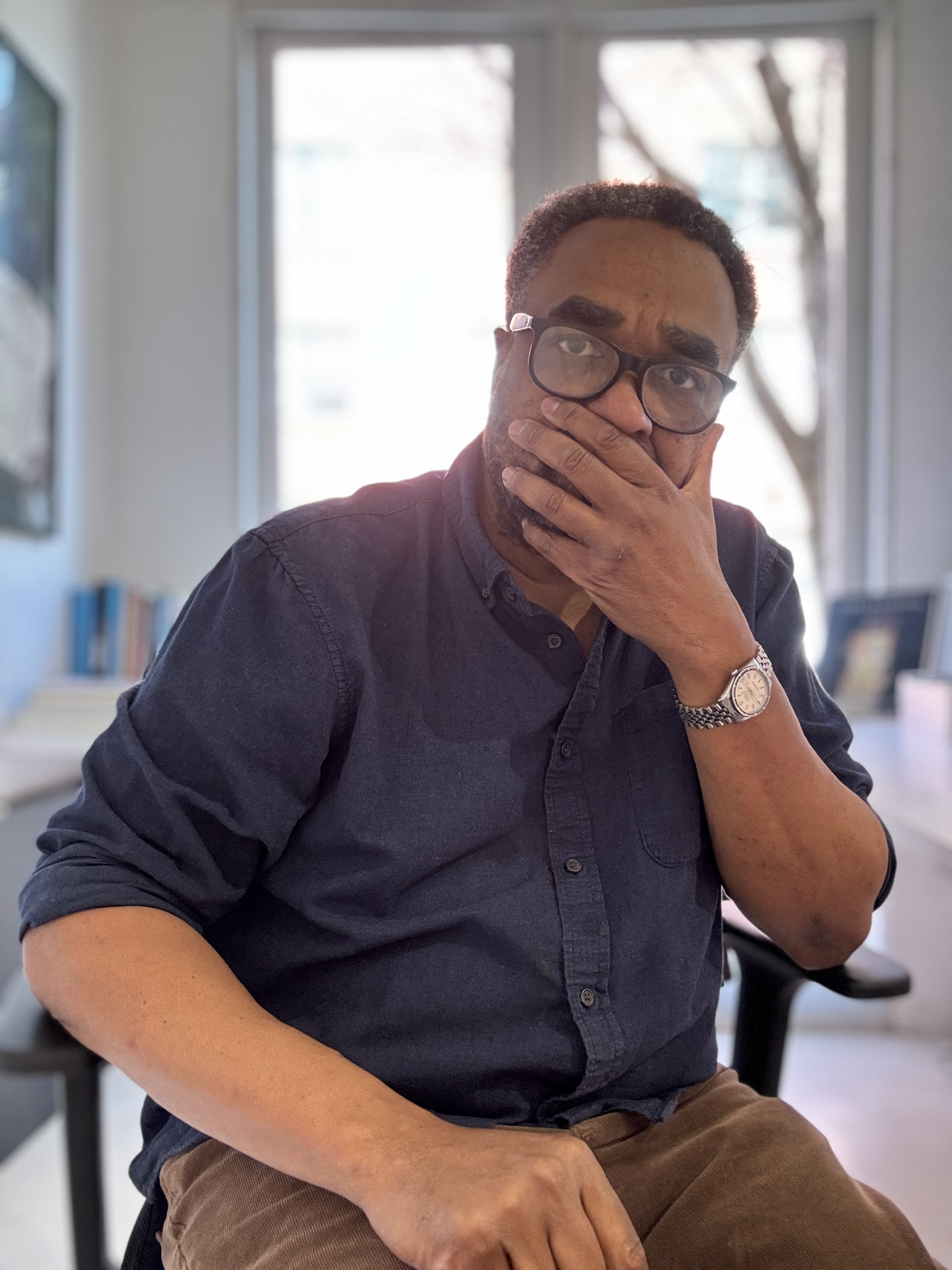 Terrence Sanders-Smith SMITH contemporary New Orleans 2025
NB: What did the two of you disagree about aesthetically, and did you recognize even then that he possessed an unusually independent way of looking at art?
TSS: When Lucien was a child, I would take him to galleries in Chelsea and SoHo as part of what I considered his informal art education. I wanted him to experience art directly to stand in front of the work, question it, argue with it, and develop his own visual vocabulary. Lucien was never interested in simply adopting my taste because I was his father. One artist we could consistently agree on was David Hammons, himself a Cooper Union alumnus. I also think we shared an appreciation for Warhol and Schnabel. Those artists demonstrated, in very different ways, that an artist did not have to remain confined to a single medium, discipline, or conventional definition of what art could be.
Lucien and I were both rooted in multidisciplinary approaches, but our sensibilities ultimately diverged. My work gravitated more toward conceptual and sociopolitical concerns, while Lucien became increasingly interested in popular culture, material experimentation, process, and abstraction. I believe his years at Cooper Union, combined with his immersion in the downtown New York art scene and the generation of artists sometimes characterized as “Warhol’s Children,” profoundly influenced the way he understood contemporary art. But Lucien was never simply a product of those influences. Even as a boy walking through galleries with me, he possessed an independent eye. He questioned what he saw, rejected what didn't interest him, and absorbed what did. Looking back, I think those disagreements between us were as important to his education as the things we agreed upon. I wasn't teaching him what art to like; I was teaching him that he had the right to decide for himself what art could be.
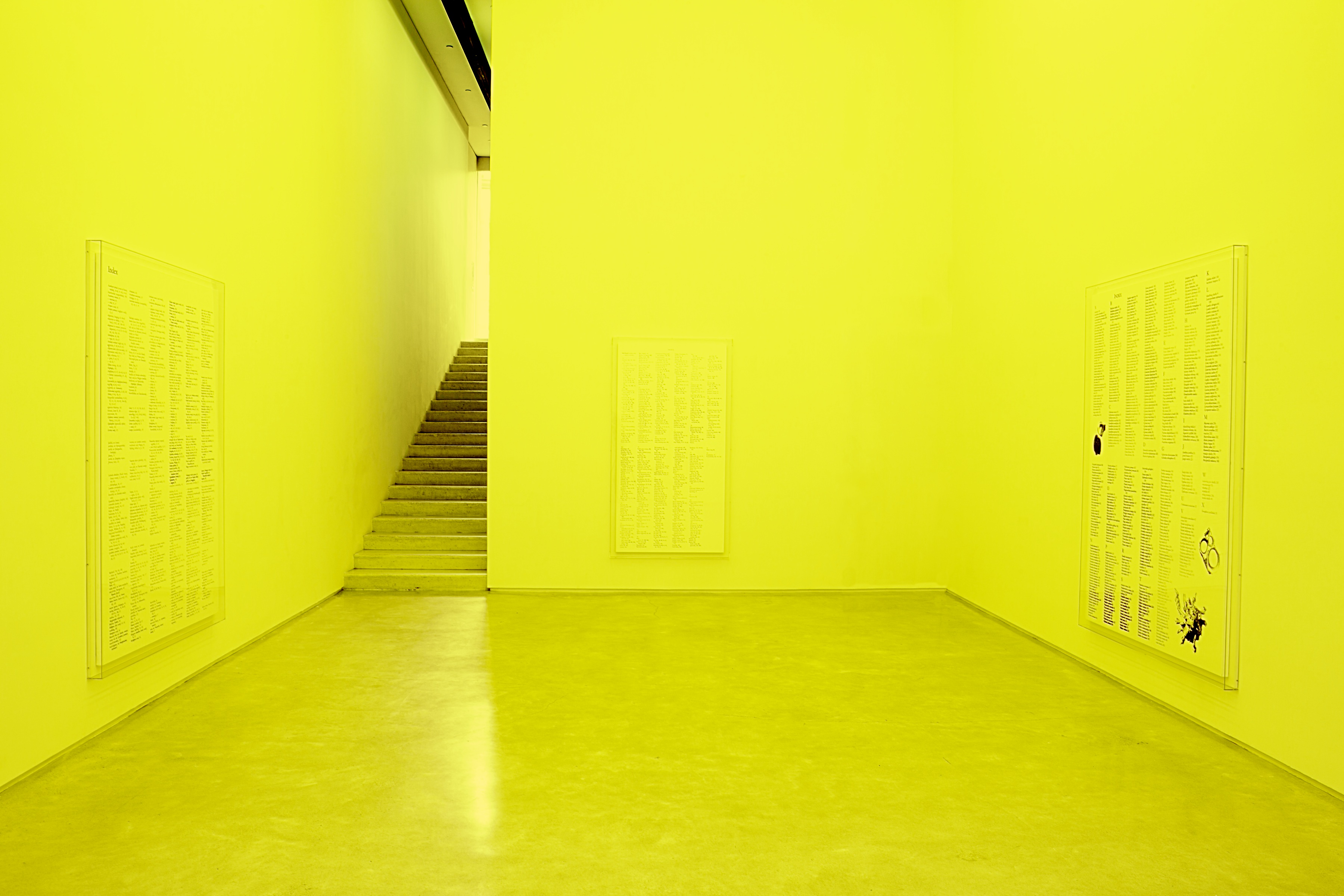 Lucien Smith "Nature Is My Church" Salon 94, New York 2013
NB: You took Lucien through Chelsea galleries and exposed him to contemporary art before his own career began. What do you remember about those conversations, and what did he teach you about looking at art?
TSS: He wasn't afraid to dislike something, regardless of who made it, how important someone said it was, or how much cultural authority surrounded it. His taste was instinctual. When he was young, he didn't necessarily possess the language to articulate why a particular work failed to interest him, but his aesthetic judgment was already remarkably decisive. He trusted his eye. As he grew older and his knowledge of art history deepened, those instincts became more focused. He began identifying particular movements, artists, and ideas that corresponded to the kind of artist and ultimately the kind of life he imagined for himself.
Lucien was also very interested in success. I don't think it is useful to separate that ambition from his artistic development. He understood that the contemporary art world was not governed by the work alone; it also operated through relationships, institutions, galleries, collectors, cultural visibility, and a particular social orbit. He became increasingly aware of that ecosystem and developed a sophisticated sense of the cultural palette associated with it. He understood that becoming a successful contemporary artist involved not only developing a recognizable practice but understanding the world in which that practice would circulate.
NB: Lucien received a scholarship to Cooper Union, the same institution which you and his mother had celebrated your marriage years earlier in front of the Peter Cooper statue drinking a bottle of wine, what did that moment mean to you as his father?
TSS: His mother called me and told me that Lucien had been awarded a scholarship to Cooper Union. She knew immediately that I would understand the significance of it. There are moments in life when coincidence begins to feel like something more when seemingly unrelated events suddenly form a pattern, and you begin to question whether anything in our lives is truly random. I recognize that not everyone sees life through that spiritual lens, but I do. I had reached a place in my own understanding where certain experiences felt less like accidents and more like signs along a path. My perspective as his father, I was watching him manifest a destiny that had been revealing itself to us all along.
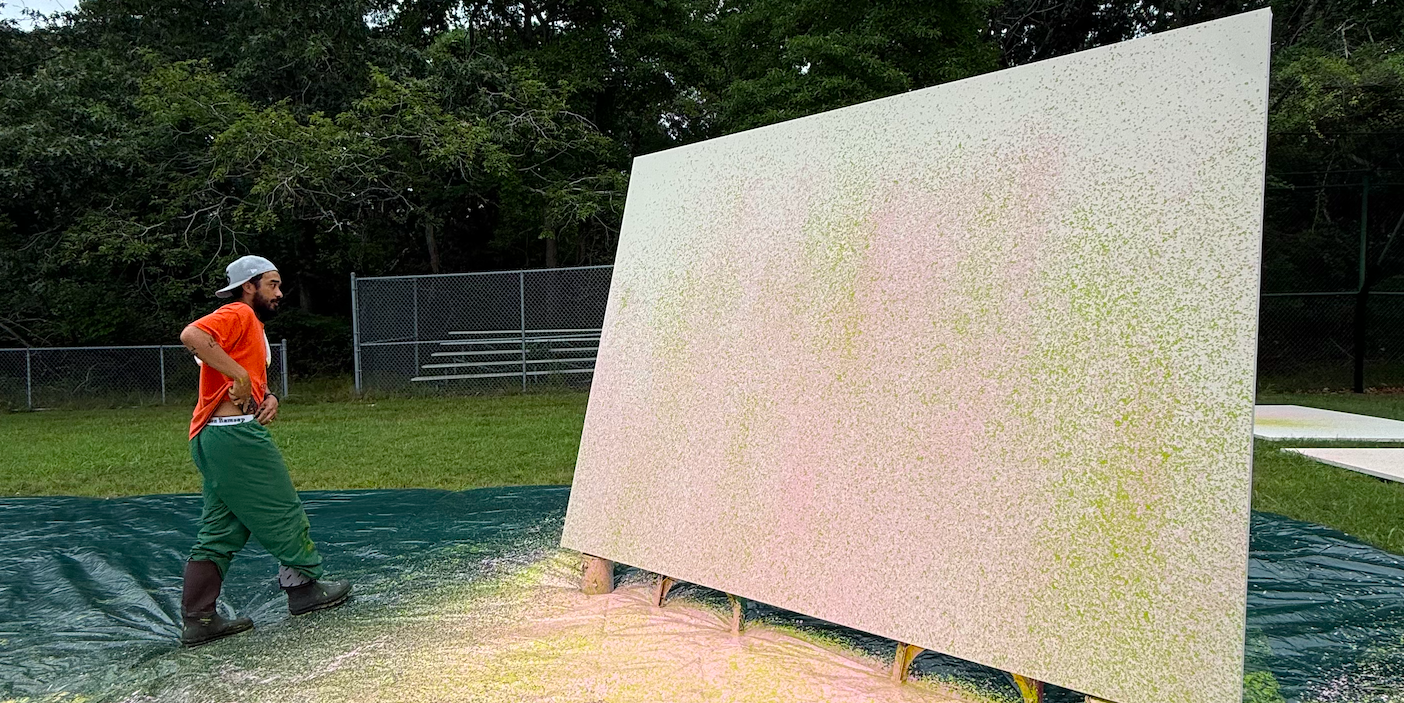 Lucien Smith Montauk New York August 2026 Photo by Zev Starr-Tambor
NB: If the first twenty years were characterized by such closeness, what happened between you? Was there one identifiable rupture, or was the estrangement a gradual accumulation of misunderstandings, hurt and distance?
TSS: That’s the million-dollar question. I don’t think there was one moment when we lost each other. It was an accumulation of distance, drugs, ambition, pride, fear, and mistakes his and mine.
When Lucien was in high school, his mother moved to San Francisco and allowed him to remain in Southern California with a friend’s family. I disagreed with that decision. I wanted him to come live with me in New Orleans, but he didn’t want to leave his friends. Looking back, I believe this was around the time his drinking and drug use began. Parenting a teenager from another state was difficult. I felt him slipping away and didn't know how to stop it.
Then he was accepted to Cooper Union and called me almost triumphantly: “You see, I got this.” I was incredibly proud. Everything seemed to be falling into place.
At Cooper, he entered the downtown art scene and became involved with artists including Dan Colen, Dash Snow, Terence Koh, and he dated Aurel Schmidt. He eventually worked as Dan’s studio assistant. From my perspective, Lucien was entering the world of “Warhol’s Children” where art, ambition, nightlife, celebrity, and excess frequently overlapped. I worried that drugs had become part of his desire to belong.
The price of admission.
During Art Basel Miami, Aurel called me at the airport and said, “Lucien’s going to hate me, but I have to tell you that he is doing a lot of heroin, and I’m worried about him.”
Game over.
I stood in the airport crying. I contacted people close to Lucien, and an intervention followed. Eventually, he promised me he would never touch heroin again. For a while, I believed we were in the clear.
Our relationship finally fractured over something that now seems painfully small. I invited Lucien to participate in an exhibition I was curating with New Orleans artists. He declined because he believed it could hurt his career. I didn't hear a professional decision I heard my son rejecting me. I felt disrespected and betrayed, and I cut him off financially.
I called it tough love. I told him it was time to become a man.
Seventeen years later, I understand the contradiction. What I believed was forcing my son to become independent, Lucien may have experienced as his father abandoning him. He did become successful, but success doesn't prove that my decision was right. It remains one of my greatest failures as a father, even though part of me still understands why I made it.
The final rupture came when I wrote a public response to something Lucien had said about me on a TED talk. I was angry, humiliated, and struggling in my own life. My mother told me not to publish it. I did anyway. It became public, and something that should have remained between a father and son became everyone else's business.
Shortly afterward, I saw Lucien walking down Bedford Avenue in Williamsburg. I could have approached him. I could have said his name, hugged him, and tried to repair what we had broken. Instead, ashamed of what I had done, I hid and watched my son walk past me.
I was the coward.
I have replayed that moment for seventeen years. Other people knew Lucien as the artist, friend, boyfriend, and collaborator. I knew the little boy who never wanted to leave my side. I knew the teenager riding beside me in my taxi. I knew the kid who watched someone hand his father $300 for a painting and realized that becoming an artist was possible.
He was my son. And I wish I had understood sooner that we did not have forever to find our way back to each other.
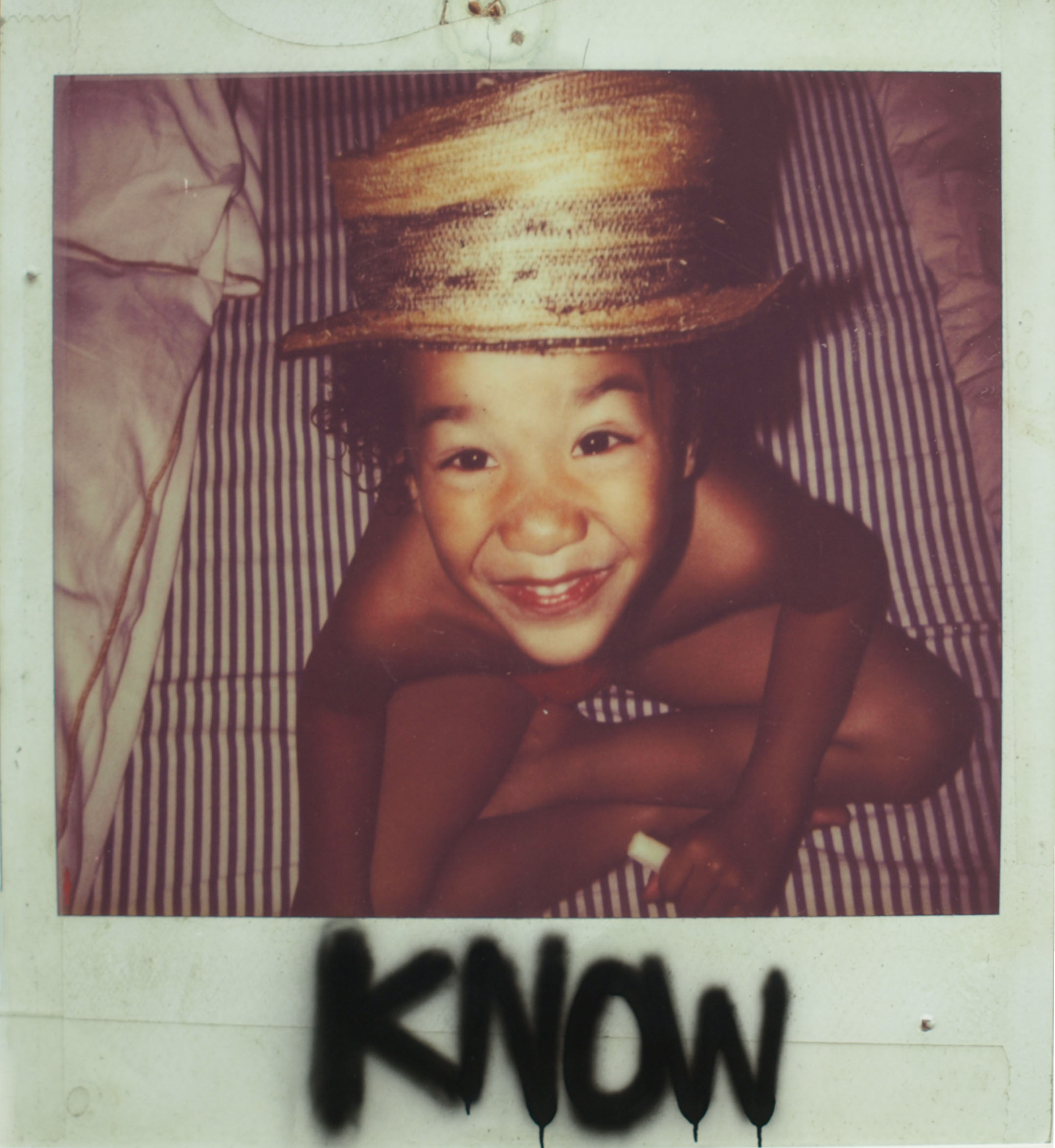 Lucien Smith, KNOW (Portrait of the Artists as A Child) 2008 Mixed Media Framed 41 1⁄2 x 41 1⁄2 in. Collection of Nathanael Albright
On Children by Kahlil Gibran
And a woman who held a babe against her bosom said, Speak to us of Children.
And he said:
Your children are not your children.
They are the sons and daughters of Life’s longing for itself.
They come through you but not from you,
And though they are with you, yet they belong not to you.
You may give them your love but not your thoughts,
For they have their own thoughts.
You may house their bodies but not their souls,
For their soul’s dwell in the house of tomorrow, which you cannot visit, not even in your dreams.
You may strive to be like them but seek not to make them like you.
For life goes not backward nor tarries with yesterday.
You are the bows from which your children as living arrows are sent forth.
The archer sees the mark upon the path of the infinite, and He bends you with His might that His arrows may go swift and far.
Let your bending in the archer’s hand be for gladness.
For even as He loves the arrow that flies, so He loves also the bow that is stable.
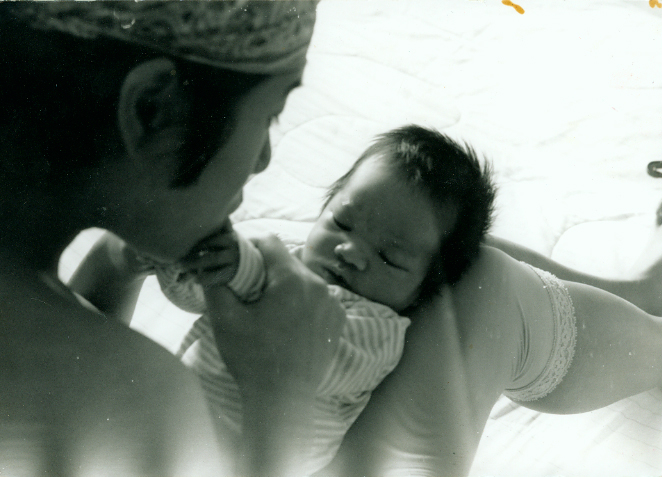 Mom & Lucien Diamond Bar California 1989
NB: When you retrace that period now, are there things you understand differently as a father than you understood while they were actually happening?
TSS: Of course. I made two decisions that I wish I could take back, although I still struggle with the fact that one of them may have helped push Lucien toward becoming the independent man and artist he wanted to be.
He was young, biracial, ambitious, and struggling with drugs. He wanted success. Somewhere along the way, he no longer wanted to be like me. He wanted fame, wealth, and access to a world I didn't inhabit. At the time, I interpreted that as rejection. I sometimes felt that he was ashamed of me because I wasn't famous, wealthy, or surrounded by the kind of privilege and assets he saw among some of his friends. Eventually, I began to feel that he tolerated me because I was his father rather than valued me for who I was.
But with time, I have come to understand something else: Lucien may not have been trying to hurt me at all. He was trying to become himself and telling his truth as he understood it. I allowed my hurt to become pride, my pride to become anger, and my anger to influence decisions that changed our relationship forever. Those decisions became the greatest regrets of my life. I only wish I had understood then what I understand now: I didn't have to agree with my son to continue loving him within reach.
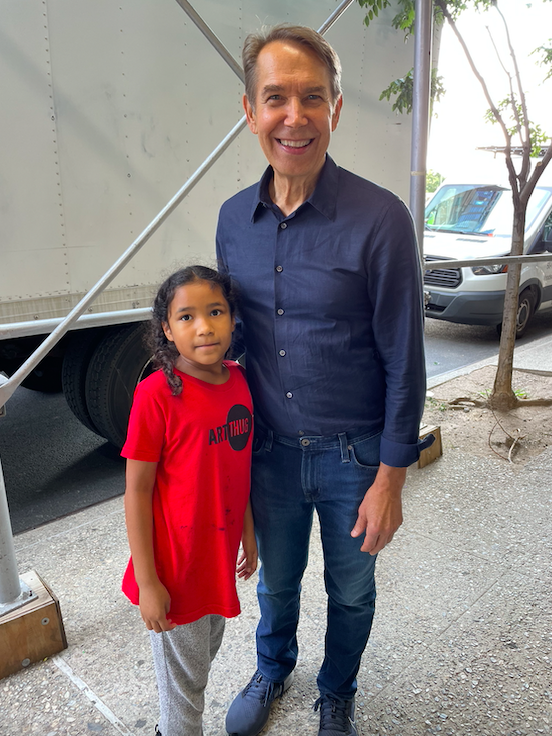 Maya Smith (Lucien’s Sister) with Jeff Koons NYC 2022
NB: Seventeen years is an extraordinarily long silence between a father and son who had once been so close. During those years, what prevented you from reaching across the distance and what do you imagine prevented Lucien?
TSS: I was a victim of physical and emotional abuse as a child, and I stopped speaking to my stepfather for twenty years. During that period, I wasn't close to my mother either because I blamed her for much of what had happened. Looking back, I realize that Lucien learned something from me that I never intended to teach him: when someone hurts you deeply, you remove them from your life.
I always believed that eventually he would learn to forgive me, and we would become father and son again. Or, in the worst case, we would reconcile on my deathbed. We both reached out at different times, but there was always this residue of betrayal between us. Neither of us seemed able to get beyond it.
What Lucien may not have understood and what perhaps I failed to communicate is that once he became successful, he didn't need my financial support anymore. He needed something money couldn't buy: my unconditional love, my wisdom, and my family. The tragedy is that I always assumed there would be time for us to understand that. There wasn't.
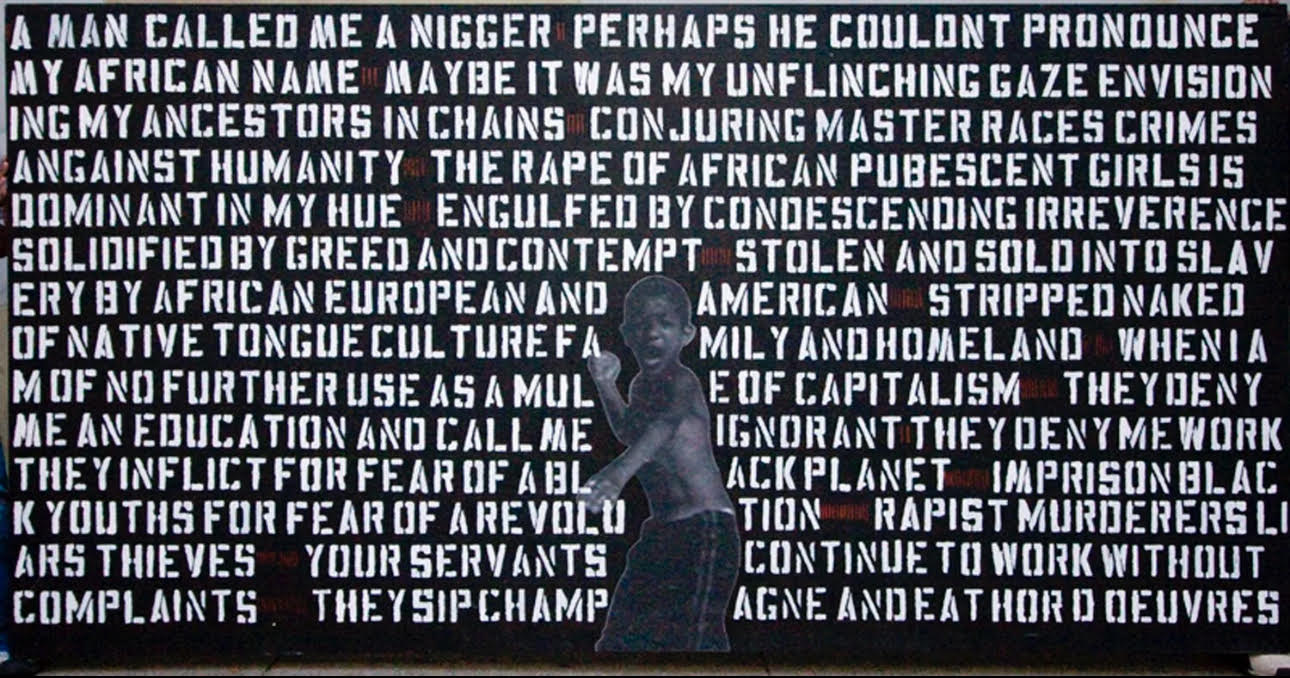 Terrence Sanders-Smith Nigger Mixed Media on Canvas, 60 x 118 inches 2011, Collection of Alexander Garbe
NB: Did pride play a role on either side? And were there moments when you almost called, wrote, visited, or simply said, “Enough we need to fix this”?
TSS: I can’t speak for Lucien about pride, but I believe it played a role. We were both stubborn Aries men, and neither of us was particularly good at surrendering when we felt hurt. But I never stopped trying to reach him. Over the years, I wrote, called, texted, and sent DMs. There were attempts on both sides, but somehow, we could never completely get beyond the hurt that had accumulated between us. When Lucien opened FOOD, I went there with his sister Maya, who was eleven years old and had never met her brother in person. Over all those years, we would see Lucien only three times before his death. My mother his grandmother would never see him again.
That is one of the hardest realities for me. Estrangement doesn't happen between only two people. It creates an absence throughout an entire family.
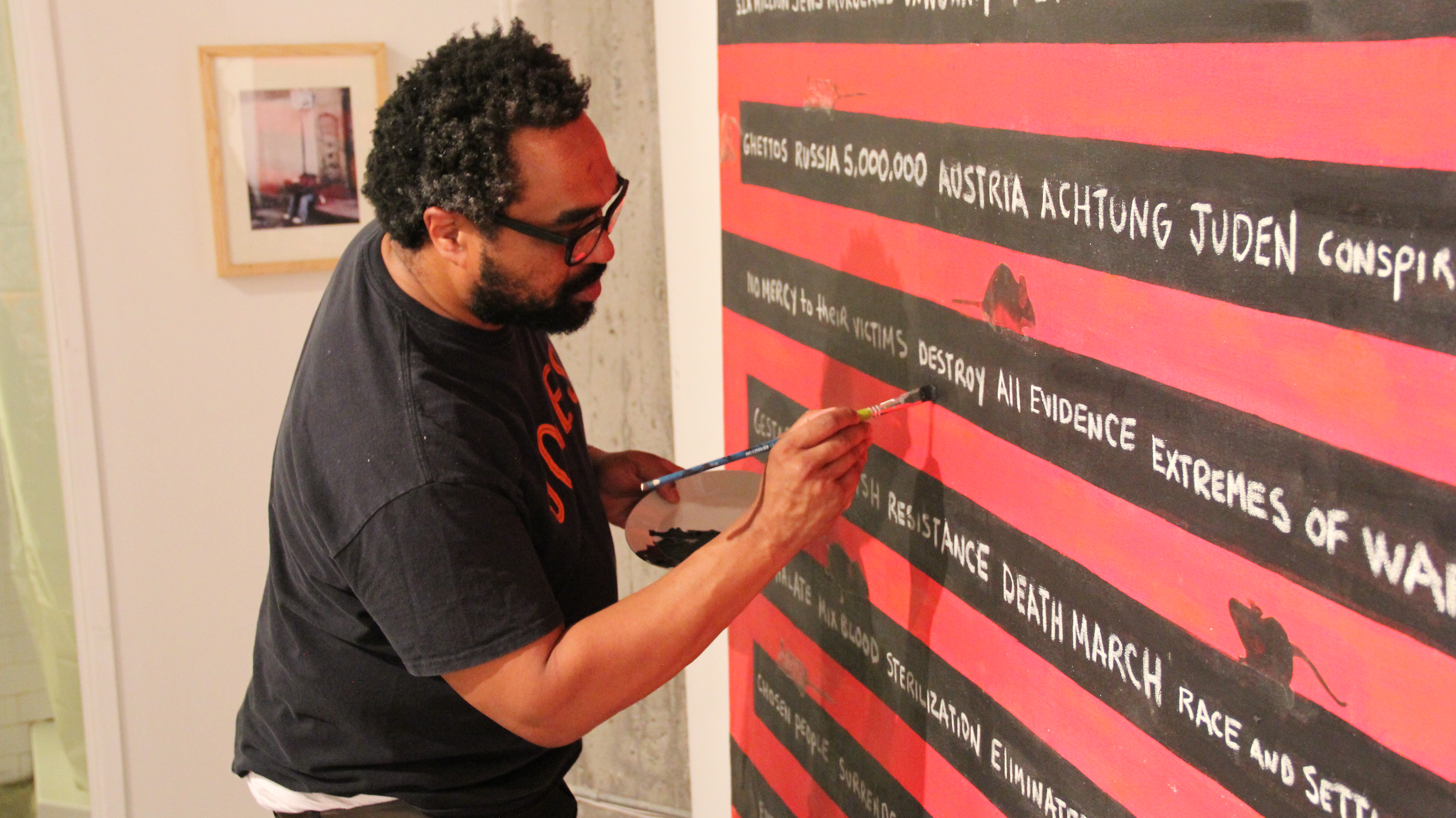 Terrence Sanders-Smith Makeshift Museum Los Angeles 2018.
NB: In 2020, Lucien contacted you while he was attending AA meetings. What can you share about those conversations, and did you believe at the time that they might become an opening toward reconciliation?
TSS: When Lucien first called, I didn’t recognize his voice. It had been that long. But we forgave each other. He apologized for the TED Talk, and I apologized for the letter. For the first time in years, we began talking about the things that mattered, family, his sister, my mother, what he was going through emotionally, and the possibility of moving forward.
He was attending AA at the time, and for about a year, I had my son back. We talked and zoomed regularly. That was one of the happiest years of my life. After all those years of estrangement, we were father and son again.
Then the distance slowly returned. I believe he may have relapsed, although I can’t say with certainty what happened. I also felt there were people around him who benefited from the two of us not being close, and that is all I’m going to say about that. What matters to me now is that we had that year. We forgave each other. We said we were sorry. And for a little while, we found our way back to each other.
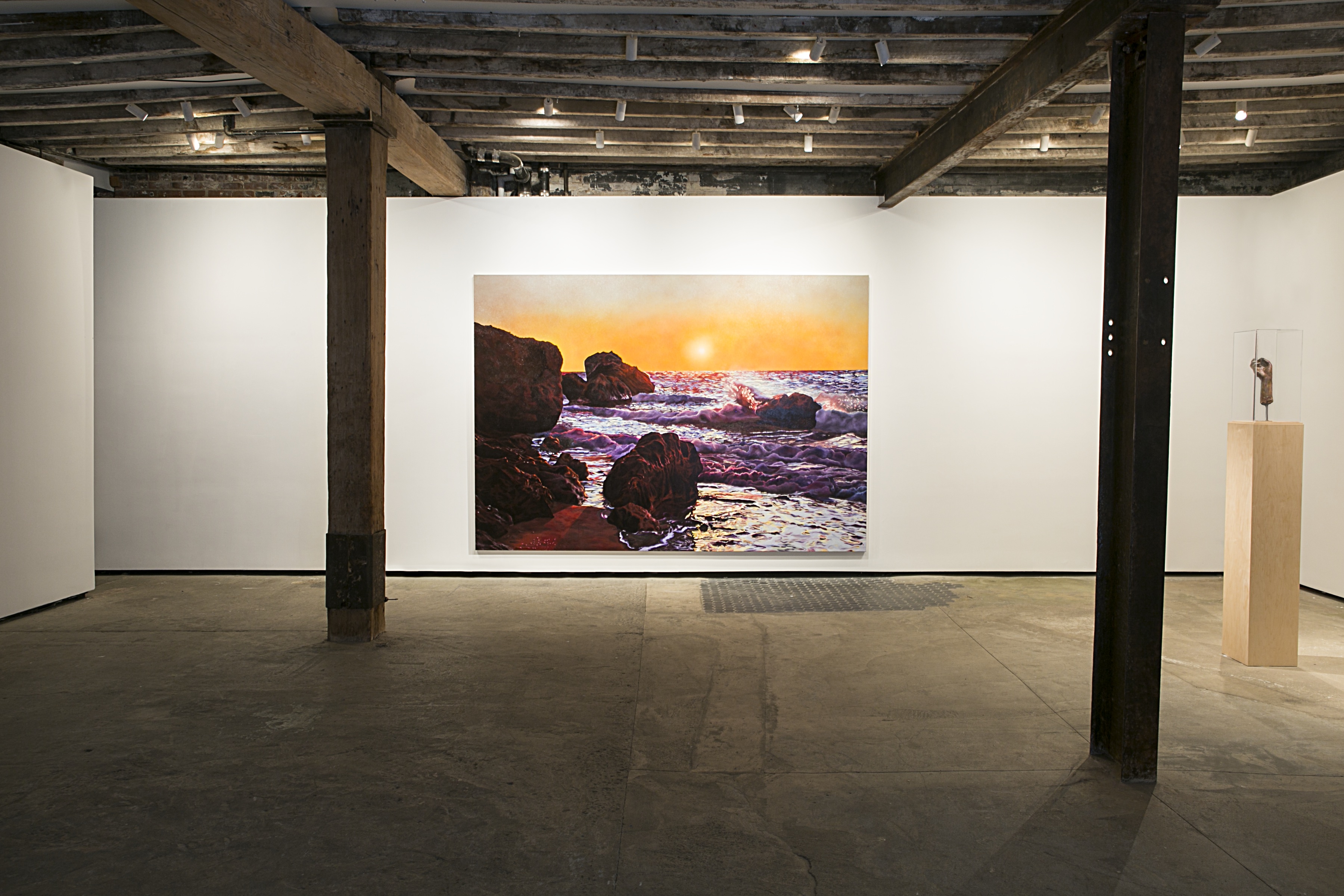 Lucien Smith Mene, Mene, Tekel, Upharsin, oil on canvas, 93 X 131 in. 2013 Salon 94
NB: Were you aware of the extent of the difficulties Lucien was experiencing, or have you only begun understanding parts of his private life since his death?
TSS: I wasn’t aware at all. In the past, when Lucien was in trouble, I was the person everyone called including his mother. Whether it was bullies, drugs, money, or some other crisis, I dealt with it. For the first twenty years of his life, I was one of the few people he would listen to.
Once Lucien became successful and started making his own money, those calls stopped. No one told me what was happening. From a distance, I believed my son was doing well.
After his death, his mother and the detectives who discovered his body told me things I had never known. I learned that my son had been struggling with addiction during many of the seventeen years we were apart. To discover the extent of his struggle only after he was gone was devastating.
I live with the belief that if I had known how much trouble he was in, I might have been able to help him. Maybe I could have saved him. Maybe he would still be alive. I will never know. What hurts is feeling that I never had the chance to try.
NB: When your mother told you that Lucien had died, what happened to seventeen years of anger in that instant? Did the estrangement still matter, or did you immediately return emotionally to the little boy you had raised?
TSS: I pulled the car over and wept. At first, I refused to accept that Lucien was dead. I was angry. I wanted someone to blame. I wanted someone to be held responsible for my son’s death.
But in that anger, I realized I had forgotten the little boy inside the grown man. For years, the estrangement, the disappointments, and everything that had happened between us had defined how I saw him. His death stripped all of that away.
Suddenly, I wasn't thinking about Lucien the successful artist or the man I had been estranged from. I was remembering my little boy, the child who never wanted to leave my side, who trusted me, who played chess and basketball with me, who once wanted to be just like his dad. And once I found him again in my memory, much of the anger disappeared. What remained was love and the unbearable realization that my son was gone.
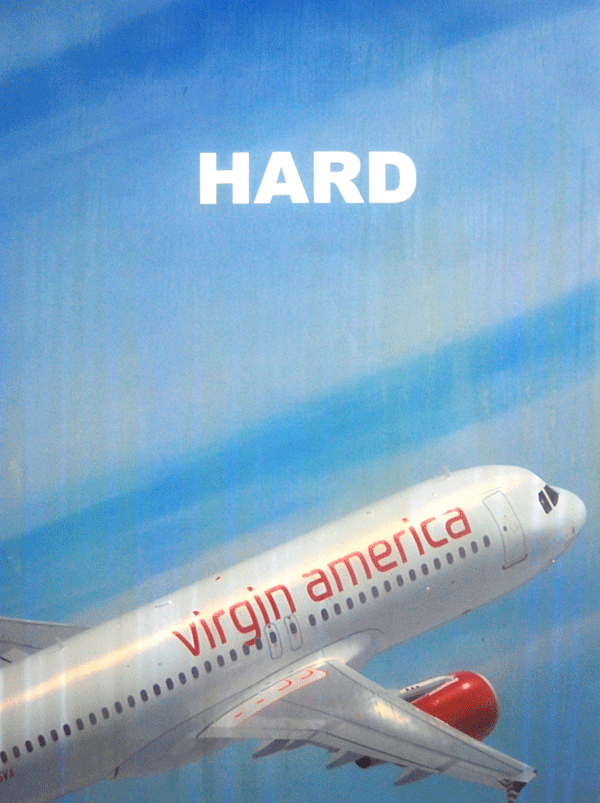 Lucien Smith HARD 40 1⁄2 x 54 3/8 in. Mixed Media 2008 Collection of Alexander Garbe
NB: You have spoken candidly about initially feeling anger toward Lucien’s enablers as well as profound love and grief. How do you navigate these emotions and who do you hold accountable?
TSS: I try to live in a fluid state of forgiveness, operating at the highest frequency I can reach. I don't want to carry anger, jealousy, bitterness, or hatred toward another human being. Those emotions cannot bring my son back.
At the same time, forgiveness does not erase accountability. Lucien made choices, as we all do, and some of those choices had devastating consequences. Ultimately, he paid the highest price, his life.
I cannot change what happened between us, but I can decide what I do with the love that remains. Preserving Lucien's legacy is how I will continue to love my son and, in some small way, do right by him. I cannot rewrite his life, but I can make certain that he is remembered fully not only for the artist he became, but for the human being he was.
NB: Since Lucien’s death, people have shared photographs and stories that are introducing you to parts of his adult life you never witnessed. What have you learned about your son that has surprised, comforted, hurt, or changed you?
TSS: He was loved. Deeply loved. Lucien was generous, kind, and loving. He was special not simply because of what he accomplished as an artist, but because of who he was as a human being. He had thirty-seven beautiful, fulfilling, complicated, and sometimes turbulent years on this Earth. I don't want the difficult years or the circumstances of his death to become the definition of his life. His addiction was part of his story, but it was not his story. When everything else is stripped away the success, the art world, the mistakes, the estrangement, even the grief I want people to remember something very simple: Lucien lived. Lucien created. Lucien mattered. And Lucien was loved.
NB: If Lucien were sitting across from you now not the successful artist, not the estranged adult, but simply your son and neither of you were allowed to defend yourselves, what would you want to say to him, and what would you most want to hear him say to you?
TSS: I’m sorry. We both will learn from this. None of us are perfect, and we all make mistakes. I made mine, and you made yours. I wish we had been given more time to understand each other and find our way back. But if I could say anything to you now, it would be simple: I forgive you. I hope you forgive me. I love you, son. I always have, and I always will.
NB: When the art world eventually separates Lucien Smith’s work from the market, the headlines, the success, the failures and the mythology surrounding him, what do you as his father want history to understand about the human being who existed underneath the name “Lucien Smith”?
TSS: He was built different. He was one of us. Lucien moved through the world with a unique lens of humanity, curious, sensitive, and deeply aware of the people around him. He believed in being his brother’s keeper. He didn’t simply want to talk about making a difference; he wanted to live it. In thirty-seven years, he manifested much of the destiny he imagined for himself. He became an artist, built a life on his own terms, and left an imprint on people fortunate enough to know him. To me, he was a living legend not because he was famous, but because his presence brought something out of people. He made them want to become more fully themselves.
That is the Lucien I want people to remember.
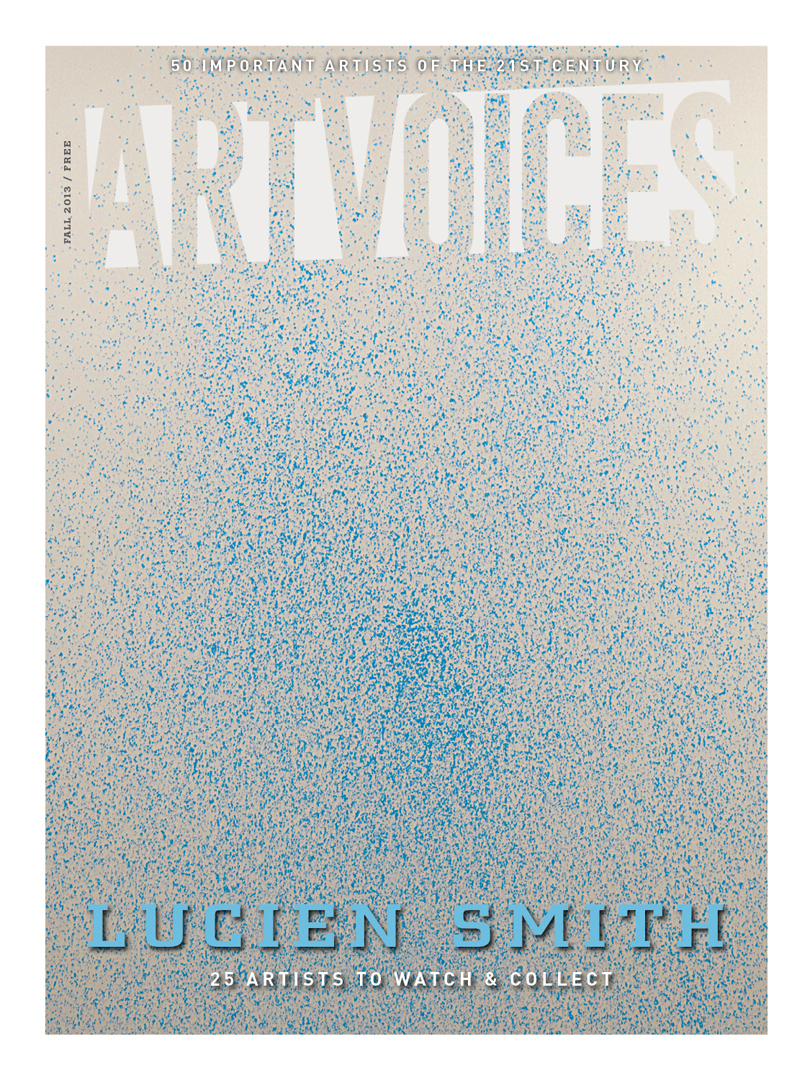
NB: As Lucien’s father, how do you plan to preserve and shape his legacy not only as an artist whose career became part of contemporary art history, but as a son, brother, friend, and human being whose life extended far beyond the work he left behind?
TSS: I’d like to establish a foundation in Lucien’s name something dedicated to managing, cataloging, and preserving his remaining artwork and ensuring that significant works find permanent homes in museums and public collections. I want to collaborate with curators, scholars, and art historians on retrospectives and definitive publications that place his work within the history of contemporary art with the seriousness it deserves.
But an artist’s career represents only a fraction of a human life. Preserving Lucien requires another kind of stewardship, one rooted in family, friendship, and community. I want to archive his voice through his letters, journals, sketchbooks, photographs, and the memories of people who knew him. Those materials contain his humor, vulnerability, struggles, generosity, and humanity. I don’t want the person to disappear behind the art history.
I also want his legacy to create opportunities for others through scholarships, grants, or residencies supporting emerging artists who possess that same curiosity, independence, and generosity of spirit.
Ultimately, when someone stands before a Lucien Smith painting fifty years from now, I don’t want them simply to recognize a name on a museum wall. I want them to feel the heartbeat, intellect, complexity, and humanity of the person who created it. That is how I intend to continue loving my son. WM
 PLEASE SCAN QR CODE TO SUBMIT SENTIMENTS, STORIES and IMAGES to LUCIEN
SMITH’S BOOK MEMORIAL

Noah Becker
Noah Becker is an artist and the publisher and founding editor of Whitehot Magazine. He shows his paintings internationally at museums and galleries. Becker also plays jazz saxophone. Becker's writing has appeared in The Guardian, VICE, Garage, Art in America, Interview Magazine, Canadian Art and the Huffington Post. He has written texts for major artist monographs published by Rizzoli and Hatje Cantz. Becker directed the New York art documentary New York is Now (2010). Becker's new album of original music "Mode For Noah" was released in 2023.
Becker's 386 page hardcover book "20 Years of Noah Becker's Whitehot Magazine of Contemporary Art" drops Aug 8, 2025 globally on Anthem Press.
Noah Becker on Instagram / Noah Becker Paintings / Noah Becker Music / Email: noah@whitehotmagazine.com
view all articles from this author