Whitehot Magazine
October 2026
"The Best Art In The World"
"The Best Art In The World"
October 2026
Leslie Lewis Sigler: Homecoming
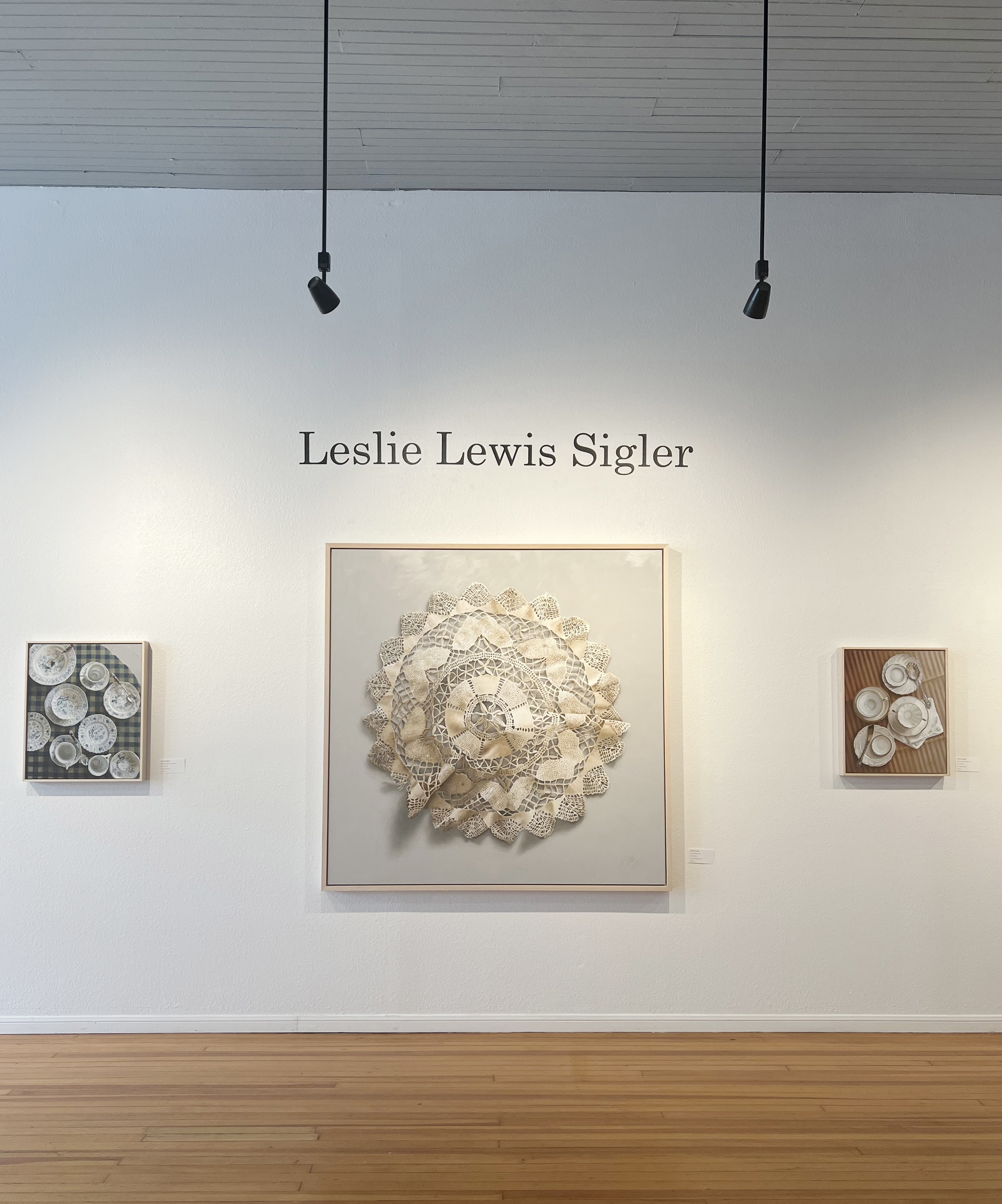
Leslie Lewis Sigler, Homecoming, courtesy Commerce Gallery
By Victor Sledge, June 12, 2026
Leslie Lewis Sigler’s new solo exhibition, Homecoming, just opened at Commerce Gallery in Lockhart, Texas. The exhibition builds on the themes she’s been exploring since 2011, painting inherited objects often passed down as family heirlooms. But as she returns to Texas, where she was raised, for the first time in years, she’s pushed this work even further into sites of memory and the roles we inhabit as seen through our objects.
“It’s taken on a new meaning as my life takes on new meaning,” says Sigler. “I’ve become a mother. I’m growing a family. I’m teaching my kids about family. It’s always special to me to come home because it’s where the themes of my work are rooted and where those seeds were planted.”
This new exhibition features what are described as “portraits” of the domestic staples you may have taken for granted as a kid: your grandma’s special china, the shiny silverware that only came out on the holidays, for example.
Sigler says, “These things were there, kind of like furniture, in your childhood. They’re in the background. But I feel like my relationship with these things has deepened over time, and they're imbued with a new perspective.”
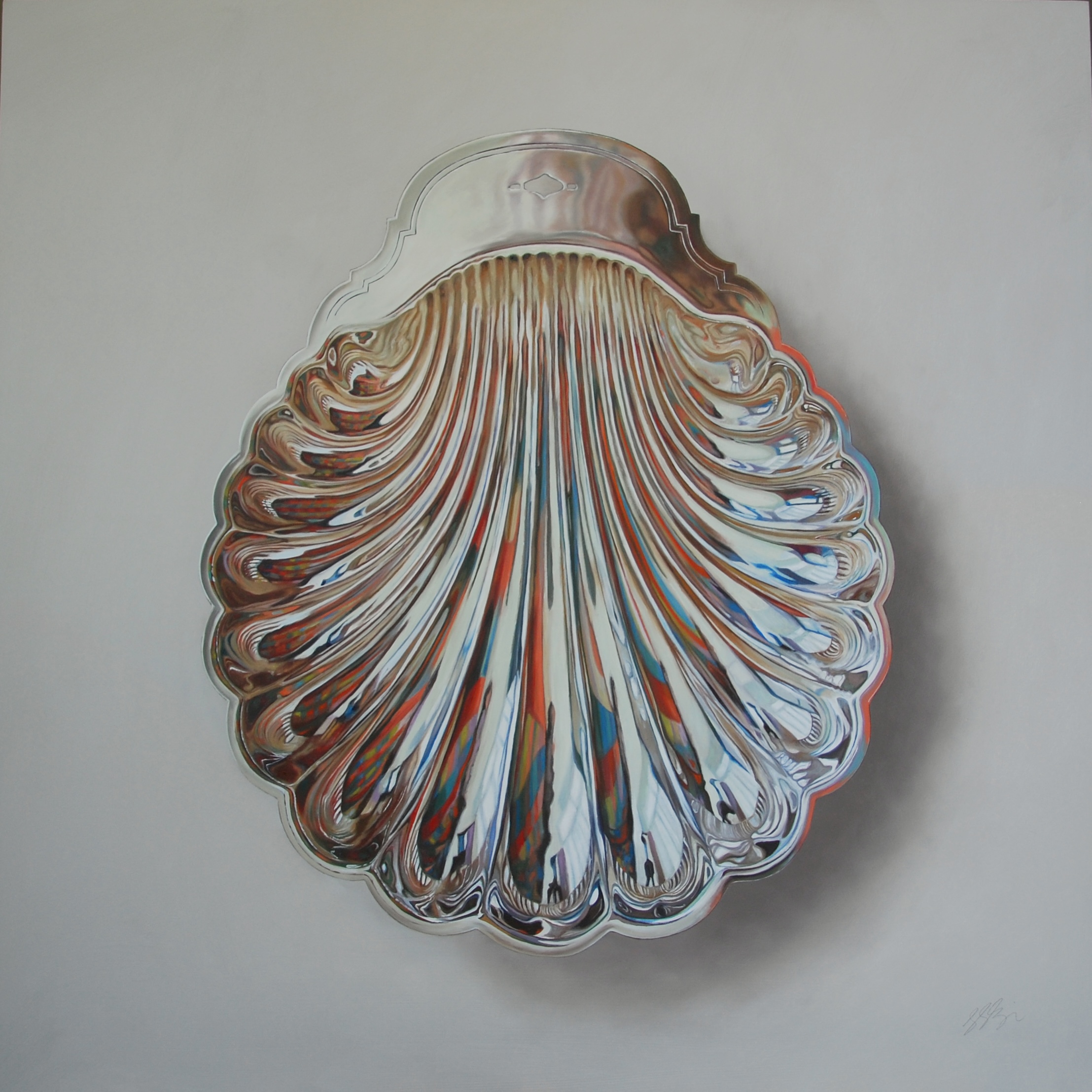 Leslie Lewis Sigler, The Yearner, 2026, Oil on panel, 40x40”
As Sigler has grown from being the child, standing on her tiptoes to see the objects laid out on the kitchen table, to being the mother who puts them there, the utensils and kitchenwares she uses for this exhibition started to feel more like tools used for something bigger than a meal.
“These were the things that were used to gather people. Whether it was hot dogs and boxed macaroni and cheese or a nice Easter lunch, I just remember these things as the tools we used to gather,” she says. “I think that’s the root of it: connection, gathering, and family. And these different series have grown from that.”
The works in Homecoming feel like snapshots of memories that are both personal and universal at the same time. You see a pattern on a plate or the shape of a fork, and it brings up memories of family get-togethers from long ago. The smells, the tastes and the sounds it brings back feel uniquely yours at first. But what Sigler has found in her practice over the years is that these memories are more shared than a lot of people realize.
“One of my favorite parts of my work is hearing other people’s memories,” she says. “I love not only the connection that surrounds these objects when we’re using them, but also the connections I can make when I share my work with people. It’s a full circle moment.”
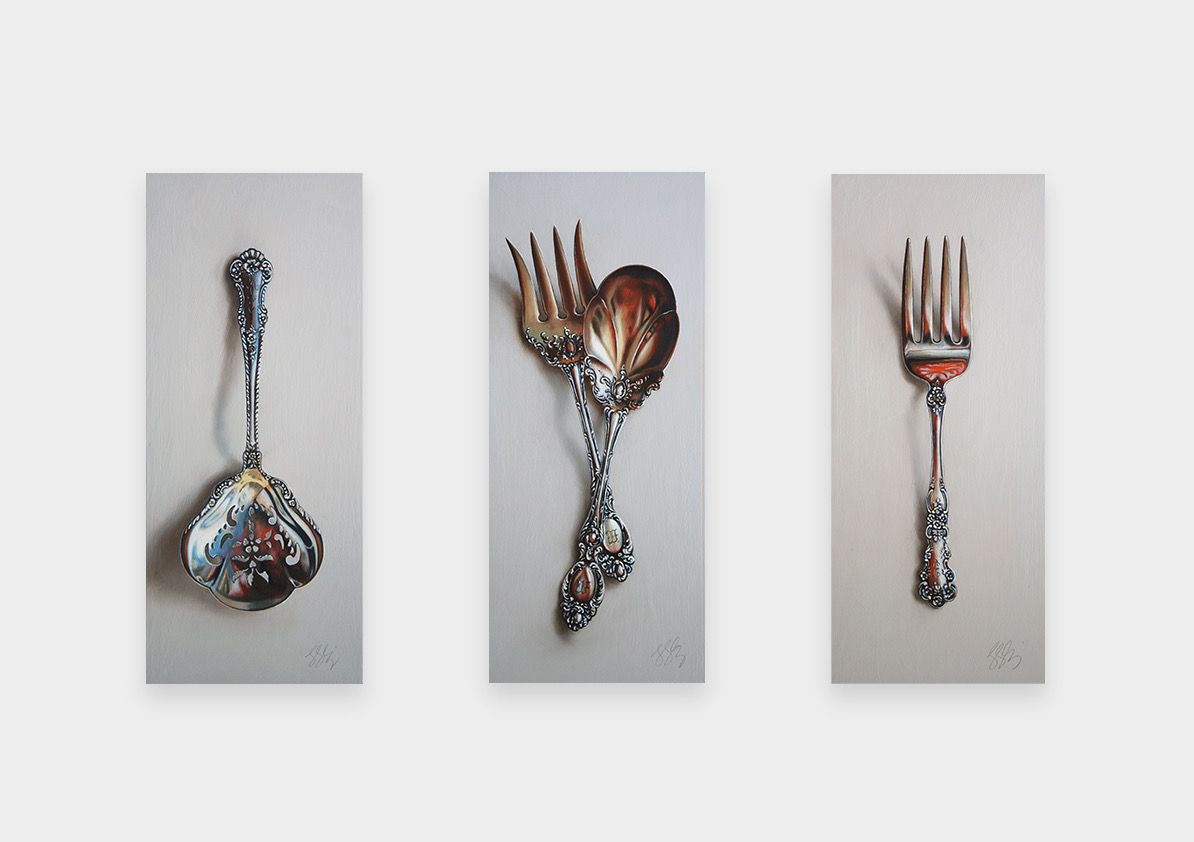 Leslie Lewis Sigler, (left to right) Silver Spoon #285, The Midwife, 2026, Oil on panel, 12x5”; Silver Pair #72, The Soul and The Spirit, 2026, Oil on panel, 12x5”; Silver Fork # 92, The Quarterback, 2026, Oil on panel, 12x5”
That sense of reflection and looking back that Sigler’s work brings out of her audience is a layered and sometimes complicated part of what she does. On one level, for Sigler herself, after she gets a piece to work with, either from her own collection, digging through thrift stores or borrowing things from friends, she’s literally looking at her own reflection in the item to help her decide how to paint it. It’s an artistic choice she makes in any reflective portrait she has.
“I compose the reflection as much as I compose the painting as a whole,” she explains. “I’m photographing the objects and manipulating the reflection with what I’m wearing. I’m constantly collecting things that have colors that may make good reflections. I can look at all of my reflective paintings and find myself in them.”
But on another level, Sigler creates deeper experiences of reflection for the audience as well. For example, her work has traditionally played with these items being archetypal members of a family. A small, awkward spoon could be a bumbling toddler, or a big teapot could be a grandfather. With the work in Homecoming, though, she’s started to use the pieces to capture moments rather in addition to characters.
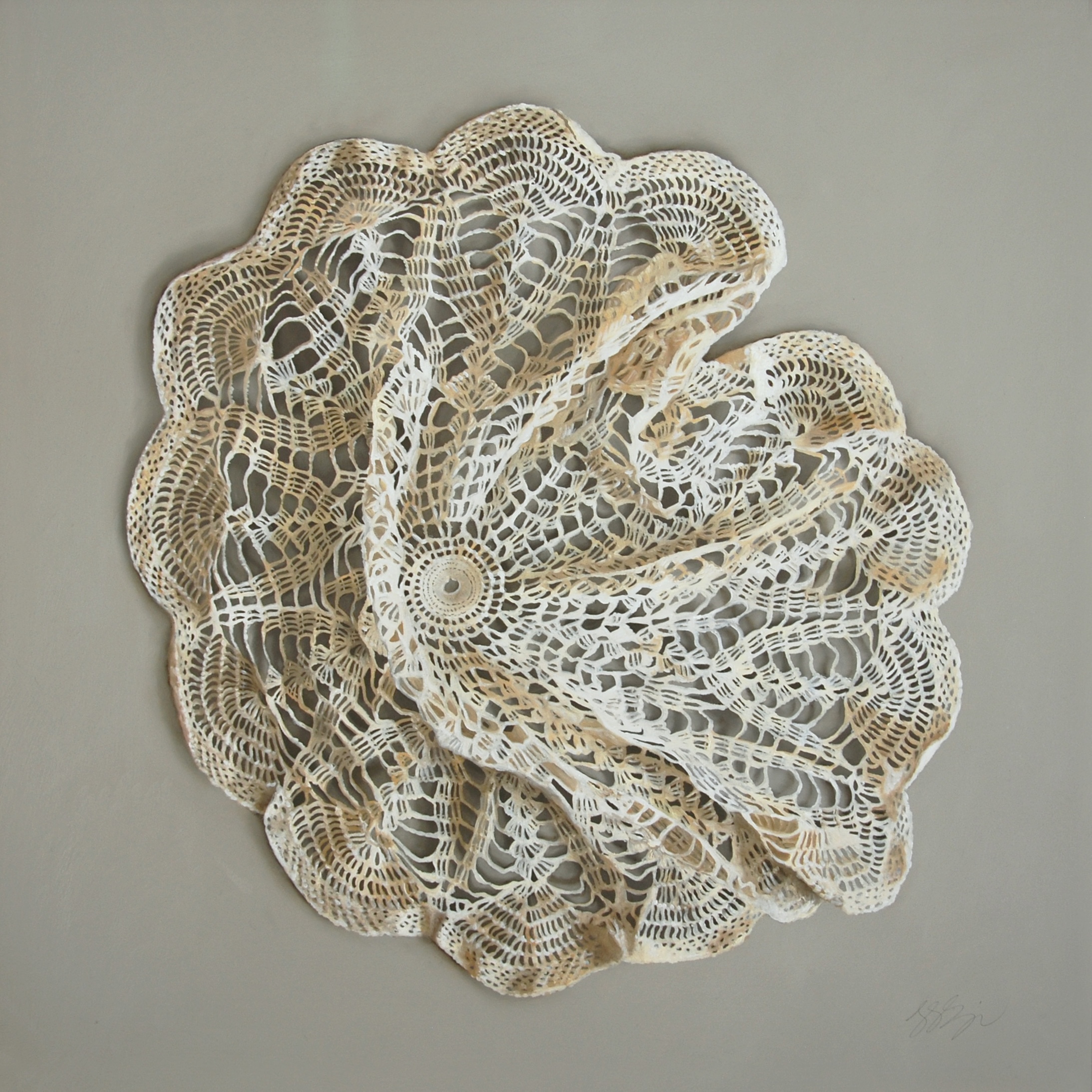 Leslie Lewis Sigler, For Crying Out Loud, 2026, Oil on panel, 24x24
She says, “Now when I see them, I think about the lives that are reflected in them that would’ve been gathered around a table.”
In this exhibition, you see tablescapes that feel like candid snapshots of a table you’d see if you showed up to a family dinner too early. It’s this feeling of eagerness—to gather, to talk, to laugh, whatever the case may be that led you there so early—that these paintings capture balancing both precision and openness.
“It’s the moment when you’re expecting people to join you,” Sigler says. “There’s no food and no evidence of life because it’s capturing this moment of anticipation right before you gather.”
She adds on to that feeling of anticipation in how she’s titled these tablescapes. Remember Where You Came From, and Make Your Cake and Eat it Too—the titles themselves are soundbites from the table conversation the scene is set for. They come from the hard conversations and funny quips we often find around the kitchen table. And she’s done something similar in the show with her doily portraits, titling some of those For Crying Out Loud and If You Know You Know. The titles feel interrupted, and the doilies themselves feel disheveled and a little off-center in the portraits, deliberately so.
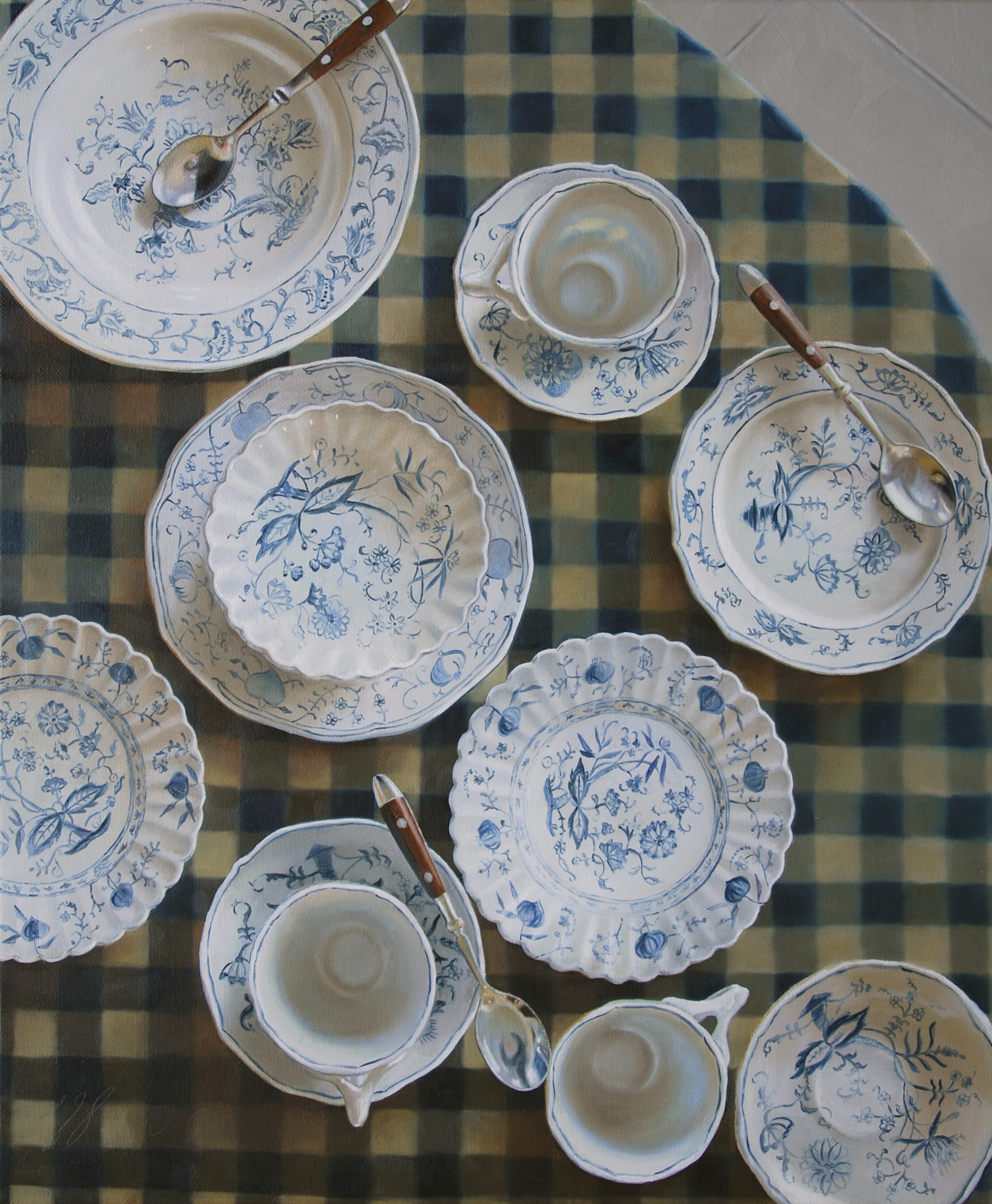 Leslie Lewis Sigler, Remember Where You Came From, 2026, Oil on linen, 24x20”
“That’s what being a mom is like,” Sigler explains. “You can see the life in these things. You can see what it’s been through. The tears, stains, and creases. These became significant to me because they reminded me of mothers, these things that are so delicate and beautiful and have a purpose.”
So the imperfections you see in the doilies and the titles, it’s yet another part of how Sigler has layered this exhibition to reflect what we see happening in our own homes right now and years ago, as our own roles have changed. The work in Homecoming brings these experiences back in and allows you to sit and speak with them. Sigler says that it could be nostalgic for some and heavy for others, but it’s the opportunity to be still and feel whatever comes that creates the connection with these paintings.
“There’s something about this time in history where everything is so fast-paced,” she says. “These items are things of the past, but things we can still relate to and understand that they’re objects of connection. In a world where everything is so fast-paced, these things make you slow down a bit.”
Homecoming will be on view until June 30th, and you can learn more about Sigler by visiting her website and following her on Instagram @leslielewissigler_artist

Victor Sledge
Victor Sledge is an Atlanta-based writer with experience in journalism, academic, creative, and business writing. He has a B.A. in English with a concentration in British/American Cultures and a minor in Journalism from Georgia State University. Victor was an Arts & Living reporter for Georgia State’s newspaper, The Signal, which is the largest university newspaper in Georgia. He spent a year abroad studying English at Northumbria University in Newcastle Upon Tyne, UK, where he served as an editor for their creative magazine before returning to the U.S. as the Communications Ambassador for Georgia State’s African American Male Initiative. He is now a master’s student in Georgia State’s Africana Studies Program, and his research interest is Black representation in media, particularly for Black Americans and Britons. His undergraduate thesis, Black on Black Representation: How to Represent Black Characters in Media, explores the same topic.