Whitehot Magazine
October 2026
"The Best Art In The World"
"The Best Art In The World"
October 2026
Culture as Infrastructure: What the Art World Already Knows About Which Cities Survive
By PRISCA PAN April 3rd, 2026
There is a thesis the art world has long accepted that urban planners and tech philanthropists have yet to fully reckon with: culture is not what a city produces after it becomes prosperous. Culture is what makes a city worth prospering in. The distinction sounds semantic. The consequences are not.
Across the last three decades, a set of cities made deliberate bets on cultural infrastructure at moments when conventional wisdom said they could not afford to. What followed, in each case, was not a soft improvement in civic mood. It was measurable, compounding economic and social transformation. The cities that understood art as a form of long-horizon capital investment are still drawing people, talent, and money toward them. The ones that treated culture as a line item to be trimmed are still explaining the aftermath.
San Francisco, once the western hemisphere's most storied incubator of counterculture and creative risk, is in the process of learning this the hard way.
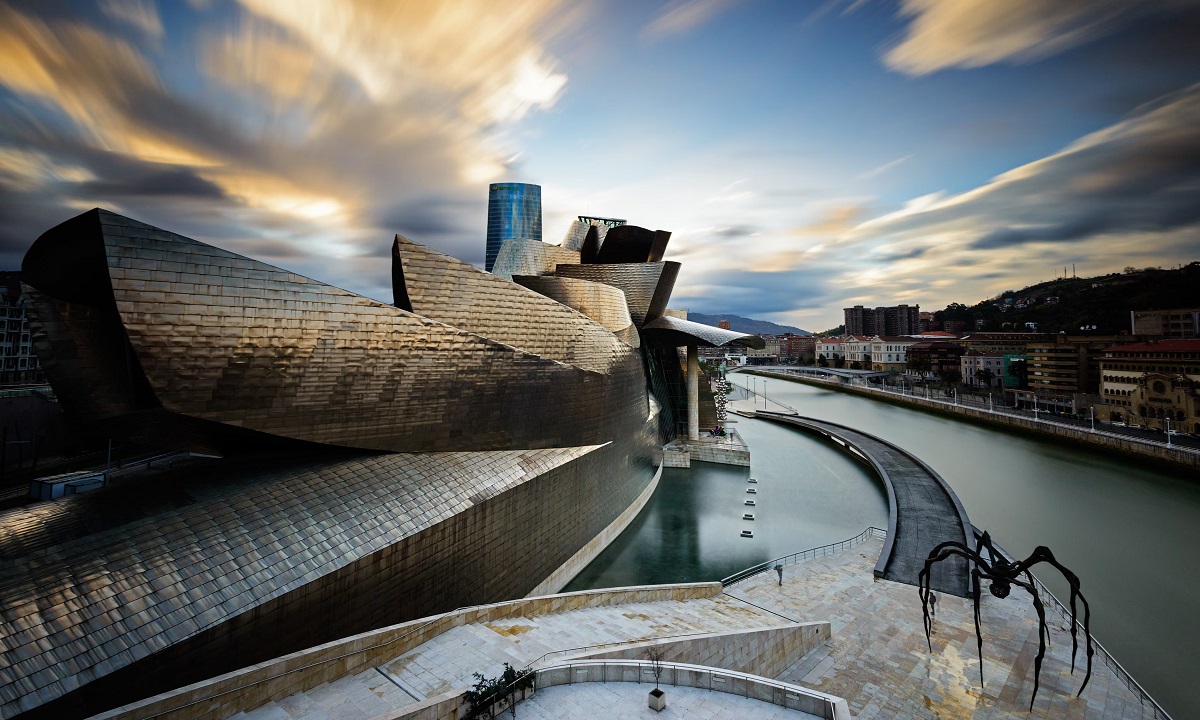 Guggenheim Bilbao
The Bilbao Lesson, Properly Read
The Guggenheim Bilbao opened in 1997 to a city that had no obvious claim on international relevance. Post-industrial, politically scarred by decades of ETA violence, absent from most maps of European cultural life, Bilbao was, by most reckonings, a place the future had passed by. Frank Gehry's titanium building changed that calculus so thoroughly that it now has its own terminology: the Bilbao Effect.
The numbers are well documented. The $100 million investment repaid its construction cost within five years. The museum now contributes approximately €400 million annually to the regional economy and sustains over 9,000 jobs. Cultural events in the city multiplied from fewer than eighty per year to over a thousand.
But the Bilbao Effect has been catastrophically misread. Delegations traveled to the Basque Country at a rate of 58 per year through the 2000s, returned home, and commissioned their own iconic buildings, expecting transformation to follow - it mostly did not. The Guggenheim was one of 71 elements in a coordinated urban regeneration plan: new metro infrastructure, a redesigned airport, reclaimed public promenades along the estuary. The Basque government chose to deploy its unusual fiscal autonomy on culture as a deliberate engine of economic development, not as a downstream reward for it. The building was the symbol. The commitment was the cause.
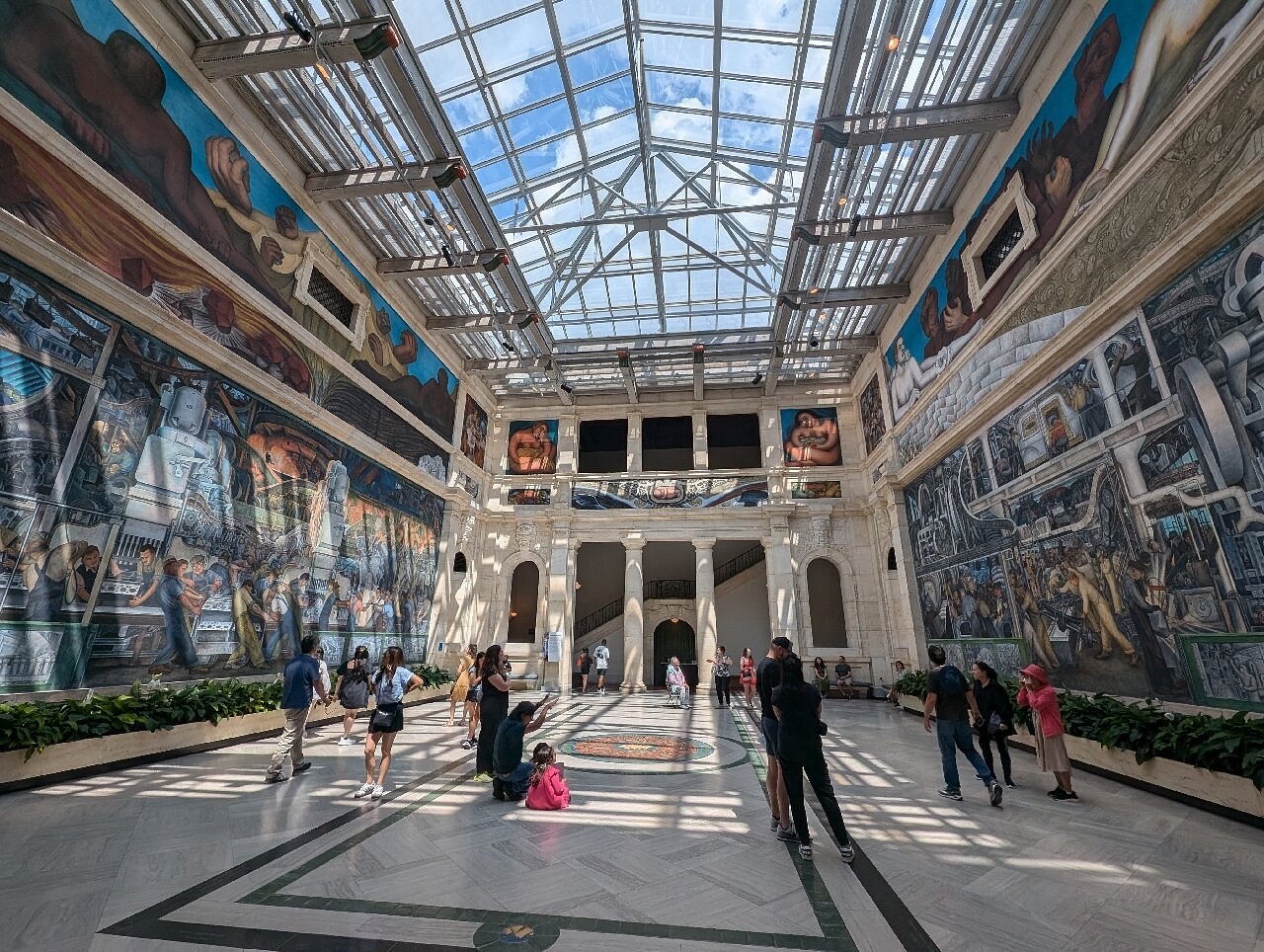 Detroit Institute of the Arts
Detroit and the Politics of Cultural Survival
Detroit's relationship with its own cultural institutions tells a more instructive story. The Detroit Institute of Arts holds one of the most significant collections in the United States, including Diego Rivera's Detroit Industry Murals, works that factory workers physically mobilized to defend in 1932. What followed across the latter half of the twentieth century was a methodical dismantling of that commitment. By the early 2010s, the DIA received no state funding at all. In 2013, when Detroit filed for the largest municipal bankruptcy in American history, the collection was briefly positioned as a liquidatable asset.
The recovery came not from the government but from residents of three surrounding counties who voted to tax themselves, approximately $20 annually per household, to sustain the museum's operations. They renewed that commitment in 2020 with substantially greater support. Between 2011 and 2015, a period in which Detroit was losing employment overall, arts sector jobs grew by ten percent. Revenue from arts organizations rose forty percent in the same window.
Culture did not follow Detroit's recovery. Culture led it.
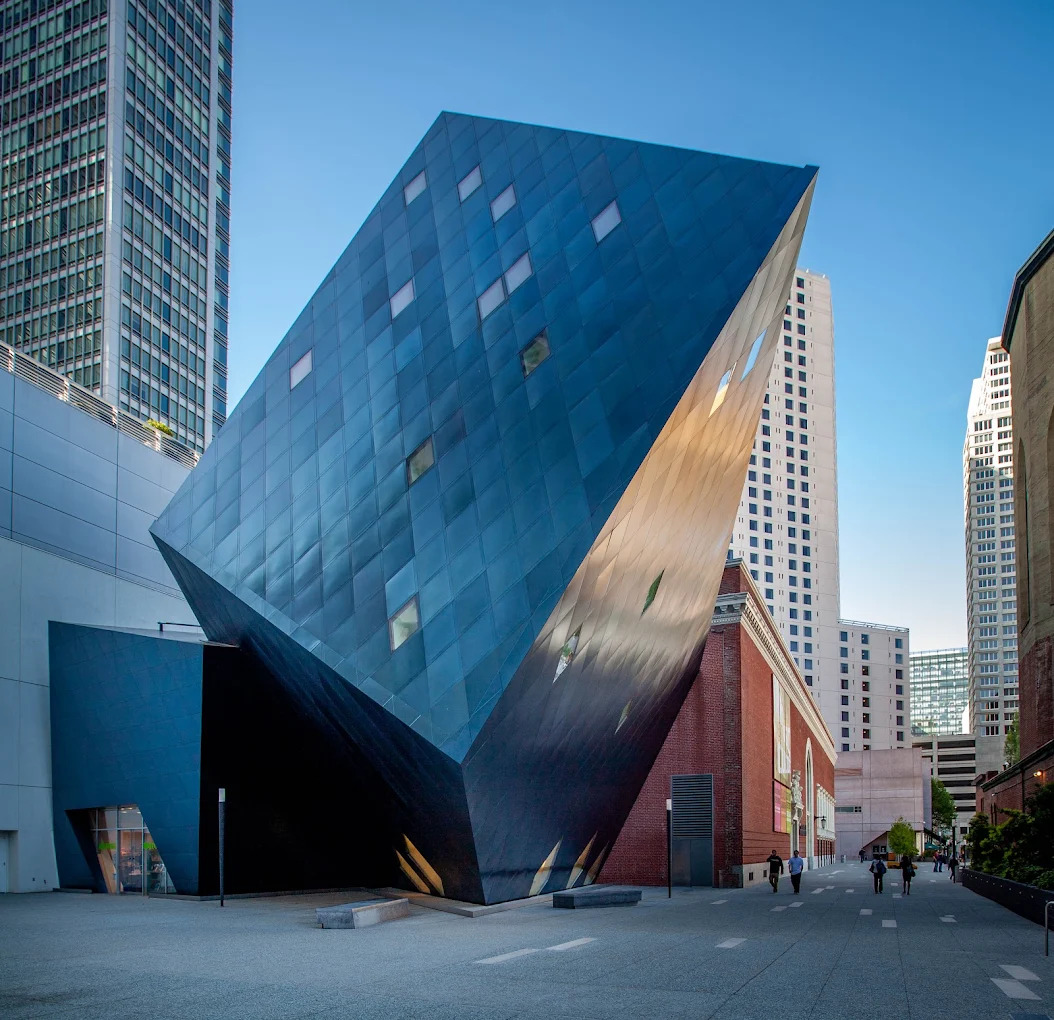 San Francisco Jewish Museum
San Francisco: The Live Experiment
San Francisco presents the most uncomfortable iteration of this argument because it is unresolved and its audience is implicated.
This is a city whose global identity was built on cultural production - The Beat poets, The Summer of Love. The political muralism of the Mission. The queer arts infrastructure that survived the AIDS crisis and became a model of community resilience reproduced nowhere else in the world. San Francisco's creative identity was not a byproduct of its prosperity. It was the precondition for it.
The nonprofit arts sector here generates $1.45 billion in annual economic activity and supports nearly 40,000 jobs. Cultural tourism accounts for a further $1.7 billion in annual visitor spending. Arts and culture function not as amenity but as load-bearing infrastructure. And that infrastructure is being quietly dismantled. The Contemporary Jewish Museum closed indefinitely in late 2024. Philharmonia Baroque lost its Grants for the Arts funding entirely. At least 28 organizations had federal NEA grants terminated or clawed back. California ranks 35th nationally in per capita arts funding.
The city made a gesture: in 2018, voters approved Proposition E by a 75 percent majority to fund Cultural Districts, three million dollars annually. Against the structural pressures of a city where a one-bedroom apartment runs $3,000 per month, this is not policy - it is acknowledgment dressed as intervention.
You do not lose a city's cultural identity in a single event. You lose it venue by venue, organization by organization, until the thing that distinguished the place from every other cluster of capital and ambition is simply no longer there.
The Capital Problem, Properly Framed
Mega galleries have recognized the gap. Gagosian and Pace have made sustained efforts to court the Bay Area's new wealth. Hauser & Wirth arrives in San Francisco this spring. The gallery infrastructure is moving toward the money. The money is not moving back, not at the scale that would constitute a genuine response to what is being lost.
The standard explanation is a values mismatch: tech optimizes for transparency and legibility, while the art market operates on opacity and relationships inaccessible to outsiders, this explanation is incomplete. Venture capital is structurally identical to the art market. It runs on information asymmetry, opaque networks, values that cannot be explained to the crowd, early believers get access. Late entrants pay the premium, in its essentials, it is the same model.
The missing variable is fluency. The art world's information asymmetry runs on relationships that take decades to build and taste that cannot be reverse-engineered from a dataset. Tech wealth navigates opacity fluently when it has built the system. It struggles as a newcomer, when entry is not granted by pitch deck or warm introduction, when the price of admission is cultural knowledge accumulated over time.
The cities that understood culture as capital are compounding. San Francisco, the wealthiest city in the history of the world by several measures, is presiding over the slow erosion of the infrastructure that made it worth being wealthy in.
That is not a cultural observation. It is an economic one, and it is still not being treated as an emergency.
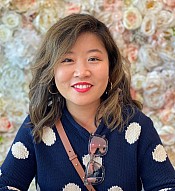
Prisca Pan
Prisca runs Unfram_d, an art advisory working at the intersection of culture and capital, helping a new generation of collectors build thoughtful, investment-grade art collections. She writes about cultural permanence, art as infrastructure, and what wealth looks like beyond liquidity at The Uncommon Angle.
view all articles from this author