Whitehot Magazine
August 2026
"The Best Art In The World"
"The Best Art In The World"
August 2026
Kazuhito Tanaka: Picture(s)
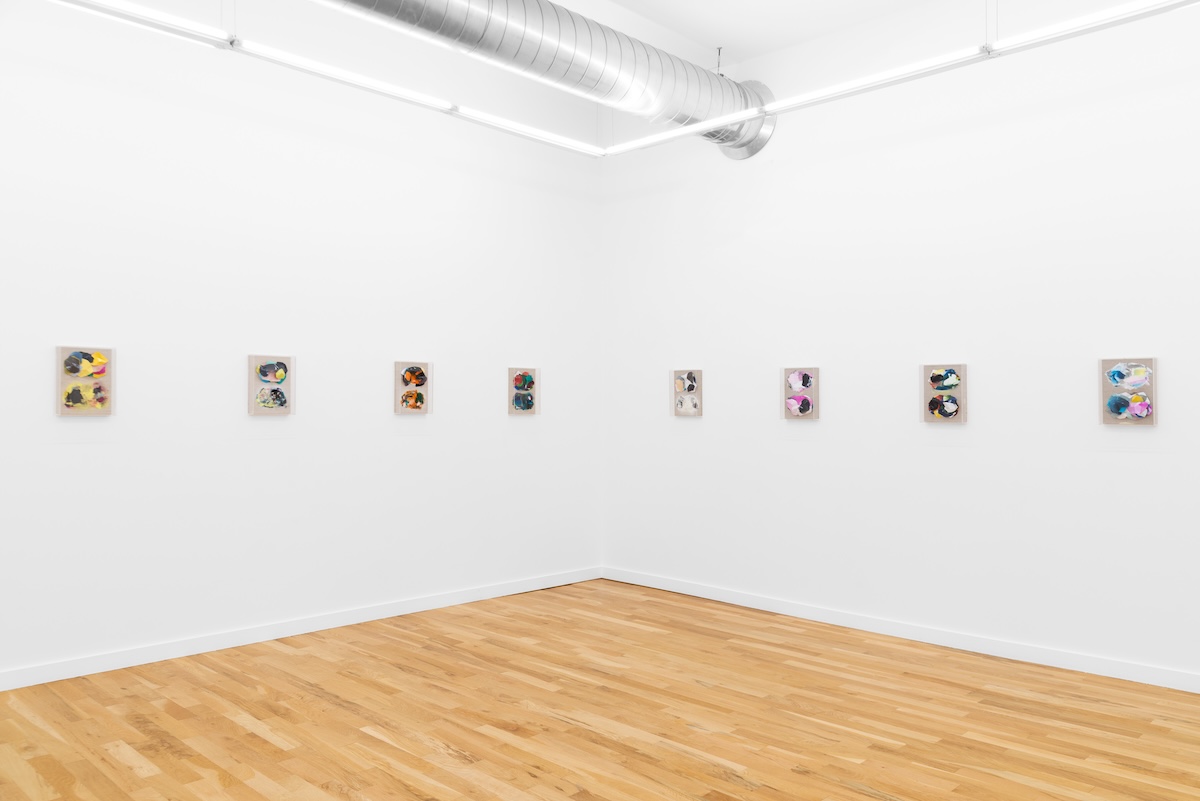 Kazuhito Tanaka, Picture(s), installation view at DOCUMENT Chicago, 2026.
By ESME GRAHAM August 7th, 2026
Kazuhito Tanaka’s exhibition Picture(s) at Document features juxtapositions on canvas. One section of each of the twenty-one canvases displays pieces of chromogenic photographs collaged together; the boldly-colored fragments form amorphous, cloud-like shapes. In the other half, these colors are echoed in paint. While the colors contained in these oblongs are similar—indeed, from across the gallery the difference is barely perceptible—upon closer inspection the difference in medium is revealed. The paint lies flat on the canvas and does not have the same glossy sheen as its counterpart, among other discrepancies. Lined neatly at eye level throughout the gallery, each canvas continually instigates this brief act of deciphering. The canvases are flipped intermittently throughout, sometimes the paper is on top, sometimes the paint is. Thus, the viewer cannot get complacent in this exhibition, which interrogates how different mediums function as representational devices.
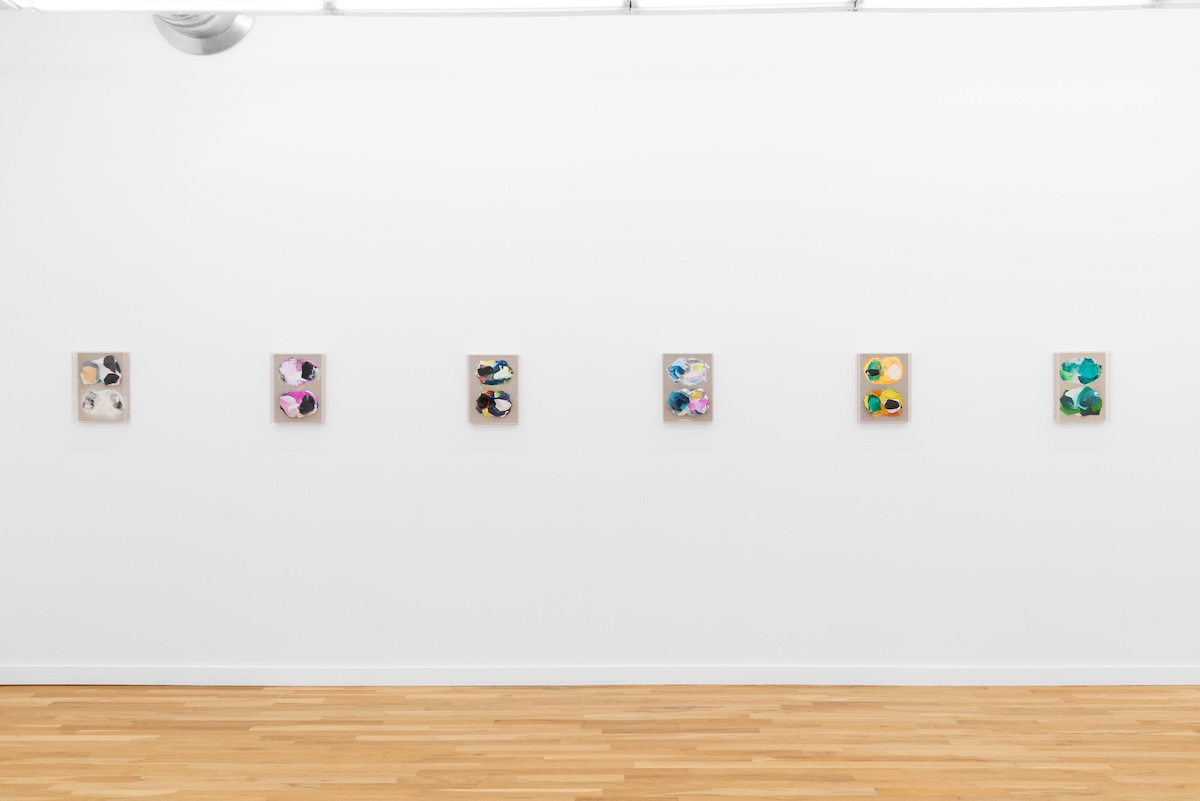 Kazuhito Tanaka, Picture(s), installation view at DOCUMENT Chicago, 2026.
This exhibition is a meditation on how paint and photography function as mimetic devices, and how these representational systems can break down. The collaged chromogenic photographs have a twofold actually-there-ness: firstly, as photographs, they are beholden to exactly replicate the subject that they capture. Secondly, the torn fragments of paper are a physical object that can then be depicted. Indeed, the paper lifts above the canvas in certain spaces, emphasizing its dimensionality, its status-as-model. However, as abstracted shards, the photographs cannot actually depict any decipherable subject. Mimicking the colors of the collage, the paint thus becomes a secondary interpretive device. Here, the paint cannot, or does not, exactly replicate the colorful glossy paper of the other half. The paint is not applied in a manner meant to evoke photorealism, but instead captures how the colors lay on top of each other or blend together. Perhaps that discrepancy calls attention to the shortcomings of paint or photography as a means of representation, but, more likely, it presents alternative ways of seeing and depicting what is there. What emerges here, throughout these multicolored bisected canvases, is a complicated investigation on the nature of depiction.
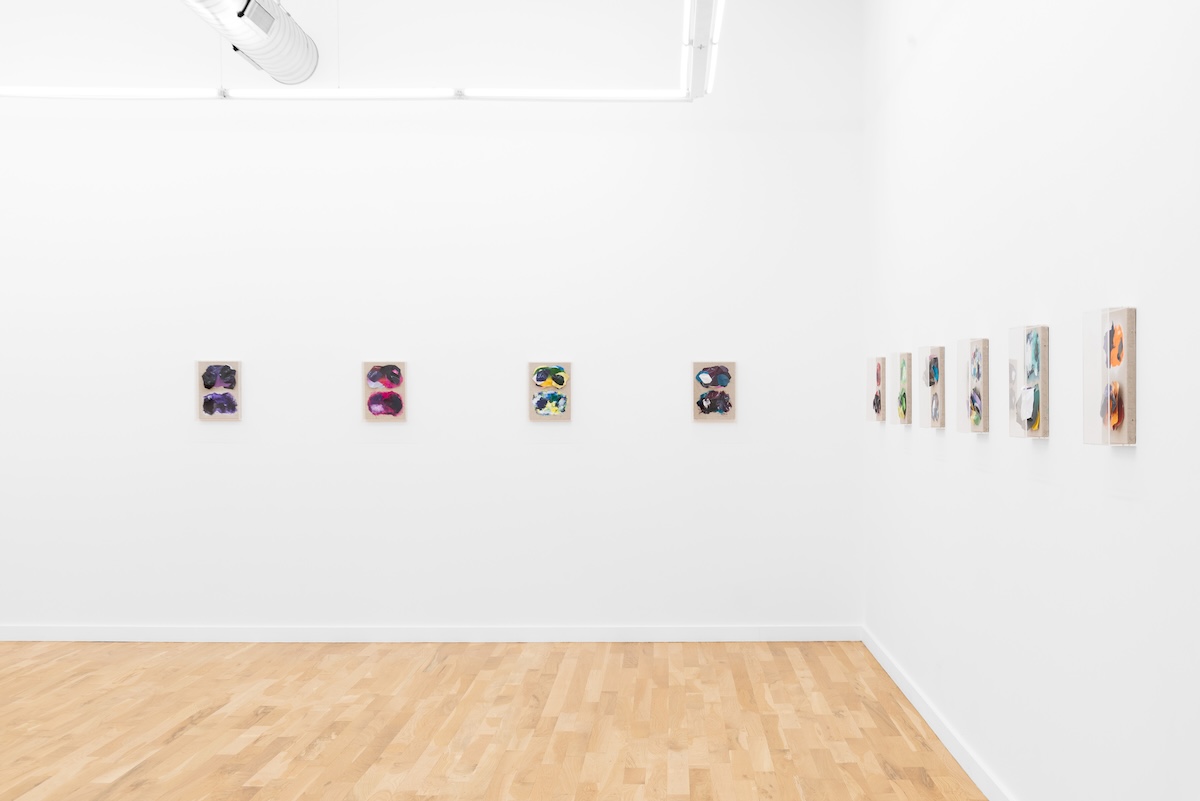 Kazuhito Tanaka, Picture(s), installation view at DOCUMENT Chicago, 2026.
Picture(s) reveals the way in which mediums can collapse, and fashions a loop of representation. Photography and paint double in on each other. What is so impressive about the exhibition is how each individual object carries itself visually while supporting this sophisticated interrogation of the act of depiction. The aesthetics of the artworks do not suffer because of its conceptual weight. As a musing on the nature of color, Tanaka also succeeds, the color palettes are varied and pleasing. Ultimately, Picture(s) presents a sophisticated de-and-reconstruction of some of the tools available to artists.
Kazuhito Tanaka
Picture(s)
Document Gallery
June 12 - August 15

Esme Graham
Esme Graham is a writer and critic based in Chicago. A graduate of Carleton College, she is currently studying Art History at the University of Chicago with a focus on Modern and Contemporary Art.
view all articles from this author