Whitehot Magazine
October 2026
"The Best Art In The World"
"The Best Art In The World"
October 2026
Painter Karen Iglehart is Having a Moment
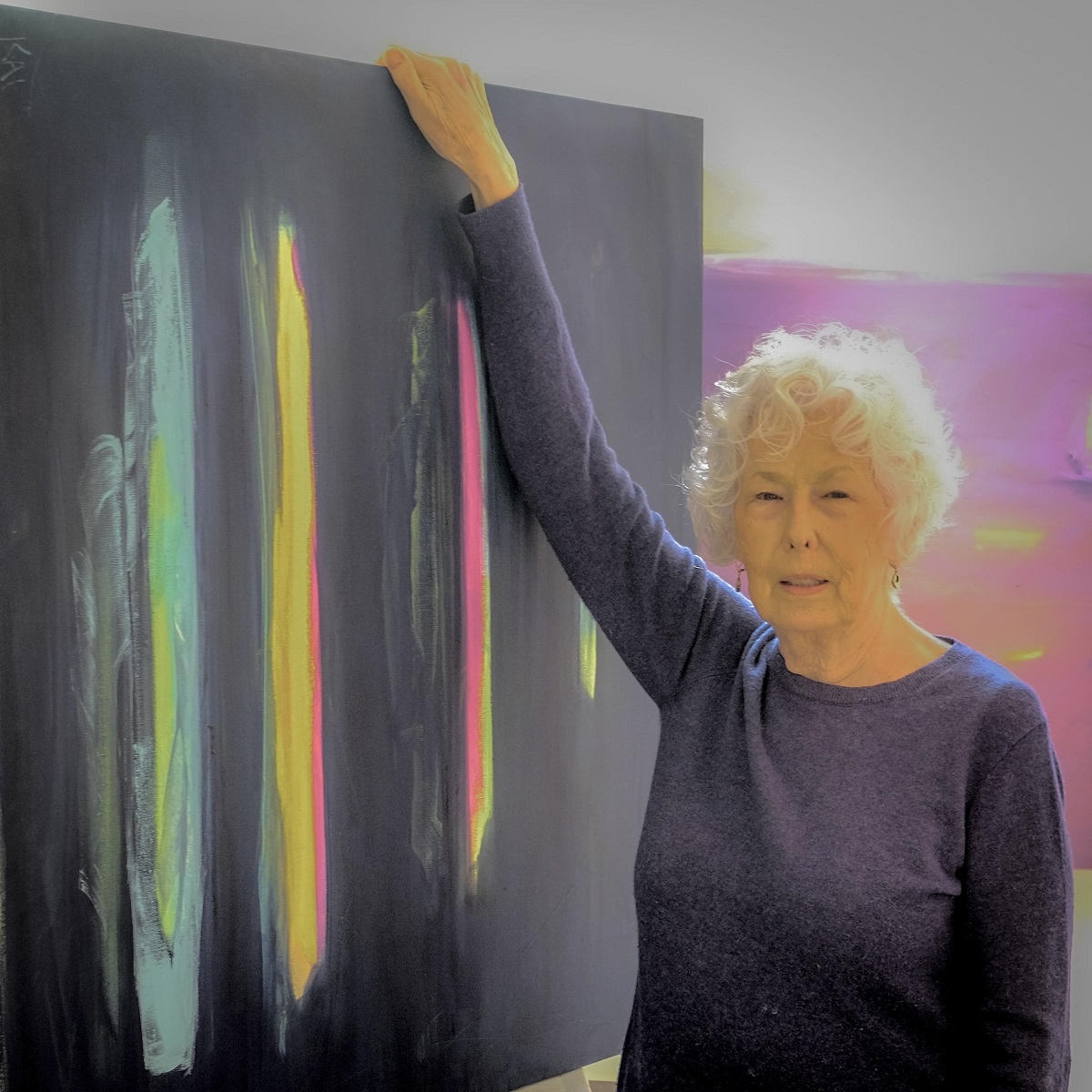 Painter Karen Iglehart with one of her works.
By NOAH BECKER October 1st, 2026
How did growing up with two artist parents influence the way you understood painting and the life of an artist?
First of all, there were regular conversations about Cezanne, my mother’s favorite, and Rembrandt and Michelangelo, my father’s favorites. She painted loose landscapes and he painted portraits. Boring for a teenager to have to sit for portraits! He paid us! I also grew up with the smells of linseed oil and turpentine in the house, and therefore I never considered working in anything but oils.
My father was a successful, independent photo retoucher (airbrush) who did work for Harper’s and Vogue magazines. He retouched Richard Avedon’s and Art Kane’s fashion photos, knew Andy Warhol and got our Siamese cat from Warhol. When I wanted to intern for one of his photographer friends, he nixed it and said I should go to college and get a teacher’s degree! So I majored in art and psychology and was an art therapist for a few years. Then went to grad school in art. He said the art world was a jungle and didn’t want me in it. He was right, but here I am, with a strong work ethic.
My mother, whose work was good, used palette knives a lot for her landscapes. She wouldn’t approach galleries out of fear of rejection. That gave me the determination to go for it…not fearing rejection, seeing my work as a profession. I inherited many brushes, palette knives and even oil paints.
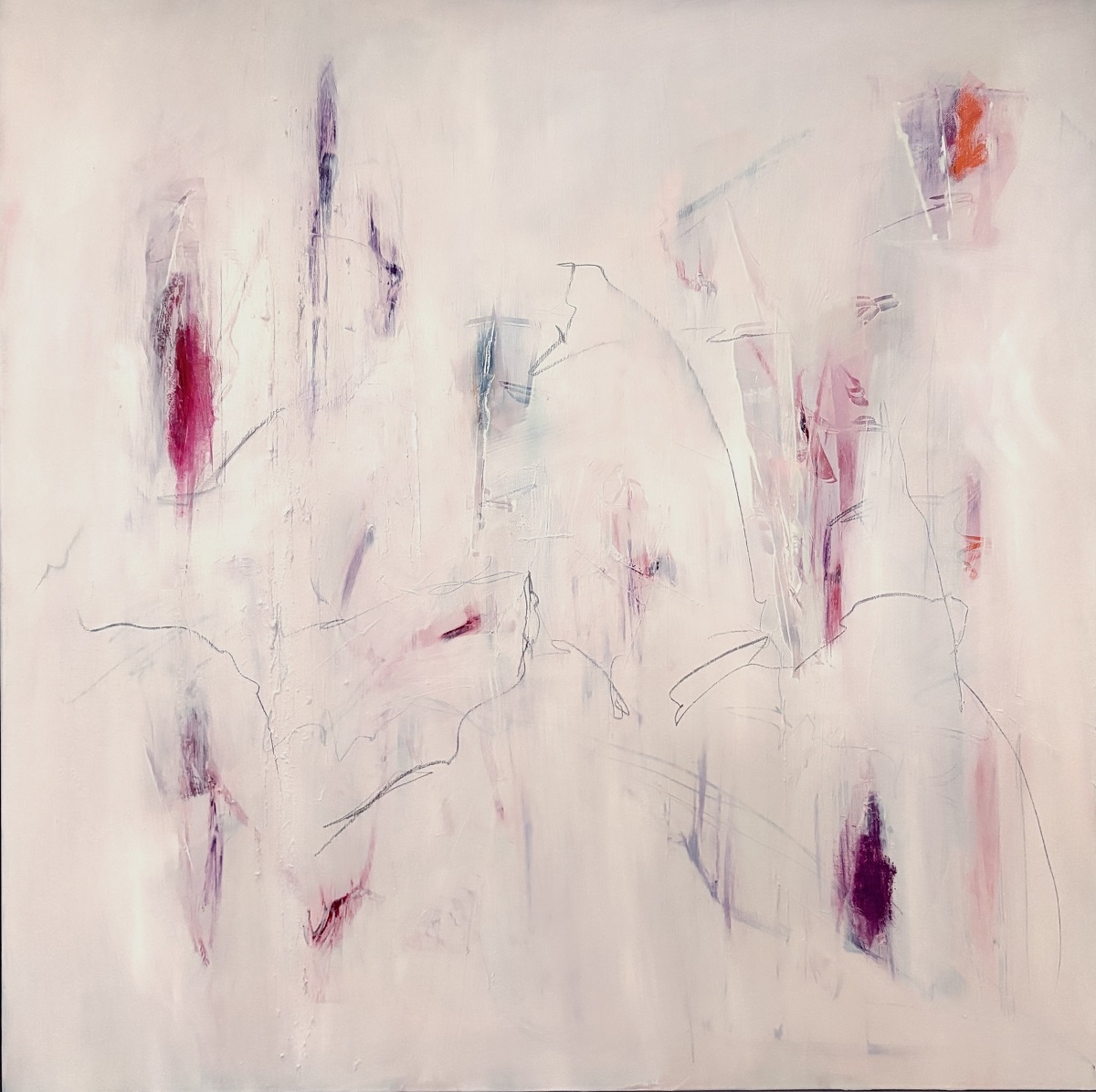 Karen Iglehart, Dissolving Thoughts #3, 36x36, oil on canvas
Your process involves adding paint, scraping it away and painting over it again. How important is destruction or erasure to the development of a painting? What makes you decide that a finished painting needs another life?
That’s a very different idea of my scraping away. I see it as adding to the painting. Using color and pattern that lies beneath, emerging as another element. Allowing a hidden part to be seen. It has become an important part of my process and there has to be something underneath to work with. Which is why I love painting over previous paintings. It isn’t giving a painting another life; it’s creating a totally new painting with memories and fragments of its past life.
You describe movement and gesture as part of the “subject” of your work. What does gesture communicate that an image or recognizable subject cannot?
Seeing the movement of colors, seeing the brush or swipe of a palette knife is activity that isn’t confined by a shape or form. So it becomes what is happening on the canvas, therefore the “subject.” I hope that the viewer is curious and sees the activity going on. Maybe it moves the viewer’s eyes around in an unpredictable way. And there is form in a large swipe of color.
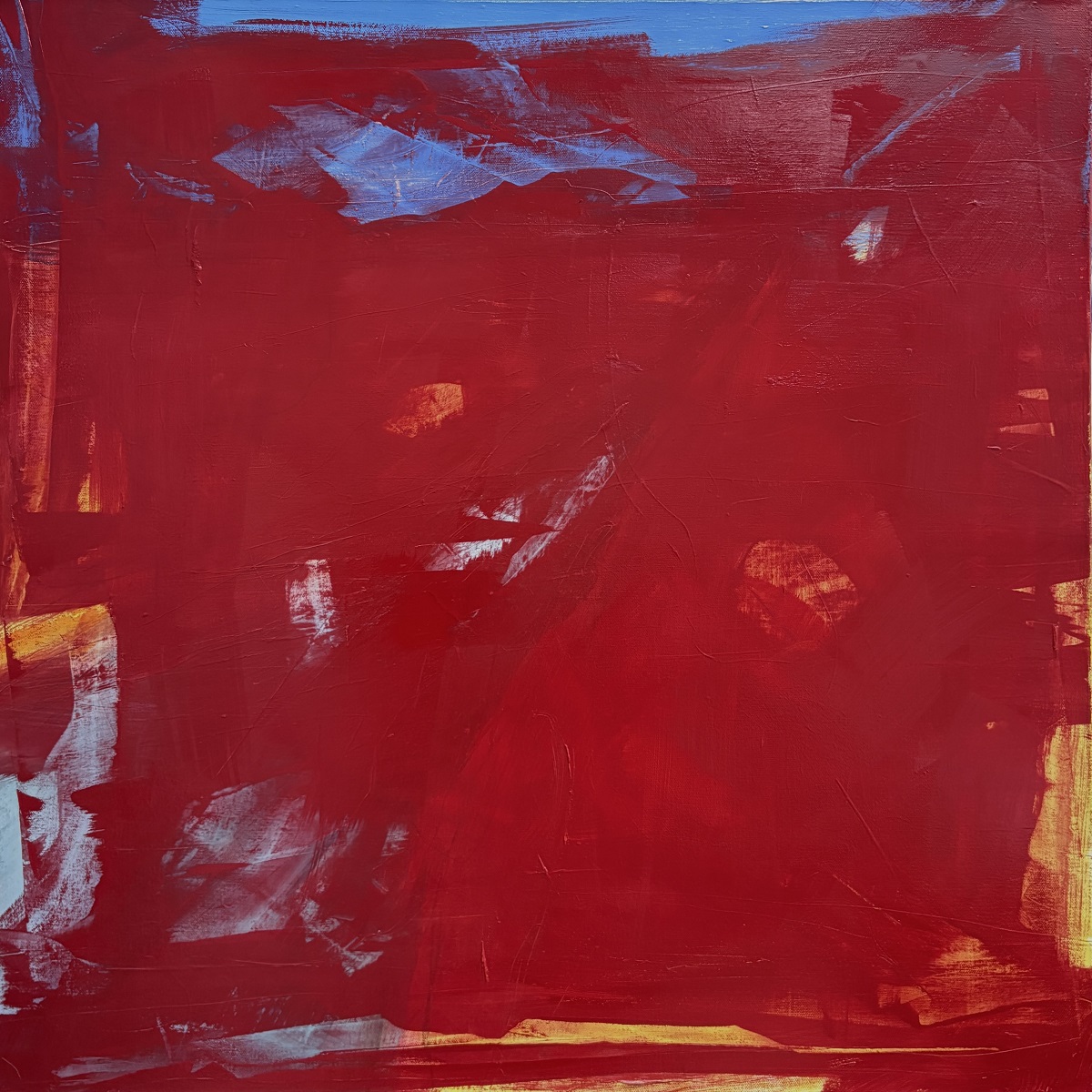 Karen Iglehart, Caught By Thoughts, 30x30, oil on canvas
How has practicing Buddhism for 40 years changed the way you approach the act of painting?
Not sure it changed anything, because my approach has been pretty consistent for years. First of all, Buddhism teaches the concept of Impermanence. Everything changes, our thoughts, opinions…nothing is forever. We are born, we die, we can’t hold onto things permanently. So when I am working, I am doing my best with whatever ideas, colors, forms I am considering. I am not trying to create a masterpiece, just working out my challenges for the moment. Sometimes I am happy with the day’s work and next day come in and laugh…well, it really doesn’t work! Or I can leave a painting thinking it is “nowhere” and next day or week I see what it needs and add or subtract and Voila…it’s good. I use a wall in my studio for “maybe finished” so I can decide to keep or work more, etc. I have the view that nothing is really finished so I am not attached to my “precious” work…impermanence and non-attachment.
You’ve said that you want your paintings to create a space where the mind can stop or at least pause. Do you think abstraction can function as a kind of meditation for the viewer?
Yes, if there is space to look and see what might be there, and the viewer is not confronted with many forms or objects, it allows slowing down, deeper breathing, and possibly contemplating details, marks that are not immediately apparent. Hopefully it quiets the mind, especially if there is no storyline. And maybe it elicits curiosity.
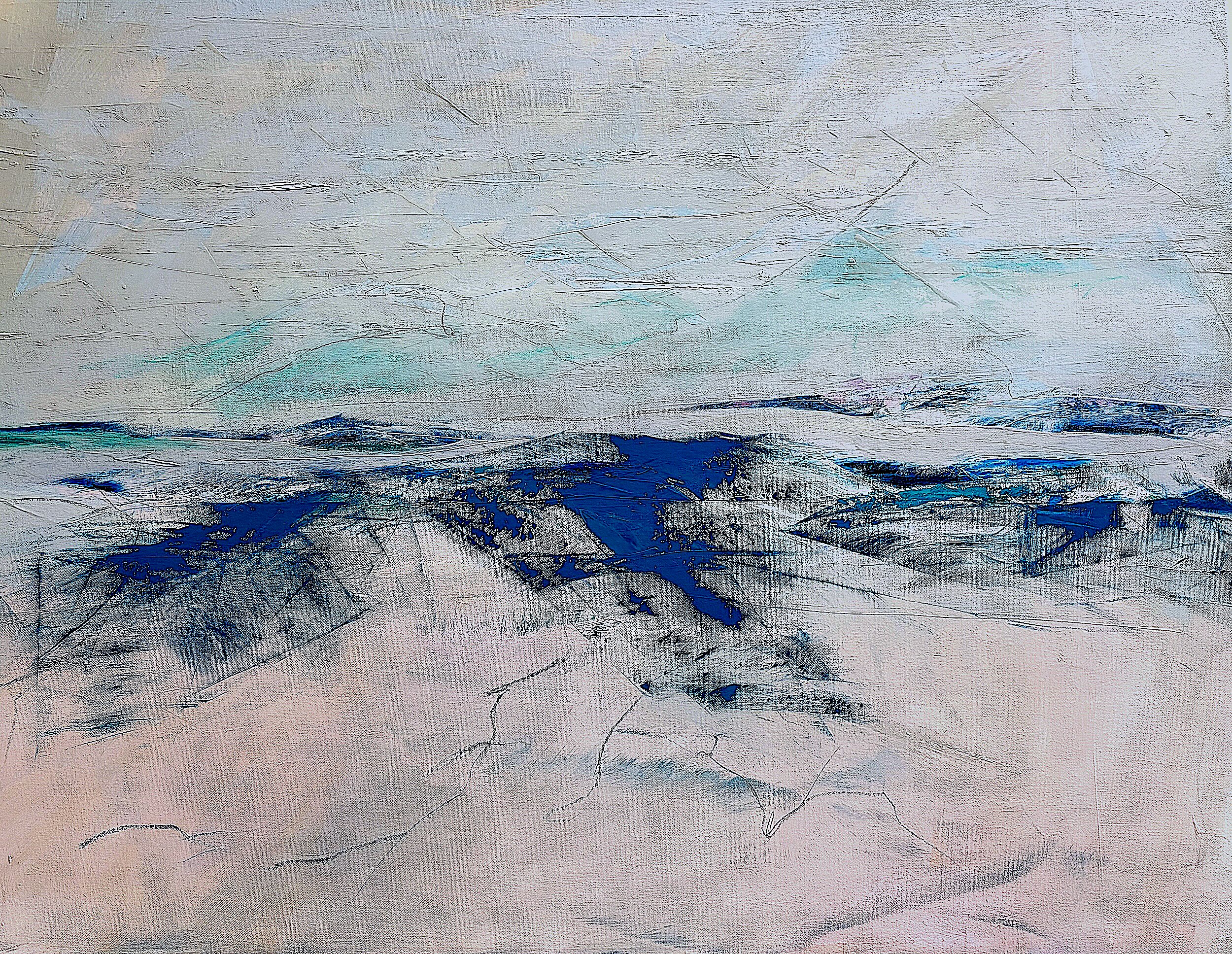 Karen Iglehart, Fleeting Thoughts of Place #1, 30x40, oil on canvas
We live in a culture of constant images, information and stimulation. Is making quiet, contemplative paintings a response to that environment?
It’s not really a response. I live in a very quiet rural area so the busy world isn’t really a day-to-day condition. I have been doing non-discursive paintings for years. I am hoping to share that with those who don’t have a peaceful environment. I have often had people at art fairs stand and look at my work and comment on how peaceful my work is, and how they appreciate that. The intensity of our current environment encourages me to continue and offer what silence or slowness I can.
When you’re painting, you describe the outside world disappearing as you focus on color, gesture and space. How do you know when a painting has captured that state?
When I come into my studio I turn on heat (in winter), then turn on music. Then clean my glass palette. Then I look around at what is on my walls. I probably have one or two I am working on, but I look around, with a kind of “sneak peek” energy. Does any painting irritate me? Is there one that feels complete and finished? Is there a color that I really like, or is something missing? It’s tricky working in a minimalist vein…“seeing” often has to be intuitive and less clear. There can be a feeling of YES but then in a week or month I can change my mind. I tend to leave paintings on my walls for at least a month or more, sometimes much longer…until I am sure nothing needs to be changed. Then it feels right and complete, but as my mind moves and changes so will my opinion of a painting a year or more later.
I also have music on all the time, of various genres. Sometimes I stop painting to dance, and when I turn back to the canvas I have new eyes and might see something different from before. I never paint to the mood of the music. I play music to match my mood.
Artists such as Rothko, Franz Kline, Helen Frankenthaler, Milton Avery and Richard Diebenkorn have influenced you. How do you absorb those histories without allowing them to overwhelm your own visual language?
I have been attracted to, or connected with, different aspects of each. Some from a time I wasn’t painting…HS, college.
Franz Kline…the movement and confidence of his brushwork.
Mark Rothko…color of course.
Helen Frankenthaler…color and her use of space vs. details.
Milton Avery…color and open space, subtleties.
Richard Diebenkorn…how he moves color around, his edges sliding in and out, and his layering color over color.
As I have painted over the years, those aspects reside in my unconscious, I guess. They are not in my thinking process. They are aspects that I connected to and learned from. I have a pretty relaxed mind, especially when I am working, so I don’t think of details of someone else’s painting. If it arises as too close I will change it.
“Inspired by” doesn’t mean copying is OK.
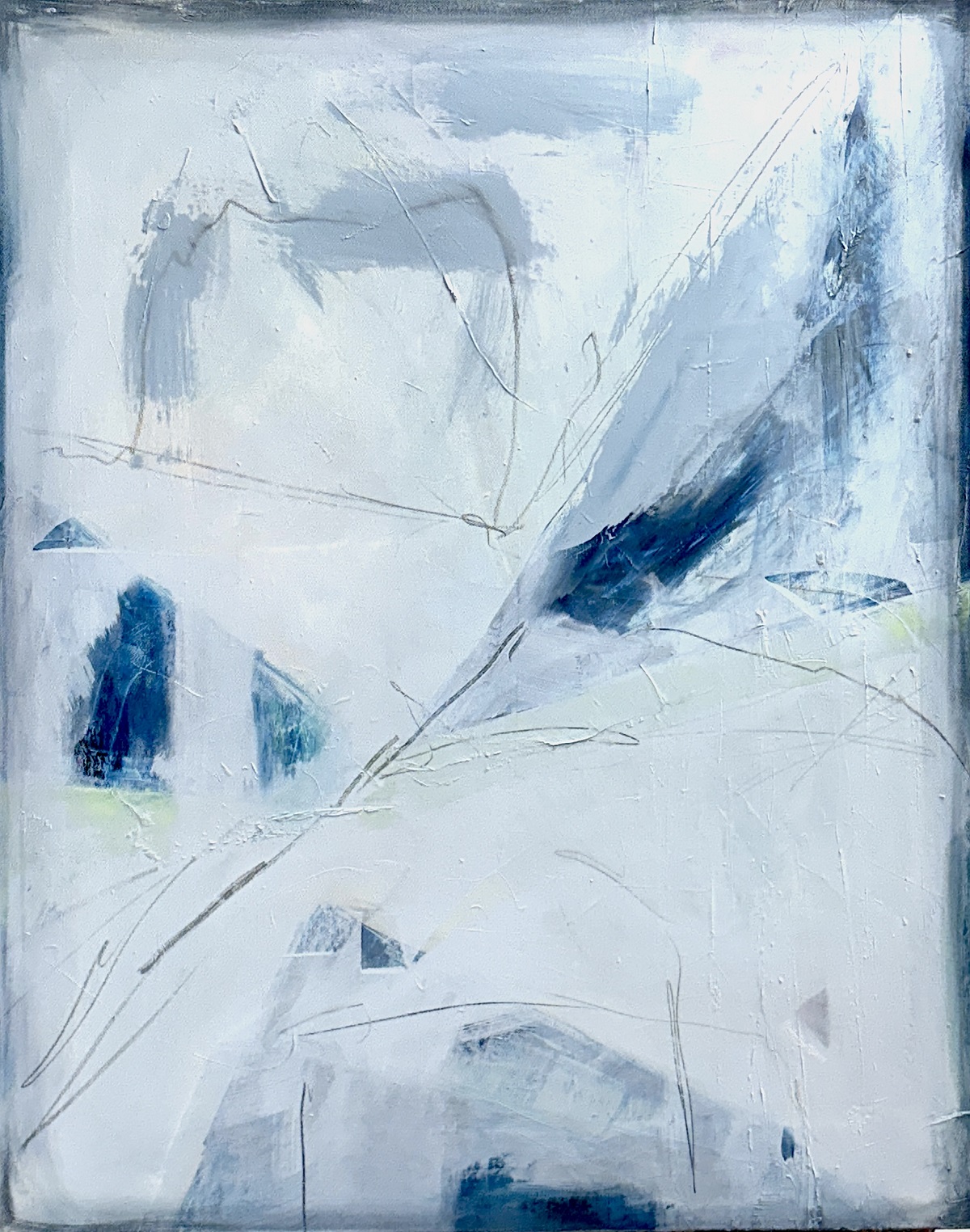 Allowing Space #11, 30x24, Karen Iglehart, oil on canvas
At this point in your career, what are you still searching for when you enter the studio and face a blank canvas?
LOL…often it’s not a blank canvas! But in terms of searching, it is usually what is my next series? Since I work in a series I will have at least 5 paintings all working with a similar intention, framework, etc., so I keep in that arena, trying to develop an idea that is emerging. Then there is usually something that makes me think “oh, that’s interesting.” It could be a few marks, two or three colors working together, etc., but it leads me to the next series. I could start with an underpainting of a color, to see where that leads me. Or I could pull an earlier painting out of storage area and I think…“hmm, are you good enough to save? Can I use those colors to jump off of? Should I just get a new canvas?” There isn’t a plan or predictable approach.
What is important is that I am more clear about expressing my Buddhist view…thoughts move, arise, dissolve, they float in the background, some take over, some keep reappearing. I have been expressing this in the paintings of past few years. My series of Allowing Space, Dissolving Thought, Convergence all are about our moving mind. The Gesture and Movement pieces are really about the movement of emotion and thoughts. I’m curious to see how next series develops.

Noah Becker
Noah Becker is an artist and the publisher and founding editor of Whitehot Magazine. He shows his paintings internationally at museums and galleries. Becker also plays jazz saxophone. Becker's writing has appeared in The Guardian, VICE, Garage, Art in America, Interview Magazine, Canadian Art and the Huffington Post. He has written texts for major artist monographs published by Rizzoli and Hatje Cantz. Becker directed the New York art documentary New York is Now (2010). Becker's new album of original music "Mode For Noah" was released in 2023.
Becker's 386 page hardcover book "20 Years of Noah Becker's Whitehot Magazine of Contemporary Art" drops Aug 8, 2025 globally on Anthem Press.
Noah Becker on Instagram / Noah Becker Paintings / Noah Becker Music / Email: noah@whitehotmagazine.com
view all articles from this author