Whitehot Magazine
October 2026
"The Best Art In The World"
"The Best Art In The World"
October 2026
The Art of Survival: Paz de la Huerta’s Journey from Screen to Canvas
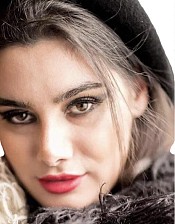
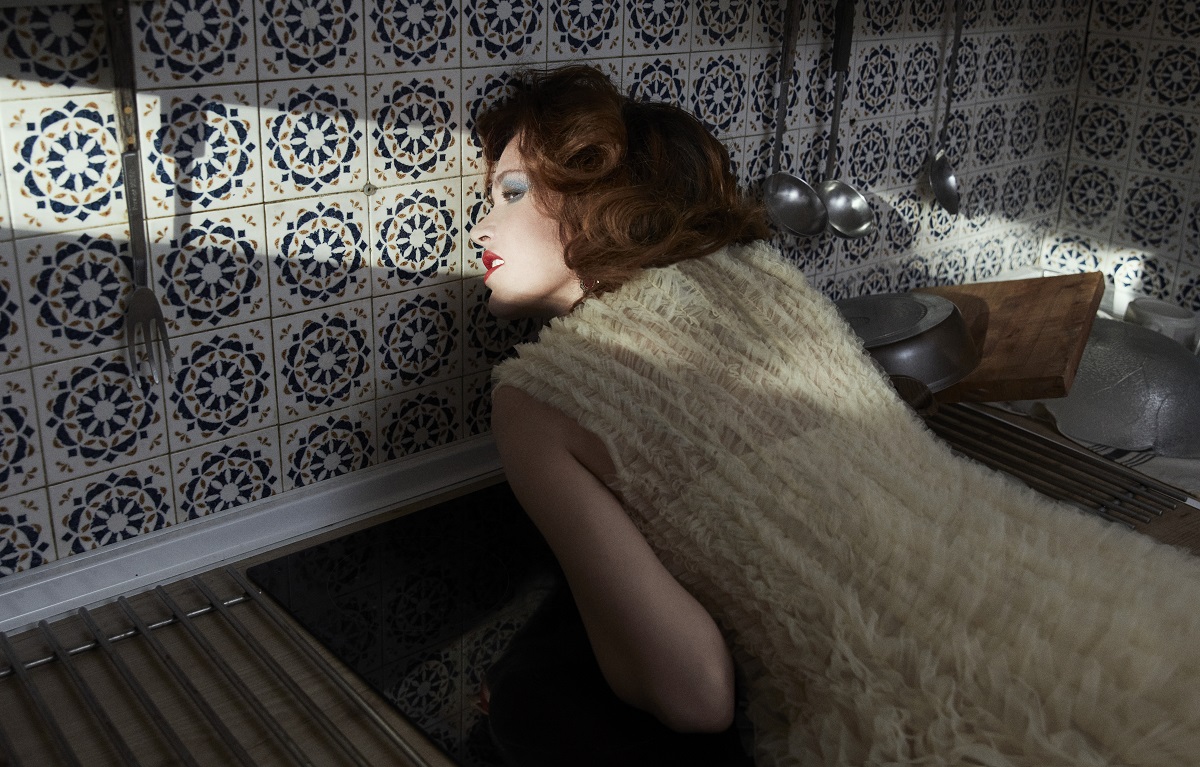 Paz de la Huerta, photo by Rafa Gallar
By ALEXA CAROLINE MODUGNO March 26th, 2026
For decades, Paz de la Huerta has been known as a compelling and unconventional presence onscreen - from her breakout roles in films like Enter the Void and television’s Boardwalk Empire to her early modeling years. In recent years, however, she has quietly and powerfully established herself as a visual artist whose work serves as a deeply personal narrative and creative exorcism.
An Artistic Life Rooted in Memory and Myth
De la Huerta has been painting since childhood, but it wasn’t until adulthood that her canvases began to articulate the internal terrain of her life - a terrain marked by trauma, spirituality, and survival. In July 2024, she debuted a collection of fourteen surreal, emotionally charged paintings at Ruttkowski;68 in Paris, titled El Vallé de Lagrimas (“The Valley of Tears”). The works, executed in watercolor, ink, resin, and oil, blend dreamlike imagery with raw autobiographical elements, presenting visions that are at once fantastical and deeply grounded in lived experience.
Her pieces often look, at first glance, playful or childlike - populated by floating figures, cherubic angels and other cobwebs of imagination - but a closer look reveals something far more complex. Many works are infused with religious symbolism, reflecting her Catholic upbringing and ongoing spiritual grappling, while others confront the darker shadows of her past.
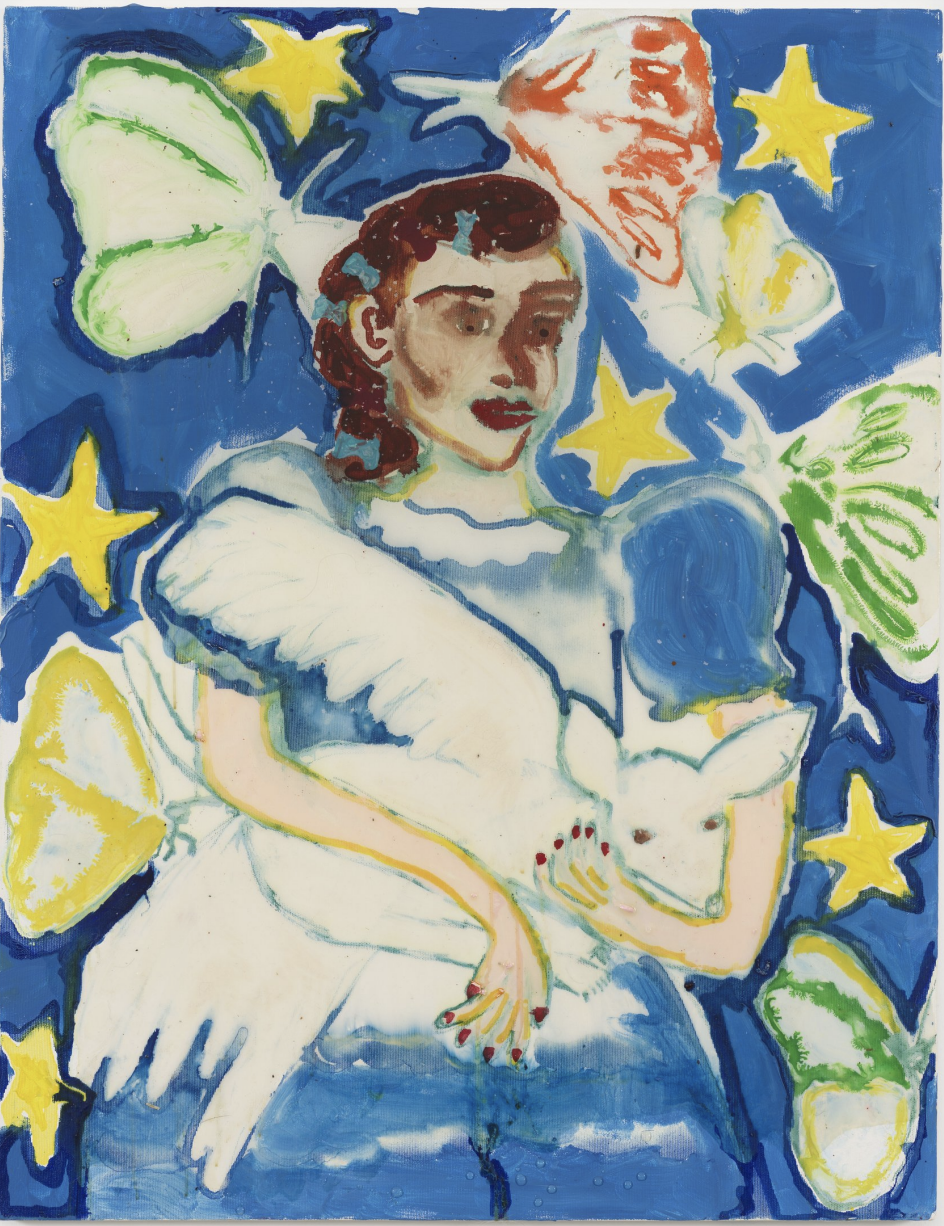 Paz de la Huerta, Mary as the Wounded Angel
Painting Pain: Trauma, Healing, and Witness
De la Huerta’s art has become inseparable from her own narrative of adversity. She has spoken frankly about suffering abuse throughout her life - including experiences of familial abuse and her accusations of sexual assault in Hollywood - and her paintings serve as both testimony and therapy. Her therapist encouraged her to paint as a way to process these experiences; the phrase “I thought I had to grieve you,” inscribed in one work, reflects that therapeutic dialogue literally woven into her visual lexicon.
Works like Oh, Father and How I Replaced Every Memory Of My Evil Mother With The Virgin Mary (as described in her media interviews) lay bare these struggles with figures of authority, memory, and identity. In some pieces, she represents her younger self beside darker representations of her parents; in others, biblical and mystical imagery overlays her personal story, creating a visual language of suffering, redemption, faith, and memory.
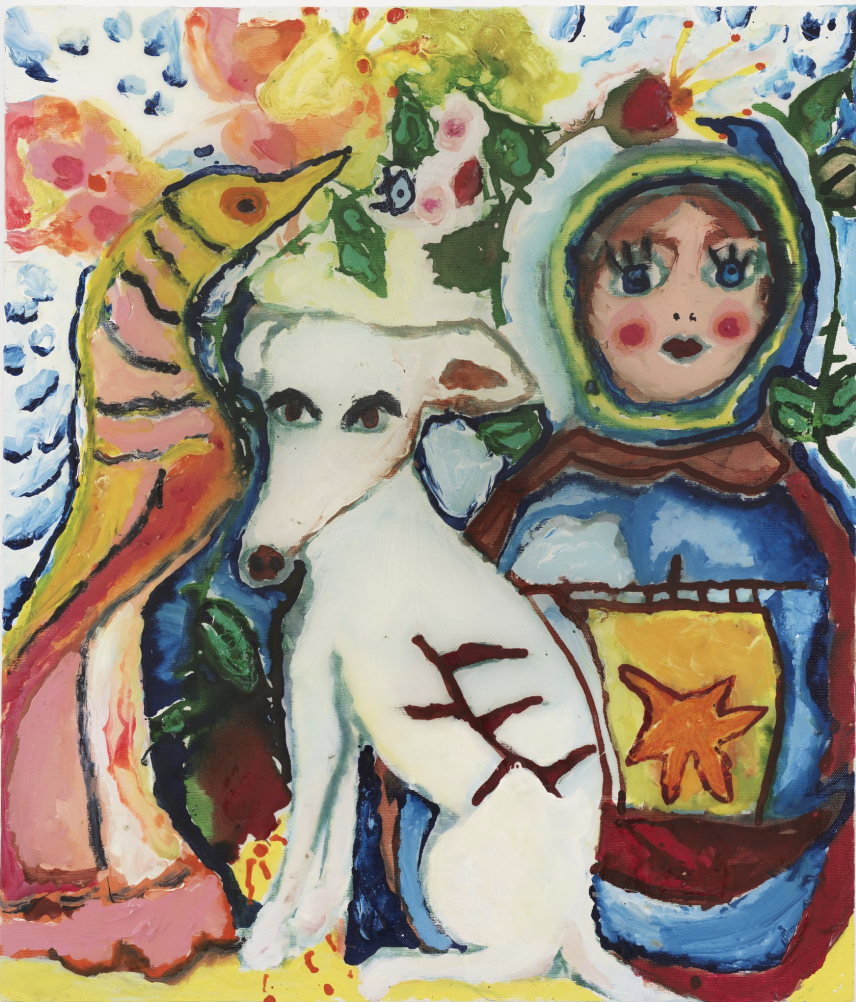 Paz de la Huerta, Ralph as the Wounded Angel
Iconography: Angels, Animals, and Surreal Worlds
Recurring symbols - “crying angels,” children in forests watched over by ethereal beings, and even depictions of an inbred tiger with distinct quirks - populate her work. These figures function as metaphors for innocence, vulnerability, and the long struggle toward healing. Though she has cited influences as disparate as Francisco Goya and Jean-Michel Basquiat, her style retains a singular intensity, fusing vivid color with a sense of psychological immediacy.
Some critics note that her technique - layering watercolor and ink beneath an undulating surface of resin - mirrors her artistic process: uncertain, instinctive, and not fully controlled. The final resin layer hardens the paint, forcing a sort of resolution that mirrors the artist’s own attempt to confront and contain her emotions.
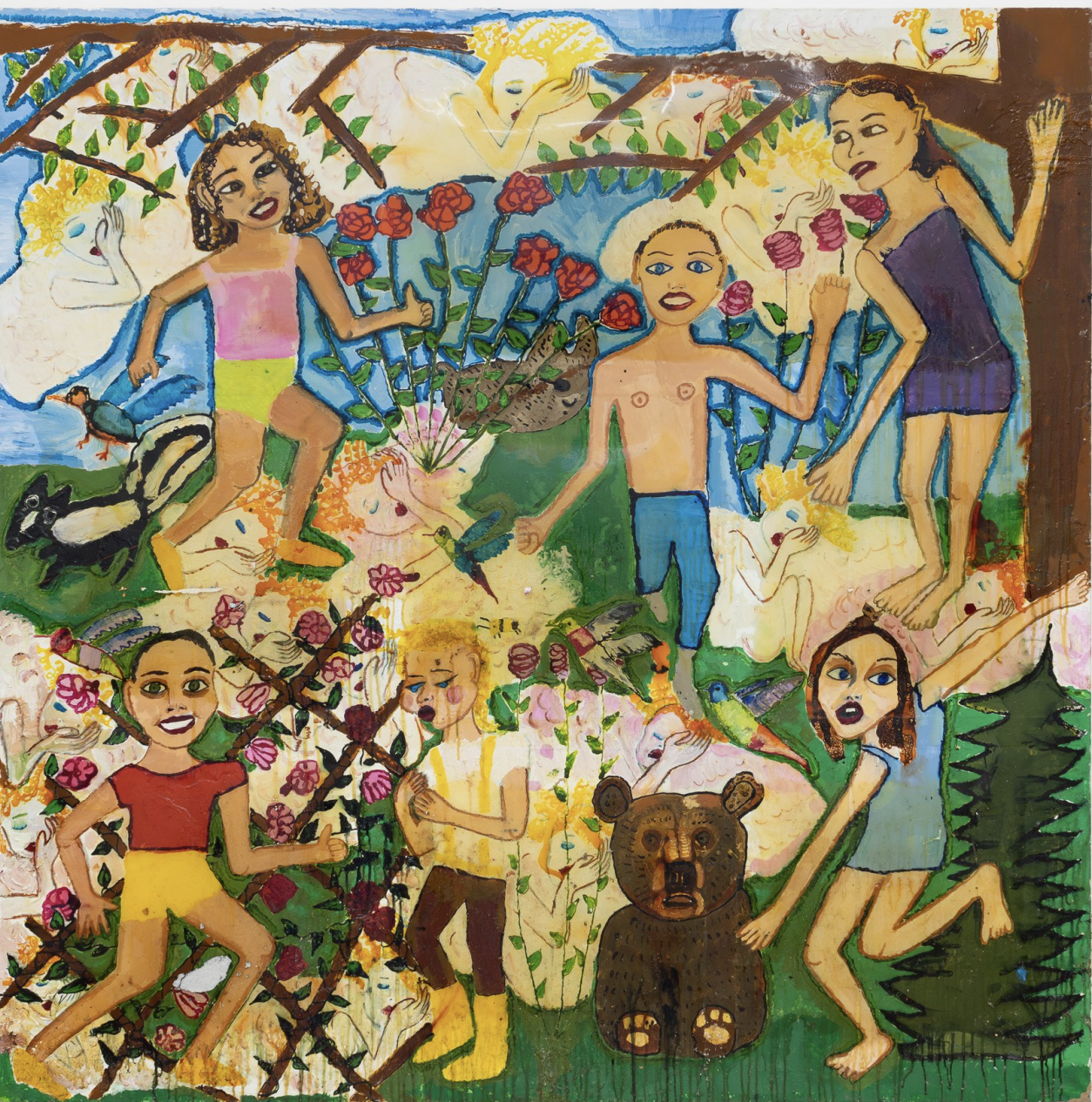 Paz de la Huerta, Fairy Forest
Exhibitions as Personal Ritual
After El Vallé de Lagrimas, de la Huerta continued showing her work, including exhibitions in Los Angeles and Berlin. Shows like Live To Tell with collaborator Jaxon Demme present her oeuvre as intertwined with imagined narratives - princesses, curses, transformation and transcendence - all grounded in lived experience and recovery. A portion of proceeds from these exhibitions has been dedicated to community causes, reflecting her belief in art’s capacity to give back.
In Berlin, her Sacrifice exhibition described her paintings as simultaneously innocent and brutal, urging viewers not merely to witness her pain but to walk with her through it. These shows highlight just how essential the visual work has become to her identity - not just as a former actress, but as someone forging meaning and connection through artistic expression.
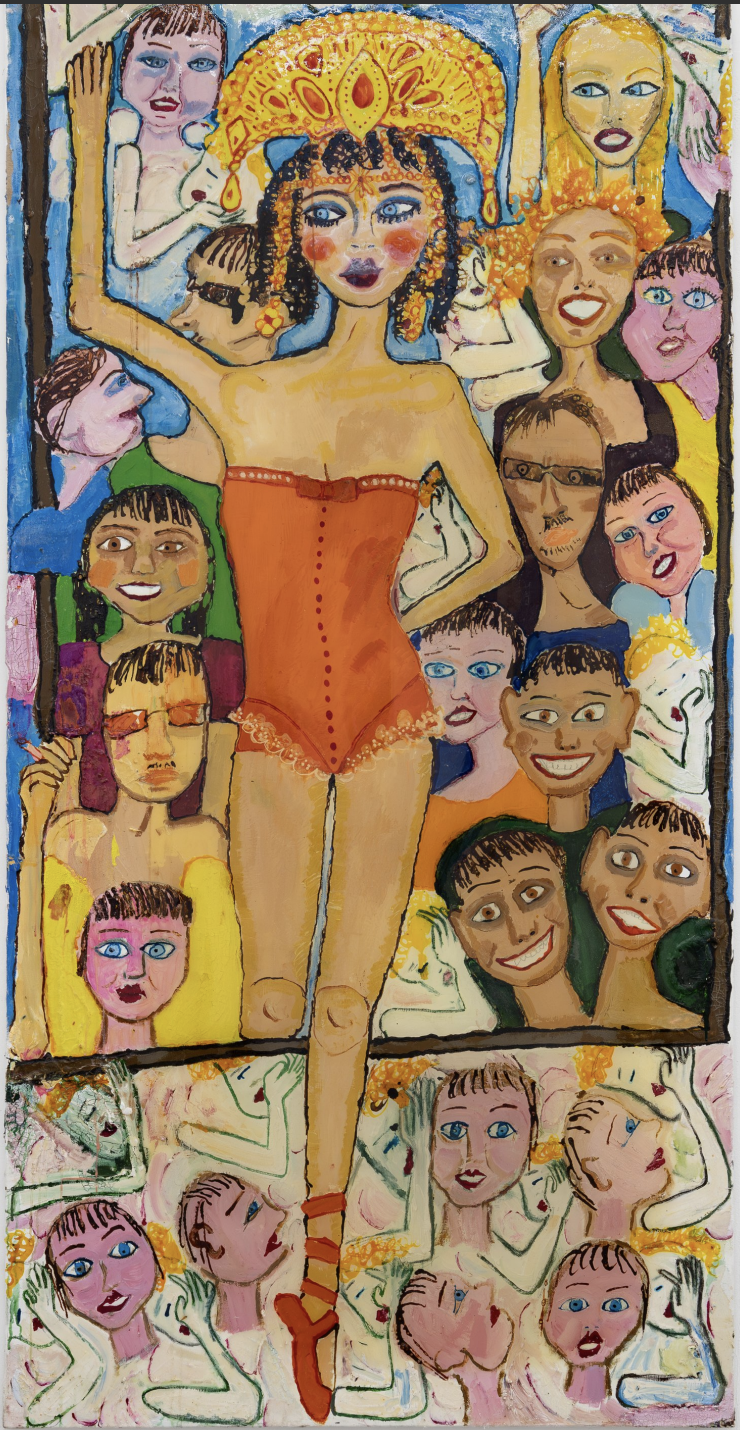 Paz de la Huerta, Showgirl, circus, nastya and leas and crying angels
A New Stage of Expression
Paz de la Huerta’s transition into the art world is more than a career shift - it is a testament to the power of creativity as survival and testimony. Her paintings are not decorative; they are confessions, prayers, nightmares, and declarations. They blur the boundaries between personal myth and collective resonance, offering something both unsettling and deeply human.
In an age when celebrity often obscures the person behind the persona, her art invites us closer - not to judge, but to see. What emerges is a body of work that is as courageous as it is enigmatic: art that teeters on trauma and yet reaches for beauty and redemption beyond it.
On the Evolution From Actress to Artist
Alexa Caroline Modugno: You’ve had a long journey in film. What was the moment you realized painting was becoming just as essential - or perhaps even more essential - to your self-expression?
Paz de la Huerta: I’ve always painted - it’s something I feel like I was born doing. Early on, I focused on interiors and even created a book called American Mansions. Looking back, I think I was trying to create safe spaces for myself, because safety wasn’t something I consistently experienced growing up.
My childhood was marked by trauma, and painting became a way to process what I couldn’t put into words. As a child, I made countless drawings and books filled with imagined interiors - quiet, protected worlds I could retreat into.
Over time, my work became more personal and symbolic. One of my pieces, How I Have Replaced Every Memory of My Mother with the Virgin Mary, reflects how I’ve transformed painful memories into something that allows for healing and reinterpretation.
Film has always been central to my life, but painting is different - it’s immediate and deeply internal. There wasn’t a single moment it became essential. It always was.
A.C.M.: How does the vulnerability of acting differ from the vulnerability of showing your paintings?
P.d.l.H.: For me, all my art forms are vulnerable. I’m trained as a method actress, so I’m used to baring my soul in my work. Whether it’s acting, modeling, or painting, each becomes a space where I can access something honest and unfiltered.
The difference is that acting often channels vulnerability through a character, while painting feels more direct - there’s no separation. But in both, I’m searching for clarity and truth, and that’s where I feel most connected to myself.
A.C.M.: Do you feel your artistic identity was always there, waiting beneath the surface of your filmmaking career?
P.d.l.H.: My artistic identity was never separate from my filmmaking - it’s always been there, evolving alongside it. I’ve been directing and starring in my own films since I was 16, and I continue to show them in my exhibitions. I’ll have a show later this year in New York where that work will be part of the experience.
Right now, I’m raising the final funds to complete the last scene of my film El Valle de Lágrimas, which will be shot in Sintra, Portugal. I recorded the audio for it during a very difficult period in my life, and finishing it feels like a way of bringing that chapter to a sense of wholeness.
For me, filmmaking is just one extension of a larger artistic language. After this project, I’m interested in adapting Narcopolis by Jeet Thayil and Laughter in the Dark by Vladimir Nabokov - both works that resonate with me visually and emotionally.
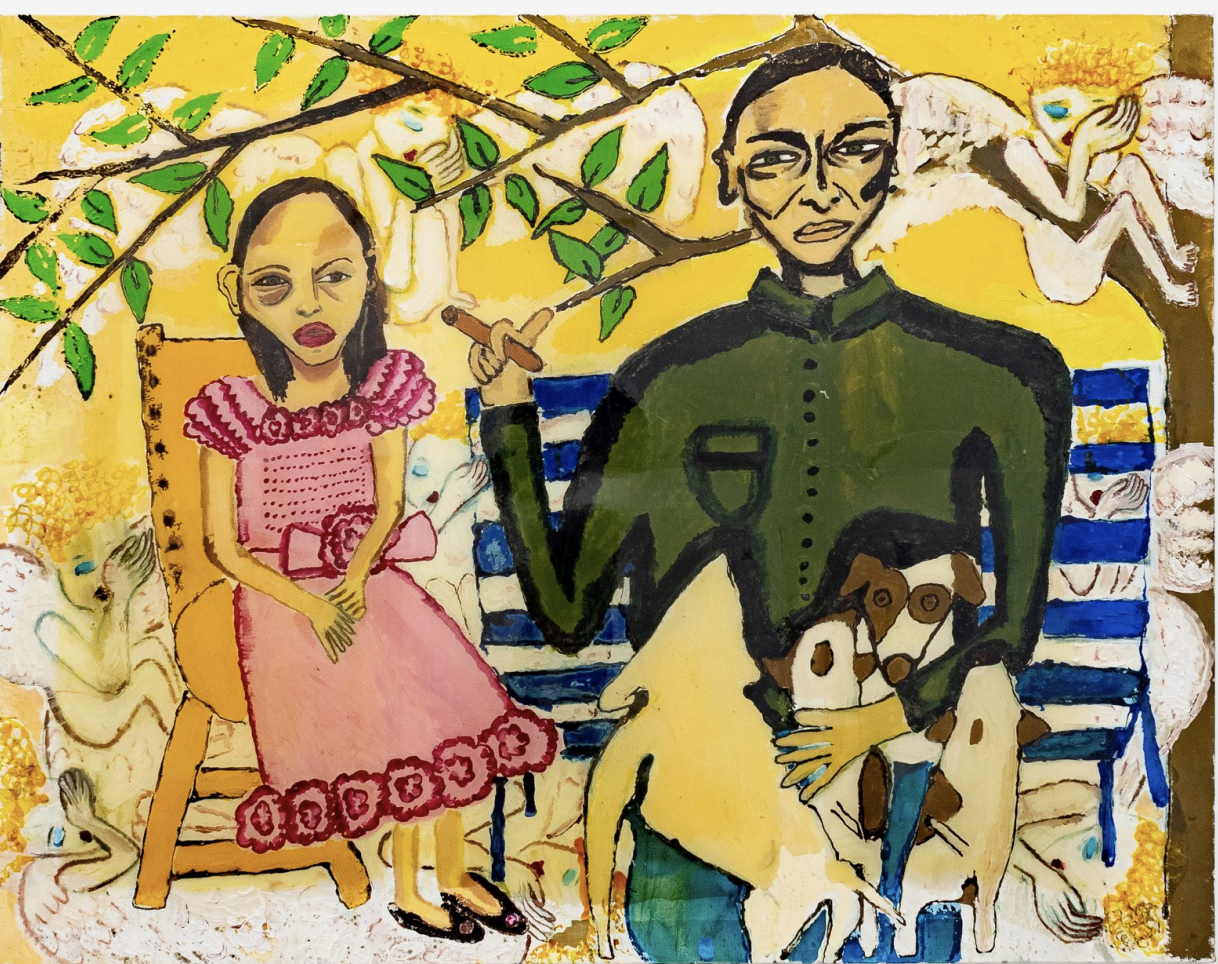 Paz de la Huerta, Oh father, crying angels and dogs
On Her Creative Process
A.C.M.: What does your painting process look like emotionally - does the artwork begin with a feeling, an image, a memory, or something more instinctual?
P.d.l.H.: My process is very instinctual. Sometimes I’ll go weeks without painting, and then there are periods where I paint every day. It usually begins with an idea - something that surfaces from whatever I’m living or feeling at that moment. My work always reflects where I am emotionally in my life.
Once I have that impulse, I begin. Some paintings come quickly, in an hour, while others take days. I work with watercolor, inks, and a green pencil, building layers in a way that feels immediate and intuitive.
At the end, I seal the painting with an oil varnish. That step is important to me - it’s a way of letting go. Once it dries, it has a glass-like finish, and I can’t touch it again. It becomes fixed, complete, and separate from me.
A.C.M.: You’ve used materials like watercolor, ink, resin, and oil. What draws you to these mediums, and how do they reflect the internal landscapes you’re exploring?
P.d.l.H.: I usually begin with a green pencil - it helps me map out the structure of the painting. From there, I’m drawn to watercolor because of how little control it allows. It moves on its own, and I have to respond to it rather than direct it, which feels very honest.
I don’t often use oil paint, but I do work with acrylic at times, and I use oil resin to finish certain pieces. The resin creates a beautiful effect - it can shift the surface and allow the work to take on a life of its own.
For me, art is something greater moving through me - it’s freedom. Now that I’m in a different place, my work reflects that shift. It’s becoming lighter, more spiritual. My next show explores that journey through orixás, gods, and deities.
A.C.M.: Many of your works have dreamlike or spiritual elements. How do dreams, intuition, or ritual shape your artistic practice?
P.d.l.H.: Spirituality is at the core of everything I create. My work is guided by intuition, dreams, and a deep connection to something beyond myself. Meditation - particularly Transcendental Meditation - has been an important part of that.
Creating is almost like a ritual. It’s a space where I can access clarity, transformation, and freedom. My paintings reflect that - blending the dreamlike, symbolic, and spiritual as a way of expressing what can’t be put into words.
On Identity, Survival, and Reinvention
A.C.M.: You’ve spoken openly about surviving trauma in your life and career. How has art reshaped your sense of self beyond those experiences?
P.d.l.H.: My art saved me - it gave me a home, it has helped me process everything.
A.C.M.: Do you feel that painting allows you to reclaim narrative power that was once taken from you?
P.d.l.H.: Yes, absolutely. For a long time, I felt that my voice and identity were being distorted and taken from me. Painting became a way to reclaim that - to speak in my own language, on my own terms.
Through my work, I found my voice again. If you look closely at my paintings over time, you can see that journey - they hold an honesty that has always been there.
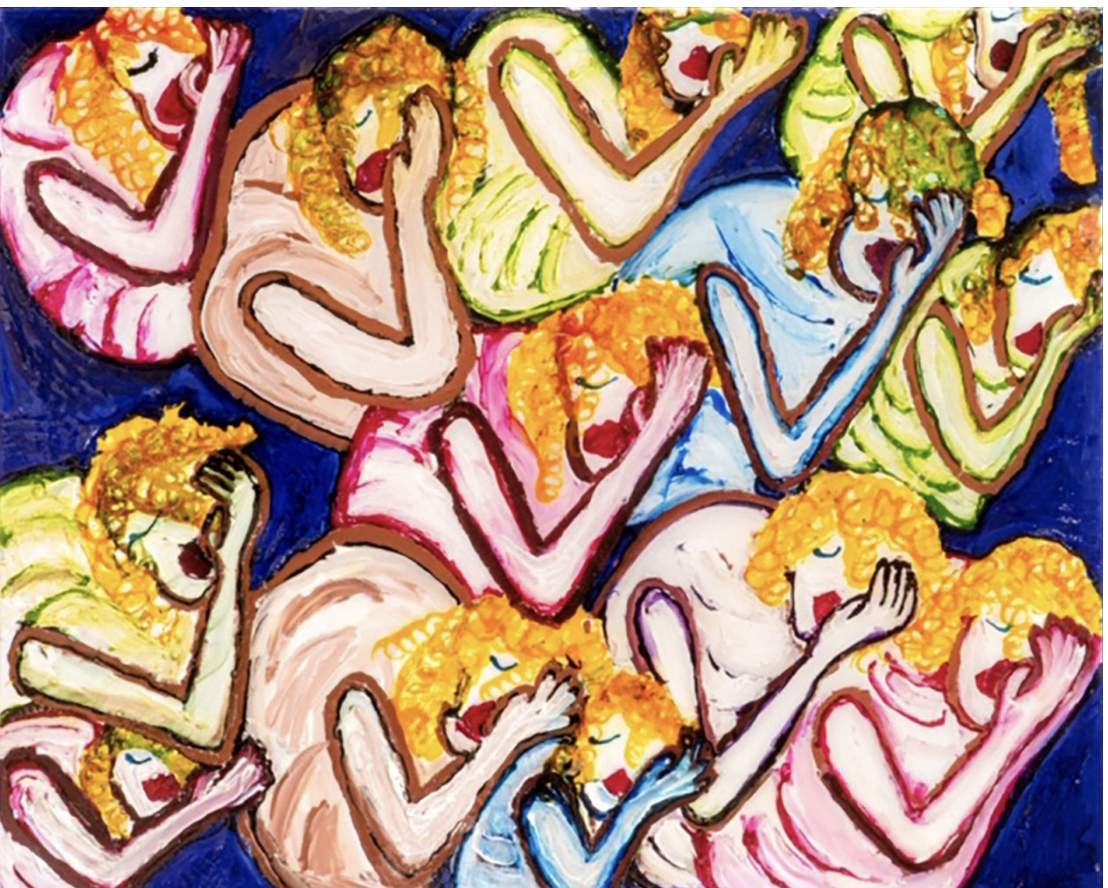 Rainbow Crying Angels
On the Future
A.C.M.: What themes or emotions are you exploring in your work right now?
P.d.l.H.: Right now, I’m exploring a series I call War Kisses. It comes from the feeling of being in an ongoing battle - personal, emotional, symbolic - and choosing to move through it with strength.
The work centers on intimacy within conflict - men and women kissing during wartime. It’s about holding onto love in chaos, about tenderness existing alongside struggle.
A.C.M.: Are there new mediums, collaborations, or artistic directions you’re excited to pursue next?
P.d.l.H.: I’m focused on continuing to direct and complete my films. At the same time, I’ll keep evolving across mediums. I was born an artist, and creating has carried me through every phase of my life.
As my life and spiritual journey deepen, so will the art. It’s a constant - and it always will be.
Alexa Caroline Modugno
Alexa Caroline Modugno is a violinist, author, journalist and New York tastemaker. She blends art, music and bold style with philanthropy and storytelling from curating gallery shows to writing Embodied Confidence and her children’s books. Always avant-garde, Alexa turns creativity into a lifestyle.
view all articles from this author