Whitehot Magazine
October 2026
"The Best Art In The World"
"The Best Art In The World"
October 2026
Janette Beckman at Atelier Jolie: The Other Punk Scene Gets its Due in the East Village
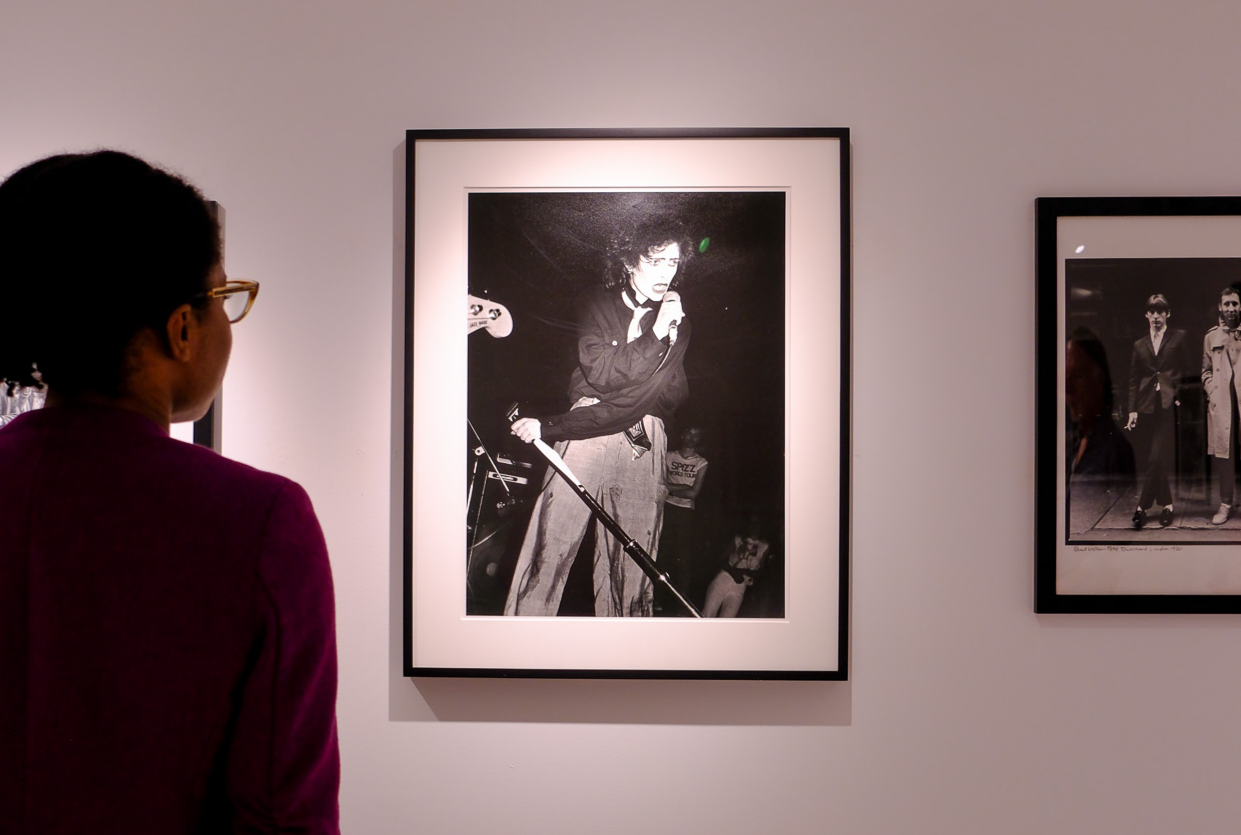
A viewer considers Janette Beckman's 1977 shot of Siouxsie Sioux taken at the Roundhouse in London. Photo by Jamie Lubetkin
By J. SCOTT ORR September 3rd, 2026
It’s 1977 and Siouxsie Sioux is in her element at London's venerable Roundhouse. Everything about her is aggressive: her appropriation of men’s clothing, her exaggerated black eye make-up, the way she squeezes a microphone with one hand and throttles the mic stand with the other. Her expression delivers an urgent mix of anger, angst, urgency and fear.
Veteran music photographer Janette Beckman was there that night on her first assignment for Melody Maker. Though she hadn’t photographed a rock ‘n roll show before, she captured the disruptive attitude of first-generation UK punk rockers in just a few rolls of black-and-white film. It was an auspicious first step in a photography career that would lead her to the U.S. and yield some of contemporary music’s most iconic photographs.
In Punk Is An Attitude, a new show of her work that opened last night at Atelier Jolie in the East Village, Beckman offers her period photographs of British punk rock icons like the Sex Pistols and the Clash, their fans and musical progeny. The venue is a special one. For one thing, Atelier Jolie is located just steps from the former site of punk’s Bowery birthplace, CBGB. For another, the building was the last home of neo-expressionist master Jean-Michel Basquiat, who had his own ties to the neighborhood’s punk rock afterparty.
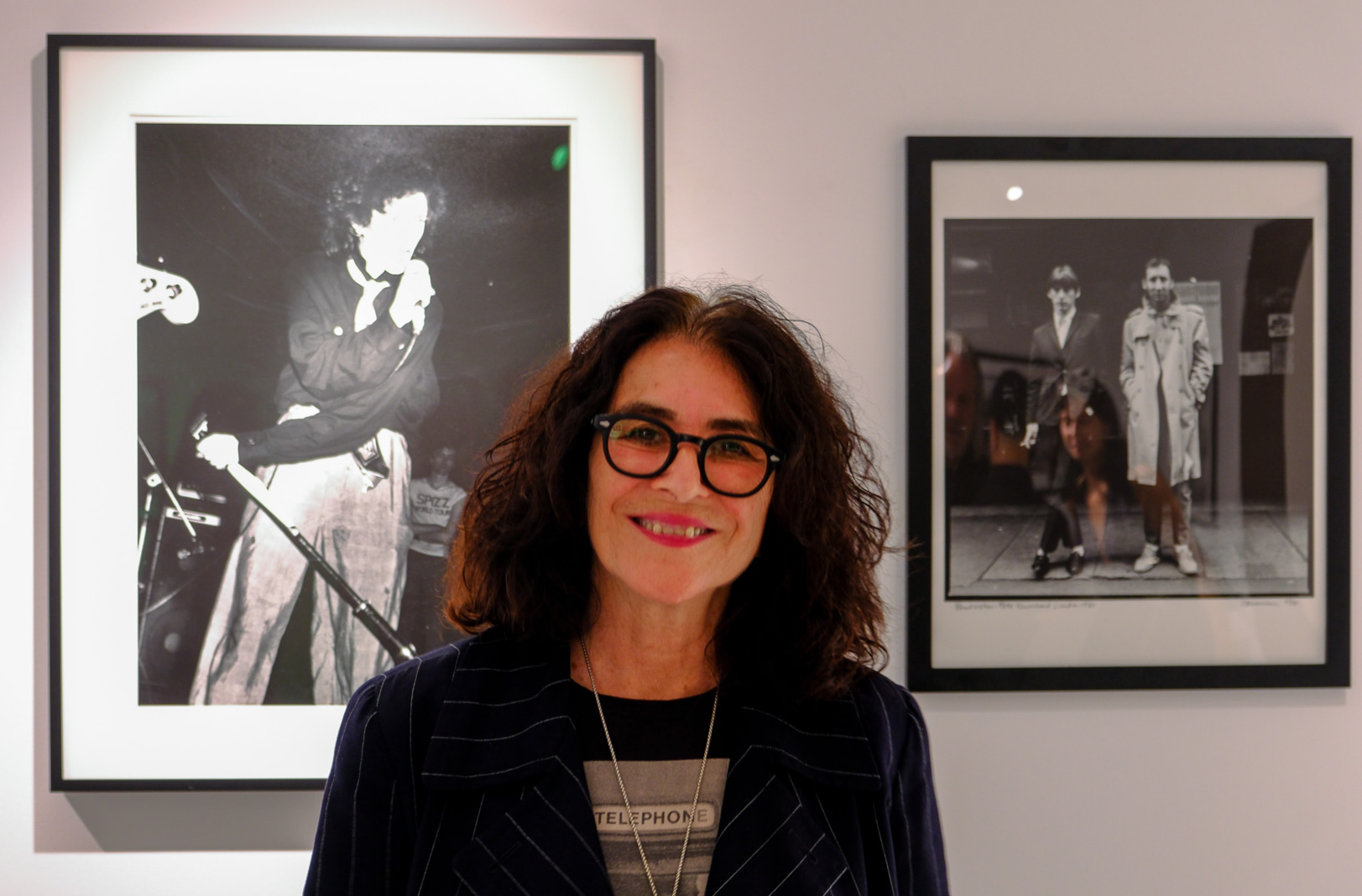
Janette Beckman standing before her shots of Siouxsie Sioux and Pauler Weller with Pete Townshend. Photo by Jamie Lubetkin
But the exhibition is hardly another nostalgia trip through the well-plumbed wreckage of CBGB and the New York punk scene. God knows there have been enough of those shows at downtown art venues recently as punk turned 50 and what’s left of that generation orbited 70 this year.
No, Beckman presents the parallel history that was taking place across the Atlantic at roughly the same time. Punk was quite different in the UK, Beckman said in an interview with Whitehot the other day in her home studio, which is, coincidentally, just a block away from the gallery. The British scene, she said, was angrier, more political and more disruptive across a wider social landscape. While the punk attitude in the U.S. offered a middle finger to establishment control of music and the arts, the UK version said fuck you to pretty much everything, because there was really nothing to lose.
“The economy was terrible in the UK. There were no jobs. When Johnny Rotten sang “no future,” he wasn’t joking. There wasn’t any future. Kids came out of school. There were no jobs for them. People were broke,” Beckman said. “It was different in England than it was here. It was very political. We had been under hundreds of years of the royal family, the class system, the government and it was time for a change.”
In comparing the two scenes, Beckman said that while the differences were stark, there were also similar tendencies. “I think it was something that we were all part of here and in England, but differently. I really shouldn’t speak to the punk scene in New York because I wasn’t here, but it was a different thing. Definitely fueled by different drugs,” she said. “England’s a small country. So it was very intense,” she added.
Like punk itself, Beckman’s photographs refuse to bow to rock star grandeur. Take for example, her 1977 shot of the Sex Pistols posed in a dumpster. They are literally rubbish at the moment Beckman presses the shutter, yet there is humor amid the resignation, hopelessness and boredom on the faces of the band. They look less like rock stars on the brink of global stardom and more like a group of neighborhood toughs who happened upon a dumpster.
Then there’s the generation spanning 1980 shot of Jam front man Paul Weller with legendary Who guitarist Pete Townshend. If a photograph is capable of capturing rock n roll succession, this one is it. Weller is young, confident and cool, almost entitled as he poses in a skinny suit with a cigarette in his right hand. Townshend is nonplussed, with a bemused expression, relaxed, not at all threatened by the young upstart next to him.
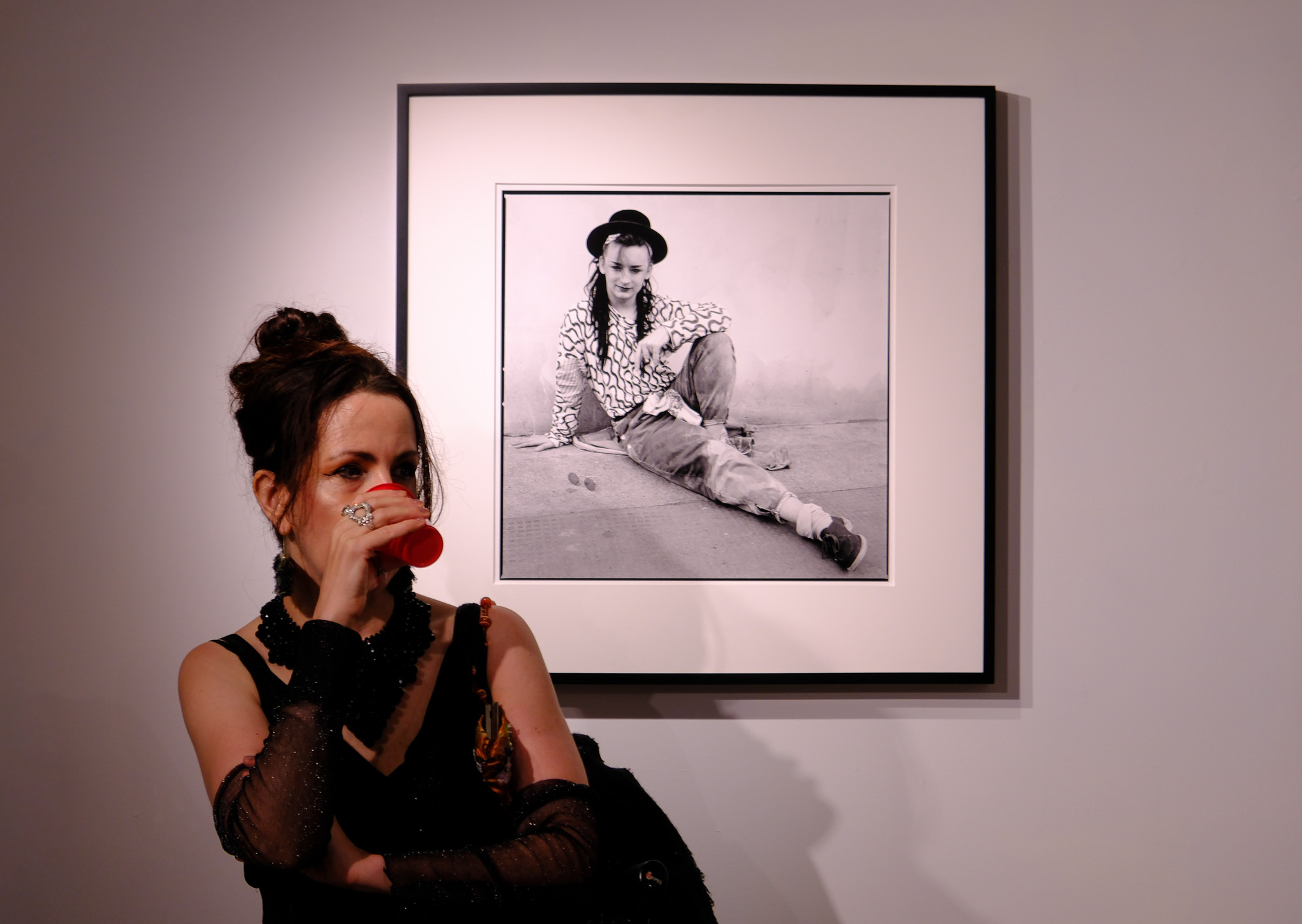
Janette Beckman's 1981 photograph of Boy George. Photo by Jamie Lubetkin
Before leaving London, Beckman made early portraits of next-generation British rockers while shooting for Melody Maker. Among them is a striking 1981 shot of Culture Club’s Boy George, just as his star was in ascension. Boy sits casually on a sidewalk, wearing loose jeans, slouch socks, a print jersey and his signature wide-brimmed hat. He’s also wearing an expectant grin, as though he knows global fame awaits him. It’s vintage Beckman, demonstrating anew her knack for capturing people just before they are claimed by their destinies.
“I knew Boy George because we used to hang out in the same places. I went to meet him outside his record company, and he was just sitting on the street, head-to-toe on Vivian Westwood. He wasn’t supposed to be on the cover of that issue, but the rock band they were going to put on the cover somehow didn’t work out, so they put him on the cover. That week, the Culture Club record went to number one, and we all looked really great,” Beckman said.
Though her images of early UK punks have been exhibited and reproduced globally, Beckman is best known for the classic early images she made of hip-hop OGs like Run-DMC, LL Cool J, Slick Rick, Ice Cube, Public Enemy, Salt-N-Pepa and countless others. She said she sensed the punk movement losing steam in the early 80s and was looking for the next big thing. She found it in 1982 when she was assigned to photograph the traveling New York City Rap Tour in London for Melody Maker.
“That hip hop show in 1982 in London really changed my life because I’d never seen anything like it,” she said. “These people, they had this really positive attitude. There were artists, there were dancers, there were rappers, scratchers, but you’d never seen anything like that.” She came to New York to visit a friend “and it was all happening around, and I just never left,” she said.
By the time Beckman arrived in the U.S. in 1983, the downtown New York scene had evolved and expanded from its late 70s raw punk rock ethos into a thriving art scene that included not just the various strains of punk, but also the experimental sounds of no wave, avant-garde art, graffiti culture and the beginnings of hip-hop. This was the scene that spawned a diverse collection of artists and performers, including Basquiat.
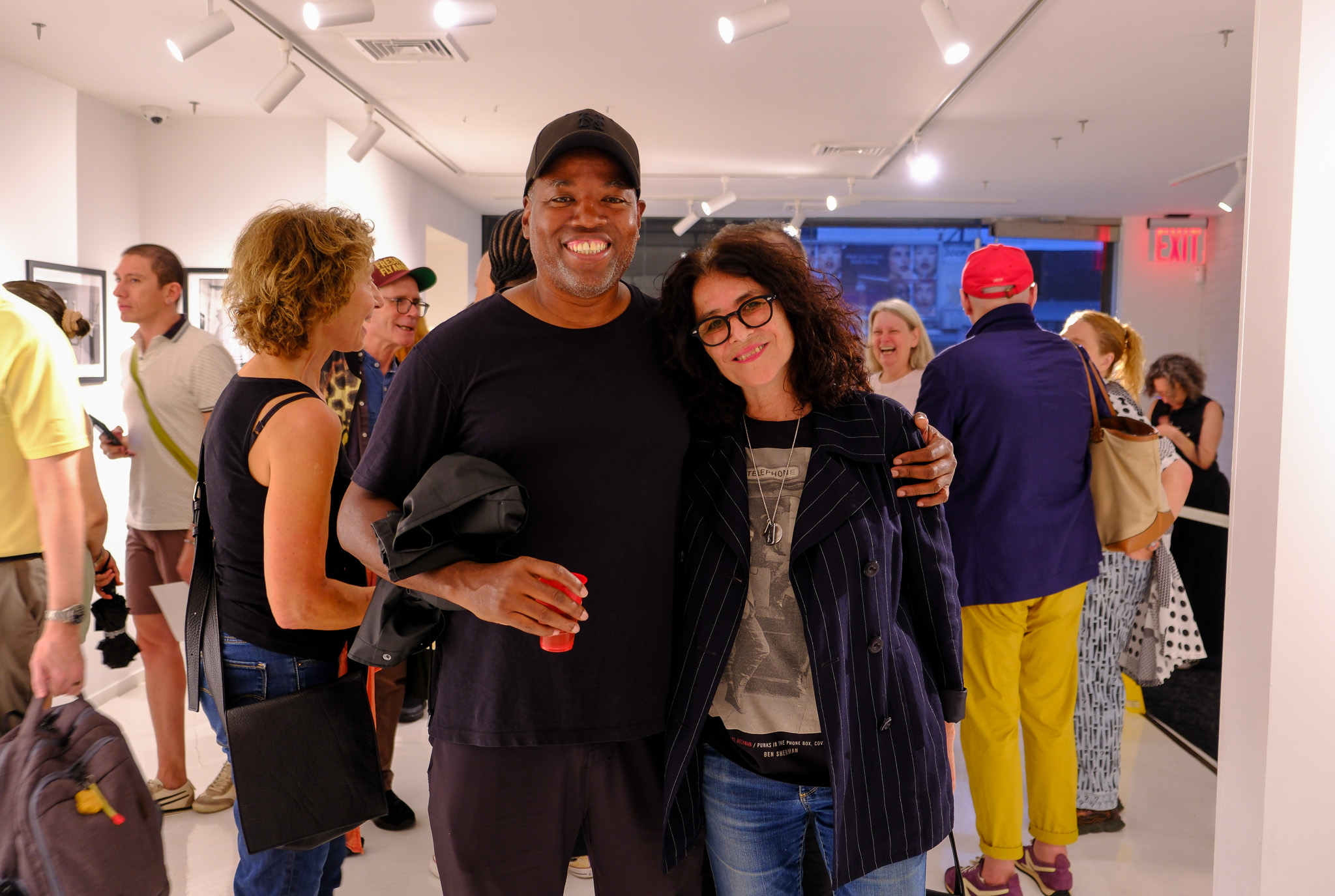
Janette Beckman with artist and collaborator Cey Adams at her opening at Atelier Jolie. Photo by Jamie Lubetkin
Though Basquiat was living in the Great Jones Street building (leased from his pal Andy Warhol) when Beckman arrived in the neighborhood and their cultural terrain overlapped, the two never met. “I got here in 1983 (the same year Basquiat moved into the building), but I never met him,” she said.
It would certainly be a stretch to call Basquiat a punk artist, but he emerged from the cauldron of downtown creativity that grew out of and eventually supplanted the neighborhood’s punk rock and hip-hop roots. Basquiat co-founded the art/noise band Gray with Michael Holman and played at CBGB, the Mudd Club, Max’s Kansas City and other downtown clubs with punk pedigrees. He went on to produce and design the cover for the record Beat Bop by Rammellzee, the legendary graffiti artist, writer, sculptor and musician. Beckman photographed Rammellzee and Fab 5 Freddie together in London in 1982.
Like many in the neighborhood, Beckman is relieved that the Jones Street space, where Basquiat lived, worked and died is being put to artistic use. The building was leased in 2023 by film star Angelina Jolie, who turned it into an art center that hosts artist residences, exhibitions, workshops, classes and other programming. “As far as Basquiat, I mean, I think it’s good that the space is being used for the arts and community. Everybody knows it was Basquiat’s studio, so thank God it’s being used for something other than a coffee shop or something,” she said.
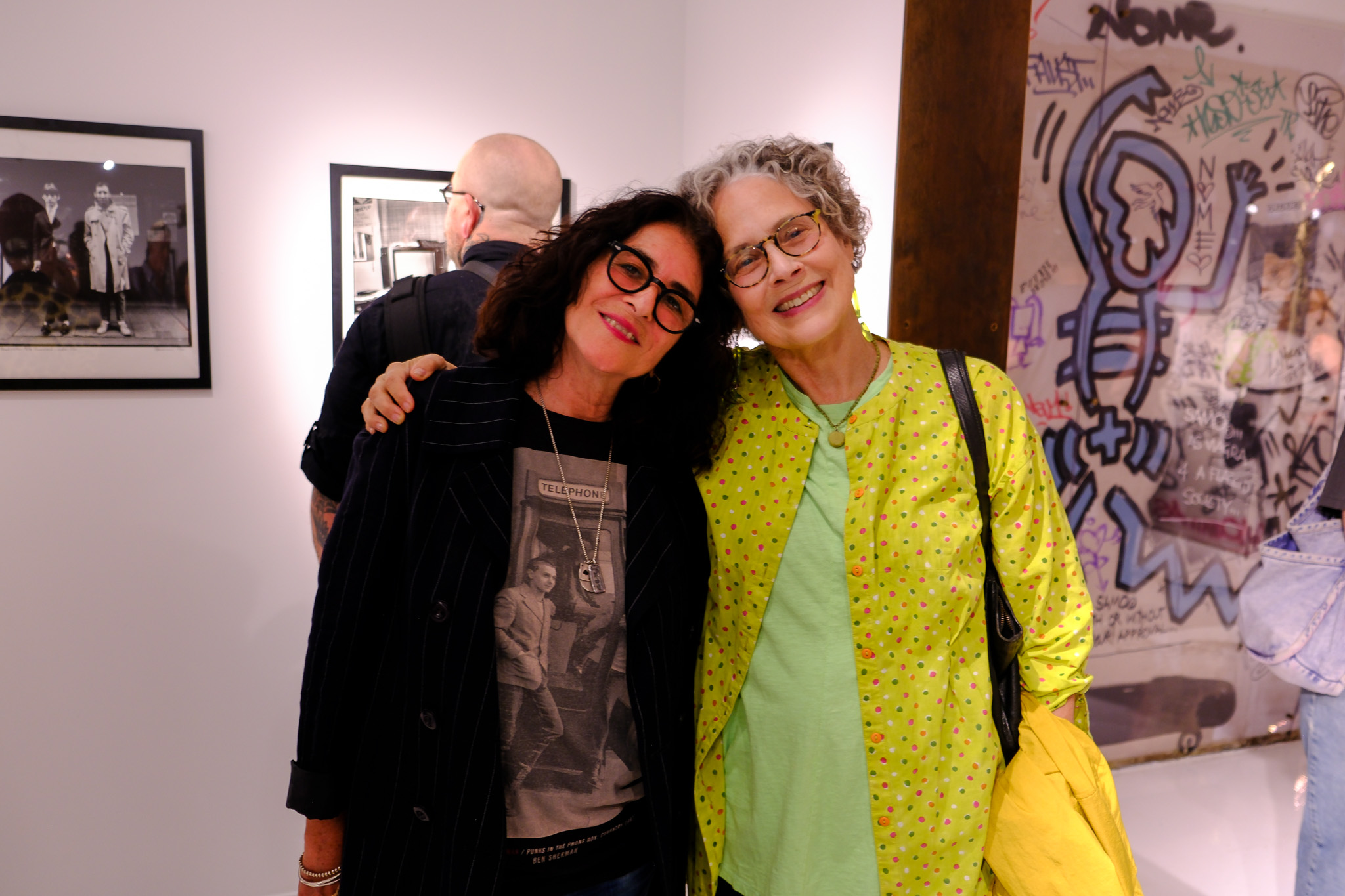
Janette Beckman with artist Jane Dickson at Atelier Jolie. Photo by Jamie Lubetkin
From her early work capturing punk rockers as the scene was disrupting the world of music, fashion and art, through her next phase as the leading early chronicler of hip-hop’s nascency, Beckman had this uncanny knack for sniffing out the next global phenomenon before it was cool. With little direction and without a plan, she somehow found a way. Maybe she was inspired by the DIY mentality of the early punks.
“I photographed all these bands as they started their careers, and they were really fresh and exciting, and there was really no plan, there was no direction. It was the same for me at the beginning. And so I just had to make it up as I went along in true punk style,” she said. Punk Is An At
Punk Is An Attitude is on view through September 12 at Atelier Jolie, 57 Great Jones Street, New York City.

Scott Orr
Scott Orr is a career writer, editor and a recovering political journalist. He is publisher of the East Village art magazine B Scene Zine. He can be reached via @bscenezine, bscenezine.com, or bscenezine@gmail.com.
view all articles from this author