Whitehot Magazine
September 2026
"The Best Art In The World"
"The Best Art In The World"
September 2026
MoMA’s Duchamp Retrospective: Celebrating Radical Work the Moment it is Safe to do so
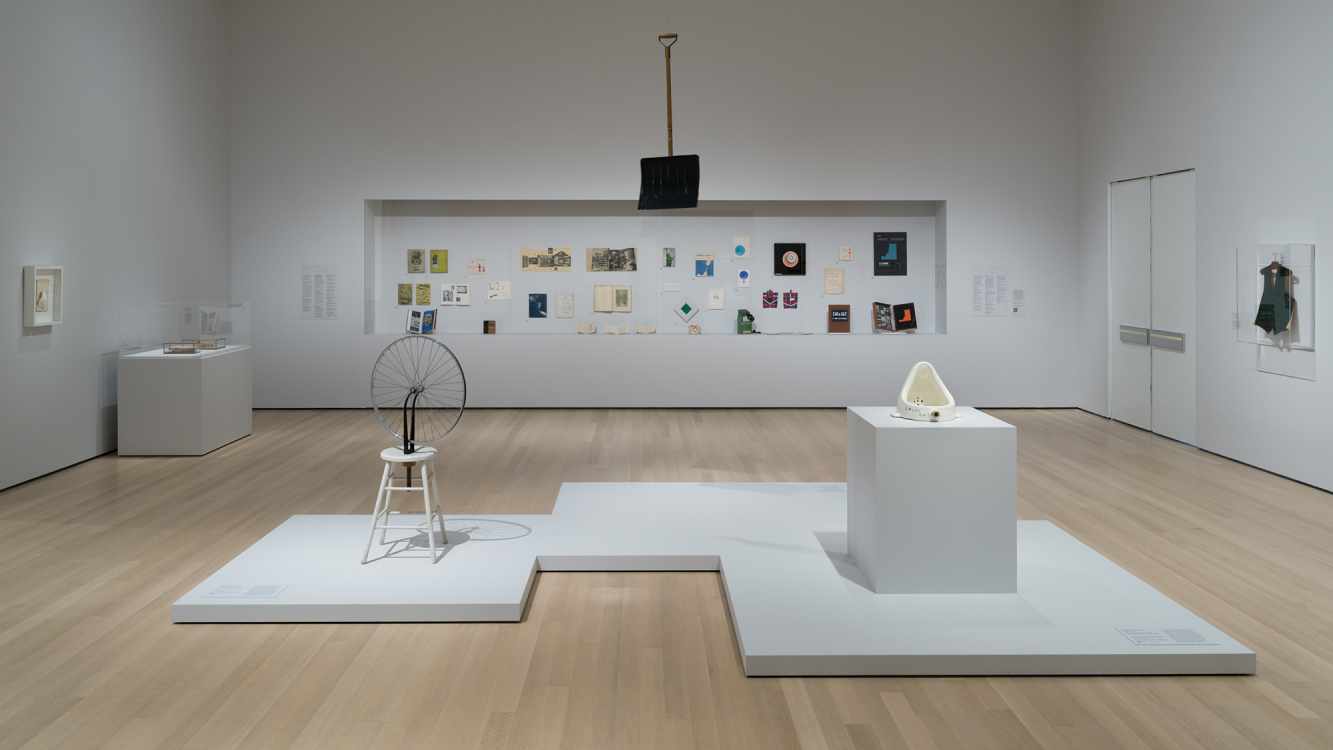 Installation view of Marcel Duchamp on view at The Museum of Modern Art, New York, from April 12 through August 22, 2026. Photo by Jonathan Dorado © The Museum of Modern Art, New York
By GABRIEL SCHER April 20th, 2026
I walked into a Tribeca gallery last week and was surprised to find a urinal hanging on the wall. The space was littered with found objects; bowling balls, surf boards, automobile parts and accessories; the urinal. It was both absurd and oddly familiar. There was clearly a throughline here, an undeniable air of something, a brave assertion of…nothing. With titles like “heritage”, I’m sure the exhibit’s intention was to comment on American history, but it was closer to patter than any meaningful commentary. It was absurd in the sense of being frustrating, that a Tribeca art gallery would shamelessly display work that was so entirely devoid of a culturally significant observation despite clearly having every intention of making one. The urinal on the wall was strange, but didn’t seem unusual; I had seen this before but I just couldn’t place it.
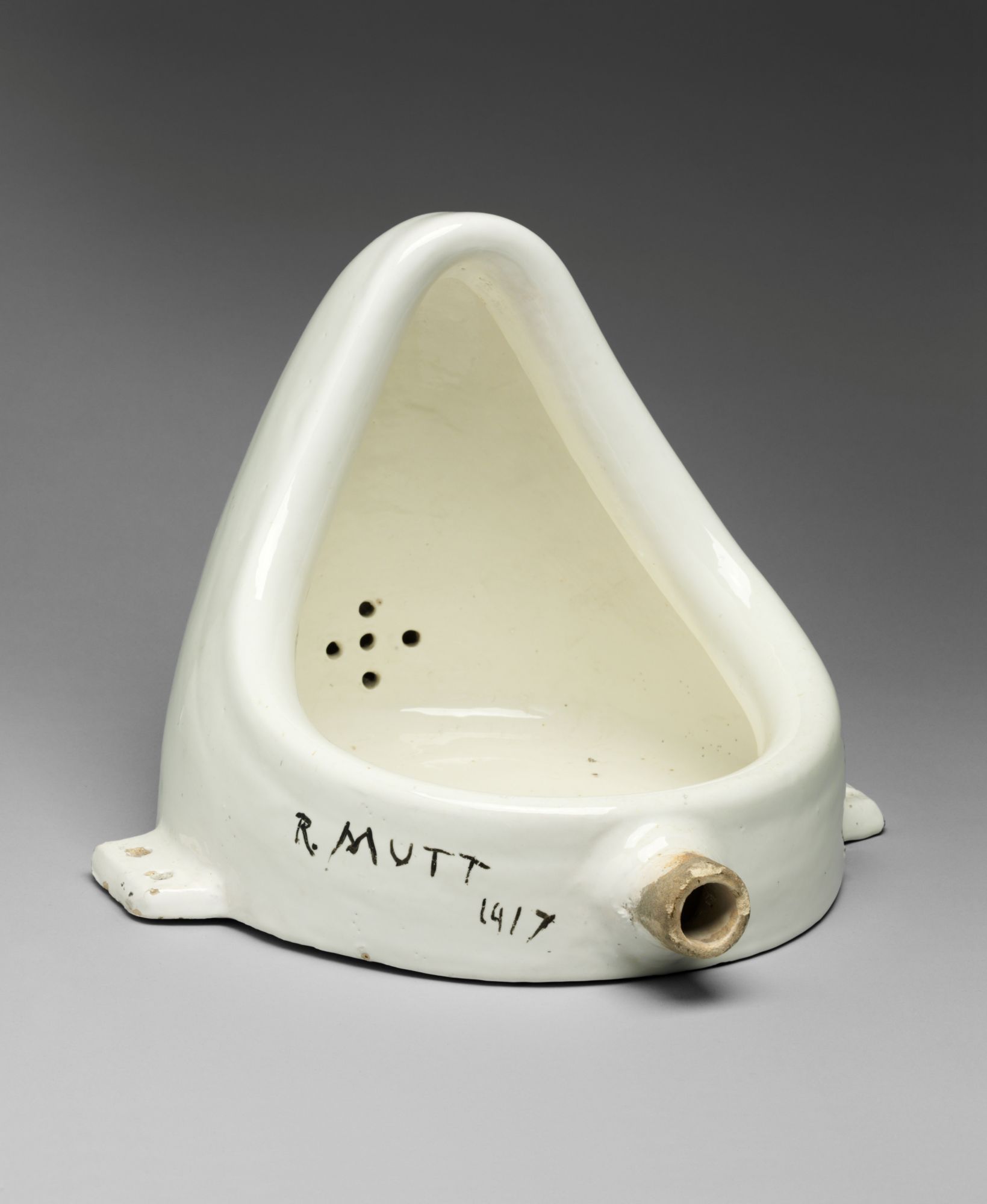 Marcel Duchamp. Fountain, 1950 (replica of 1917 original). Porcelain urinal, 12 x 15 x 18 inches (30.5 x 38.1 x 45.7 cm). Philadelphia Art Museum: 125th Anniversary Acquisition. Gift (by exchange) of Mrs. Herbert Cameron Morris
Naturally, I came to understand that this was an echo of Marcel Duchamp’s Fountain and subsequently was able to piece together the source of my frustrations: this show didn’t assert american heritage, it asserts artistic lineage; an empty claim to membership in a tradition of subversion.
As a young artist I’ve spent an incredible portion of my life working, alone, on whatever it is that has captured my attention; solely for the sake of satisfying the compulsive need to create and express myself. The thought of making a living from my work hasn’t even become a serious consideration until recently, as I’ve moved firmly into adulthood. I can’t help but wonder, who is actually going to buy Nick Hoecker’s urinal? If one’s work isn’t explicitly marketable, surely it must be something borne of genuine self expression. However, Hoecker’s rendition of Fountain serves a singular purpose: to virtue signal an opposition to contemporary and institutional norms, the moment it is safe to do so.
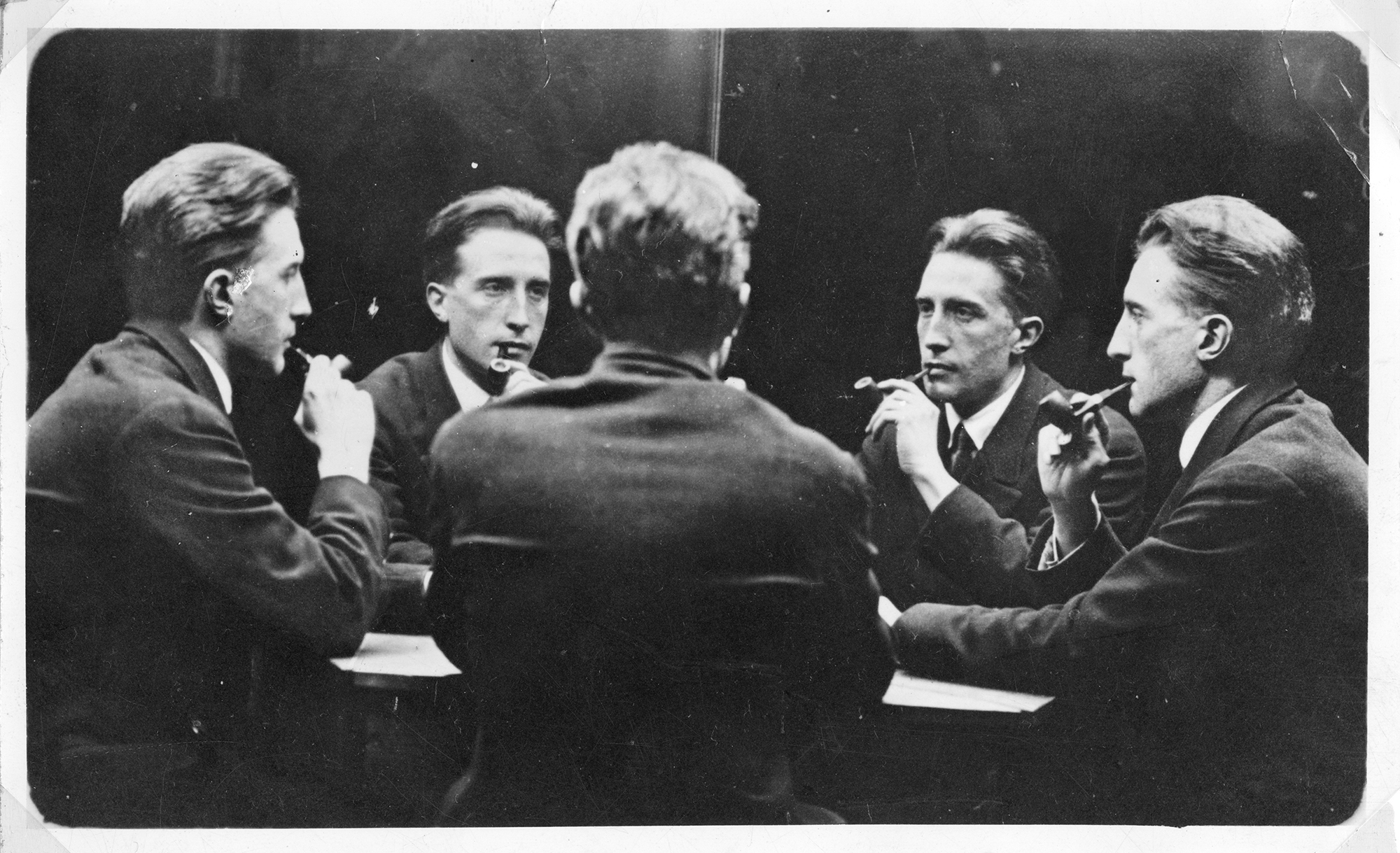
Multiple Portrait of Marcel Duchamp. Broadway Photo Shop, New York, 1917. Gelatin silver print, 3 7/16 × 5 1/2 in. (8.7 × 14 cm). Private Collection, France. © 2026 Artists Rights Society (ARS), New York/ADAGP, Paris/Estate of Marcel Duchamp
MoMA’s Marcel Duchamp retrospective serves the same purpose. Aside from the offhanded remark that Fountain was rejected by “a New York exhibition in 1917” in the didactic, MoMA indicates nowhere that Fountain, along with the other "readymades", were thoroughly rejected by the art establishment as a whole. This institutional celebration of Duchamp has little to do with his disruption and everything to do with retroactively positioning themselves as heralds of change within the world of art. The establishment that his work was designed to antagonize absorbed him completely; absolved itself of its failure to recognize a substantial, radical gesture, and now celebrates him as canon while obfuscating history.
This isn’t unique to Duchamp. Every distinctly oppositional move we make can and will be categorized, reframed, curated as an easily definable and reproducible product no matter how scandalous it was when first presented. Jean-Michel Basquiat's neo-expressionist vulgarity, his anti-imperialist sentiment and broadly oppositional artistic identity was so effectively folded into the image of “downtown cool” and cultural authenticity. This subsequently allowed the art establishment to attach a status of cultural cachet, allowing those in proximity to him and his work to accrue the social capital associated with participating in the sociopolitical notions expressed in his work; without ever having to stake their own reputations or resources on the same radical ideas.
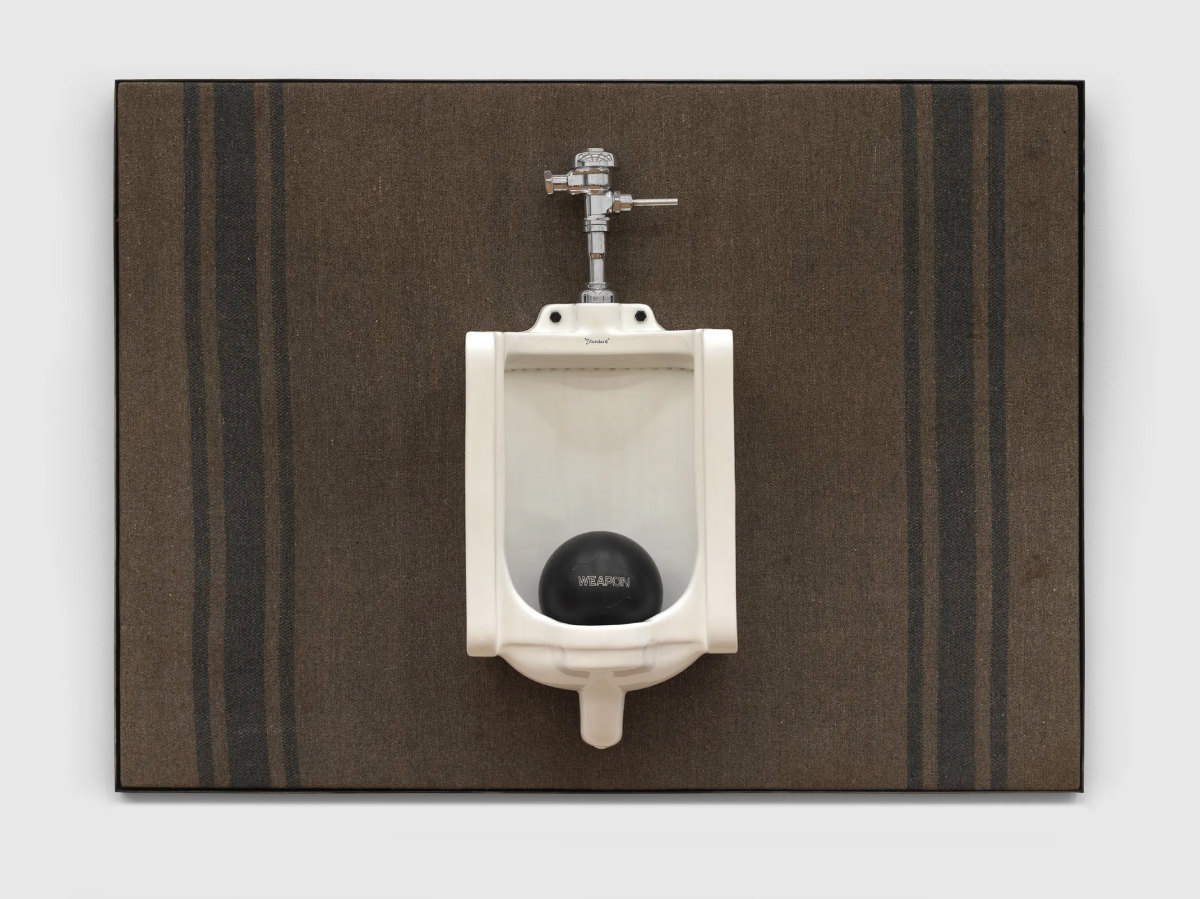
Heritage-xii: Nick Hoecker. Heritage XII, 2025. German Wool Blanket, American Standard Urinal, Weapon Bowling Ball, Hardware, Steel Artist Frame. 50" H x 68" W x 1.5" D
This institutionally performative support of cultural phenomena has serious ramifications beyond the art world. A highly curated, diluted, and easily consumable retrospective package erodes the perceived value of the work by wider audiences: the readymade section of the exhibition was notably empty relative to the previous sections. I observed attendees take photographs, glance, and walk away quickly without engaging with the work. In my newfound understanding, these are the most influential objects of the twentieth century art — and nobody stopped to actually look.
This isn’t a problem that lies solely within the art world: it’s how the entire cultural apparatus functions. The art world is simply the most visible example because it’s supposed to be the one domain where genuine opposition is possible. If even our defiant self expression can’t resist being subsumed, repackaged, and sold back to us at a fraction of its original potency, is rebellion futile? Or does it simply force our hand in finding new forms or invisibility within the market? WM

Gabriel Scher
Gabriel Scher is a multi disciplinary artist working across sound, mixed media painting and digital design. Writing about material practice, culture and the space between minimalism and coherent maximalism.
view all articles from this author