Whitehot Magazine
October 2026
"The Best Art In The World"
"The Best Art In The World"
October 2026
A love affair between art and design: ISSKA or the ballet of furniture
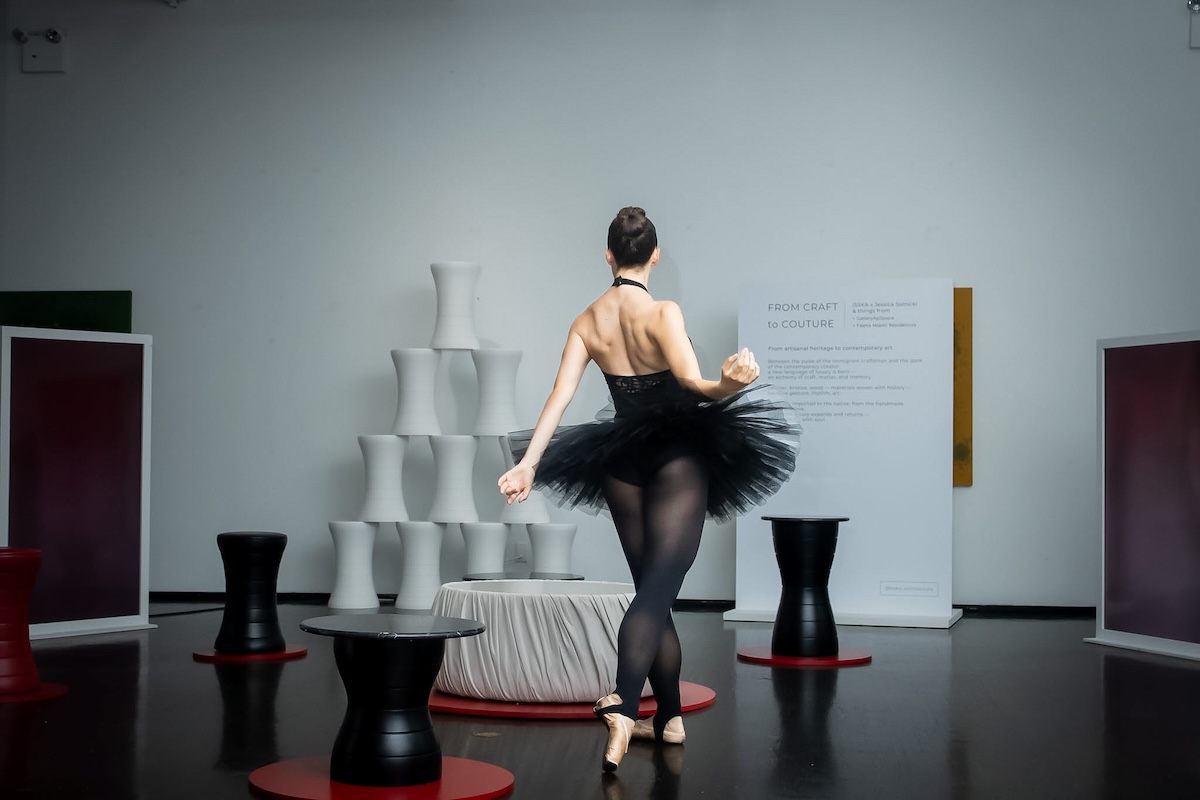
Image Courtesy of AP Gallery and ISSKA Design, 2026
By COCO DOLLE October 25, 2026
On view at AP GALLERY
The boundary between art and design has always been a love affair. Furniture can function as sculpture, interiors can become immersive compositions, and objects conceived for everyday use can acquire a presence that exceeds their practical purpose. Few emerging multidisciplinary practices navigate this territory as fluidly as ISSKA, the studio founded by architect and designer Jessica Solnicki. Working across architecture, interiors, furniture, and objects, she approaches design as a means of shaping not only the spaces we inhabit, but also the ways we experience them.
At the heart of the studio’s practice lies a tension between utility and expression. Its furniture retains a relationship to function while asserting an unmistakably sculptural identity. Curved profiles, hourglass-inspired silhouettes, and recurring organic forms establish a visual vocabulary that moves across seating, tables, and decorative objects. These gestures create continuity throughout the collection without reducing individual pieces to variations on a single motif. Instead, each object occupies its own visual territory, balancing formal consistency with an expressive autonomy.
ISSKA’s language is immediately recognizable, yet its appeal extends beyond silhouette. Materiality plays an equally significant role in defining the work. Gathered textiles, tactile finishes, and carefully articulated surfaces introduce a physical dimension that invites closer attention. Texture becomes more than a decorative consideration; it shapes the viewer’s relationship to the object, suggesting that design is experienced through proximity, touch, and movement as much as through vision.
This emphasis on material presence reflects a broader ambition. Rather than treating furniture as a collection of isolated functional elements, ISSKA considers each piece within a larger spatial and sensory composition. Proportion, placement, light, and atmosphere become integral to the work’s meaning. The object does not simply occupy a room; it participates in defining its character. In this respect, the studio’s practice enters a wider conversation around collectible design, in which the distinction between the functional object and the autonomous artwork continues to dissolve.
That proposition found a particularly compelling expression in ISSKA’s recent presentation at AP Space Gallery in New York, in a co-hosted event with Faena Residences Miami. Developed in connection with ISSKA’s architectural and interior design project for Faena Residences Miami, the presentation brought together pieces from ISSKA and Things From within an environment conceived as a unified visual experience. Rather than displaying furniture as a sequence of independent works, the exhibition invited visitors to encounter the relationship between objects, interiors, and the body in space.
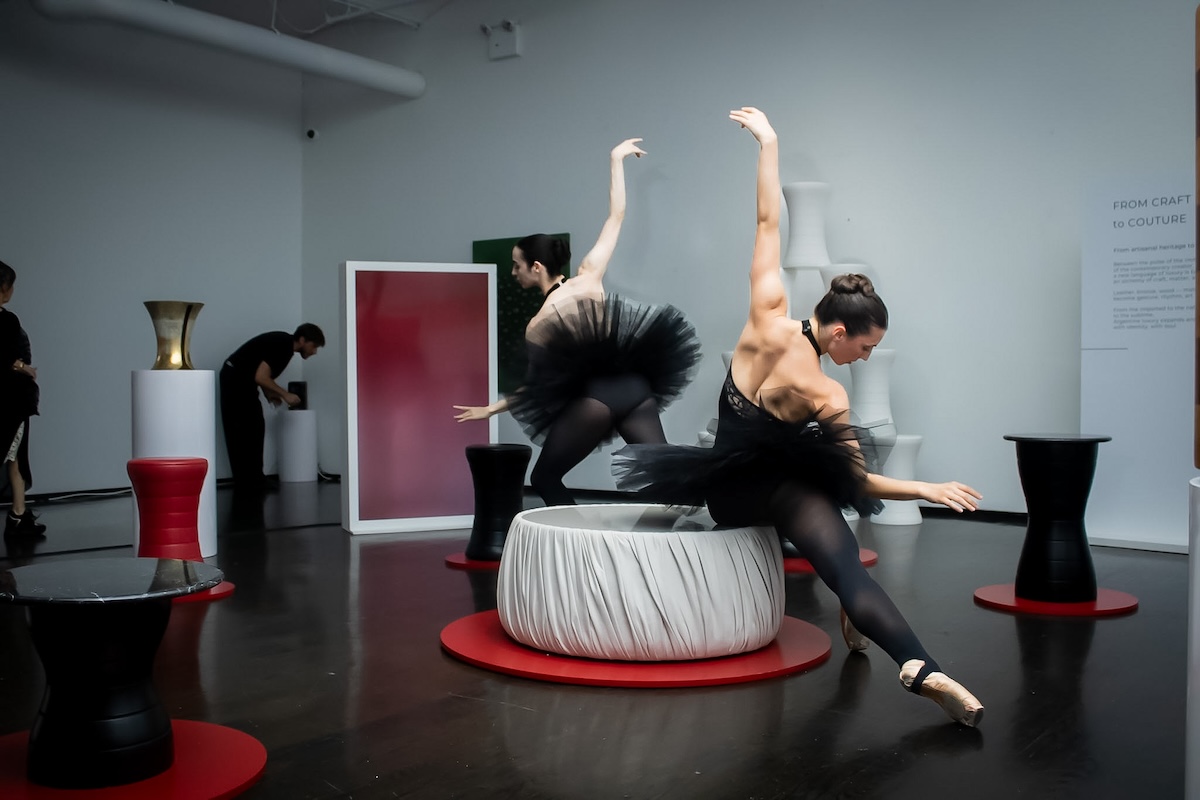
Image Courtesy of AP Gallery and ISSKA Design, 2026
The gallery became a setting in which design could be experienced beyond the conventions of the showroom. Furniture, architecture, sound, and movement operated in dialogue, allowing the collection to reveal itself through changing perspectives and spatial relationships. This approach shifted attention away from the individual object as a self-contained commodity and toward the experience generated by its placement within an environment. The question was no longer simply how a piece looked, but how it might be encountered, inhabited, and activated.
The exhibition’s most distinctive intervention came through a live ballet performance accompanied by tango music composed by ISSKA. As the dancers moved through the gallery, interacting with the furniture and responding to its spatial arrangements, the objects became participants in a choreographic exchange. Their presence was no longer static. A chair, table, or sculptural form could become a point of orientation, a physical boundary, or an element around which movement unfolded.
The encounter introduced another dimension to ISSKA’s design philosophy: the body as both observer and inhabitant. Choreography made visible the relationships that furniture ordinarily establishes in less theatrical circumstances. Objects direct movement, invite proximity, establish distances, and influence how people occupy a room. Through the dancers’ gestures, these usually implicit relationships became the subject of a performance. Furniture was neither a passive backdrop nor merely a prop; it contributed to the composition of the event.
The use of tango further reinforced the presentation’s emphasis on relational movement. Defined by proximity, tension, rhythm, and exchange, the dance offered a way to consider space as something continuously negotiated between bodies and their surroundings. The resulting experience brought together disciplines that are often presented separately, suggesting that architecture, design, music, and performance can operate as interconnected forms of spatial expression.
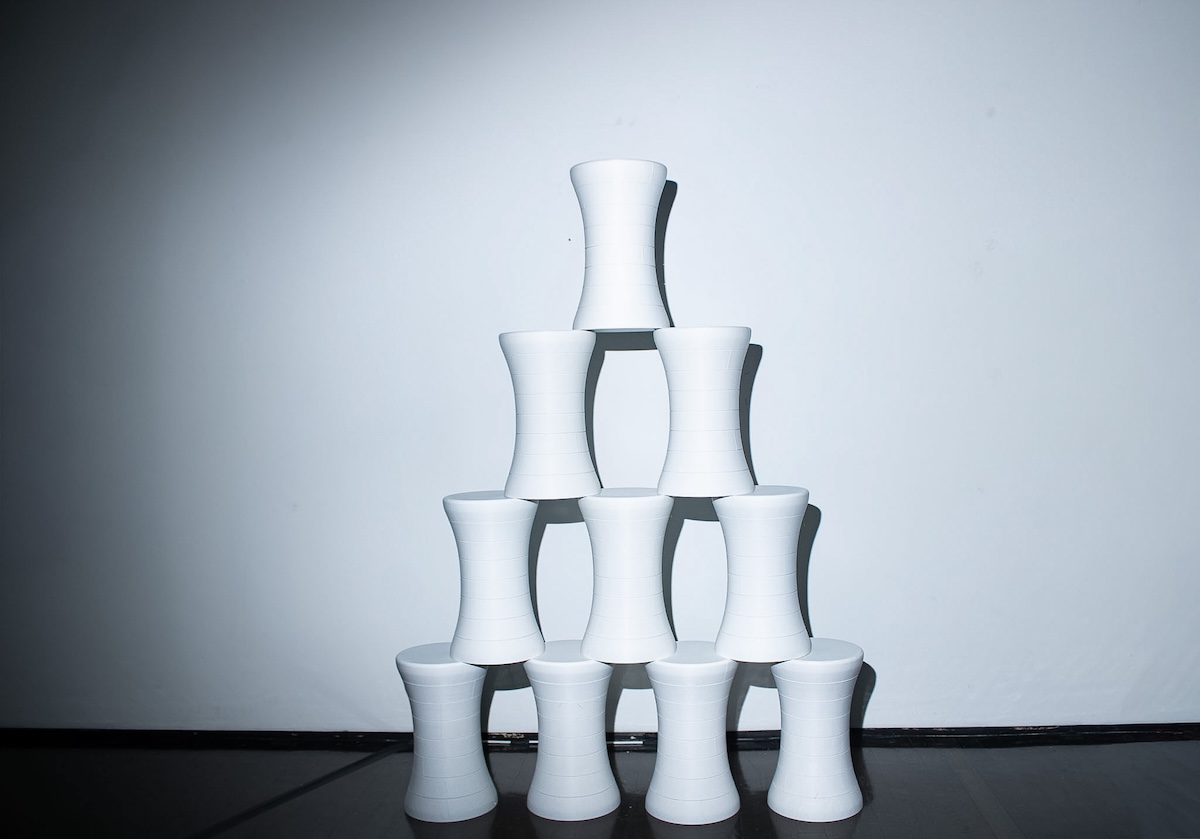
Image Courtesy of AP Gallery and ISSKA Design, 2026
Photographs documenting the exhibition preserve these temporary encounters between the dancers, the furniture, and the gallery environment. Yet the significance of the event lies in the experience it proposed: a shift from viewing design as a finished object to understanding it as a medium through which situations and relationships can be created.
This distinction matters within a design culture increasingly shaped by the language of collectibility. As furniture enters galleries and design objects circulate within the art market, questions arise about what distinguishes a functional object from a sculptural work, and whether those categories remain useful. ISSKA does not resolve this tension by abandoning function in favor of spectacle. Rather, the studio explores how functionality can coexist with formal experimentation and how an object designed for use can also sustain a more contemplative encounter.
Its multidisciplinary approach is particularly relevant to contemporary interiors, where architecture, furniture, and art are increasingly conceived as parts of a continuous environment. The result is a practice that resists the separation of disciplines without erasing their differences. Architecture provides a framework; furniture establishes scale and use; materials introduce texture and physical presence; and performance reveals the ways bodies move through space. Each contributes to an experience that cannot be reduced to any single element.
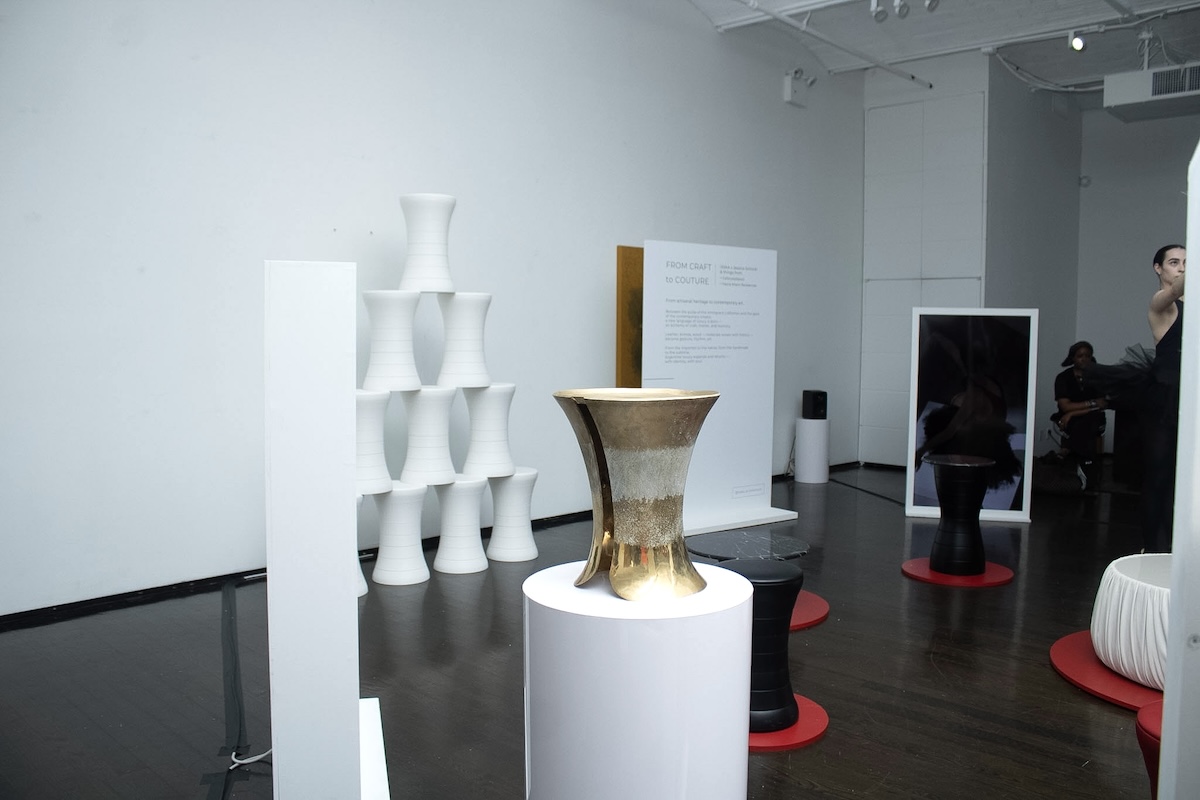
Image Courtesy of AP Gallery and ISSKA Design, 2026
Ultimately, ISSKA’s work proposes a more expansive understanding of design, one in which objects are not simply placed within spaces but actively participate in shaping them. The studio’s presentation at AP Space Gallery made this proposition tangible by transforming an exhibition into a meeting point between sculpture, interior architecture, and live performance.
Design, in this context, is no longer simply a matter of form or function. It becomes an emotion, shaped by material, movement, and human presence, guiding us into the realm of a dancing lived experience.

Coco Dolle
Coco Dolle is a French-American artist, writer, and independent curator based in New York since the late 90s. Former dancer and fashion muse for acclaimed artists including Alex Katz, her performances appeared in Vogue and The NY Times. Over the past decade, she has organized numerous exhibitions acclaimed in high-end publications including Forbes, ArtNet, VICE, and W Magazine. She is a contributing writer for L’Officiel Art and Whitehot Magazine. As an artist, her work focuses on body politics and feminist issues as seen at the Oregon Contemporary (OR) and Mary Ryan Gallery (NYC).
Follow her on instagram.
view all articles from this author