Whitehot Magazine
August 2026
"The Best Art In The World"
"The Best Art In The World"
August 2026
An Interview with Artist Coney Ishida
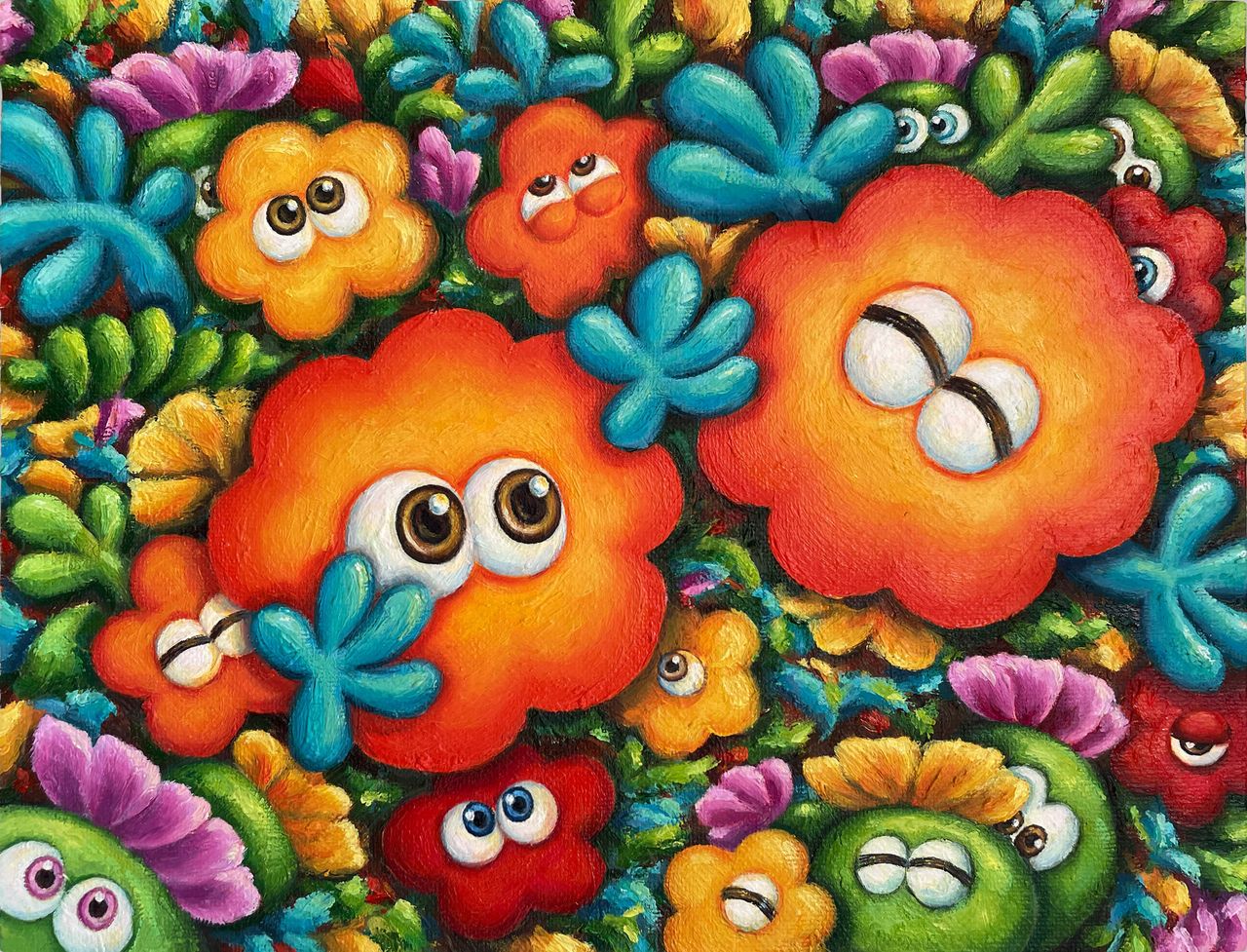 Coney Ishida,Untitled, 2024, Oil on canvas, 9 × 12 in
By NOAH BECKER March 11th, 2026
Coney Ishida is a multidisciplinary artist based in New York City, working in painting, drawing and sculpture. Her practice explores overconsumption, animal welfare, food waste, and environmental destruction, while retaining humor, softness, and the playful wit associated with Japanese kawaii culture.
Noah Becker: Your work treats animals, plants, and objects as presences rather than symbols. How do these figures first appear to you—through observation, intuition, or something closer to dialogue?
Coney Ishida: Most of the time, these presences first appear to me through observation and intuition, and I feel that dialogue comes as an extension of them. I deeply love animals, plants, and nature. They are my greatest source of inspiration.
Not only animals, but also everyday objects sometimes give me a sense of awareness in quiet moments. For example, when I spend a long time with familiar things such as a pot, a pen, a chair, or a stuffed toy, and continue to treat them with care, they can begin to feel like beings with a kind of spirit — similar to animals or plants.
 Coney Ishida, New Era – Shogyō Mujō, 2021, Graphite on paper, 8.5 × 11 in
Animist sensibilities quietly shape your practice. How does this worldview influence the sense of responsibility you feel toward the beings you create?
Because I try to treat these figures as presences, I am careful not to handle them roughly. I always try to approach them with sincerity and care.
I was born and raised in Japan, and I feel that this way of thinking is connected to animism. In Shinto, there is a belief that spirits or sacred qualities dwell in nature and in objects. This feels very close to animism.
The feeling that everything has a spirit is something that lives quietly in Japanese cultural memory, and it has also naturally taken root in me.
I cannot clearly define what “responsibility” means to me yet. But at the very least, I value not harming, not turning what I create into something to be consumed and forgotten, and facing it with love and care.
Time in your work often feels slowed and suspended. How does slowness function in your process, and what does it allow you to see?
The sense that time moves slowly or feels suspended in my work may come from the fact that I take a long time to create each piece. I feel that the time spent in the process slowly becomes part of the work itself.
Sometimes I question the way our society places too much value on speed, both in how things are produced and how we communicate.
If viewers feel a sense of slowness or gentleness in my work, I hope it can become a moment for them to think about time — how it exists, how we relate to it, and how we choose to use it.
The painting of clouds that I shared is still unfinished. It is in a kind of suspended state. I sometimes feel that this unfinished time is also part of my process.
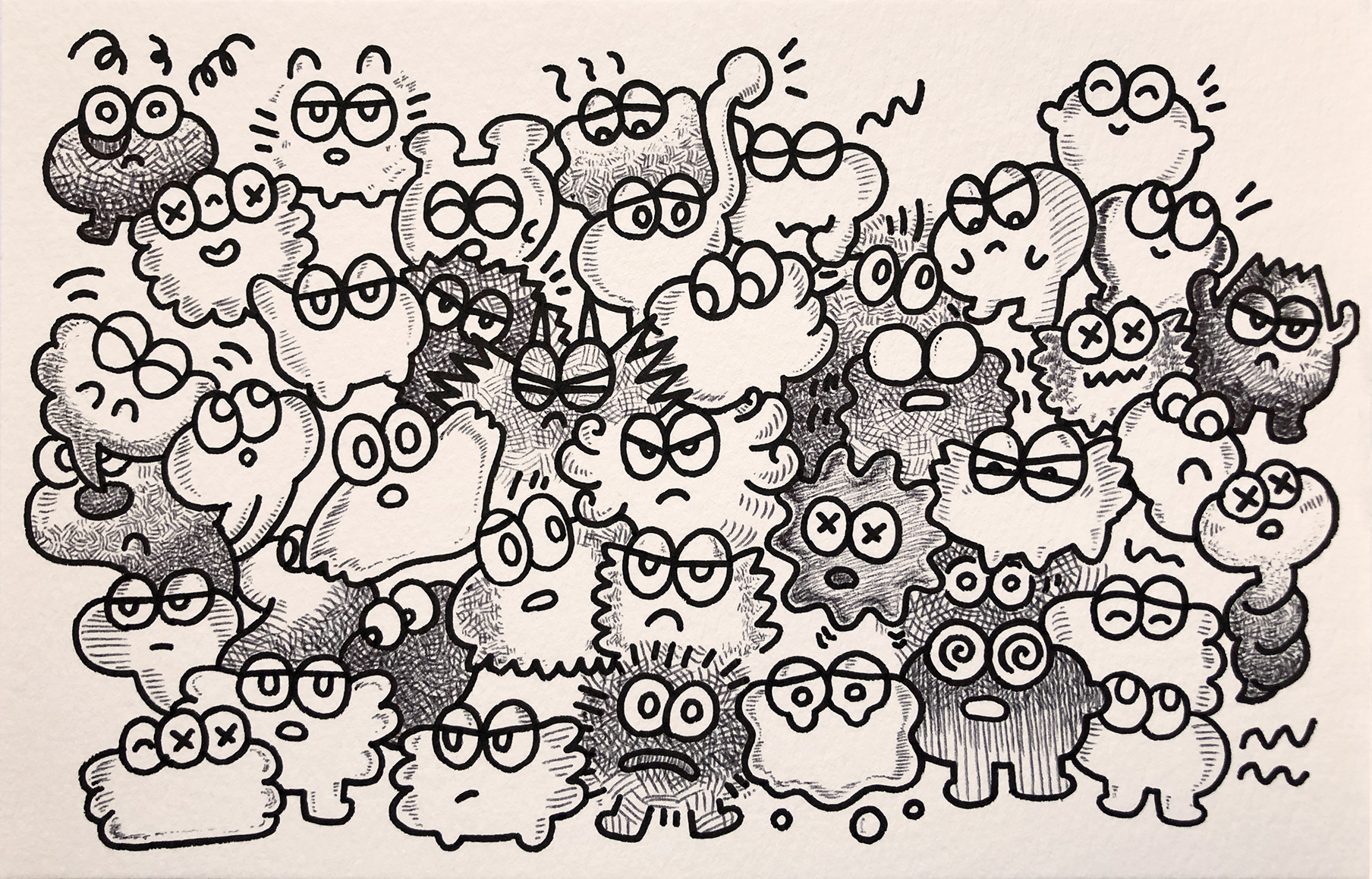 Coney Ishida, Untitled, 2024, Ink on watercolor paper, 5.5 × 8.5 in
You frequently shift scale and attention, giving dignity to the small or overlooked. What draws you to these subtle rebalancings?
I feel that by paying attention to small or often overlooked beings, and by treating them with respect, the world might slowly become a little better.
When I look at our society, I sometimes notice how structures of power — where the strong act unfairly toward the weak — are accepted as something normal.
It is still difficult for me to clearly explain why I am drawn to these subtle shifts. But I think I feel a quiet discomfort when imbalance is left as it is.
Consumption and care often coexist in your work. How do you think about the tension between nourishment and harm?
To create something can bring joy to someone, but at the same time, it may also involve consuming something or causing harm in ways we do not always see.
I feel that it is very difficult to completely remove the tension between consumption and care.
Still, I wonder if by slowly changing the structures of consumption, and by widening our sense of care, these two things might be brought a little closer together.
Alongside my art practice, I also work in character creation and design. This question is a very important challenge for me, and I feel it is something I will need to keep facing for a long time.
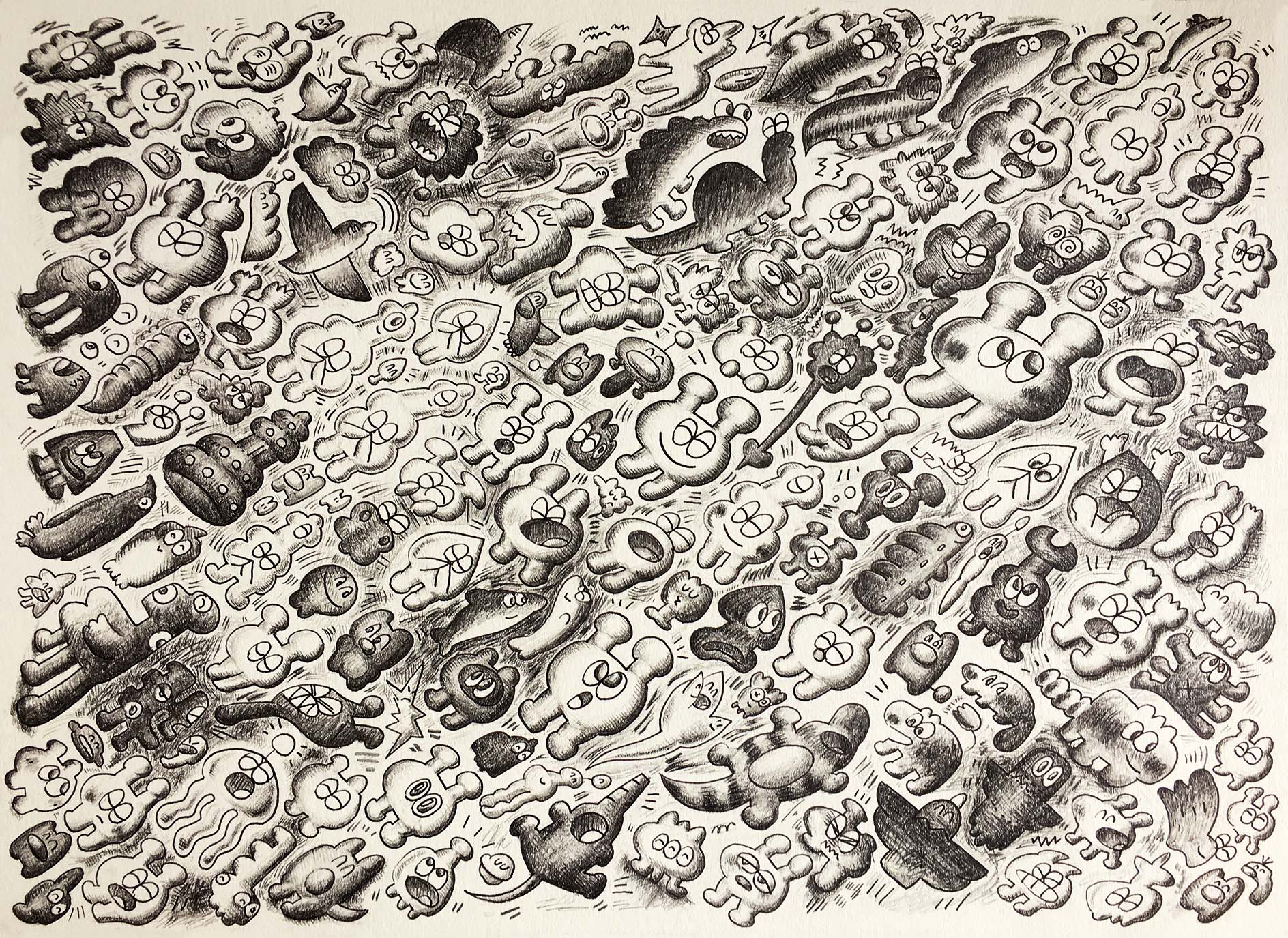 Coney Ishida, Freedom, 2021, Graphite on paper, 11 × 15 in
Many figures exist between the living and the inanimate. What does this ambiguity open up for you and for the viewer?
I think the boundary between what is considered “living” and what is “inanimate” may be slightly different for each person.
In my work, leaving this boundary ambiguous may allow it to remain open rather than fixed. It might gently shift or soften the line.
I hope that both I and the viewer can slowly widen this boundary, and increase the number of things we are able to feel as “alive.”
Travel and daily encounters inform your imagery, yet the worlds you build feel intimate and internal. How do external experiences become these quiet ecosystems?
The intimate and inward feeling of my work may be connected to my own personality.
I like to spend time quietly, both in daily life and when I travel. For many years I traveled alone. Recently I sometimes travel with my partner, but I still value quiet time.
Even during travel, I enjoy a kind of dialogue with nature.
The landscapes and experiences I encounter outside are not drawn directly as they are. I feel that they are first taken into my inner world, and over time they slowly become part of my work.
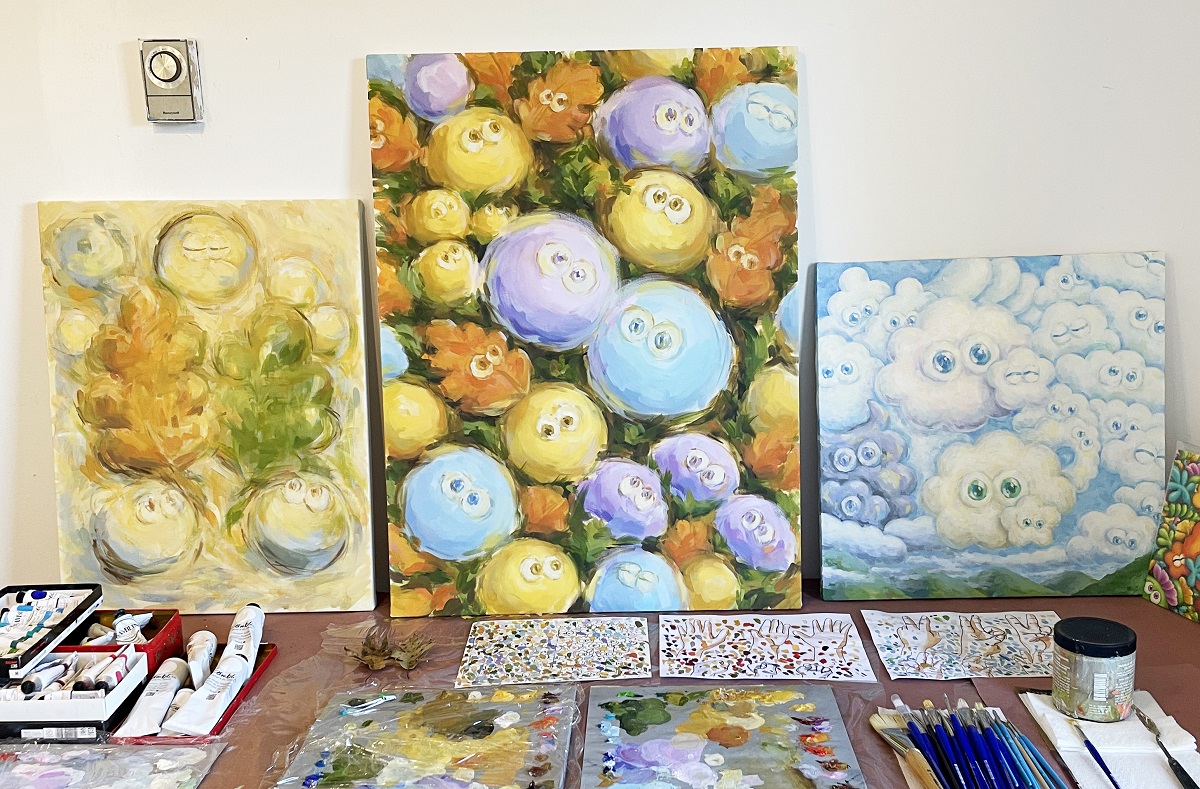 Studio view during Cha North residency, 2025 Pine Plains, NY
Your work gestures toward “small futures” rather than grand solutions. What role do you see art playing in shaping these modest visions of coexistence?
I believe that small acts of kindness and small solutions can eventually lead to larger changes.
In my work, I try to place small or often overlooked motifs at the center — things that might not usually become the main focus. I hope that by doing so, viewers may begin to notice these beings or situations more carefully, reflect on them, feel care for them, and perhaps gently shift their actions.
https://coneyishida.com
https://www.instagram.com/coneyishida

Noah Becker
Noah Becker is an artist and the publisher and founding editor of Whitehot Magazine. He shows his paintings internationally at museums and galleries. Becker also plays jazz saxophone. Becker's writing has appeared in The Guardian, VICE, Garage, Art in America, Interview Magazine, Canadian Art and the Huffington Post. He has written texts for major artist monographs published by Rizzoli and Hatje Cantz. Becker directed the New York art documentary New York is Now (2010). Becker's new album of original music "Mode For Noah" was released in 2023.
Becker's 386 page hardcover book "20 Years of Noah Becker's Whitehot Magazine of Contemporary Art" drops Aug 8, 2025 globally on Anthem Press.
Noah Becker on Instagram / Noah Becker Paintings / Noah Becker Music / Email: noah@whitehotmagazine.com
view all articles from this author