Whitehot Magazine
October 2026
"The Best Art In The World"
"The Best Art In The World"
October 2026
Language, Space, and Survival in Greater New York 2026
By YEZI LOU, Apr 30th, 2026
On April 16, MoMA PS1 opened the sixth edition of Greater New York, bringing together more than fifty artists working in and around the city. Immersed in this expansive presentation, one might initially feel dazzled, even overwhelmed by its density and energy displayed. However, beyond capturing the vitality of New York as a geographic and cultural site, the exhibition unfolds as a space where meaning is continuously negotiated. Across many of the works, language and translation no longer guarantee clarity but instead generate new, often deformed gate of communication.
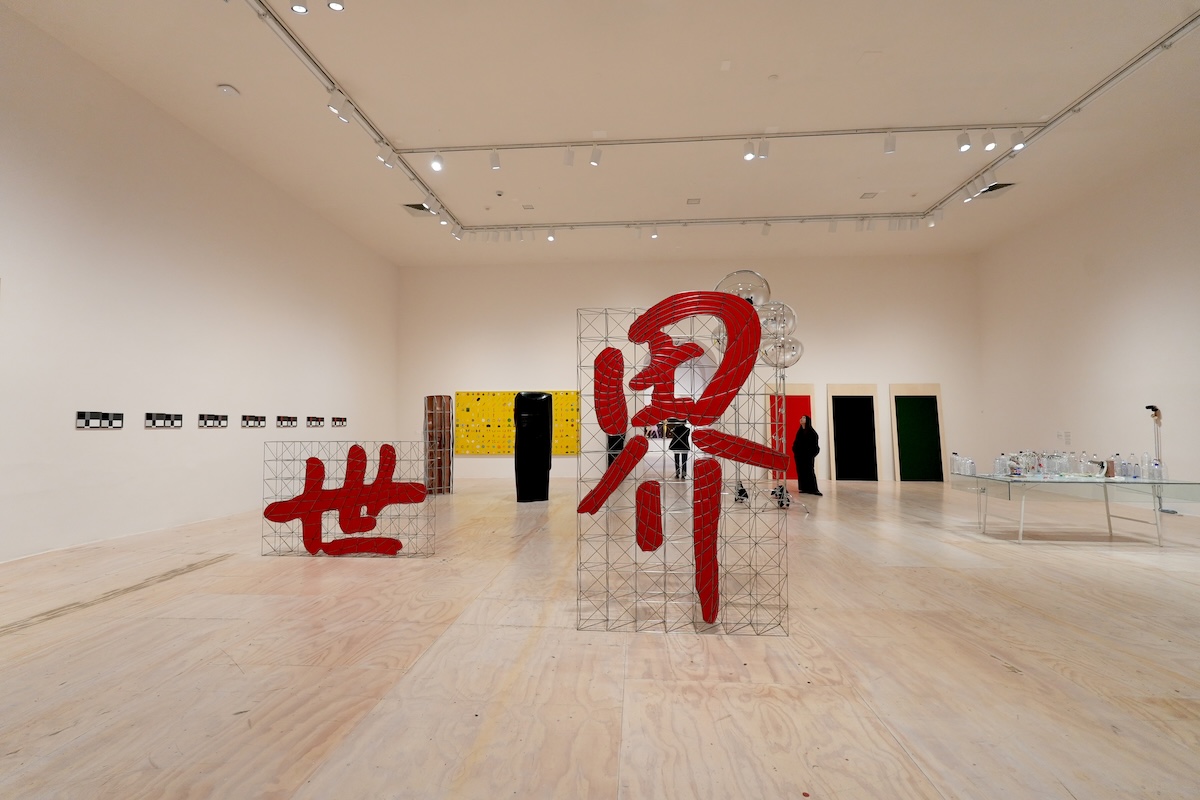 Installation view of Greater New York 2026, on view April 16-August 19. MoMA PS1, 2026. Photo by Yezi Lou. Courtesy of MoMA PS1.
Rather than functioning as faithful translators, artistic mediums here operate as speculative tools. They expose how meaning is constructed, mediated, and at times fails to hold. In this context, systems of knowledge that once promised coherence begin to loosen. Taxonomy, archives, and representation appear not as a social infrastructure, but as partial and contingent frameworks shaped as much by misalignment as by connection.
Moving through the exhibition takes time; its intensive curation fails quick comprehension, and it demands a slower mode of attention. This reflection focuses on selected artists whose works sustained writer’s attention the longest, where interaction unfolded through extended looking.
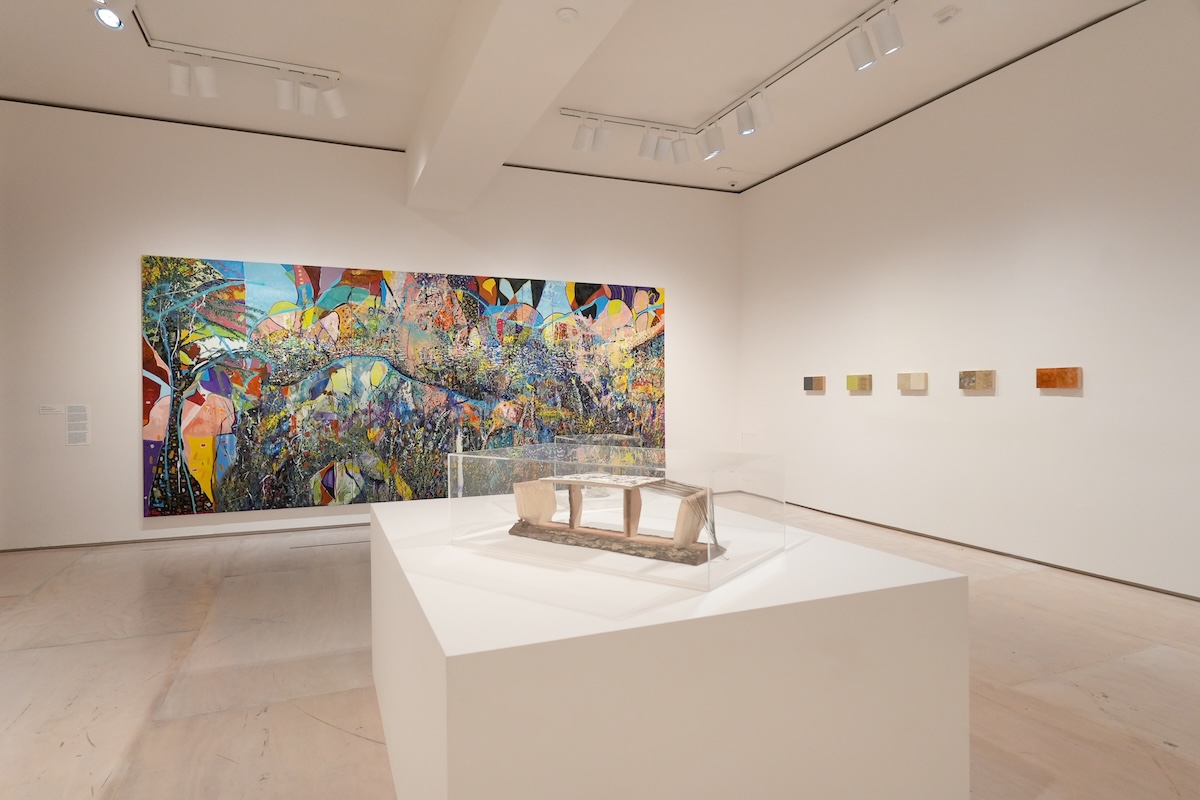 Installation view of Greater New York 2026, on view April 16-August 19. MoMA PS1, 2026. Photo by Yezi Lou. Courtesy of MoMA PS1.
Chang Yuchen’s (b. 1989, Shanxi Province, China) ongoing Coral Dictionary reframes translation as a slow and ecological process that resists equivalence. In Malaysia, after encountering the trilingual Kamus Sari dictionary, a compact dictionary designed for quick reference rather than deep linguistic study focusing on commonly used words, Chang began pairing its situational phrases with fragments of dead coral collected along the shoreline, treating each porous form as a unit of meaning.
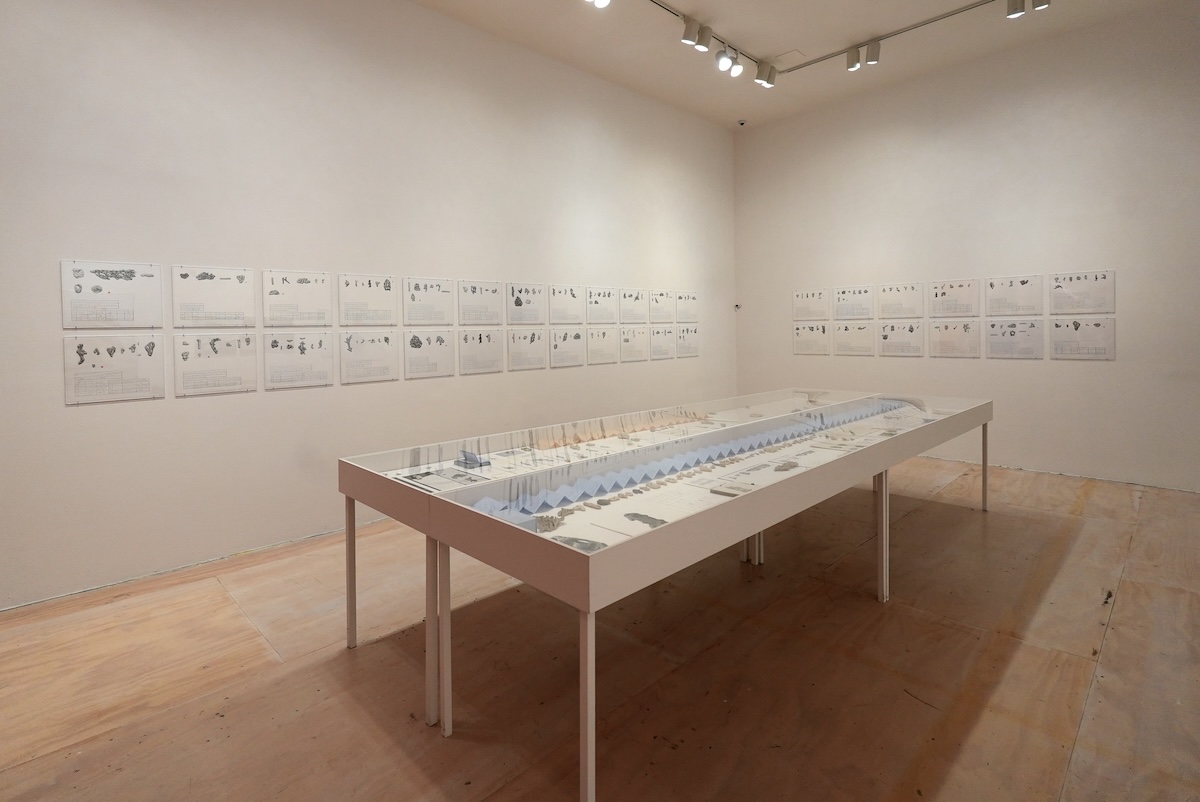 Chang Yuchen, installation view of Coral Dictionary (36 Sentences), 2019-ongoing. Greater New York at MoMA PS1, 2026. Photo by Yezi Lou. Courtesy of the artist and MoMA PS1.
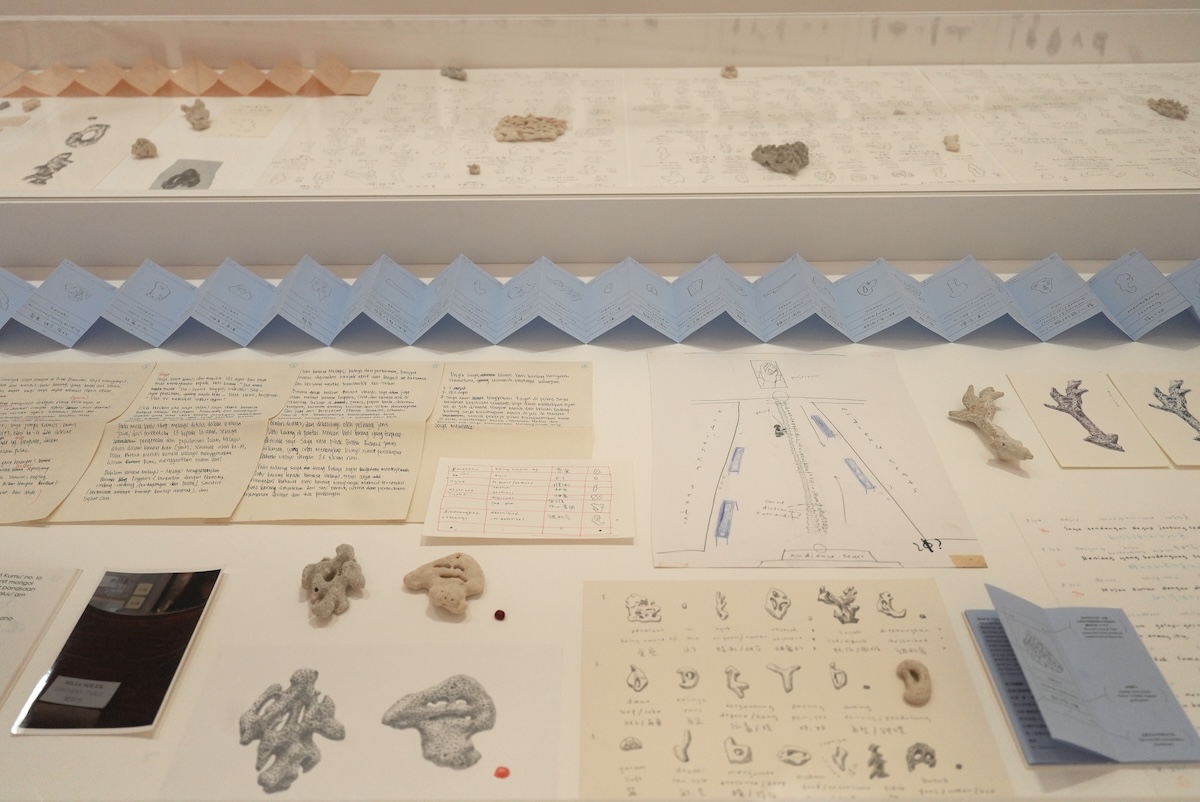 Chang Yuchen, installation view of Coral Dictionary (36 Sentences), 2019-ongoing. Greater New York at MoMA PS1, 2026. Photo by Yezi Lou. Courtesy of the artist and MoMA PS1.
The project draws on the fluid linguistic environment of Malaysia, where multiple languages often coexist within a single sentence, shaped by colonial history and everyday social exchange. This condition of multilingual fluidity finds a parallel in the expressive irregularity of coral. Through meticulous graphite drawings, Chang places coral forms alongside Mandarin, Malay, and English phrases, yet these elements never settle into fixed correspondence. Meaning emerges instead through proximity, repetition, and duration. The work is less a system to be decoded than one to be inhabited. What begins as translation gradually becomes the construction of an alternative semiotic field that shifts authority away from human language toward the material intelligence of the nonhuman. In later participatory iterations, where viewers assemble their own sentences using coral fragments, authorship disperses further, transforming translation into a collective process.
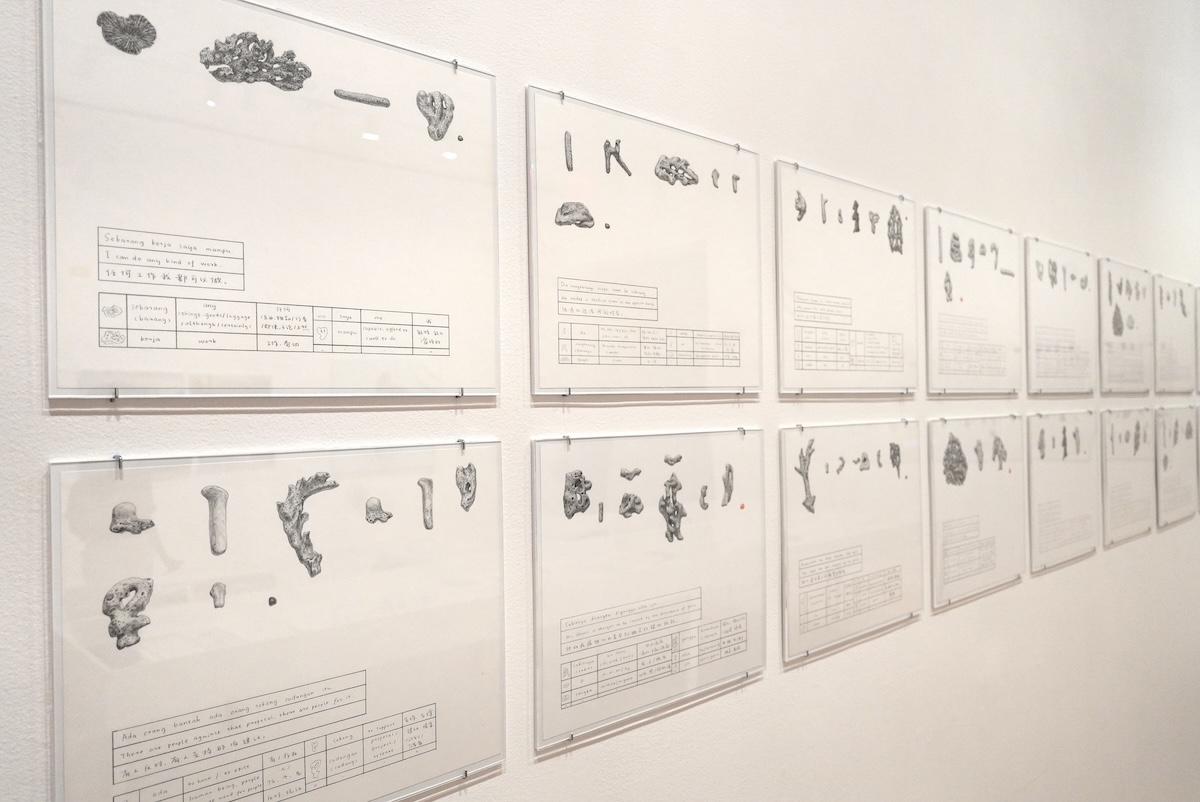 Chang Yuchen, installation view of Coral Dictionary (36 Sentences), 2019-ongoing. Greater New York at MoMA PS1, 2026. Photo by Yezi Lou. Courtesy of the artist and MoMA PS1.
If Chang’s work approaches translation through ecological relation, Red Canary Song situates it within the urgency of lived experience. Based in Flushing, Queens, this collective of migrant massage workers, sex workers, and allies presents Touch the Heart (2026) as a translation of community into space.
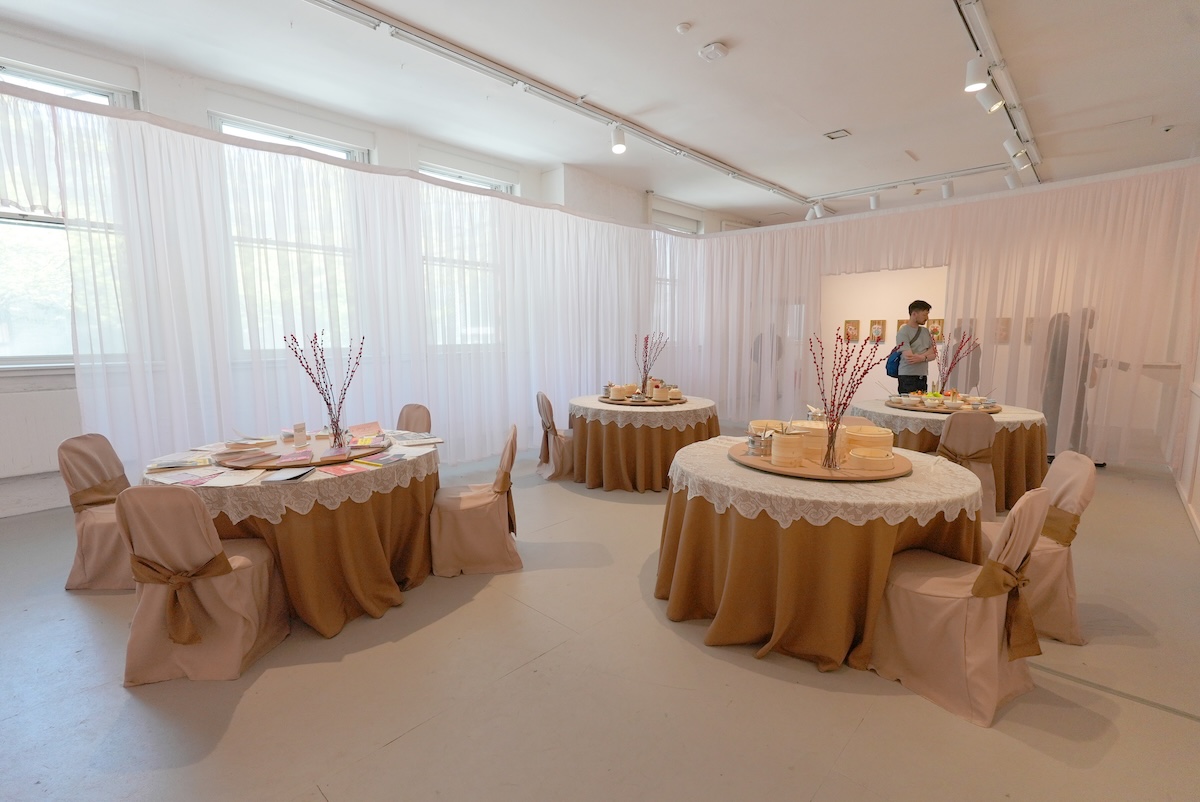 Red Canary Song, installation view of Touch the Heart, Multimedia installation, 2026. Greater New York at MoMA PS1, 2026. Photo by Yezi Lou. Courtesy of the artists and MoMA PS1.
Installed in the Homeroom gallery, the work adopts the familiar structure of a typical dim sum restaurant, where round, rotating tables become sites of grassroot-gathering, exchange, and organization. This spatial framework extends into a hybrid environment that merges a massage parlor, a domestic interior, and an information hub. Each table carries a distinct function, including an altar for mourning lives lost to state violence, a cartographic archive tracing migration and surveillance, a massage table that moves between care and labor, and a reading station filled with zines and legal resources. Knowledge here is not presented as fixed information but produced through interaction and proximity.
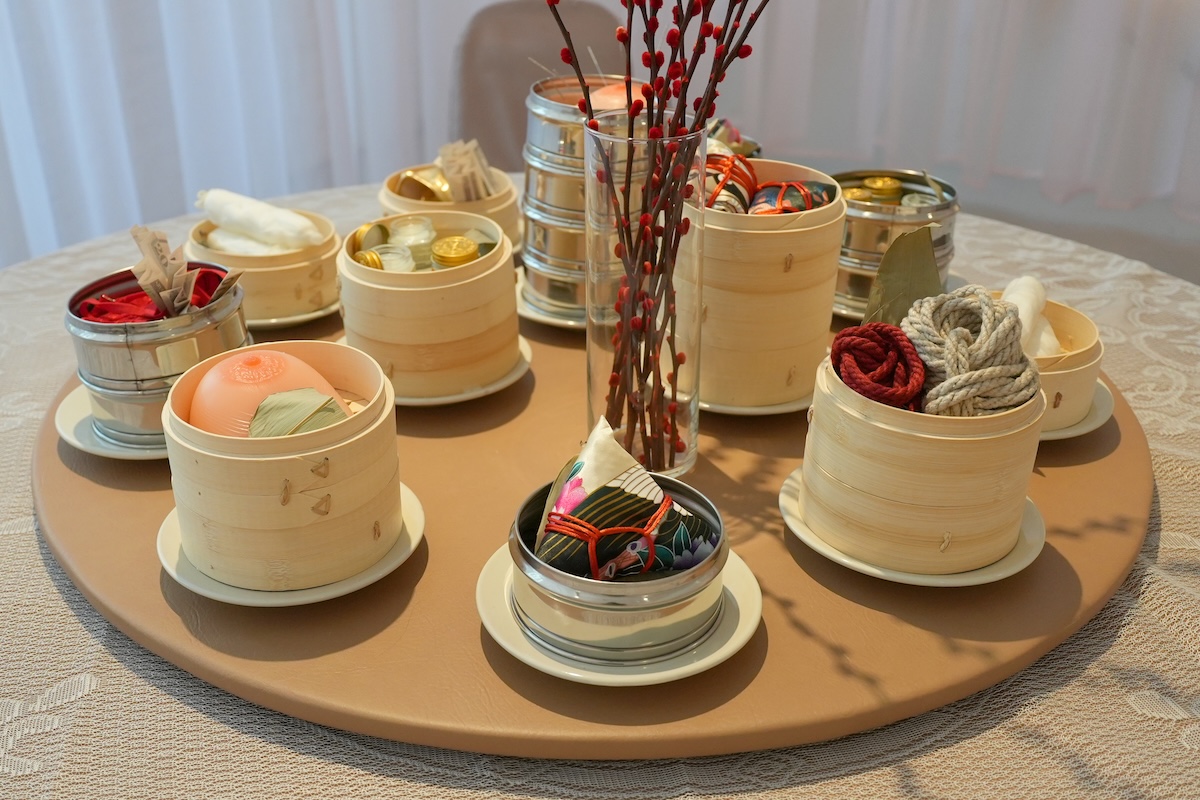 Red Canary Song, detail view of Touch the Heart, Multimedia installation, 2026. Greater New York at MoMA PS1, 2026. Photo by Yezi Lou. Courtesy of the artists and MoMA PS1.
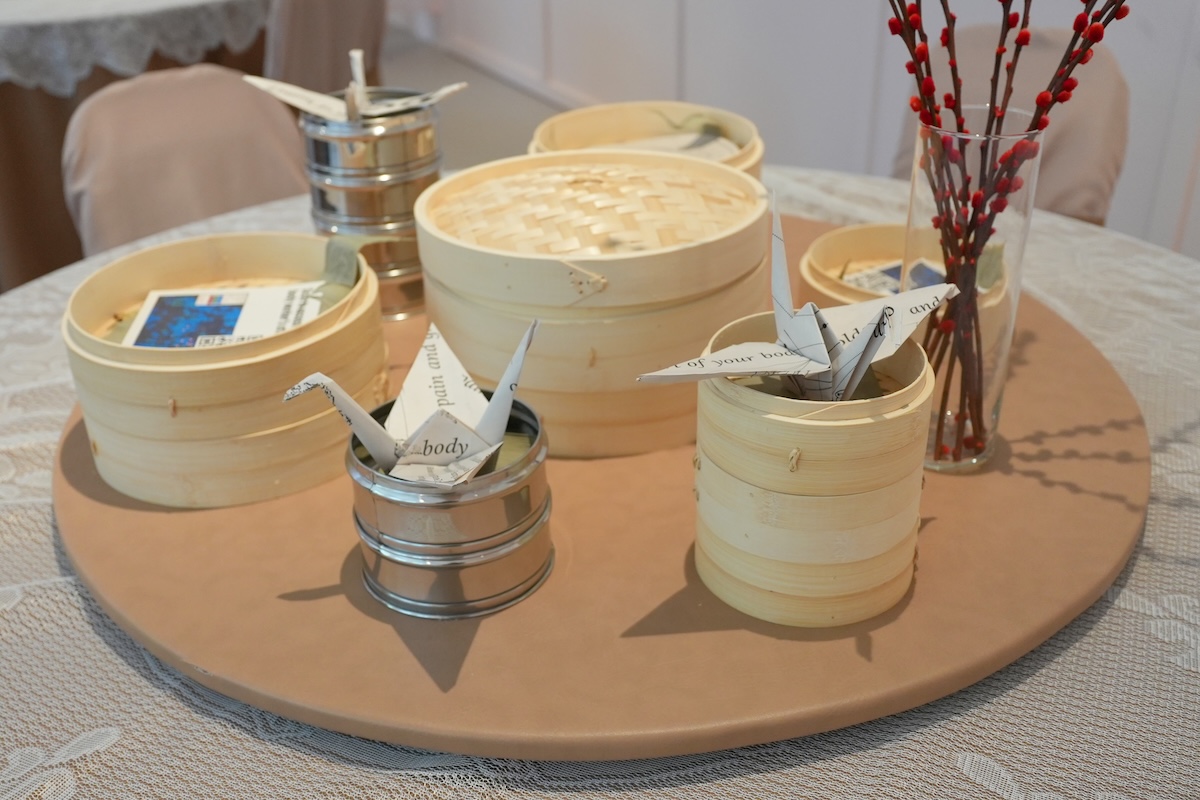 Red Canary Song, detail view of Touch the Heart, Multimedia installation, 2026. Greater New York at MoMA PS1, 2026. Photo by Yezi Lou. Courtesy of the artists and MoMA PS1.
The act of “spinning the table” becomes both a literal gesture and a model of redistribution, circulating resources, stories, and support. In this context, translation is inseparable from survival. It describes the daily negotiation between visibility and protection, between institutional language and lived realities. Coved by lured pink mesh, this environment draws the viewer into an unknown privacy, where the work replaces spectatorship with participation, positioning knowledge as something collectively assembled rather than passively received.
This instability of meaning continues in Akira Ikezoe’s (b. 1979, Kochi, Japan) paintings, where systems of classification begin to unravel. I first encountered his work at the Whitney Biennial 2026, where his dense visual language left a lasting impression, one that deepens in his presentation here. Ikezoe constructs compositions that resemble charts, diagrams, or instructional maps, suggesting a rational system of organization. In Chart of Darkness (2025), horizontal and vertical axes appear to group objects and assign meaning. Yet the elements within these structures refuse to stabilize. Everyday objects and allegorical symbols line up the canvas in associative sequences that are both precise and irrational.
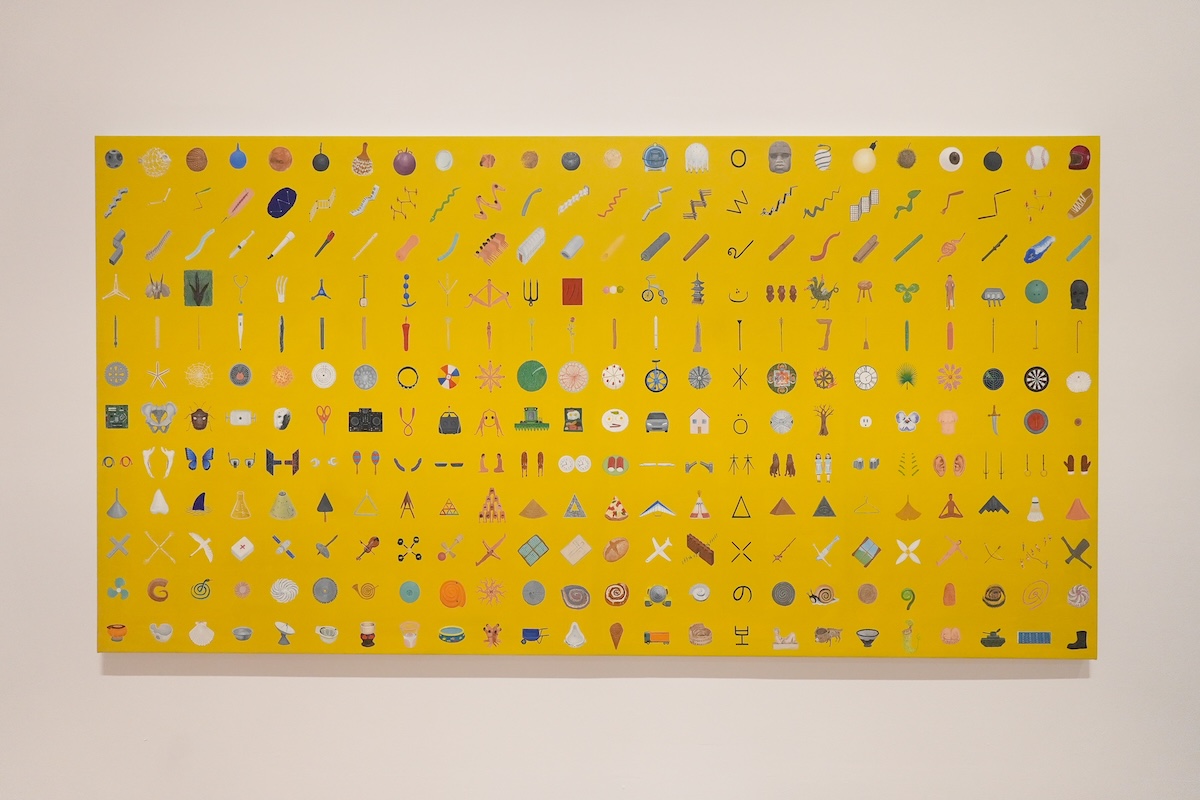 Akira Ikezoe, installation view of Chart of Darkness, oil on canvas, 2025. Greater New York at MoMA PS1, 2026. Photo by Yezi Lou. Courtesy of the artist and MoMA PS1.
Developed after his move to New York with limited English, Ikezoe’s approach to communication emerges through images, affinities, and repetition rather than fixed linguistic systems. His work reveals classification not as a neutral tool, but as a fragile and contingent construct shaped by displacement and cultural overlap. Translation here does not resolve difference but instead occupies the space between systems, where meaning remains open and continuously shifting.
Janiva Ellis (b. 1987, Oakland, CA) extends this condition into the realm of image-making, where representation itself begins to falter. Her paintings resist immediate legibility, presenting surfaces that feel both saturated and eroded, as though the image were dissolving even as it appears. In Lens Error (2021), the structure of the Brooklyn Bridge emerges faintly through a murky field of color, its iconic form destabilized. A barely visible falling figure interrupts any sense of narrative resolution, shifting the work away from heroic imagery toward uncertainty.
Ellis draws from animation, digital media, and art historical references, yet these sources are fragmented and reconfigured into compositions that withhold clarity. Looking at her work requires a slower engagement, where dry humor forms through hesitation and partial recognition. This visual instability also reflects the broader circulation of images shaped by histories of racialization, repetition, and distortion. By disrupting familiar visual codes, Ellis exposes how images flatten and circulate across media. Painting becomes a site where translation breaks down, where the movement from image to meaning is delayed and persistently incomplete.
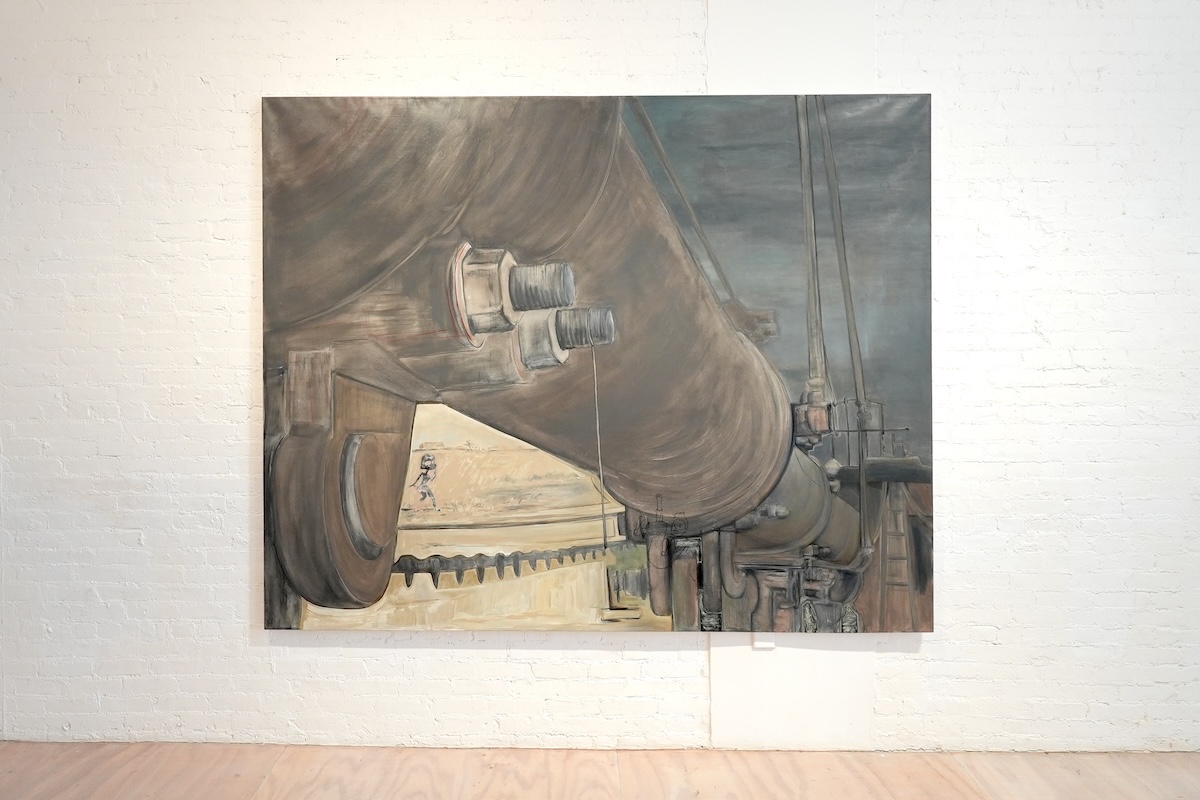 Janiva Ellis, installation view of Lens Error, oil on linen, 2021. Greater New York at MoMA PS1, 2026. Photo by Yezi Lou. Courtesy of the artist and MoMA PS1.
Together, Greater New York 2026 presents practices that remain open, provisional, and unsettled. What connects these artists is not a shared aesthetic, but a shared refusal of coherence as an endpoint. Translation becomes a method of destabilization, revealing the gaps between systems of knowledge and the distance between lived experience and its representation. Rather than proposing new frameworks of certainty, the exhibition lingers within states of partiality, where meaning is continuously negotiated. Moving through the show becomes an exercise in attention, where understanding accumulates gradually through relation and time.
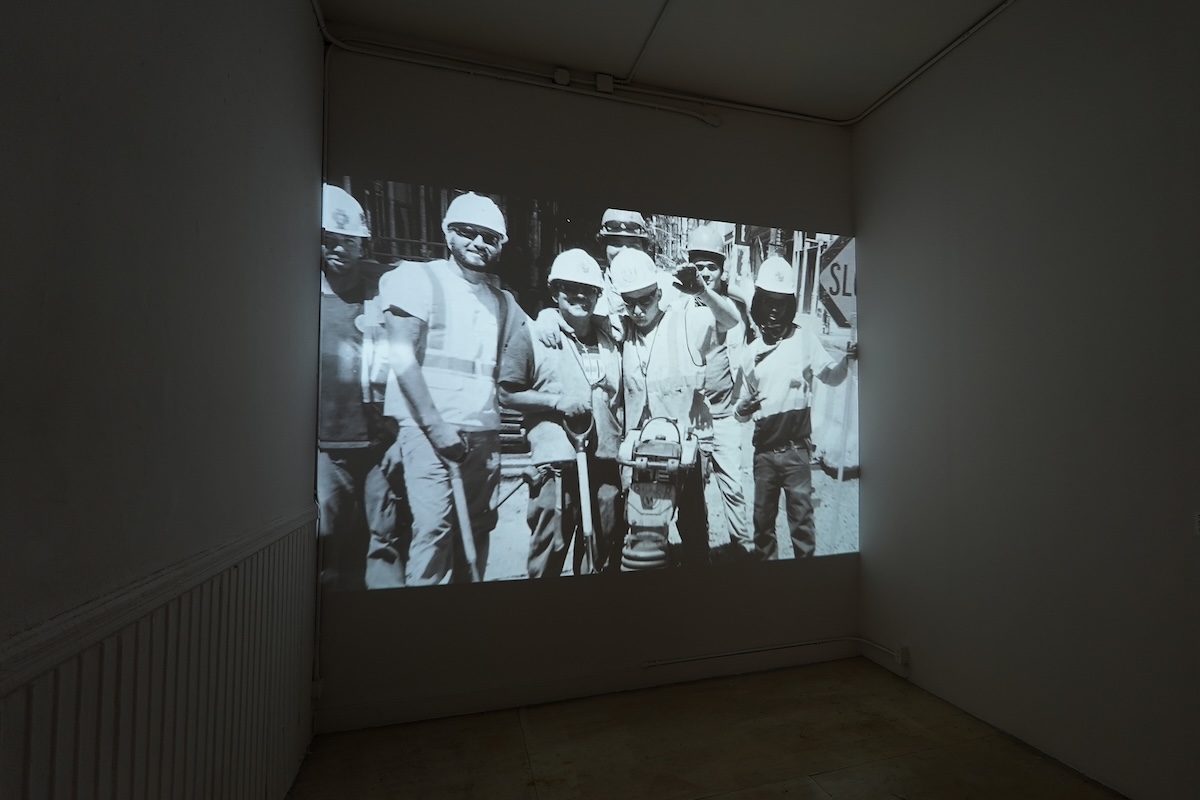 Marie Angeletti, installation view of Men at Work, Digital slideshow, 15:50 min, 2026. Greater New York at MoMA PS1, 2026. Photo by Yezi Lou. Courtesy of the artist and MoMA PS1.
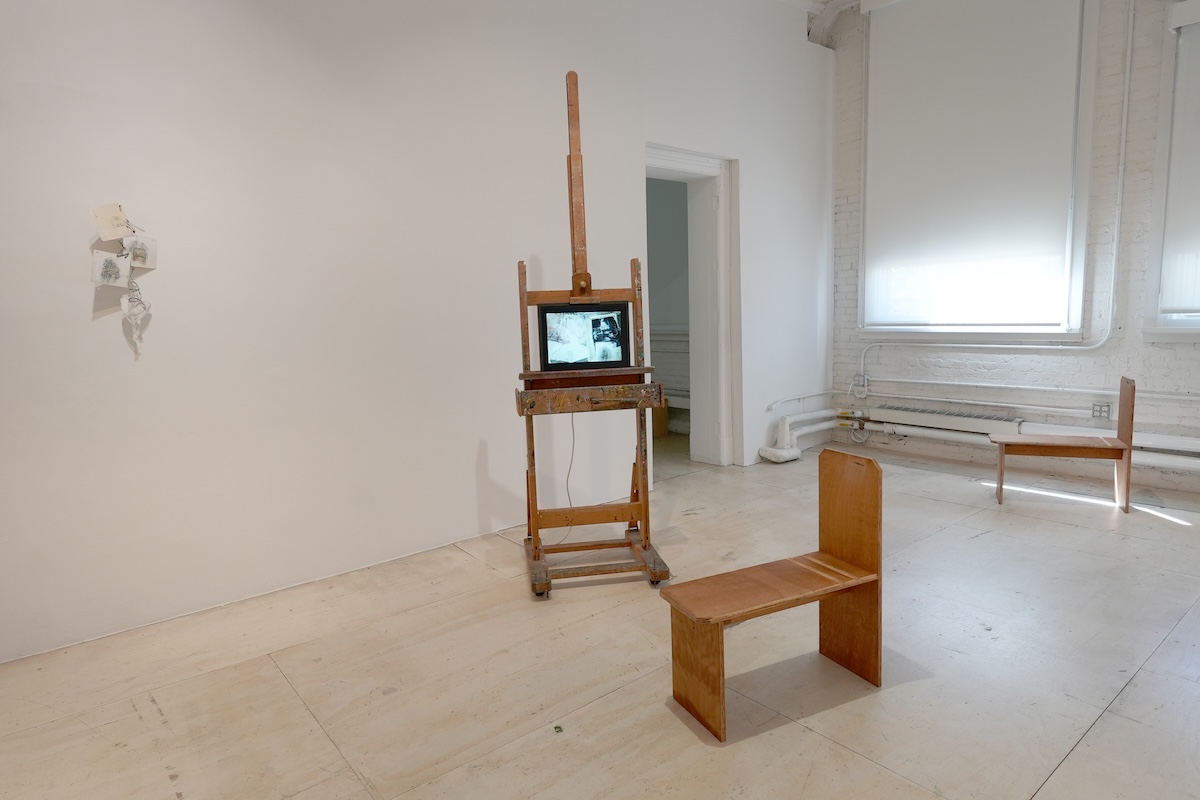 Sophie Friedman-Pappas, installation view of “Meet you in hell!”, Video (color, silent; variable loop), wooden easel, and wooden drawing horses, 2026. Greater New York at MoMA PS1, 2026. Photo by Yezi Lou. Courtesy of the artist and MoMA PS1.
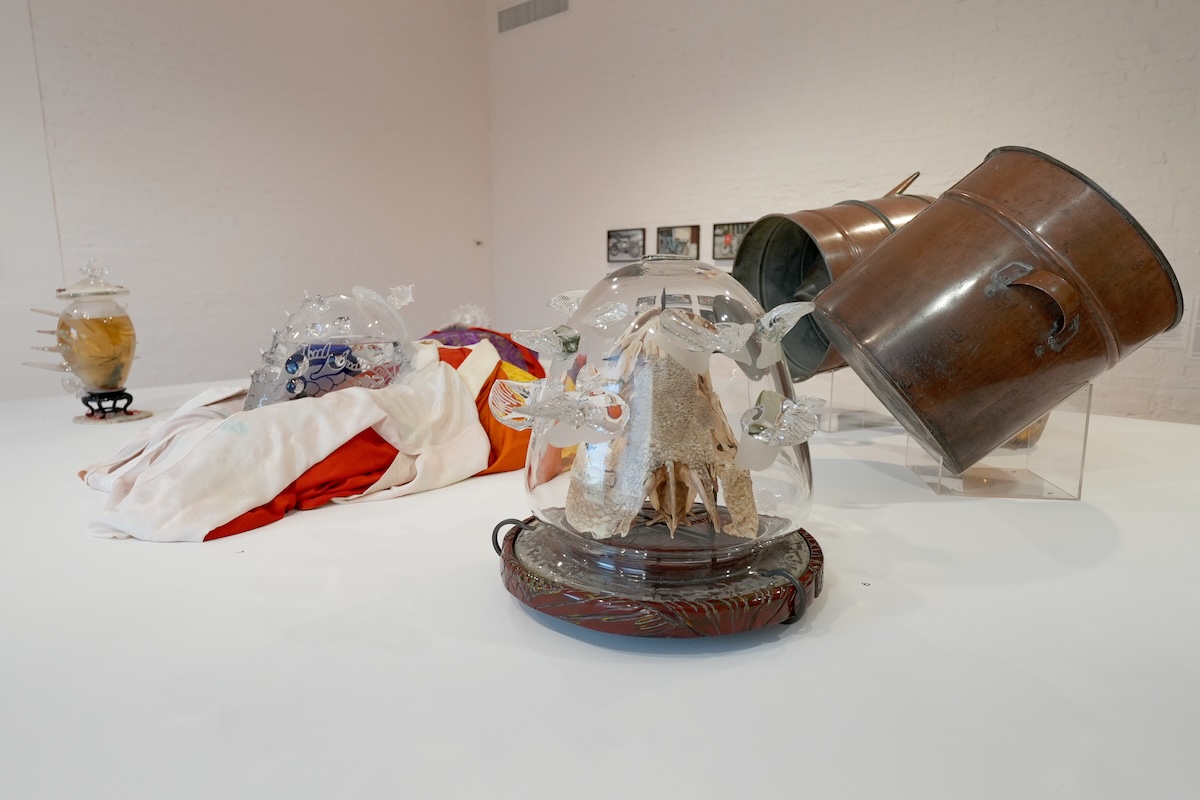 Arlan Huang, installation view of Orientalism in a Jar, 1991-97. Greater New York at MoMA PS1, 2026. Photo by Yezi Lou. Courtesy of the artist and MoMA PS1.
This instability extends beyond language into the spatial and political conditions that shape it. Space and national borders are continually redrawn; maps are remade, territories shift, and boundaries remain in flux. No spatial order is ever fixed, but instead exists in a constant state of trembling. In this sense, history can be understood as an ongoing reconfiguration of space, shaped by the movement and presence of bodies. If authorship is a form of expression, it is also a claim to recognition within these shifting terrains. The relationship between the body and its rights, then, is never direct, but mediated through systems of interpretation that determine visibility, legitimacy, and belonging. In this sense, the exhibition reflects the city not as a stable entity, but as a continuous process, one formed through acts of translation, survival, and care.
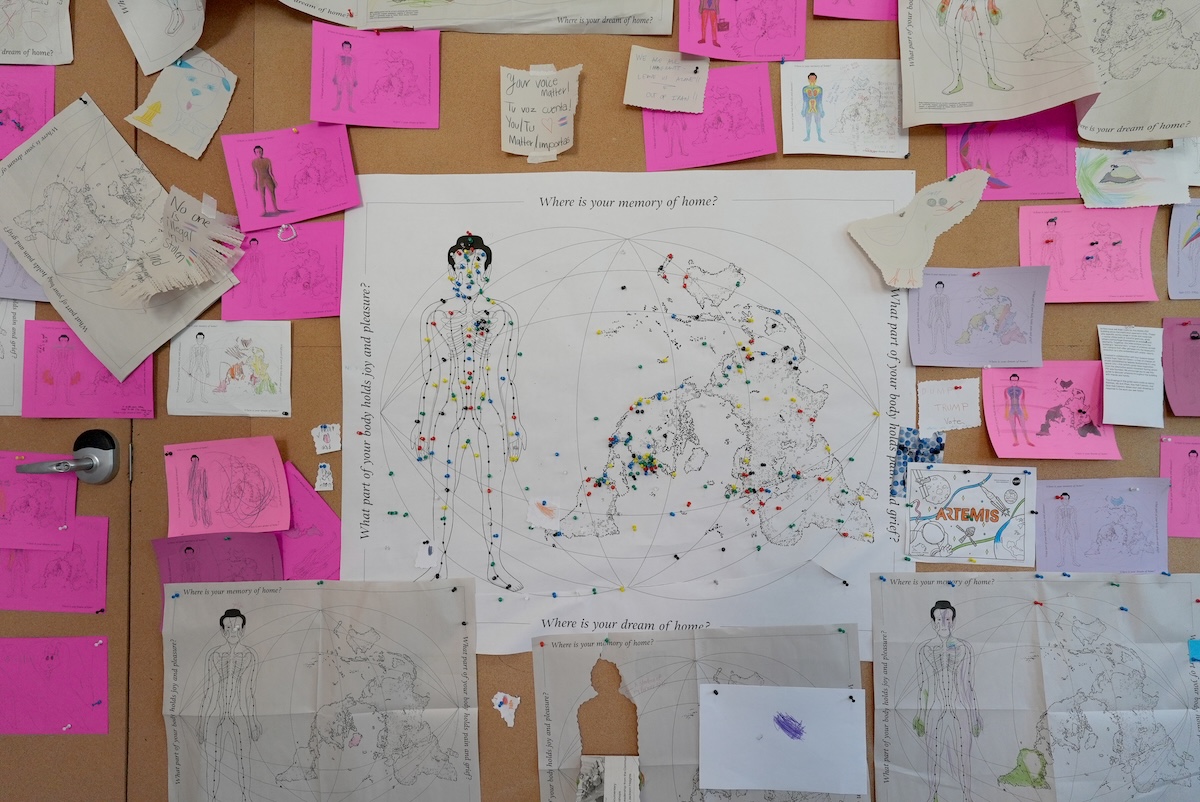 Installation view of collaborative drawings in activity room, MoMA PS1, 2026. Photo by Yezi Lou. Courtesy of MoMA PS1.

Yezi Lou
Yezi Lou (b. 1997) is an artist and independent writer based in Los Angeles. Her research centers on material culture, social phenomena, and syncretic spiritual practices in East Asia. She earned her MFA in Painting and Drawing at UCLA.
view all articles from this author