Whitehot Magazine
October 2026
"The Best Art In The World"
"The Best Art In The World"
October 2026
In Conversation with Kennedy Yanko
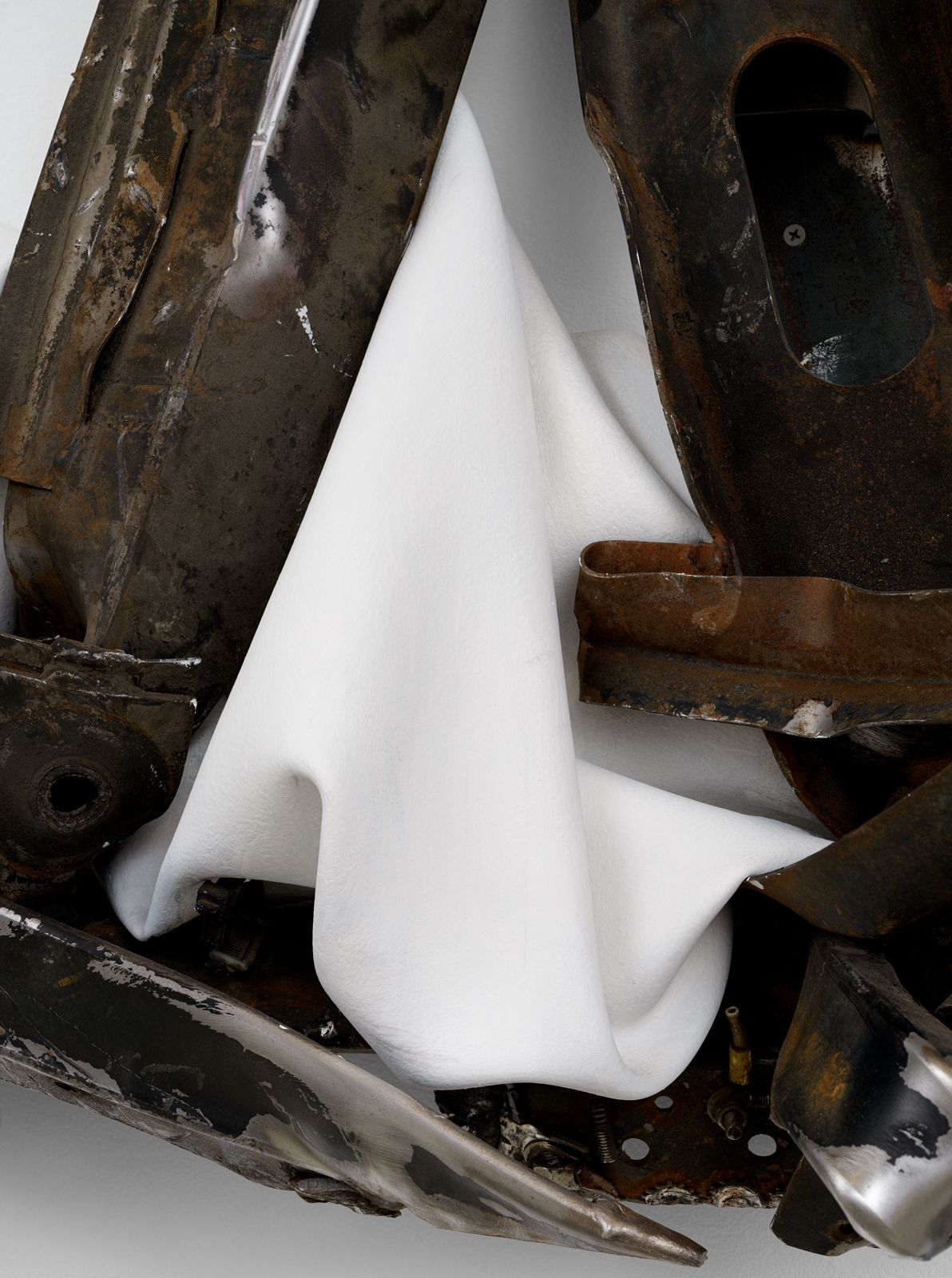
KENNEDY YANKO, Psychically Milked, 2025, Epithets,
Courtesy of James Cohan Gallery, New York
By AYSE SARIOGLU April 1st, 2026
In her studio, metal bends, paint breathes, and form resists definition. Kennedy Yanko’s practice exists in a space where painting dissolves into sculpture, and material becomes both subject and collaborator. Working with salvaged metal and her signature “paint skins,” Yanko constructs immersive environments that feel at once ancient and futuristic - charged with memory, movement, and a quiet, pulsating life.
In this conversation with Ayse Sarioglu for Whitehot Magazine, the artist reflects on her early realization of art as world-building, her evolving relationship with material and color, and her pursuit of balance between control and surrender. Moving fluidly between philosophy and process, Yanko reveals a practice grounded not in domination, but in listening - to matter, to energy, and to the unseen forces that shape both.
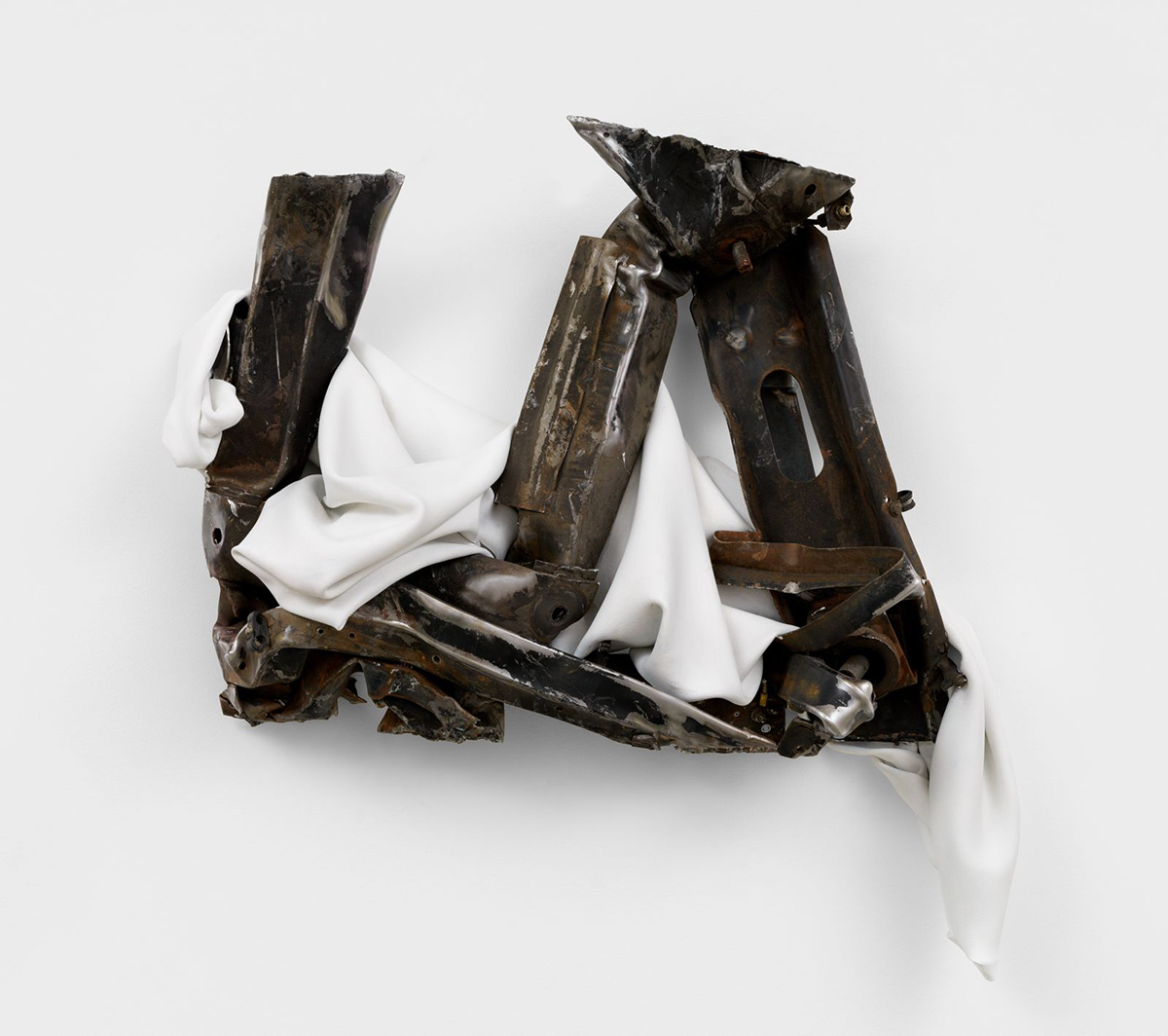
KENNEDY YANKO, Psychically Milked, v2, 2025, Epithets,
Courtesy of James Cohan Gallery, New York
Ayse Sarioglu: At 15, you realized that through art you could create worlds. How has that early revelation expanded into the complex universes you construct today? Are these spaces still places of refuge, or have they become sites of confrontation or reflection?
Kennedy Yanko: When I think back to that age, realizing I could build worlds, what I really meant was that through process - through play and creation - life begins to unfold in front of you. Over time, that idea has expanded into a deeper sense of trust in how things come into being.
Now, in my practice, I feel there’s a kind of knowingness in how things are created - whether in the studio through material or from the mind into physical form. Looking back at my work from the past six years, I feel like I’m only now able to articulate that headspace clearly. I’m always ahead of myself while making the work - it takes years to process what I’ve done.
Lately, I’ve been writing more, journaling, organizing programs for scholars and writers. I’m very interested in language, sound, and vibrational living.
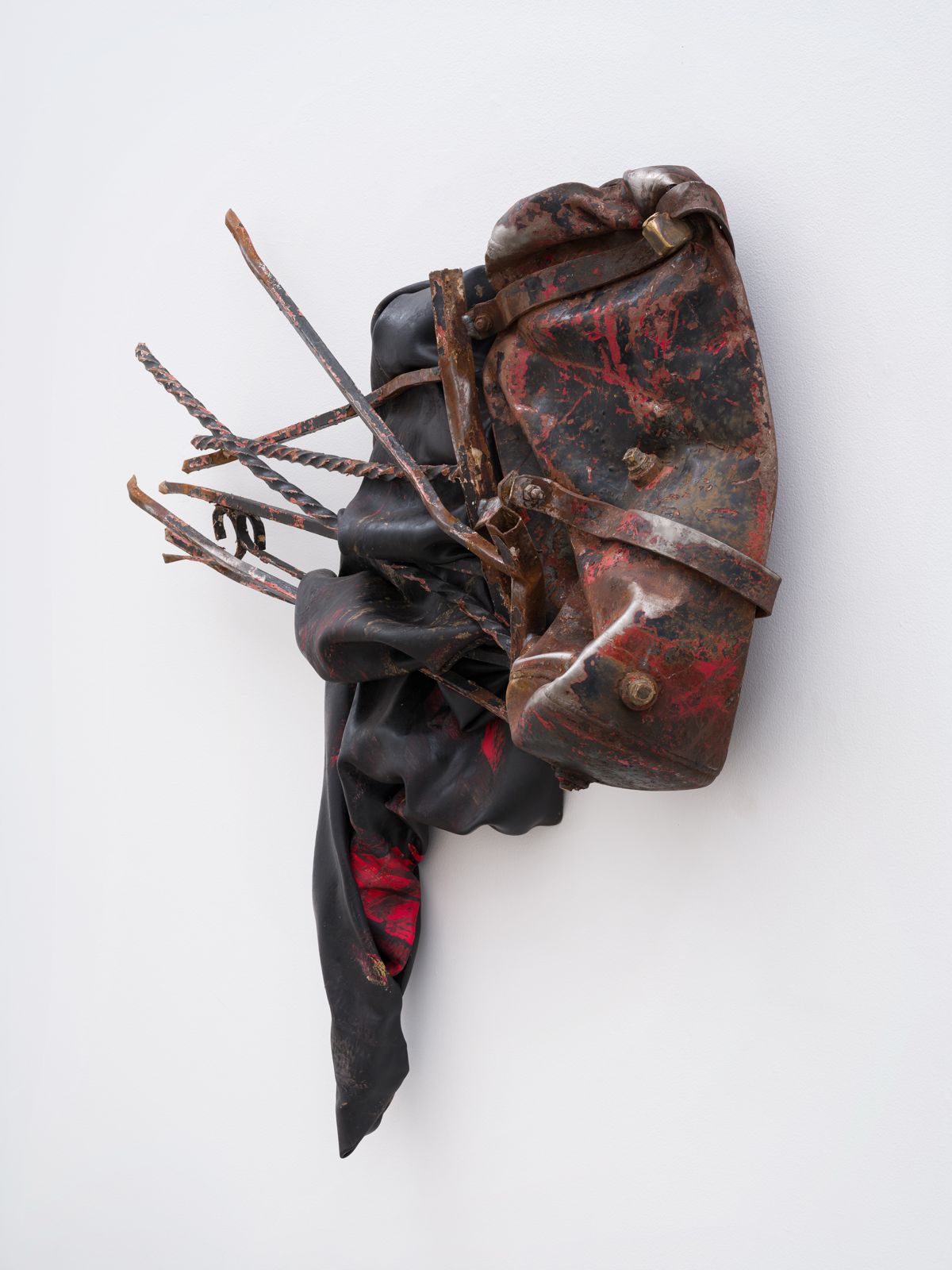
KENNEDY YANKO, Trembling Down, 2024, Epithets,
Courtesy of James Cohan Gallery, New York
Sarioglu: The paint skin in your work appears both fragile and protective, like a membrane between interior and exterior. How did this material language emerge, and how has it reshaped your understanding of painting and sculpture?
Yanko: This material innovation began around 2009 - 2010, when I started removing paint from the canvas. I’ve spent about 15 years developing it.
When you place deep attention on something, it evolves. The paint skins have become a guide for me. I may begin with an idea, but once I start placing them, the process becomes a choreography - a dialogue between the material and myself.
I’ve always been interested in three dimensions, in moving beyond the canvas, but I am fundamentally a painter. Even when creating architectural-scale sculptures, I approach them through painting - through gesture, color, and mark-making.
Sarioglu: Your visual language echoes ancient sculpture, from Greek and Roman traditions to artists like John Chamberlain. How do these historical dialogues unfold within your work?
Yanko: I think there’s a shared consciousness that artists tap into - a kind of collective reservoir. Whether it’s Renaissance painters or Abstract Expressionists, we are all responding to the world around us.
My work is shaped by my own lens - my identity, my background, my lived experience. There’s a longing, a reaching within the work that echoes historical gestures you see in Hellenistic sculpture or Renaissance painting. These themes repeat because they are fundamental to the human condition.
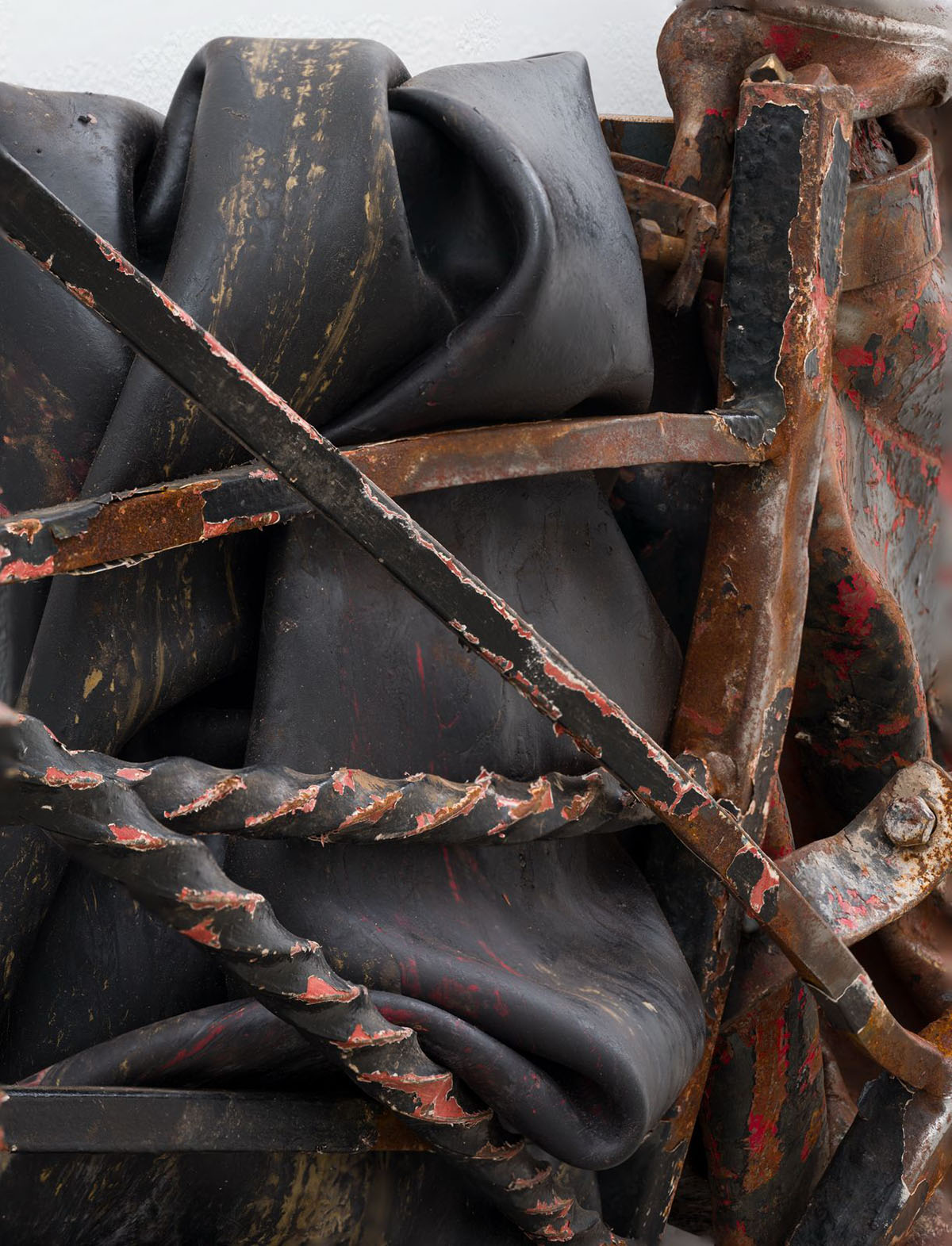
KENNEDY YANKO, Trembling Down, v2, 2024, Epithets,
Courtesy of James Cohan Gallery, New York
Sarioglu: Scrap metal carries traces of time and previous life. When you reshape these fragments, do you feel you are uncovering their memory or inventing new identities?
Yanko: I move between both ideas. Metal comes from the earth - it’s natural, alive in a way. I’m interested in treating it as something organic.
But sometimes the material carries too much history to ignore. There are moments when the metal insists on holding onto its past, and that influences how I work. It becomes a dialogue between its history and my own.
Sarioglu: Many of your forms oscillate between feminine and masculine energies. How do you approach this tension in relation to identity, desire, and power?
Yanko: I’m not intentionally creating tension. I’m seeking balance and completeness. Those dual forces naturally exist within that search.
I’m interested in consciousness - how energy moves, how ideas circulate. These philosophical concerns manifest visually in the work.
Sarioglu: Water, movement, and material introduce rhythm into your process. Do you experience this rhythm as musical, meditative, or physical?
Yanko: It varies. Recently, sound has become very important to me. I’m interested in vibration and how it shapes experience.
I’m drawn to creating environments where perception shifts - where light, air, and atmosphere transform the space. That’s something I’m exploring more deeply now.
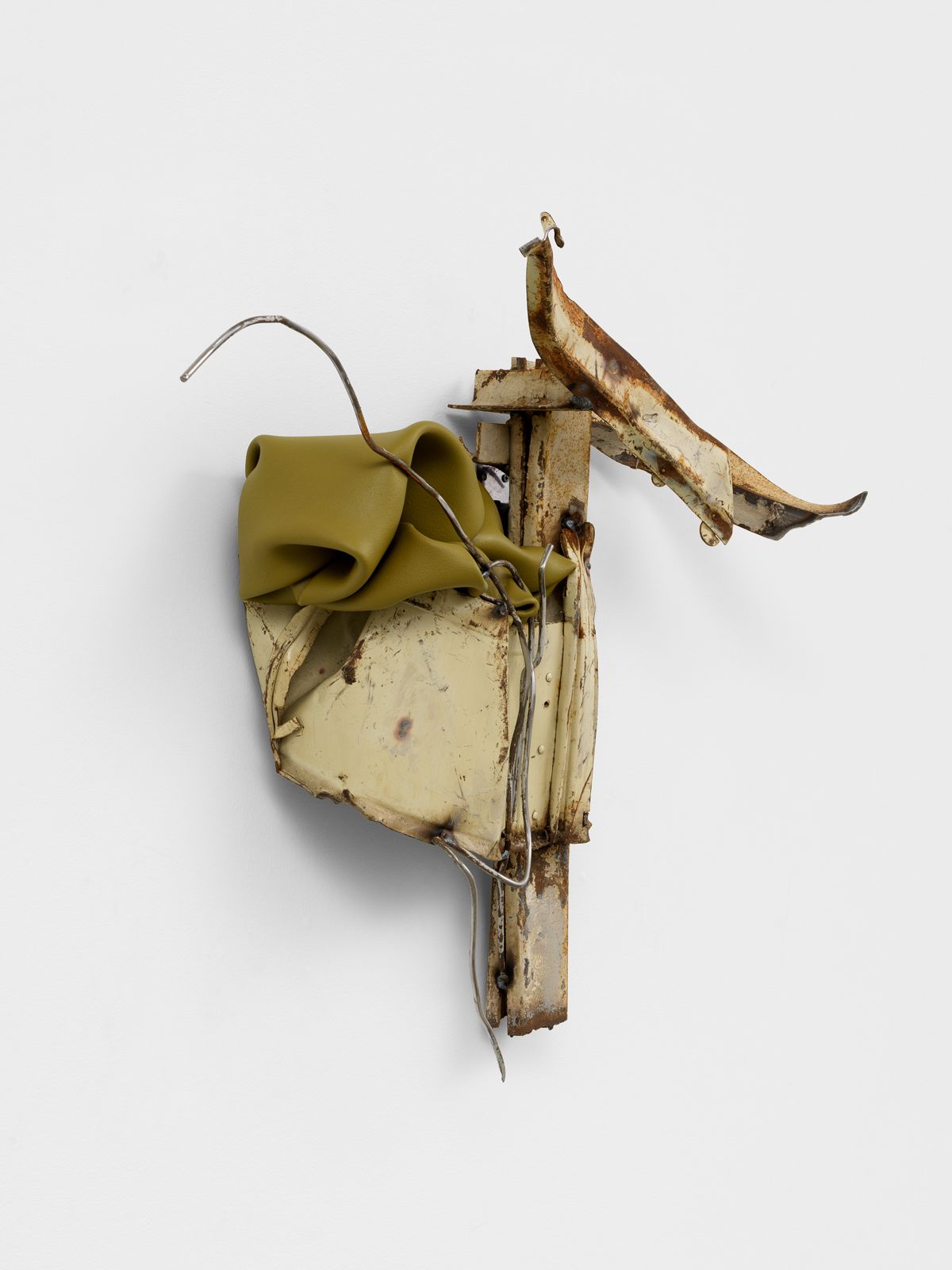
KENNEDY YANKO, B!D!F!W!, 2025, Epithets,
Courtesy of James Cohan Gallery, New York
Sarioglu: Fire, water, and metal appear almost as collaborators in your studio. How do these elemental forces shape both the making and meaning of your sculptures?
Yanko: They act as directives. Sometimes I can’t manipulate the material without fire, and that changes the composition entirely.
My role is to respond to these forces rather than impose control. The work becomes what it is because I move with the materials, not against them.
Sarioglu: Some sculptures seem to hover lightly, while others are firmly grounded. How does this interplay between weight and levity shape the emotional experience?
Yanko: It’s about perception. A small gesture can transform a massive structure - just a slight lift in form can make something heavy feel like it’s about to take flight.
I’m interested in creating forms that feel alive - almost breathing - despite their weight.
Sarioglu: Over time, your palette has evolved from raw industrial tones to vivid yellows, reds, and blues. Do you see this shift as reflecting an emotional transformation?
Yanko: Color has always been central to my work. Even when working with found materials, I focus on subtle undertones and variations.
I approach sculpture like painting - layering color to create something that feels alive and complex.
Sarioglu: Your works feel immersive - almost architectural. How do you imagine viewers interacting with them?
Yanko: I want people to move through them. I imagine my sculptures as environments - spaces to explore rather than objects to observe.
I’m interested in creating experiences that feel unfamiliar, where viewers must discover the work physically.
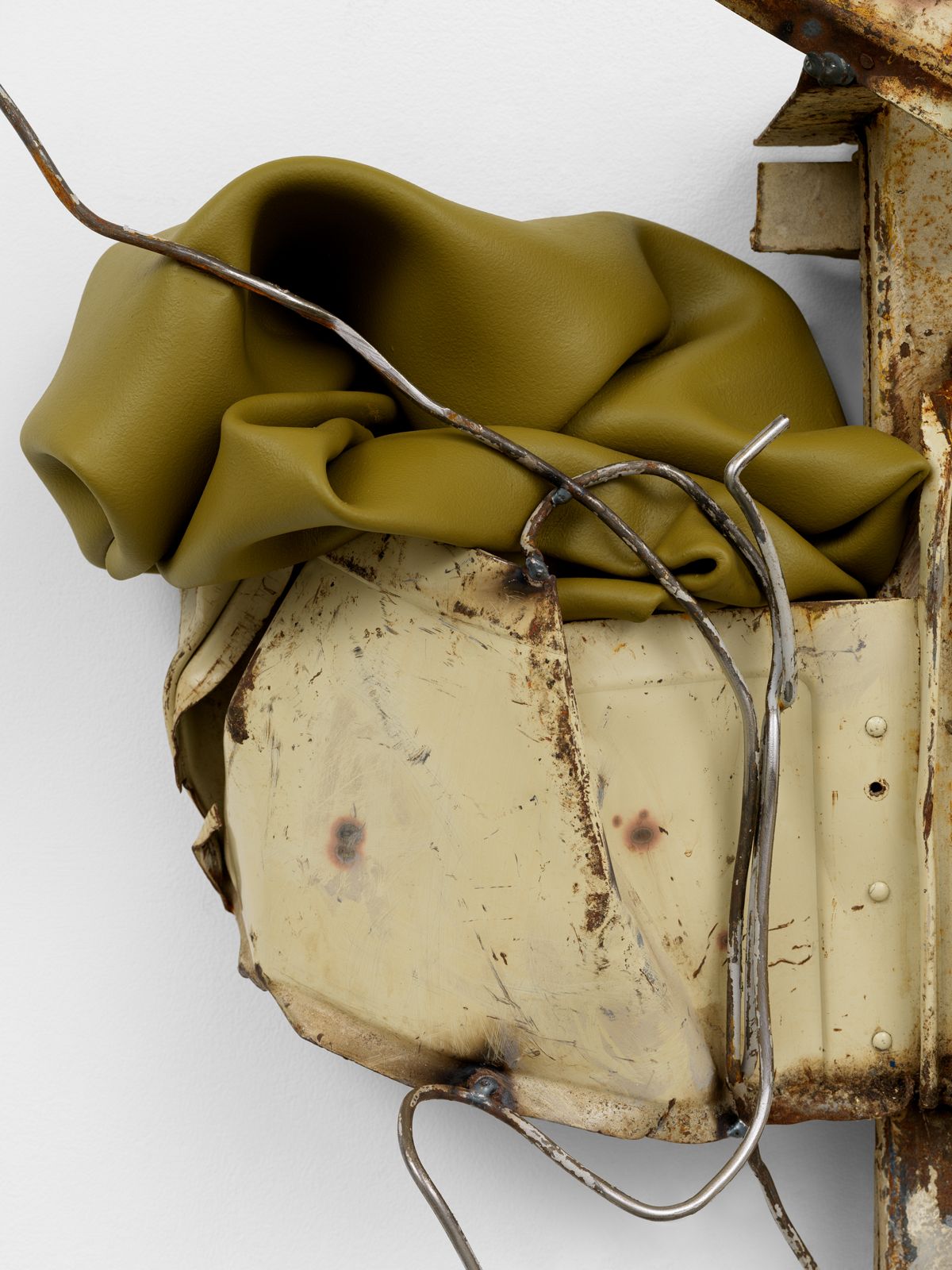
KENNEDY YANKO, B!D!F!W!, v2, 2025, Epithets,
Courtesy of James Cohan Gallery, New York
Sarioglu: Your practice has expanded into digital realms such as NFT and VR. How does this dimension transform the way audiences perceive your physical works?
Yanko: I was briefly interested in the potential of NFTs, particularly for contracts and tracking artworks. But ultimately, it wasn’t a space that held my attention.
I’m more interested in physical, material-based practices.
Sarioglu: As you look to the future, how do you envision the evolution of your practice, and what materials, technologies, or collaborations are currently shaping that direction?
Yanko: I’m interested in scale - outdoor works and architectural collaborations that extend into aquatic environments.
Alongside this, I’m exploring film and writing as ways to more clearly articulate my ideas. Ultimately, I want to create immersive spaces - both physical and emotional - that people can inhabit, while also documenting my voice in the process of making.
Sarioglu: What do you imagine when children encounter your work in public spaces?
Yanko: People have a visceral reaction - they want to touch, climb, and enter the work. Children especially engage with it playfully.
I can imagine creating environments like playgrounds or gardens - spaces that invite exploration and interaction.
Sarioglu: Finally, what are your aspirations for exhibiting in Europe?
Yanko: I’m very interested in engaging with European history. Exhibiting in spaces that carry historical weight creates a dialogue between past and future.
I hope to spend more time in Europe researching, studying, and immersing myself in that context.
Photo credit: Dan Bradica, Epithets, James Cohan Gallery, New York

Ayse Sarioglu
Ayse Sarioglu-Guest is a senior Turkish media executive, writer, and art critic based in Istanbul and New York. With over 25 years of executive experience in Turkey’s leading media organizations, including Sabah and ATV Group, she has held key leadership roles overseeing national newspapers, magazines, and television networks. Sarioglu-Guest was instrumental in the launch of MTV and Nickelodeon in Turkey and led the market introduction of Eurosport. She currently contributes to Vogue Turkey and Harper’s Bazaar Turkey, focusing on contemporary art, culture, and international creative industries.
view all articles from this author