Whitehot Magazine
September 2026
"The Best Art In The World"
"The Best Art In The World"
September 2026
“Art in times like this:” How making art fights not just ICE but fascist regimes, in conversation with Danae Nunez
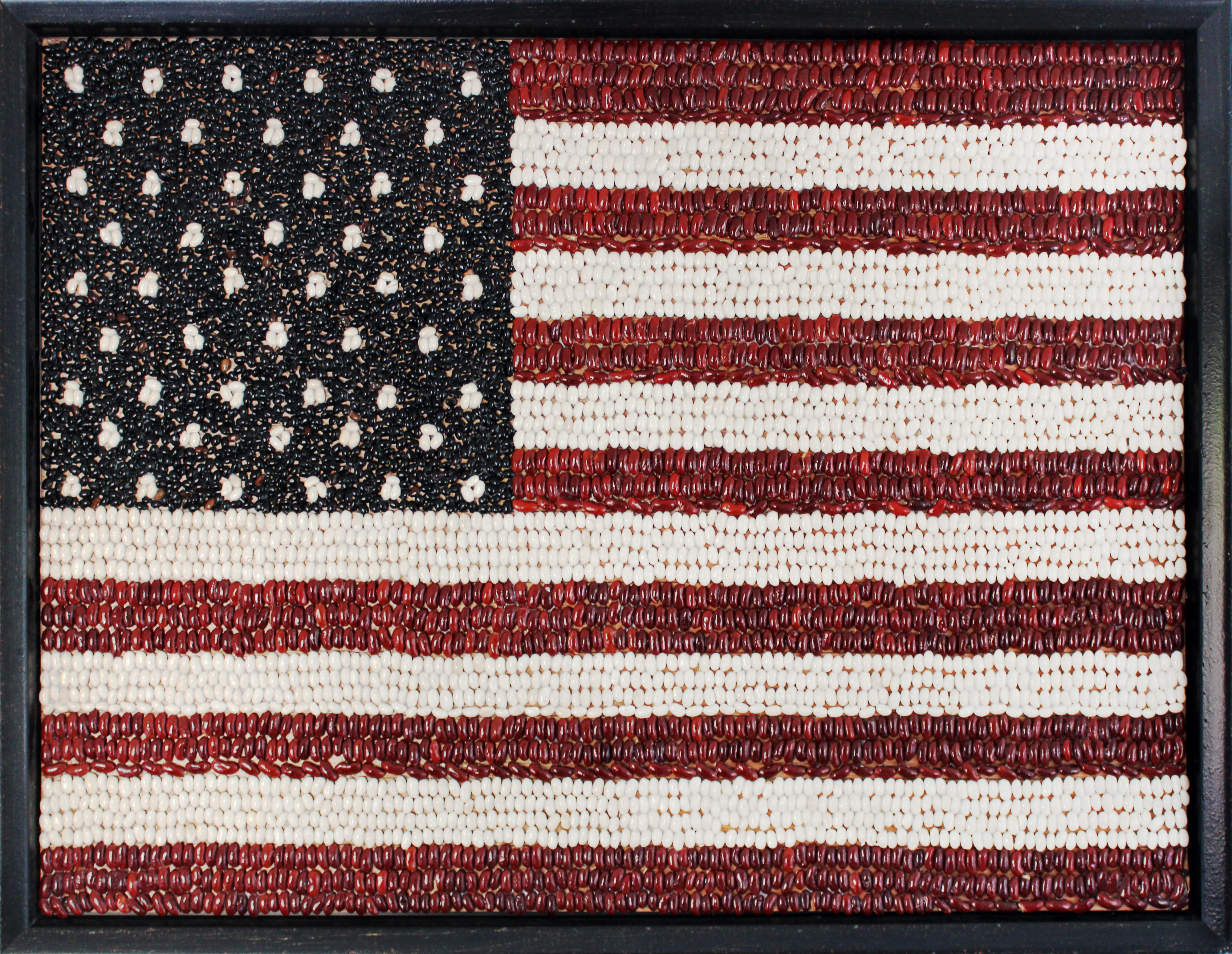
Made by Beaners, by Danae Nunez. Permission from the artist.
BY EMMA CIESLIK July 28, 2026
Danae Nunez, also known professionally as Mocosa, is an artist and immigrant from Mexico. Nunez is the artist and founder of Hecho En Magazine, which showcases and empowers BIPOC creatives. Although Nunez displays her works in gallery settings, her most recent work--highlighting how Immigration and Customs Enforcement (ICE) has murdered people on American soil--is both visually compelling and morally devastating, documenting the human toll of ICE’s violence, on social media.
Her work not only strives to humanize the immigrants who are often reduced to numbers and disembodied names on newscasts, but also to challenge the idea that what we are witnessing--racialized violence and detention of racial minority groups--is not what America was founded on. At its core, her work is about historical solidarity with victims of racist violence across generations.
In this interview, as she continues documenting the lives--young and old--lost because of ICE and Homeland Security, she highlights the importance of challenging the idea that what we are witnessing is new and how analog art--even physical art shared digitally on social media--reinforces that this is real-life violence that exists outside of our smartphones, and in a time when the current regime is censoring not just this history but also freedom of expression and existence, creating works of art is an act of resistance.
Emma Cieslik: Would you mind introducing yourself however you feel comfortable? Along with art, you studied psychology and philosophy at Rollins College and earned your master’s degree in philosophy at The University of Edinburgh in 2023. What inspired you to become an artist--and make resistance art?
Danae Nunez: I’m a Mexican immigrant living in Orlando and I’m an artist and activist. Although it’s hard for me to label myself an activist when there are people doing a lot more, but that takes many forms. I’ve been making art my whole life, inspired by my mom who is an artist, but I didnt get into resistance art until my thesis in fine art that coincided with Trump’s first term.
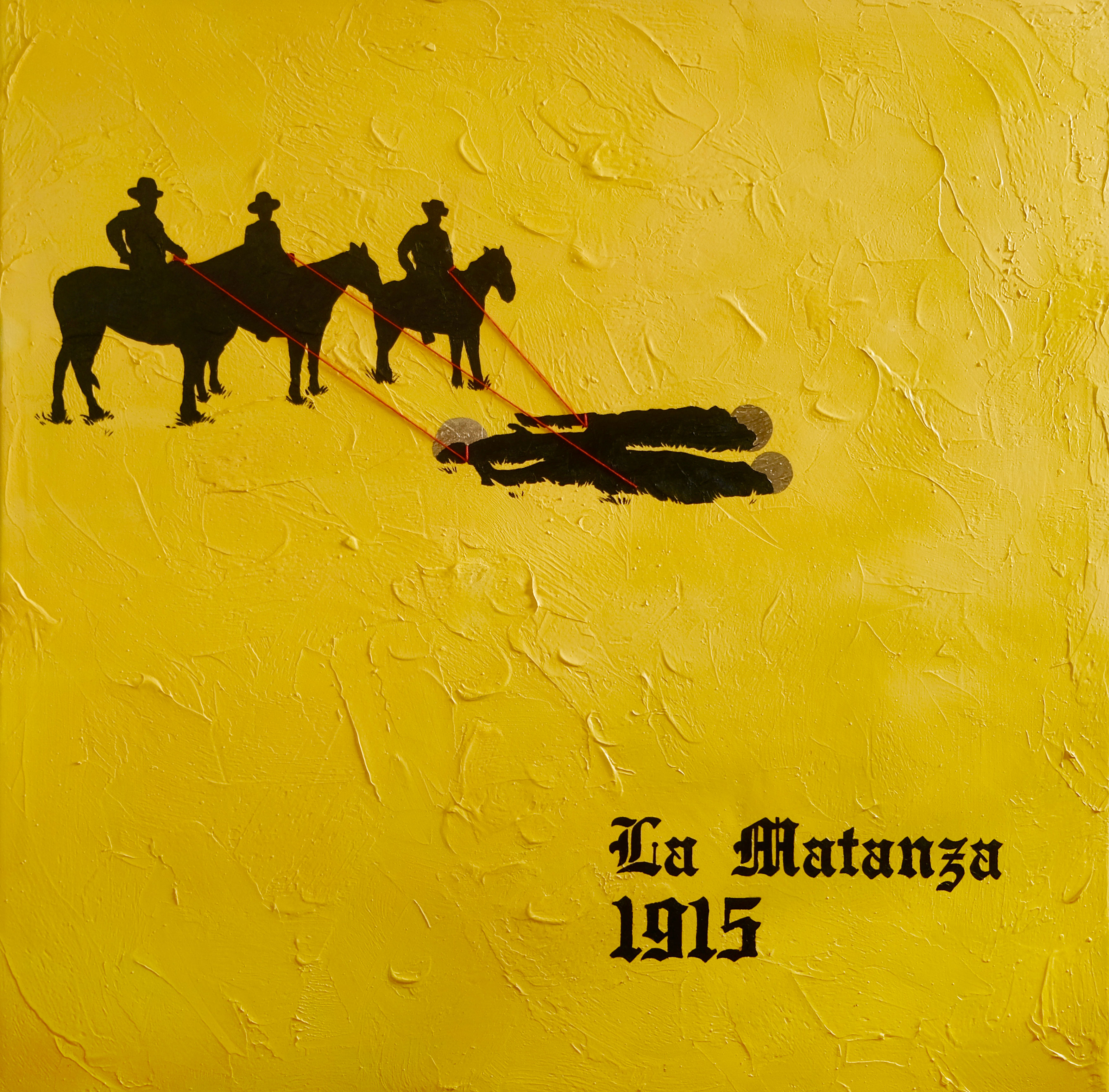
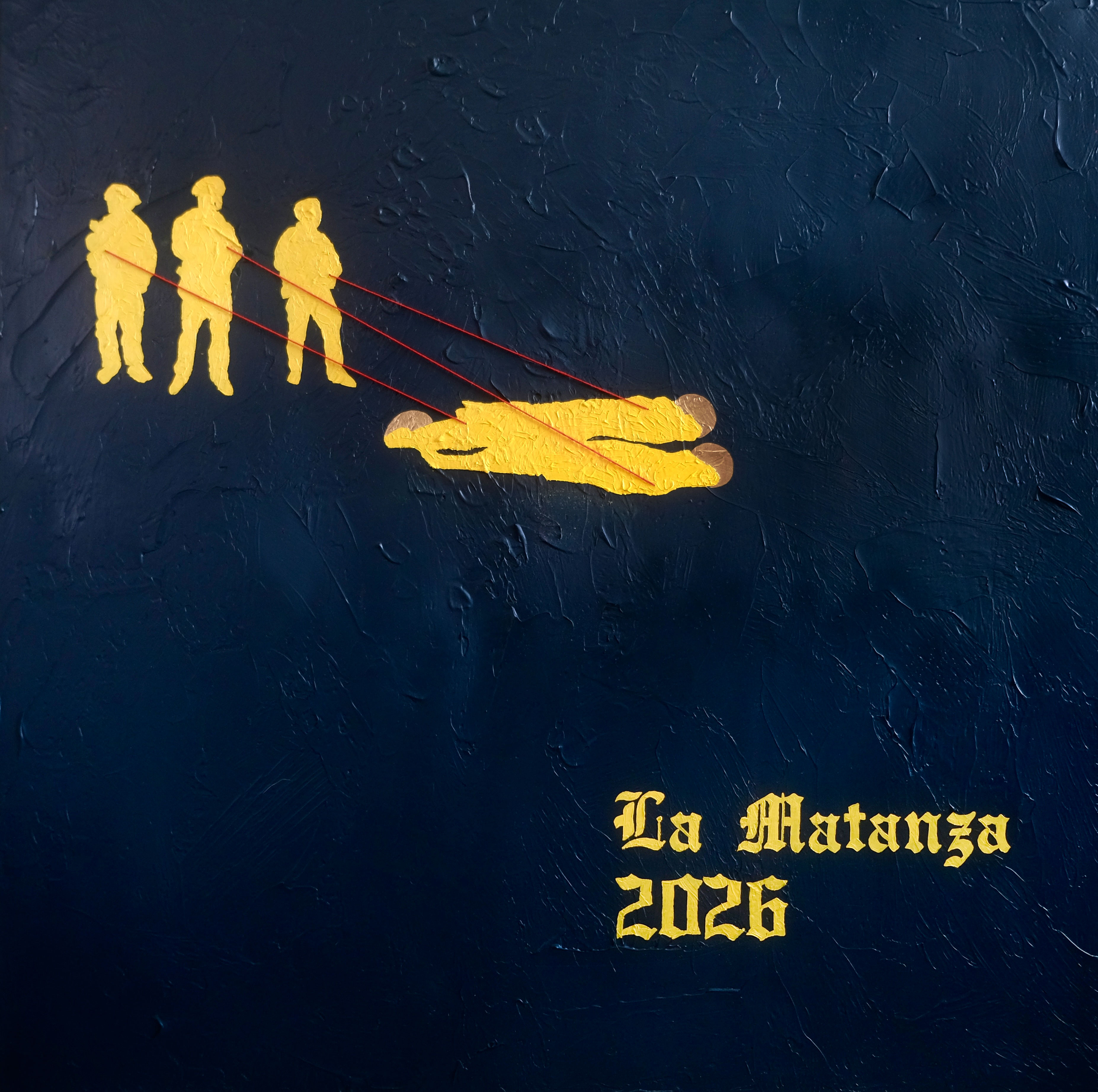
La Matanza Continues, by Nunez. Permissionf rom the artist.
Cieslik: One of your recent pieces titled La Matanza Continues is a diptych depicting the 1915 massacre (a period of state-sanctioned violence against Mexicans) and ICE’s murder of Lorenzo Salgado Araujo. How is art a way to recall historical violence and highlight modern violence and murder?
Nunez:I think what’s powerful about art is that it allows us to show similarities throughout history in a way that attracts attention. It’s not a headline or an article that a lot of people just skip, it’s bright, it’s colorful, it stops you in your tracks and gets your atention. And it also makes a point and teaches you something. I don’t know how many people have heard of La Matanza in the early 1900s. That’s not something that’s taught in schools. I grew up here and I went to school here, and it’s not something schools taught then and I doubt they do now. So it’s a way to pass on information.
I think art also allows you to make connections of what happened then to what’s happening now in a way that’s instantaneous and easier to grasp. People don’t love to learn about history or don’t have the means to, so art offers a means to bring these ideas and knowledge in a way that’s easy to digest. Create something that once you see it, you understand immediately. And it’s not just visual art that does this. Music does this too. There are a lot of musicians making music with a cause now, or poetry, or spoken word. I think all this art helps us synthesize the violence of the past and the similarities to what is still going on today.
Touching on topics that are tough--murder and violence in past and present—doing this through art also feels like a form of respect. As an artist you research this stuff and learn about it. You spent so much time with it—you turn it over and analyze it and sit with all of the emotions it evokes trying to find the best way that feels like you’re honoring the victims. So it feels like a form of respect, bringing it through the art. So not only does making art do something for the people that are looking at the art itself, but as an artist, it feels like it’s a form of me paying respect to both the people that passed in the early 1900s Matanza and the people today who are being shot by ICE.
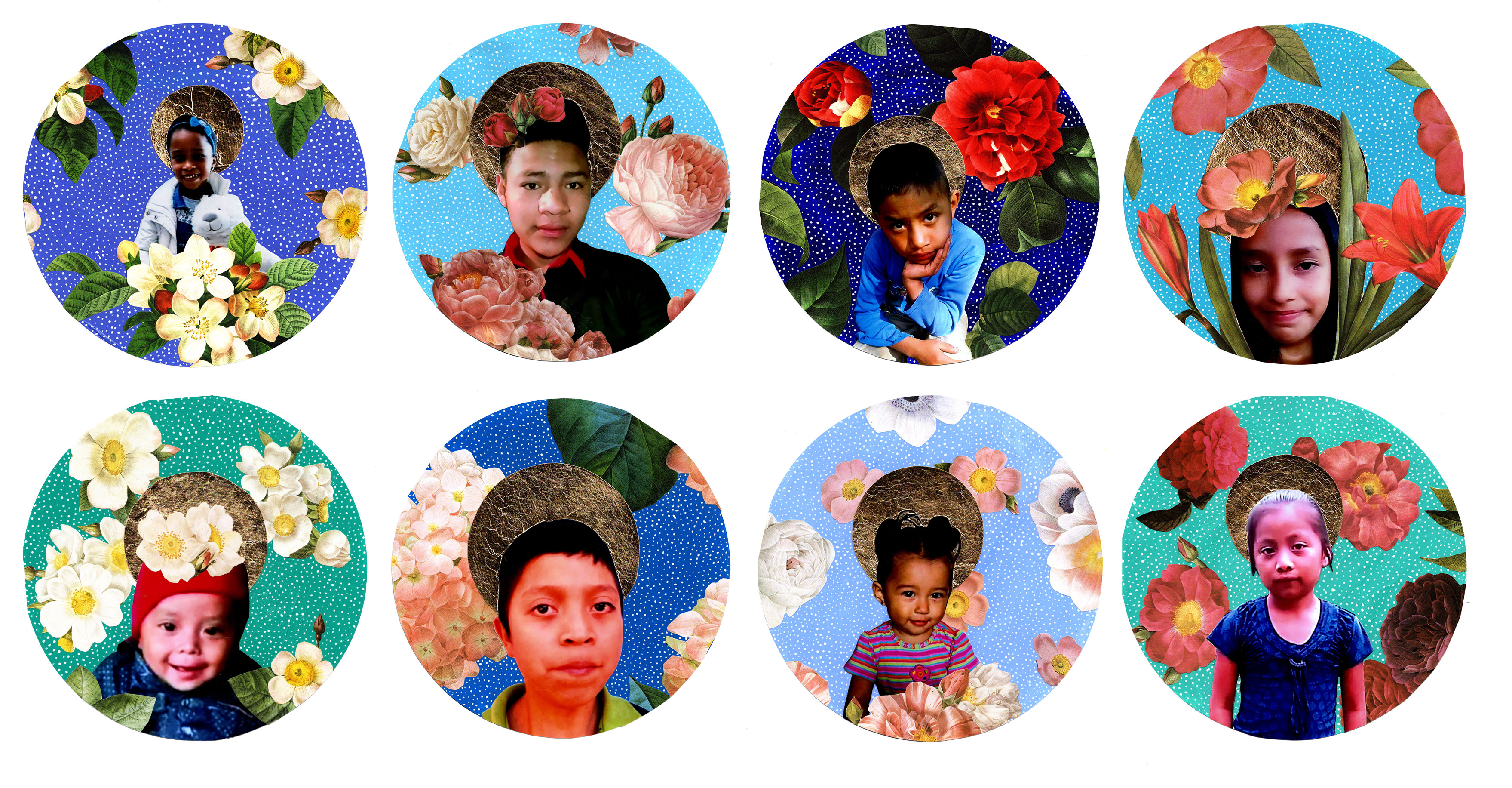
Icons of the children who have passed in ICE custody created by Nunez. These include Mariee Juarez, Carlos Gregorio Hernandez Vasquez, Darlyn Cristabel Cordova-Valle, Wilme Josué Ramirez Vásquez, Anadith Danay Reyes Alvarez, Juan de León Gutiérrez, Jakelin Caal Maquin, and Felipe Gomez Alonzo. Permission from the artist.
Cieslik: One of your most powerful works are small icons depicting children that were killed/have died in ICE custody, largely due to lack of medical intervention. How does this art visualize the profound violence and murder we are witnessing? Where are these icons going to live? What is the importance of humanizing victims of violence through art?
Nunez: That piece was super cathartic for me because I had just had a baby a year before I made the piece, so it was so fresh on my mind when doing this for all these kids. When I learned that children had been dying in ICE custody for what’s essentially neglect, something that’s so preventable, I had to do something. Kids shouldn’t be in detention in the first place, it’s a ridiculous policy. And I realized that so many people read the headline or see a post and scroll by it, they don’t grasp what’s going on. But when you put pictures behind who these people are—you see that these are children. This is a two year old and a 16 -year-old. A 1 year old who died.
Humanizing --putting a face behind the policy of the people that are affected--is so important because you can’t just brush it off. It’s a person who had a family. They had parents. They had hopes. They had dreams. All the people crossing the borders have dreams too. The people that put up these policies don’t care, and for so much of the population, it’s so easy to brush off.
So for me, that piece was about humanizing and getting the word out. I think the more people see a face behind the policy or what the policy’s intentions are, the more likely they are to care and to act. So the importance of that for me was if any one person learned something new, if any one person learned one of these kids’ names or if they were prompted to act, whether it’s volunteering or donating or protesting, [it would be worth it]. That was my intention behind those pieces.
They don’t have a home right now. I keep them with the rest of my art because I’d love to have a good place for them, but I don’t think that’s a piece that you sell to collectors. I think that’s a piece that needs to be shown, for people to learn from and not to profit from.
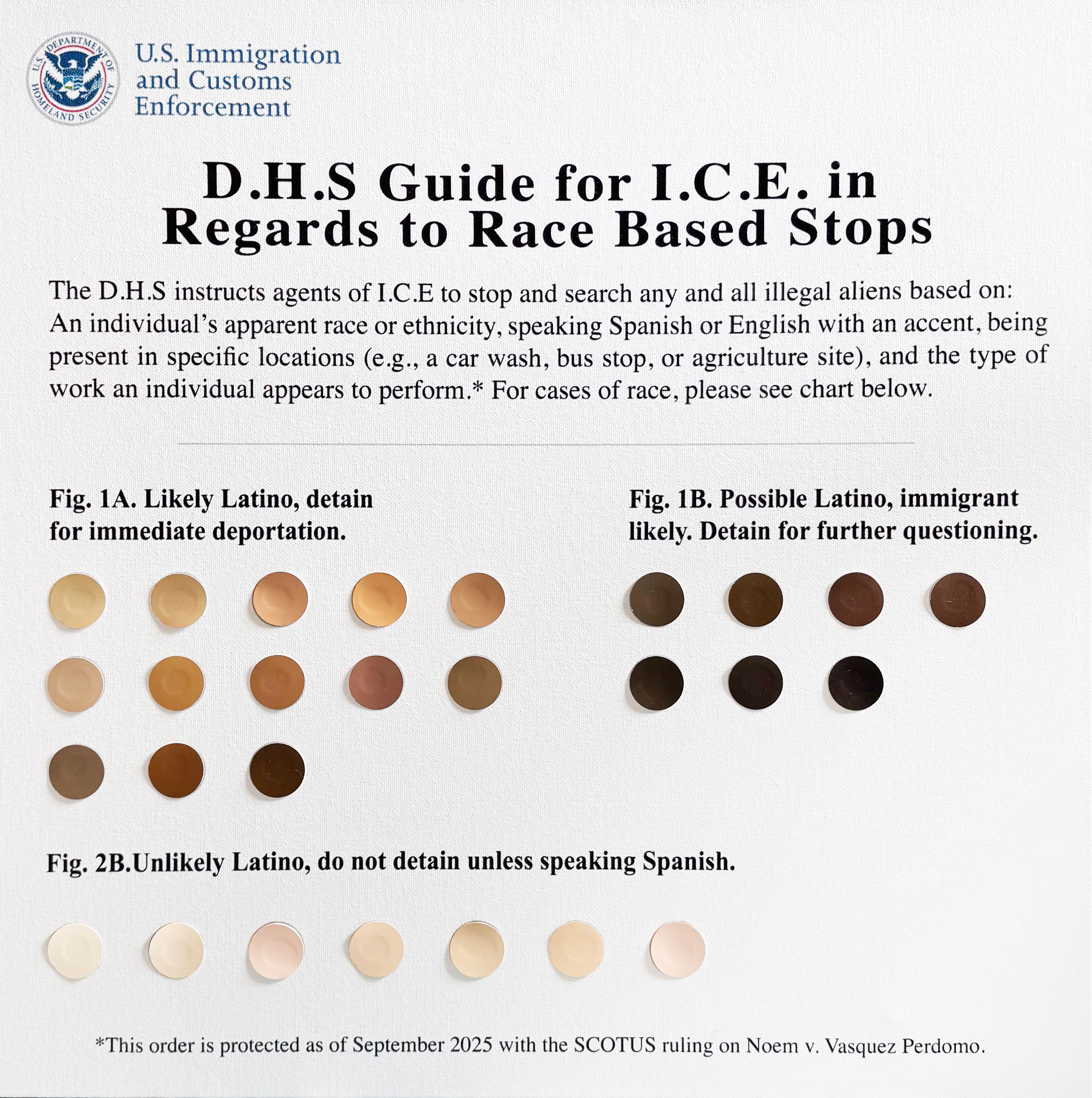
An Idiots Guide to Amerikkkan Racism, by Nunez. Permission from the artist.
Cieslik: I totally agree, and one thing I have loved about your art is that it humanizes people who have been reduced down to numbers and disembodied names on news programs, and art can share that information in ways that extend beyond language. The visual can and is universal in many ways. Your piece “An Idiots Guide to Amerikkkan Racism" places paint swatches on a canvas to satirize the September 2025 Supreme Court decision that clears that way for racial profiling during immigration stops. What is the impact of visualizing the real-world impacts of these decisions?
Nunez: When it’s a policy or when it’s a Supreme Court decision, it’s something that’s very technically written and can be hard to fully understand. You can read it and try to synthesize it, but did you fully grasp it? So for me, the intention behind that piece [“An Idiots Guide to Amerikkkan Racism"] is making it so obvious and in your face that this is what this policy is doing. That’s why the piece was so important because until you see it so raw, it’s hard to grasp.
I mean, they don’t hide it. The government’s not trying to hide anything. But with the legal jargon, the general population tunes it out, even myself sometimes. You’re reading through some super dry articles about what this policy is meant to do, and there’s no way to synthesize it. I think you need something raw, in your face, to really understand.
Cieslik: What inspired the use of paint swatches, especially from a hardware store involved in ICE violence?
Nunez: I’m super glad you asked that because that was intentional. To me, what the policy is doing is essentially reducing people down to a color, the color of their skin. It’s a color swatch. Like what could ICE possibly be using to descriminate based on color but a color swatch. But they’re looking for and taking the same people that they’re profiting from. The same people that they only see as a color swatch are the same people that are building the communities. They’re the ones standing outside of these stores looking for jobs to help build homes and schools and churches. And these home improvement stores are in a way profiting from these people as well. When people need help with a job, they go to that store to both get what they need and get the labor that’s outside. So to me, it’s very intentional to use something from that store to show the hypocrisy of the policy and these capitalistic brands.
The paint swatches are also something that thse people use on a daily basis. They hire people to paint, so they go in and they use this stuff. So it was very intentional for me to use those color swatches from that store. And I took the swatches and I used a hole punch to make the circles, but the other of part of the piece that you don’t see online is that the rest of the swatches are on a all on a binder ring and you can match your own skin tone to the names of the paint color which is just another way to reduce people down to a sample. You are not who you say you are, whether they reduce you down to a number or reduce you down to a color name. It’s the same thing.
Cieslik: You share a lot of your work on social media. How do you hope that people encounter your work and what do you hope they take away from it?
Nunez: I do exhibit in some galleries. I think it’s hard because I know my art doesn’t belong in a lot of places. Not in the sense that it doesn’t belong in galleries or museums. It’s just tough topics to deal with, so I apply to a lot of galleries or exhibits that tend to be more political and activist based. My art’s not meant for like home decor or as something to hang on your wall, so I know there’s a limit to where I can show it.
But while it is very limited where my art can go out in the world, social media really allows me to open doors. I follow a lot of artist-activists already. I’m kind of in that world, so it’s a lot of word of mouth. And when any viewer sees something that resonates with them, they share it. So that allows more people to see it. And for me, my intention and my goal behind it all is whether I can change one person’s mind, spark one person to act, to donate a dollar, or go volunteer, or go protest. That’s my intention--sharing the knowledge of things like the La Matanza, of what happened. If I could teach one person and help them connect what happened and how it’s similar to what’s going on now, that’s what I hope they take away from it. I just hope to pass on knowledge and to spark action.
Cieslik: That’s a perfect transition to my next question. Because ICE’s violence is not new, as you have highlighted through your work. Many people just celebrated the 250th anniversary of America, and many progressive folks argue that what we are witnessing is not what America was founded on and to be, but history tells us differently. Your piece “Made by Beaners” depicts an American flag made of multicultural beans honoring Latinos who helped build the United States. What inspired this piece, and what do you hope this piece conveys to people arguing that what we are witnessing is not part of American history?
Nunez: It’s interesting because I made that piece during Trump’s first term, and it applies again today just like it applied years and years ago, so it’s something that is always relevant because it’s always been the history of the United States. What inspired it originally was the hate and racism during his first term, and again this second term, against all Latinos, specifically Mexicans. In fact, the term that they call [us] is beaners, which is a whole other topic, but to me I feel like Latinos should reclaim that term, because there’s nothing wrong with it. It’s our cuisine. It’s the food we eat, we shouldn’t be ashamed of it. They use it as a derogatory term, but it’s who we are. I think that’s what makes us special, so we should reclaim it.
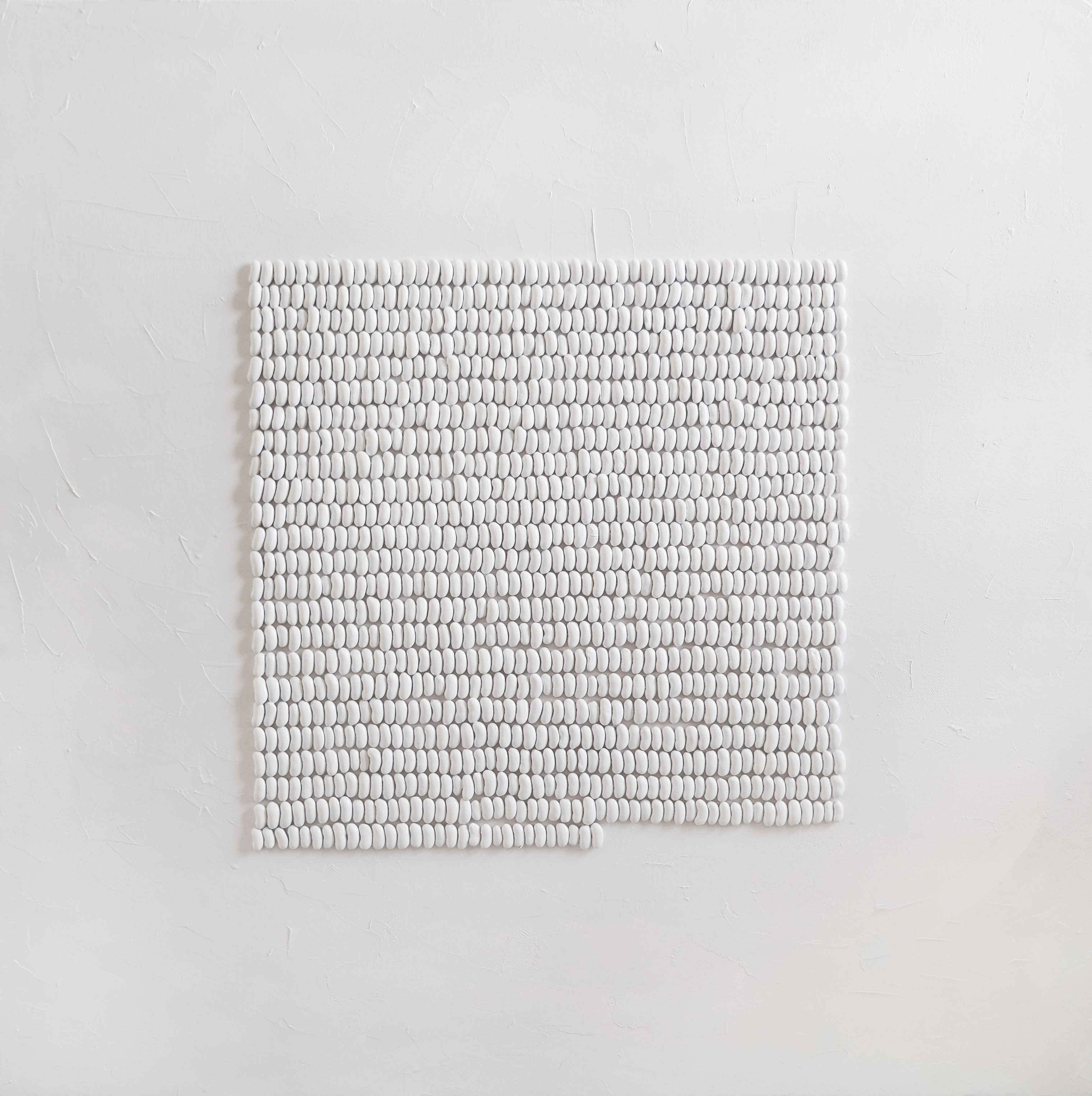
Desparecidos, by Nunez. The work is created using oil, spray paint, and 1,200 beans in honor of the 1,200 people who have disappeared from Alligator Alcatraz. Permission from the artist.
But it was the hate and racism behind that [which inspired the piece], and then the thought these are the same people that are building communities, physically and metaphorically. These are the people that are building homes, that are picking your food, that are keeping things clean, and at the same time, they’re the ones that keep the community going. Latinos are so warm and close-knit. They care about people. They help each other. To exploit them like that and then not consider them a part of this country.
Obviously in history we know so much about slavery and native Americans, and that is just as important. But also the migrant and immigrant cultures that have been exploited—and it’s not just Latino immigrants but Asian immigrants as well. But it’s been time and time again. The Bracerrors program. The deportation of Mexicans during the Depression, it’s been the same thing over and over and over again.
It’s easier to see these issues in America right now because of where we are in terms of social media and the news--we see it firsthand and on our screens. And we think this isn’t what was happening before, but it’s always been going on. We were just never taught in schools. So I was inspired by that--that this country was built by exploited hands. And how you can use creativity to help people understand that, which is the power behind it.
Cieslik: Often, people (who are not affected by ICE’s violence) stop helping or paying attention because they are overwhelmed by the news. What is the power of art to force people to look at what is happening? How does art implore us not to look away and to recognize silence as complicity in violence and murder?
Nunez: That’s tough because I have people close to me that are kind of in that boat, where they’re not affected by it so it’s just really easy for them to tune out and turn off. But art is a reflection of society and what is happening right now, so I think it’s so important to be able to have art that’s not on your phone and out in the real world. Art that’s interpreting with everyday life, because these issues exist outside of your phone. These issues exist outside of whatever you see on TV when you turn it off. These issues are a very real thing people have to deal with, so when it’s art out in the real world, it’s not something that you can ignore or scroll by. I think that makes people uncomfortable, and I think that uncomfortableness is what leads people to action.
There’s a really good quote by Cesar A. Cruz where he says that “Art should comfort the disturbed and disturb the comfortable.” To me, that’s the core of it. Art is for the people that are suffering. Seeing art that talks about what they’re going through tells them that someone else is thinking about this too, you’re not alone in this. So it has that comfort of letting you know that there’s people in this fight with you. The people who are made uncomfortable by it should take it as a sign in and of itself that you should do something about it. You can either choose to be uncomfortable and do nothing, or act. Evil prevails when good men do nothing, that’s another good quote. And if you do nothing, you have to live with that yourself. So it’s so important to have it [the art] out in the real world and to push people to action. My intention behind the work is that. We’re all in it together, you can’t shut off a screen, you got to act. This is happening to real human beings.
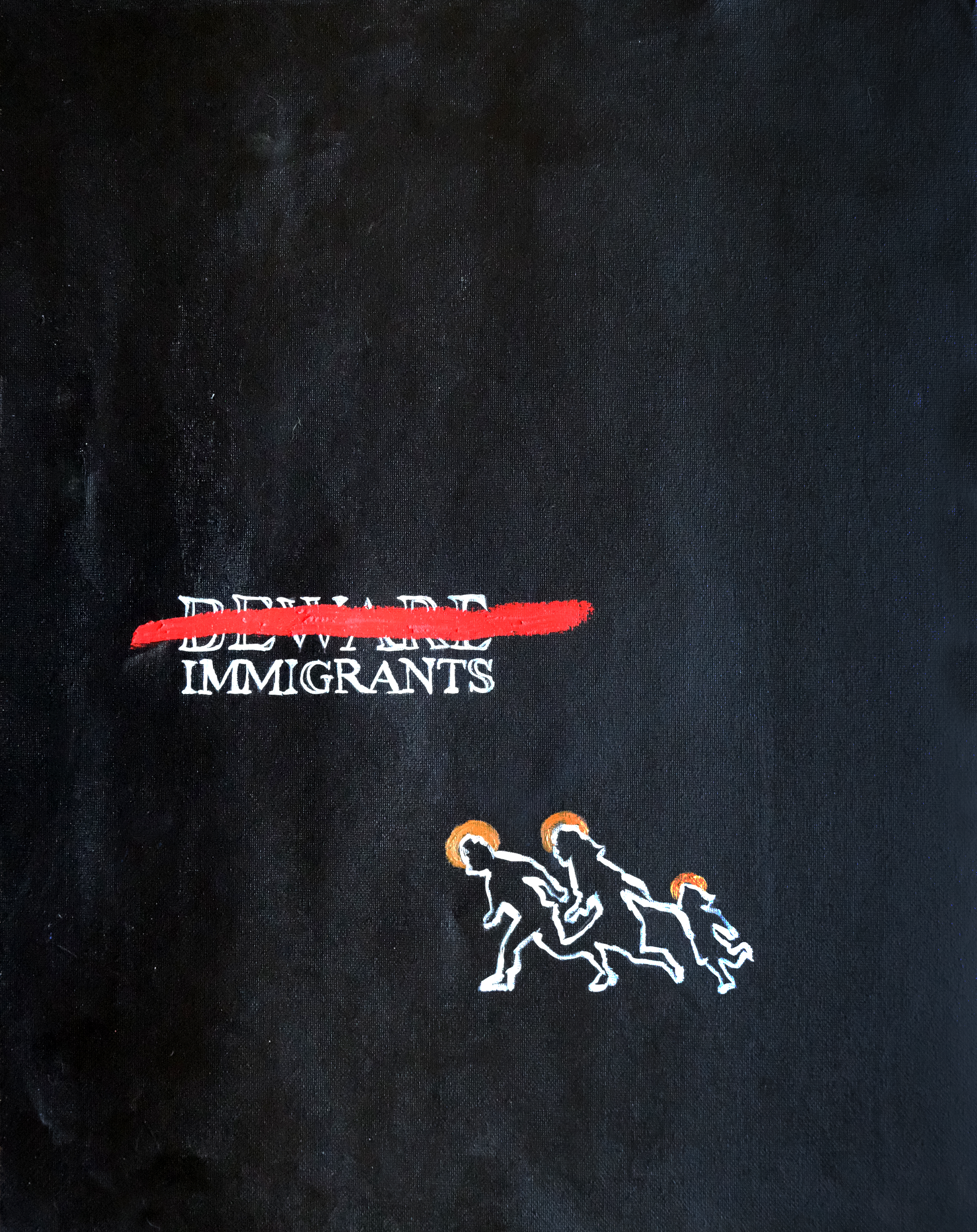
Beware Immigrants, by Nunez. Permission from the artist.
Cieslik: I think that’s so important. Analog and physical art takes up space and attention--itself a radical act. For example, I live in Washington, DC where people have been putting up signs recognizing where people have been disappeared off the street and also using stickers as a form of guerilla art forcing people on the Metro, sidewalks and even inside federal buildings to confront their violence.
Nunez: Yes, and I want to highlight the importance of art in times like this. I understand what my art is and it’s labelled activist art. That’s not everyone’s cup of tea, but just because it’s not your cup of tea doesn’t mean you can’t do something about it. I think at a time when we live in a regime that’s starting to crush you and censor you and do all these things to make a creative act feel like an act of resistance, any act of expression or flourishing feels so important and powerful, not just for Latinos but everybody. At the end of the day, if you’re a Latino who’s flourishing making art, that sounds like a big fuck you to the government at the moment.

Emma Cieslik
Emma Cieslik (she/her) is a queer, disabled and neurodivergent museum professional and writer based in Washington, DC. She is also a queer religious scholar interested in the intersections of religion, gender, sexuality, and material culture, especially focused on queer religious identity and accessible histories. Her previous writing has appeared in The Art Newspaper, ArtUK, Archer Magazine, Religion & Politics, The Revealer, Nursing Clio, Killing the Buddha, Museum Next, Religion Dispatches, and Teen Vogue
view all articles from this author