Whitehot Magazine
October 2026
"The Best Art In The World"
"The Best Art In The World"
October 2026
Carb-Culture and Hyper-Sterile Market: Fuerer Nielsen
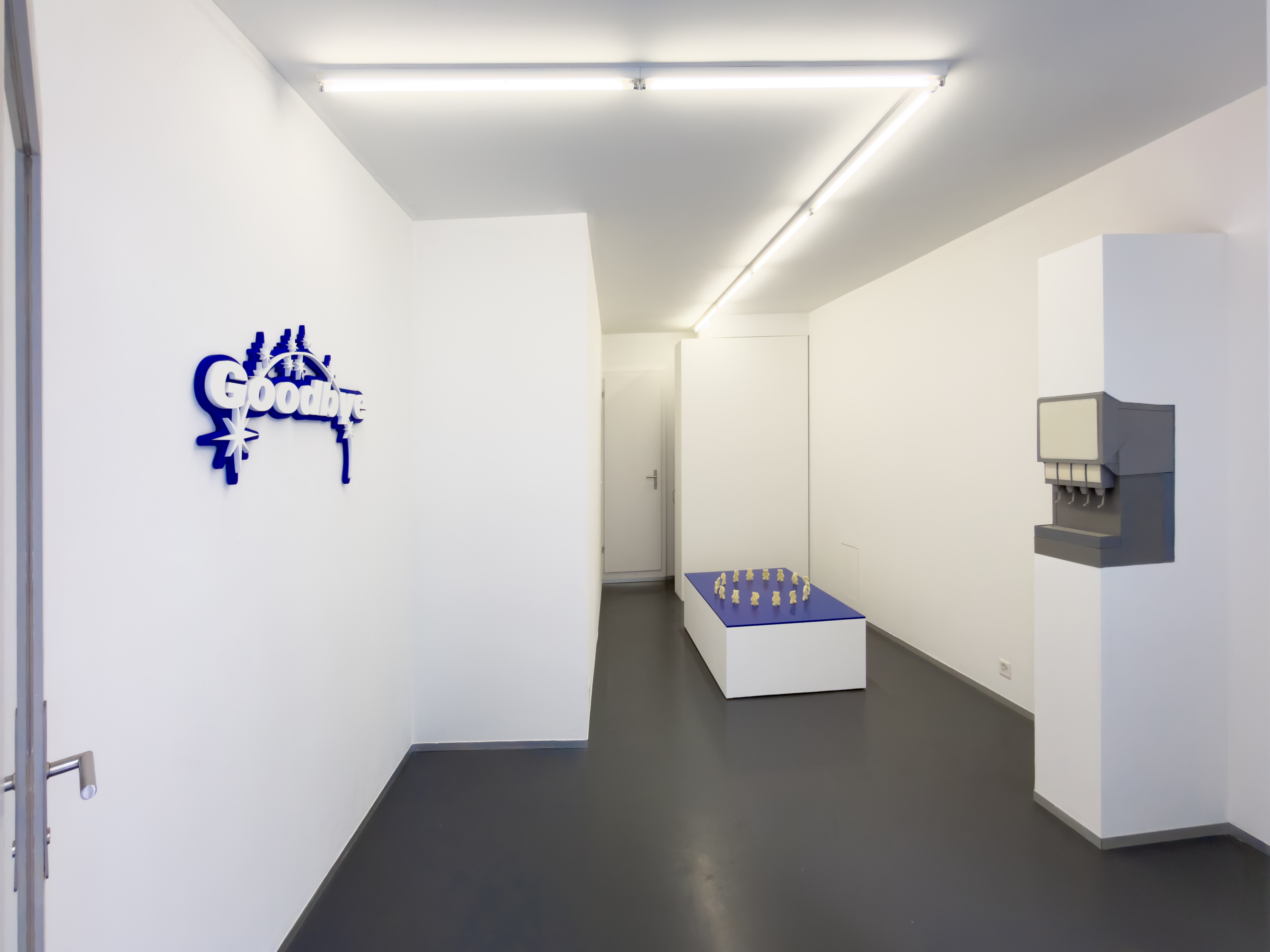 Fuerer Nielsen, Bubbles #5: Leaking Overdrive (installation view). Curated by Svenja Clauss. Tilde Space, Chur. Photo courtesy of the artist and gallery.
BY SERENA HANZHI WANG, Oct 22, 2026
At Fuerer Nielsen’s new solo show, BUBBLES #5: Leaking Overdrive, the room is cold, fluorescent, and aggressively clean. Three works sit apart with so much empty space between them that the gallery feels more like a showroom than an exhibition.
When I first met Sonjoi Nielsen in passing conversation, he brought up object-oriented ontology, Deleuze’s body without organs, and accelerationism. It sparked an obsession that quickly reshaped my thinking, to the point where I ended up basing my entire graduation thesis around them. Eventually, though, we both hit a wall with these post-human, post-capitalist speculative theories, agreeing that it was exhausting to try to force our own creative or critical work through such rigid conceptual frameworks. We both took a step back and let the theory go. But looking back now at his work with Fuerer, I realize those ideas didn’t really disappear. They just dropped the academic weight and marinated into the physical objects themselves.
 Fuerer Nielsen, Bubbles #5: Leaking Overdrive (installation view). Curated by Svenja Clauss. Tilde Space, Chur. Photo courtesy of the artist and gallery.
The exhibition adopts the grammar of a commercial pop-up: temporary, modular, ready to vanish before the lease expires. But instead of pitching streetwear or lifestyle branding, Fuerer Nielsen isolate the infrastructure: the pristine lighting, the exaggerated spacing, and the expectant room layout—all to reframe how we look at industrial spaces. Stripped of explicit products to sell, the staging forces the viewer into an uncomfortable closeness with the staging itself.
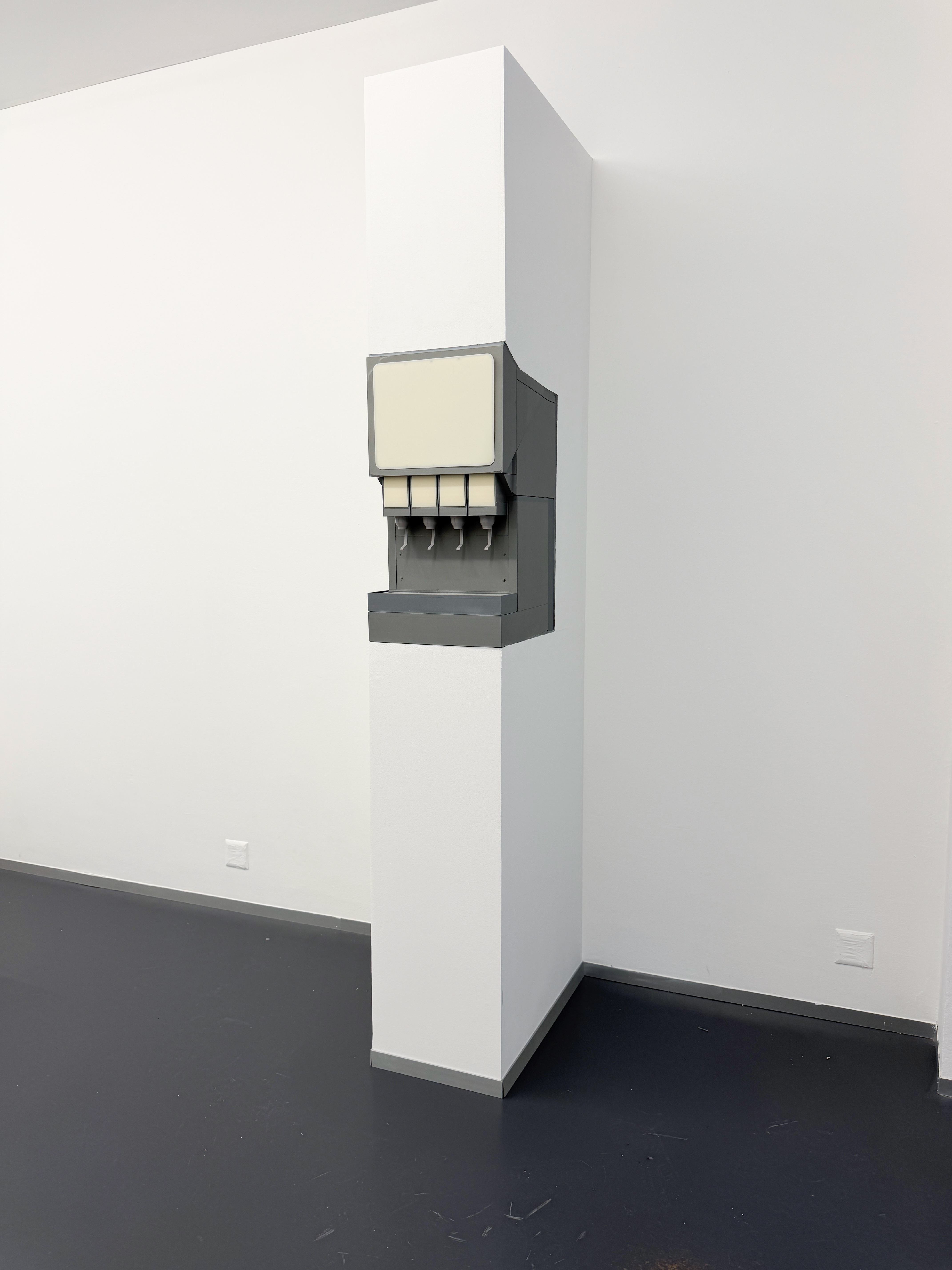 Fuerer Nielsen, Soda Fountain, 2026. Sculpture, architectural intervention, 3D printing, plastic, water, medical drip technique. 40 × 60 × 250 cm (including built pillar).
Then you look at Soda Fountain, mounted on the wall like a ghost from a defunct Taco Bell. Rendered as a bone-grey, 3D-printed shell, it takes the iconic architecture of a self-serve beverage dispenser and strips away every drop of utility. No levers, no syrup lines, no free refills. Instead, it slowly bleeds water onto the floor, dripping continuously without pause like a crying appliance. The infinite refill promise of fast-casual dining is reduced to a wet hazard, turning a staple of mass consumption into the broken, leaky system that gives the show its title.
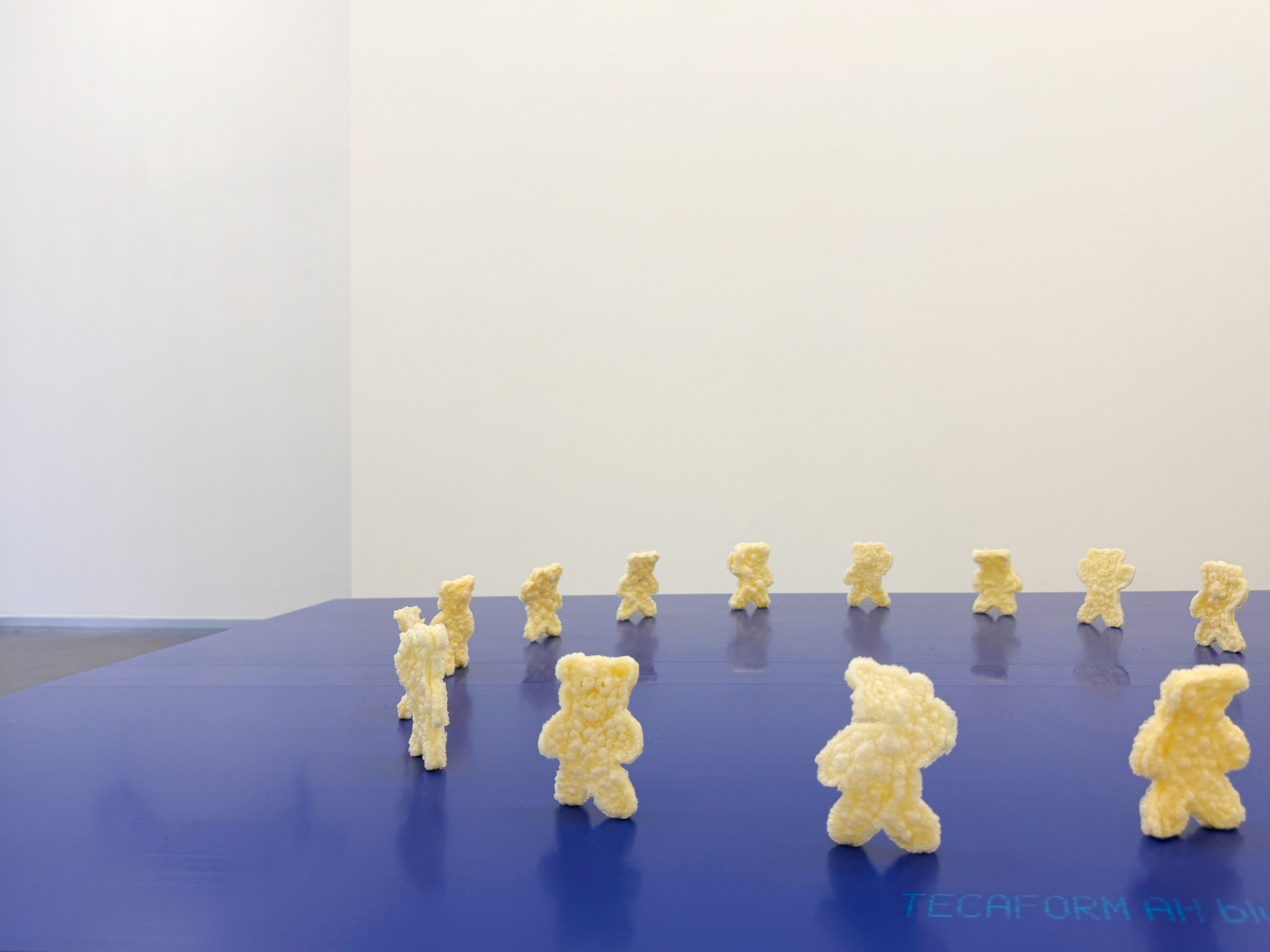 Fuerer Nielsen, Bearmarket, 2026. Installation. Deep-fried puffs: corn starch, potato powder, high-oleic sunflower oil; diesel-infused, iodized salt; monosodium glutamate.
Further into the space, Bearmarket taps into the underlying anxiety of carb culture. Carbs, aka snacks like gummy bears or potato chips, aren’t just food; they’re engineered comfort units, cheap, hyper-palatable dopamine hits meant to numb systemic anxiety. Even on the opposite end of the spectrum, where anyone seeking health would naturally choose a carrot or a grape, the market still steps in to sell us a new zero-calorie gummy instead.
But take a closer look, and the work springs another meaning. The table holding the snacks is electric blue, like a default desktop background. Get it? It’s a bear market. What seems like a playful punchline becomes a literal pun on Wall Street dread, juxtaposing a financial crash with mass-produced junk food engineered for late-night chewing. Placed inside this hyper-clean space, these fragile little potato bears look like absurd relics of consumer habit. Do we really process one bear by eating another bear until our mouths go numb? Apparently, yes.
 Fuerer Nielsen. Shopper, 2026. Sculpture, 3D-Print. 120 x 20 x 4 cm.
Hovering near the entrance, Goodbye cuts straight to what hype branding actually is: an eviction notice in a dripping street-fashion font. Cast in blue plastic, the sculpture reduces brand identity to pure exclusion and empty noise. It is a logo that promises you nothing.
The total lack of logos on the soda fountain and potato bears makes the joke land even cleaner. The only brand in the whole space is a sign telling you to leave. Stripped of branding, the remaining works just sit there like default 3D assets. Soda Fountain carries this exact absurdity. In American culture, the soda fountain exists as a relic from a bygone era of postwar dining and suburban optimism. Fuerer Nielsen just gut it, leaving a leaking grey shell that performs its only job wrong.
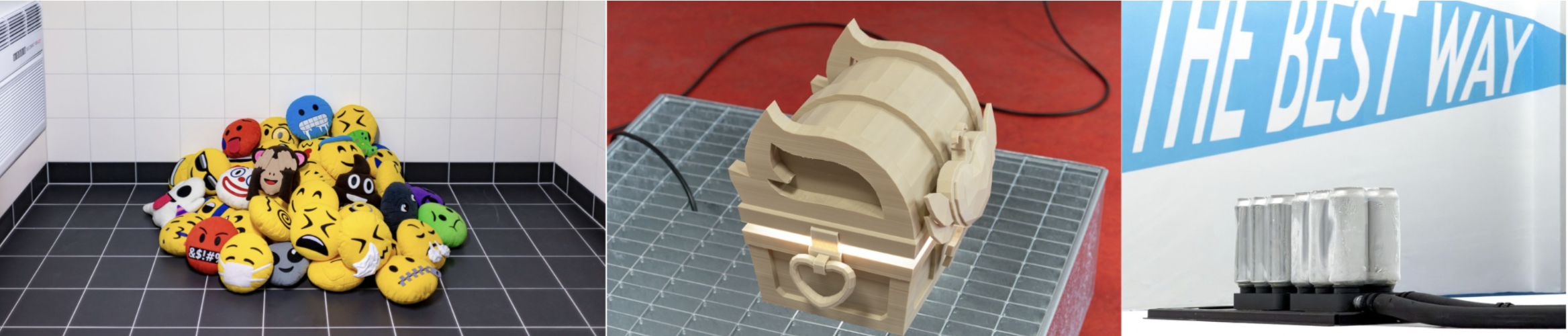 Good News Only, 2022 (Photo 1, left). Installation, sculpture. | Superstar, 2024 (Photo 2). Sculpture. Exhibition: Redshift. Photo: © Raphael Stucky. | Hardzone, 2024 (Photo 3). Sculpture. Exhibition: Ozeane fliessen aufwärts, EWZ Unterwerk Selnau.
Taking ordinary objects and making them perform the wrong job has been central to Fuerer Nielsen’s practice since 2021. Their work has always maintained a dry humor, though earlier pieces delivered it through more explicit symbolism. In their 2022 work Good News Only, they transformed their own custom emojis into pillows, arranging them into a pile of trash. In another piece, Superstar, a 3D-printed treasure chest sits illuminated on a metal grate. It skips cheap gimmicks and hits something surprisingly sweet: that childhood memory of wanting a magic box, illuminated by a golden Pulp Fiction-like glow while keeping its lid locked tight. As they transition into larger museum shows and gallery presentations, they continue testing this same motif: taking a familiar item and pushing it until it stops making sense. Beyond manipulating symbols, Fuerer Nielsen approaches sculpture with a direct engineering mindset. In their 2022 work Hardzone, they built a functional cooling system that runs coolant through thick hoses into aluminum cans on a platform, applying industrial-grade hardware to a trivial consumer demand.
Watching a fake soda dispenser bleed while potato snacks go stale on a neon plinth, the exhibition, along with all of Fuerer Nielsen’s work, feels like a hyper-polished, self-evacuating shell. Instead of fighting the slickness of commercial culture, the work just maxes it out until it turns absurd. It’s giving fin-de-siècle energy here. It’s giving the twilight of the pre-everything-AI-made era. We are right on the edge of a moment before artificial intelligence completely rewires how physical objects and hardware are designed and built. Fuerer Nielsen’s overengineered, hyper-tactile contraptions feel like a final, deadpan tribute to human mechanical design right before everything turns sour. They aren’t preaching about the end of an era or trying to save it. It’s just that exact in-between state where everything’s kind of going to shit, but you’re standing in the room watching a machine leak, feeling weirdly fine about it, and knowing your peers looked ridiculously cool living through it.

Serena Hanzhi Wang
Serena Hanzhi Wang (b. 2000) is an award-winning art proposal writer, multimedia artist, and curator based in New York City. Her work spans essays, exhibitions, and installation Art—often orbiting themes of desire and technological subjectivity. She studied at the School of Visual Arts’ Visual & Critical Studies Department under the mentorship of philosophers and art historians. Her work has appeared in Whitehot Magazine, Cultbytes, SICKY Mag, Aint–Bad, Artron, Art.China, Millennium Film Workshop, Accent Sisters, MAFF.tv, and others.
view all articles from this author