Whitehot Magazine
November 2026
"The Best Art In The World"
"The Best Art In The World"
November 2026
The House Has a Body at Gallery44
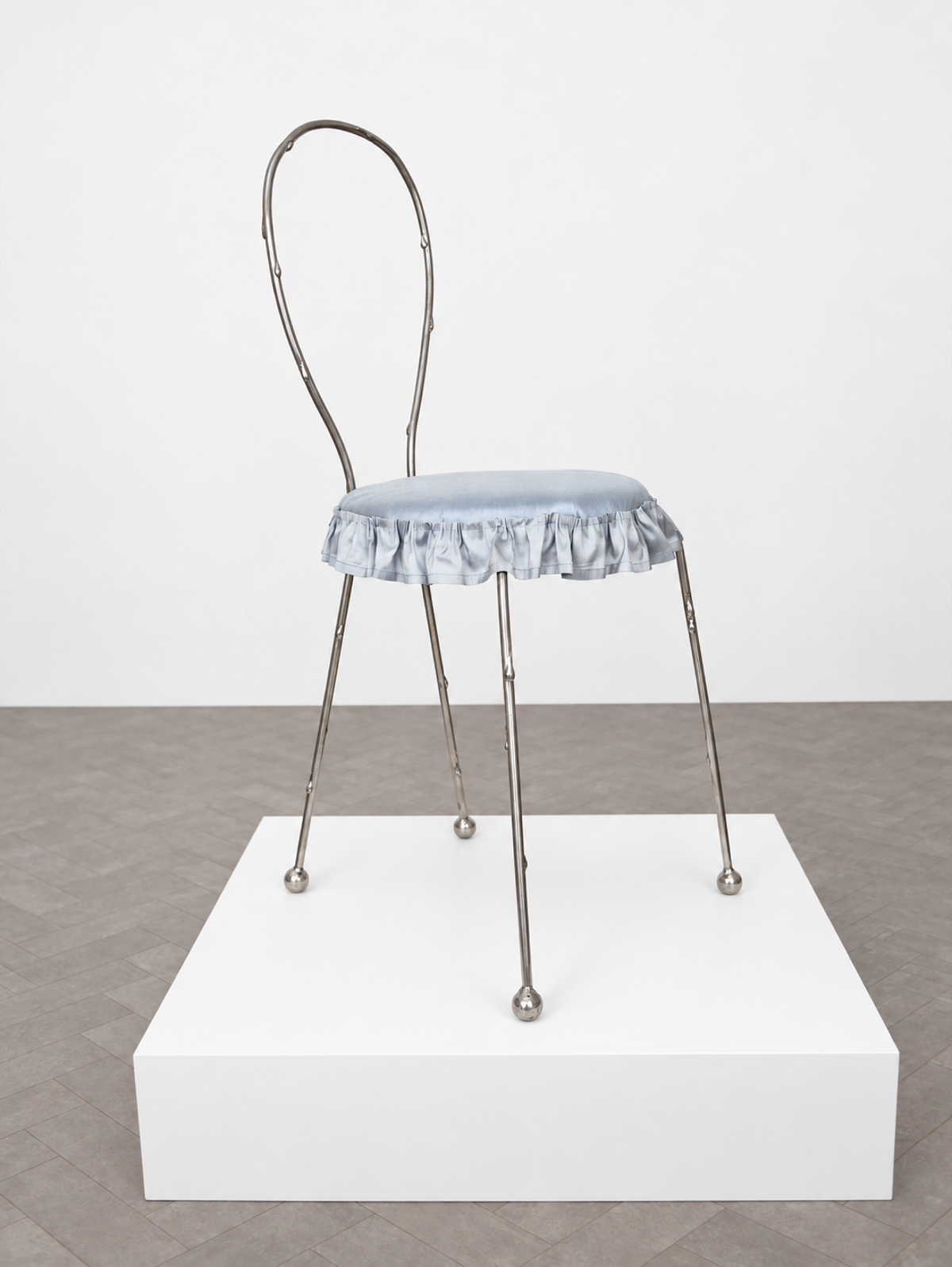 Marisa Musing, Cry Baby Chair, Courtesy of Gallery44, London UK
By MARCARSON, November 21st, 2026
What made you decide to open your home to artists, and what did you refuse to change when it became a gallery?
What I was determined to preserve was the feeling of a home, and the sense of hospitality that comes with it. I grew up in a home where welcoming people and bringing them together was very much part of everyday life, and I wanted to carry that same spirit into Gallery44.
The gallery occupies a Victorian townhouse in Primrose Hill, a neighbourhood with a longstanding artistic and literary history. I never wanted to lose the character of the house or transform it into a conventional white-cube gallery. Its architecture, history, and the feeling of being in a lived-in space were all important to me. I wanted artists and visitors to feel welcomed, to spend time here, and to experience art in a setting that encourages conversation, curiosity and discovery.
That sense of openness also extends to our residency programme, which supports emerging artists, offering them space to develop their practices and engage with new audiences.
I see us as temporary custodians of the spaces we inhabit. There's something important about respecting the history of a building while allowing it to take on new meaning. For me, the house isn't simply a backdrop for art. It has its own identity, its own memories, and continues to evolve through the people and artists who inhabit it.
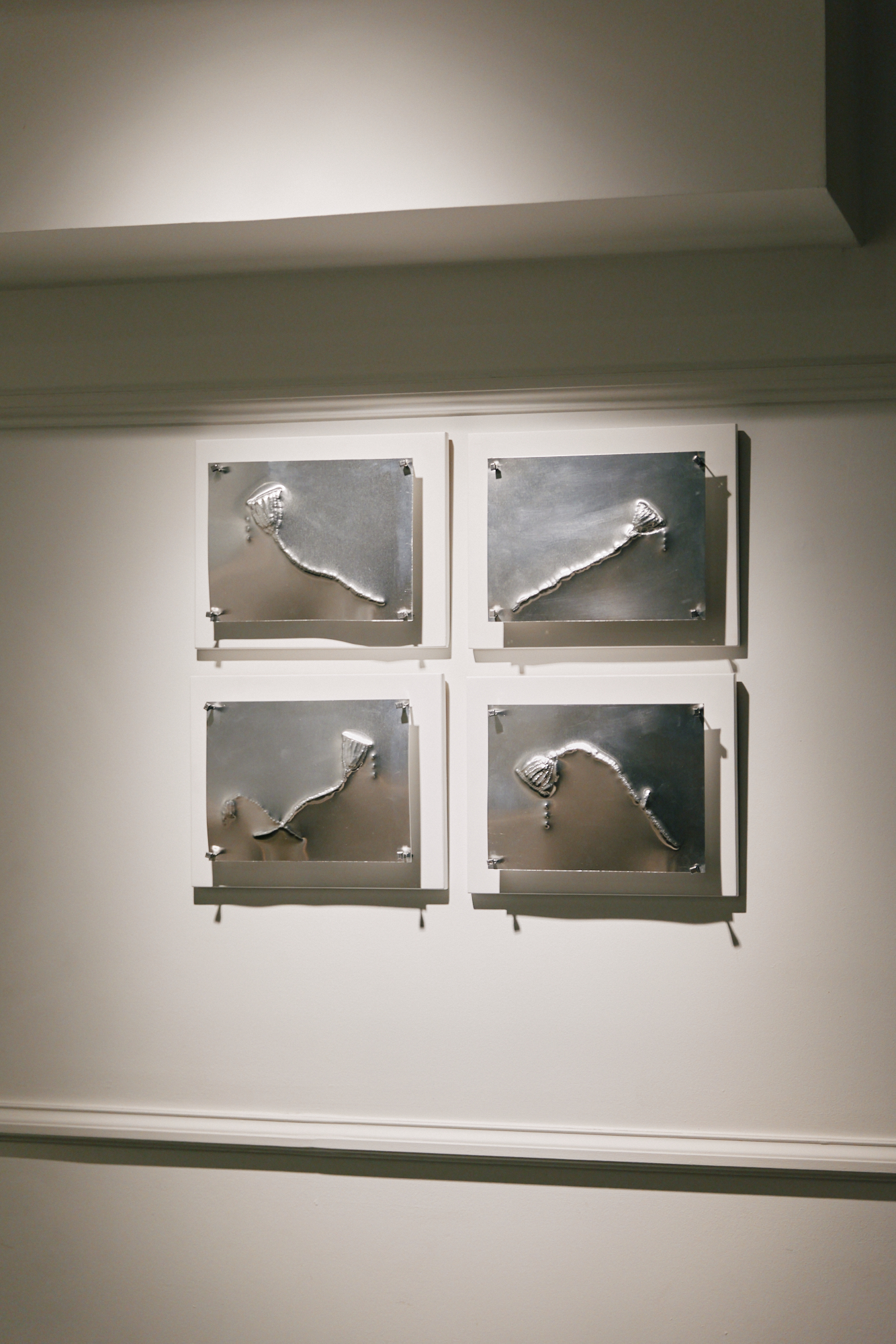 Monya Riachi, Futures, Repousse on aluminium, 200 x 150mm, Courtesy of Gallery44, London UK
The exhibition is called The House Has a Body. If the house went to therapy, which room would it refuse to talk about?
The first-floor kitchen, without a doubt. It's where the chefs prepare our private dinners, but also where artists and friends of the gallery somehow always end up after an exhibition opening. It's where the evening becomes a little less curated, conversations take unexpected turns, and nobody seems particularly keen to leave. I suspect the kitchen has witnessed some of the most interesting moments in the house, although it might prefer to keep a few of them to itself.
What brought Marisa Müsing, Hayfa Algwaiz and Monya Riachi together for this show? Was there a work that made the connection clear?
All three artists responded to our open call for The House Has a Body, and what fascinated me was how differently each of them interpreted the idea.
Hayfa Algwaiz approached the house through memory, creating a painted floor plan based on her recollection of moving through the space. Rather than documenting the architecture precisely, she painted how she remembered it, through light, emotion and the experience of her own body within it.
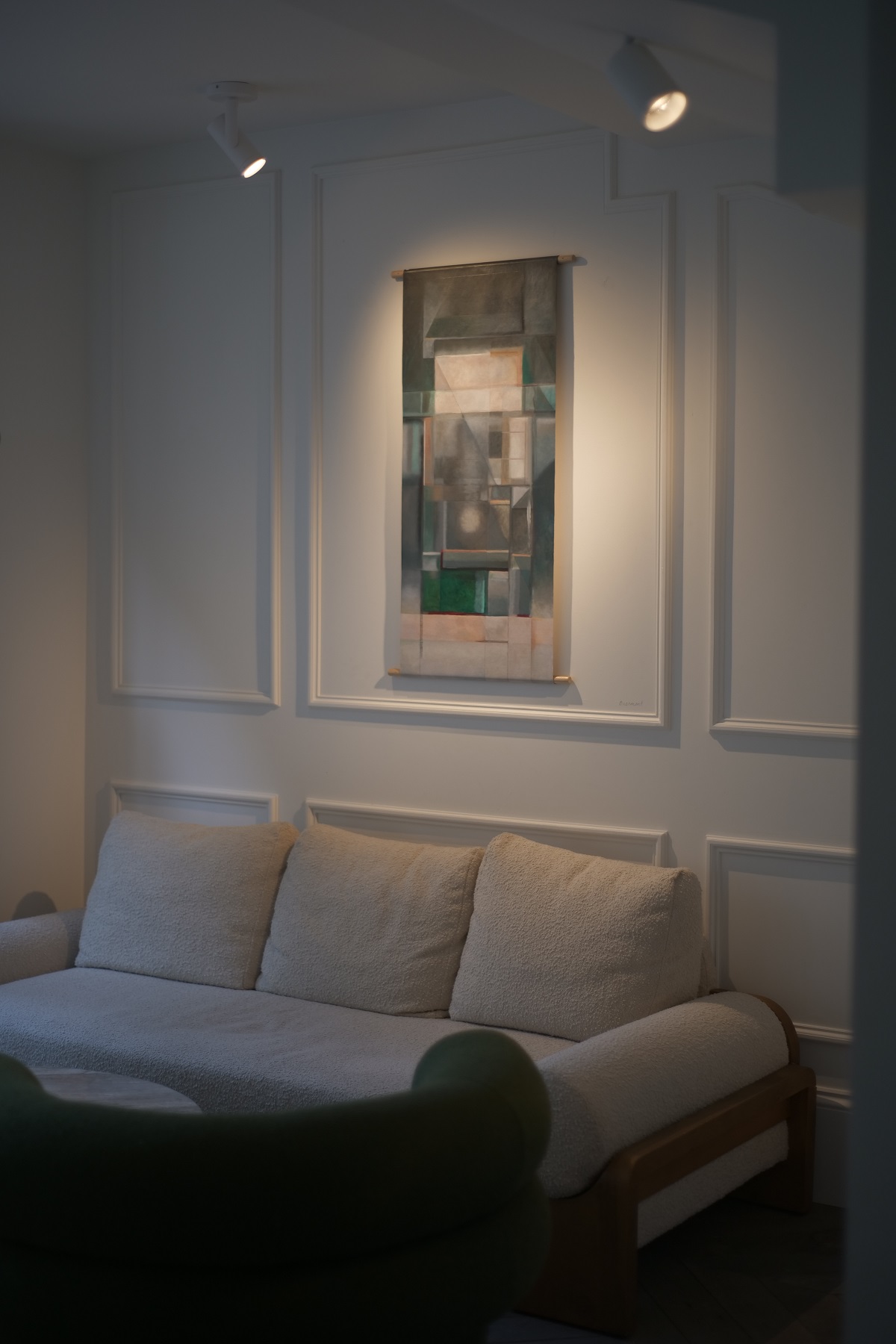 Hayfa Algwaiz, Basement, Courtesy of Gallery44, London UK
I had already seen Hayfa's painting when Marisa Müsing presented her early sketches for the Cry, Baby series. I remember being particularly drawn to the chair with its teardrops, and that was when I began to see a connection emerging. There was something compelling about the relationship between our memory of a space and the emotional weight that the objects within it can carry.
Monya Riachi brought another dimension through her exploration of the poppy's life cycle. I was particularly drawn to the way the poppy head holds the seeds of future life, carrying ideas of resistance, renewal and regeneration. Nature has always been an important part of my curatorial thinking, and I was interested in bringing that sense of life and transformation into the house, allowing the natural world to enter into conversation with the architecture and the works around it.
What excited me was that the artists weren't approaching the subject in the same way. Their practices are distinct, but together they opened up a much broader conversation about the relationship between the body, memory, the objects we live with and the spaces we inhabit.
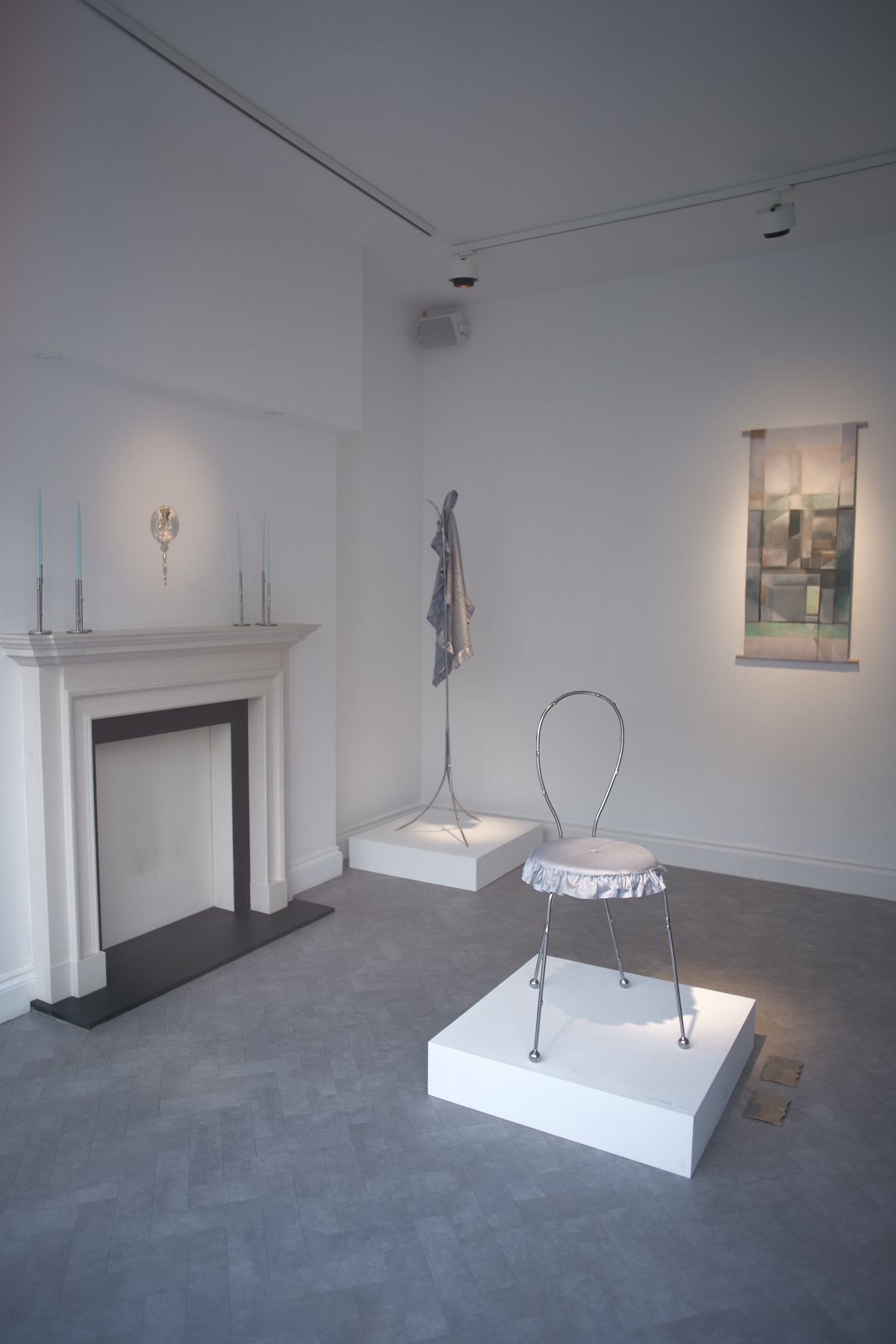 The House Has a Body, Courtesy of Gallery44, London UK
Marisa’s Cry, Baby Chair looks dressed for dinner and on the verge of tears. If it could speak, what would it complain about?
I imagine it would complain about being expected to hold everything together when it's clearly having a moment of its own. There's something beautifully contradictory about a chair made from steel, a material we associate with strength and permanence, shedding tears. I loved that Marisa took something so hard and industrial and gave it this extraordinary sense of vulnerability. Perhaps the chair would simply ask why everyone assumes that being made of steel means you can't be sensitive.
Has living with the exhibition changed your relationship with a room, an object or an everyday habit?
I find myself returning to Hayfa Algwaiz's Basement, which hangs in the gallery's living room. The painting is based on her memory of moving through the space, and what I find particularly beautiful is the way she's captured the light and atmosphere of the room.
What's fascinating is how the painting itself seems to change throughout the day. In daylight, it has one presence, but by evening, it takes on an entirely different feeling. There's something quite compelling about that relationship between the light Hayfa remembered and the changing light in which we experience her work.
It's made me more attentive to how a space can shift in mood throughout the day, and how an artwork can become part of that experience.
The House Has a Body
October 14–November 14, 2026
Primrose Hill, London

Marcarson
Marcarson is the owner of NOT FOR THEM, an art house/concept gallery in New York City.
view all articles from this author