Whitehot Magazine
October 2026
"The Best Art In The World"
"The Best Art In The World"
October 2026
Private Feelings, Public Things: "Goodbye Sadness, Hello Sadness" at Pace Gallery
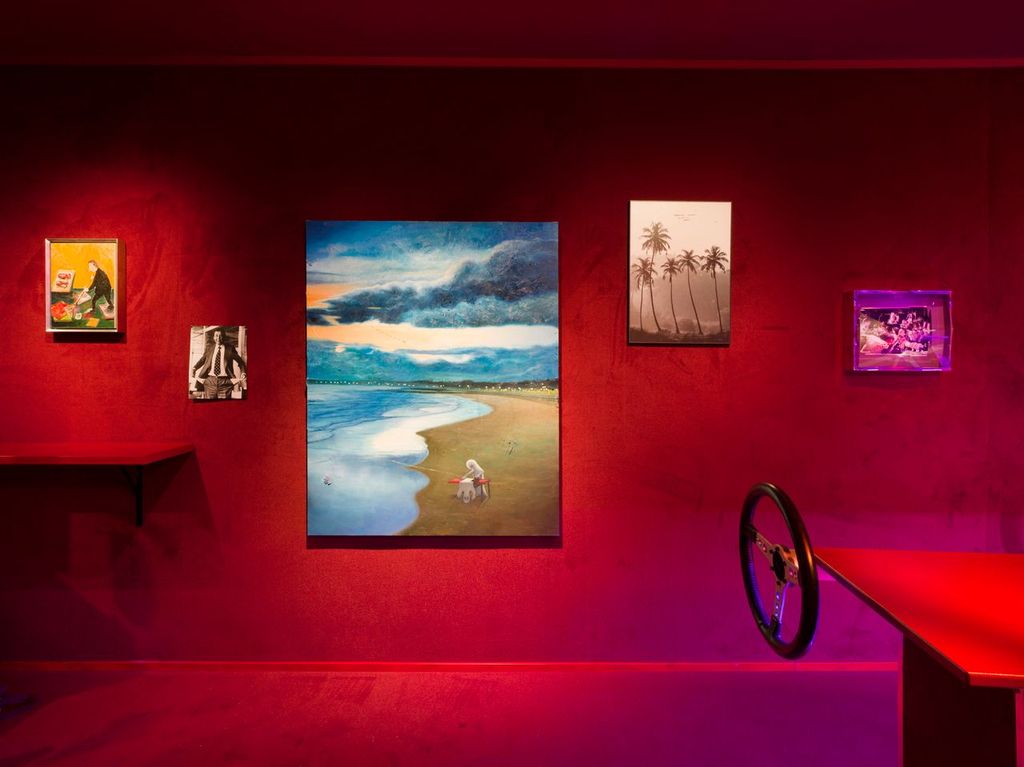
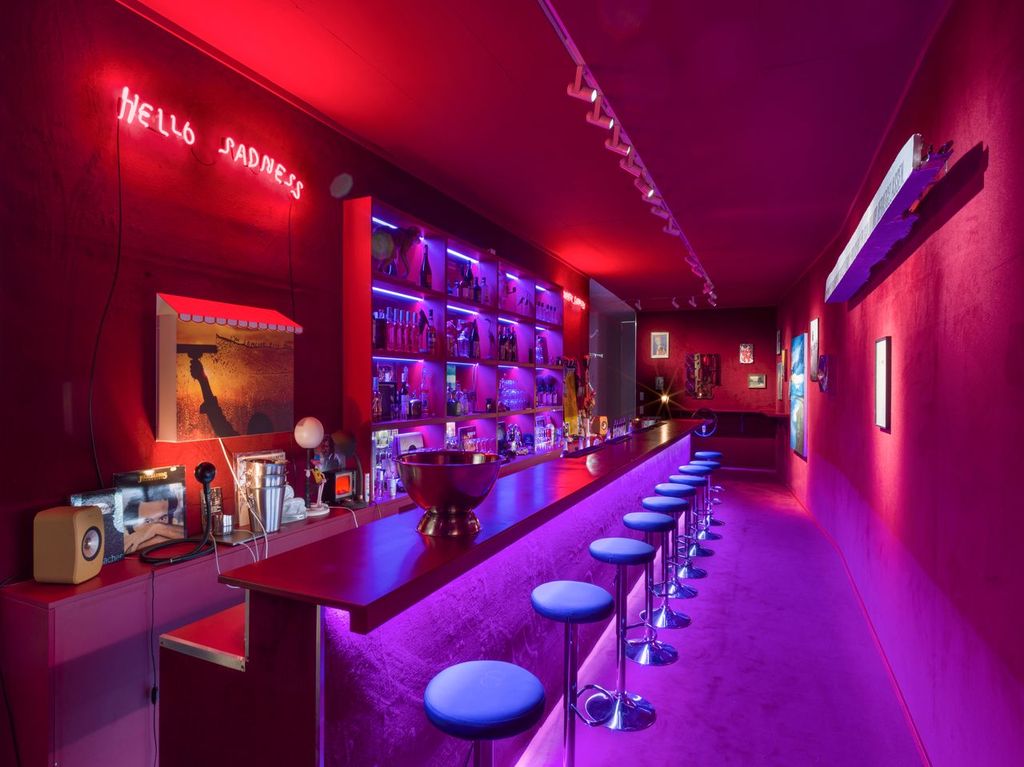 Friedrich Kunath, "Bar Va Bene" (2026). Installation view, “Goodbye Sadness, Hello Sadness,” Pace Gallery, Berlin, 2026. Courtesy: Pace Gallery. Photography: Roman März.
Goodbye Sadness, Hello Sadness
July 4 – August 21
Pace Gallery Berlin
Schöneberger Ufer 65, 10785 Berlin
By JEFFREY GRUNTHANER August 22nd, 2026
The opening party for Goodbye Sadness, Hello Sadness was crowded, even overcrowded, but to Friedrich Kunath’s credit, the replica of his private studio bar in L.A.—Bar Va Bene (2026)—was more densely packed than the other two drinking stations set up for the evening. The cocktails were great, and the art seemed OK in spots. Only the works upstairs were really viewable due to all the thronging at the bar: some of them stood out, some were interesting, and others were typical productions from artists whose brands are too well-known and unsurprising to really take any issue with. Which isn’t to say that surprise, or avant-gardism (whatever that means today), should be the point of a summer group exhibition whose centerpiece is an artist’s wet bar.
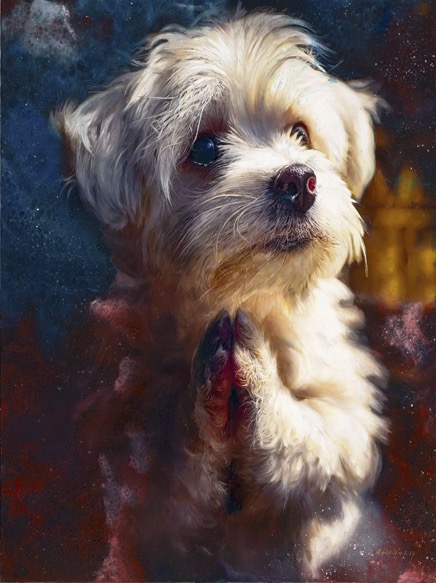 Martin Eder, "Killing me softly" (2024), oil on canvas,
120 cm × 90 cm (47-1/4" × 35-7/16").
Once at the top of the stairs, I found myself entranced by Martin Eder’s cloyingly deadpan depiction of a type of orisoning Shih Tzu, set against a backdrop of sequined stars and luminous gases in outer space. Other works upstairs didn’t really do it for me; everything felt heaped together in a warehouse-storage kind of way, producing adjacency without much relation beyond being set out for display. Nadine Lohof’s terrifically well-painted Alle Sehnsucht will nun träumen (All Desire Now Turns to Dreaming) (2026) was hung near a glassed-in Alicja Kwade readymade titled abarstoolisabarstoolisabarstool (2019)—one of the more nomen est omen-type works by this artist that I’ve seen in a while. Norbert Bisky’s eye-catching and totally camp painting Night Matrix (2026) was just another Norbert Bisky, more or less similar to all the others you’ve probably seen if you live in Berlin. Suspended beside it, Esben Weile Kjær’s Afterparty (2026) has the greater merit of working with a refreshingly recalcitrant, albeit highly traditional, material: stained glass. Even in the gloaming, a residual luminosity seeped in from outside and mingled with the gallery lighting, capturing a weird translucency that straddled the devotional radiance of a church window and the druggy morbidity of a danse macabre.
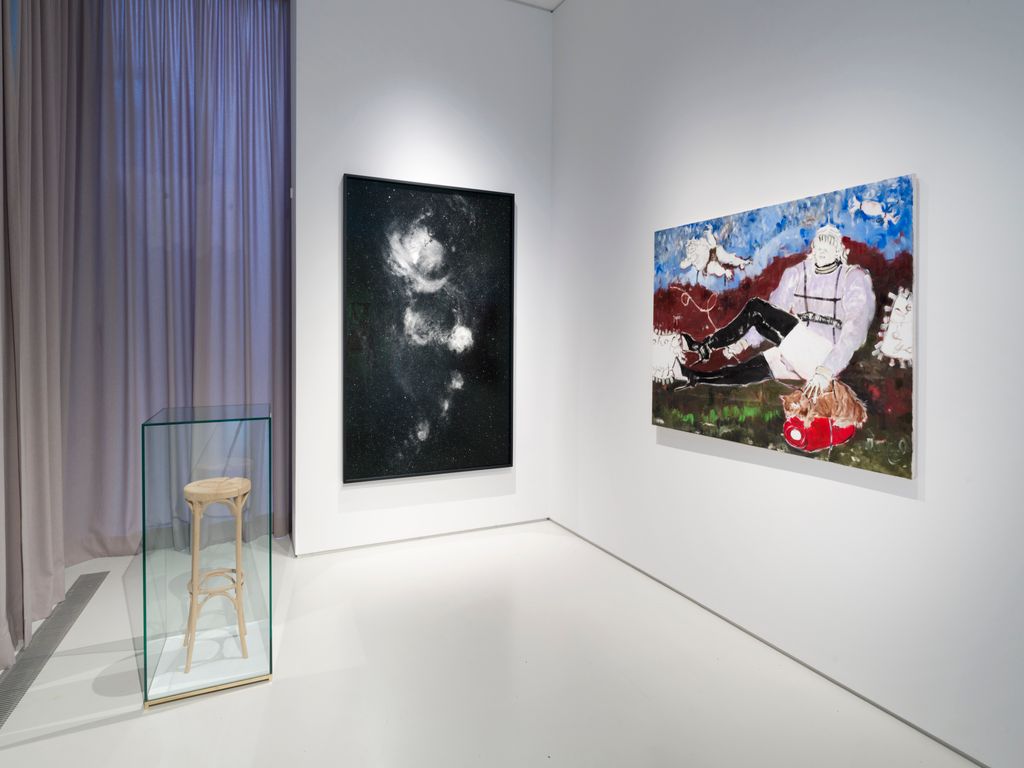 L-R: Alicja Kwade, "abarstoolisabarstoolisabarstool" (2019); Trevor Paglen, "UNKNOWN #90007 (Classified object near Dreyer's Nebula)" (2023); Nadine Lohof, "Alle Sehnsucht will nun träumen" (2026).
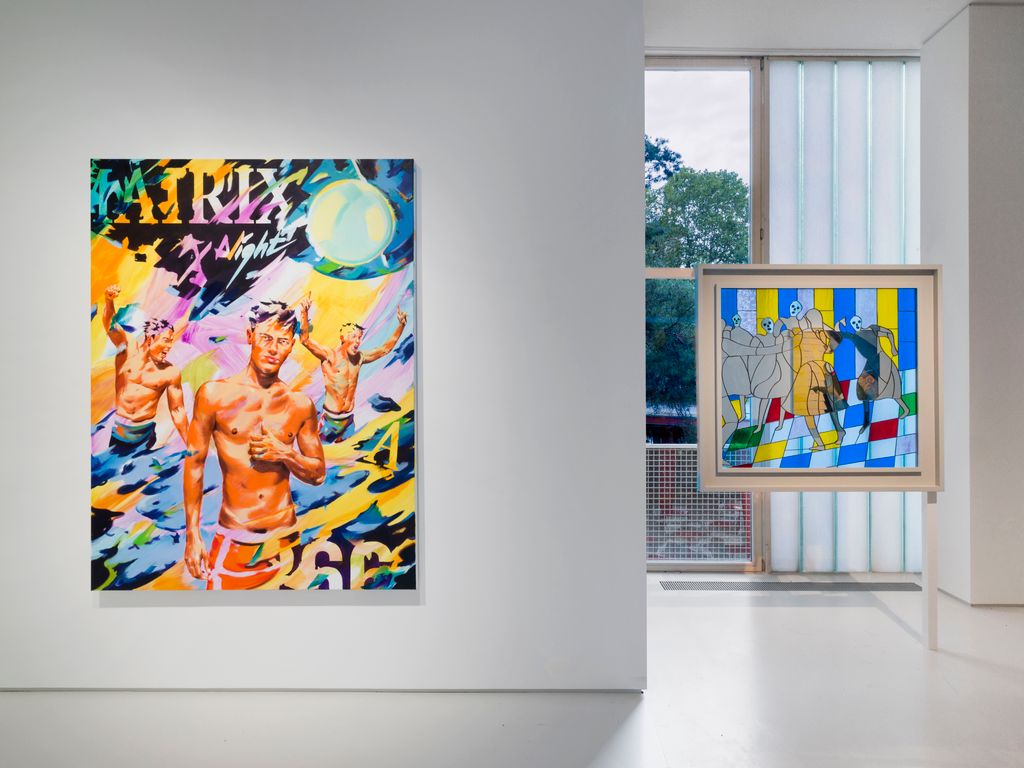 L-R: Norbert Bisky, "Night Matrix" (2026); Esben Weile Kjær, "Afterparty" (2026).
I had to revisit the show on another day to actually see and linger with the works on view in the bar proper. True to the theme of nightlife (I guess), and to the show’s being a gathering of Kunath’s friends, the den-like coziness in, around, and behind the bar eschewed any overt political or aesthetic statements. This floor of the Goodbye Sadness, Hello Sadness radiated something like the domesticity of a wall-to-wall carpeted basement from the 1970s, like a calming bump of good cocaine (minus the faux-wood wall paneling). Kunath’s own works are standouts here, but there’s enough variety of artists and styles to make this whole wing a serious viewing experience.
Even with the bar itself closed, as it was now, there were enough accoutrements of cultural entanglement, enough passive fixations, to swell my flaccid brain to the point of cracking open. Especially when I was seated at the bar alone. Apparently, there’s a David Lynch work on view somewhere? I didn’t have my phone, so I took notes.
 Friedrich Kunath, "Bar Va Bene" (detail) (2026).
Kunath’s own paintings are tightrope walks between bathetic sentiment and a kind of psychedelic surrealism. One of the best features of his methodology is the way his paintings are overwritten with little disclaimers of hypnagogic reverie. One work, which portrays a ghost ironing a sheet near the seashore (I spotted an imposingly life-sized sculpture of this same figure in the gallery’s courtyard), rewards careful attention to the details of its surface with phrases which gently rend the heart. Not quite literary, not quite thought balloons, they drift somewhere between the directness of apostrophic address (“to you, dear close-looking viewer!”) and the possibility of a private language. While these unattributed and sometimes difficult-to-read sentence fragments adorn all of Kunath’s paintings in the show, in The night we called it a day (2026) I noted these: “Explaining / Don’t even bother explaining… Only lonely… Never ending math equation…”
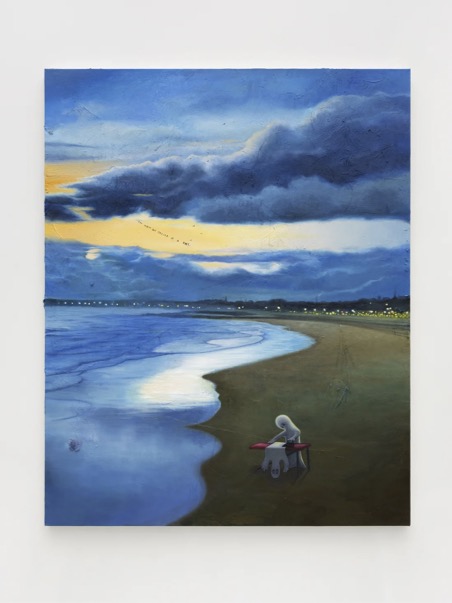 Friedrich Kunath, "The night we called it a day" (2026), oil on canvas,
122 cm × 154 cm × 4.5 cm (48-1/16" × 60-5/8" × 1-3/4").
There’s something here analogous to hearing Glenn Gould faintly humming under his breath while playing Bach’s Goldberg Variations: an ostensibly extraneous trace that becomes inseparable from the work itself. Equally difficult to decipher was the cultural detritus suggested by the mélange of objects Kunath displays on the shelves behind the bar. I seem to recall a Wu-Tang CD and a copy of Roland Barthes’s Image-Music-Text. Both made me feel a sense of affinity with the artist, while also reminding me how ensnared we are in cultural homogenization. Museums, publishing houses, record labels, canonicity, kitsch—all of these have already formatted for us the apparently private cultural consciousness through which we come to know and associate with one another.
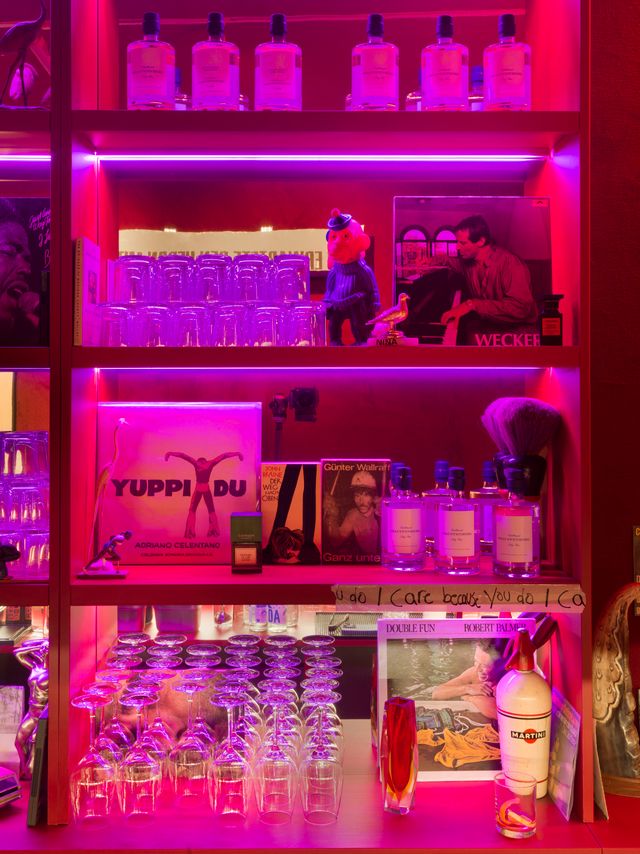 Friedrich Kunath, "Bar Va Bene" (detail) (2026).
Goodbye Sadness, Hello Sadness ultimately suggests that we all share in a similar kind of institutionally mediated awareness. We all pretty much own the same things, don’t we? Recognize the same experiences? We've all read the same books (or at least want to). But what does art even mean if, in order to feel like a person at all, your identity is inevitably granulated by pressures beyond your control, then spread in isolate flecks over books and records like fetishistic talismans culled from the boring showmanship of a cultural majority? If that’s the target, then Kunath nailed it. Also, he’s from L.A., or at least based there, so maybe there’s something distinctly Californian about the shimmer of enthusiasm haloing all this sadness—a sedimented nostalgia that might otherwise remain confined to a dive bar, but here dimly illuminates the institutional forms by which our private feelings and attachments become legible in the first place. WM

Jeffrey Grunthaner
Jeffrey Grunthaner's work explores symbolism, memory, and perception across poetry, music, and art.
view all articles from this author