Whitehot Magazine
October 2026
"The Best Art In The World"
"The Best Art In The World"
October 2026
While Counting Stars, the Universe Grows: Heejung Kim’s Vestiges of Time
By SOOJUNG HYUN October 3, 2026
For Heejung Kim, a star begins with a single dot. One dot calls forth another; dots become constellations and, eventually, a universe. To make a dot, draw a line, stitch, bind, and connect one small thing to another: Kim’s practice over the past three decades has grown through just such modest, repetitive gestures.
Vestiges of Time: a Semi-Retrospective, at the Asian & American Art Foundation in New York, brings together works from different periods of Kim’s career. From Dream (1993) and A Map of the Universe (2000) to Karma (2005), Reincarnation (2006), Eye Mandala (2018), Stars at Night (2022), and The World of Dots (2025), dreams, eyes, reincarnation, dots, stars, and the cosmos disappear and return. The exhibition feels less like a retrospective than the unfolding of a map of a universe that has long been growing inside one artist.
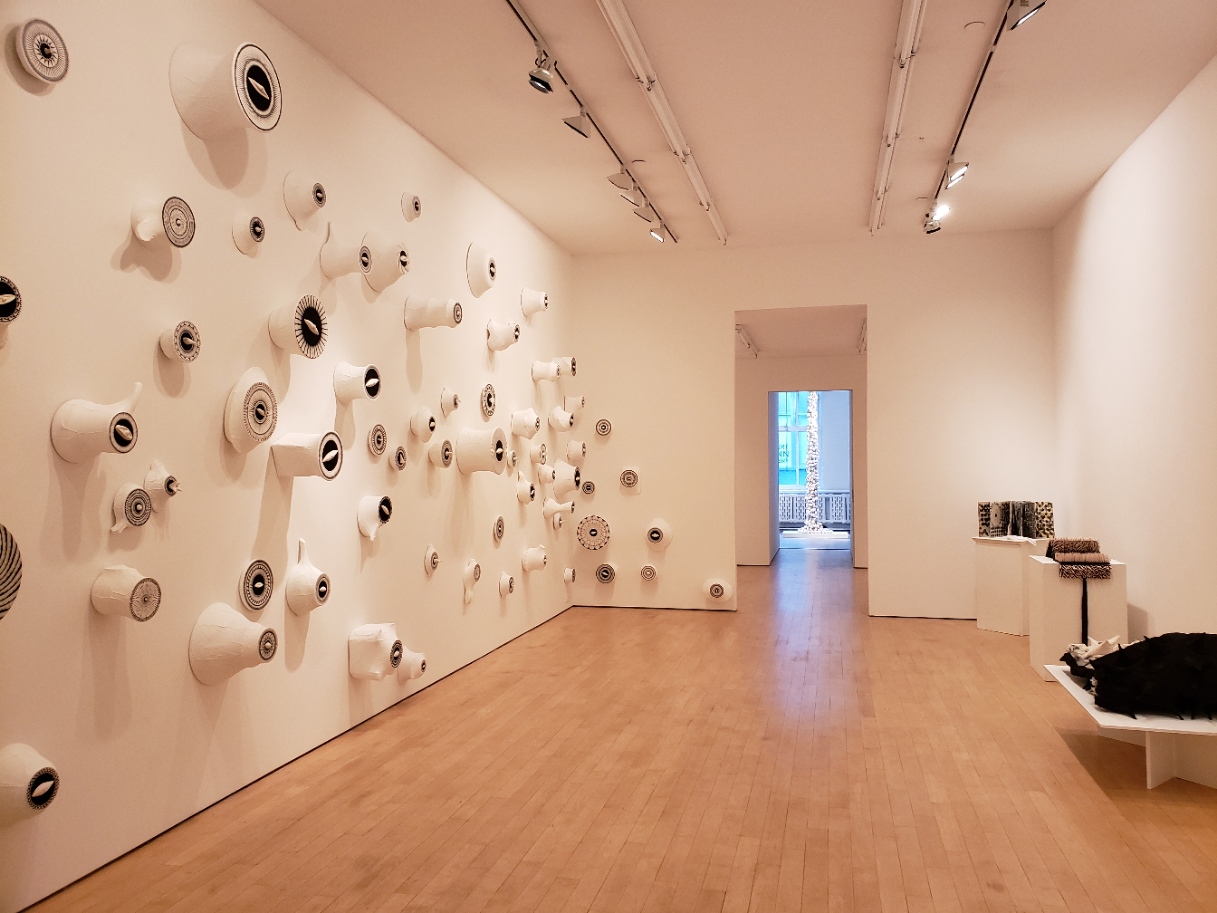 Installation view of Heejung Kim: Vestiges of Time – a Semi-Retrospective, Asian & American Art Foundation, New York, 2026. Courtesy of the artist.
Raised by a composer father, Kim absorbed art and imagination naturally, yet from early age she was also a remarkably diligent student. She earned an MFA from Stony Brook University and an MA in Art Education from the University of Illinois, teaching for years without ever setting her own work aside. There is a striking contrast between the disciplined rhythm of her life and the freedom of the world she invents.
In her work, Kim travels somewhere else.
There are thousands of eyes and hands, stars and a universe. Fragments of the body encounter ordinary objects—bowls, stairs, skeins of thread—and forms that seem unrelated become linked as if part of an unfamiliar constellation. Kim describes her practice as gathering forms derived from her most personal experiences and bringing them together to create images of the universe. She invites viewers to discover them as one might unravel a thread or search a night sky for shapes half-hidden in the dark.
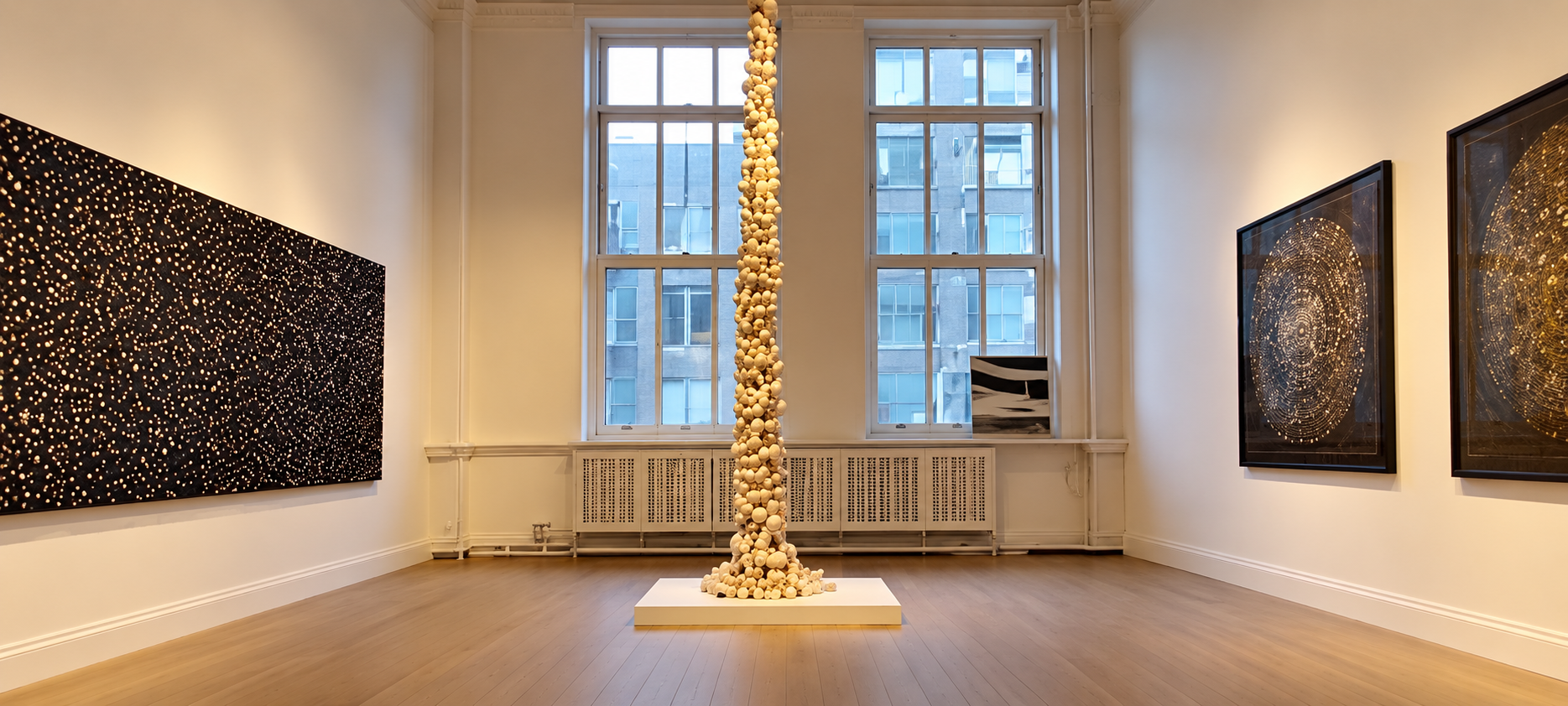 Installation view of Heejung Kim: Vestiges of Time – a Semi-Retrospective, Asian & American Art Foundation, New York, 2026. Courtesy of the artist.
A Small Universe Called a Book
Especially notable across this long trajectory is the Artist Book series. In works from the 2000s nearly every element that would come to define Kim’s later work is already latent: the universe and its cartography, karma and reincarnation, hands and eyes, repetition and accumulation, and the act of joining disparate materials together. Yet I would rather see these early books not as the finished result of an already-formed worldview, but as traces of a period when Kim was actively searching for a voice of her own — work still charged with an experimental energy that had not yet settled into a single form.
Kim's books expand the experience of reading into something tactile and spatial. Dream combines thread, wire, plaster, paper, pigment, and hanji; Karma joins wood, thread, hinges, and ink; Reincarnation brings together fabric, wood, acrylic paint, and even plastic eggs. Freed from being merely read, the book becomes a tactile object — something to open, touch, stand up, and look into.
She draws, binds, stitches, folds, and connects. She moves between the flat and the three-dimensional, crossing back and forth between book and sculpture. What counts as painting, what counts as sculpture, where the fixed idea of "the book" gives way — these distinctions seem to matter little. What matters is that thought arrives through the hand’s contact with material. Kim does not simply select materials; she thinks through them.
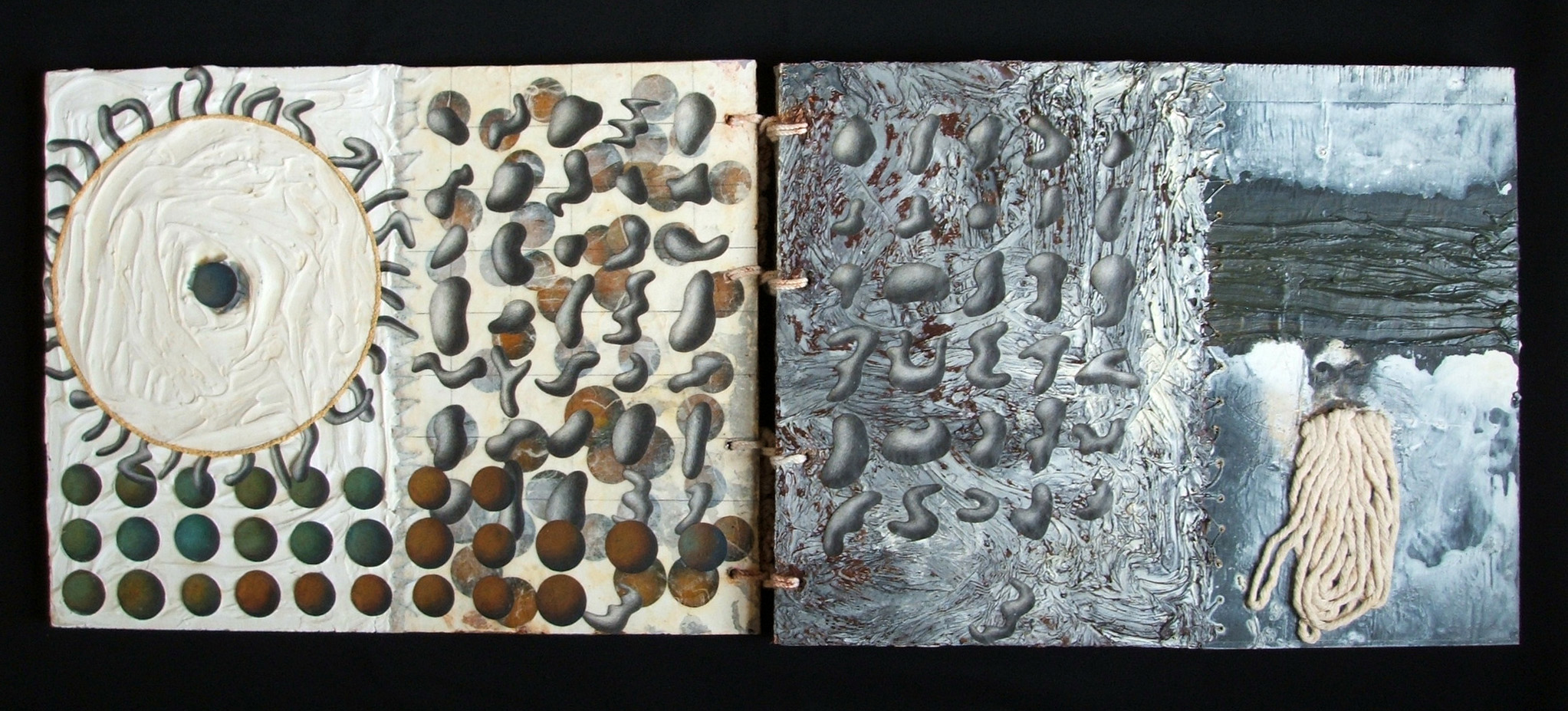 Dream, 1993, oil paint, string, wire, plaster, paper, pigment, hanji (traditional Korean paper) on wood, 12” x 31” x 4”, Courtesy of the artist
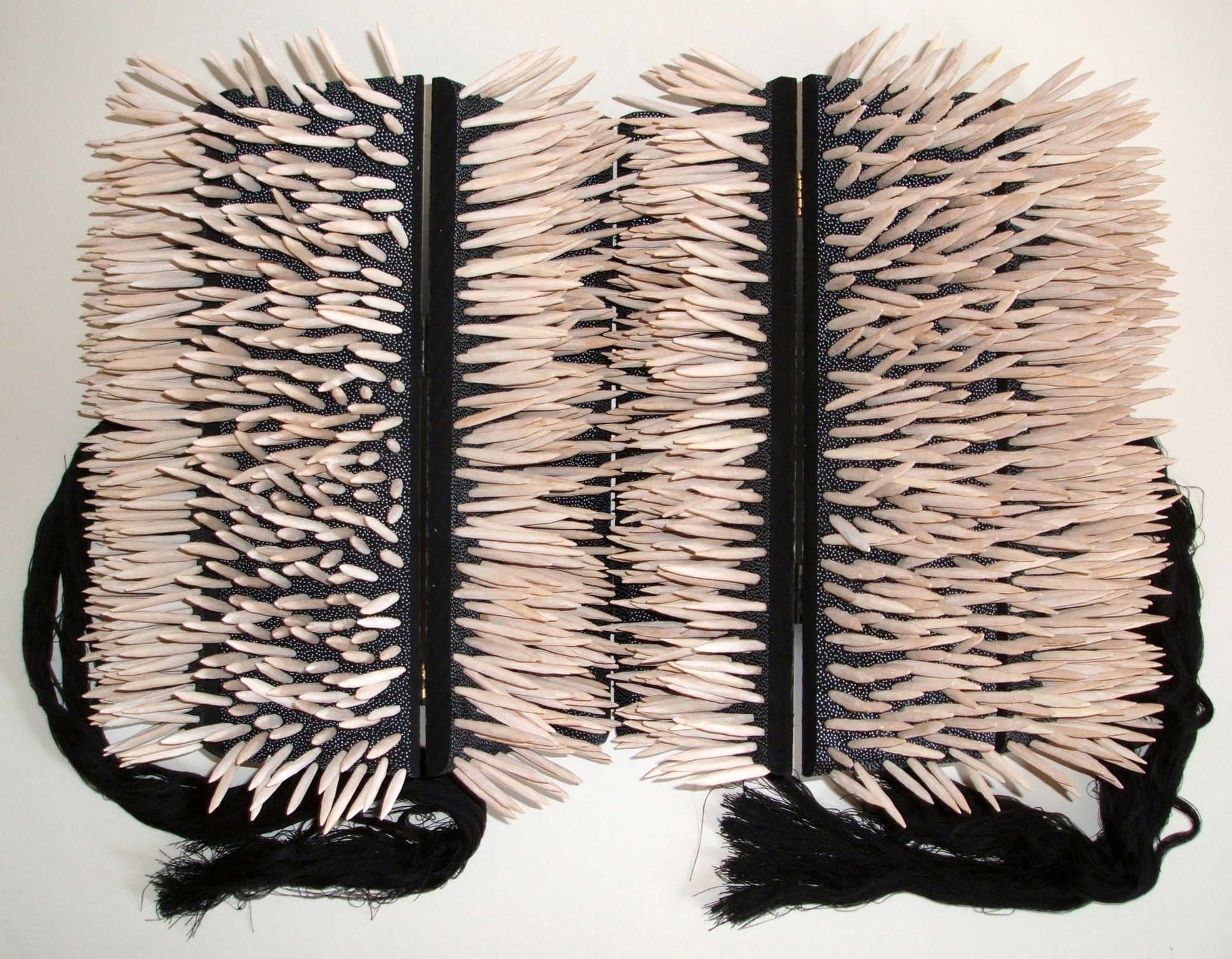 Karma, 2005, wood, thread, hinges, and ink, 12” x 24” x 4”, Courtesy of the artist
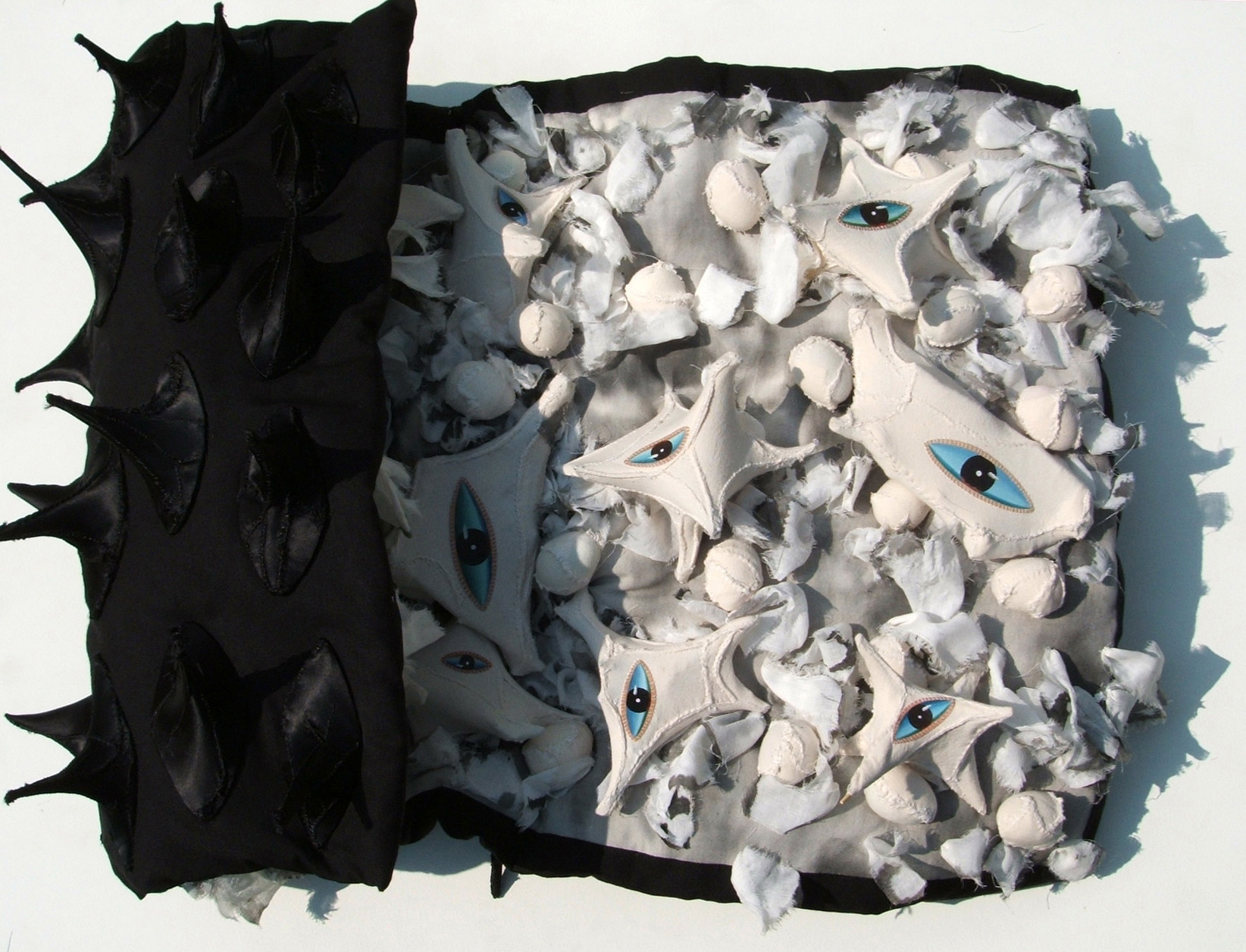 Reincarnation, 2006, fabric, wood, acrylic paint, plastic eggs, and ink, 29” x 50” x 10”, Courtesy of the artist
Stars and Mandalas
Kim's interest in Tibetan Buddhist art grew out of her art history studies at the City College of New York, where she began a thesis on a Tibetan mandala painting in the Metropolitan Museum of Art. Learning that the mandala can be understood as a map of the universe deepened an interest that already resonated with her longstanding fascination with stars and the cosmos. In the year her father died, she traveled to Nepal and climbed in the Himalayas, an experience of the mountains themselves, far from the scholarly encounter through which she had first come to this art.
What she brought back was not a tradition to reproduce but a structure to think with. Her mandalas do not follow the established iconography. In place of a deity, she raises the form of an eye and lets circles and dots unfold within and around it. Eye and circle, dot and star bleed into one another, as in Eye Mandala I, Eye Mandala II, Eye Mandala III (2018).
For Kim, the mandala functions less as an icon than as an order for her imagination. The stars she has loved since long before are no longer simply points of light in the night sky: a dot becomes a star, stars gather into a constellation, and a constellation meets a circle to become a universe. Forms that began in personal memory and dream pass through the mandala and expand into signs linking the spiritual world to cosmic order. Her mandala becomes not a traditional religious image but a private cosmology, a map of a universe all her own.
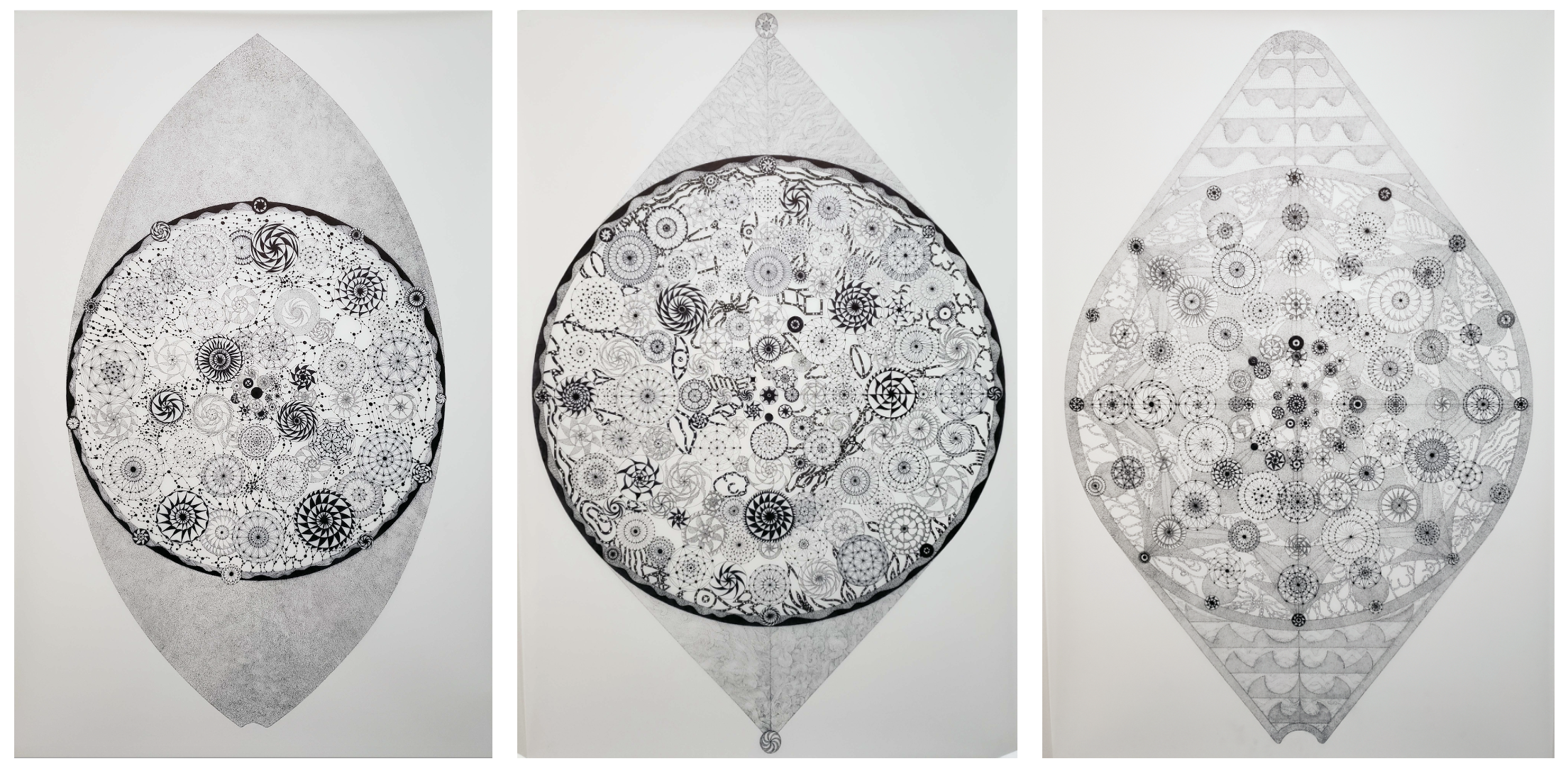 Eye Mandala I, 2018, black marker on mylar, 36” x 24”/Eye Mandala II, 2018, black marker on mylar, 36” x 24”/Eye Mandala III, 2018, black marker on mylar, 36” x 24”, Courtesy of the artist
The Child Who Has Not Quite Grown Up
Looking at the work and talking with Kim, I came to think that somewhere inside her lives a child who has not yet fully grown up. The child inside Kim is more whimsical and unpredictable—one who turns a single eye into an entire world, transforms a small dot into a star, and finds unexpected connections among things that seem to have nothing to do with one another. She does not stop at admiring the beauty of the stars in the night sky; she imagines what might lie beyond them. The adult Kim has lived faithfully within the order of the everyday — studying and teaching as an educator, working as an artist. But might there not be another self, tucked inside that practical one, who never quite believed the visible world was all there is?
Here emerges the intriguing paradox of Kim’s work: her imagination is free, yet the way she gives it form is remarkably disciplined.
She sets down one dot, then another beside it. One stitch, then another. One small form, then another placed alongside it. Repetition here is not merely a formal method but an act of measuring time. Her universe was not born in a single day — it has grown, gradually, through thousands of small and persistent bodily gestures.
In that sense, the exhibition’s title, Vestiges of Time, does not refer only to the traces left behind by past works. In each dot, each stitch, each repeated line, the time of the body that performed it remains. Rather than depicting time, the work accumulates it.
Contemporary speculation about whether the reality we experience is the only possible world, or whether other worlds might exist as well, raises an intriguing question before Kim’s work: if another world exists beyond this one, might more than one self exist within a single person, too?
For Kim, counting stars may never truly end. Discover one star, and another lies beyond it; just as one world seems complete, another opens. What has persisted longest across more than three decades of her work may not be any particular material or motif, but the imagination that keeps believing something remains beyond the visible world, still waiting to be found.
And perhaps this is exactly what an artist is: someone who does not easily give up that belief.
While counting stars, Heejung Kim’s universe keeps growing.
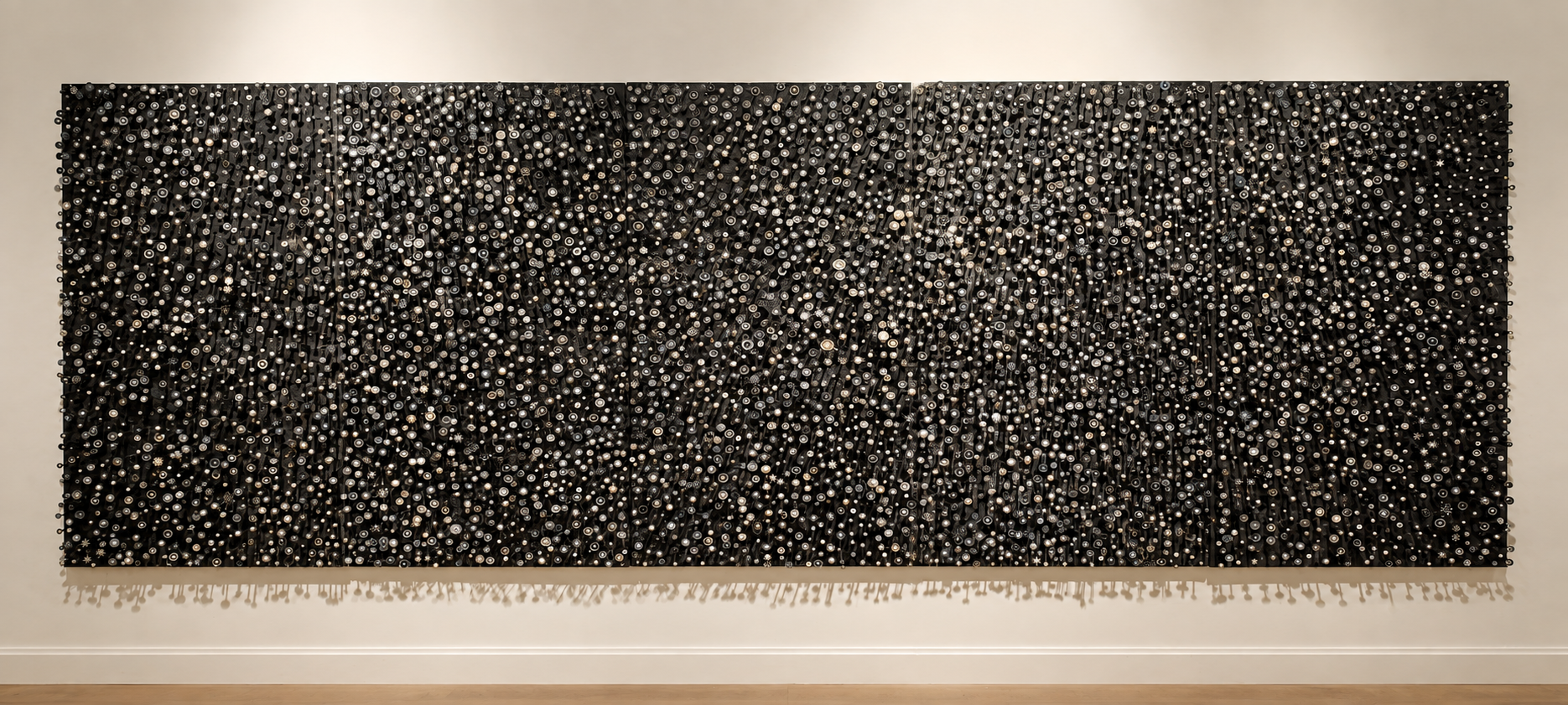 The World of Dots, 2025, wood, paper, marker, ink on wooden panel, 4 feet x 10 feet, Courtesy of the artist
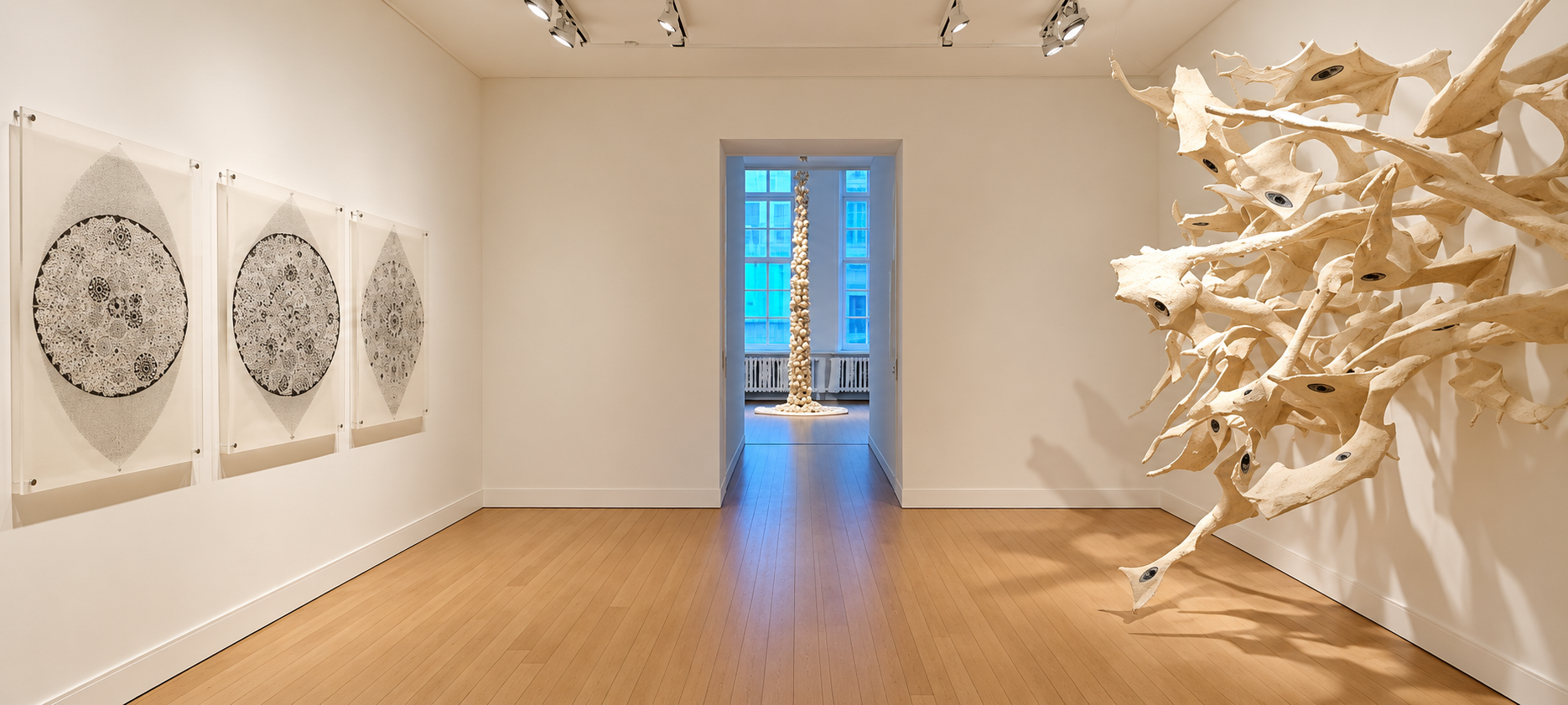 Installation view of Heejung Kim: Vestiges of Time – a Semi-Retrospective, Asian & American Art Foundation, New York, 2026. Courtesy of the artist.
Soojung Hyun
Soojung Hyun is a New York–based curator, writer, and art historian. She has organized exhibitions at venues including the Anya and Andrew Shiva Gallery, AHL Project Space, and PS122 Gallery. She teaches Asian and contemporary art as an adjunct faculty member and contributes to the Archive of Korean Artists in America (AKAA). Her writing focuses on diasporic identity, material memory, and the intersection of Eastern and Western aesthetics.
view all articles from this author