Whitehot Magazine
October 2026
"The Best Art In The World"
"The Best Art In The World"
October 2026
Exhibition Review–"Barnett's Candelabra" at Below Grand (New York City)
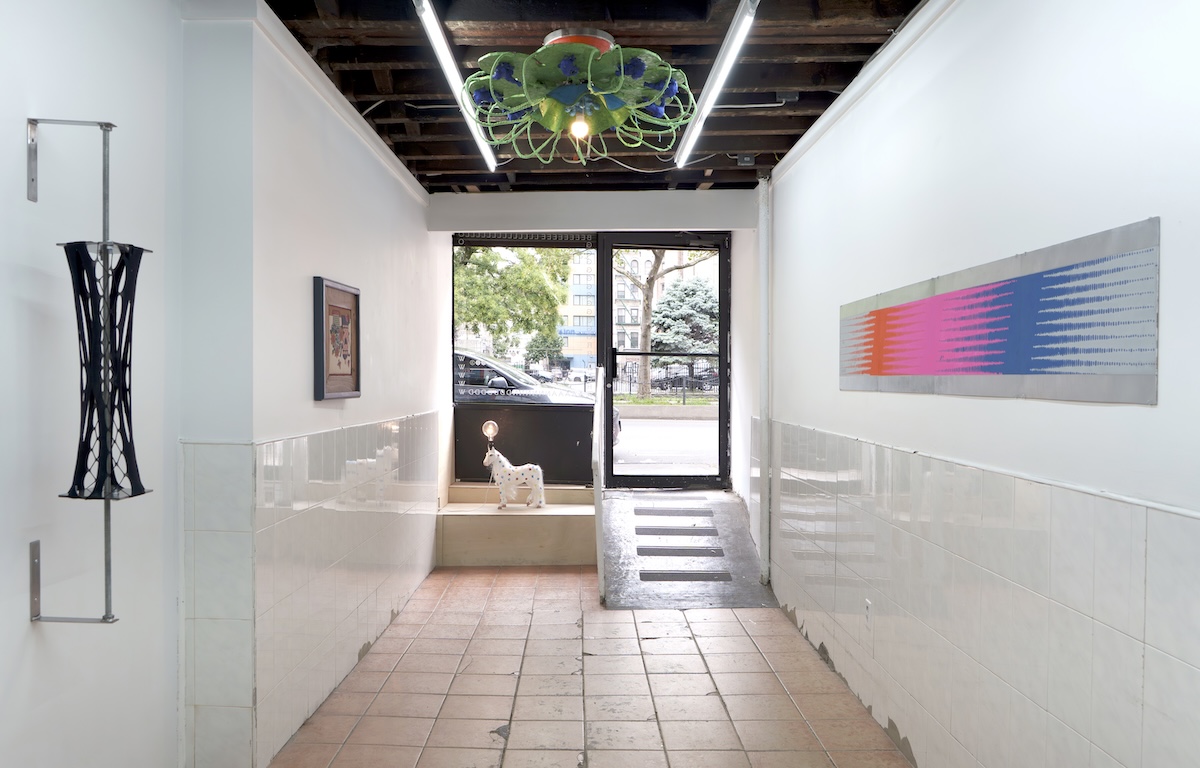 (Installation View of Barnett's Candelabra. Courtesy of the gallery. Credit: Frank Wang.)
By Yihsuan Chiu September 9, 2025
Once, the gesture of repair was inseparable from the idea of home. To dwell somewhere meant to tend to it, through cleaning, fixing, stitching or repainting. As replacement became more economical than restoration, a particular kind of creative agency began to fade. We grew distant from the intimate knowledge that comes from engaging with the material world around us.
Barnett's Candelabra, currently on view at Below Grand Gallery in New York's Chinatown, assembles eight artists whose work recovers this lost territory between making and mending. Each expands on the tradition of the Readymade, treating found objects and materials as carriers of embedded histories and lost messages. Together, they speak to how objects accumulate meaning through use, damage, and care, gaining in this process a kind of autonomy, much like the gallery space itself.
The title Barnett's Candelabra nods to a moment of the gallery's past life in 1902, when Abraham Barnett, then owner of the frame store, accidentally ignited a frame while examining a picture by candlelight. The fire was destructive, yet it became another prompt for renewal. Throughout the late 19th to early 20th centuries, the building that now houses Below Grand's Allen Street extension served as tenement housing. Later, it became a lingerie shop, a frame store, and eventually a soy-processing factory. Each iteration left its mark: visible burn scars from at least two separate fires ghost the ceilings, while the faded sign of New Sung Lay Bean Products Inc. still hangs on the facade. These layered traces stand as a testament to the cycles of destruction and renewal that mirror the domestic rhythms of breakage and repair, which lie at the heart of this exhibition.
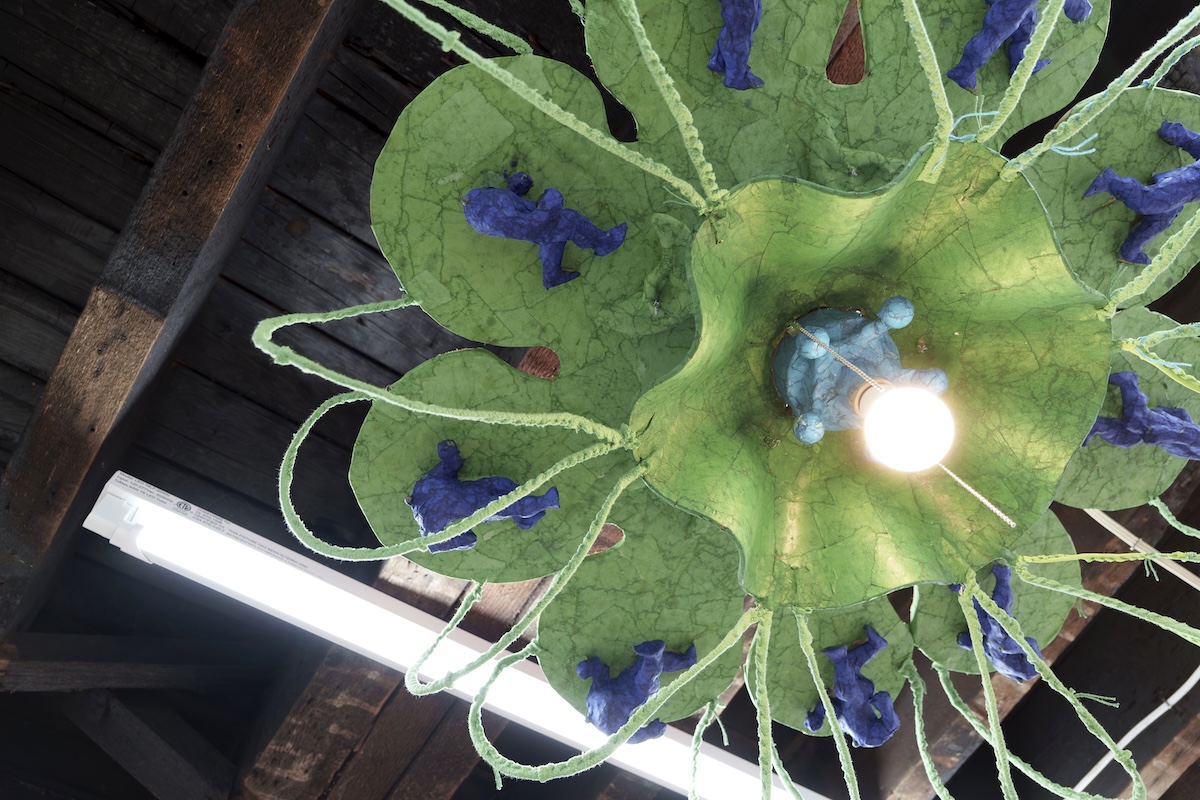 (Pap Souleye Fall, Courante coupéne, 2025. Courtesy of the gallery. Credit: Frank Wang.)
In Courante coupéne (2025), which translates to "power out" in French, Pap Souleye Fall transforms the gallery ceiling into a sculptural host. Composed of fabric, paper, and other salvaged elements in vivid green and blue tones, the work converts a functioning ceiling fan into animated ceremonial adornment, enlisting the space as a co-conspirator. When expected functions are disrupted, objects reveal their capacity for autonomous existence, blurring the line between infrastructure and ornament.
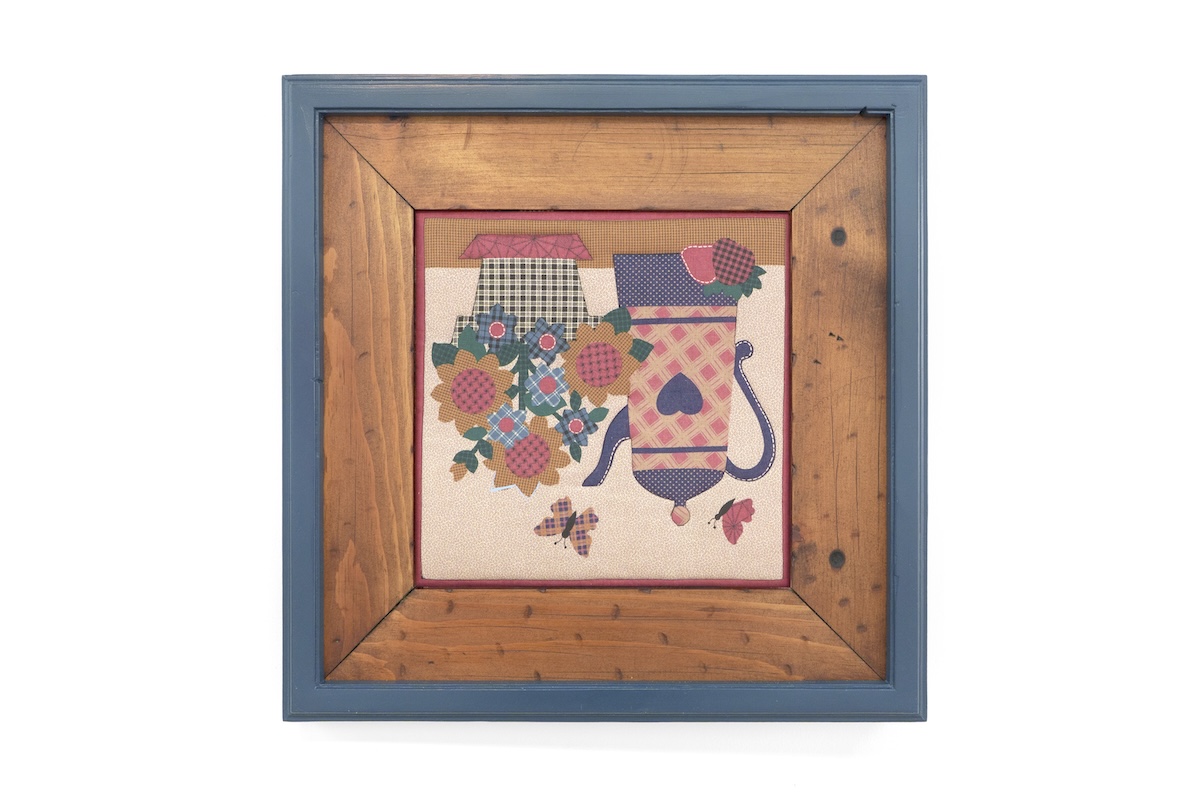 (Jongho Lee, Untitled, 2025. Courtesy of the gallery. Credit: Frank Wang.)
While some artists transform found materials into entirely new forms, others work within the existing formal language of the objects themselves. Jongho Lee's wall-based sculpture exemplifies this latter approach. At first glance, the framed quilt appears to be a familiar domestic scene: an image of flowerpots, water kettles, strawberries and butterflies, the kind of tranquil tableau one might expect in a dining room. But Lee has inverted the image, turning this symbol of domestic decorum upside down. The salvaged wood frame itself was cut to sit flush with the wall on one side and protrude asymmetrically from the other. This disruption creates tension within the very symbol of home, challenging assumptions about comfort. The inversion reveals the gap between form and meaning–the quilt retains its identity as domestic craft while its cultural certainties are destabilized.
At the exhibition's outer edge, Ronald Sterling's handmade lamps incorporate commercial circulation into the exhibition's concern with readymades. Crafted from recycled children's toys, these lamps, many shaped like horses or unicorns, are sold and displayed daily at Union Square Station. They must be purchased to complete their transformation from discarded toys to functional objects, returning to domestic life. Through this dual process of artistic and commercial participation, Sterling's practice suggests how contemporary acts of preservation might productively engage with the very economic systems that generate disposability in the first place.
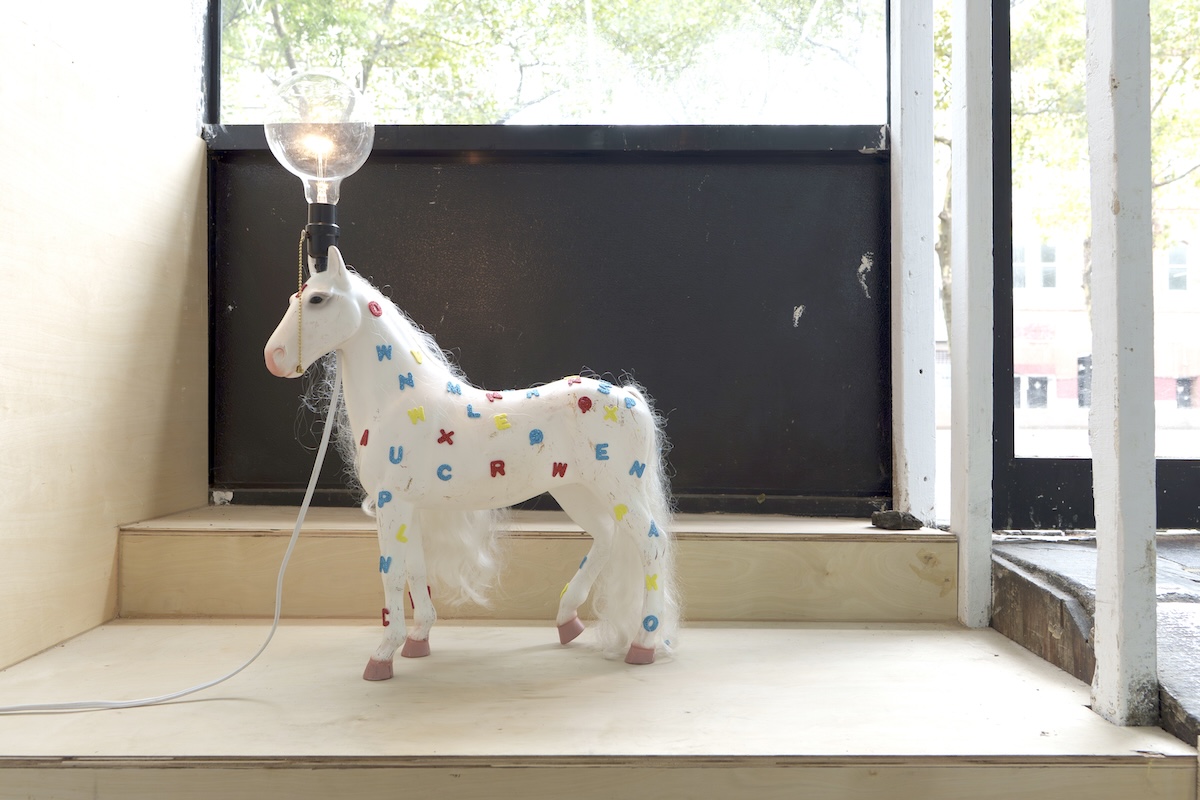 (Ronald Sterling, Carol, 2025. Courtesy of the gallery. Credit: Frank Wang.)
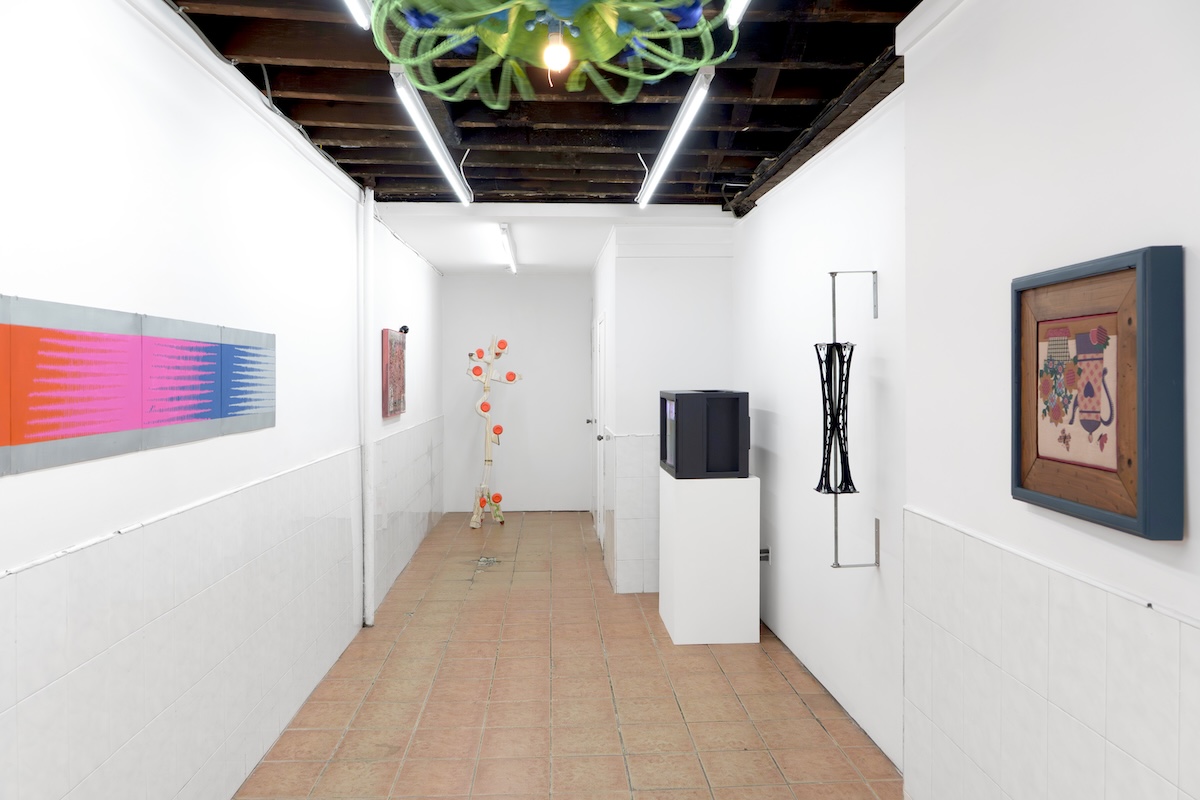 (Installation View of Barnett's Candelabra. Courtesy of the gallery. Credit: Frank Wang.)
This animist approach to objects allows curator Peter Kelly to assemble diverse practices, from digital archaeology to industrial salvage, that each find different entry points into the same fundamental question: how do we restore agency to the material world around us? By utilizing the building's layered history as both context and collaborator, the show demonstrates how art-making and exhibition-making could tend to the spaces, objects, and communities they steward. What grounds this meditation is not architectural grandeur or historical prestige, but the accumulated daily practices of care and preservation, the small gestures that make continuity possible.
Barnett's Candelabra
August 23 - September 27, 2025
Below Grand Gallery
Curated by Peter Kelly
Artists: Jake Brush, faith****, Pap Souleye Fall, Jongho Lee, Emily Drew Miller, Alec Snow, Ronald Sterling, Carolina Tenorio

Yihsuan Chiu
view all articles from this author