Whitehot Magazine
October 2026
"The Best Art In The World"
"The Best Art In The World"
October 2026
Joseph Nechvatal on the first retrospective exhibition in Paris dedicated to the work of American avant-garde furniture and fashion designer Rick Owens
By JOSEPH NECHVATAL July 15, 2025
In the temple of love, shine like thunder
In the temple of love, cry like rain
In the temple of love, hear my calling
In the temple of love, hear my name
And the devil in a black dress watches over
My guardian angel walks away
Life is short and love is always over in the morning
Black wind come carry me far away
~Excerpted lyrics from the song Temple of Love by The Sisters of Mercy

COLLECTION FEMMES DIRT, PRINTEMPS-ETE 2018, PALAIS DE TOKYO, PARIS, 28 SEPTEMBRE 2017 SS18 DIRT WOMEN’S, PALAIS DE TOKYO, PARIS, 28 SEPTEMBER 2017 © OWENSCORP
With over a hundred strong strapping sculptural silhouettes, thirty pieces of brutalist sculpture/furniture, and beaucoup archival documentation; Palais Galliera (formally known as the Musée de la Mode de la Ville de Paris) is displaying the first retrospective exhibition in Paris dedicated to the work of American avant-garde furniture and fashion designer Rick Owens (born 1961 in Porterville, California). Owens is calling the show the Temple of Love, after the 1992 post-punk Goth rock song of the same name by The Sisters of Mercy that featured the Israeli mezzo-soprano voice of Ofra Haza. The song first spoke to me on the 1993 Sisters of Mercy LP A Slight Case of Overbombing. (The 2025 sad Israeli irony is unintended.)
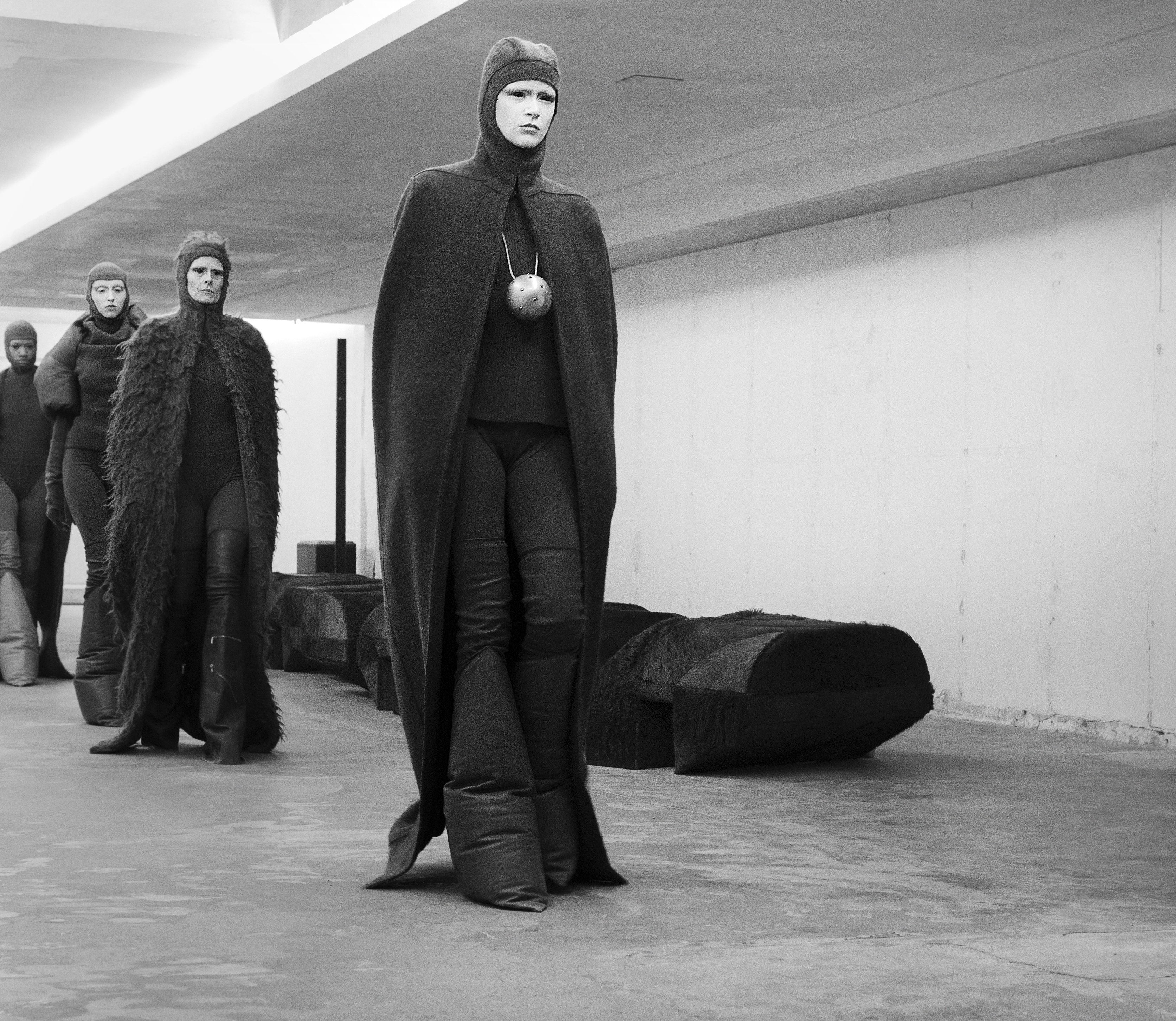
COLLECTION FEMMES PORTERVILLE, AUTOMNE-HIVER 2024, PALAIS BOURBON, PARIS, 29 FEVRIER 2024 FW24 PORTERVILLE WOMEN’S, PALAIS BOURBON, PARIS, 29 FEBRUARY 2024 © OWENSCORP
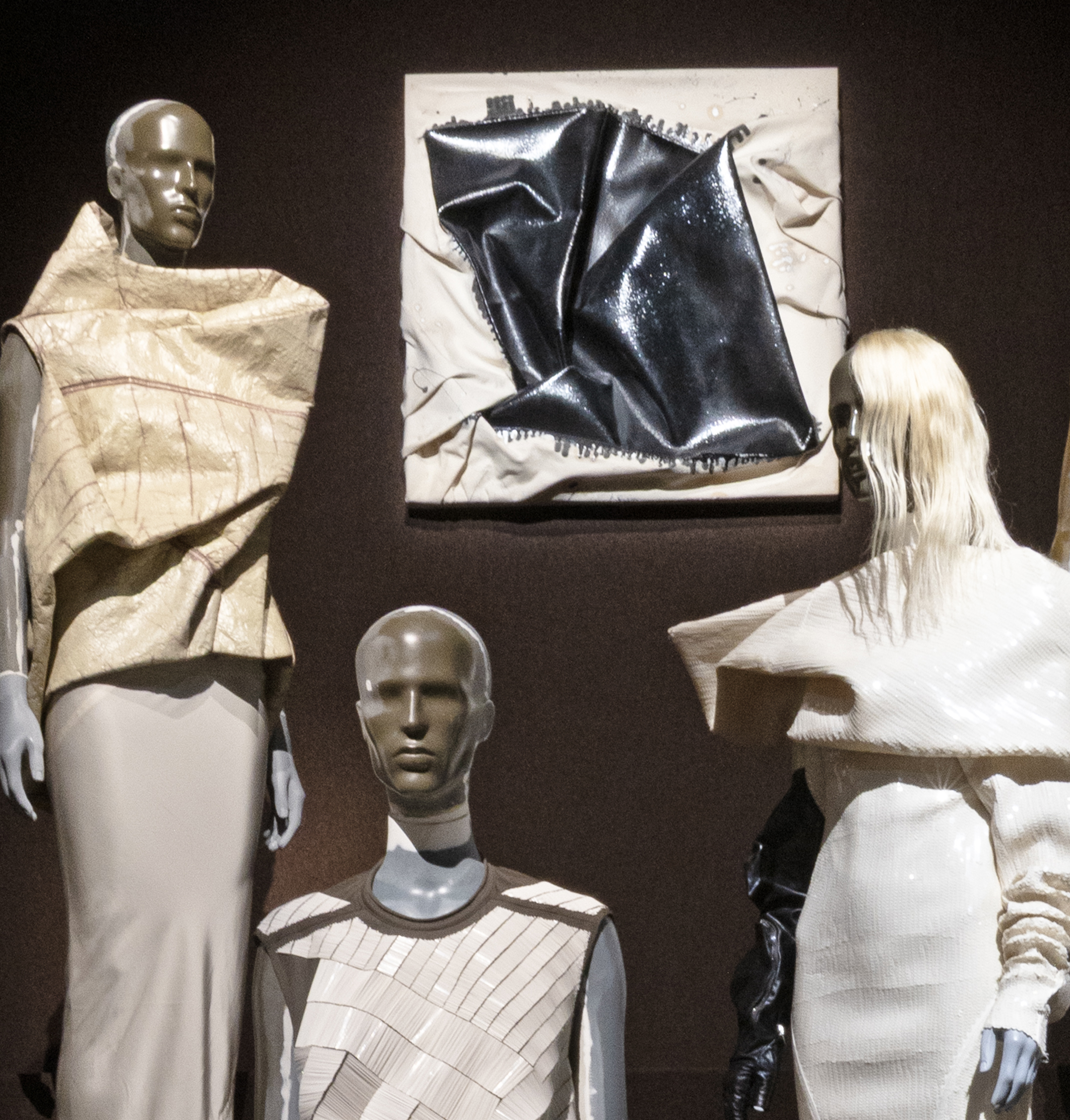
Partial installation view of Rick Owens: Temple of Love G90A6319 ©Palais Galliera-Paris musees, Gautier Deblonde featuring a painting by Steven Parrino
Like the song Temple of Love, the show is kind of cool kid trashy and very hard to get out of your head. But Owens’s work here is informed by (and situated within) the context of other specific cultural moments and creators: specifically the crumpled no wave paintings of Steve Parrino (in 2016 Owens also included Parrino's paintings in his Museum of Contemporary Art, Los Angeles exhibition Rick Owens: Furniture), the social and felt sculpture of Joseph Beuys, the fin-de-siècle literature of Joris-Karl Huysmans, early Hollywood films, and the life and work of his eccentric wife Michèle Lamy.
Indeed, the show includes a full-scale replica of an Owens-Lamy California bedroom. Though the star-fucking vibe can be seen by some as insufferably pretentious, it works for me only by being in conjunction with Owens’s intersecting of radical artistic thinking and obscure spiritual strivings.
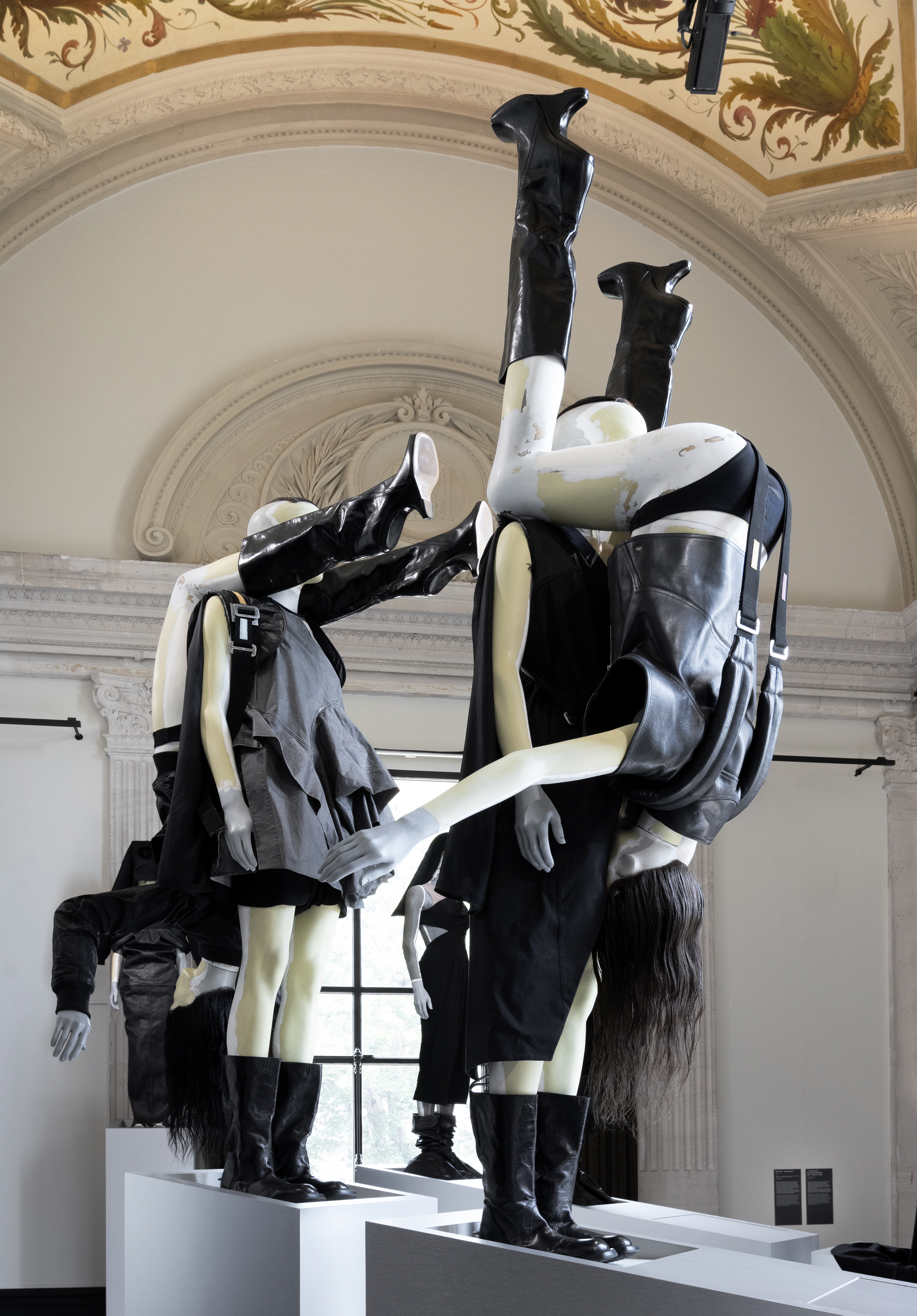 Installation view of Rick Owens: Temple of Love ©Palais Galliera-Paris musees, Gautier Deblonde
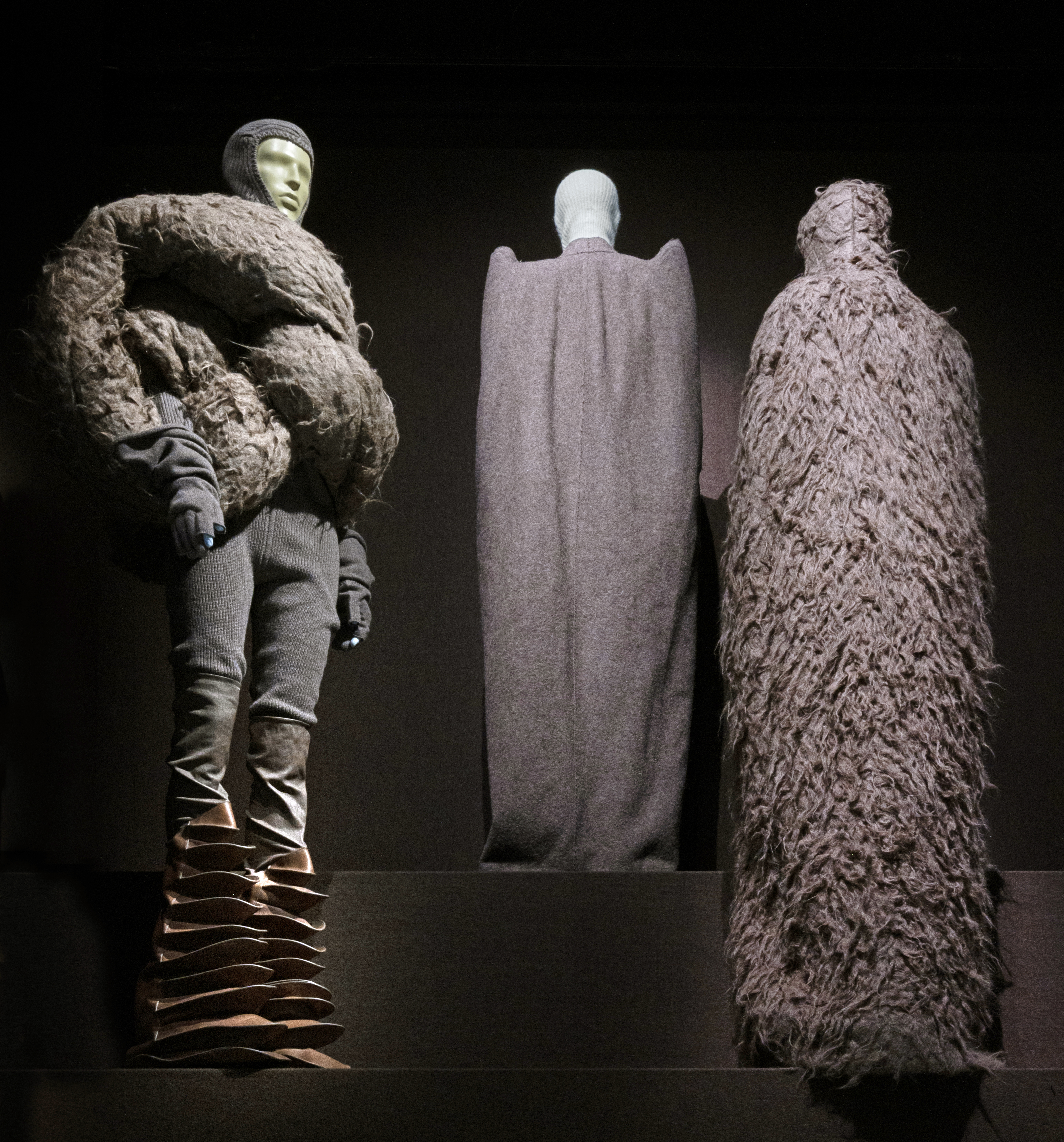
Partial installation view of Rick Owens: Temple of Love ©Palais Galliera-Paris musees, Gautier Deblonde
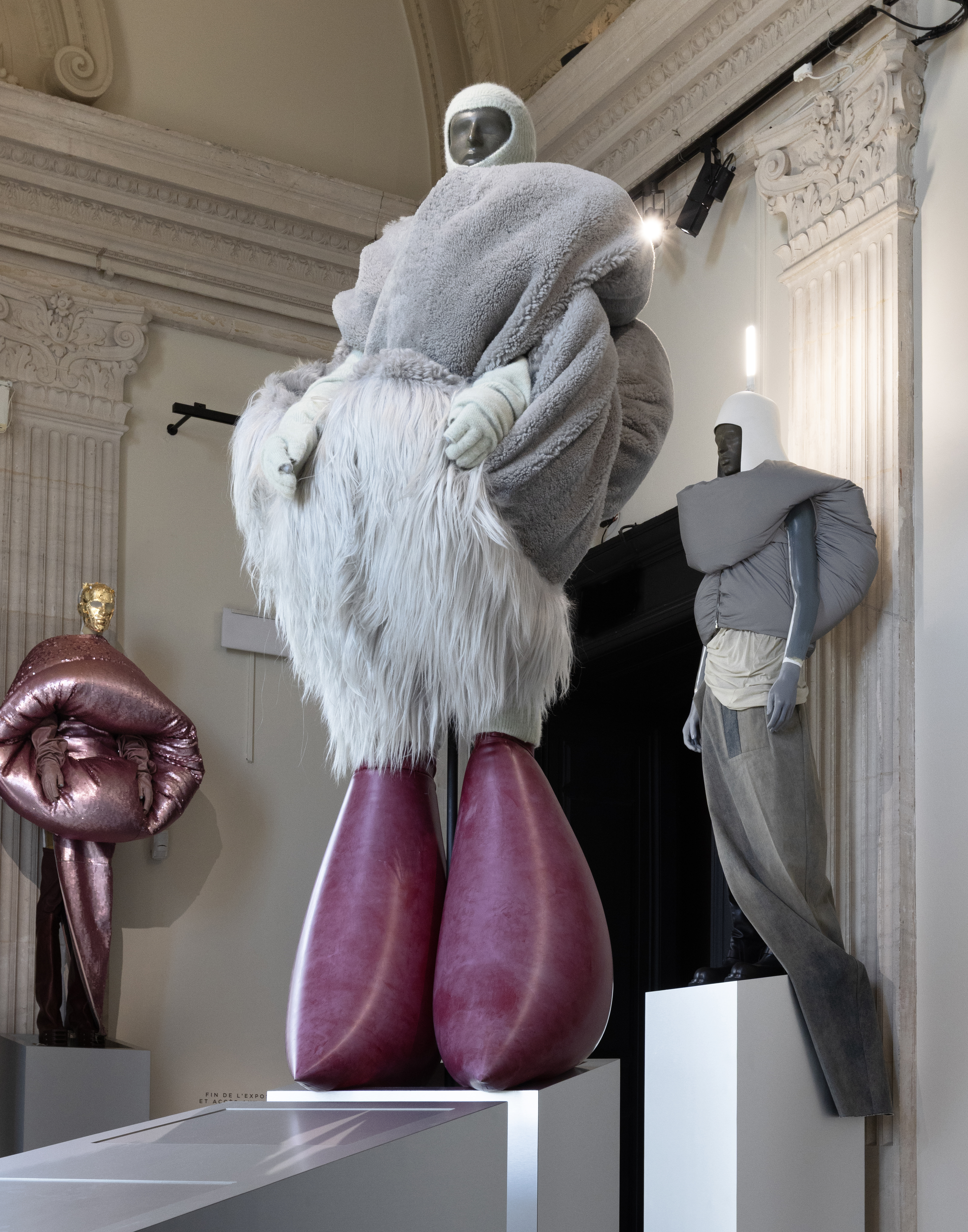
Partial installation view of Rick Owens: Temple of Love ©Palais Galliera-Paris musees, Gautier Deblonde
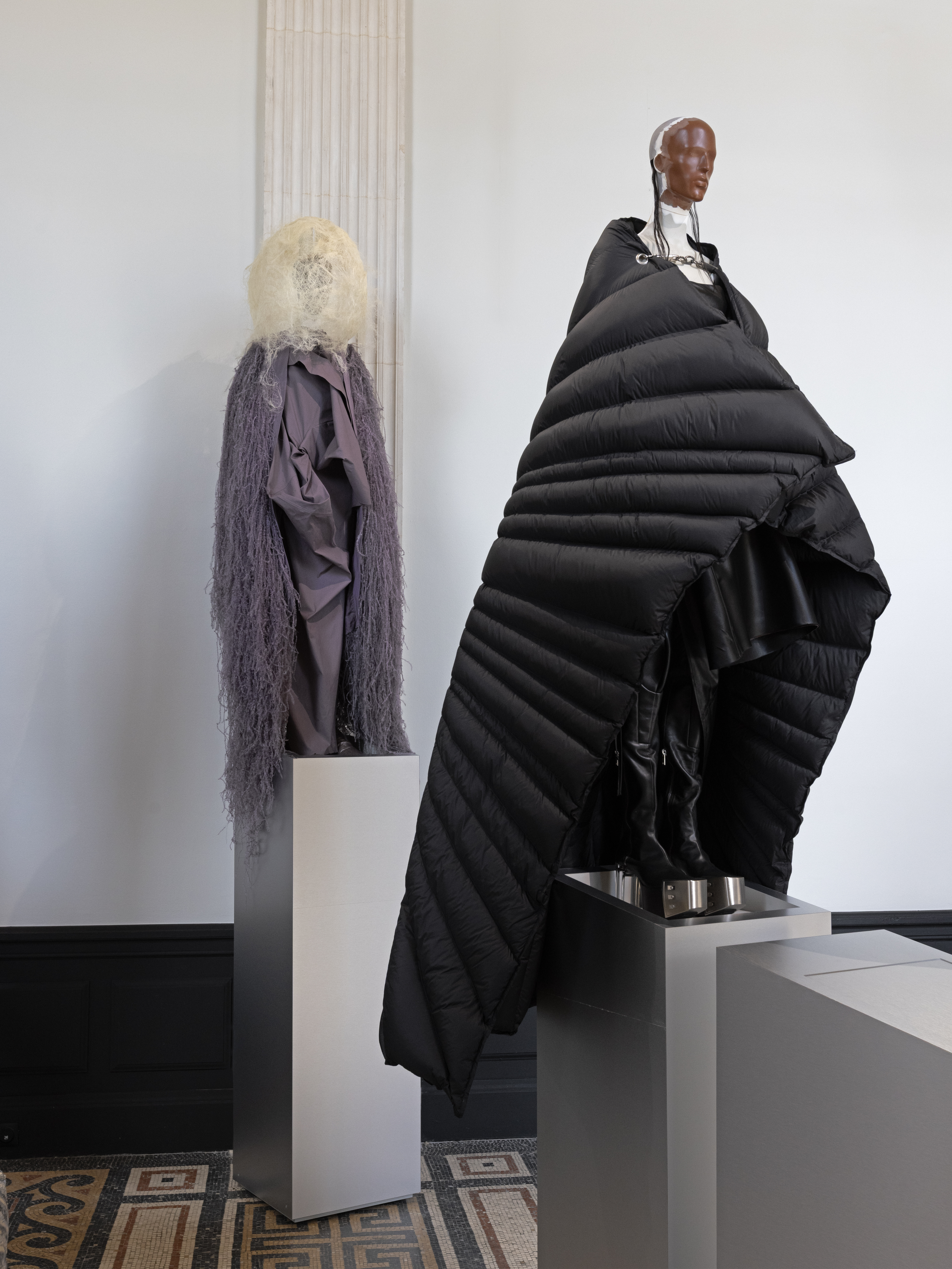
Partial installation view of Rick Owens: Temple of Love ©Palais Galliera-Paris musees, Gautier Deblonde
By explicitly citing and displaying his cultural inspirations, Owens gives us the opportunity to re-contextualize his fashion work within the history of performance art (for one show he hired a predominantly black all-female team of step dancers as his models; in another, the genitals of his male models hung exposed, and he went about strapping models together in the 69 sexual position as part of his spring 2016 show), the contemporary art of Steve Parrino and Joseph Beuys, the visual decadence of painter Gustave Moreau, and the decadent Joris-Karl Huysmans’s novel A Rebours (Against Nature, 1884): a story of a reclusive art worshiper who yearns for new sensations and perverse pleasures within a transcendental artificial ideal.
At least partially inspired by Huysmans’s novel, in 2003 Owens moved to Paris after starting out as a pattern-cutter in Los Angeles (his home town, where he launched his label in 1992).
Owens calls his gnarly postmodern style glunge—a mixture of glamour and grunge and with his predilection for black and muted shades, his sometimes outrageous outfits can be falsely assumed costumes from some sci-fi horror flick. But not so. Rather than being inspired by Cassandra Peterson’s Los Angeles television program of B movies, Elvira’s Movie Macabre Mistress of the Dark, (originally aired on station KHJ-TV from 1981 to 1986) Owens was far more inspired by the glamour of the 1930s fashion he saw in old dramatic American A movies. Shape, volume, and construction are highlighted in his work, as black (and to a lesser degree gray and white monochrome) reduces body shapes to solid, flat silhouettes. Some painters have learned this about black from Édouard Manet’s great oil painting Berthe Morisot au bouquet de violettes (Berthe Morisot with a Bouquet of Violets, 1872) that hangs at the Musée d’Orsay.
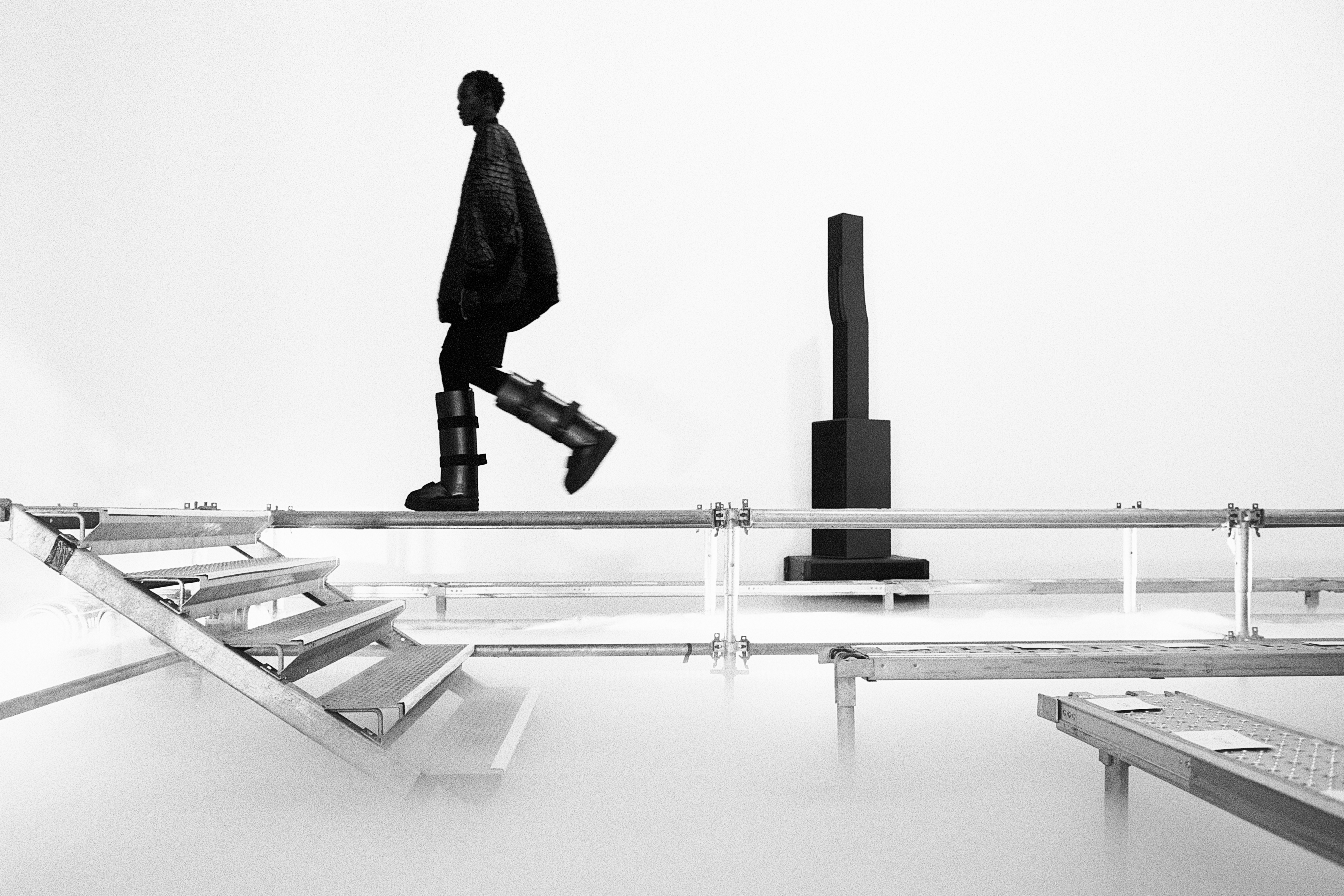
COLLECTION HOMMES LUXOR, AUTOMNE-HIVER 2023, 19 JANVIER 2023 FW23 LUXOR MEN’S, PALAIS DE TOKYO, PARIS, 19 JANUARY 2023 © OWENSCORP
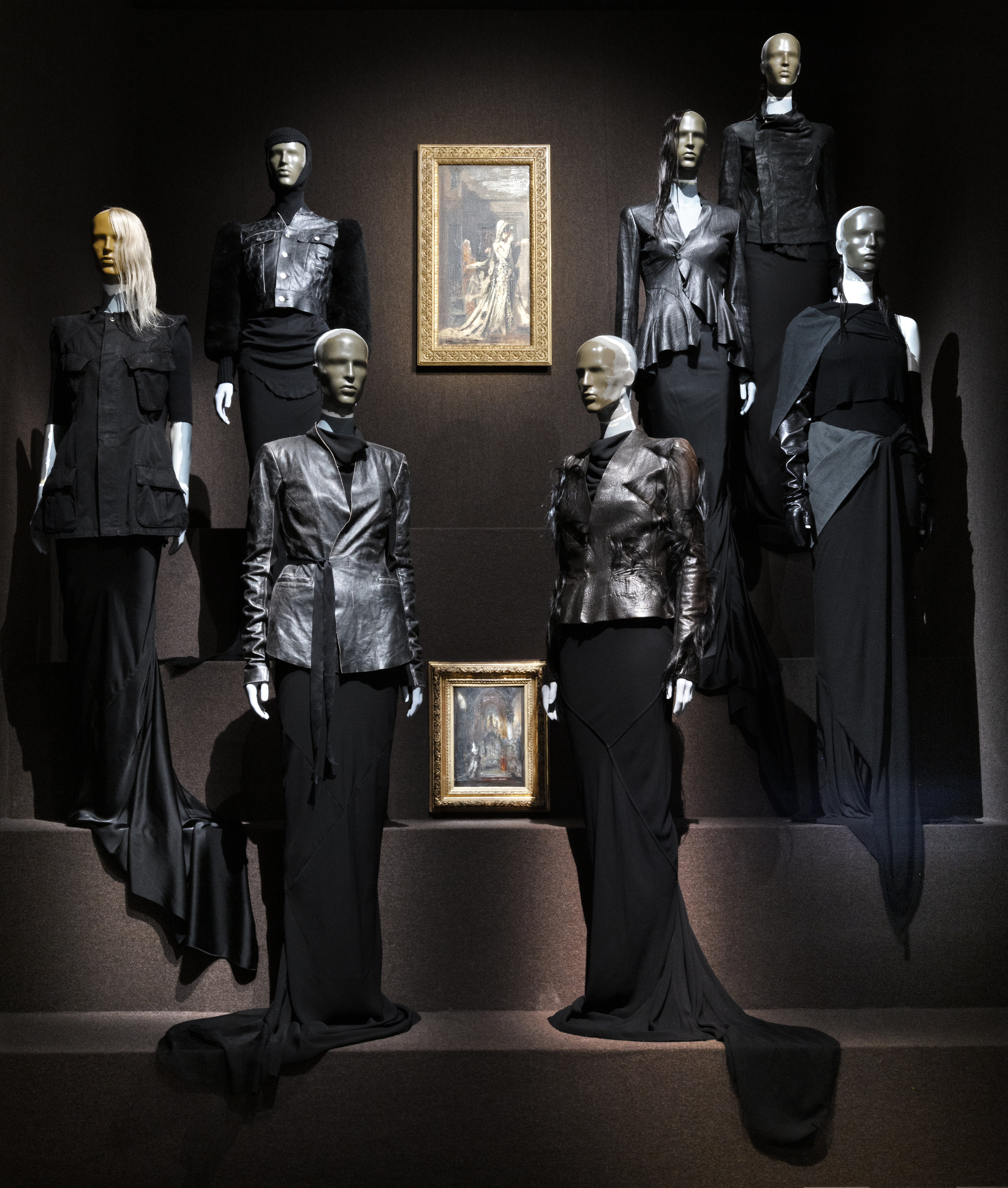
Partial installation view of Rick Owens: Temple of Love © Palais Galliera-Paris musees, Gautier Deblonde featuring paintings by Gustave Moreau
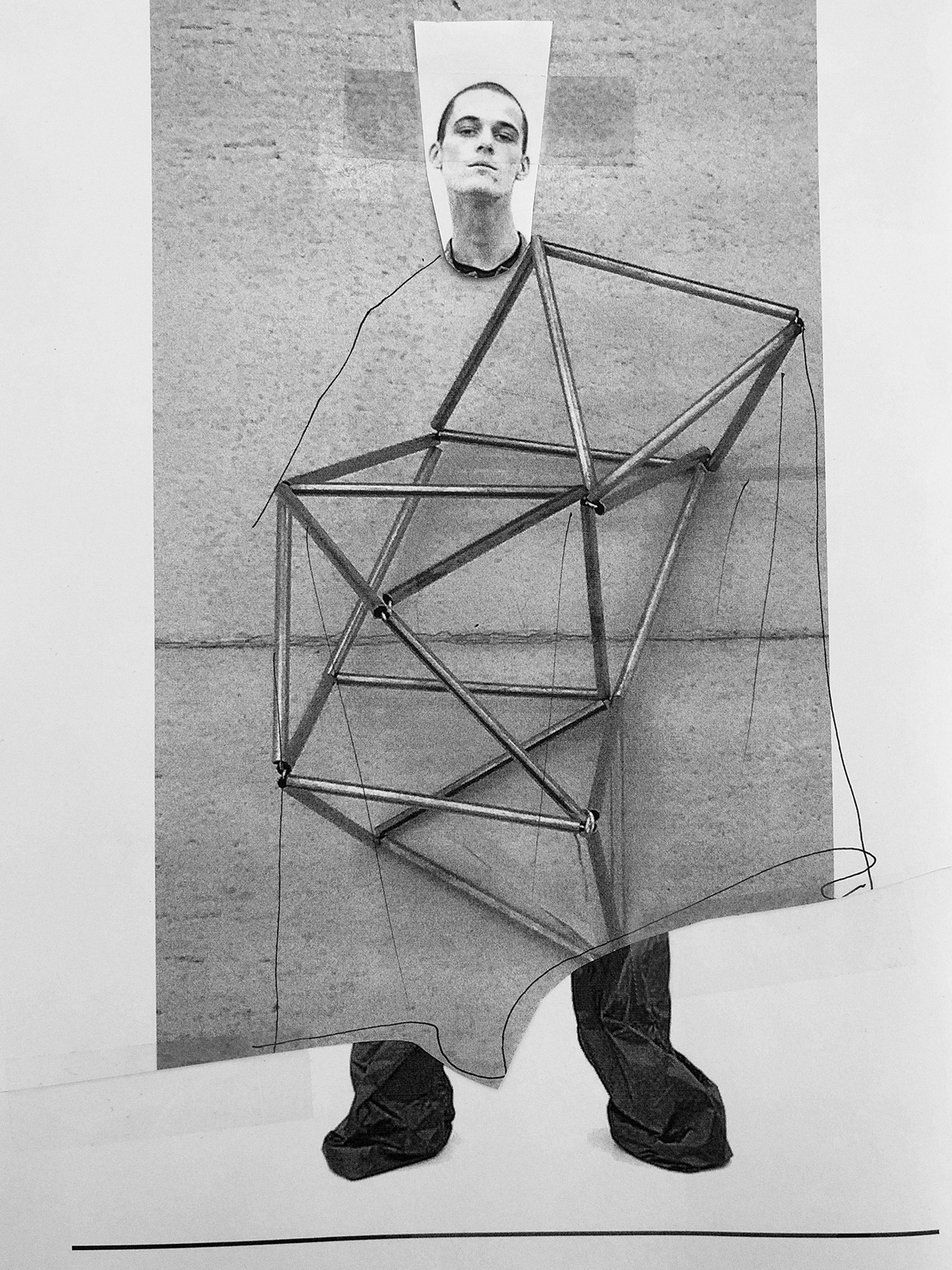
JIMMY, PREMIER CROQUIS, COLLECTION HOMMES BABEL, PRINTEMPS-ETE 2019
JIMMY, FIRST SKETCH, SS19 BABEL MEN’S © OWENSCORP
Therefore, with Owens there is a strong emphasis on sculptural shape and structure, just as there was with Cristóbal Balenciaga’s sculptural manipulations of black fabric. But Owens’s dark constructions do not appear dated (as does the sound of The Sisters of Mercy), perhaps because black is the darkest value of all colors, and not a primary, secondary, or tertiary color—it isn’t even on the artist’s color wheel. As such, black suggests something of the raw energetic formlessness of the black hole or void, and so, has something transcendent and timeless about it. That is why black has become a cultural signifier within noise music theory. Black is associated with mourning and lunacy (as with Francisco Goya’s Pinturas negras series), power (consider judges’ and priests’ robes or, worse, Mussolini’s Fascist militia the “Blackshirts” (but Owens’s fashion shows always reflect a political stance that condemns discrimination and male dominance), and sophistication: think tuxedos and limousines. But unlike Balenciaga, due to early limited resources, Owens was inspired to use reclaimed and salvaged materials like military bags, army blankets and found leather for his dresses and jackets, and this is what connects him to the work of Joseph Beuys.
My take is that the glunge in Temple of Love is speaking to our moment in time with great articulation. A moment, like all moments, that casts the mind back on previous moments and places. His fashion shows have something of the medieval danse macabre about them—something again fashionable among hip noise music-loving Parisians and all sort of connoisseurs of the occult.
Most truly great works of art are touched with death—born of anguish and despair are we—so I read Temple of Love as a questing of evasive refuges from oblivion. It’s strange how and why its style of anti-realist realism is transcendently beautiful. Something that pervades much of my ponderings these days.
It would be excessive and even erroneous to seek among the works here any universal principles that would respond to concrete paradigms, but the large, weird shapes Owens creates are, for me, visual meditations on humiliating death—with all of its cruel and nasty comedy. The weirdness of his cloths and boots actually helps me confront the challenge of existence (not that I want to wear them), especially this impressive and tender dress that looks to me like a 19th century Doton magical amulet from Togo. But nearly all the works are vivid and richly animated by this kind of compositional imbroglio.
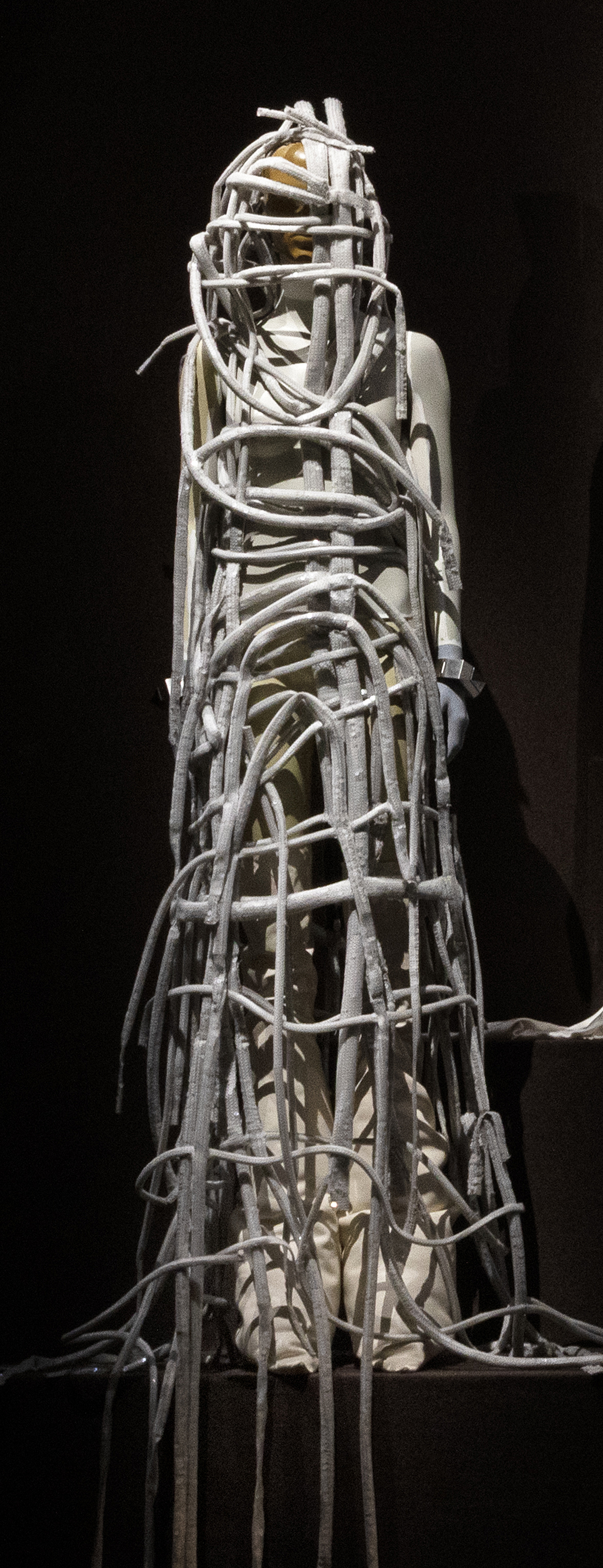
Partial installation view of Rick Owens: Temple of Love ©Palais Galliera-Paris musees, Gautier Deblonde
Talk about push/pull: the precise serenity of this dress/cage pulled me in just as the horror of the subject pushed me away—reminding me that German philosopher Georg Wilhelm Friedrich Hegel was dismissive of the concept of good taste in his Aesthetics text; saying that “Taste is directed only to the external surface on which feelings play. So-called ‘good taste’ takes fright at all the deeper effects of art and is silent when externalities and incidentals vanish.”
Likewise, Temple of Love provides us the chance to do the counter-fearful thing—to look at what might be feared with a twinkle of aesthetic pleasure—so that such an effort will help release us from the grip of the whisper of nemini parco. Which means: I spare no one.
Looking hard at the Temple of Love means entering into yourself and emerging with a post-punk pleasure vocabulary you may never knew existed. But, to be sure, there’s a deep abiding sadness here too. The cloths are like a shadowy figure of yourself you may wish to ignore, but cannot. For we want to feel in control of our destinies, even if we’re not. So at Temple of Love we come face-to-face not with love but with the ambiguity of the human spirit over and over again.
Far from being a toast—or a passive surrender—to love, the intense artistic creativity involved in the Temple of Love feels like the flowing juices of life in the face of death and that confirms my love of art in the midst of the inevitability of suffering, loneliness, and dumb death. Indeed, I greatly enjoy how Owens’s work over the years is still addressing the essential question of how we cope with the mortality of our human body: through sex appeal and the immortality of art: something that is, in reality, beyond artistic narration. WM

Joseph Nechvatal
Joseph Nechvatal is an American painter/writer currently living in Paris. His book of essays Towards an Immersive Intelligence (2009) was published by Edgewise Press. He has also published three books with Punctum Press: Minóy (ed.) (2014), Destroyer of Naivetés (poetry, 2015) and Styling Sagaciousness (poetry, 2022). His book of art theory, Immersion Into Noise, was re-published in 2022 in a second edition by Open Humanities Press. In 2025, Venus Voluptuous in the Loins of the Last God, his sequel novella to ~~~~~~~~~~~~~~~~~venus©~Ñ~vibrator, even (1995/2023) was published by Orbis Tertius Press. In 2025 his art exhibition Information Noise Saturation was presented at the Magenta Plains in New York City and in 2026 he exhibited a series of new paintings called Le Bateau ivre (The Drunken Boat) at Galerie Richard in Paris.
view all articles from this author