Whitehot Magazine
September 2026
"The Best Art In The World"
"The Best Art In The World"
September 2026
Book Review - Beyond the Aural, as Approach the Fantastic with Lee “Scratch” Perry
 An individually embossed, numbered first edition copy (#366) of “Black Ark”.
By JOHN DRURY July 25th, 2026
There is in the brilliant design and obvious care invested in the First Edition of the new title, Black Ark, the understandable limited run of only 1500 copies - as published by Edition Patrick Frey. Nearly absent in current publishing efforts, outside of the occasional embellishment a Bible, gilded edging catches light, and at top and bottom of the books accumulated page-edges, L$P.ERRY and UP$ETTER, are printed in red ink; duplicated to recall Perry’s own handwriting. It is sure to be a highly pursued collector’s item, as it was conceived of, and initially guided by Perry’s own hand before his death at the age of eighty-five, in 2021.
Few aficionados of music, particularly reggae and dub, do not know the name of Lee Perry. This document the photographs of, and writings to emerge from Perry’s Jamaican studio - the now deteriorated creative space revered one of the most famous places in music history - enriches an understanding the creator, in totality then, yet coming to light. It was in this Kingston studio, that Lee Perry produced more than 70 albums…those his own and for notable others, including Bob Marley and the Wailers (Perry recorded the early and wildly influential Soul Rebels from 1970 and Soul Revolution from 1971), Max Romeo, and the Heptones - in addition his house band, the Upsetters. There were later international collaborations with the Beastie Boys, the Clash, Paul McCartney, Portishead and others, before as some believe, he burnt the joint to the ground. Perry was awarded a Grammy Award in 2003, for Best Reggae Album.
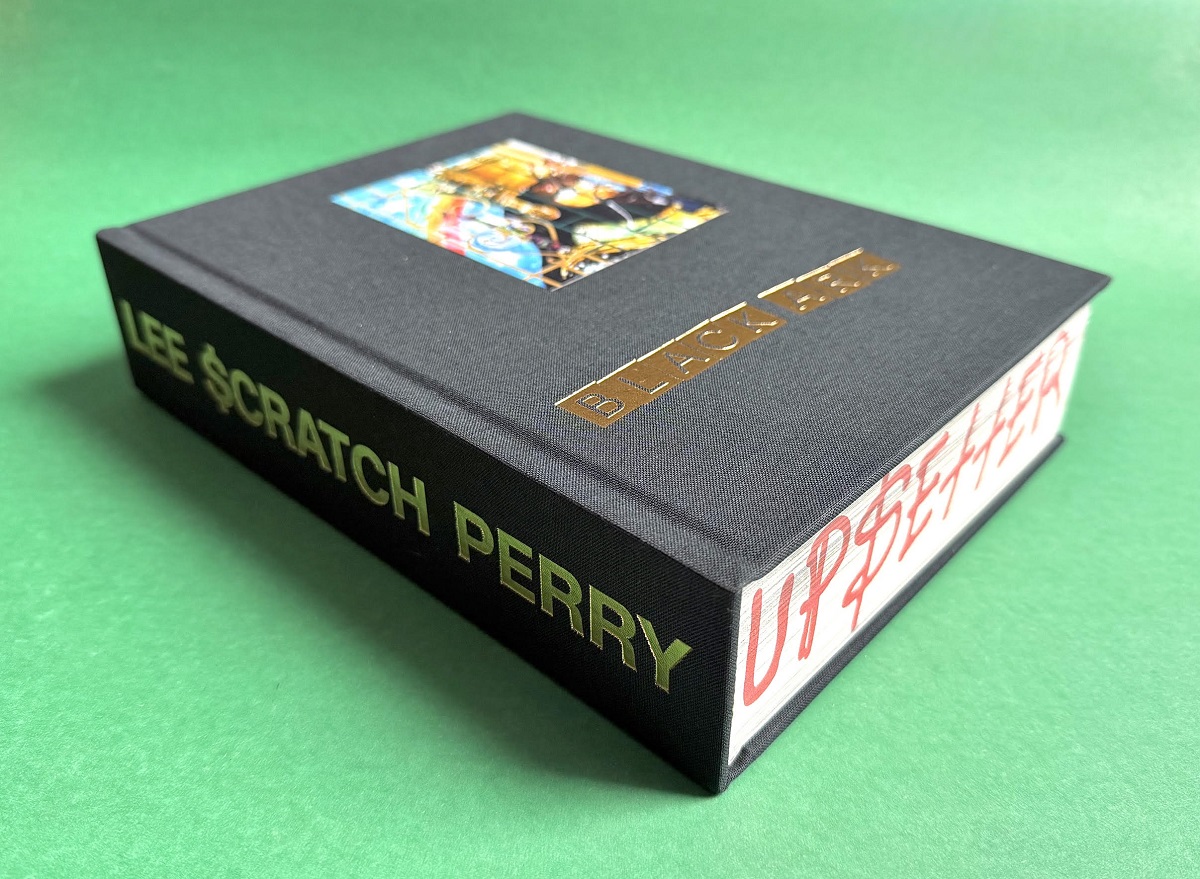 An individually embossed, numbered first edition copy (#366) of “Black Ark”.
Fewer however, might be aware of the contributions of the performer and producer Perry’s work in the visual arts – that oversight rapidly changing however, with the recent exhibition of his work (2025) at Cabaret Voltaire, in Zurich, building on the New York City solo-exhibition of his work in Mirror Master Futures Yard, at the Swiss institute in 2019, and as his work is increasingly included in themed museum exhibitions (currently, and until September 20, 2026, as part of Dancing the Revolution: From Dancehall to Reggaetón, at Chicago’s Museum of Contemporary Art). It is apparent in the first few pages of the girthy 600-page tome that Perry’s was a creative endeavor without limits - spanning both the visual and the aural, in addition a lived saturation all that was about him. We are generously supplied with a map - a blueprint (in black) of a kind, the footprint of Perry’s home and Jamaican studio. Once inside of the red, green and gold gates, our tour begins with the scrawled-on walls of the home’s corridors and proceeds with what might be loosely defined as dedicated “chapters”; including the Energy Room, followed with the Bedroom, the Livingroom, and so on. Hundreds of images document a living space best consumed in small samplings, micro-doses if you may, of a place and material manipulated with word and image; a corporeal impasto, accumulated in years (decades) of application imposed, super-imposed and thus encrusted.
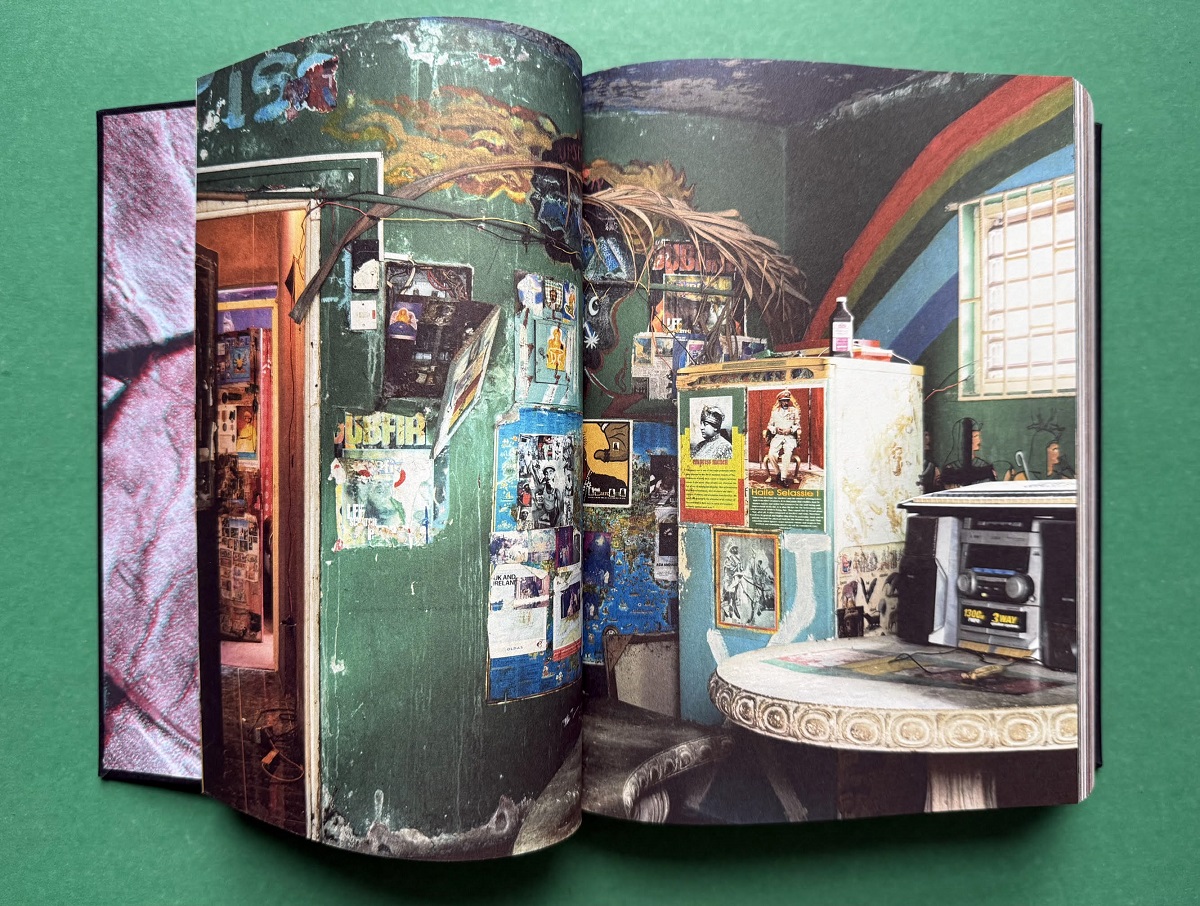 A two-page spread from “Black Ark”; Edition Patrick Frey, documenting the home, studio and creative endeavors of Lee “Scratch” Perry.
Hands were lain, stones turned; there is the judgmental, the judicious and jaunty – the perhaps blasphemous, the celebration black and the beautifully battered. There seems method to the madness, or better…a methodology, just barely containing…restraining, the genius. If “Scratch” Perry encountered it, “it” became residue Lee’s very existence. It isn’t until page 589 of the book that some traditional structure is attempted in evaluating what has previously happened in page and space, just barely contained between hard covers. Here there is an attempt, in word-form, by art critics, a musicologist, and specialists in Jamaica’s turbulent post-colonial history as regards culture, spirituality and politics, an understanding the perhaps misunderstandable.

John Drury
John Drury is a multi-media artist, published author, independent curator and instructor. Drury holds a Bachelor of Fine Art degree from the Columbus College of Art and Design and a Master of Fine Art degree in sculpture (1985; including a minor in painting), from Ohio State University. John is the father of two young adults, and is living in NYC since 1989. He has received the prestigious Louis Comfort Tiffany Foundation Award. John is a contributing editor of Glass Magazine, with published texts appearing in Raw Vision, Neus Glass and Maggot Brain magazines, in addition those appearing online, at ArtNet and Whitehot. He has written texts for artist monographs published by Black Dog, Damiani and the Museum of Glass.
John Drury is on Instagram, at johndrury.studio and can be contacted, at simplefolktoo@hotmail.com
view all articles from this author