Whitehot Magazine
September 2026
"The Best Art In The World"
"The Best Art In The World"
September 2026
The Bishop Gallery’s co-owner Erwin John on “RESPECTFULLY,” - Discovery Before Consensus, and Creating Space on His Own Terms
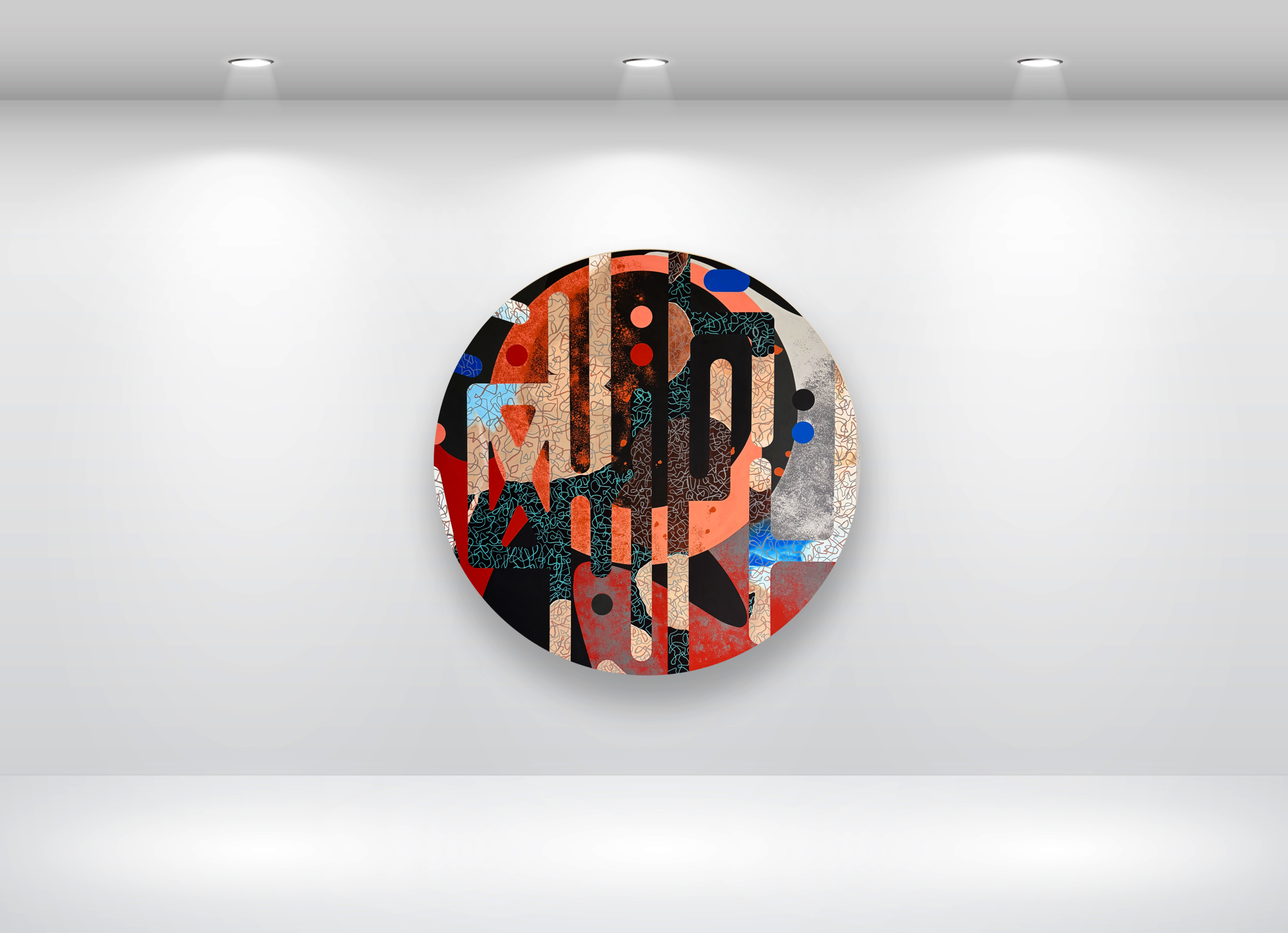
Vingt Sept — “All These Things,” acrylic on canvas, 64-inch diameter (round), 2025.
By MARCARSON September 27th, 2026
What was the starting point for RESPECTFULLY?
RESPECTFULLY started from something we’ve believed for a long time at Bishop: you don’t have to wait for permission to create space for yourself or for the artists you believe in. Discovery happens before consensus. Often, artists are doing important work long before the larger art world decides to validate it.
The exhibition puts that philosophy into practice. Rather than waiting to be invited into a particular room, we created our own room, on our own terms.
There’s also some tension in the title. “Respectfully” is polite, but deliberate. It’s almost like saying, “With all due respect, we’re going to do this our way.”
The exhibition brings together artists working across different materials and approaches, including Lex Marie, Vingt Sept, Traci Johnson, and Destiny Branay.
What connected these practices for you when shaping the exhibition?
It wasn’t medium or aesthetic. It was conviction and authorship—artists who have committed to developing something distinctly their own.
Vingt Sept is perhaps the clearest example. He spent years developing an actual language—a vocabulary, structure, and system that exists within his practice. That level of commitment says a lot about how he approaches the work. He didn’t build it in response to a trend or what the market was asking for. He created something that belongs entirely to him.
That sense of authorship runs throughout the exhibition. Lex Marie, Traci Johnson, Destiny Branay, and the other artists may work very differently, but each has a specific point of view.
Luz Harmon deserves a lot of credit for bringing those voices together as both an artist and the curator of RESPECTFULLY. He understands what it means to make work while also creating space for somebody else’s work. He brought these practices into conversation without flattening their differences.
The goal isn’t for everything in the room to look like it belongs together. It’s for every artist in the room to look like they belong there.
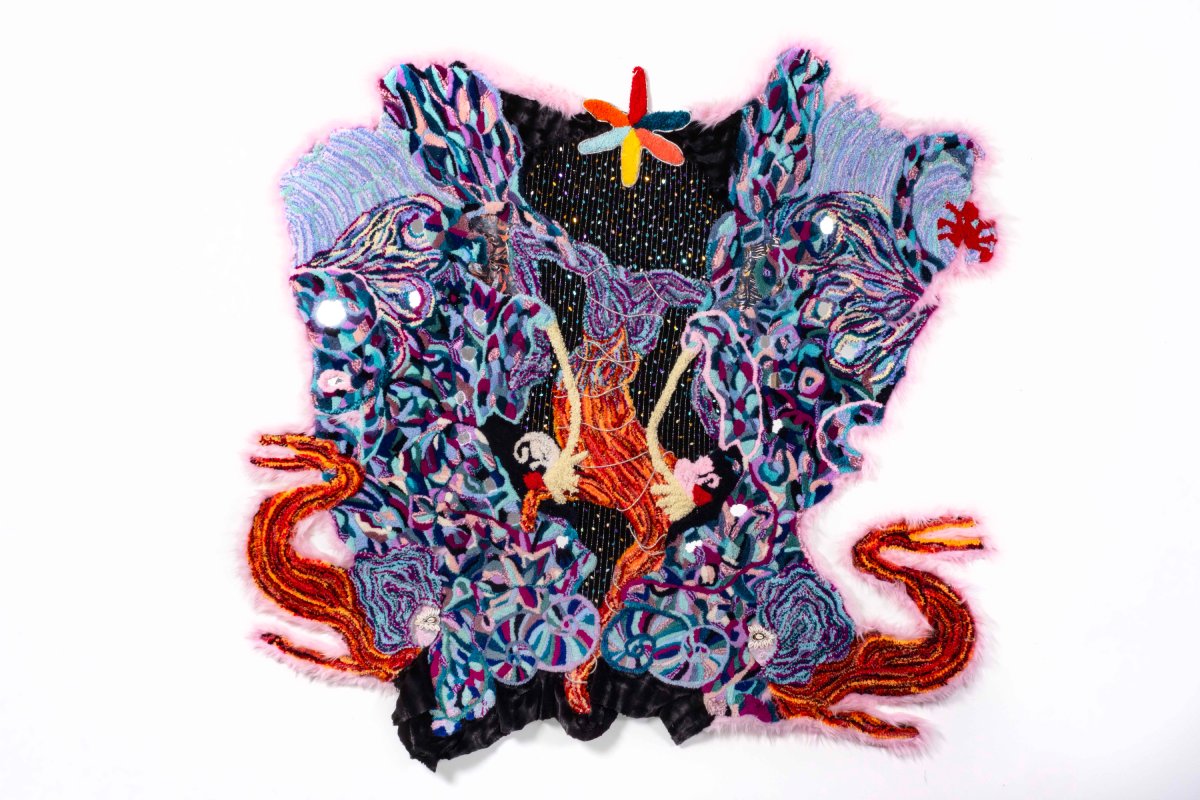
Traci Johnson — “Between Two Waters a Drowned Sky Birth Me,” 2026, yarn on faux fur, mirror, glitter, fabric, silver lace, 5.6 ft x 6.2 ft.
How does the idea of “respect” operate within the exhibition?
On several levels. First, it’s respect for the artists and their practices—giving the work enough room to exist without forcing everyone into a single curatorial argument.
It’s also about respecting your own eye. The art world can train people to look for validation before trusting what they see: Who represents the artist? What institution has shown them? Who collects them?
RESPECTFULLY asks you to encounter the work first.
And there’s some attitude in the title. “Respectfully” is often what you say immediately before disagreeing with someone. We can respect institutions and the history of the art world while still questioning who gets access, who gets recognized, and who gets to determine when that recognition happens.
Are you avid chess players? Should the artists you work with also know how to play chess?
[Laughs.] No, knowing how to play chess is definitely not a requirement.
But I understand the analogy. Running a gallery requires some chess thinking. You have to understand where you are, think several moves ahead, know when to be patient, and know when to move.
I don’t necessarily want artists approaching their work that way. Their first responsibility is to the work. Our responsibility as a gallery is to think strategically around it—to create opportunities, protect the practice, and think about the long game.
So maybe the artists don’t need to play chess. The gallery probably does.
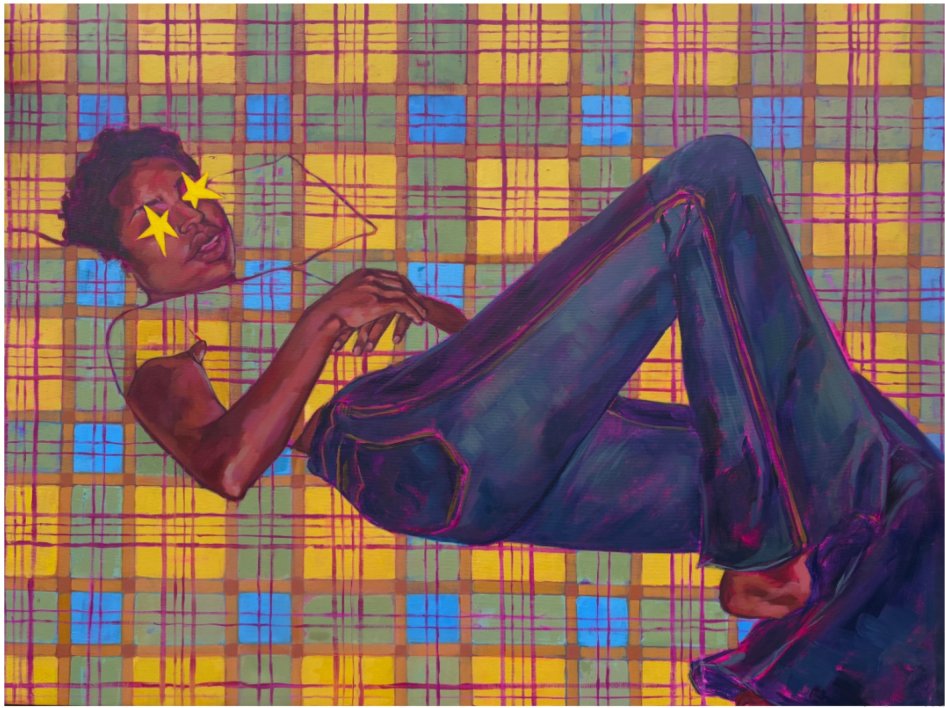
Destiny Branay — “PEEKABOO,” 36 x 48 inches, oil on canvas.
What do you hope someone takes away from seeing RESPECTFULLY in person?
I hope they leave having discovered somebody.
Someone might walk in because they recognize one artist and leave thinking about an artist they had never encountered before. That, to me, is one of the most important things a gallery can do.
I also hope people leave trusting their own response to the work a little more. You don’t always need someone else to tell you what’s important before you recognize it.
That’s central to Bishop and to RESPECTFULLY discover begins before consensus. Somebody has to see it first.
Link to show: https://us18.list-manage.com/survey?u=67b59c505e9f13da9a4abea1b&id=614fcb59c8

Marcarson
Marcarson is the owner of NOT FOR THEM, an art house/concept gallery in New York City.
view all articles from this author