Whitehot Magazine
October 2026
"The Best Art In The World"
"The Best Art In The World"
October 2026
Renée Levin: Impermanence and Mirroring Life
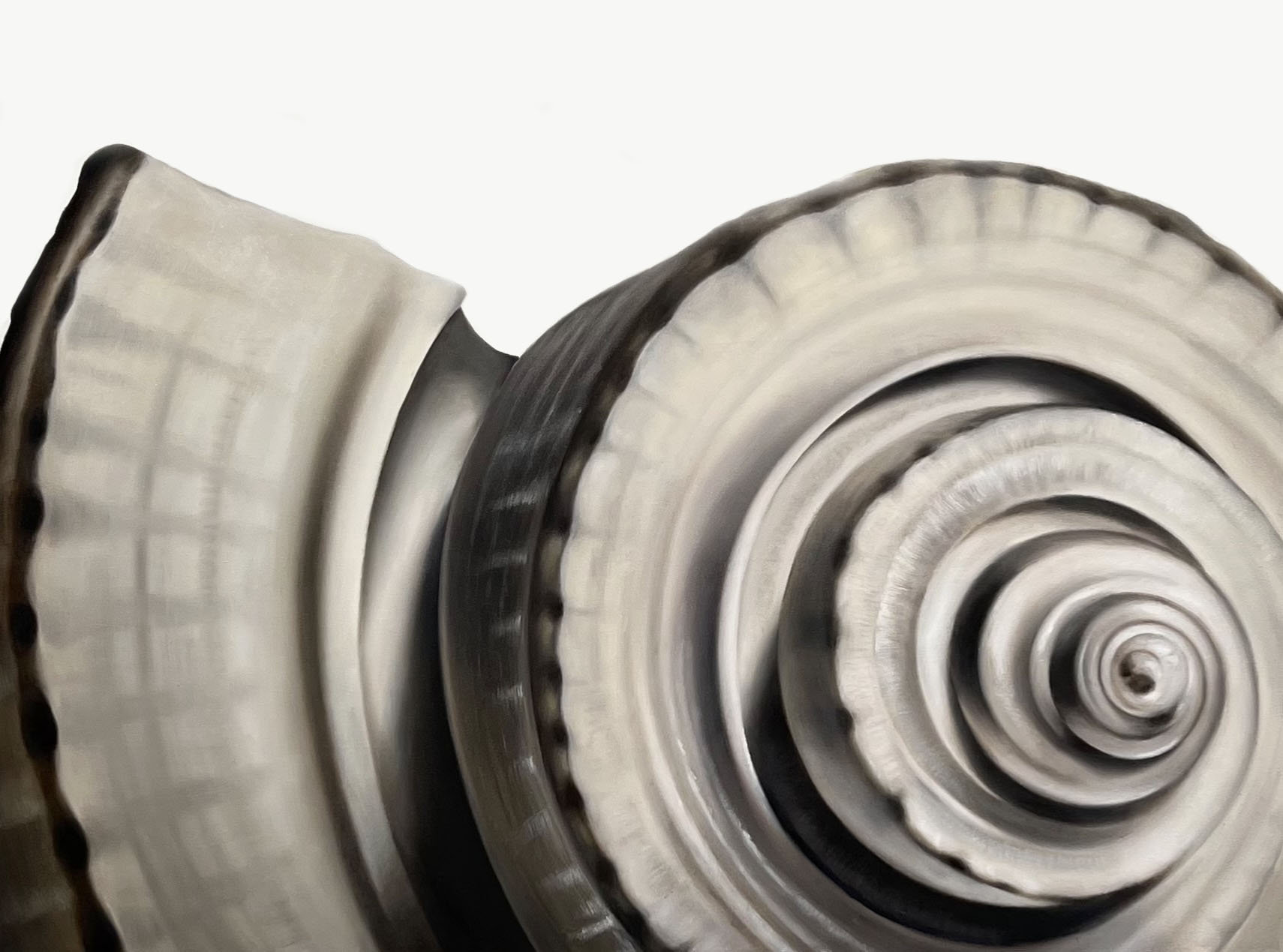 Exposed No.01, 2024, Oil on panel, 36x48 inches
By VICTOR SLEDGE March 9, 2026
Artist Renée Levin makes you see yourself in objects we take for granted every day in paintings that enlarge our experiences of the world.
“I think it’s interesting to take something that doesn’t have emotions and express myself through it to give it life from my perspective,” she says.
Since taking her art full time in 2019, she’s created a practice out of painting objects like pearls and seashells in her realistic style that invites reflection on an emotional level. And that’s what she’s done in her newest collection, Impermanence, which now focuses on floral subjects.
Growing up as a first-generation American to Polish parents gave Levin much to reflect on later in life. A sense of otherness, of existing between places, emerges throughout her work.
“Looking back on life’s stages and the emotions that come with those, it’s almost like these floral forms are stand-ins for me. They’re bringing back these stages of my life,” she says.
In her newest series, on the surface it may seem like she’s simply working with the beauty she finds in these floral forms, but she’s actually personifying her subjects to accentuate their transient nature.
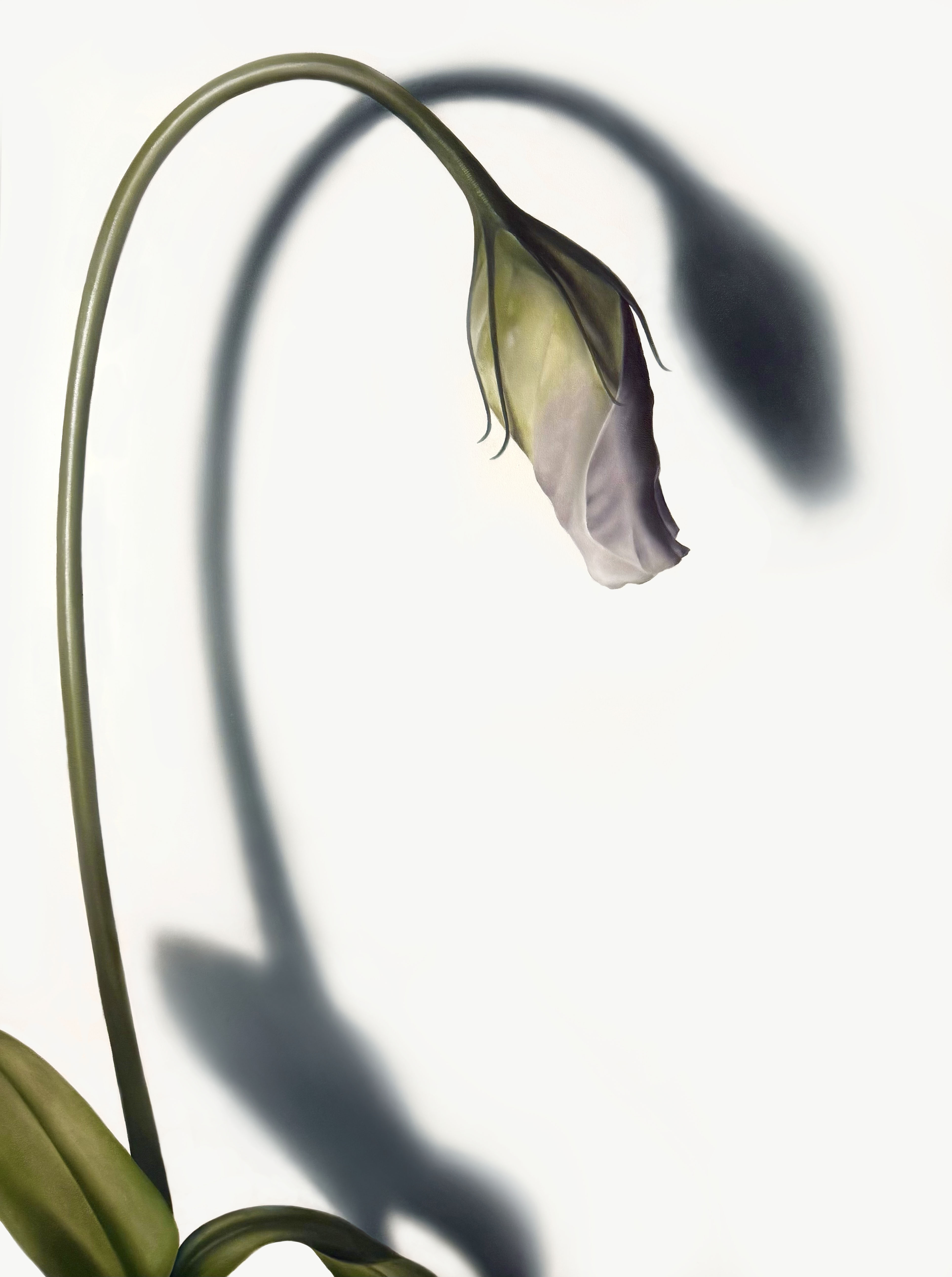
Before Bloom, 2025, Oil on panel, 48 x 36 inches
Levin plays with a flower's curvatures and angles in a way that mirrors body posture. She leans into the depth and weight of their shadows in a way that gives even that part of each piece a life beyond the technique she uses to execute them. For her, those are the seemingly small aspects of her work that begin to strike the parts of her she’s exploring through each piece, becoming “vessels of memory,” as she describes them.
Her hope is that her audience is also able to sit with themselves through her work. Everyone won’t have a precisely identical experience with her work, but the goal is for people to at least offer what feels like a rare moment of time to pause and reflect.They also offer a pause for Levin to rest and navigate herself.
“They’re a permission to feel,” she explains. “In this world, we don’t slow down. It’s a face-paced world with immediate results, and I think I’m doing the opposite in the studio. I’m slowing down because we need that right now. This collection is challenging me to make choices that make my viewers stop and to relate to different stages of life.”
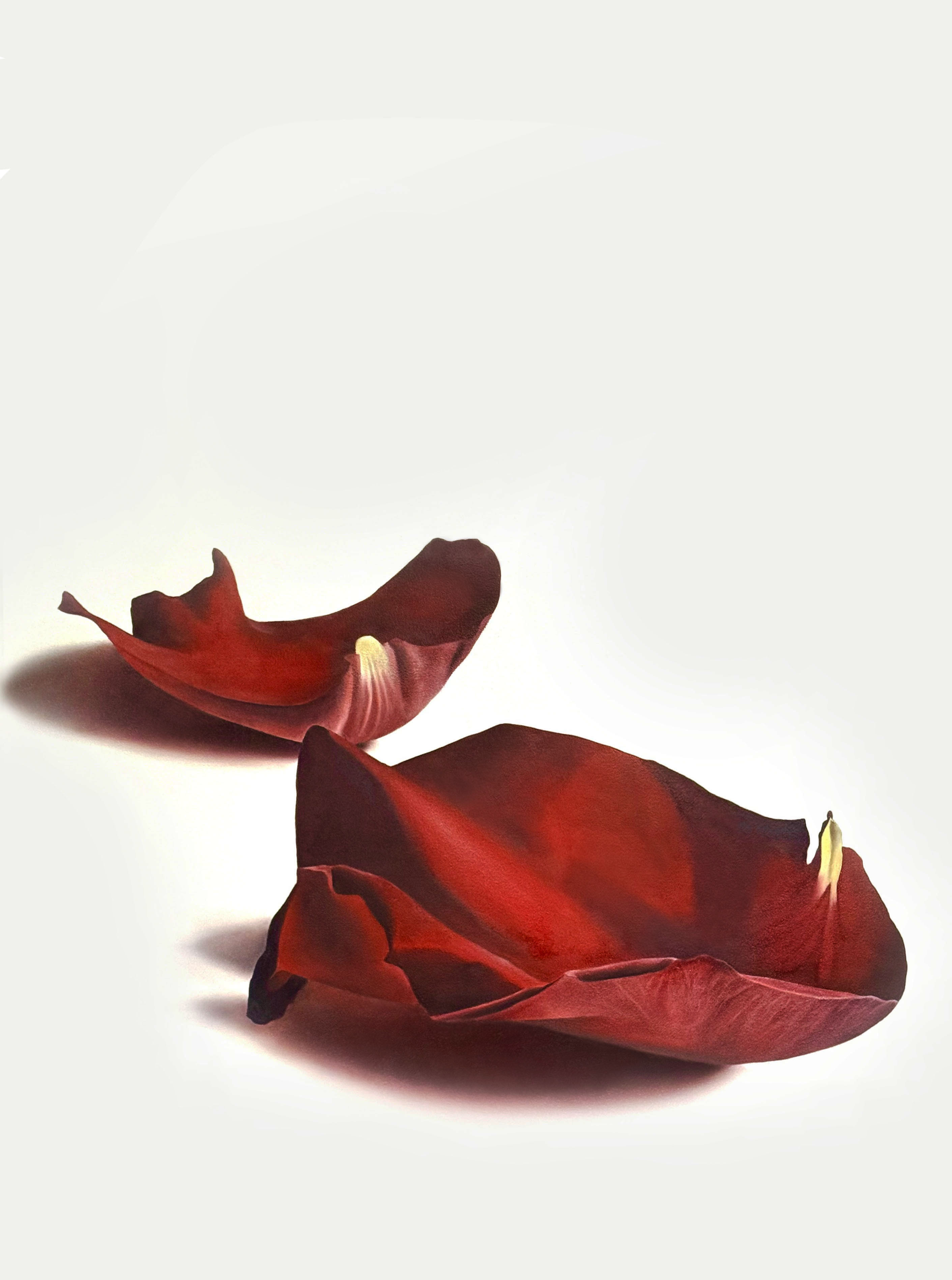 Soft Remains, 2025, Oil on panel, 48 x 36 inches
When you look at her work, you see details in Levin’s subjects that can only come from taking time with those objects and letting their intricacies speak at their own pace. In her process, she can easily spend an hour photographing an object before she finds the right angle or lighting to use as a reference for her paintings. Her work becomes an act of meditation in our day-to-day lives.
Levin sticks to a more minimalist color palette with these pieces, and she keeps her backgrounds simple and open, free from distraction. It creates a certain focus for the viewer that anchors each piece on the object at hand. While this is an effective element of Levin’s work, her pieces are a bit too balanced to call her a minimalist painter. The palettes and composition might be minimal but their sizes are anything but.
Levin does large-scale work, and it’s another way the audience is drawn into her paintings. It’s not just that she’s capturing the most minute details within each object, it’s that she’s blowing those details up so that the audience has a chance to sit with them in a way they haven’t before. It’s a way to give reverence for both the objects themselves and the viewing experience for the audience.
“I paint the objects realistically to honor and respect the object being painted,” she says. “The pieces make you stop and think, and they’re powerful in the way they envelop you. When painting at a large scale, there’s no hiding. You see all the little nuances.”
As a realistic painter, these nuances are what separates Levin’s work from what we see in these objects throughout our normal lives. Balance is also evident when she takes these often idealized subjects, like flowers, and finds beauty in their natural imperfections.
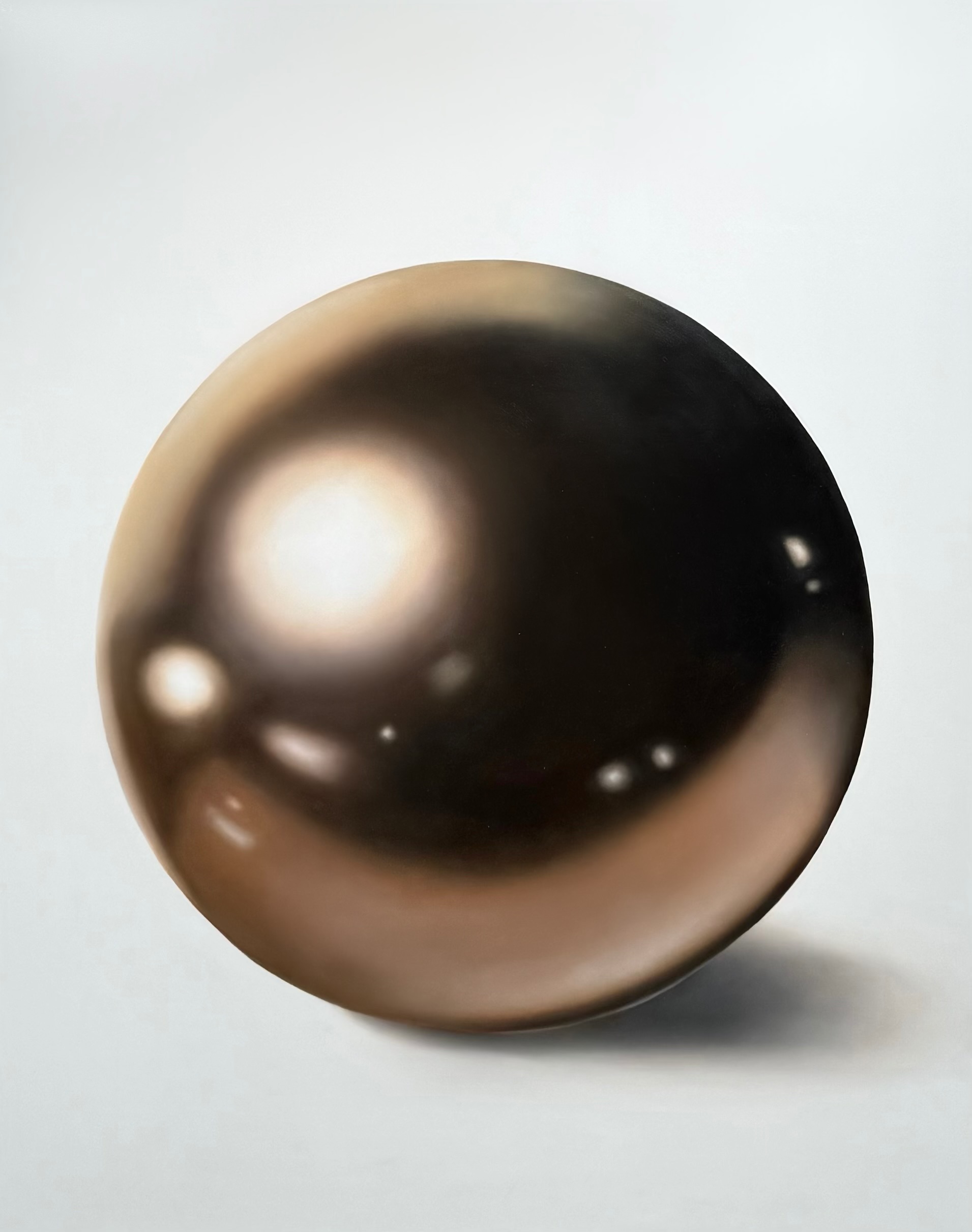 Brown Pearl (Large), 2024, Oil on panel, 60 x 48 inches
“When I see these objects, I take them for what they are. I don’t try to idealize them,” she says. This stylistic choice creates a juxtaposition of making perfection out of imperfection, and it’s indicative of who she is as a painter.
“When you are a realistic painter, you’re playing a game with yourself: How close can I get to perfection? But some of the flowers I’m painting are wilted and not the most perfect. I’m painting those wilted petals, and the end result is this beautiful balance.”
In her work, you constantly see this balance. Whether it be between color and scale or perfection and imperfection, Levin plays with stylistic dynamics in her work because those same dynamics exist in our lives every day. In that way, her work is life mirroring life.
And there’s more of this work to come. “I want to make sure that I’m resolving everything within this flower collection. There’s so much more that I want to do with this collection,” she says.
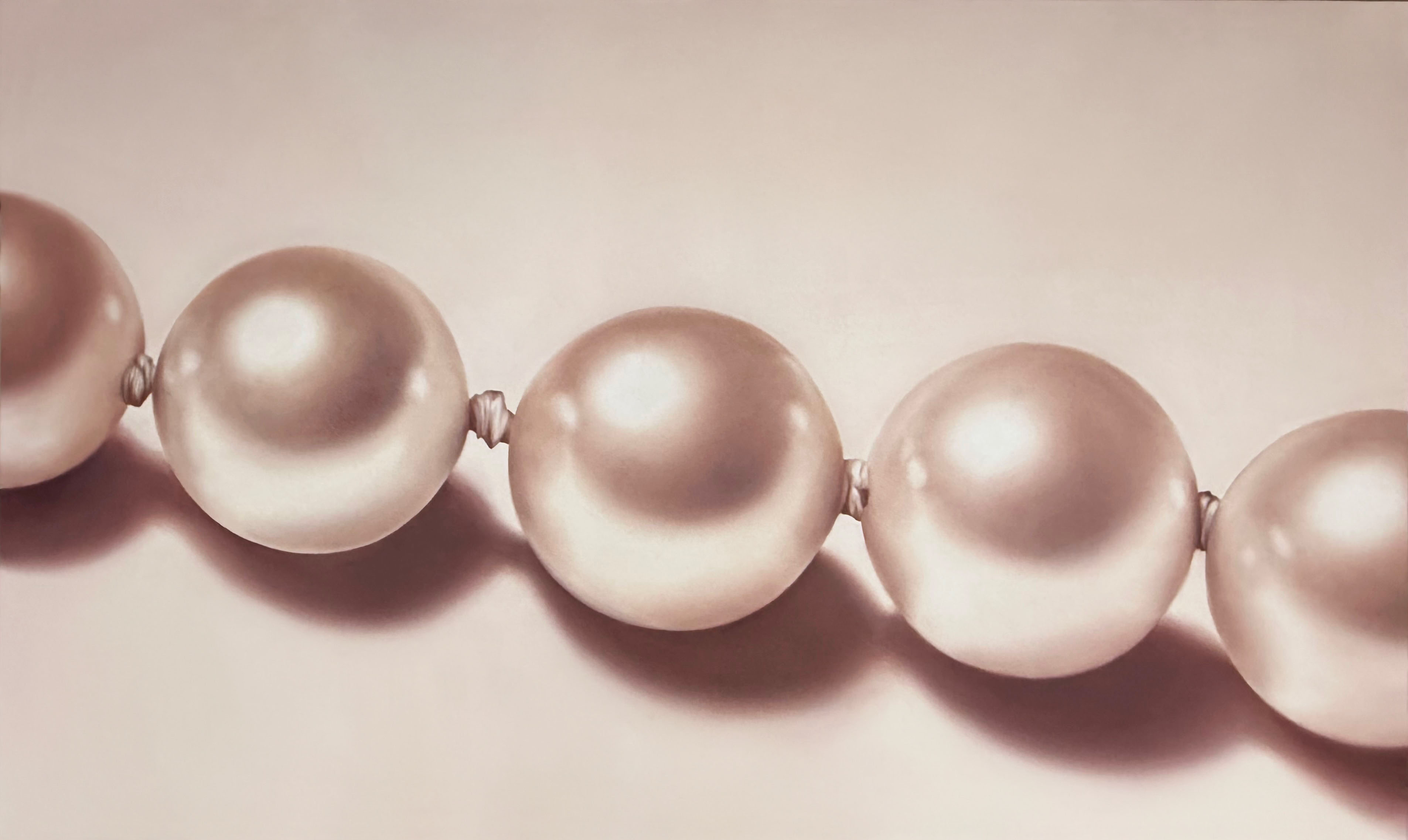 Blushed, 2026, Oil on panel, 36x60 inches
As for her work in the future, Levin is a realism painter through and through, but she’s interested in seeing what that looks like as she grows into more abstracted elements in her work as well. Impermanence has helped to move her in that direction.
“I’ve asserted myself a bit more, and in doing so, things have changed,” she explains. “This new collection is bridging that gap. It’s a pathway to what’s to come.”
You can explore more of Levin’s work on her website here and by following her on Instagram @reneelevinstudio

Victor Sledge
Victor Sledge is an Atlanta-based writer with experience in journalism, academic, creative, and business writing. He has a B.A. in English with a concentration in British/American Cultures and a minor in Journalism from Georgia State University. Victor was an Arts & Living reporter for Georgia State’s newspaper, The Signal, which is the largest university newspaper in Georgia. He spent a year abroad studying English at Northumbria University in Newcastle Upon Tyne, UK, where he served as an editor for their creative magazine before returning to the U.S. as the Communications Ambassador for Georgia State’s African American Male Initiative. He is now a master’s student in Georgia State’s Africana Studies Program, and his research interest is Black representation in media, particularly for Black Americans and Britons. His undergraduate thesis, Black on Black Representation: How to Represent Black Characters in Media, explores the same topic.