Whitehot Magazine
October 2026
"The Best Art In The World"
"The Best Art In The World"
October 2026
DNA Residency: The Space Between
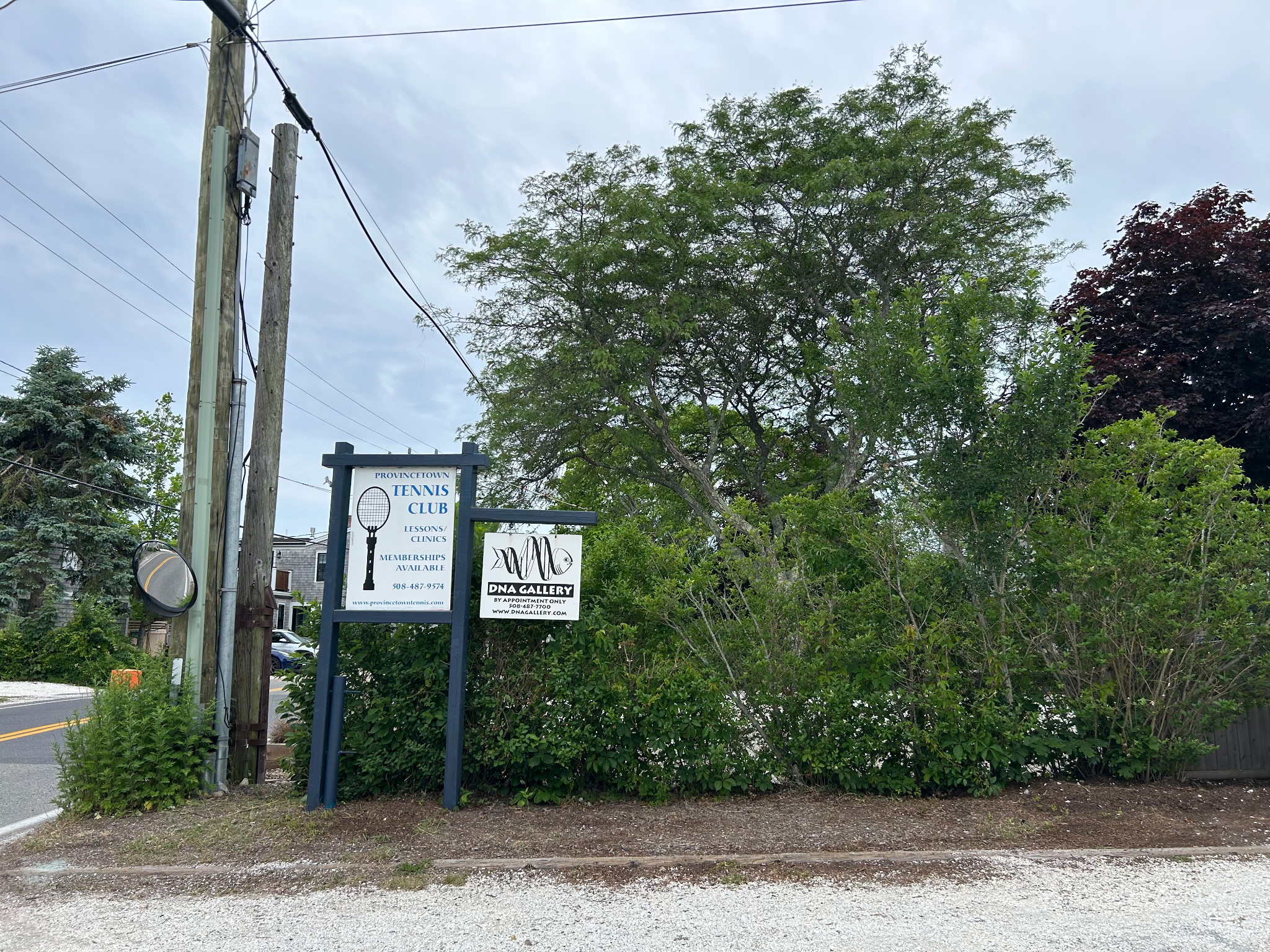 Sign pointing to the DNA residency, Provincetown MA
By Riad Miah August 7, 2026
It was the second week of September. The art fairs and Armory Week had just concluded in New York. Galleries across the city had reopened for the fall season, and I was en route to Massachusetts for a week of intensive studio practice at the DNA Residency. Upon arriving in Provincetown, I quickly realized I had stepped into something far greater than dedicated studio time. I had entered one of the most historically significant artist communities in the United States—a place where generations of artists have gathered to test ideas, exchange knowledge, and reshape the language of contemporary art.
For more than a century, Provincetown has occupied a singular place in American art history. Since the early twentieth century, it has attracted painters, printmakers, sculptors, photographers, writers, and experimental thinkers seeking both solitude and community. Its geographic isolation at the tip of Cape Cod has fostered an atmosphere uniquely suited to artistic exploration, while its openness to experimentation has made it a catalyst for successive generations of artists. Provincetown played a formative role in the development of American Modernism and later Abstract Expressionism, establishing itself as an enduring center of artistic innovation. Walking its narrow streets today, one senses an ongoing conversation between past and present. Galleries, studios, and weathered buildings bear witness to more than a century of creative exchange.
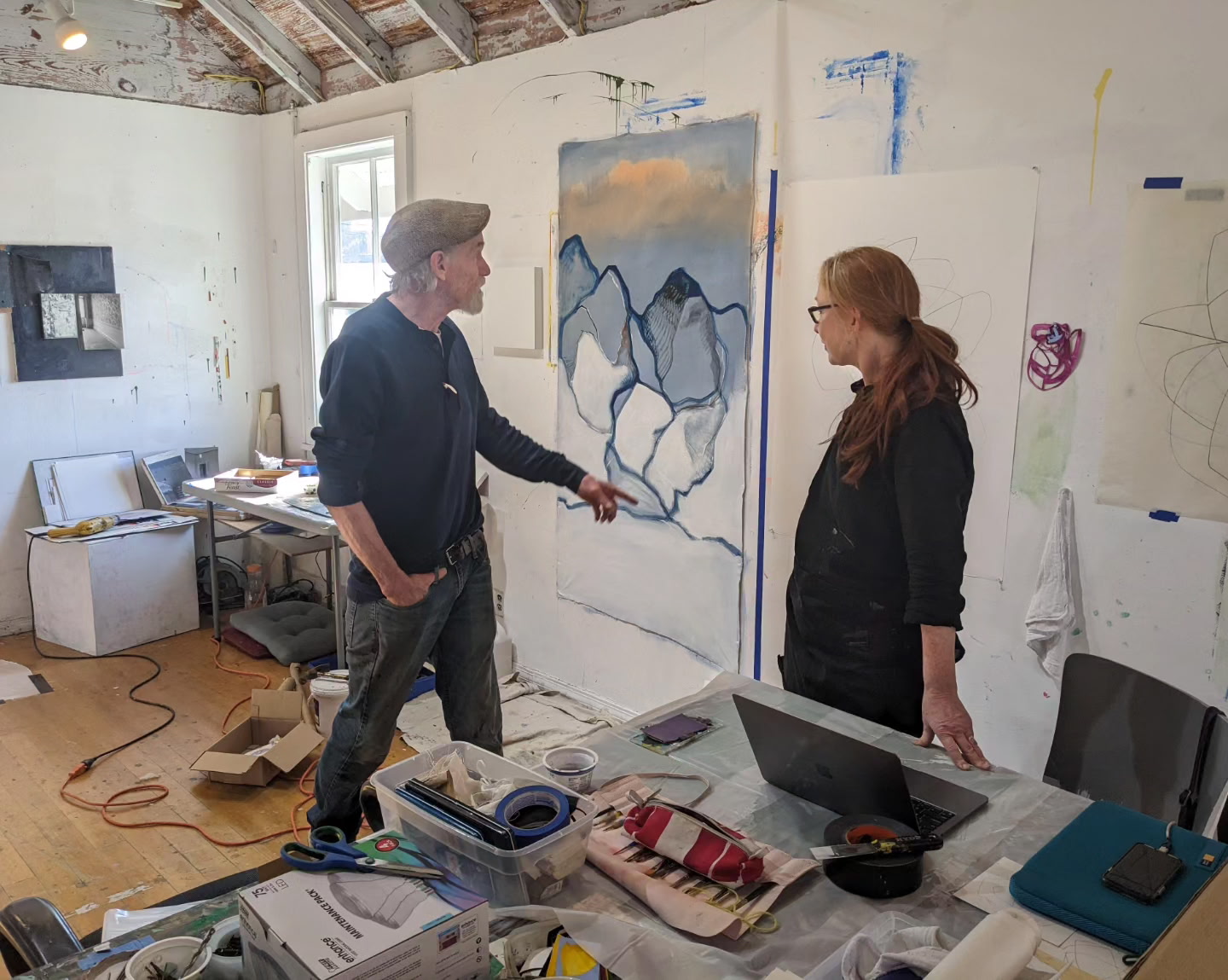 Jim Peters and Kathline Carr at the DNA Residency
My connection to Provincetown began long before I arrived, through the work of Hans Hofmann, whose paintings profoundly shaped my understanding of color and pictorial structure. Hofmann first spent summers in Provincetown in 1934 before establishing a school that transformed generations of painters. His emphasis on spatial tension and color became foundational to postwar American painting and helped cement Provincetown's reputation as a center of modern art. Artists including Robert Motherwell, Helen Frankenthaler, Jackson Pollock, Lee Krasner, and Franz Kline found inspiration in the town's distinctive creative environment, establishing a legacy that continues to resonate today.
The DNA Residency occupies the second floor of the historic Provincetown Tennis Club, where the studio overlooks the clay courts below. The rhythmic exchange of tennis balls creates an unexpected soundtrack that many residents describe as calming, meditative, and conducive to sustained concentration. The relationship between tennis and art has long been part of the building's identity. Beginning in the 1940s, artists such as Hans Hofmann were known to play there, a tradition that continued with figures including Jack Pierson and influential New York gallerists Colin de Land and Pat Hearn. The Tennis Club became an unlikely but enduring meeting place where artistic practice, conversation, and community naturally intersected.
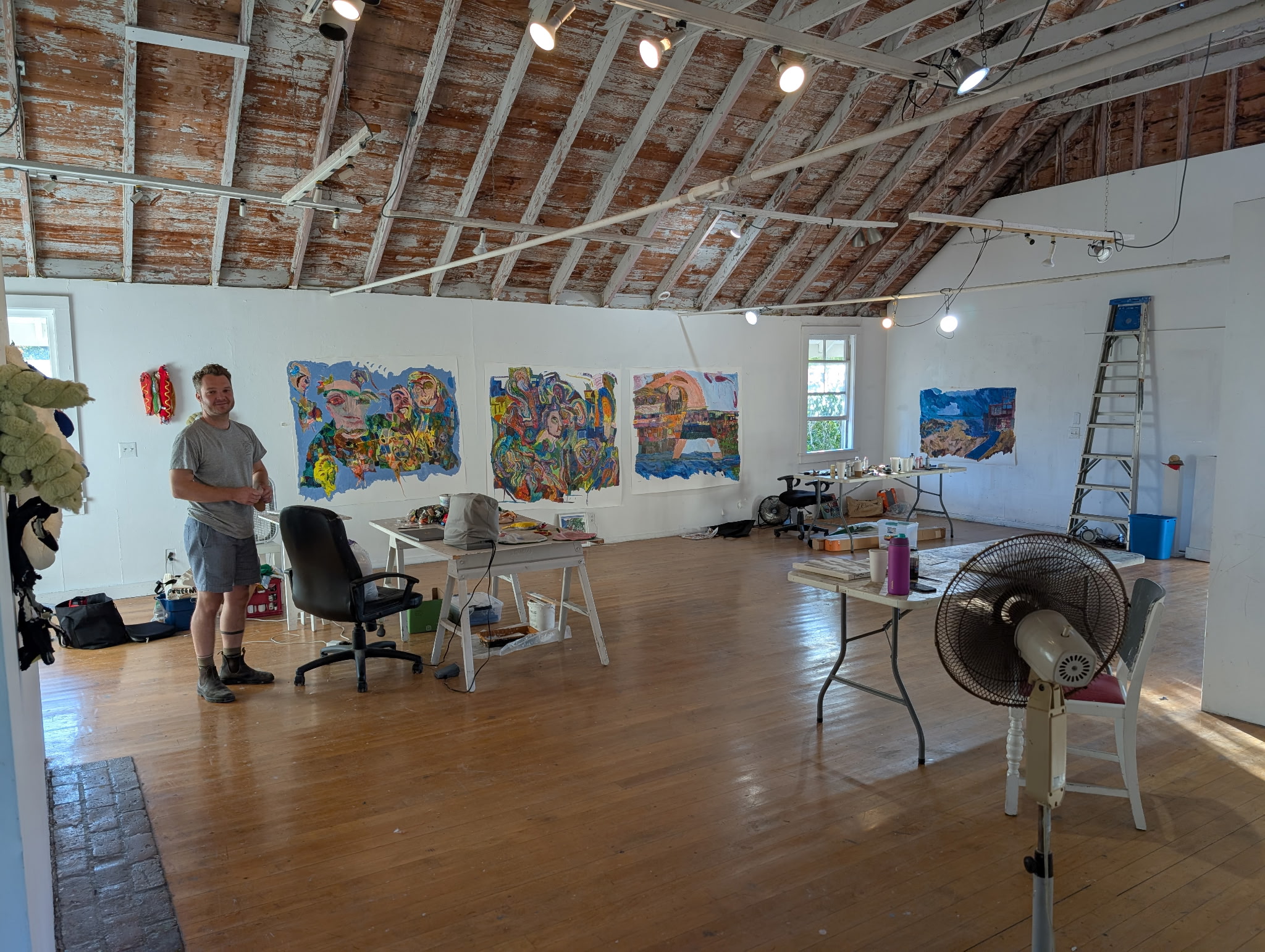 Douglas Degges in the studio at the DNA Residency
When artist Nick Lawrence arrived in Provincetown in 1993, he entered this rich artistic lineage. Seeking to immerse himself in the town's creative community, he met Pat de Groot, then president of the Provincetown Group Gallery, which occupied the second-floor space within the Tennis Club. Recognizing both the historical significance of the site and its potential as a contemporary art space, Lawrence assumed stewardship of the studio that same year and established DNA Gallery.
From 1994 through 2011, DNA Gallery became one of Provincetown's most important multidisciplinary exhibition venues, presenting artists working across painting, sculpture, photography, installation, and performance. The gallery extended the building's long tradition as a place where artistic practice and community converged while contributing significantly to Provincetown's contemporary cultural landscape. During this period, Lawrence also became co-owner of LFL Gallery in New York's Chelsea district and, in 2003, founded Freight + Volume Gallery, strengthening an ongoing dialogue between Provincetown and New York's contemporary art worlds.
In 2012, DNA Gallery evolved into the DNA Residency, transforming the exhibition space into a working studio where artists could create, reflect, and develop new work. Rather than simply providing studio space, the residency carried forward Provincetown's longstanding tradition of artistic experimentation, offering artists uninterrupted time for sustained inquiry. Among its early residents were Joshua Abelow, Eric Aho, Trudy Benson, Liz Collins, Cristina de Miguel, Craig Drennan, Jenna Gribbon, Daniel Heidkamp, Sam Jablon, JJ Manford, Sophia Narrett, Natalie White, Wendy White, Wallace Whitney, and Jessica Wynne, and many others who have since established significant careers. In 2023 Lawrence established Readymade Gallery to showcase the artist who participated at the Residency.
This year marks a moment of transition as the residency pauses before its next chapter. While change is inevitable, the pause also invites reflection on DNA's lasting contribution. Over the years, the residency has supported hundreds of artists, each arriving with different ambitions. Some sought uninterrupted time to complete work for upcoming exhibitions, while others welcomed a temporary departure from familiar studio routines. For many, DNA became a productive interruption—a place where established habits could be questioned and new possibilities emerge. Removed from the pressures of daily life, artists found themselves increasingly open to experimentation, uncertainty, and discovery.
Unlike many artist residencies, DNA has never relied on a formal application process. Artists are invited personally by Lawrence or through recommendations from former residents. Sessions typically last one or two weeks between May and early November, fostering relationships built on trust, conversation, and shared commitment rather than institutional selection. This approach reflects Lawrence's belief that artistic communities are cultivated through personal engagement rather than bureaucracy.
The residency also developed in close conversation with Freight + Volume Gallery. Artists often use their time in Provincetown to begin, develop, or complete bodies of work that may later be exhibited there or elsewhere. Yet DNA has never functioned simply as a site of production. Instead, it offers a setting where ideas can evolve free from immediate expectations, allowing experimentation to precede exhibition.
Residents stay in nearby cottages, typically sharing accommodations with four or five artists. Evenings often conclude with dinners hosted by Lawrence, featuring signature dishes such as paella, pasta Bolognese, or bouillabaisse prepared with local seafood. These gatherings become an extension of the studio itself, where conversations continue long after the workday ends and artists from diverse practices discover unexpected points of connection. Often, these informal exchanges prove as valuable as the hours spent working alone.
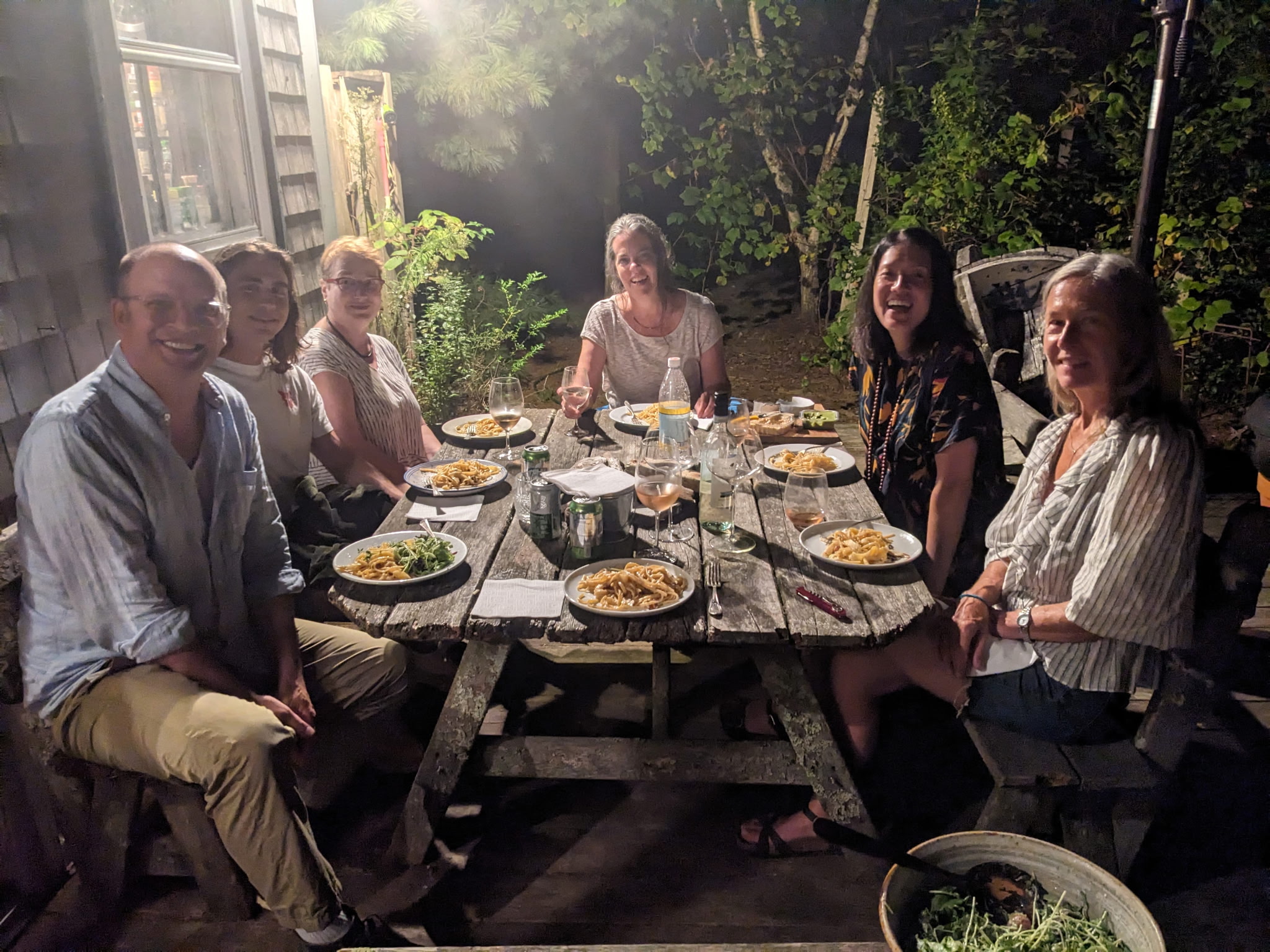 DNA participants. Pictured: Jason Rohlf, Ivan Langesfeld, Melanie Kozol, Jackie Reeves, Amber Mustafic, Sasha Parks
The experience of Provincetown continually seeps into the creative process. The extraordinary quality of light that has attracted painters for generations, the rhythm of the harbor, weathered architecture, shifting tides, and expansive dunes become part of daily experience. Inspiration often arrives unexpectedly during a walk through town, an afternoon on the beach, or a conversation over dinner. Residents are encouraged to engage with the community, including a local gardener known simply as Stormy (Mayo), who cultivates more than 800 dahlias each year. The freedom to move between concentrated studio practice and reflective wandering allows the landscape itself to become an active participant in artistic discovery.
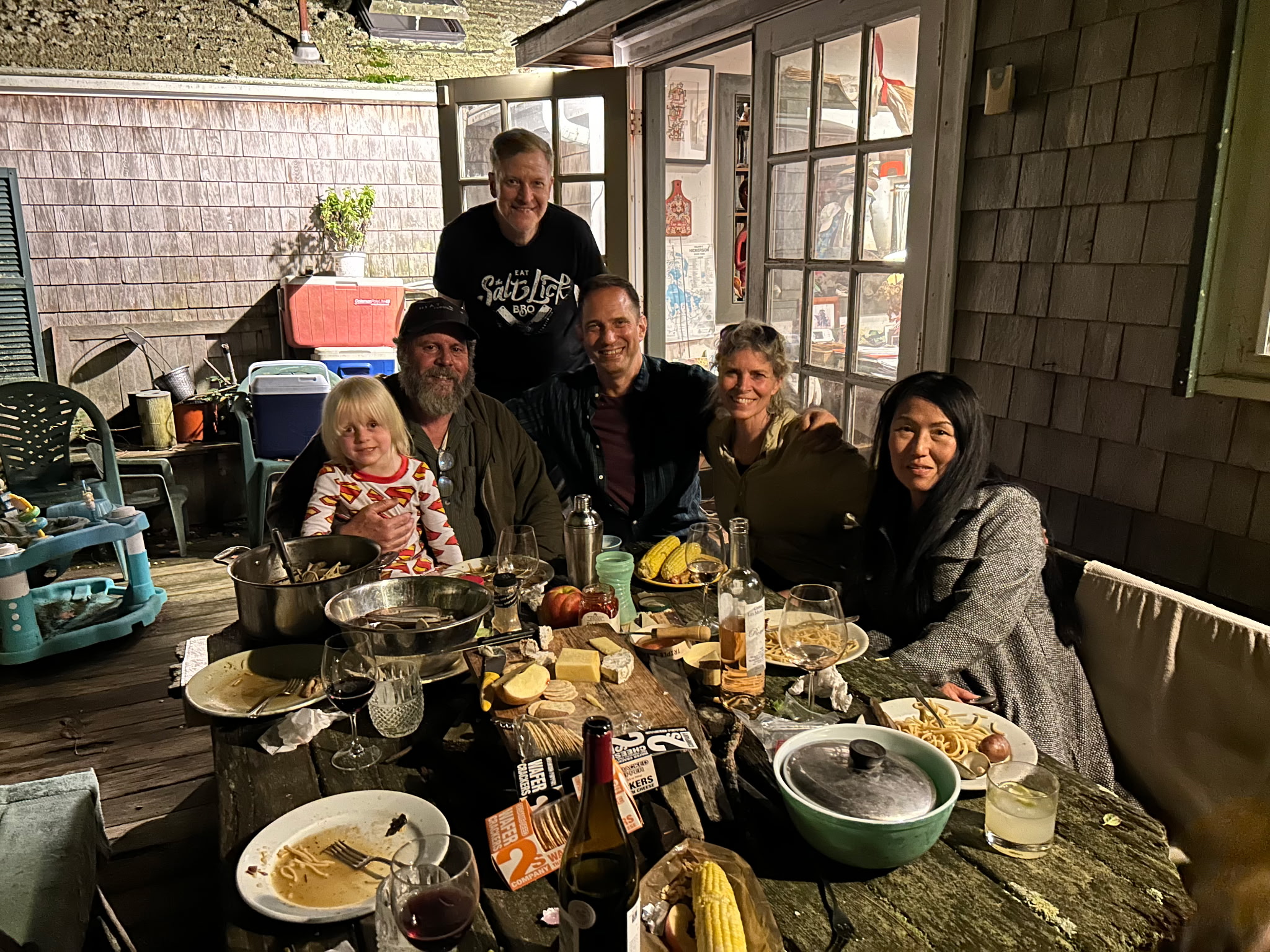 DNA participants. Pictured: Henry Lawrence, Nick Lawrence, James Kozlik, George Towne, Sam Colt, Jai Hart
Perhaps this openness is the residency's greatest gift. An artist may arrive with a carefully conceived plan only to discover that the landscape, conversations, and rhythms of daily life quietly redirect the work. What begins as a temporary retreat gradually becomes a space of transformation, where ideas unfold through sustained attention and unexpected encounters. In this respect, the DNA Residency continues Provincetown's enduring tradition—not simply as a place where art is made, but where artistic practices are challenged, renewed, and reimagined. It reminds us that creative communities endure not only through studios and exhibitions, but through generosity, conversation, and the rare opportunity to give artists what they need most: time, space, and the freedom to discover what comes next.
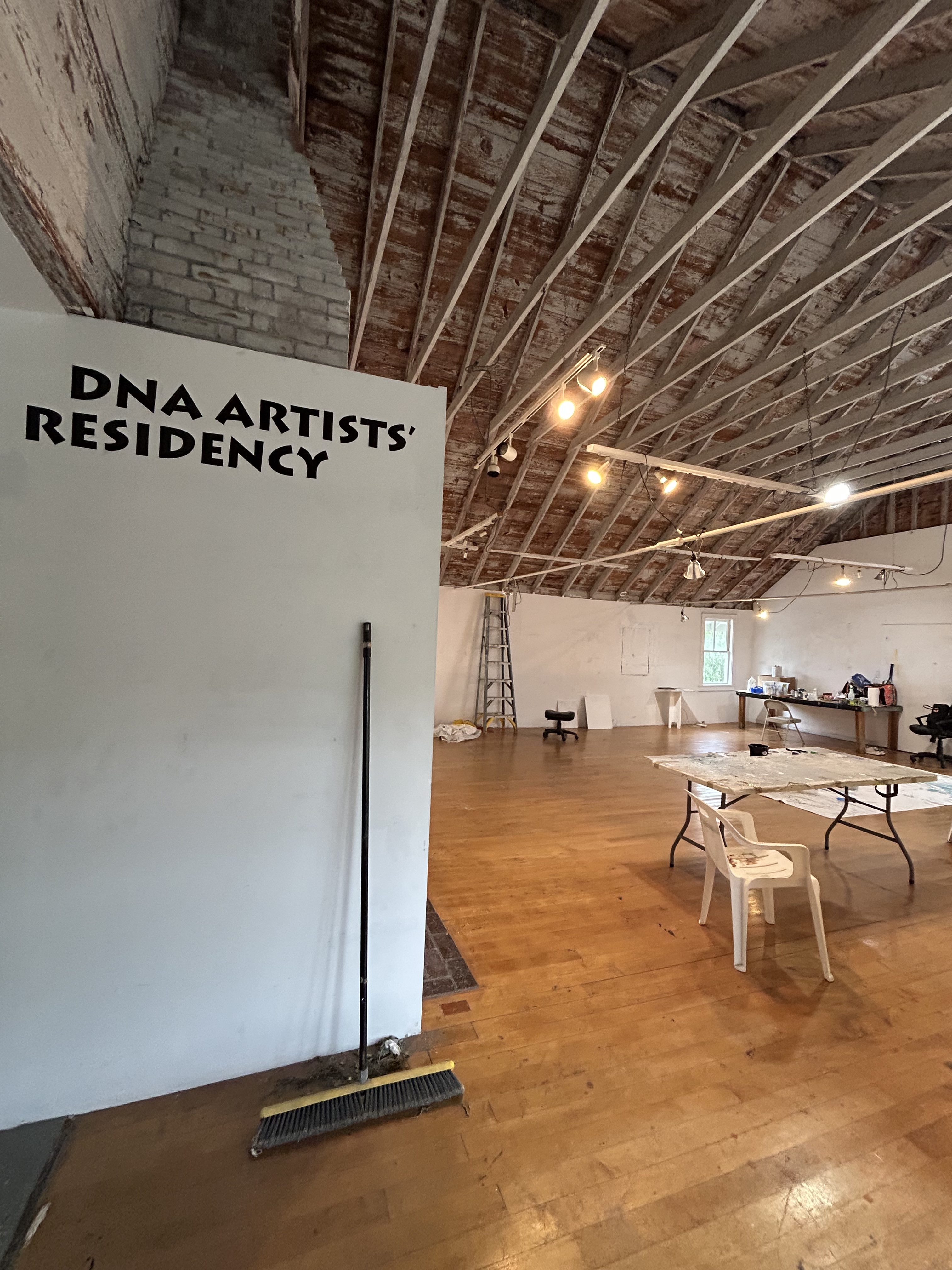 Images provided by Wayne Adams and Nick Lawrence

Riad Miah
Riad Miah was born in Trinidad and lives and works in New York City. His work has been exhibited at the Baltimore Museum of Contemporary Art, Sperone Westwater, White Box Gallery, Deluxe Projects, Rooster Contemporary Art, Simon Gallery, and Lesley Heller Workshop. He has received fellowships nationally and internationally. His works are included in private, university, and corporate collections. He contributes to Two Coats of Paint, the Brooklyn Rail, and Art Savvvy.
view all articles from this author