Whitehot Magazine
October 2026
"The Best Art In The World"
"The Best Art In The World"
October 2026
Designing for the In-Between
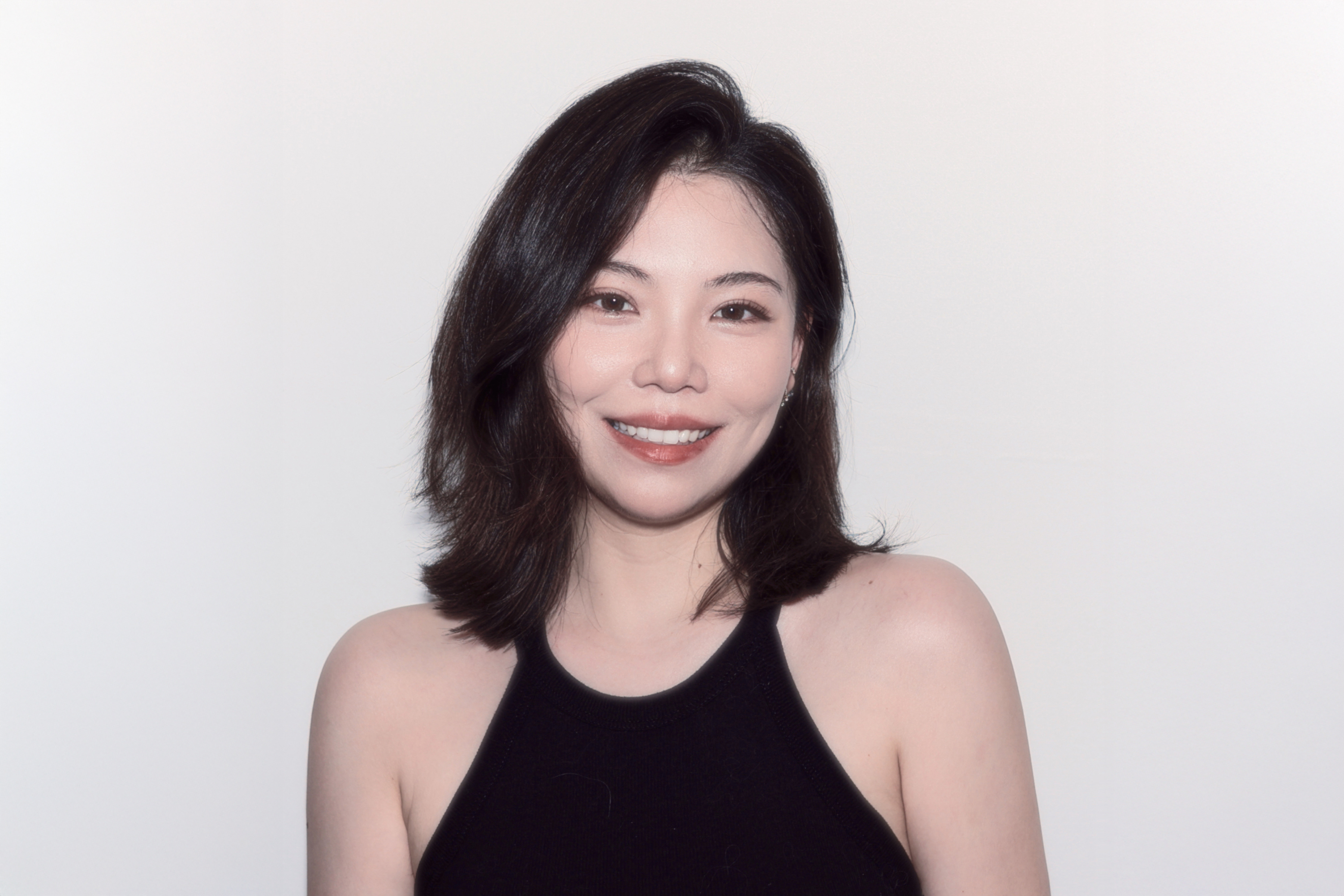 Shuting Jiang
BY SERENA HANZHI WANG March 8th, 2026
You are sitting in a waiting room in a country that is not your own. The intake form is long. The insurance terminology almost makes sense, but not quite. You understand your body. What you don’t fully understand is the structure surrounding it.
That quiet misalignment is where WeWomenHealth began.
Shuting Jiang approached immigrant healthcare as a problem of navigation. The obstacle was not diagnosis. It was orientation. Healthcare systems operate through stacked procedures: verification, consent, referral loops, insurance classifications, delayed scheduling. For someone moving through it in a second language, each layer adds friction. What should feel procedural begins to feel unstable.
In WeWomenHealth, Jiang focused on reorganising that instability. Translation tools were embedded directly inside appointment flows rather than placed as separate utilities. Insurance information was broken down into progressive steps instead of static policy language. Guidance appeared precisely at points where hesitation tends to occur. The platform did not attempt to reinvent healthcare. It aimed to make its structure legible.
This interest in legibility runs through Jiang’s broader practice.
By day, she works as a Senior Product Designer at Madhive in New York, operating within enterprise-scale advertising and broadcast infrastructure. Over several years, she contributed to the majority of core platform features during a period of rapid growth. Enterprise partnerships expanded from a small network base to more than fifty major partners, including national broadcasters and global brands.
Design at that level functions differently. Interfaces connect to revenue pipelines. Data passes across internal systems. Performance metrics shape release timelines. A design decision is rarely isolated. It ripples.
Working inside that environment sharpened Jiang’s sensitivity to structural thinking. Clarity becomes operational. Organisation stabilises scale. Every interface must serve multiple stakeholders at once: engineers, clients, analysts, end users. It is an environment that demands precision without losing adaptability.
That same precision appears in her independent work, though in a quieter register.
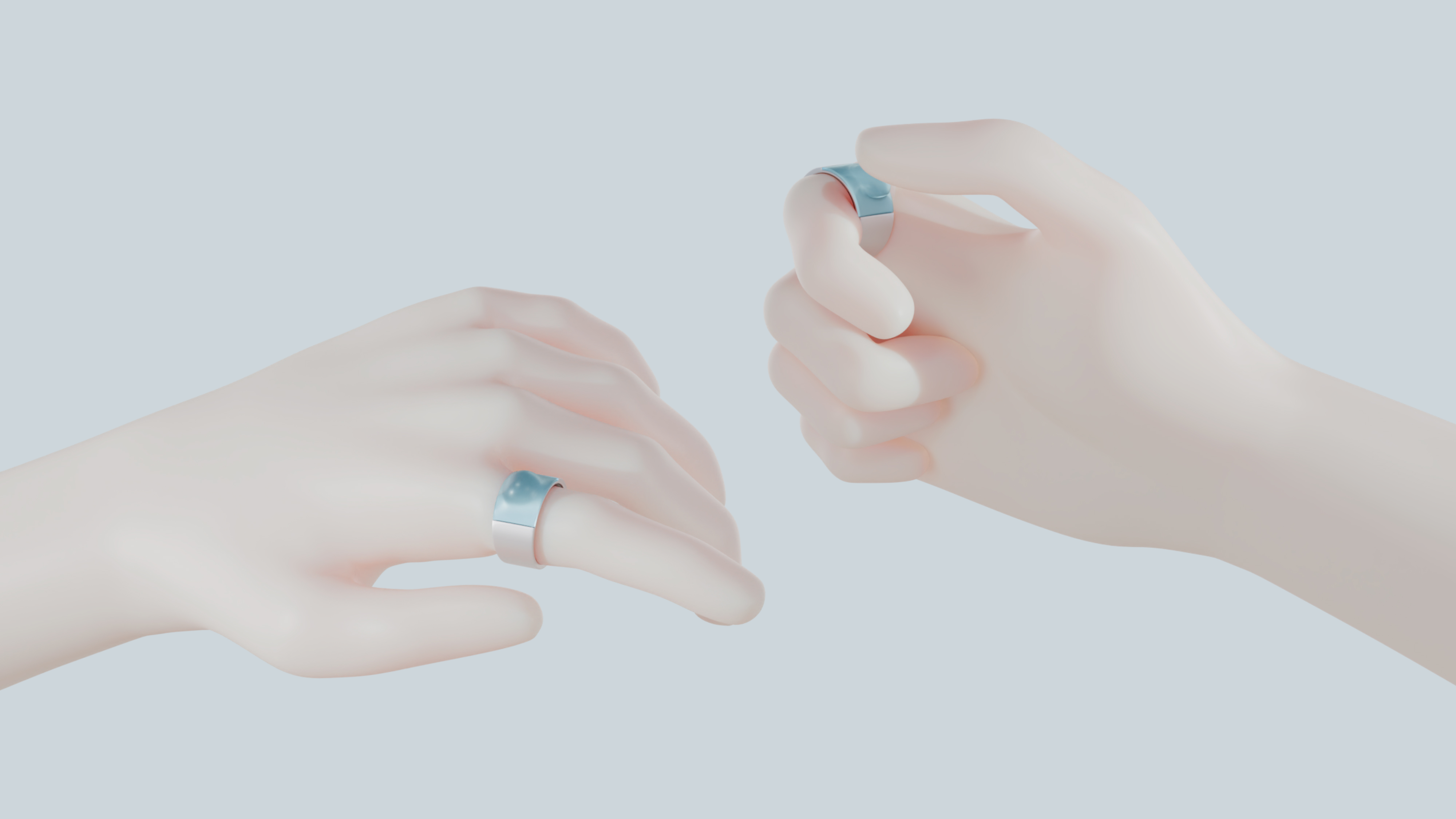 3D Art of The Melo Bubble Ring
The MELO Bubble Ring started from a more intimate question: what happens to stress before it becomes a chart?
Much of contemporary wellness technology leans toward visualisation. Emotional states become dashboards. Heart rate variability becomes a graph. Alerts attempt intervention. The Bubble Ring took a different direction. It combined biometric monitoring with a tactile interaction surface designed to be touched rather than watched.
Stress indicators were measured discreetly in the background. The primary interaction remained physical. Instead of encouraging users to check a screen, the ring invited subtle rhythm through touch. Regulation became embodied rather than visualised.
The project received multiple international design awards, including iF and Red Dot, and was exhibited at the Red Dot Design Museum from October 2025 to October 2026. Positioned among other award-winning design objects, the ring read less like a gadget and more like a meditation on pace.
Across these projects, Jiang’s work consistently gravitates toward transitional moments. Filling out forms. Reviewing contracts. Waiting for confirmation. Touching a wearable device during a pause in conversation. Her designs sit in the intervals between action and resolution.
That focus on intervals is not accidental.
Jiang’s background moves between cultural contexts. After completing her graduate studies in Integrated Digital Media at New York University, she built her career across both American and Chinese design ecosystems. The tempo of New York product culture prioritises execution and clarity. Design environments in Hangzhou and Shanghai often foreground technical expansion and rapid iteration. Operating between these contexts has shaped her sense of calibration.
She co-founded QIMU Design as a way of extending that calibration beyond product teams. The studio works between New York and Hangzhou, focusing on health, accessibility, and structured design thinking. Rather than centring on aesthetics alone, QIMU emphasises decomposition: breaking down complex problems into workable systems. In parallel with her studio work, Jiang has served as a jury member for international UX and design competitions. Reviewing submissions shifts the stance from production to evaluation. It involves articulating what makes a system coherent, not simply making one.
Taken together, her projects outline a consistent position. Jiang does not design for spectacle. She designs for orientation. Whether working within enterprise advertising infrastructure, a healthcare support platform, or a wearable stress regulator, she returns to the same question: how does a system reveal itself without overwhelming the person inside it?
There is a certain restraint in that approach. It does not aim to disrupt loudly or dominate attention cycles. It works through adjustment. It reorganises friction points. It compresses noise.
In a design culture that often equates innovation with scale or visibility, Jiang’s practice suggests another metric. The success of a system may lie in how quietly it supports movement. The most radical shift might be a form becoming understandable.
If her projects share anything, it is this attention to direction. Inside bureaucracies, inside data platforms, inside wearable devices, she builds pathways where people can maintain their sense of footing.

Serena Hanzhi Wang
Serena Hanzhi Wang (b. 2000) is an award-winning art proposal writer, multimedia artist, and curator based in New York City. Her work spans essays, exhibitions, and installation Art—often orbiting themes of desire and technological subjectivity. She studied at the School of Visual Arts’ Visual & Critical Studies Department under the mentorship of philosophers and art historians. Her work has appeared in Whitehot Magazine, Cultbytes, SICKY Mag, Aint–Bad, Artron, Art.China, Millennium Film Workshop, Accent Sisters, MAFF.tv, and others.
view all articles from this author