Whitehot Magazine
September 2026
"The Best Art In The World"
"The Best Art In The World"
September 2026
In the Weeds - A DayDream conversation with James Salomon
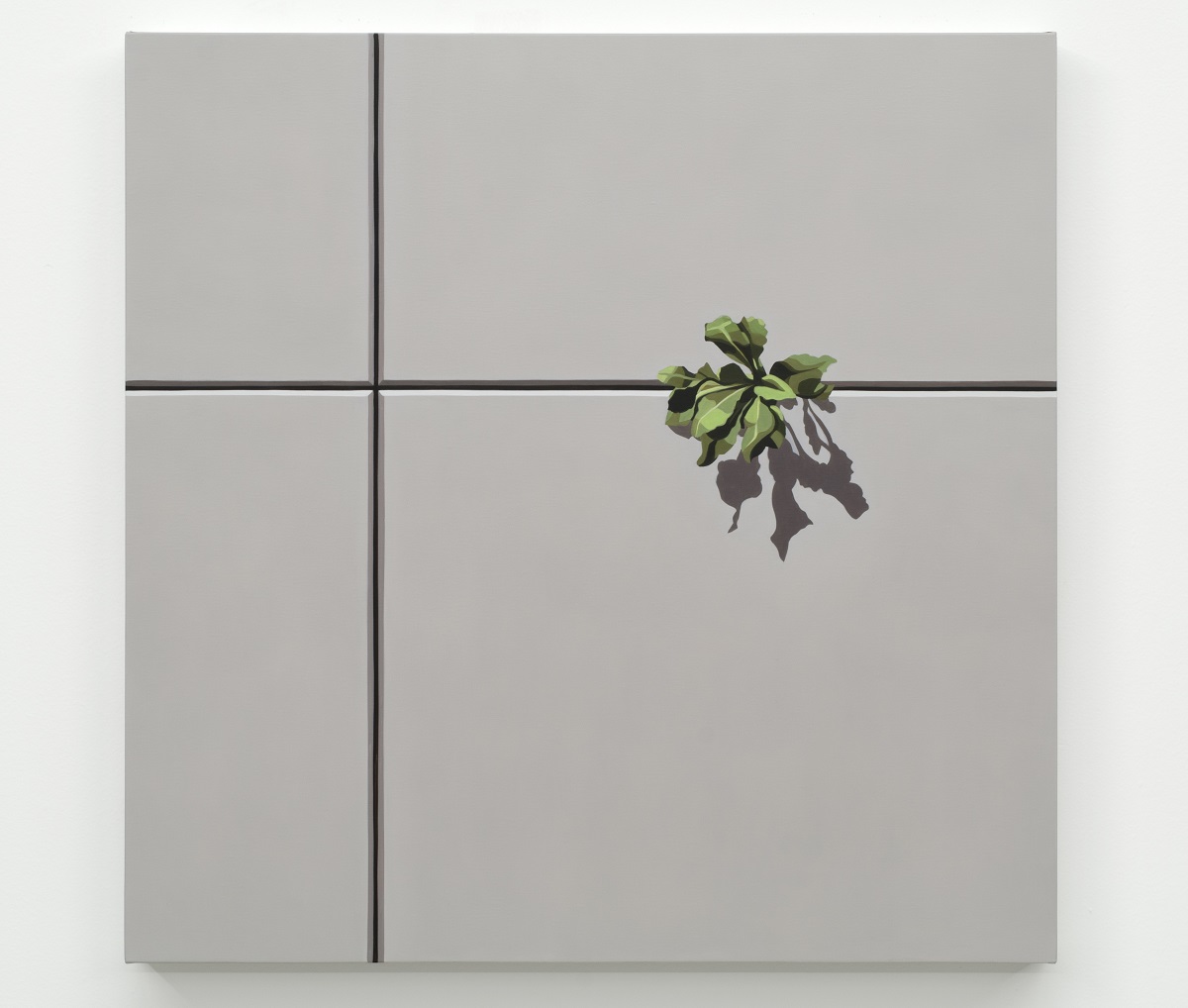
Richard Pasquarelli, Disturbance #12, 2025
By RICHARD PASQUARELLI August 3rd, 2026
He used to daydream. A lot. That stopped long ago. It seems futile now.
The daydreams he used to have were full of hope, potential, and excitement for a future wide open.
- Excerpt from Weeds by Richard Pasquarelli
A couple of years ago, James Salomon approached me about an exhibition he was curating called DayDream at the Berkshire Botanical Garden in Massachusetts. He and I have known each other for 25 years, not only do we have a relationship professionally, but an incredible friendship that has lasted through thick and thin. For a period James represented me when he had his galleries in East Hampton and in New York. When he approached me about this new exhibition, he had an interesting request; he wanted me to not only create a painting for the show, but to write a piece to go along with it that would be published in a catalogue. He wanted both the written piece and artwork to relate to the theme of “daydream”. I knew I wanted it to maintain the themes already found in my work, which center around mental health. Where do I begin?
I have ADHD, which is coupled with a form of OCD, symmetry ordering OCD to be specific. Much of my work explores these themes and often highlights “disturbances“ I see out in the world on a day-to-day basis. That particular day I was in the country, and I had been weeding for hours in the yard. One area I had been focusing on was a stone patio made up of perfectly square 30-inch bluestone slabs, and I had been pulling weeds from between the stones. While I was laboring, I was thinking about their enduring persistence. They just keep coming back. Again. And again. And again. I could either get upset about it, or I could accept it and become “one” with the task. I chose the latter, and saw this as a humorous metaphor for the problems in our lives, how they affect us, how we try to get rid of them, and how new ones will always arise.
This then got me to thinking about how many times I had tried to create perfect order throughout my life. I thought about my younger self, and the ways in which this behavior had helped me get a better sense of control, focus, and productivity, countering the effects of my ADHD. Back then I also thought about the future I had daydreamed about, and now, at 57, could look back and see the ways in which I did, or did not, accomplish those dreams. These ideas I would use as my jumping off point for the painting and story for the project.
Once the show opened I got my catalogue with honest, vulnerable, and touching writings from the participants. It gives us a view into their inner worlds and makes their artworks feel richer in content. Months later, James and I got together for dinner, where he told me that LongHouse Reserve in East Hampton had commissioned him to do a second book with the same concept, which has now come to fruition. They both bring something that most art books do not deliver on, which are insights into the mind of the artist, not through academic essays, or critical response, but through their own words, which, to be honest, is what most people seek to know when looking at a work of art.
Richard: What was the inspiration for the first book?
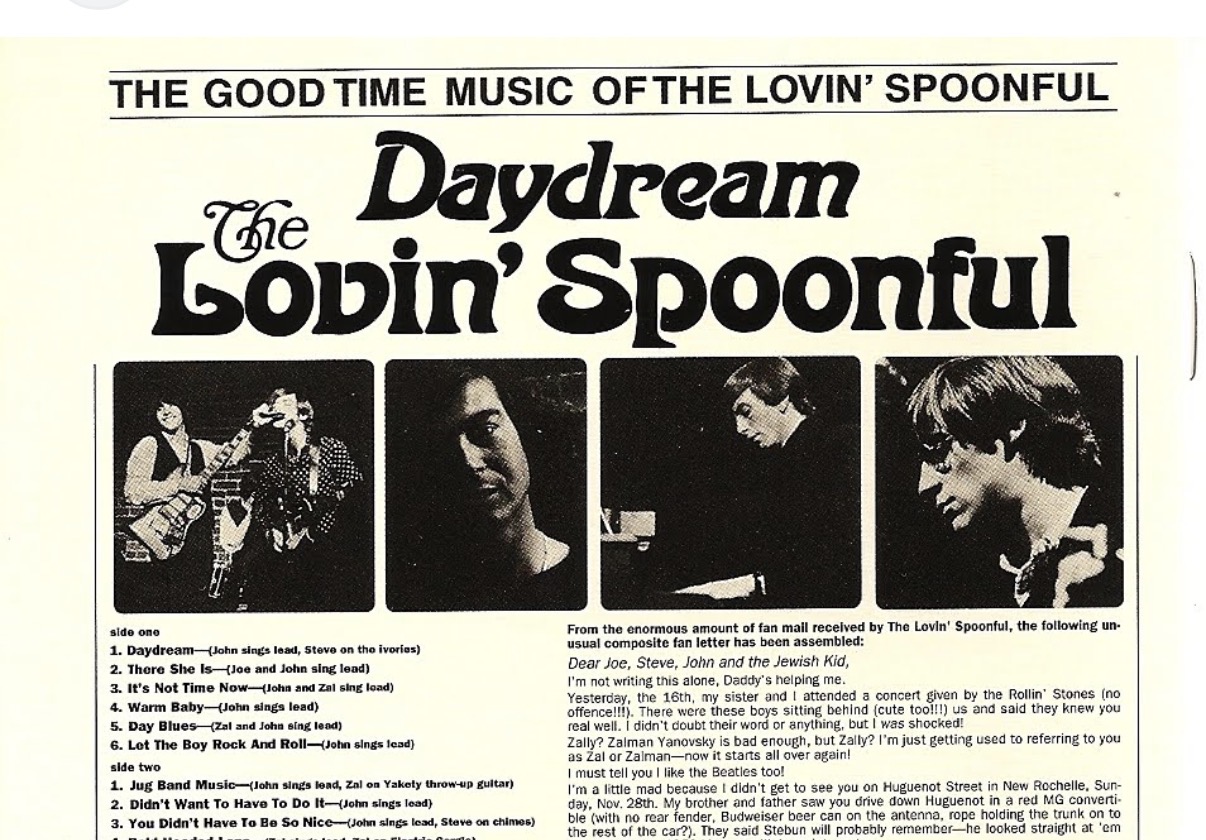
James: My friend Joanne Cassullo called me up in the winter of 2025, she wanted me to put together a show at Berkshire Botanical Garden the upcoming summer. I had previously curated an outdoor sculpture show for them in 2018, but this time they wanted indoors in the galleries. Sooo…a few weeks go by, I’m driving down the road, and DayDream from Lovin Spoonful comes on the radio, I’m thinking enchanted garden, summer show, lite n easy, boom. With group shows, I start with a title, then start putting the pieces together. It’s often derived from songs, literature, what mood I’m in, what’s going on in the world, my life… you get the idea.
RP: I do. So you pitched that?
JS: Yes, I did. The marketing team liked it so much that they based their whole season on the theme.
RP: That’s awesome. So tell me about the catalogue.
JS: Once I had the concept, I immediately thought about the book, because I had the budget for it. And, let’s face it, the show’s gonna last about six weeks, right? But the book lasts forever, so let’s give it some real purpose. I was talking with an artist, and they recounted a childhood daydream… I asked them to put pen to paper for me… and so began my idea for every artist in the show to recount a personal daydream-memoire-type story to occupy the pages, instead of this going through the motions with a general catalogue with intro, then artwork with specs, et cetera, which feels thin to me. I realized that I was on to something, and the energy that I put into the book became just as important as the gallery exhibition.
RP: I see that. So I wrote about my Weeds story. Tell me about yours.
JS: Well, I felt responsible for writing an intro, but had zero spark. I wasn’t seeing it.
RP: You weren’t looking forward to the foreword.
JS: Good one! Exactly. So I thought let’s skip it entirely and instead I’ll be a participant, which is what I really wanted anyway. When that decision was made, I saw everything clearly and became really psyched to get into the mix.
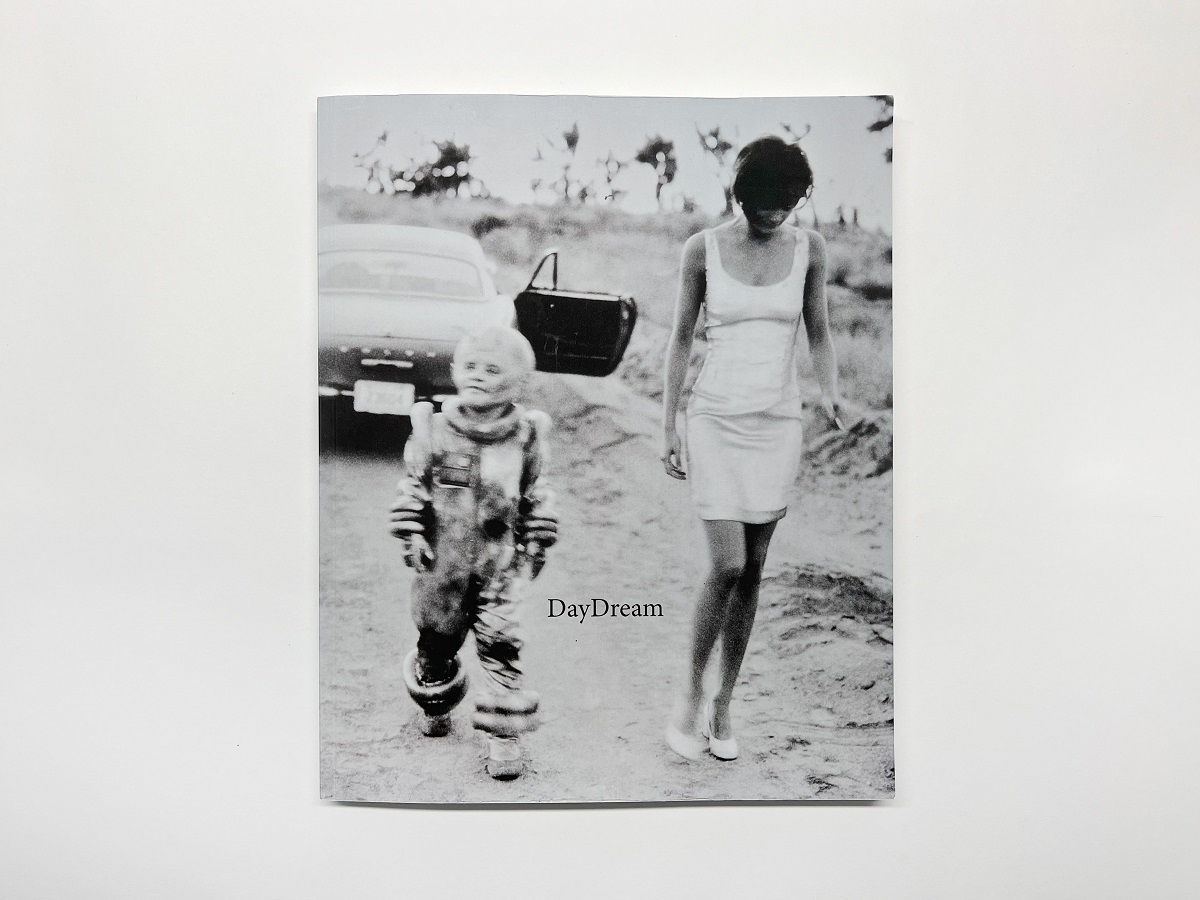
Cover of DayDream, 2025, featuring Peter Lindbergh’s 1990 “Helena & Martian” (detail)
The image that I chose is an iconic photograph by Peter Lindbergh that’s been living in my head practically since it came out in 1990. I think I first saw it when I was at college in Boston, I used to visit Robert Klein at his gallery on Newbury Street. Back then, I had absolutely no designs on being in the art world, it was a cool place to visit and I liked talking to the guy. I remember being totally seduced by Sugimoto’s seascapes, Robert had so much good stuff. I also followed Staley Wise’s program, which focuses on fashion photography. My father was friends with Evelyn Tripp, who was one of William Klein’s muses in the late 50s. I’ve always had an affinity for that era, these women look so graceful and sophisticated. And that ushered in photographers like Lindbergh, Ritts, lots of others.
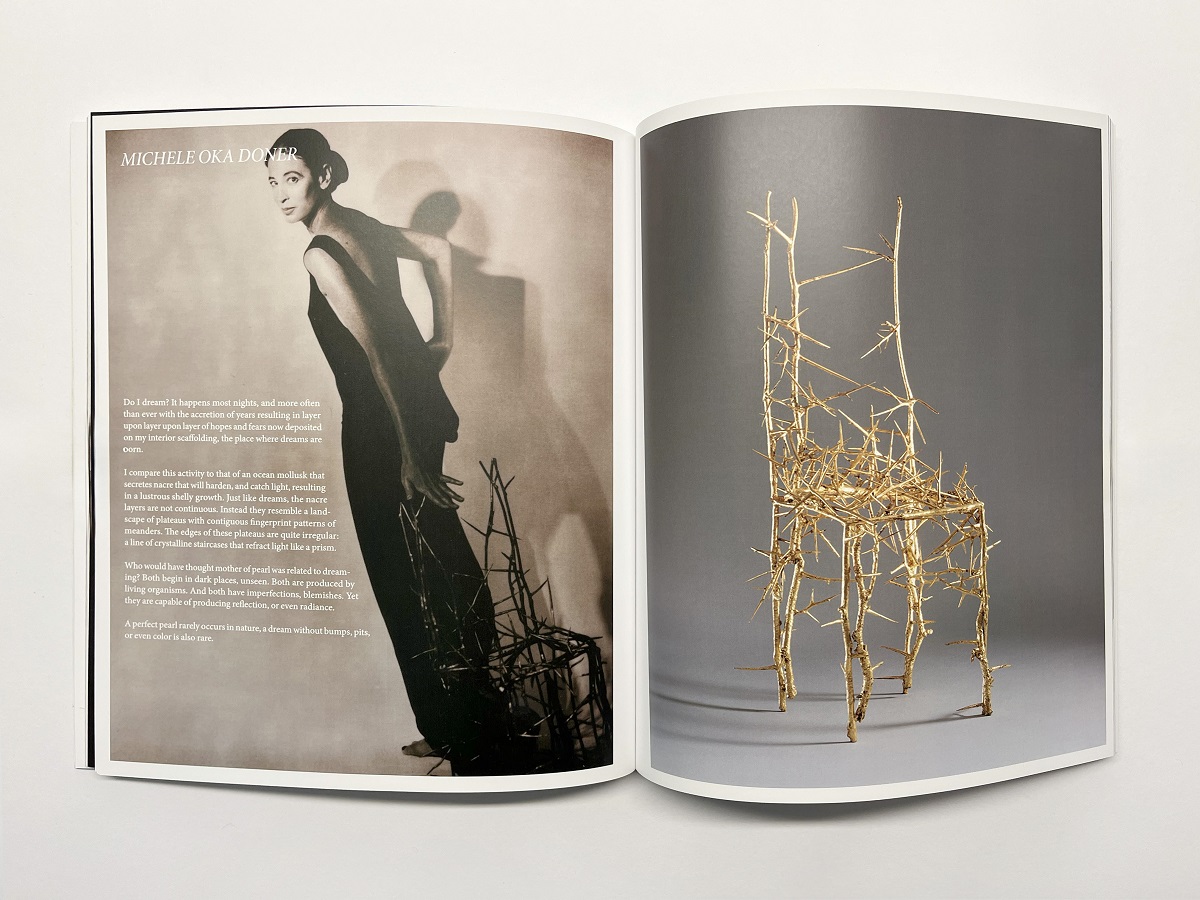
Michele Oka Doner in DayDream, 2025
RP: Everybody looks and feels more serious in black and white. Go on.
JS: Yes, they do. So in Lindbergh’s background is a late 60s Volvo p1800, with the rounded fins. My father had the same one in British Racing Green that he bought in Sweden and had shipped over. I grew up with this car! To boot, my mother in her early twenties was doing runway stuff with Eileen Ford…So here’s this composition… the car, the woman, the authority, the beauty…Venus and Mars… mommy and daddy issues…it’s all bundled in, then there’s this spaceboy looking out into the distance… daydreaming…not giving a flying f#@!.. that’s where I land.
So I had my image, now comes the story. I drew upon a memory that I had around the age of Lindbergh’s lil Martian. I remember clearly being in second grade parochial school where church was mandatory, and all I could think about in the pews was a girl sitting across the aisle that I had a crush on. In my mind we would run through the fields, holding hands, making out… like they did in soap operas. Isn’t that funny? Life, even with its disturbances and disappointments, is quite glorious.
RP: It is, James!!! You crack me up. Well said. How were the other artists handling their assignments?
JS: It varied, of course. For some artists it was business as usual, they listened to what I had to say and asked for the deadline, then handed in on time. Some required multiple phone calls, it’s like herding cats, really. A few artists were shaken up by it, they were very nervous to show their hand to the public in this manner. It takes some bravery, you know? Honest writing requires digging deep, and that’s not easy. I said to someone once, after last year’s show ended “If you were nervous about this, that’s good, because it means you’re alive.” There was some talking off the ledge once or twice, but these people thanked me in the end.
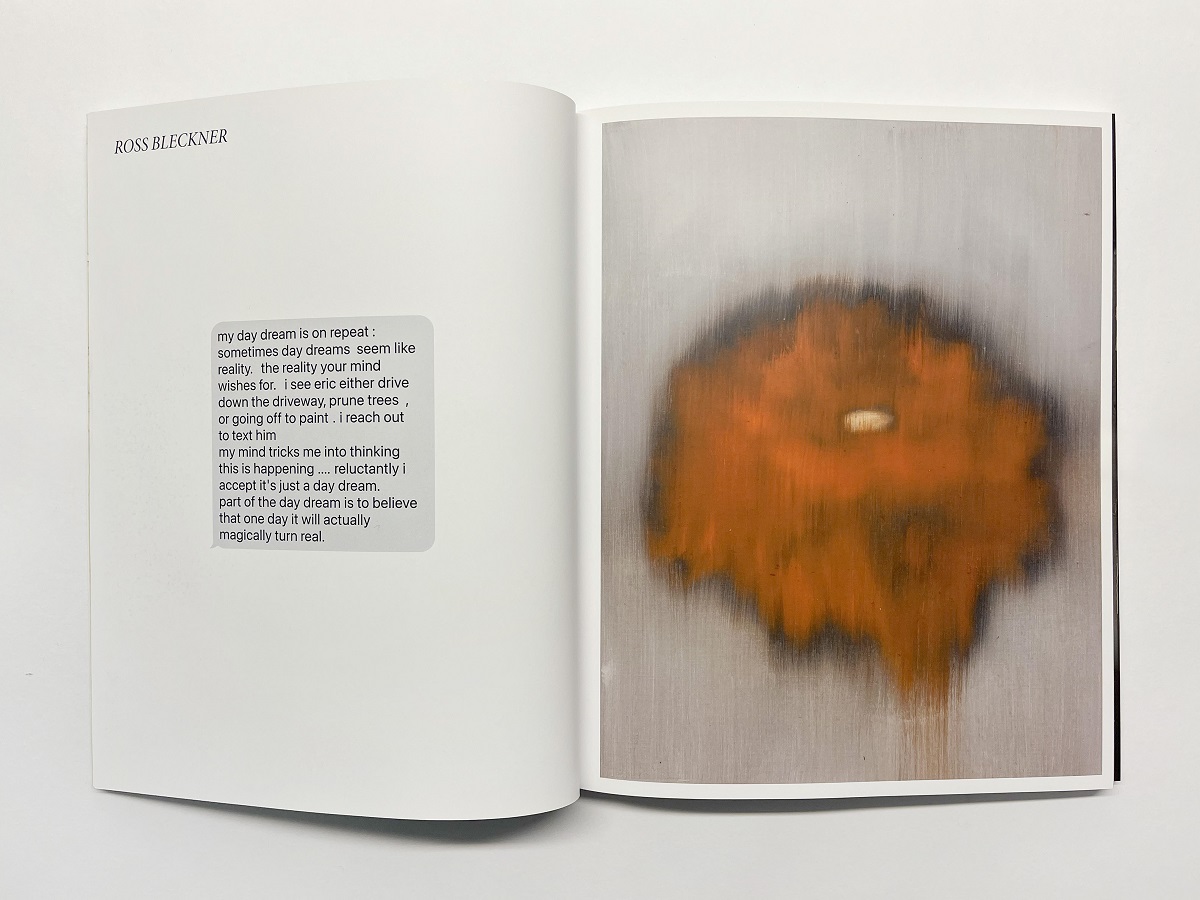
Ross Bleckner in DayDream, 2025
RP: Are there any significant differences between the two volumes?
JS: Not really. The format, the template, is the same. We wanted it that way. When I say “we”, I mean myself and Seth Sgorbati, the designer. He’s actually way more than that, and we talk about five times a day. The devil is always in the details. We love to obsess together.
The new one, at LongHouse, has a splendid introduction by Glenn Adamson, who’s a bit of a heavyweight in the art and craft world. That worked out perfectly because he just nailed it in one page. Then there’s a heartfelt second intro by Dianne Benson, who brought me to LongHouse under her wing about 20 years ago. I wound up writing about an old pal, Lawrence Weiner, who showed there in 2019. I had historian Alastair Gordon write on Buckminster Fuller, Andrea Grover at Guild Hall gave me something beautiful, as well as former LongHouse director Carrie Barratt, who commissioned me to do this.
I mean, they’re both specific to artists somehow affiliated to the institutions, and it’s a chronicle, an ongoing encyclopedia of sorts.The two tomes are different yet similar, and you learn as you go.
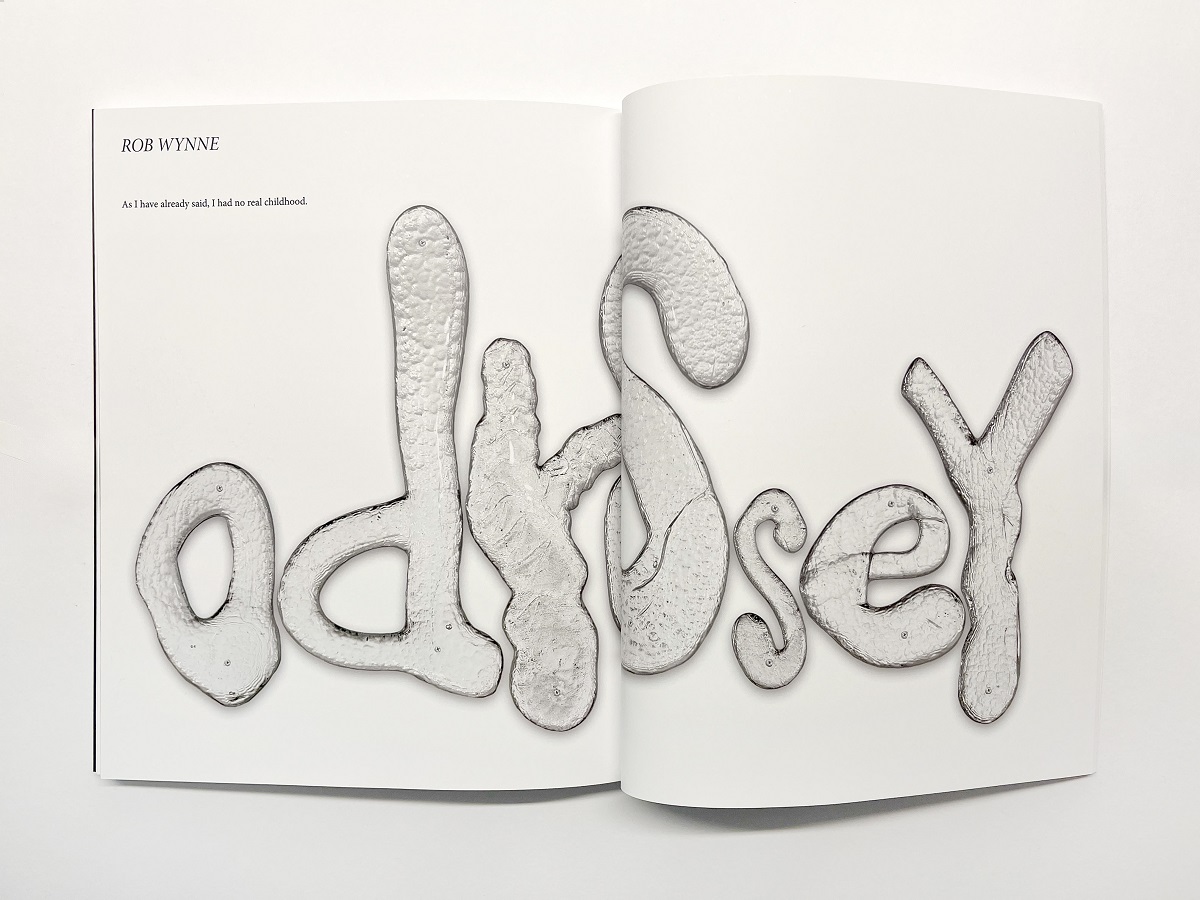
Rob Wynne in DayDream, 2025
RP: Would you want to do another one?
JS: I’m not bored yet!! Seriously, yes… this is a special project, it’s become very dear to me. I’d love for it to ripple out to more artists, more communities. Life is just an ODYSSEY.
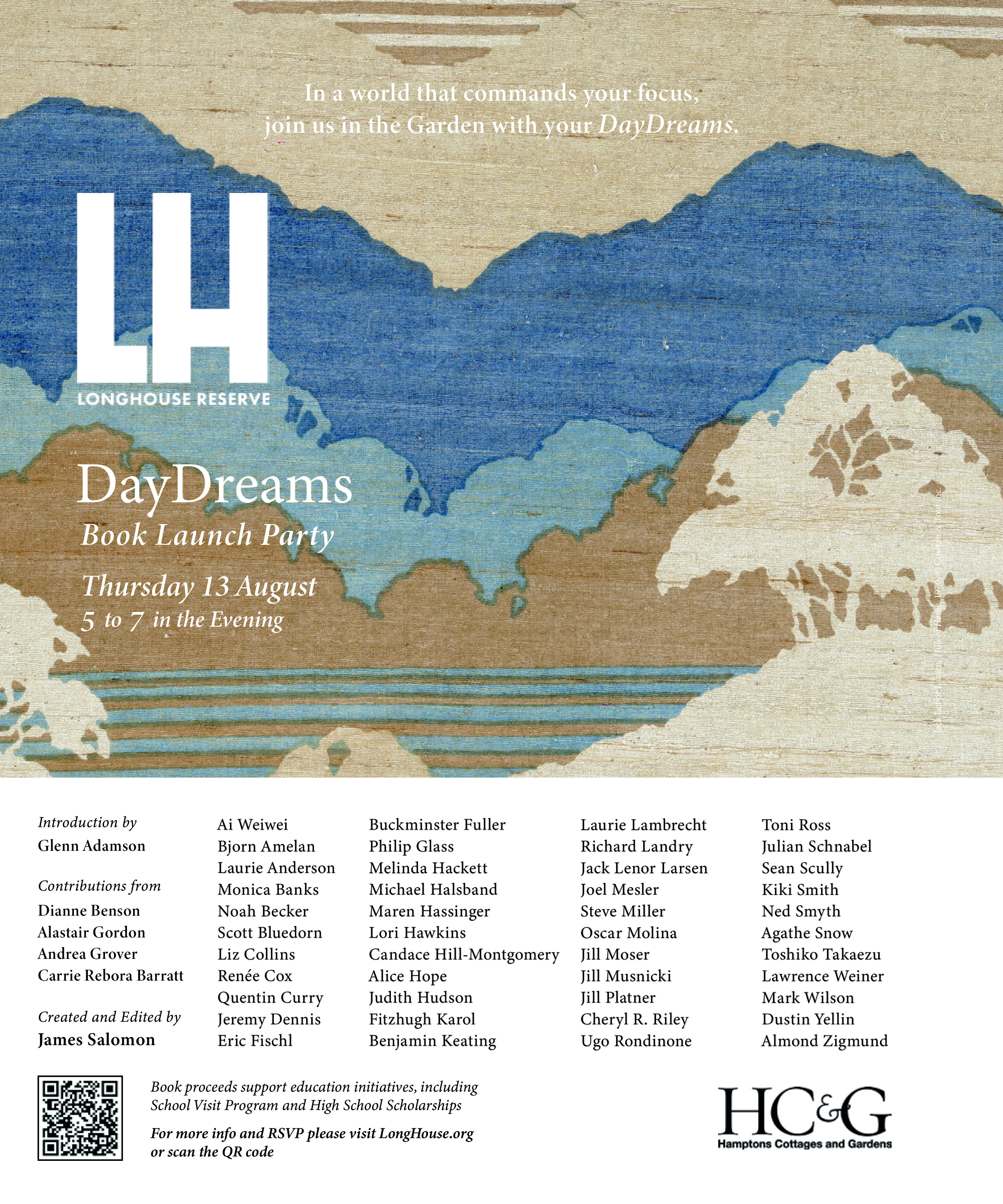
A DayDreams launch party will be hosted by LongHouse Reserve in East Hampton, New York on Thursday August 13th. HC&G Magazine is proud to be the media sponsor, and Whitehot’s own Noah Becker is a participant..
Click HERE for more information.

Richard Pasquarelli
Richard Pasquarelli lives and works in New York. Inspired by analysis of his own obsessive compulsions for perfect order, his work studies the relationships between psyche and environment. He has appeared in Whitehot Magazine before, as an interviewer, interviewee, and has had multiple articles and reviews written on his work. www.richardpasquarelli.com.
view all articles from this author