
Whitehot Magazine
October 2026
"The Best Art In The World"
"The Best Art In The World"
October 2026
Interview with Ramuntcho Matta: Brion Gysin: The Last Museum Musée d’Art Moderne de Paris
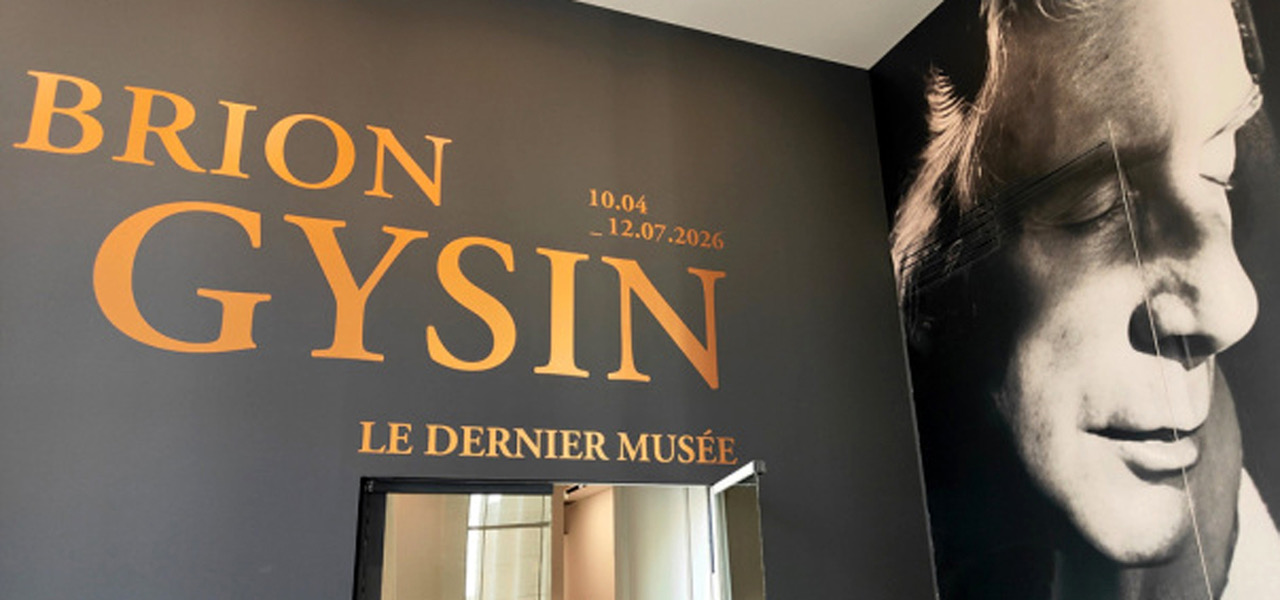 Entrance to Brion Gysin: The Last Museum, Musée d’Art Moderne de Paris, photo by the author
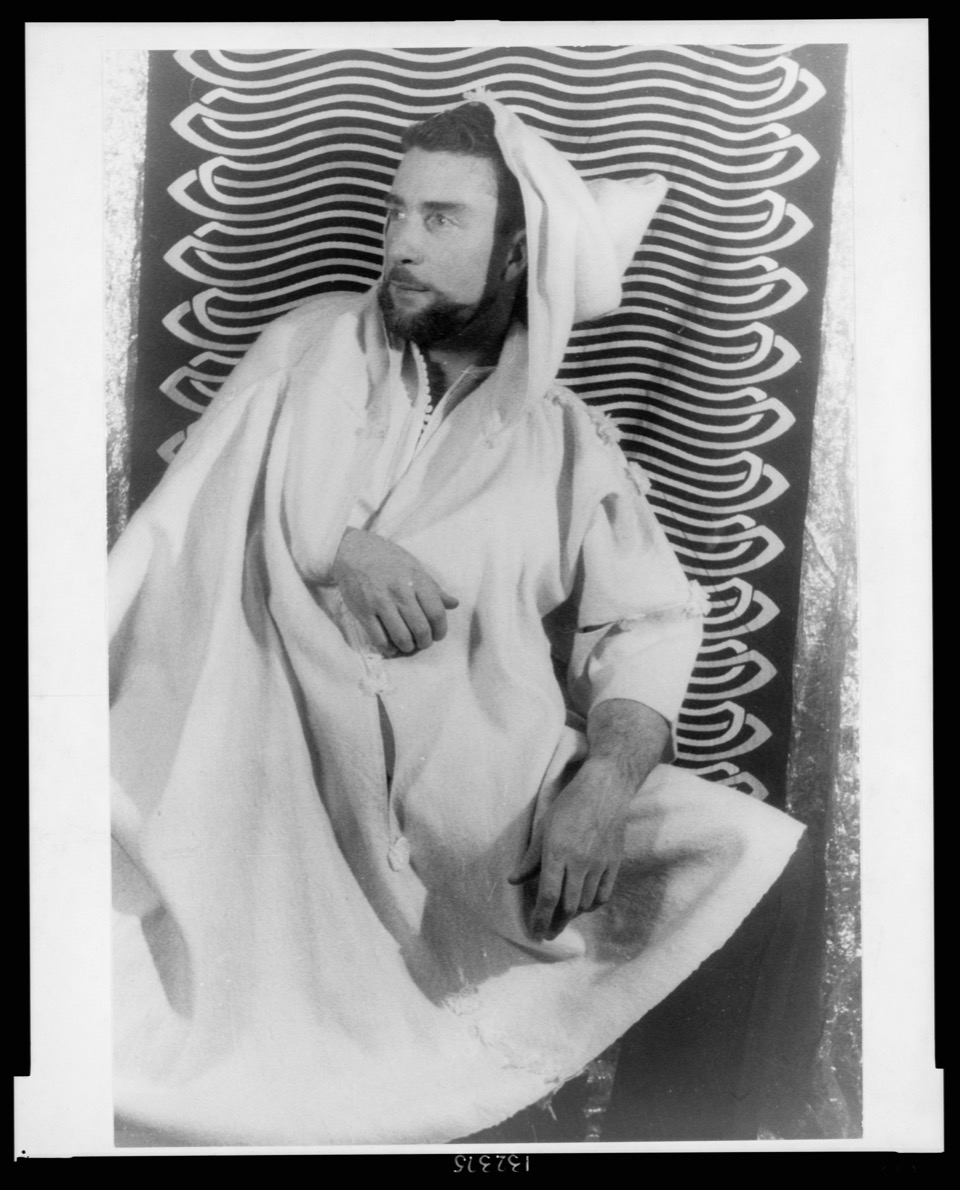 Carl Van Vechten, Portrait of Brion Gysin (1957) photograph, Van Vechten Collection, Library of Congress, Washington D.C.
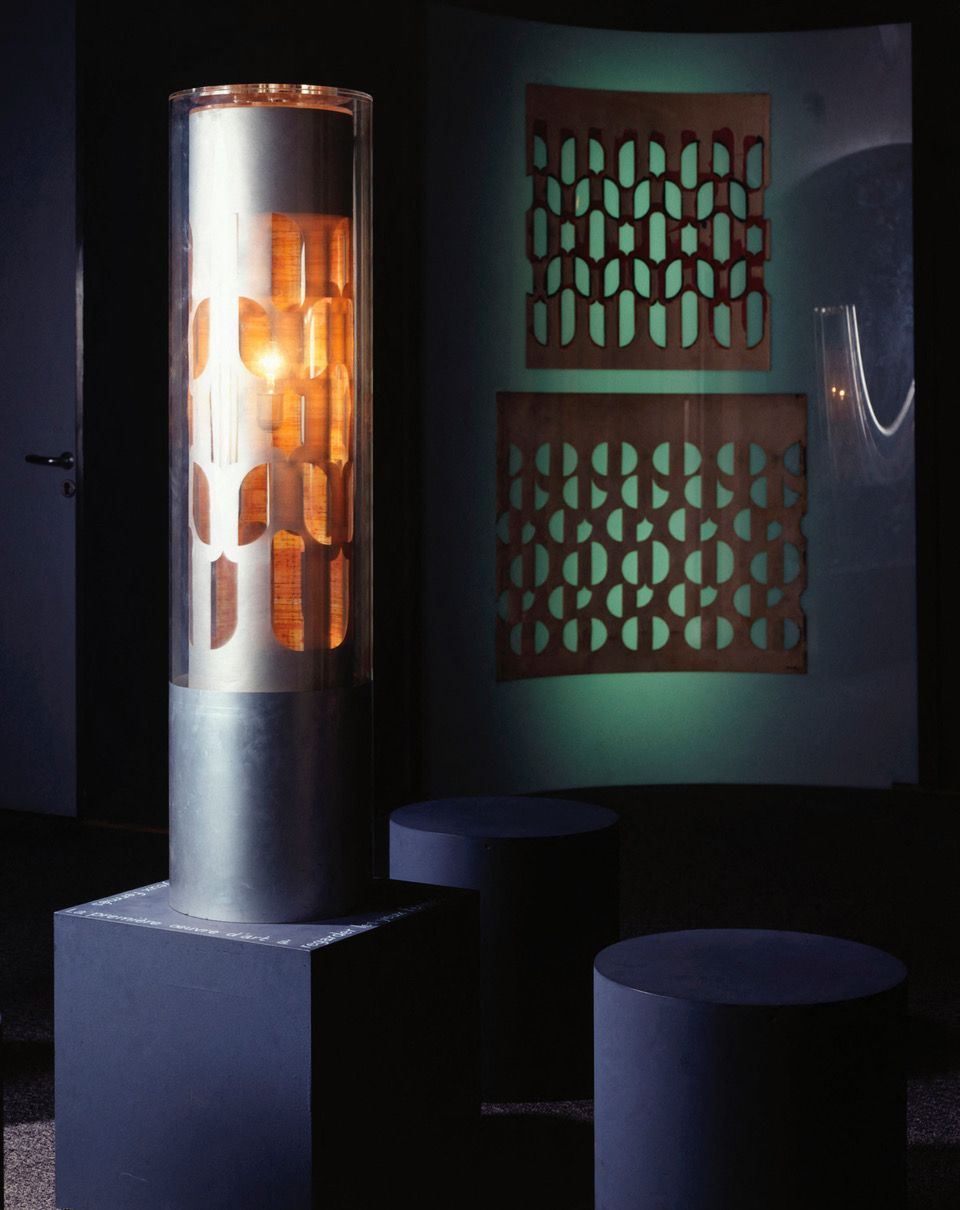 Brion Gysin & Ian Sommerville, Dreamachine (1961-1979) Courtesy Musée d’Art Moderne de Paris
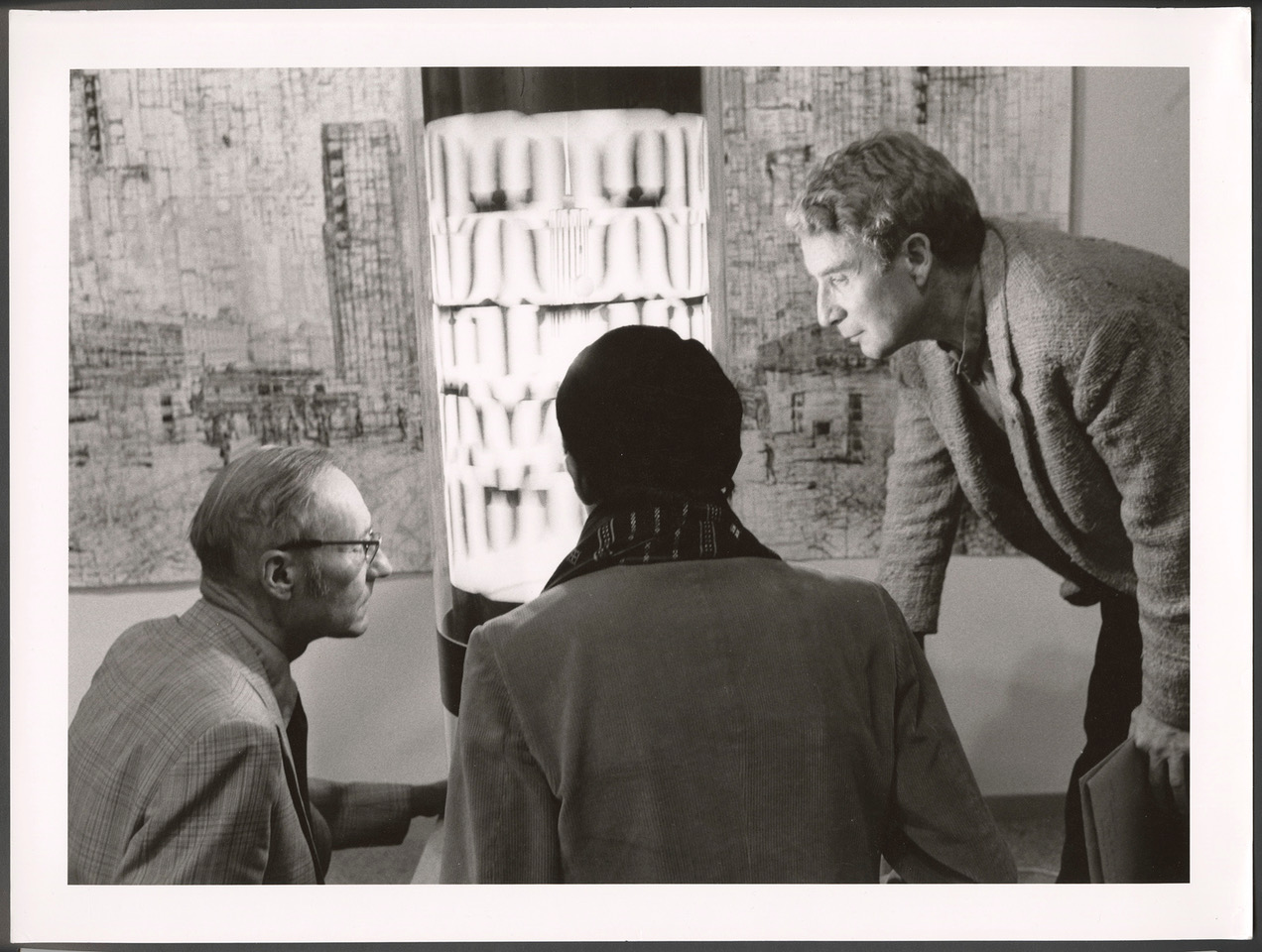 William S. Burroughs, Lawrence Lacina and Brion Gysin with the Dreamachine, photo by François Lagarde (1975) gelatin silver print, 30 x 40 cm, Courtesy the Artist and New Galerie
By JOSEPH NECHVATAL May 22nd, 2026
"I am a painter who does other things." ~Brion Gysin
With an oeuvre beginning with his association with the Surrealists in 1935, Brion Gysin was a prolific artist. Born in Great Britain in 1916 to Canadian parents, Brion Gysin was a multifaceted artist who placed himself at the conjunction of painting and writing—where calligraphic language clashes with gridded composition. Simultaneously a poet, calligrapher, painter, draftsman, multimedia artist, digital artist, inventor, restaurant owner, novelist, musician, shaman-teacher and performer; he has been associated with Poésie Concrète, the Lettrists, Action Painting, William S. Burroughs and the Beat Generation, the cut-up technique (a dadaist revival involving his cutting up a text and randomly rearranging the pieces) and the 1959 Dreamachine—his and his artistic/romantic partner Ian Sommerville’s rotary slit cylinder and lightbulb that emits flickering light between eight and thirteen flashes per second that may produce a relaxing sensation or generate visions when looked at through closed eyes while on psychedelic drugs. The theory is that when one approaches the whirling device with eyes closed, alpha waves are stimulated in the brain in a similar way the brain reacts to dreams or hallucinogenic drugs. But not really.
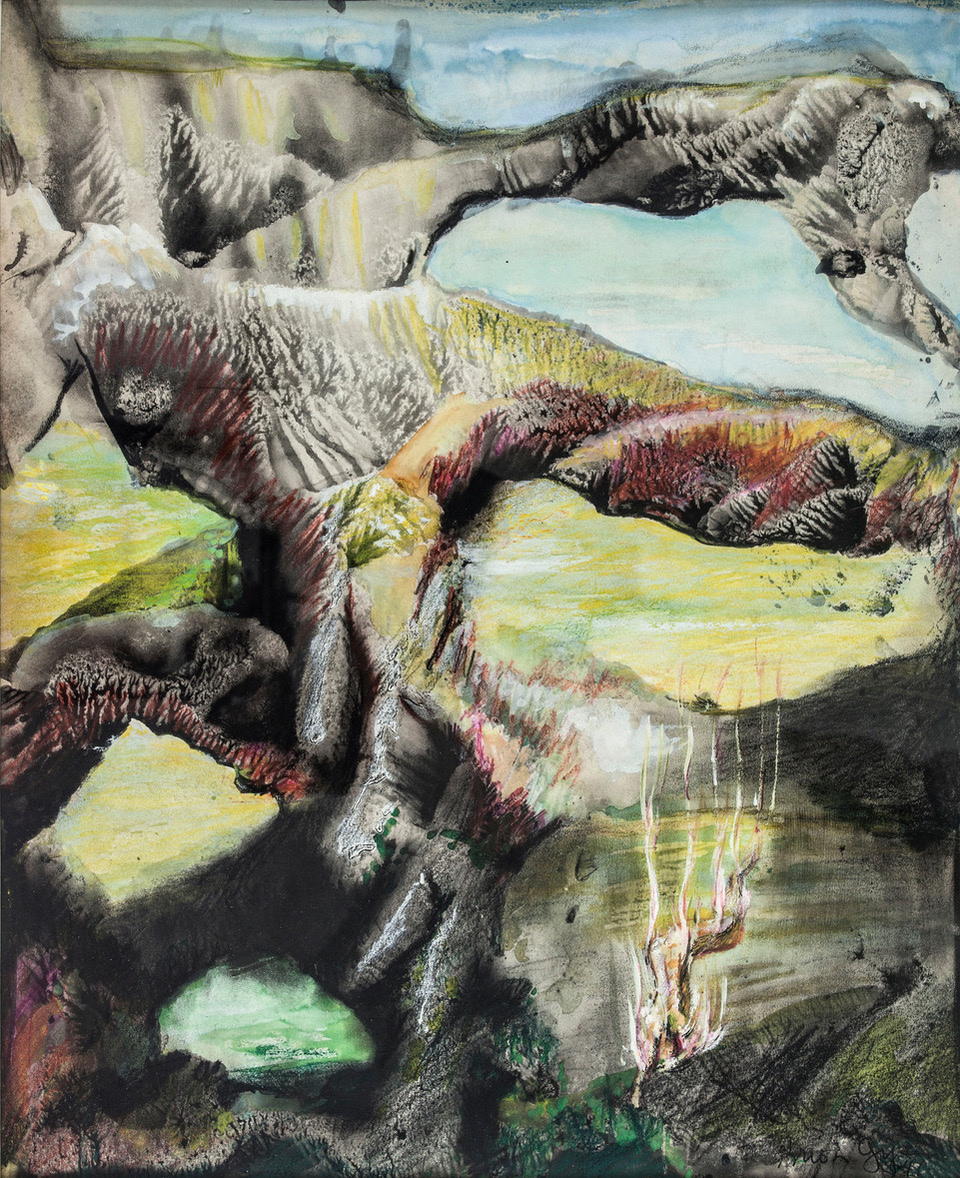 Brion Gysin, Sans titre (1941) Courtesy Musée d’Art Moderne de Paris
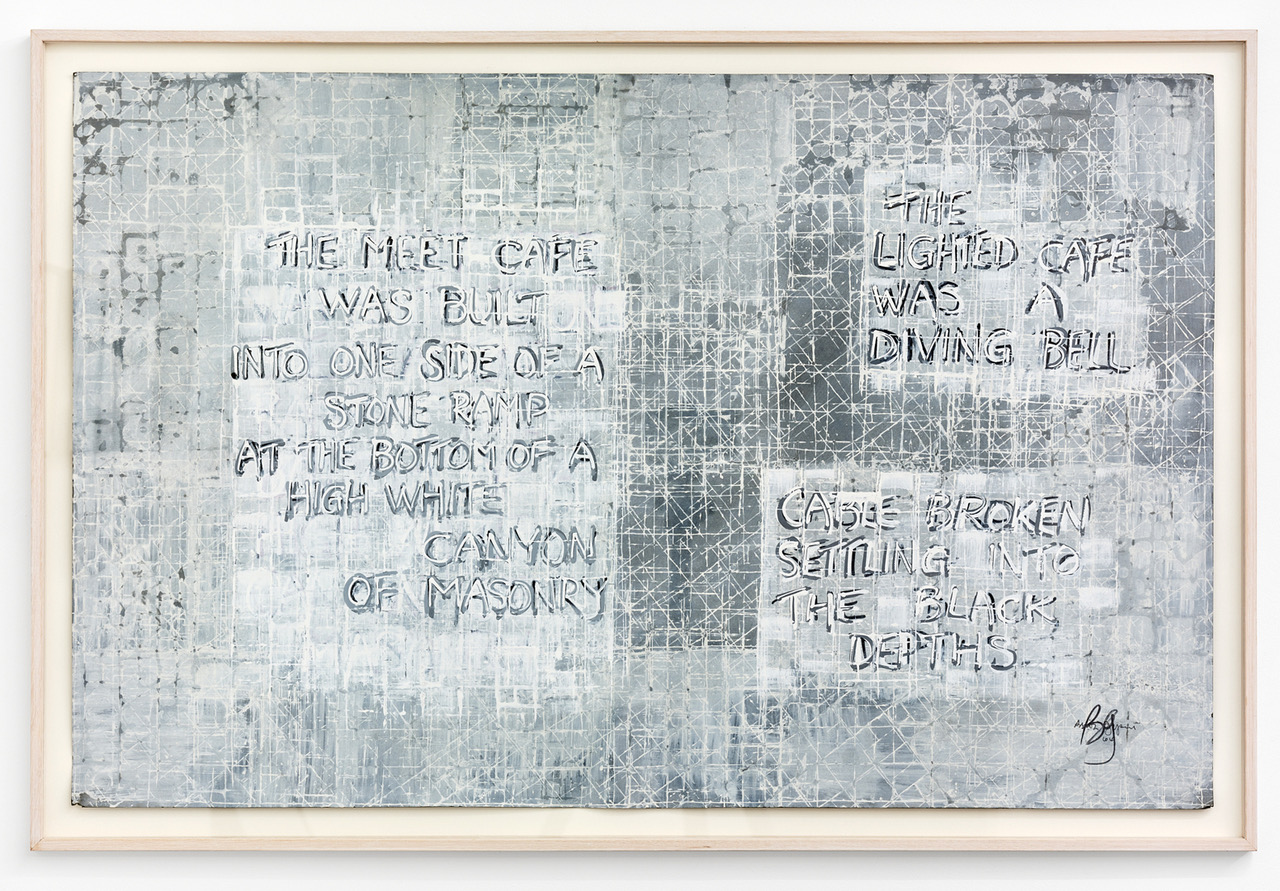 Brion Gysin, The Meet Café (1964) ink and paint applied with a custom roller, 64 x 100 cm, Courtesy the Artist and New Galerie
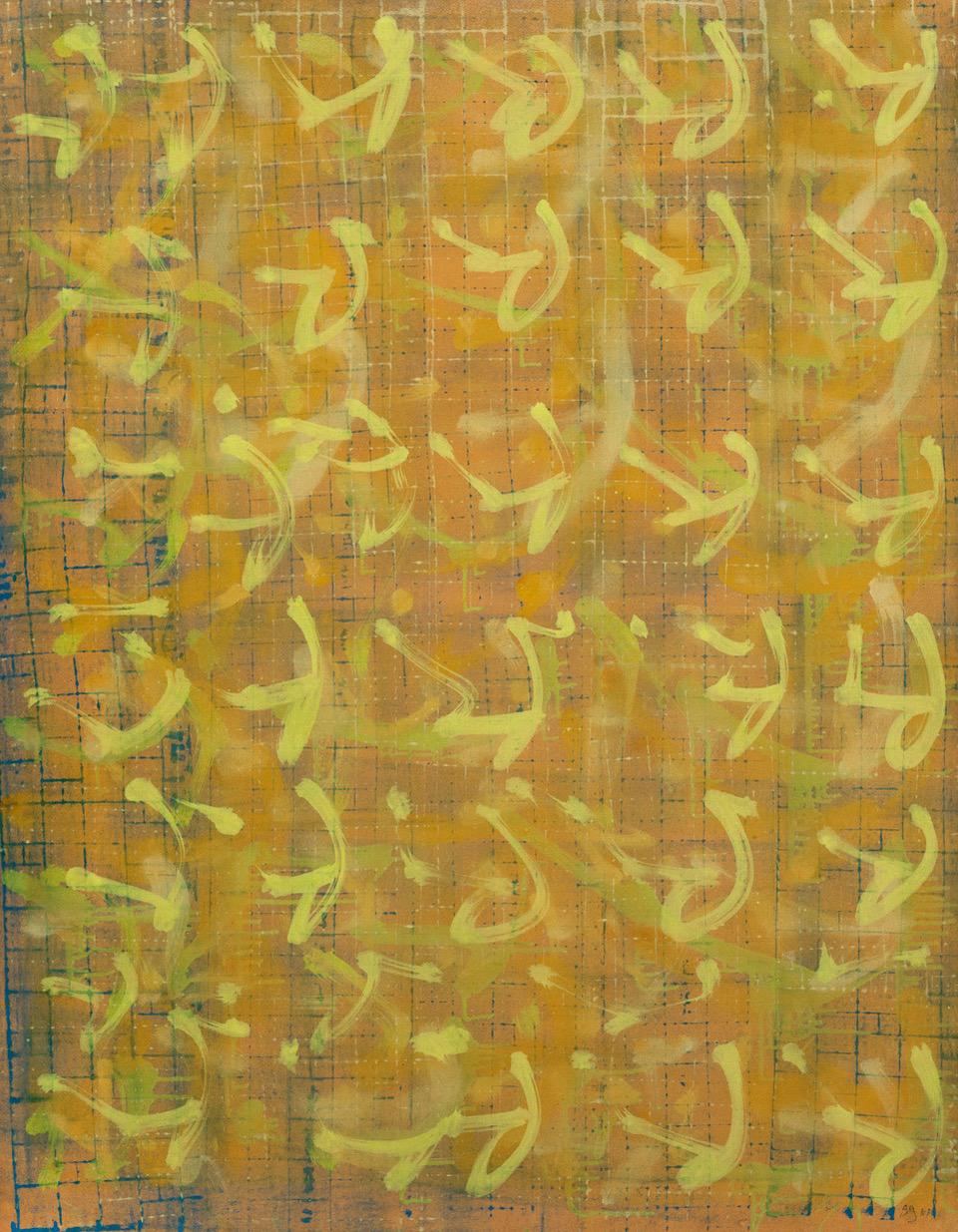 Brion Gysin, Ensemble 2 from 8 Unit (1961) Courtesy Musée d’Art Moderne de Paris
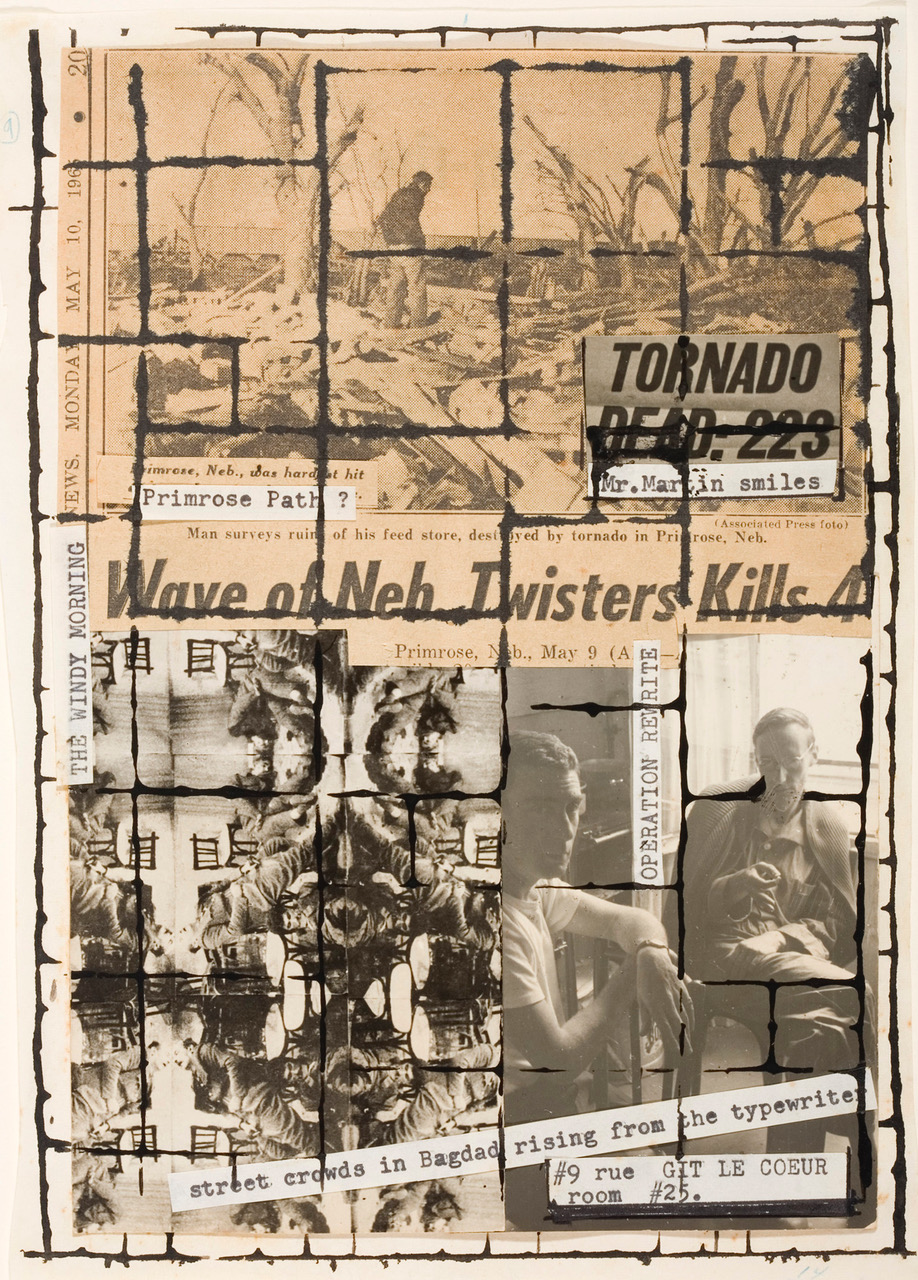 Brion Gysin & William S. Burroughs, Untitled (Primrose Path, the Third Mind, p.12) (1965)
The last time I saw Gysin featured within a Parisian institution was in 2008 at Ugo Rondinone’s curated The Third Mind show at Le Palais de Tokyo; a show that spun around the Gysin and William Burroughs unpublished book collaboration called The Third Mind. An entire gallery was devoted to the maquettes borrowed from the collection of the Los Angeles County Museum of Art.
Based largely on the Gysin collection he donated to the Musée d’Art Moderne de Paris after his death in 1986, The Last Museum exhibition retraces the major stages of this non-canonical career based in calligraphy, typography, and permutations that encompassed a span of twentieth-century avant-garde movements, including Op Art.
Psychedelic drugs are a key component to The Last Museum show and it opens with a selection of trippy works, including a mescaline drawing by the Franco-Belgian poet and visual artist, Henri Michaux. It illustrates nicely Gysin’s interest in dreams, surrealism, and the mind-altering effects of psychedelic drugs, magic, and the cut-up from which anything “could be taken apart and reassembled without end,” as Genesis Breyer P-Orridge wrote in his 2018 book Brion Gysin: His Name Was Master (Trapart Books). Also included are works of artists with whom Gysin forged close ties and whom he inspired (excluding Genesis Breyer P-Orridge), including Burroughs, Françoise Janicot and Bernard Heidsieck, John Giorno, Keith Haring, Patti Smith, and Ramuntcho Matta.
As an extension and counter-point, Ramuntcho has organized the exhibition Underwood 2246449-5 (Les diables de Brion) (The Devils of Brion) with Nathalie Heidsieck at New Galerie. Here Burroughs’s typewriter, the Underwood 2246449-5, is featured as the exhibition showcases various instruments, techniques, rules of the game, machines, recordings, tapes, chessboards, friendly deals, and cut-ups. It includes pieces by Gysin, Burroughs, Udo Breger, Aaron Brookner and Howard Brookner, Paul Armand Gette, John Giorno, Bernard Heidsieck, Françoise Janicot, Ramuntcho Matta, François Lagarde, Philip Heying, Lawrence Lacina, and Jean-Jacques Lebel.
The leitmotif throughout both shows is what Gilles Deleuze outlined, with considerable prescience, in his 1990 text Postscript on the Societies of Control—the control society asserts over the individual and the control the individual claims within one’s self to navigate/resist this controlling force.
As I have recently become acquainted with Ramuntcho Matta, I thought this an opportune time to ask him about his relationship to Brion Gysin and Gysin’s oeuvre. Ramuntcho is a French musician, producer, sound designer and visual artist and son of Chilean painter Roberto Matta and the brother of Gordon Matta-Clark. He met Brion Gysin in 1976 when he was 16 through his school principal, Maurice Benhamou. Benhamou thought it would be beneficial for Ramuntcho, who had been diagnosed with autism and was struggling with school and with life.
According to Ramuntcho, he knew nothing about Brion but soon became like a son to him during the last 10 years of his life. During which he was slowly dying of cancer. During this time, they collaborated together and Gysin introduced him to sound poetry, the work of the Beat Generation and much more. Beginning his artistic career in pop-rock music in the late 1970s, Ramuntcho has released 34 solo CDs and collaborated on about twenty other albums.
Joseph Nechvatal: You have a new book out with Édition Marcel le Poney called Ce que Brion m’a dit de Gysin. Can you tell us about Brion and yourself and Brion's view of himself? I translate the title of your book as What Brion told me about Gysin.
Ramuntcho Matta: Brion was a transmitter from other forms...from ancient Egypt...to Tibetan knowledge...to modern science...to inner worlds. Ce que Brion m’a dit de Gysin is me transmitting the essential Brion, who adopted me as a receiver at the moment of he was literally dying. William Buroughs and John Giorno told me that, because of me, not only did Brion live ten more years, but those years were the happiest of his life.
But I was not invited to participate in the curation of The Last Museum show. So Marion Dana, the owner of New Galerie, invited me to curate a show there and for it we invited all the rejected ones to participate. All friends of Brion.
At the same time Kristell Loquet offered me the opportunity to make the Ce que Brion m’a dit de Gysin book about the relationship I had with Brion and the collaborations we made with music.
As every true artist, Brion saw himself as a failure, and it is this sentiment that stimulated his need for producing the flame of art.
JN: Brion spent time in Paris during the 1930s when he was a student at the Sorbonne. In the early 1960s, he gravitated toward the artist/writers of the Beat Generation at the Beat Hotel (9, rue Gîtle-Cœur) in the 6th arrondissement. What was it about Paris that attracted Brion so?
RM: Paris was in the 30s the place to be. There was no question for him to be in any other place. Later he became an epicenter of Paris.
JN: Shortly before his death, he bequeathed his entire estate to the Musée d’Art Moderne de Paris. Why did he do that?
RM: Not the entire estate, but a great part of it went to Musée d’Art Moderne de Paris. I organize this on the advice of art critic Pierre Gaudibert and with the help of the then curator at the Musée d’Art Moderne de Paris, Marie-Odile Briot. Some of the estate went to Catherine Thieck (to keep a presence on the market) and some went to friends. I got all the reel-to-reel recordings.
We believed at that time that it was a good idea. We did not expect that the politics would change and that understood responsibilities would vanish. This is demonstrated by the fact that the museum gave the curation job of the show to a private collector/critic/translator Olivier Weil (who in 2021 edited an anthology book for L’Atelier contemporain of annotated essays around British art critic and curator David Sylvester called L’Art à bras-le-corps).
JN: You are a prolific independent audio producer and have released a number of recording by (and with) Brion, such as his One Night @ the 1001: Moroccan Music recorded by Brion Gysin. I am also familiar with the Ramuntcho Matta Presents Brion Gysin vinyl LP that was released in 1985. Tell us about your collaborations with Brion. How did it begin?
RM: We started to collaborate from the very first day. For him, life was more important than work. He had a very rigorous way of organize his days: writing, eating, painting, meeting, and parties.
JN: I understand that he wrote a novel called Othello that has never been published. Is that right? Can you tell us something about the novel? Novels by artists interests me greatly.
RM: The Othello novel was one of the numerous pièce that he finished and then destroy when he did not find a publisher. He was always saying that there is no need to keep a bad work.
Brion Gysin: The Last Museum
Musée d’Art Moderne de Paris
11 Avenue du Président Wilson 75116 Paris
From 10 April to 12 July 2026
and
Underwood 2246449-5 (Les diables de Brion)
New Galerie
2 rue Borda 75003 Paris
From April 10 to May 30, 2026

Joseph Nechvatal
Joseph Nechvatal is an American painter/writer currently living in Paris. His book of essays Towards an Immersive Intelligence (2009) was published by Edgewise Press. He has also published three books with Punctum Press: Minóy (ed.) (2014), Destroyer of Naivetés (poetry, 2015) and Styling Sagaciousness (poetry, 2022). His book of art theory, Immersion Into Noise, was re-published in 2022 in a second edition by Open Humanities Press. In 2025, Venus Voluptuous in the Loins of the Last God, his sequel novella to ~~~~~~~~~~~~~~~~~venus©~Ñ~vibrator, even (1995/2023) was published by Orbis Tertius Press. In 2025 his art exhibition Information Noise Saturation was presented at the Magenta Plains in New York City and in 2026 he exhibited a series of new paintings called Le Bateau ivre (The Drunken Boat) at Galerie Richard in Paris.
view all articles from this author



