Whitehot Magazine
September 2026
"The Best Art In The World"
"The Best Art In The World"
September 2026
Review for The Bitterest Ice Cream at FLOHAUS - New York
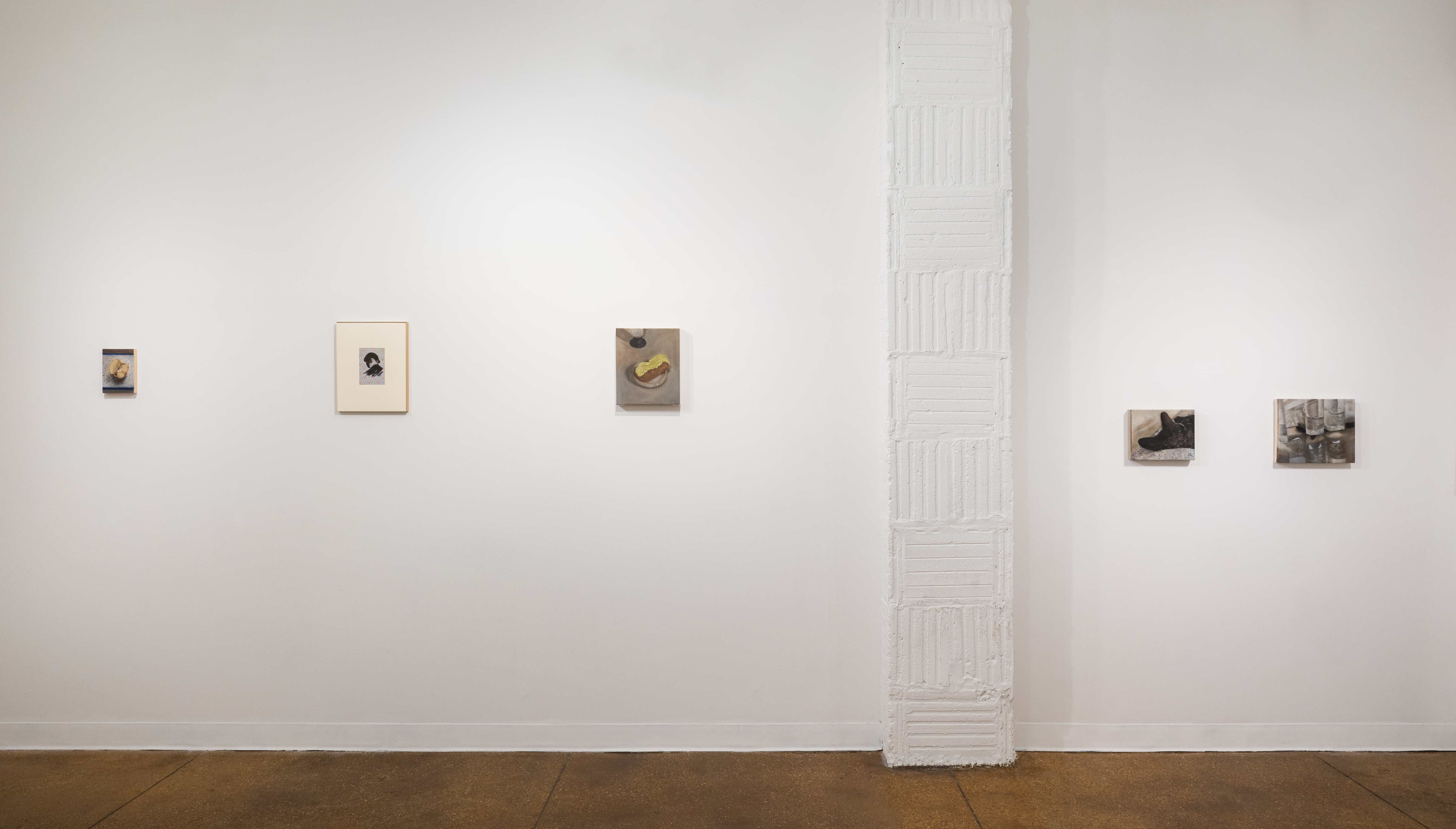 Installation view of The Bitterest Ice Cream. In courtesy of the artists.
By SERENA HANZHI WANG July 23rd, 2026
Small works are everywhere. Walk into any gallery that's not in Chelsea, and chances are you'll find tiny paintings at the center of attention. There are obvious practical reasons for this. Many New Yorkers are constantly moving, and smaller artworks are easier to transport, easier to live with, and easier to collect. But another big reason is that we've become so accustomed to looking at the world through the scale of a screen that our relationship to images has quietly changed. Small works no longer feel secondary; they feel natural, even intimate. Perhaps the emotional power lies not only in the image, but in the scale through which we encounter it.That was the first thought that came to mind when I walked into The Bitterest Ice Cream at FLOHAUS Gallery, a two-person exhibition built almost entirely around works that could be easily carried home.
After spending some time with the exhibition, I realized how carefully curator Shuhan Zhang had paired the two artists. None of the works feels urgent or overtly expressive. A folded shirt and a rotting apple receive the same quiet attention. The consistency of the exhibition initially suggests that the two artists are engaged in the same conversation. Looking more closely, however, their works are more like two sides of the same coin. Alex Wen constructs an installation that has duality and contrast within, while Shengjie Jiang focuses on portraying one tangible thing.
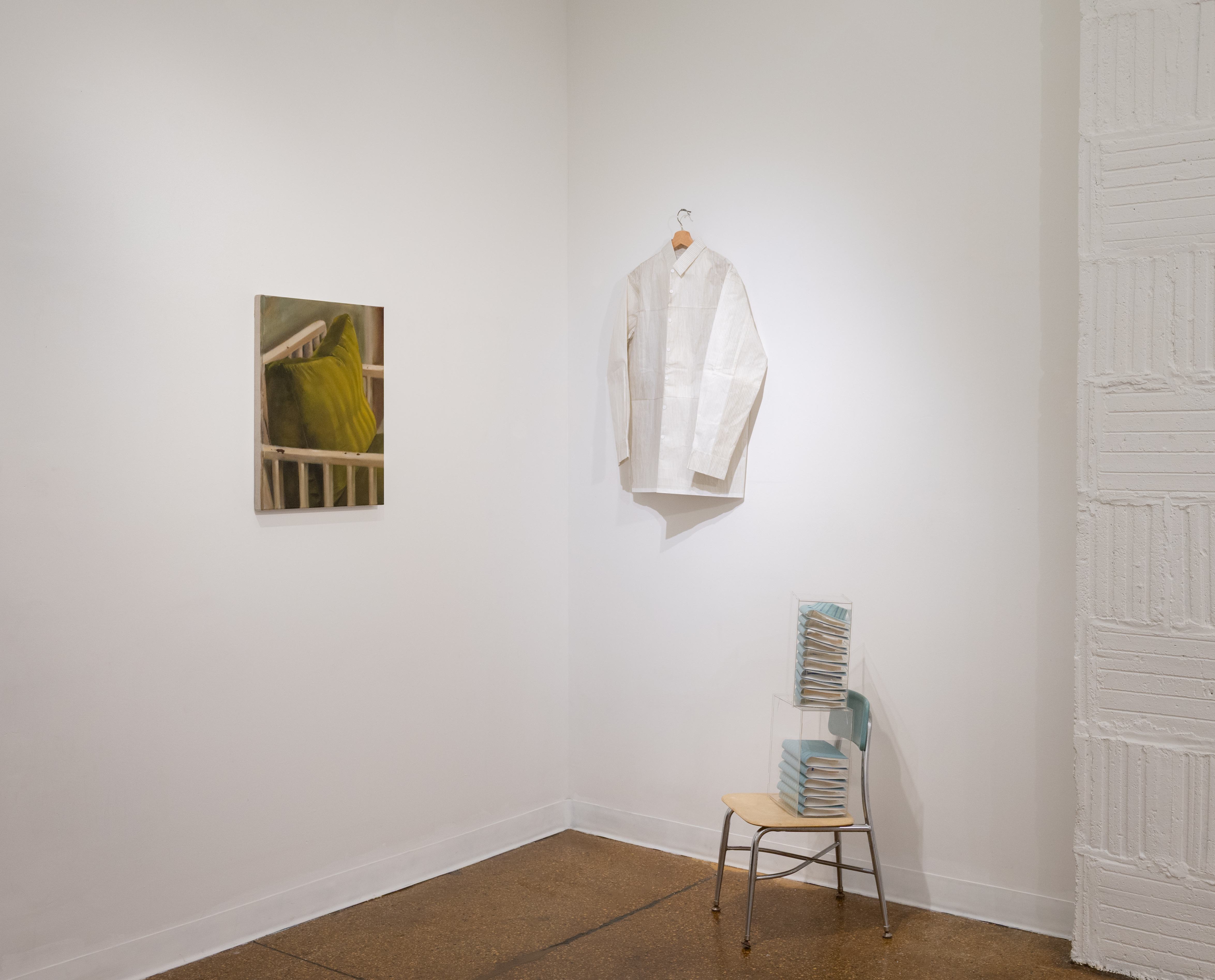 Installation view of The Bitterest Ice Cream. In courtesy of the artists.
That distinction also places the two artists within different artistic lineages. Alex Wen's work recalls Henry Darger, an artist who built imagined worlds to give form to vulnerability, fear, and the desire for refuge. In her interview, Wen describes her practice as a "silent scream" and a process of "slow digestion." Like Darger, imagination is not an escape from reality but a way of enduring it. Shengjie Jiang, on the other hand, reminds me of Gerhard Richter's Candle paintings. Richter demonstrated that an ordinary object could carry extraordinary emotional weight through restraint and sustained attention. Jiang's paintings operate with a similar quiet confidence. A bruised apple or a sleeping cat never becomes a symbol. Instead, they remain themselves, allowing meaning to emerge through careful observation. In an age of constant stimulation, both artists suggest that painting still has the capacity to slow perception, even if they arrive there from opposite directions.
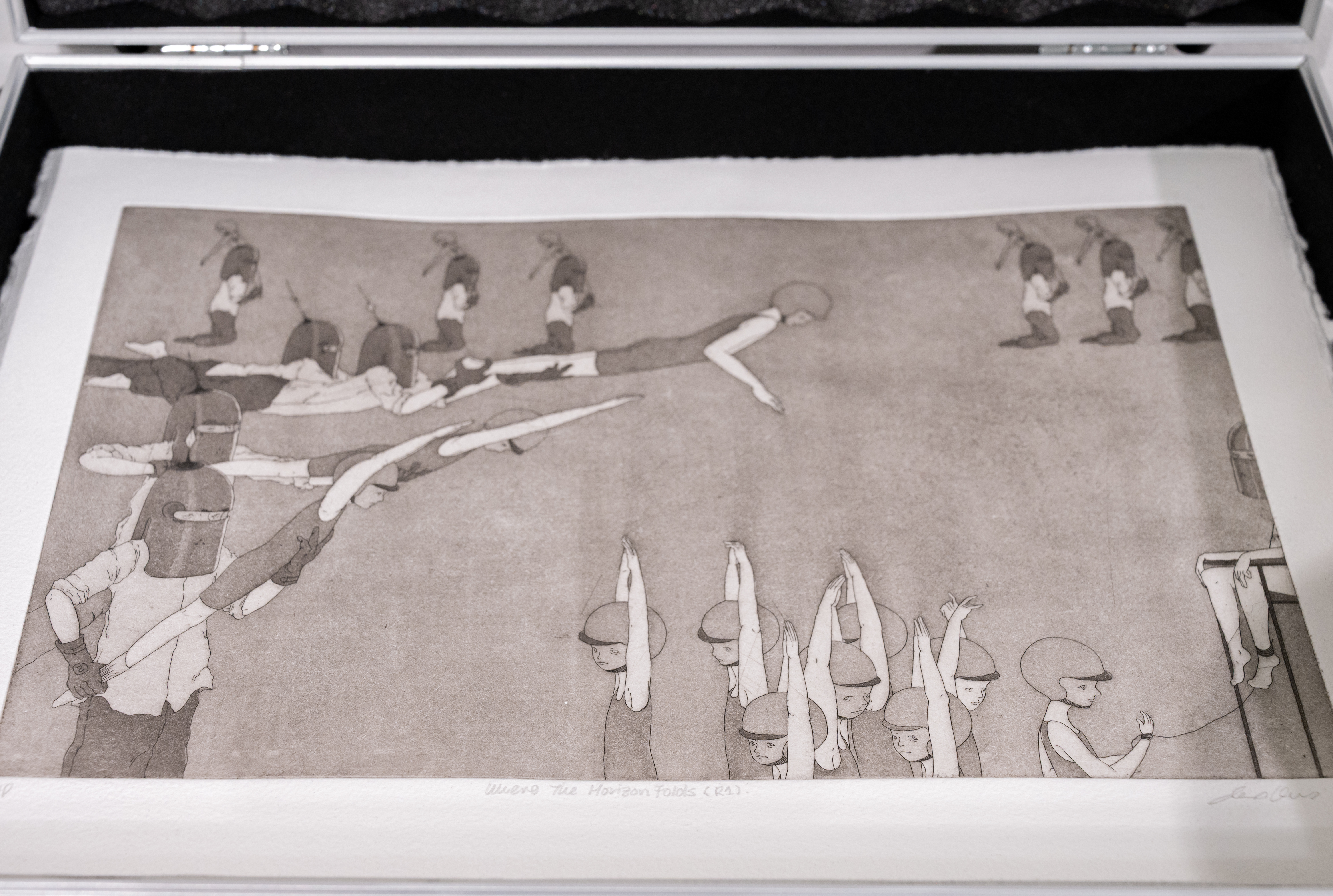 Installation view of The Bitterest Ice Cream. In courtesy of the artists.
 Installation view of The Bitterest Ice Cream. In courtesy of the artists.
In Funny Weather: Art in an Emergency, Olivia Laing writes, 'You can't paint reality: you can only paint your place in it, the view from your eyes, as manifested by your own hands.' At a moment when the art world often equates significance with size and spectacle, The Bitterest Ice Cream reminds us that quietness is not the opposite of ambition. Even the largest questions, about contradiction, memory, and lived experience, can emerge through the smallest of gestures.

Serena Hanzhi Wang
Serena Hanzhi Wang (b. 2000) is an award-winning art proposal writer, multimedia artist, and curator based in New York City. Her work spans essays, exhibitions, and installation Art—often orbiting themes of desire and technological subjectivity. She studied at the School of Visual Arts’ Visual & Critical Studies Department under the mentorship of philosophers and art historians. Her work has appeared in Whitehot Magazine, Cultbytes, SICKY Mag, Aint–Bad, Artron, Art.China, Millennium Film Workshop, Accent Sisters, MAFF.tv, and others.
view all articles from this author