Whitehot Magazine
October 2026
"The Best Art In The World"
"The Best Art In The World"
October 2026
Catalyst Through Craft: The Transformative Art of Laura Shape
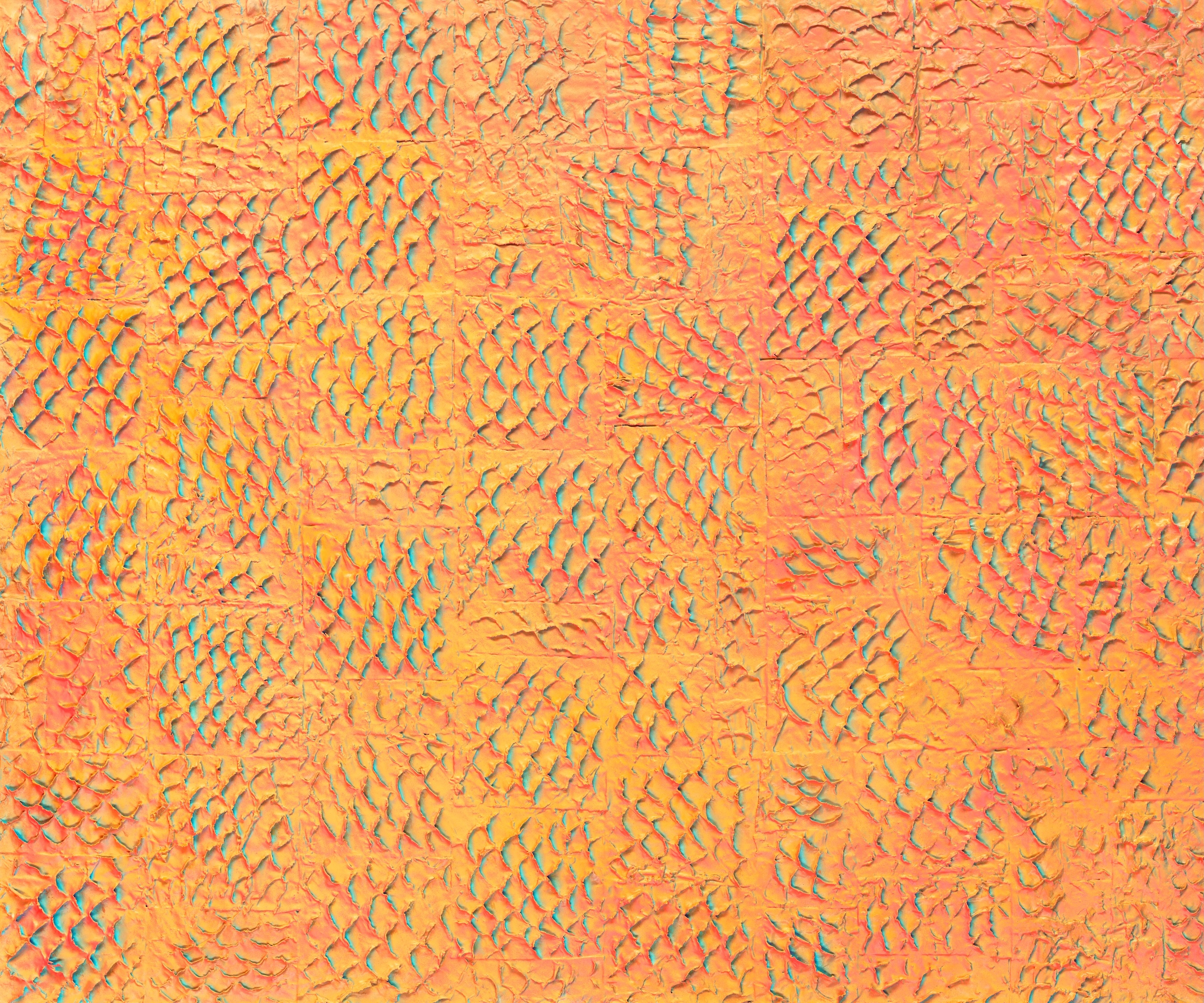 Golden Hour, Invasive carp leather, acrylic, 20 x 24 x 1.5 in
By CARLOTA GAMBOA July 28, 2025
Materials and mediums for an artist—like genre or form for a musician—can serve as a container, guiding a piece into the next project or iteration of a series. For Laura Shape, it may have started with leather work in the shape of belts and handbags, but before she knew it, an impulse to create innovative artwork using exotic materials had taken on a drive of its own, and, more critically, become a vehicle for ecological intervention.
Born into a home of artists and makers, Shape was for the most part always immersed in a culture of experimentation. “I don’t remember a time when I wasn’t making something,” she reflects. Her upbringing was marked by a wide exposure to artistic media: photography in the family darkroom, ceramics in the at-home kiln, drawing, painting, sculpture. “All of that was just part of my upbringing,” she admits, “I think I inherited it from my mom. She always wanted to try new art forms—and I got that from her, both by nature and nurture.”
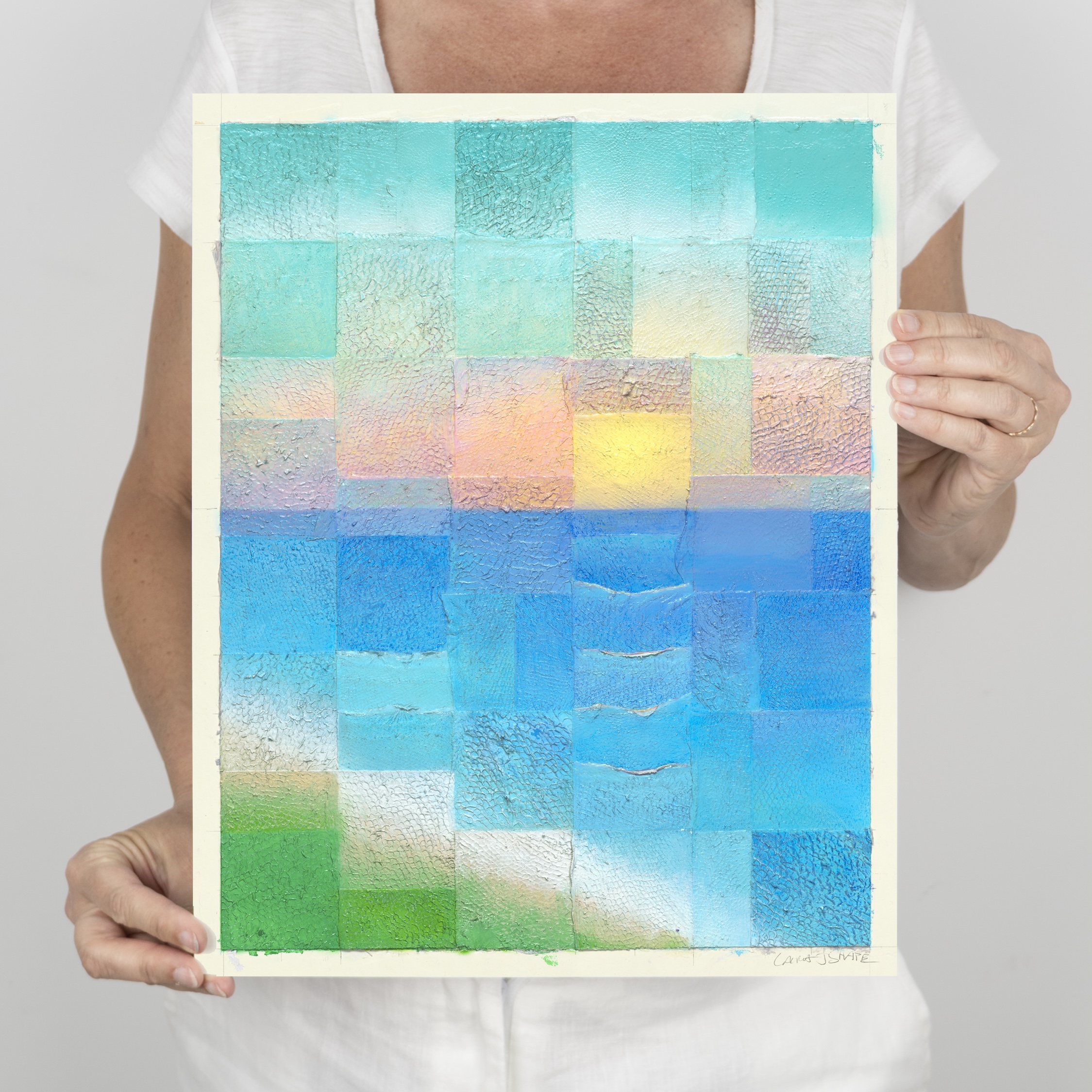 Luminous Drift, Invasive lionfish leather, acrylic, 14 x 11 in
Before fully committing to her current fine art practice, which she’s been doing for the last 10 years, the Denver-based artist spent two decades as a graphic and interface designer in the LA tech industry. “I started in 1995, around when you could first actually design the internet,” she says. “I loved it. Tech startups had the excitement I originally thought I’d find in advertising.”That energy sustained her until career burnout offered the unexpected gift of reinvention. She turned her attention to physical media. “First, I was sculpting,” she shares. “I’d taken a lot of jewelry classes and liked sculpture, so I started making lost wax cast belt buckles.”
While sculpting belt buckles, she began decorating the leather straps—an unexpected introduction to working with leather. That curiosity soon evolved into learning the craft of hand-stitching high-end handbags.
But the process was slow. “It occurred to me that the amount of time it took to make a handbag meant there was no chance of ever realizing all my ideas.” So she pivoted again, this time toward fine art.
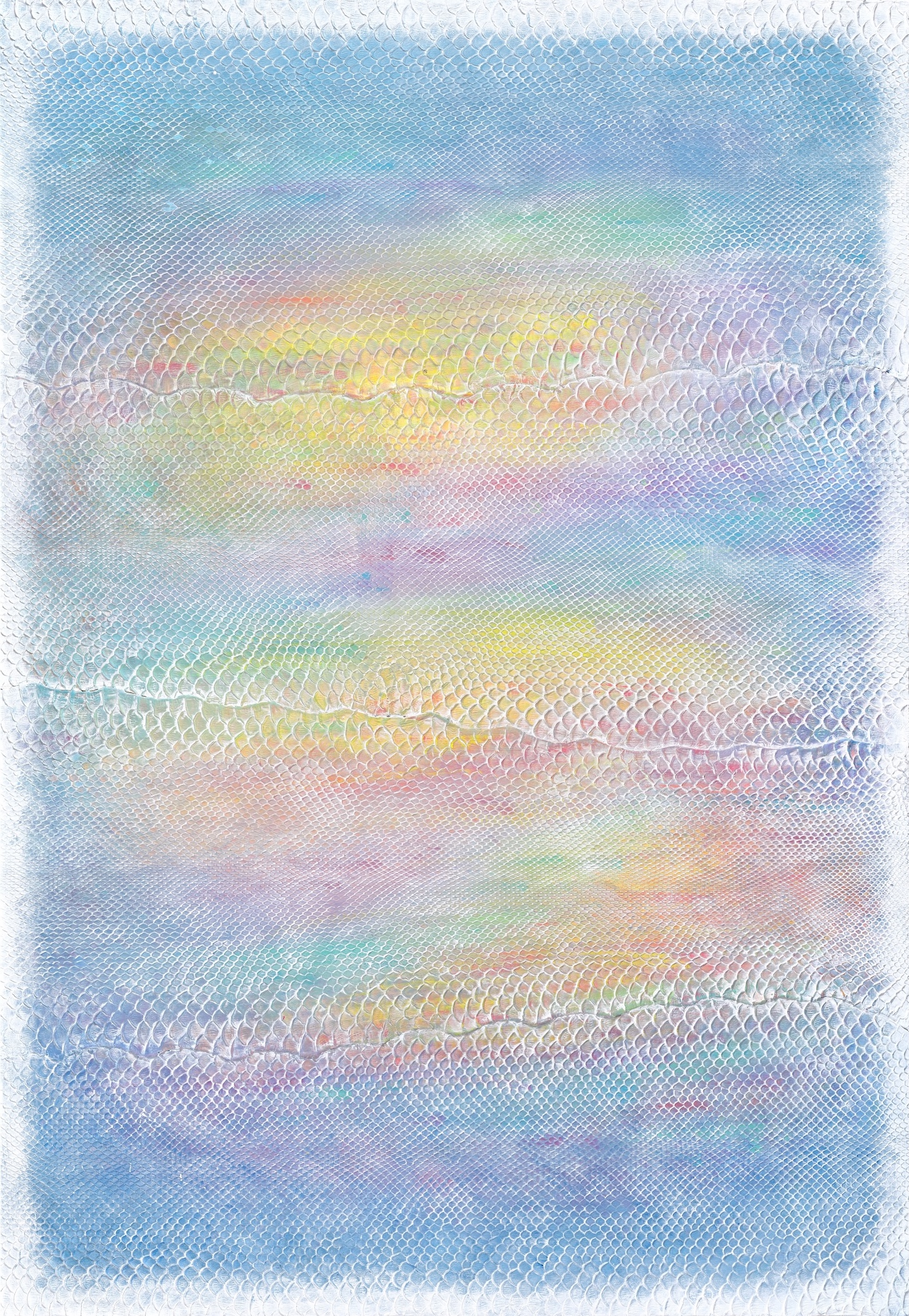
Beautiful Stranger, Invasive python leather, acrylic, 52 x 36 x 0.3 in
“I loved working with exotic leathers: python, stingray, fish,” Shape explains. “The textures are incredible, but at some point, I had to ask myself why I was using another being’s skin to make art. For handbags, for belts—sure, durability is unmatched. But for fine art? There are a million other materials you could use.” That tension sparked a pivotal search: was there such a thing as leather that she could use ethically? That's when she discovered the story of the Burmese python in the Florida Everglades.
“I started researching invasive species, and I came across Amy Siewe, a python huntress,” Shape says. “These snakes, once exotic pets, have wreaked ecological havoc in South Florida. Released into the wild, they grow sometimes up to 20 feet long and decimate native animal populations. They’ve eaten something like 85% of native mammals in the southern Everglades,” she says, shaking her head. “And they can’t be returned to Southeast Asia. They’re full of mercury and carry local pathogens. So they’re killed...and then just thrown away.”
Instead of turning away from the problem, Shape saw an opportunity to reinvent her own medium and imbue meaning into an environmental concern largely overlooked. She purchased her first python hide from Siewe and began to “turn ecological harm into something of beauty and impact.”
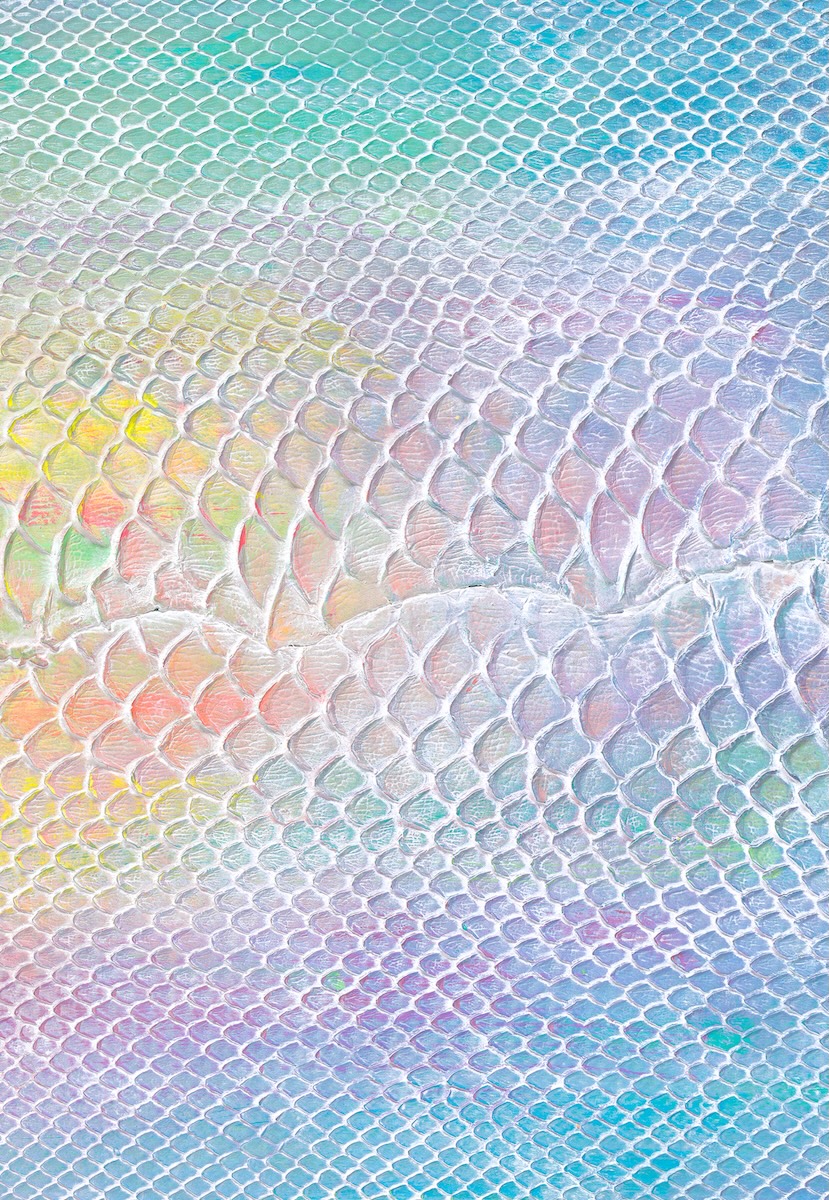 Beautiful Stranger (detail), Invasive python leather, acrylic, 52 x 36 x 0.3 in
That ethos was further expanded when she discovered Inversa Leathers, a startup turning invasive lionfish—another exotic pet turned ecological menace—into ethically sourced leather. Their mission aligned, and Shape became the only known fine artist in the world using this material. She later incorporated invasive carp from the Mississippi River basin to her list of materials as well.
For her, the appeal is not just ethical. It is also tactile. Each leather brings unique constraints and opportunities. The lionfish leather, for example, has tiny, dense recesses where scales once were, resulting in an X-shaped microtexture, whereas carp leather presents large scale pockets, “big enough to fit a fingertip,” she mentions. “The texture guides the content,” says Shape. “I respond to the material. How the paint settles into the recesses, how the light hits the surfaces—it all matters.”
While her subject matter is rooted in environmental urgency, her aesthetic approach is deliberately gentle. “So much activist art is designed to confront or even traumatize. I don’t want to do that. The situation is already dire. Instead, I want to make work that’s joyful, beautiful enough that it draws people in.” That initial attraction, she hopes, will lead to curiosity, information, and action.
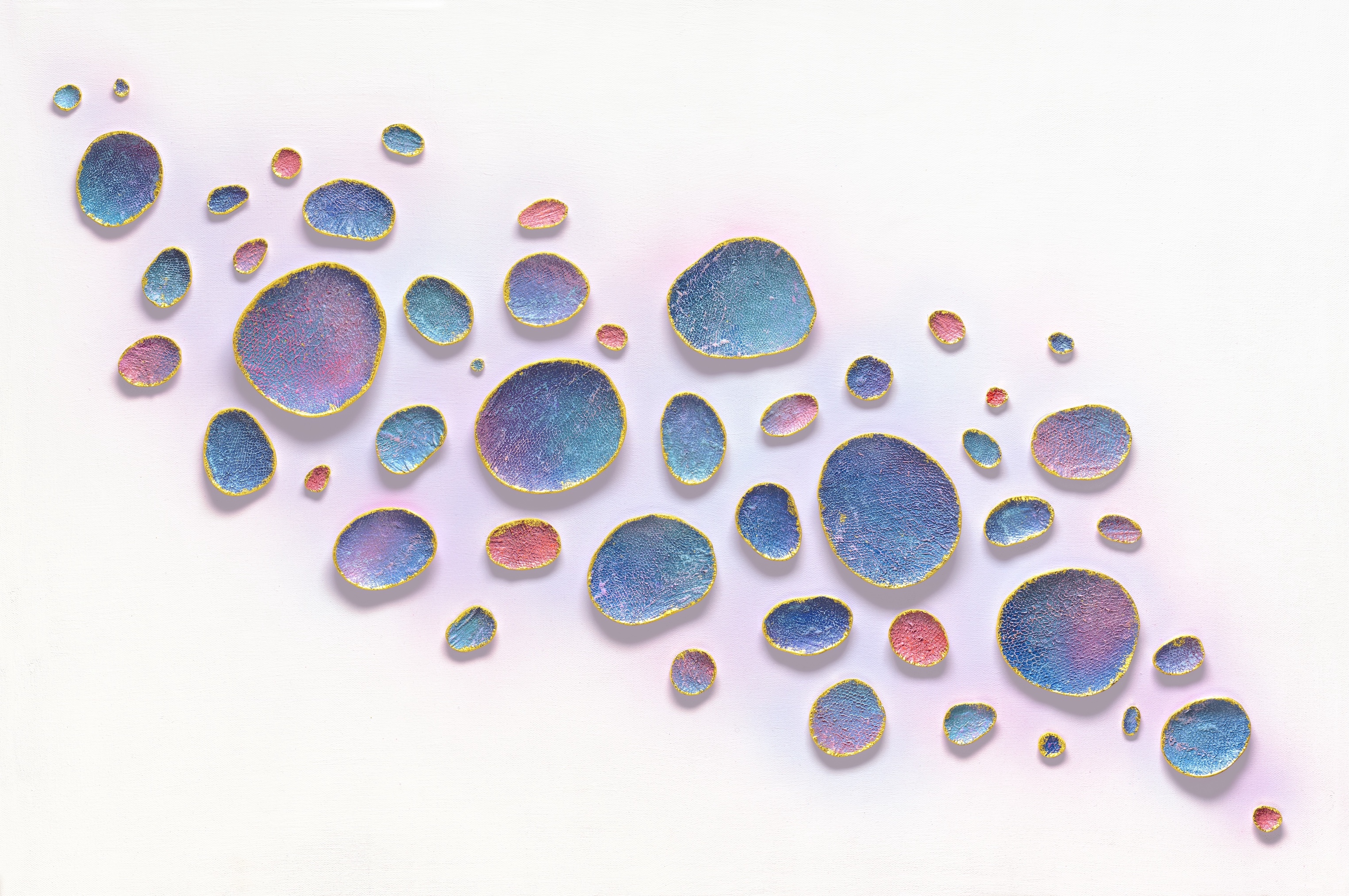 Daydreaming About My Love, Invasive lionfish leather, acrylic, 24 k gold leaf on canvas, 24 x 36 x 1.75 in
To that end, she’s developing a collector model she calls Catalyst Collaborative Art—a framework where the artwork itself creates real-world impact, and collectors help scale that impact through their investment. “My collectors aren’t just buying art,” she says. “They’re a crucial part of the system. And each piece becomes a daily reminder for them that they’re someone who helps—that their actions do real good in the world.”
She’s currently working on a new series of large-scale paintings using invasive carp leather, part of a broader effort to bring her work into public spaces like airports, hospitals, and hotels—especially in regions affected by these species. “I want the work to live in the communities where these animals are causing harm,” she says. “The materials are the problem, and transforming them into beauty is part of the solution. I hope it reminds people that creativity belongs in real-world problem solving—and that we can all do our part.”
To learn more about Laura Shape, please visit her website here and follow her on Instagram @laurashape

Carlota Gamboa
Carlota Gamboa is an art writer and poet from Los Angeles. You can find some of her writing in Art & Object, Clot Magazine, Salt Hill Journal, Bodega Magazine, Oversound and Overstandard.
view all articles from this author